
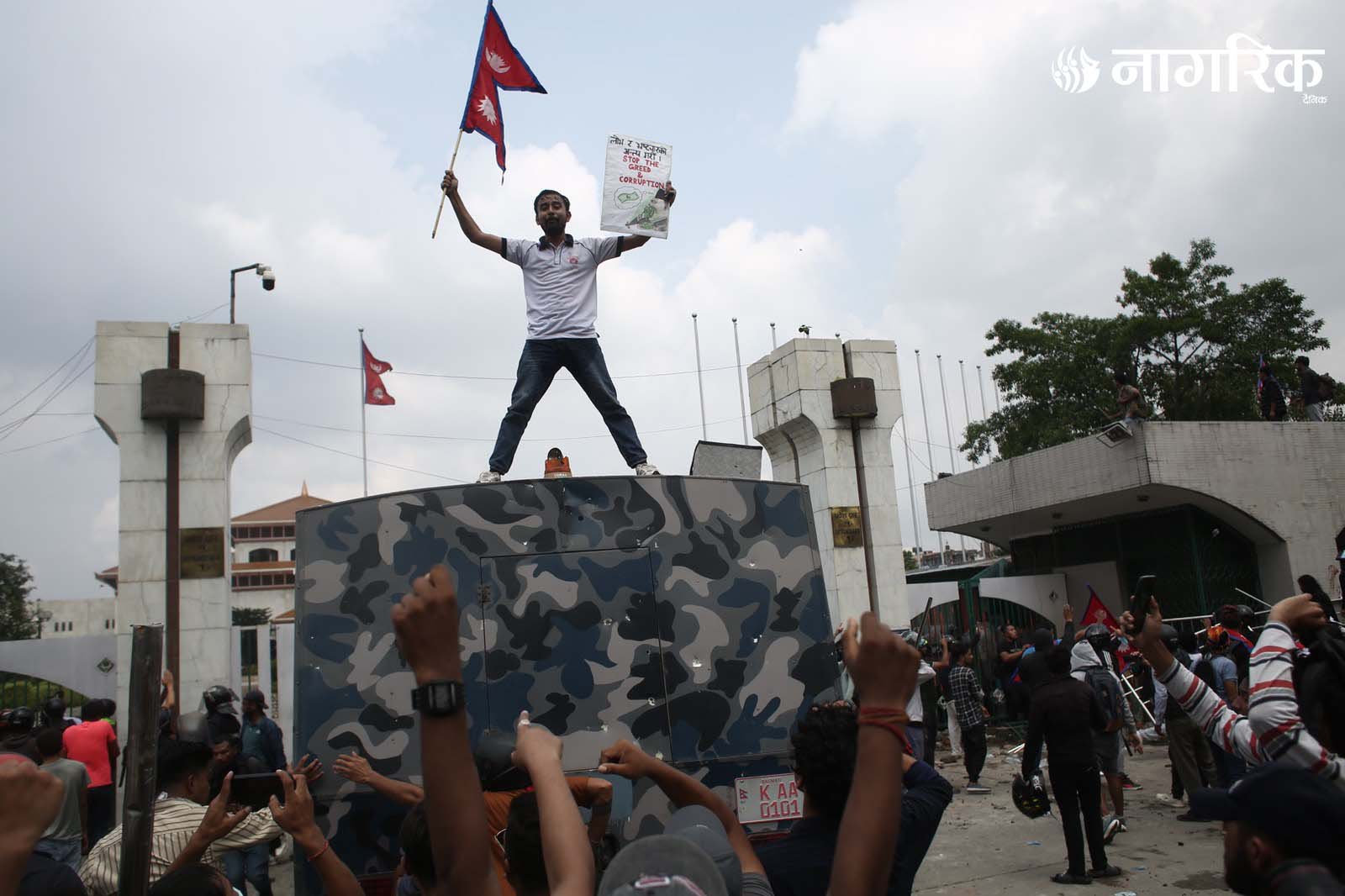
Nepal Prime Minister KP Sharma Oli resigned from office following the massive protests in the country by the youth against corruption and a ban on social media platforms. As the protests turned violent and snowballed out of control, at least 19 people lost their lives and hundreds of others have been injured.
The protesters set ablaze Oli’s house, the Parliament building, the main gate of Singha Durbar, the Nepali Congress’ (NC) central office, and the CPN-UML’s central office.
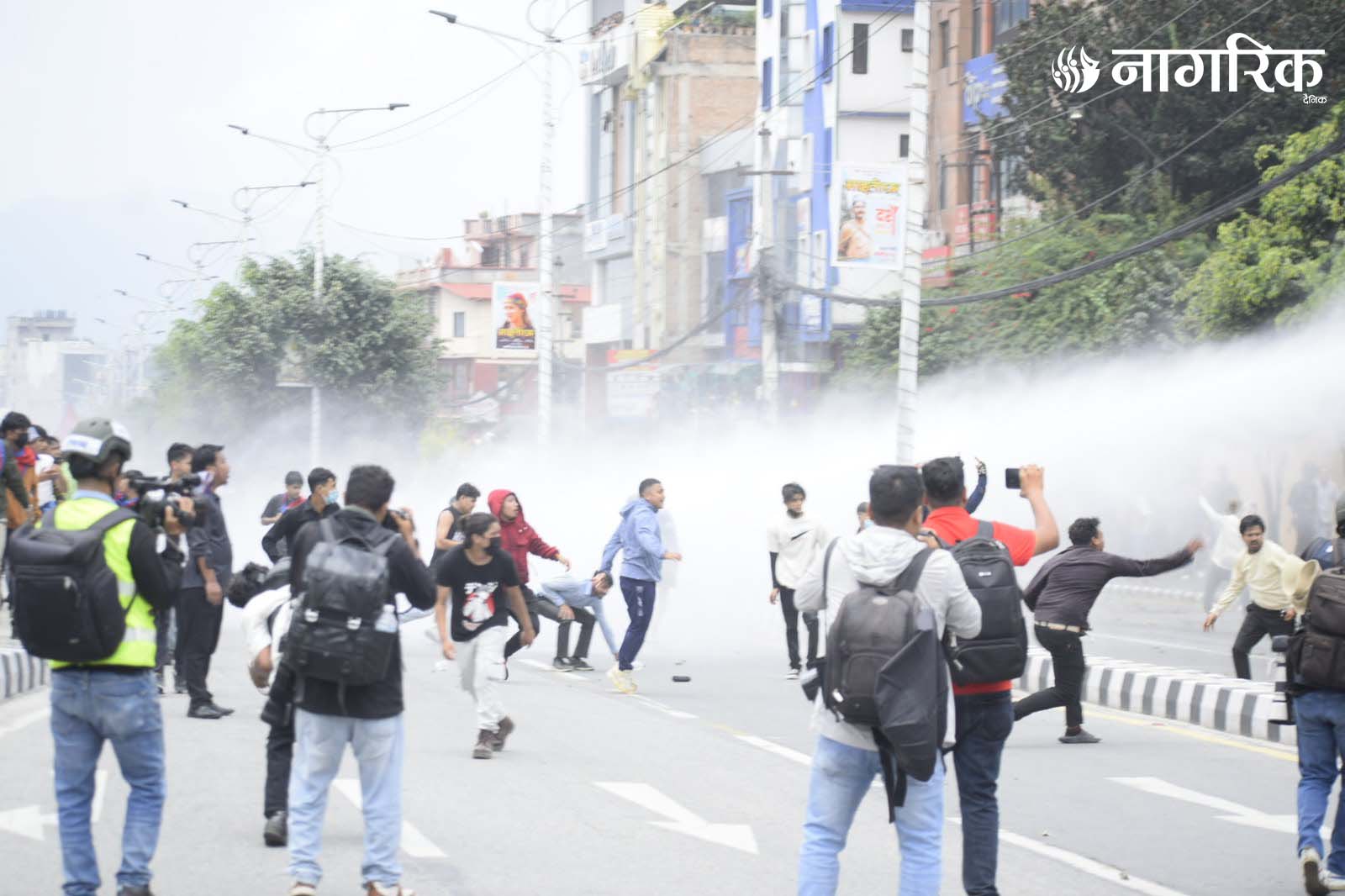
Earlier on Monday, police used heavy force including multiple gunshots, rubber bullets, water cannons, and baton charges to disperse the agitating youngsters.
Baneshwor—the heart of the capital city Kathmandu and home to Nepal’s federal Parliament—descended into chaos as protests, dubbed as Gen Z protests, escalated into violent confrontations. Despite the government’s imposition of a curfew, defiant crowds of protesters continued to occupy the streets, chanting slogans, and challenging security forces.
The tense standoff transformed Baneshwor into a flashpoint of unrest.
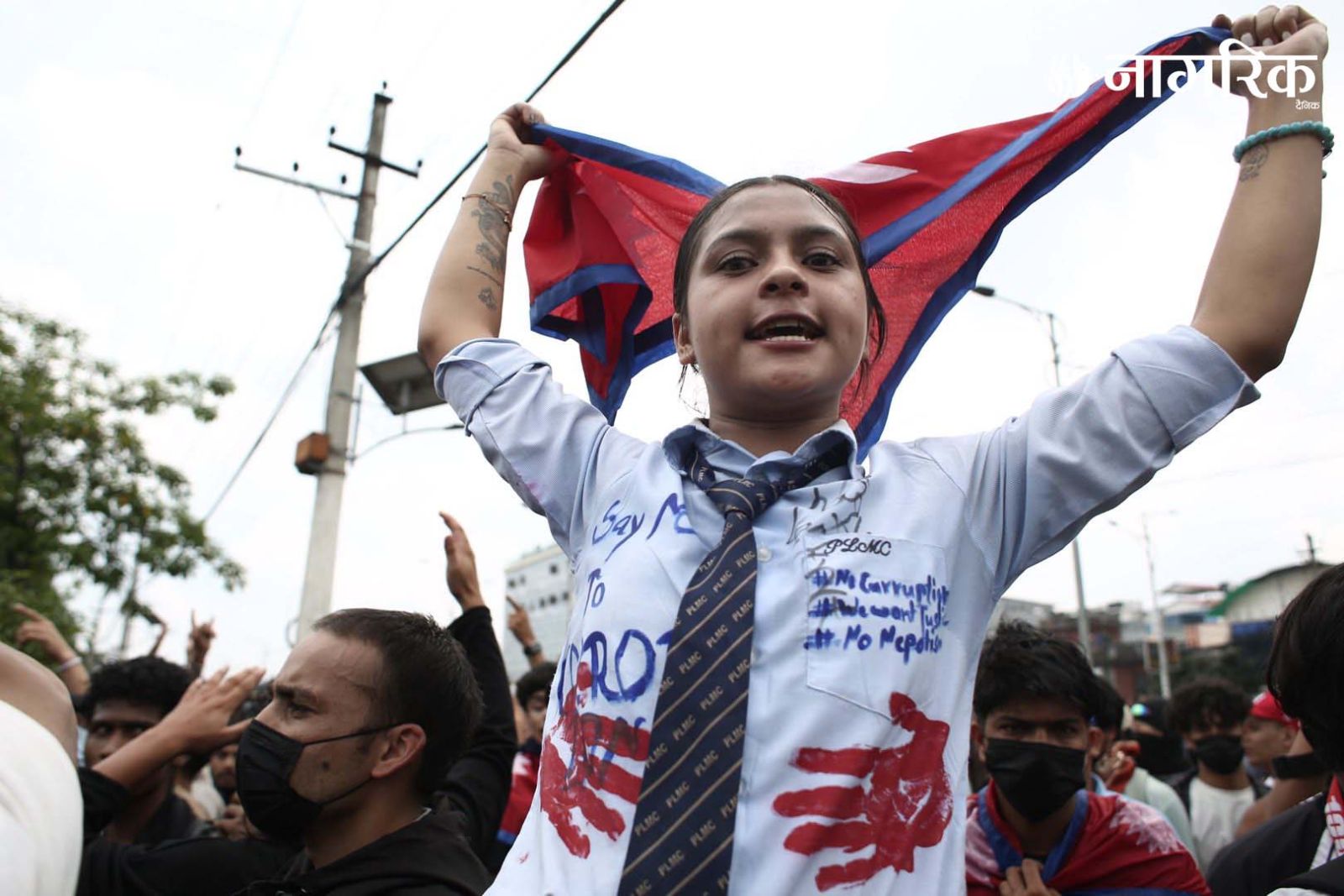
Curfew Imposed
The District Administration Office (DAO) Kathmandu imposed an indefinite curfew starting 8:30 am on Tuesday. The earlier curfew, enforced following Monday’s protests, had ended at 5 am this morning.
Earlier, Nepali Army (NA) personnel took control of the roads surrounding the Parliament complex in New Baneshwor, Kathmandu. As of September 8, protesters remained between Baneshwor and Bijulibazar, and didn’t disperse despite curfew order, according to SSP Shekhar Khanal of the Kathmandu Valley Police Office, Ranipokhari.
Gen Z Nepal, however, distanced itself from the incident, stressing that those who stormed the Parliament were not affiliated with their campaign.
“Our movement had around 20 to 25 groups, and the plan was to march only up to Everest Hotel,” said organiser Ujen Raj Bhandari. “Those who went beyond that point are not recognized by us. We have already asked students present there to return.”
As tensions escalated, Gen Z Nepal issued an urgent appeal on social media urging participants to leave the protest site immediately.
“Please exit safely as soon as possible. Several vested groups are inciting the crowd. Our day has already been a success. Please go home safely today,” the statement read.
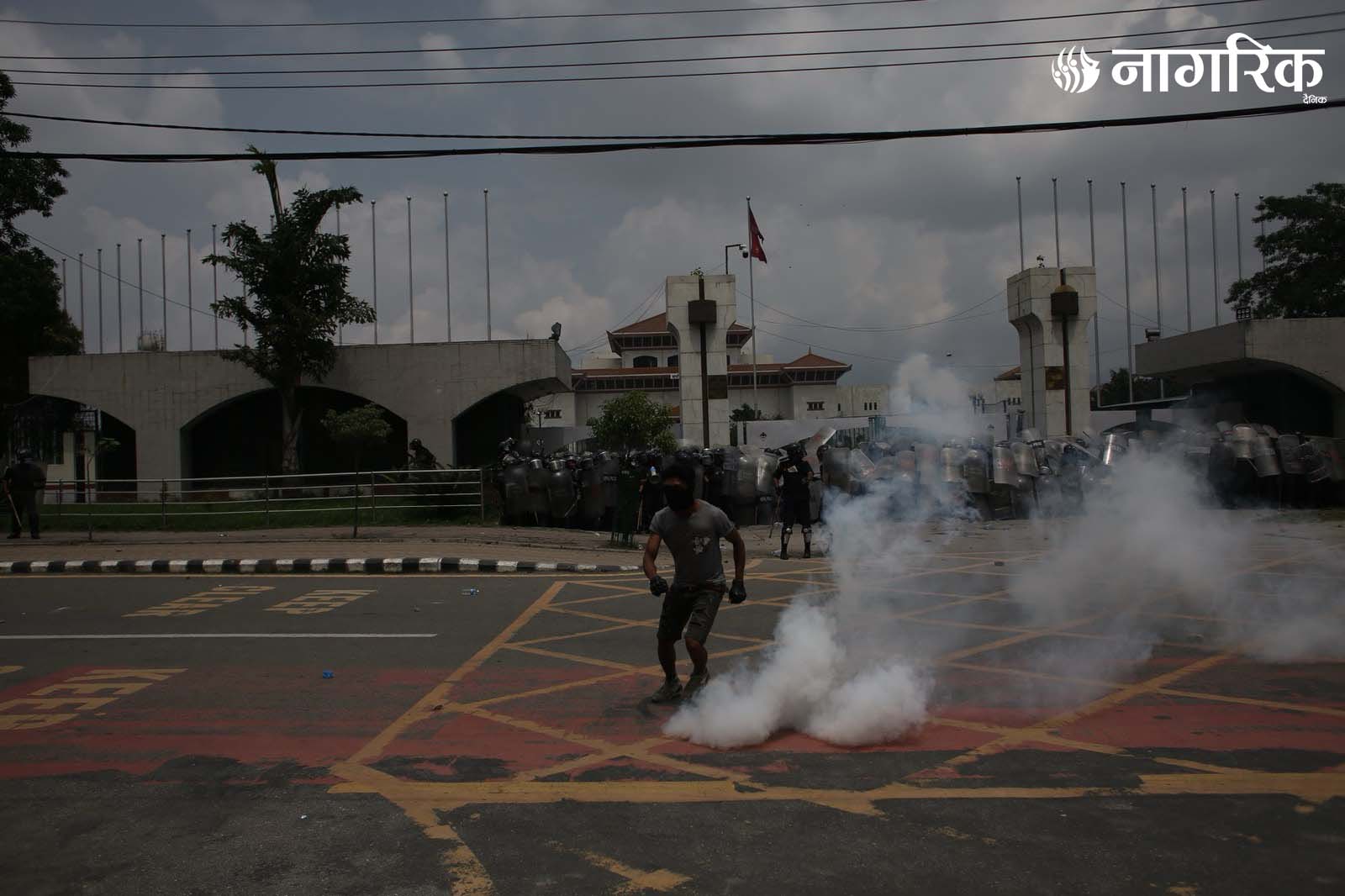
Government Response
President Ramchandra Paudel has accepted the resignation of PM Oli. He is now preparing to move forward with the process of forming a new government in accordance with Nepal’s Constitution. “The President is consulting with relevant parties to advance the government formation process as per the Constitution,” a presidential advisor stated.
In the early hours on Tuesday, the government had reportedly lifted the ban on social media platforms and formed a committee to investigate the protest.
A cabinet meeting, held on Monday evening, decided that the committee would look into all incidents that occurred during the demonstration. The panel has been given 15 days to complete the investigation and submit its report to the government.
Meanwhile, the Ministry of Health and Population (MoHP) had instructed all federal hospitals to provide free treatment to citizens injured during the protests.
MoHP led by Minister Pradip Paudel issued a circular directing hospitals to ensure prompt care for injured protesters without any charges. The MoHP also called for making ambulance services more efficient and easily accessible where needed.
The Kathmandu Valley ambulance network was urged to facilitate transfers of patients referred between hospitals. Additionally, all doctors and healthcare workers were appealed to come together to provide timely treatment to the injured.
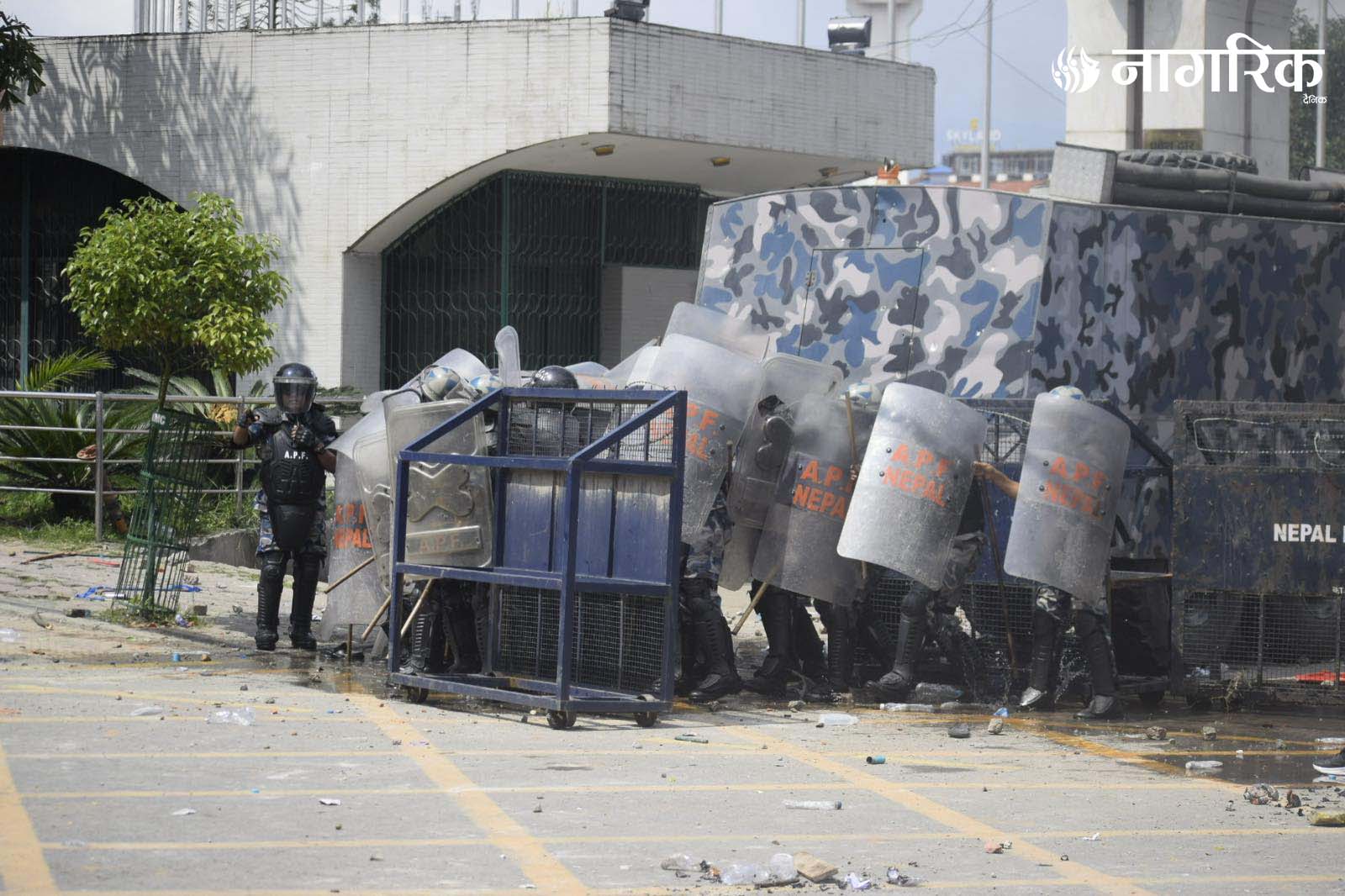
Opposition Demands PM’s Resignation
Opposition parties, including the CPN (Maoist Center) and the Rastriya Swatantra Party (RSP), had demanded the resignation of the prime minister, accusing his government of committing a massacre during the protests in the capital and across the country.
They concluded that the government’s handling of the movement was “highly inappropriate,” insisting the prime minister step down to create a conducive political environment.
As part of its campaign “Maoist with the People, Mid-Hill Pushpalal Highway — National Awakening Drive,” top Maoist leaders, including Chairman Pushpa Kamal Dahal, senior vice-chairs, vice-chairs, and the general secretary, had reached Gorkha on Monday. However, after learning about the escalation of protests in Kathmandu and reports of casualties, the leaders held an informal meeting, demanded the PM’s resignation, suspended their campaign, and returned to the capital the same day.
Similarly, the RSP also demanded Oli’s immediate resignation and early elections. Meanwhile, the Janata Samajbadi Party-Nepal (JSP-N), led by Upendra Yadav, demanded the immediate lifting of the social media ban and urged the government to hold talks with protesters to resolve the crisis.
Reason Behind the Protests
Public anger has surged since the government’s September 4 decision to simultaneously shut down 26 platforms, including Facebook, WhatsApp, Instagram and YouTube. In response, Gen Z has turned the issue into a broader campaign, raising voices against violations of fundamental rights as well as against nepotism and corruption.
One of the youths involved is Aarati Ray of Kathmandu. According to her, the country’s system has already been ruined by partisan politics, leaving no choice but for this generation to take to the streets. “We are clear. The country has been devastated by corruption. The root cause is a broken system,” Ray told Republica. For many, social media was the only outlet to vent frustration over hardships faced in public services.
On TikTok, the hashtag #PoliticiansNepoBabyNepal is raising questions about expensive cars, foreign education, and lavish lifestyles of politicians’ children. As Gen Z’s movement heads to the streets, the sharpest criticism has targeted the family of Nepali Congress President Sher Bahadur Deuba.
Gen Z activists have been posting photos and videos of his son Jaiveer and daughter-in-law Sivana’s lavish lifestyle, running a “Nepobaby” campaign online. Youth have also taken a dig at Shrinkhala Khatiwada, daughter of a former health minister Birodh Khatiwada; Ganga Dahal and Smita Dahal, daughter and granddaughter of former prime minister Pushpa Kamal Dahal; Anjila Basnet, daughter of former minister Mahesh Basnet; Ankit Khand, son of a former home minister, and Kshitiz Parajuli, son of former chief justice Gopal Parajuli.
Content creator Bishal Gautam made a satirical video calling out ‘Nepo Baby’ privileges, which has already gathered over 400,000 views. Another user @am___bika expressed frustration commenting: “Corruption in Nepal is not just a political issue — it’s a deep-rooted crisis that affects every citizen, every community, and every dream for a better future. From the smallest public office to the highest levels of government, the misuse of power and public funds has become so common that many have stopped questioning it. That is the most dangerous part — when corruption becomes normalized, accepted, and even expected.”
The protest has been amplified by the viral “Holy Airball!” trend, which became a social media sensation among youth worldwide. The “Holy Airball” trend, popular among youth, uses a three-part format to show off personal or family achievements. The first slide shares a fact about themselves or their family, the second presents a common assumption, and the third humorously proves that assumption wrong with the phrase “holy airball.” Borrowing the basketball term for a complete miss, the trend became a way for young people to flex their success, wealth, or talents while playfully telling viewers not to underestimate them.
As the movement against the social media ban gained ground, the trend inadvertently became a platform for expressing frustration at government restrictions and corruption, turning it into a symbol of youth defiance. However, in the wake of the social media ban and growing public scrutiny, several of these flashy posts have reportedly been deleted by their original posters.
The shutdown of Facebook and YouTube has directly hit content creators and digital marketers. Despite promoting the idea of a “Digital Nepal,” the government shut down these platforms overnight without offering any alternatives for those whose income depends on them.
In response, youth have been voicing outrage at the government and political leaders. Many influencers, digital entrepreneurs and even some politicians have declared support for Gen Z’s protest campaign.
This is a developing story.