
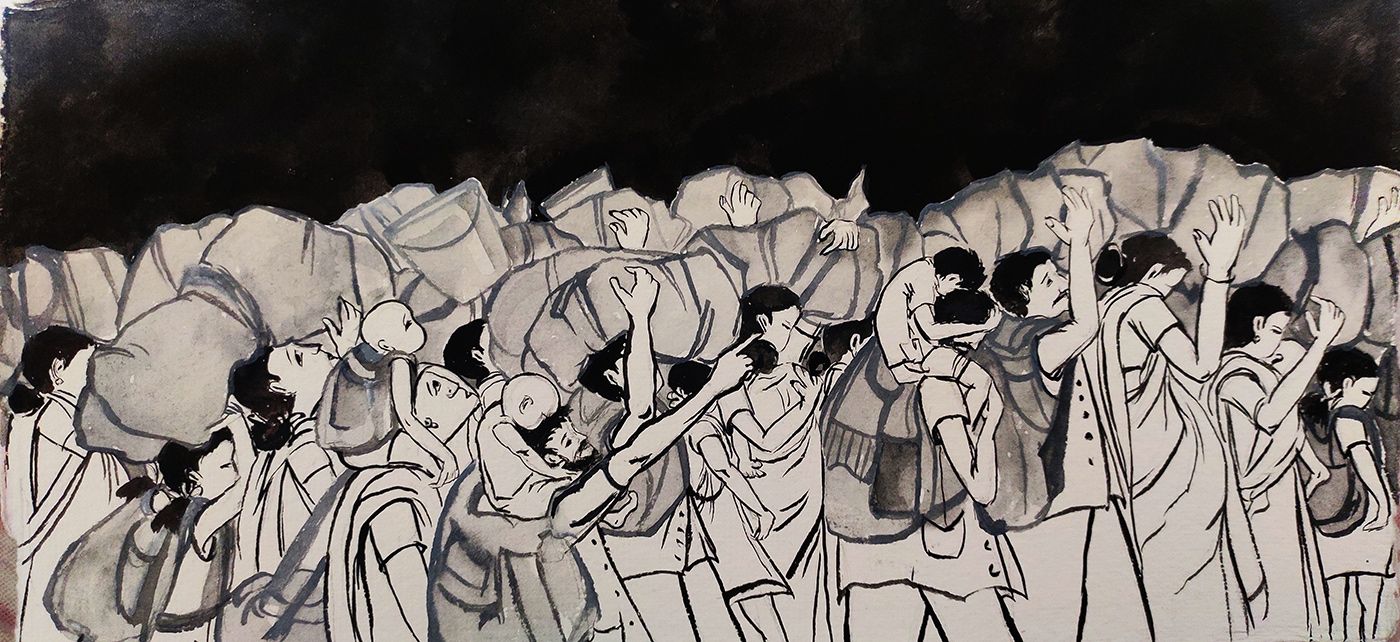
“As I saw the barbed wire, it seemed to be the end of everything… I thought I’d never be able to return to my homeland. My dado’s dado [great grandfather] used to live right here in Murshidabad. My nani [maternal grandmother] lived in this village in Bhagawangola [block] where we have our home now.”
A visibly upset Mehbub Sheikh, 36, explains his family’s historic roots in Murshidabad district to us at his home in Balia Hasennagar. It’s barely a month since he was labelled a ‘Bangladeshi infiltrator’ and shoved across the border.
“Voter card, ration card, Aadhaar card – I have every single one. I have toiled hard and bought some land as well. How come they call me a Bangladeshi now?” asks the migrant labourer.
Mehbub is not alone. Migrants from Murshidabad across the country – construction labourers, domestic workers, street vendors and hawkers – ask the same question: why are Bengali-speaking Muslim migrant labourers of our district being targeted in various states?
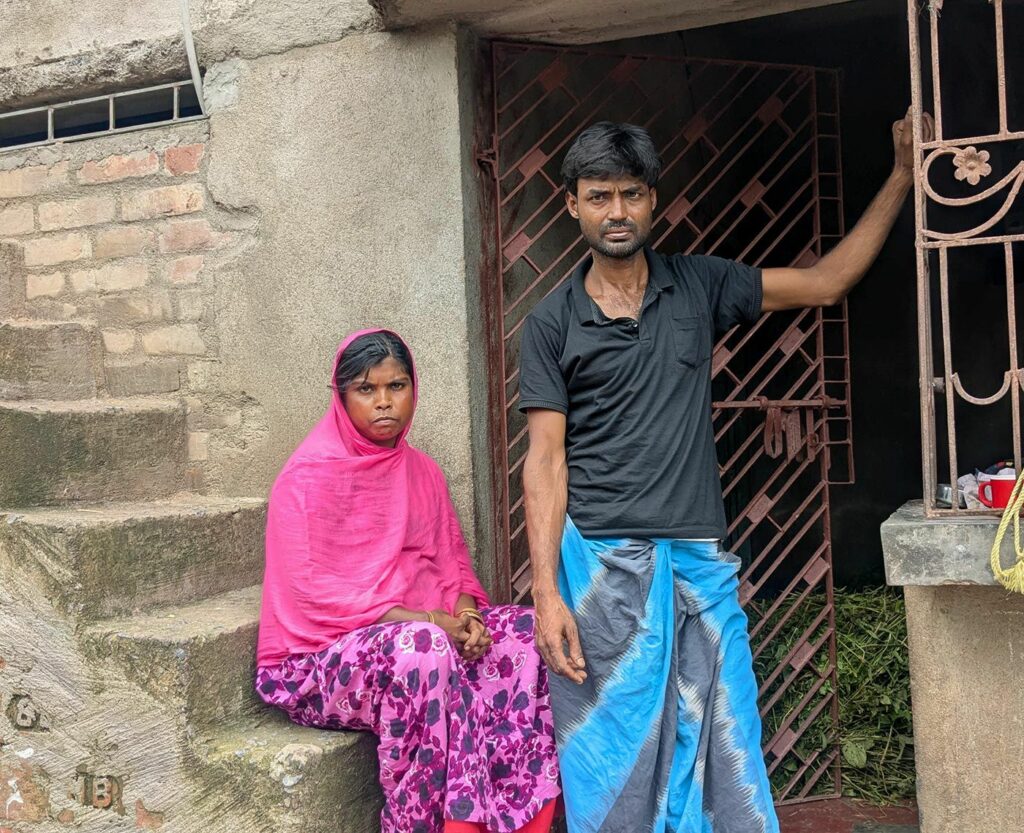
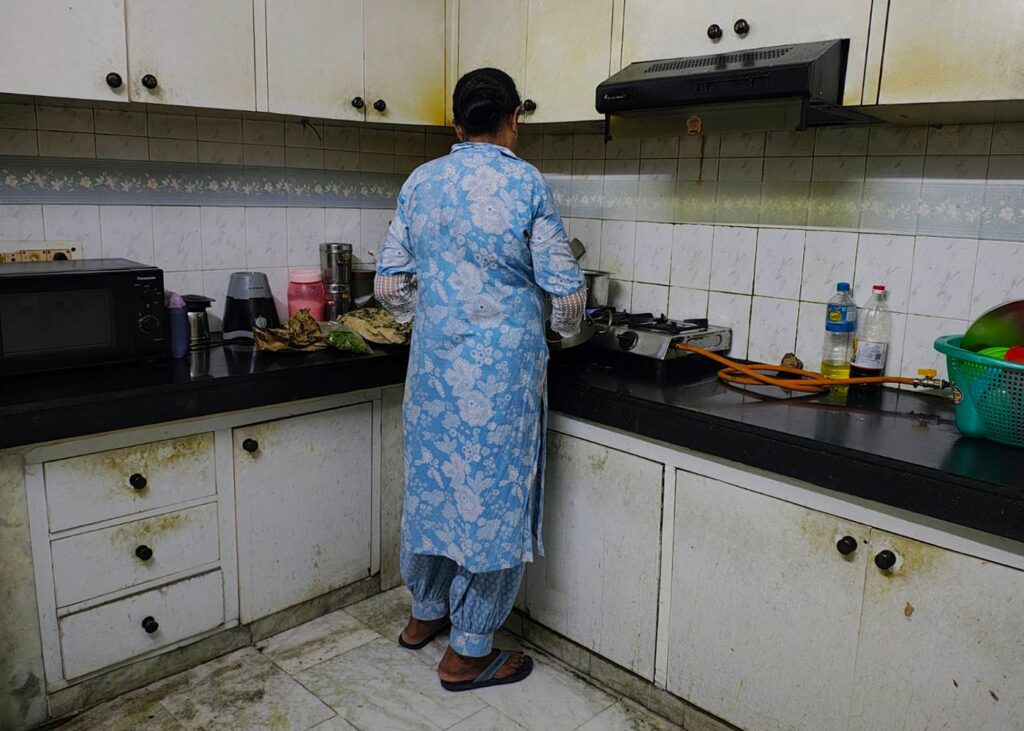
“No one raised a question [about our being Indians] until now,” says Bishakha Mondal, 52 (name changed) from Gokarna village in Kandi. “But with all these troubles [us] Bangali Musalman workers everywhere, we can’t help getting worried.” She has been a domestic worker in Delhi for three decades. Her labour in five households there brings in Rs. 25,000 a month. She has an authentic voter card and ration card. Also an Aadhaar card and bank account linked to her Delhi address.
Murshidabad, administrative centre of undivided Bengal till the British shifted the capital to Kolkata, was once famed for its prosperity. Today, it supplies the biggest out-migrant workforce from West Bengal. Till May 2025, close to 4 lakh workers from here had registered for the Migrant Workers Welfare Scheme of West Bengal. (Curiously, the document citing these numbers has vanished from the government site). Independent estimates by different migrant organisations suggest there are more than a million such workers in Murshidabad. A state education ministry official says on condition of anonymity, “no government data would ever mention it… but the reality is, countless child labourers are [also] moving out for work every day.”
Both Mehbub’s younger brother Mujibar Sheikh,33, and their father Hossein Sheikh in his early sixties, worked as migrant labourers. Hossein still works in Kolkata as a mason. Mujibar, now a driver, had been to Delhi and Mumbai with Mehbub, for masonry work. Both brothers remember childhood as an incessant battle with poverty. Mehbub remembers: “There was a time when I used to graze the goats of others. I have not studied much. Ours was a very needy family. The burden of poverty had me working from an early age.”
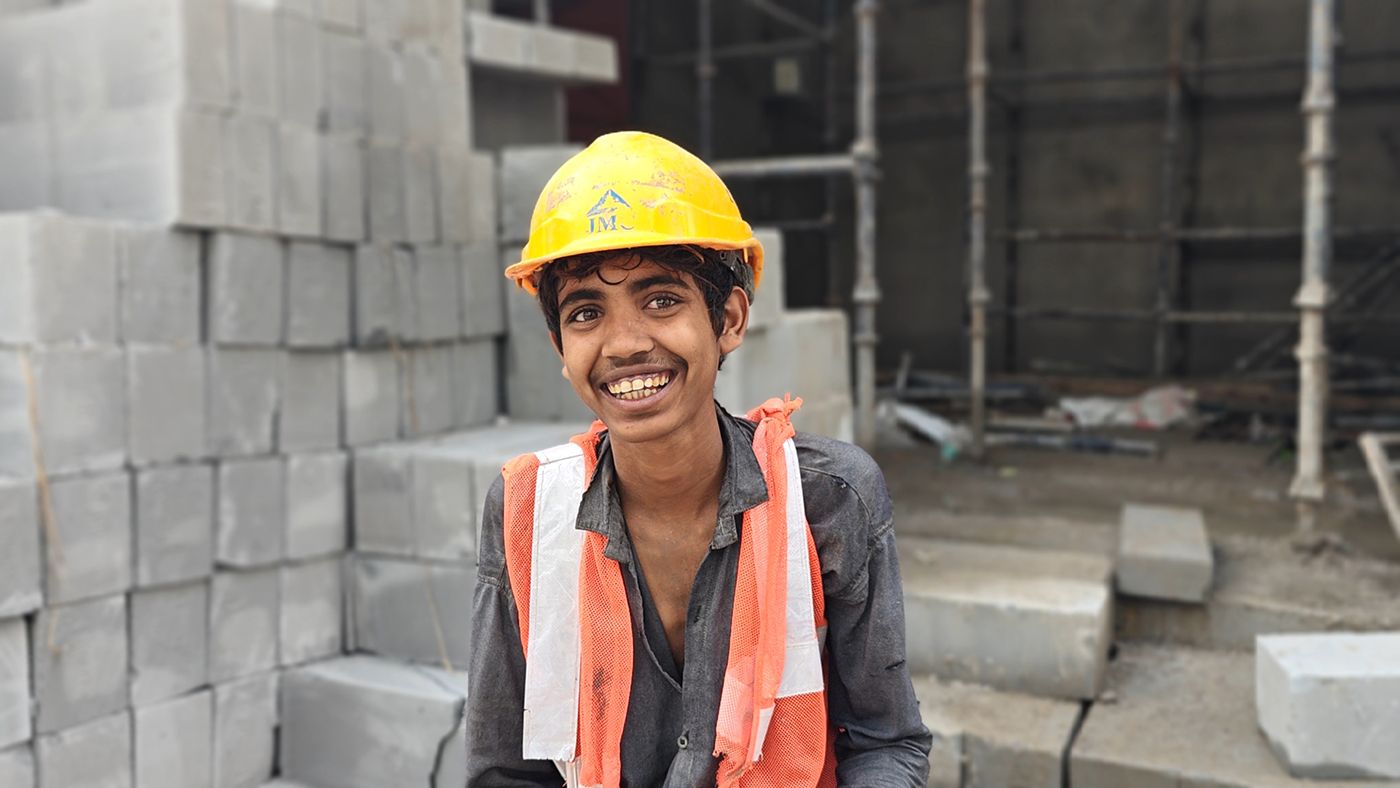
At 17, Mehbub migrated out in search of a livelihood with his inheritance of masonry skills. As someone who has worked in states like Delhi, Punjab, Tamil Nadu, Rajasthan and elsewhere, he finds the awful changes in his migrant workplaces baffling. Media reports and personal accounts record several instances of migrant labourers like him being pushed out on flimsy grounds to Bangladesh.
There is a palpable atmosphere of suspicion and distrust. That’s unsurprising: For more than a year, they have been targeted by law enforcement agencies of both central and state governments. “Our names don’t sound like yours. That’s why we are humiliated,” Mujibar tells us. Over the last one year, Muslim migrant labourers from West Bengal have been picked up, branded as ‘Bangladeshi’, ‘Rohingya’, ‘Ghuspethia’ (infiltrator) or ‘illegal’.
All of them recognise and speak of hatred based on language, religion, caste, or regional identity having intensified in the last decade, leading to the current escalation. The Muslim migrant workforce is the most vulnerable segment, bearing the brunt of hate speech propagated by the fundamentalist outfits and political leaders.
“We are having to choose between life and work,” people in Diarjali Bagicha complained to this reporter. Nejema Bibi, 32, who lives here in a two-room brick house with unplastered walls, fears for her husband Rafiqul Islam working in Kanpur, Uttar Pradesh. “My heart sinks if he doesn’t pick up my calls for even just a few hours,” she says.
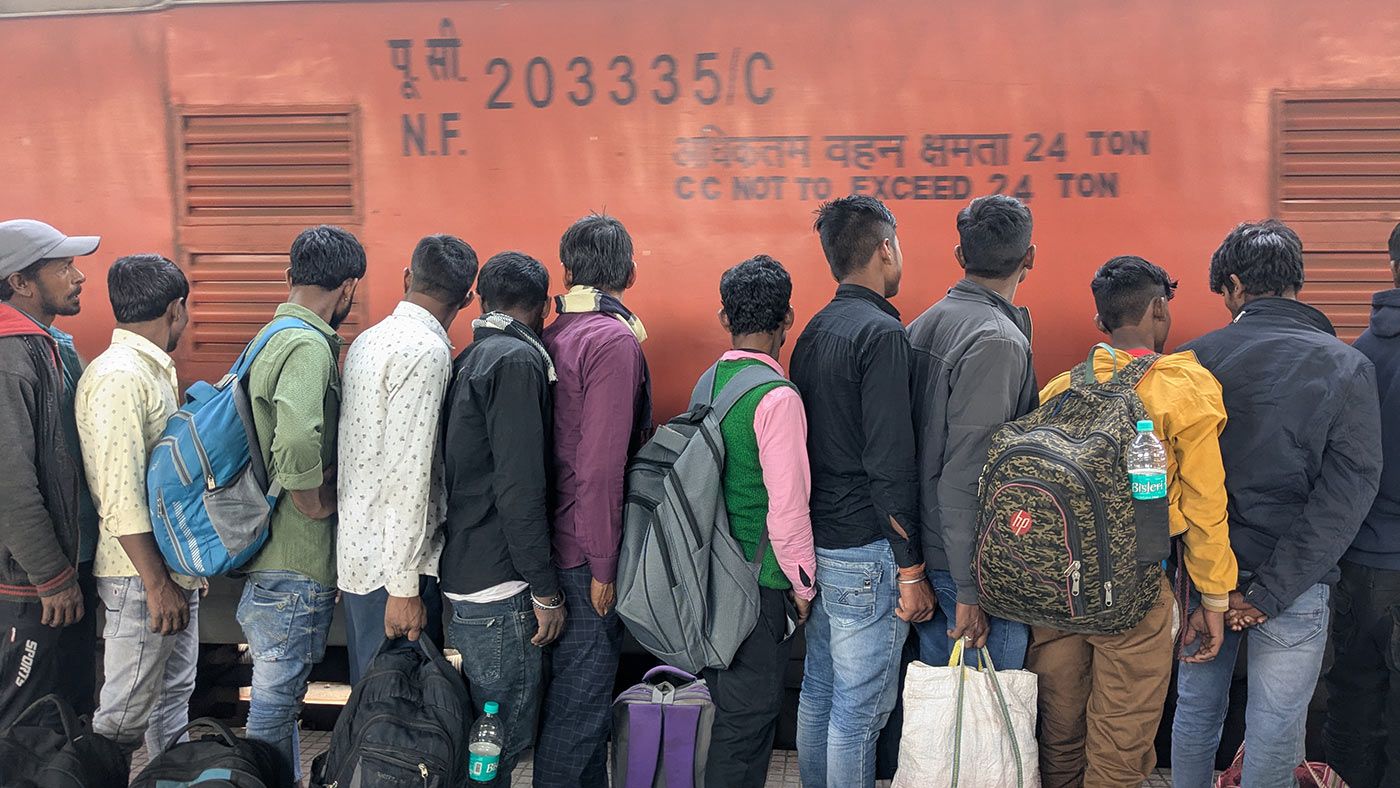
Mehbub returned to Balia Hasennagar this May to celebrate Eid al-Adha (in early June, 2025) with his family. Their two-and-a-half storey house was built brick by brick over years by this family of masons. It has five rooms and some space on the ground floor to set up a shop in future. The part where Mehbub lives with his wife and homemaker Surna Bibi, 30, and their three children, is as yet unplastered on either side. Their eldest son Bakul Sheikh,16, having dropped out of school, is working in a nearby shop. The younger sons – Sagar Sheikh,12, and Rehan Sheikh,7 – are studying in a local school. On the occasion of holy qurbani and Mehbub’s homecoming, his family even made arrangements for the ritual sacrifice.
It didn’t happen. “Repeated calls from the construction site at Thane,” summoned him back.” Mehbub flew back to Maharashtra and resumed his work – leaving family and celebrations behind.
On June 9, while having tea at a local stall, he was picked up by police without explanation and taken to an outpost of theirs near the Shree L R Tiwari College of Engineering in Mira Road, Thane. At night, he was transferred to the Mira Road Police Station where he was asked for documents to prove his citizenship.
“‘You are a Bangladeshi, right?’ The officers asked me in Hindi. I said, ‘I am from West Bengal’ and showed them my Aadhaar and PAN card. They said, ‘these can be bought for five rupees nowadays’,” Mehbub told this reporter.
Somehow, he stealthily phoned his family in Balia Hasennagar who immediately contacted the local gram panchayat at Mahishasthali and sent all the necessary documents to the Mira Road Police Station. “For four long days,” says Mehbub, “I endured immense mental torture. Through daytime I was made to sit outside the station and was put in a police camp during nights.”
The Mira Road police contest Mehbub’s account of wrongdoing on their part. Senior Inspector Meghna Burade stated that they were “not at fault.” And that the detention of Mehbub Sheikh and others was carried out on a police commissioner’s order.
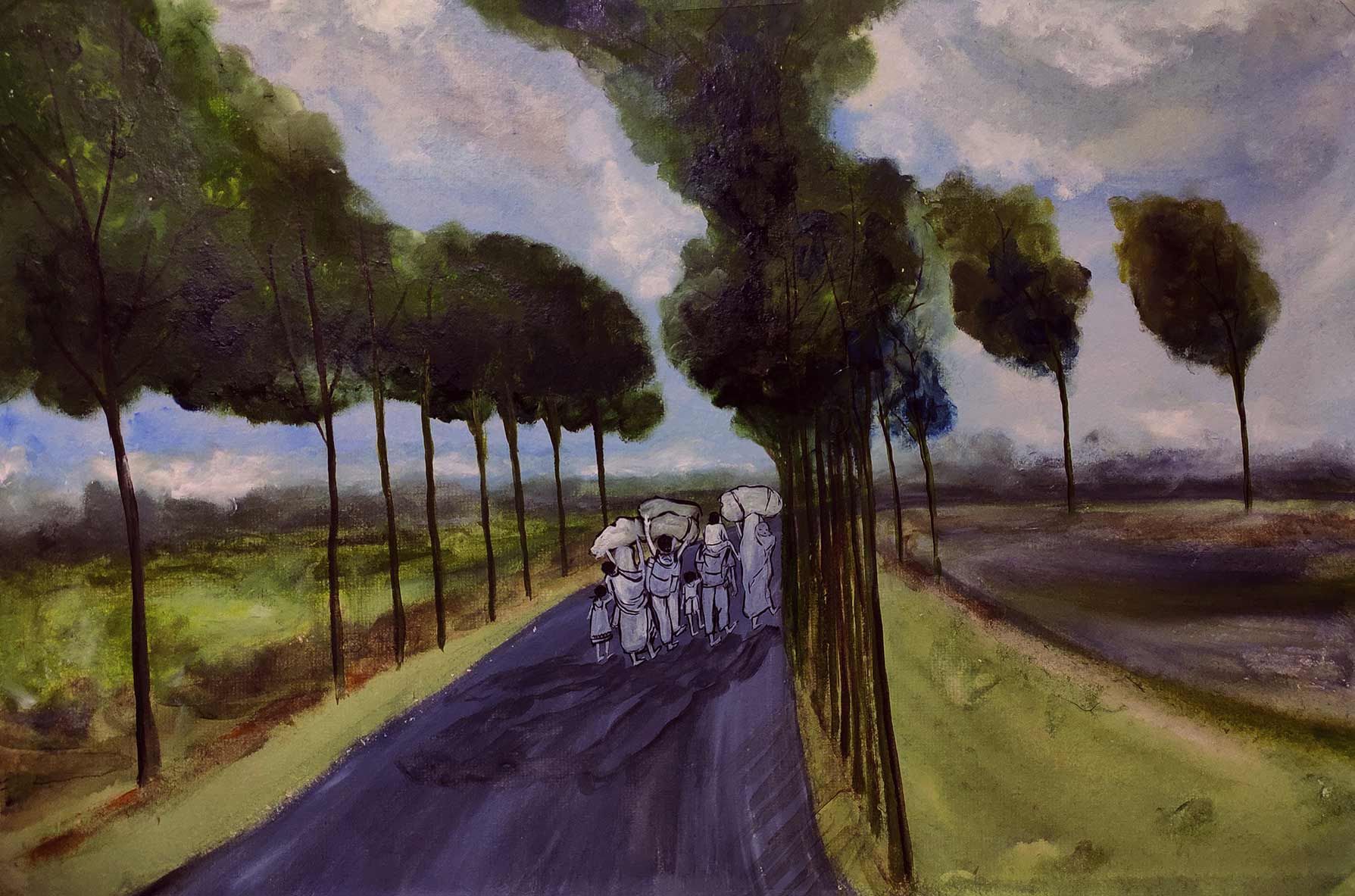
For Mehbub, though, June 13 was to prove dreadful.
“That day we were picked up in a large police van covered with wire-mesh. Many more cars piloted us, like we were some important leaders or ministers,” says Mehbub. “The car finally stopped at some security camp near Panvel.”
On June 14, the same vehicle ferried almost 30 people including Mehbub to the Pune airport. At 2 p.m. they were swiftly put onto a flight. On getting off the plane Mehbub realised it was the Bagdogra airport in West Bengal. “They made a head count and divided us into small groups,” he says. “I had heard criminals face head count. But why count us the same way? Suspicion crept in…” From the airport they were taken to the Siliguri Border Security Force (BSF) camp and from there a new journey began towards an unknown destination.
“The vehicle ran some five-six hours at a stretch. Then they dropped us in the middle of a jungle at a small BSF camp. The handful of officers there got us down and asked, ‘Where are you from?’ I told my address. Immediately, a brutal beating ensued. They even held loaded guns at our throat. Then the BSF officers clicked our photos and asked us to walk off through the forest.
“Where to go? And how? We didn’t have the least idea. We worried that if we got spotted, BSF or Border Guard Bangladesh (BGB) would straightaway shoot us. Fear gripped our hearts. The forest became our hideout for the night,” a traumatised Mehbub recalls.
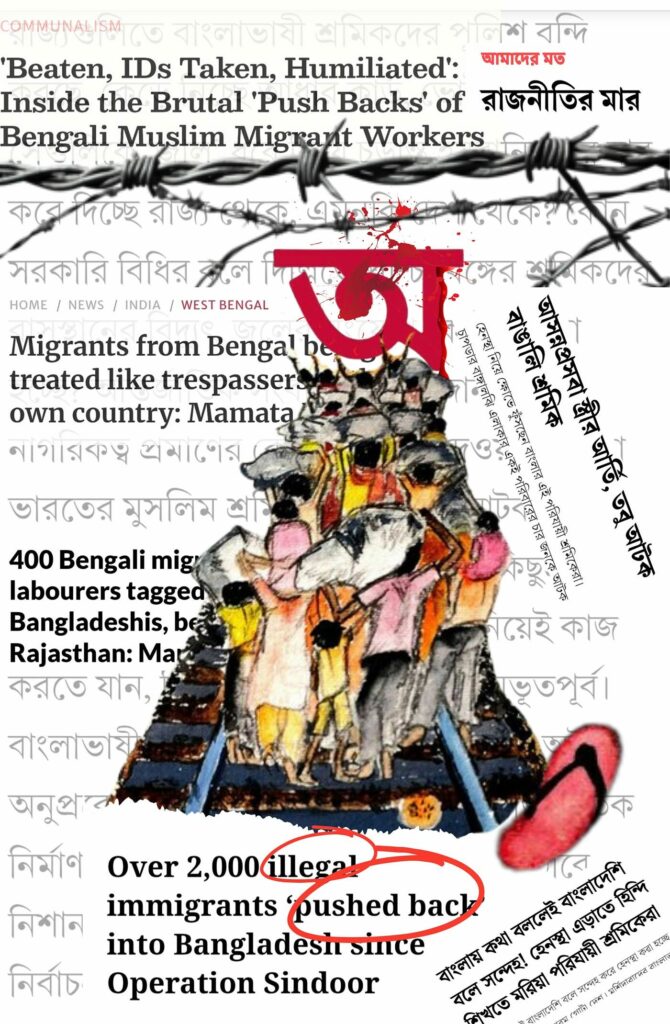
Daybreak brought more stress. The last they’d eaten something was at the Pune airport. And 24 hours had passed since, without a single morsel of food. “It felt like we would collapse and die right there,” says Mehbub. “There were only trees all around us. We were walking in a group.” He pauses some moments, then continues, “It was around 2 p.m. when we walked up to a small settlement in Bangladesh. We told the people that we were Indians. They suggested we take a bath, and gave us rice to eat. [With their help] I contacted my family through Imo app [a mobile app that enables chats and international calls]. I was crying. My voice choked. I could barely speak …”
Mehbub lost all hope of ever returning. Meanwhile, his brother Mujibar ran around many places including Siliguri and Raiganj, going door to door seeking help and support. From the panchayat office to district administration, even to state-level sarkari officials. Finally, Mehbub could make his way back home. “Even after bringing him back, sarkari people [departmental affiliations unknown] visited our house wanting to verify the land deeds.”
The relief was short lived and did not end their anxieties. From Mehbub, we learn the compulsions of migration. “Sitting idle at home means zero income. I can earn 800-1,200 rupees a day there [other states]. I can even work double shifts for additional income…” But fear has shattered his confidence. “I have been working as a mason in cities like Pune, Mumbai and Thane for years. Never thought I would witness such a time.”
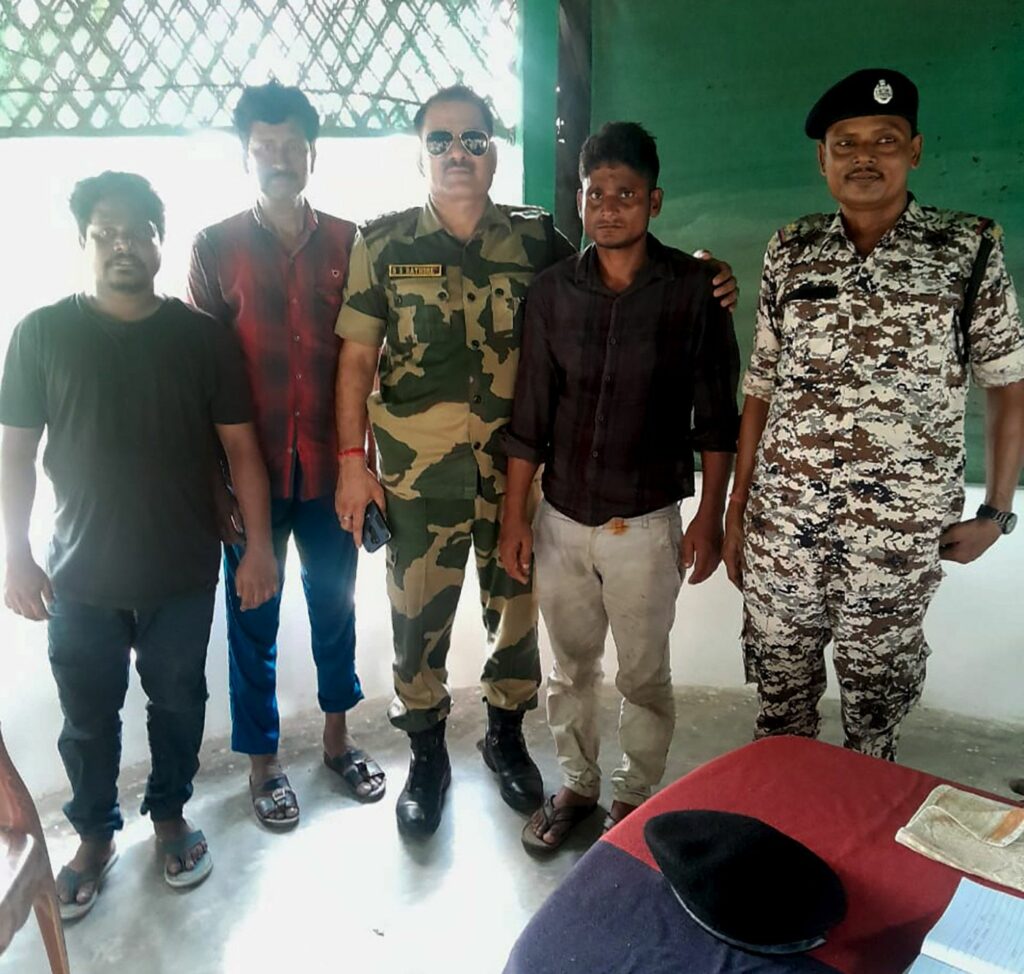
On seeing this reporter, Nazimuddin Mondal could barely control his anger. This resident of Murshidabad’s Hariharpara Block is as resentful of the media as he is of government and administration. Ever since a video of Nazimuddin abandoned by Indian state authorities in Bangladesh went viral, journalists have frequently quizzed this 35-year-old mason from Tartipur village about being pushed across the border. “What have you got to do with that?” he bursts out. “Why can’t you write about the torture [inflicted on us]? Why on earth are we being tagged as Bangladeshis? It’s high time the media speak out.”
The silence of most media on the current situation worries Nazimuddin even more. He sees clearly that in the name of news, some media houses actually promote suspicion about Bangla-speaking Muslim labourers.
The “push-back” experience traumatised Nazimuddin. The thought of leaving his wife and a teen daughter – in Class 10 – at home for work in a distant state now terrifies him. “[I have] worked in the Mira Road Police Station earlier,” he says. There, he did masonry and repair work. “Now police from the same station picked me up from my rented room at the dead of night and called me ‘Bangladeshi’. What kind of system is this?” The Maharashtra police had raised questions regarding his birth certificate. “I was born in Hariharpara 35 years ago. That’s where my baap-dada [father and grandfather] was born. None of my parents got formal education. They didn’t obtain my birth certificate either. Poverty made things difficult. I couldn’t even finish primary schooling,” clarifies Nazimuddin.
His belongings remain in the room at Mira Road, Maharashtra. No one knows how he can collect the wages the contractor still owes him. His mobile phone, confiscated by the police, is yet to be returned. “It’s really hard to get work in a new place. Working somewhere for five long years results in having some contacts and ease. How can that be taken away like this?” he asks angrily.
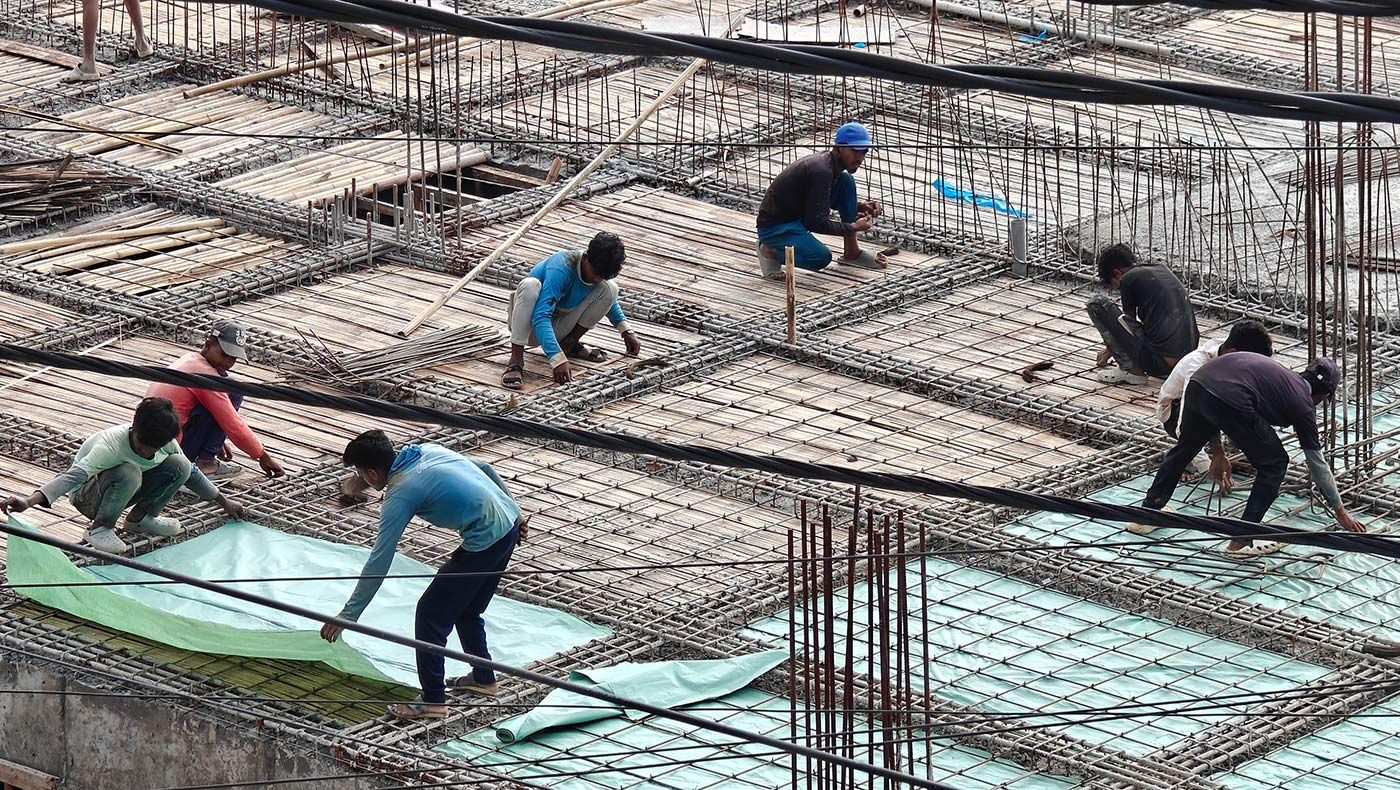
Two brothers of Nazimuddin work as labourers in Kerala and Tamil Nadu. Workers here generally say the southern-Indian states are a lot safer for Bengali migrant workers. Many labourers, forced to return from Maharashtra, Gujarat or Delhi, are now trying to find wage work in the south.
Nazimuddin says that Minarul Sheikh from Kazisaha, Beldanga I, Murshidabad, and Mostafa Kamal Sheikh from Monteshwar in Barddhaman district shared his ordeal. “On June 13 [2025] we were deported to Bangladesh via Siliguri and got rescued on the 15th.”
“After this…it won’t be easy to move out again. But remaining in our village means a meagre 500 rupees per day [on days that work is available] and expenditure of 250. [In the other states], the daily expense might be 300 rupees, but the wage is 800 a day. We can send 500 rupees to the family. So, leaving [migration] is the only way out,” explains Nazimuddin. “We must return to work [outside] at our own risk.”
There is a dearth of steady work, even that at just survival wage level, across Murshidabad district. The 100 days of employment guaranteed under MGNREGA is still stuck in limbo. Migration seems the only option for working-class people. Murshidabad, one of India’s most underdeveloped districts, is mostly rural. Roughly 80 per cent of its people live in 2,166 villages. At 66 per cent, its literacy rate is way below the state average of 76 per cent (Census 2011). Two-thirds of the population are Muslims. It is obviously they – marginalised in class, region, and religious terms – who account for most of the forced labour migration.
The situation in in Diarjali Bagicha, a hamlet under Habaspur panchayat, captures that reality. In over 60 per cent of households, at least one member is a migrant worker. Residents Latibul Haque, Ainal Haque and Rajjak Hossein Sheikh, who once worked as porters, left their jobs and went to Odisha to earn a better wage as street vendors. They explained to us on phone that the mahajans (moneylenders) lend them various household and stationery items. They load these items on their cycles or motorbikes and sell them across the villages. On average, it earns them Rs. 700-800 a day after deducting the contractor’s share. They live together in groups in small, rented rooms.
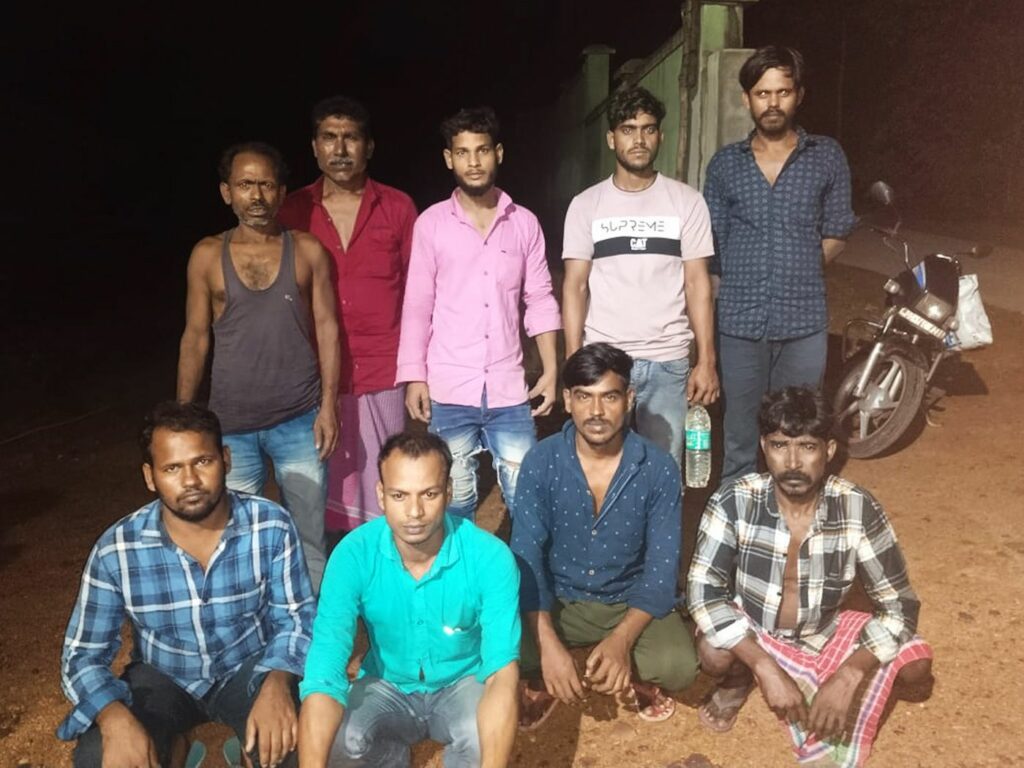
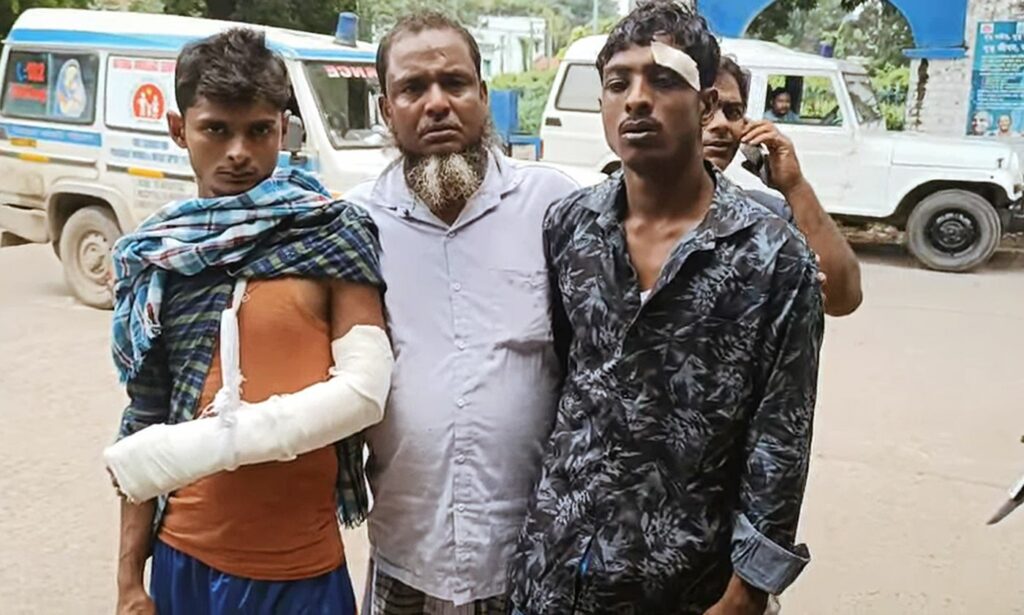
Family members of these migrants told us in Diarjali Bagicha that since September 2024 many travelling Bengali Muslim salesmen from Murshidabad have been attacked and detained in Odisha. That, on the pretext of the violence against Hindus in Bangladesh and in Murshidabad’s Samserganj. But what is panicking the migrants is the increasing involvement of Odisha police in such incidents.
When the police there questioned the validity of Latibul Haque’s documents, his family members in Diarjali Bagicha sought help from the Bhagwangola Police Station. Latibul and others were set free only after the documents were exchanged between the police stations, but are still stuck in Odisha. Latibul who was confined in one of the camps in Jharsuguda for four days tells us on phone: “The police said they are still verifying our documents related to Indian citizenship and instructed us not to return to our home state for a month.”
The families of labourers toiling in distant states like Maharashtra, Odisha, Uttar Pradesh and Delhi are now rattled. In Diarjali Bagicha, we met Ainal Haque’s mother Madina Bibi, 60, frail, but with keen eyesight. Her deft fingers fly while weaving kanthas (hand-embroidered quilts) of intricate design as she speaks to us. People get her to weave and stitch kanthas, paying her just 20 to 30 rupees a piece. However meagre, that amount helps in sustaining the family. With her son and grandsons all toiling in Odisha, Madina can’t hold back her tears as she talks about the ordeal and harassment they’ve been through.
“When they said my son and pota [grandson] are all Bangladeshis, how could I keep calm?” Madina asks. “My second son Ainal Haque and two grandsons from my eldest son – Amir and Rajjak Hossein – live in Odisha. The police detained them for four days. I didn’t get any sleep those days.”
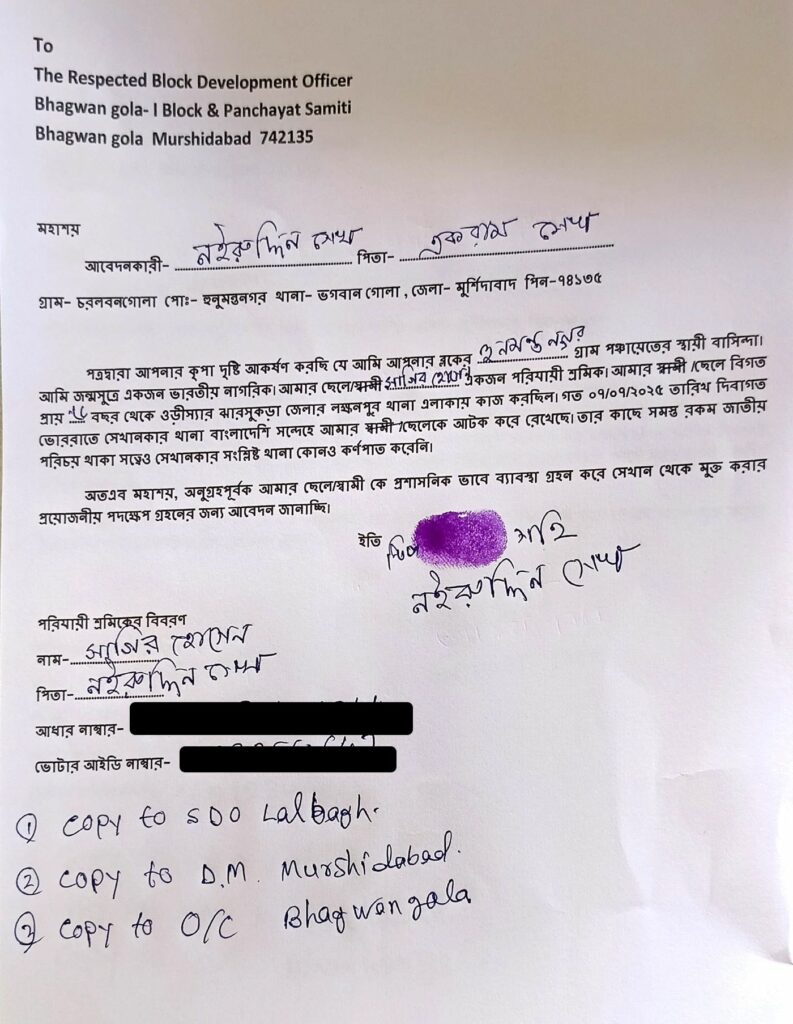
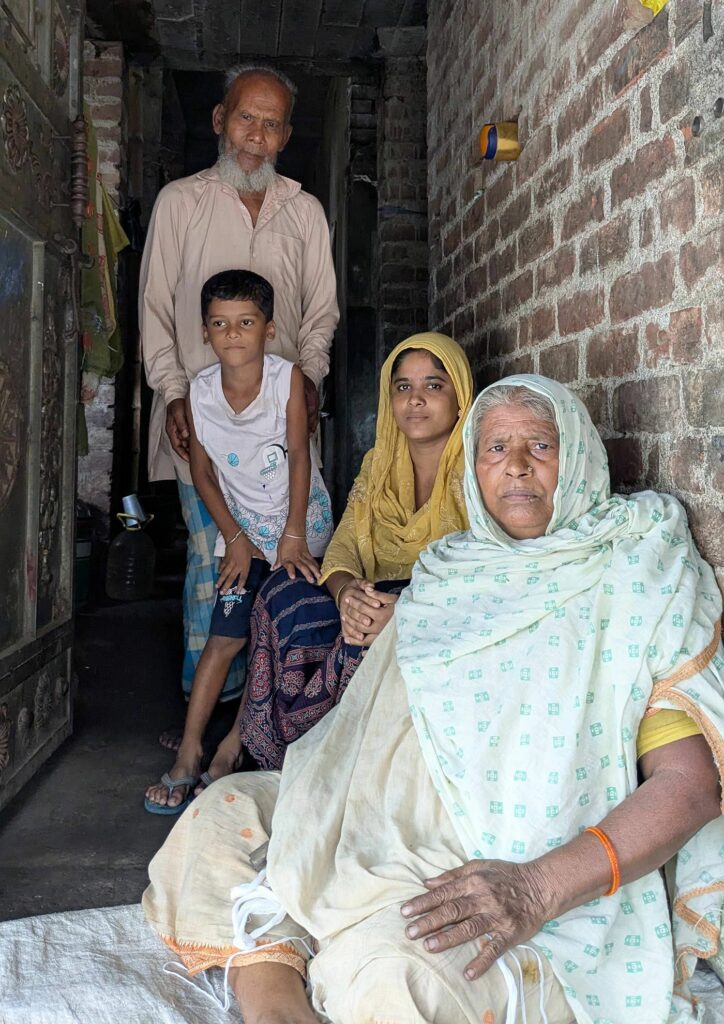
The phone call Shiuli Bibi – Ainal Haque’s wife – received, terrified the whole family. Documents such as Aadhaar and ‘admit card’ of the secondary board examination [class-10] had to be found and submitted. Ainal Haque’s father Moinul Sheikh, in his late 60s, had to take all these papers to the police station. “There, they even snapped at me for being late. But what could I do? I was totally numb and dumbfounded, thinking of my son’s situation…” recalls the old gentleman.
A distraught Madina Bibi tells us: “After his secondary exam, my son [Ainal] said, ‘I must work to fill our bellies.’ He ran chores for the malik at a brick kiln and would get 800 rupees a month. Later, he carried loads in a godown. Even that would only get him 10,000 rupees a month at best. We were crushed by debt. That’s the reason he went outside…It’s been two years now. We are merely trying to survive,” she says. “[My] father-in-law, even his father, are all from India… Yet, the fear refuses to leave me.”
On July 7, 2015, Amirul Sheikh, in his mid-30s, from Charlabangola village in Bhagawangola I, were also detained in Lakhanpur Police Station of Jharsuguda in Odisha with 30 other migrant workers from West Bengal. On getting the news, family members ran frantically from Bhagawangola Police Station to the local Dakshin Hanumanta Nagar gram panchayat office. Finally, the detained workers were released four days later from Lakhanpur Police Station, Odisha. “I have worked 10 years in Odisha as a hawker. But everything has changed. People have been beaten up before, but this time we are straightway being labelled as Bangladeshis,” says a shaken Amirul on phone. Still, he has no choice but to remain in Odisha to support his family in Charlabangola.
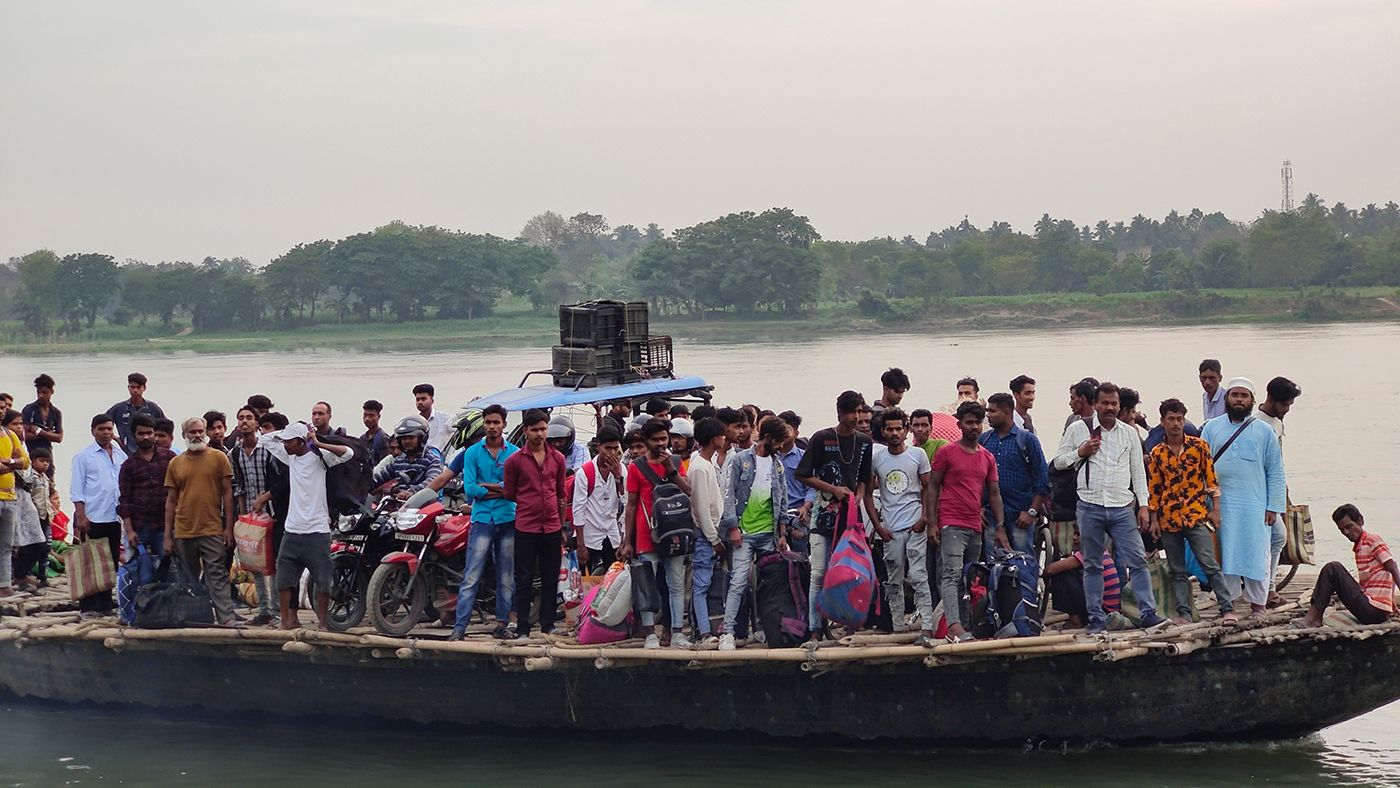
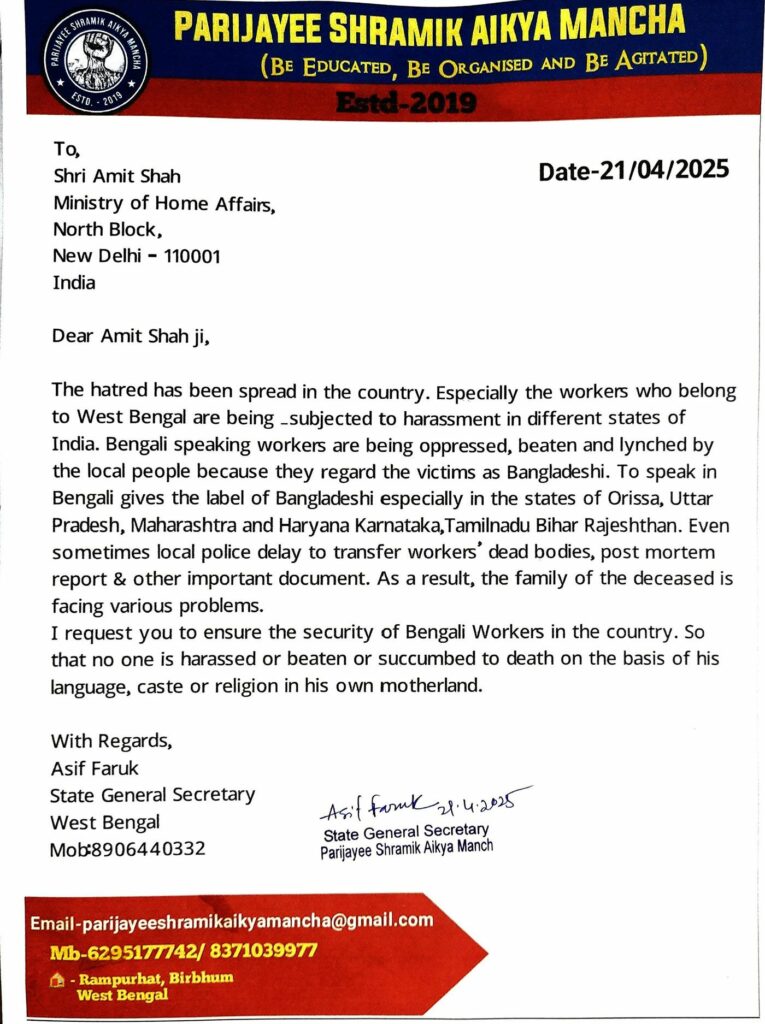
“In this year alone, more than 5,000 migrant labourers from Murshidabad have been harassed by police in Odisha,” says Asif Faruk. He is secretary of Parijayee Shramik Aikya Mancha (PSAM) – an organisation fighting for the rights of migrant workers from West Bengal. “In different regions of Odisha including Jharsuguda and Paradip, many Murshidabad labourers have been detained in police camps for four to five days and are being interrogated to prove their citizenship status.”
The political storm between Centre and State governments, highlighted by the speeches of leaders of both, isn’t helping. A press release by the Central Government’s Ministry of Labour months ago lauded the projects and schemes undertaken by them for the welfare of the migrant labourers in India. But there have been no official statements, no condemnation of the violence against them.
The Border Security Force has not issued any official statement on the charges of unlawful conduct during the ongoing crackdown on people alleged to be unauthorised Bangladeshi infiltrators in several Indian states. Villagers in Bhagawangola say: “The lower rank [BSF] jawans tell us ‘we are merely doing as instructed by the oporwalas [higher authority]’.”
The state government has promised to defend the rights of citizens and deal with the issue of people being pushed across the border. Asif Faruk of the PSAM believes the “West Bengal government is trying to rescue and bring the victims back.” And “from April, we started a helpline for the workers.”
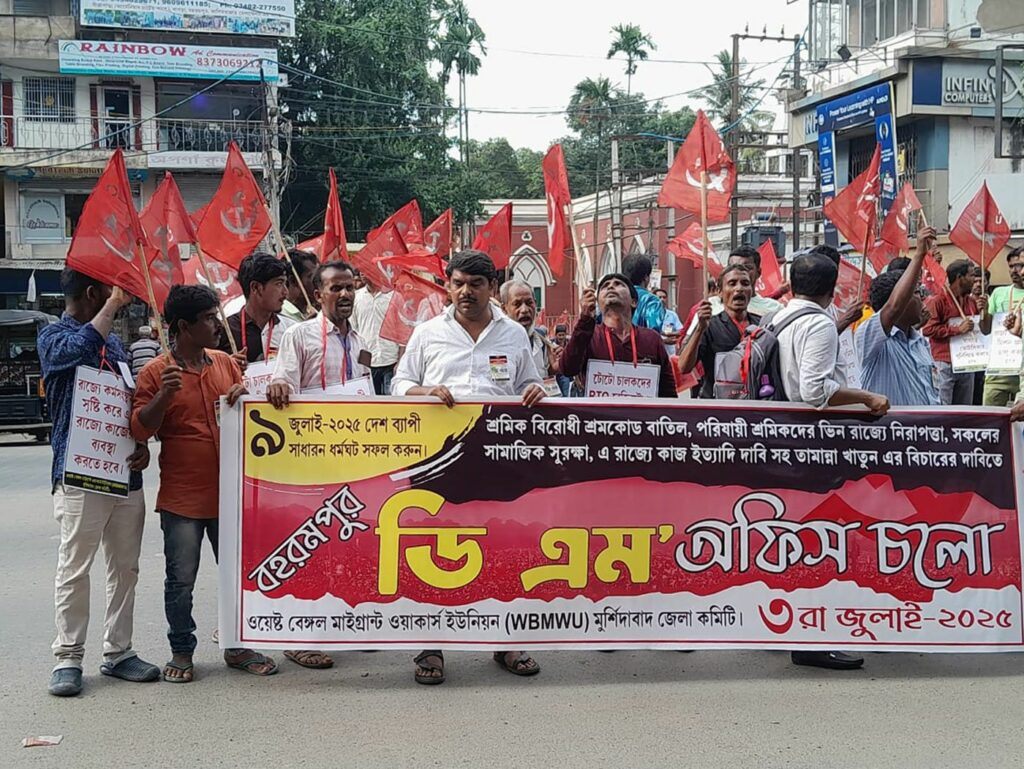
The organisation has also filed a Public Interest Litigation in the Calcutta High Court seeking immediate action against harassment of Bengali migrant workers. And the West Bengal Migrant Workers’ Union organised a procession in Murshidabad district headquarters, Baharampur, demanding security for the labourers in other states. “MPs [Members of Parliament] from the concerned districts,” says Kamal Hossein, WBMWU district secretary, “must visit and intervene in the states where the migrant labourers are under attack.”
Meanwhile, the Centre-State squabble sidelines the question: had there been decent employment in Murshidabad, and serious intervention in the agriculture sector – would people have had to migrate in the first place?
Back in Balia Hasennagar, a panic-stricken Mehbub Sheikh, wonders how he will sustain his family now. “The [construction] company is calling me [from Mumbai] to resume work, but they are not willing to take any responsibility…”
Disappointment grips the master mason: “Where shall I find work now? I don’t have any answer to this…”