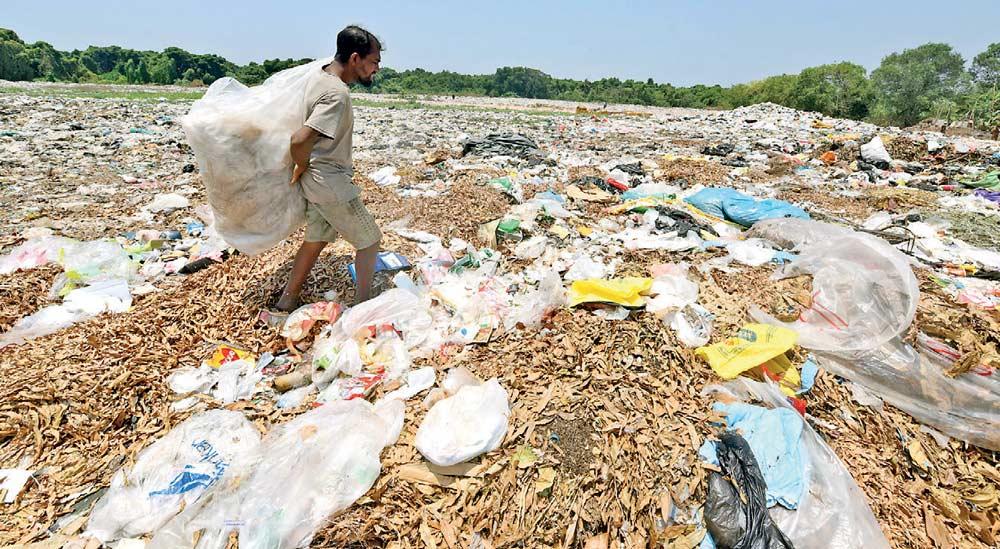
Colombo is a high risk MOH area for dengue due to the lack of a proper solid waste management system. Photo: Kithsiri de Mel
Three-year-old Nethmi Sehansa* from Dematagoda, a suburb of Colombo, succumbed to dengue in May 2023. Her parents and elder siblings remain devastated by her untimely demise. Even though they had big plans for their little daughter, the dengue endemic shattered their dreams.
The Western Province of Sri Lanka had been identified as a high-risk Medical Officer of Health (MOH) area since 2010 with a high density of dengue infected patients. As of March 1, 2025, as many as 4119 cases have been reported from the Western Province, which is the highest recorded number of patients among nine other provinces in the country. The fact that many dengue cases have been reported during a usually low peak season has raised concerns among health officials.
- As of March 1, 2025, as many as 4119 cases had been reported from the Western Province
- Western Province of Sri Lanka had been identified as a high-risk Medical Officer of Health (MOH) area since 2010
- Increasing evidence also suggests that peak dengue seasons may stretch due to unseasonal rains and warmer temperatures
Surge in Dengue Cases
Dengue is a viral infection transmitted following the bite of infected Aedes species of mosquitoes. According to the National Dengue Control Unit, dengue has a seasonal transmission with two peaks occurring with monsoon rains between June-July and October-December respectively.
Usual symptoms of dengue fever include high fever, pain behind eyes, severe headache, nausea, vomiting etc. Little Sehansa had had high fever and her parents took her to the hospital on the second day. The doctor had asserted that her platelet count was low and advised her parents to admit her to the hospital. Unfortunately, the doctors couldn’t save her life.
Since the beginning of 2023, the National Dengue Control Unit (NDCU) in Sri Lanka has reported 36,628 dengue cases. These figures are around three times higher than the cases reported during the same period in 2021 and 2022.
A 2024 research conducted to investigate reasons behind the outbreak of dengue in 2023 explains the fluctuating incidence of dengue fever that occurred in Sri Lanka since 1989. The largest outbreak due to dengue was reported in 2017 with 186,101 cases, associated with the cosmopolitan strain of the dengue virus (DENV) serotype 2. DENV-2 continued to be the predominant circulating serotype until October 2019. In Sri Lanka, the number of cases began to gradually increase from June 2022 onwards with a total number of 89,799 cases reported in 2023, with 18,650 from Colombo equivalent to one fifth of the caseload. Usually, Sri Lanka has two seasons of intensified dengue activity coinciding with the monsoon seasons. One season typically spans November to early February and the second season runs from May to July.
According to Dr. Preshila Samaraweera, Consultant Community Physician at the NDCU, the endemicity of the dengue virus has increased since 2000. “Therefore the number of cases cannot be brought down to zero even during a drought period. Due to the tropical climate the incidence of dengue is high and there is high transmissibility,” said Dr. Samaraweera.
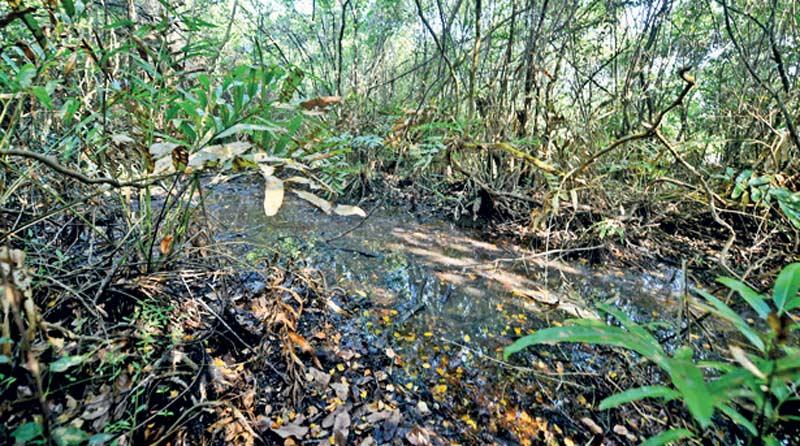
(Left) More rain also creates more stagnant water bodies and receptacles that mosquitoes may breed in.
When asked why there had been a sudden spike of dengue cases during the pre-monsoon period in 2025, Dr. Samaraweera said it cannot be described as a surge in cases because a similar trend had been observed during the past few years during the same period.
Dengue Vector and Climate Change
But increasing evidence also suggests that peak dengue seasons may stretch due to unseasonal rains and warmer temperatures.
More rain also creates more stagnant water bodies and receptacles that mosquitoes may breed in. Three of the four stages of the mosquito life cycle take place in water – eggs are laid in pools of stagnant water, which hatch into larvae and pupae which develop within them.
A 2020 research on climate change induced vulnerability and adaptation for dengue incidence in Colombo and Kandy explores how numerous models have predicted that climate change would increase the geographic distribution and potential risk of dengue incidence.
Relative humidity is a vital factor, which directly enhances the feeding frequency, inter sexual attractions and oviposition rates of Aedes mosquitoes. The adult longevity and survival success after being infected by DENV have also been found to increase under high humid conditions leading to a wide geographical dispersion of dengue.
Colombo – A High Risk MOH Area
As for the Colombo district, a combination of factors make it a highly vulnerable area for dengue fever. A study on the impact of environmental factors on the spread of dengue fever in Sri Lanka reveals that dengue fever incidence was caused by following factors: precipitation, wind, urbanization, land management, socio-demographic characteristics.
Consequently, western province possessed higher dengue cases (41% in 2017) than the eastern parts of the country (7% during the 2017 outbreak).
A 2024 research on dengue dynamics and environmental impact indicates that in Sri Lanka, the tropical climate, marked by seasonal weather primarily influenced by monsoons, fosters optimal conditions for the virus to spread efficiently. This heightened transmission results in increased per-capita vector density. Dr. Samaraweera further said that every year 45-50% of cases are always being reported from the Western Province of Sri Lanka. “Out of 57 MOH areas in the Western Province, a high number of cases are often being reported in areas such as Nugegoda. The reasons are manifold including high population density, flash flood situations after a heavy rain that would usually increase the number of stagnant water bodies and most importantly the lack of a proper solid waste management system,” said Dr. Samaraweera.
She said that potential breeding sites for the dengue vector include discarded items such as yoghurt cups, coconut shells etc., mostly found in the backyards of houses and commercial buildings.
Speaking about changes in weather patterns over the years, Dr. Lareef Zubair, Principal Scientist at the Federation of Environment, Climate and Technology, observe some ‘unusual rain events’ in dry seasons thereby delaying wet seasons at times. It appears that the frequency of such extremes has changed.
The endemicity of the dengue virus has increased since 2000. Therefore the number of cases cannot be brought down to zero even during a drought period. Due to the tropical climate the incidence of dengue is high and there is high transmissibility. —Dr. Preshila Samaraweera, Consultant Community Physician at the NDCU
“Certainly, the temperature highs, the air quality highs and evaporation has been exacerbated due to the already observed climate change. The argument that the warmer atmosphere has the capacity to hold much greater amounts of water vapour is sound and when large clouds burst it can lead to extreme rainfall,” said Dr. Zubair who had been observing weather patterns over the past 15 years.
He further said that people are experiencing a hydrological change. “Both maximum and minimum temperature is higher than in the last century. As a result, evaporation is much higher. Sri Lanka experiences lower air quality, which influences rain formation and the acidification of rain,” he stated.
Dengue Infection and Non-Economic Losses
So far, the dengue infection has claimed four lives during the first two months of 2025. In 2024, dengue claimed the lives of 24 individuals. Dr. Samaraweera further said that by reducing the number of cases, it would also save the expenses borne in treating patients with dengue. “When a patient is diagnosed with dengue, his or her economic productivity drops for three weeks. On the other hand the intensity of the infection varies from person to person. Therefore as the apex body to control dengue infections, we carry out targeted interventions such as fogging activities, source reductions and so on,” she added.
A 2014 study done on the economic cost of non-fatal paediatric dengue cases indicate that the average cost to hospital per case of dengue haemorrhagic fever (DHF) and dengue fever (DF) was SLR 24,856 (US$ 191) and SLR 10,348 (US$ 80) respectively.
Sehansa’s case is a classic example which indicates that dengue infection affects individuals irrespective of age. Other non-economic losses associated with dengue fever includes potential long-term health complications and psychological impact on caregivers.
However, the NDCU has been taking various measures to bring down the frequency of deaths by dengue. Dr. Samaraweera said that compared to 72 deaths in 2023 the number of deaths were brought down to 24 by 2024,” she added.
According to WHO, improper water storage practices and high population density are risk factors for dengue. But even though the authorities are taking steps to bring down the cases of dengue, V. Chithra, Sehansa’s mother, claims that even though fogging activities are being conducted by authorities on a regular basis, none of those interventions could save her daughter. “Fogging alone isn’t enough. If you check around these flats, the drainage systems are blocked and there are many stagnant water bodies. People aren’t interested in cleaning their sewage lines or cleaning the surroundings because poverty is a bigger burden they have to face on a daily basis,” she added.
In her comments, Dr. Anoja Dheerasinghe, Consultant Community Physician at NDCU said that there’s no stigma attached to the dengue infection unlike for diseases such as tuberculosis and HIV. When asked whether the urban poor is more vulnerable to the dengue infection Dr. Dheerasinghe said that people in highly populated areas are more vulnerable. “The population density in underserved settlements is high and the mosquitos’ flight range is between 100-200 metres. Therefore chances of an outbreak is highly likely in these areas and people therefore have to take all precautions,” she underscored.
The temperature highs, the air quality highs and evaporation has been exacerbated due to the already observed climate change. The argument that the warmer atmosphere has the capacity to hold much greater amounts of water vapour is sound and when large clouds burst it can lead to extreme rainfall. —Dr. Lareef Zubair, Principal Scientist at the Federation of Environment, Climate and Technology
According to the newly drafted National Strategic Plan for Prevention and Control of Dengue – 2024-2030, Sri Lanka has made a commitment to reduce dengue deaths to zero by 2030. The authorities are determined to bring down the average infection rate by 40%. But whether increasing risk factors such as climate change and the adaptability of the dengue vector would pose significant challenges in reaching this target, remains a doubt.
Seventeen million people are eligible to vote on September 21 to elect the next president of Sri Lanka. Exactly one tenth of this population –1.7 million voters– are migrant workers, living outside their home country. And unless they travel home, they cannot vote.
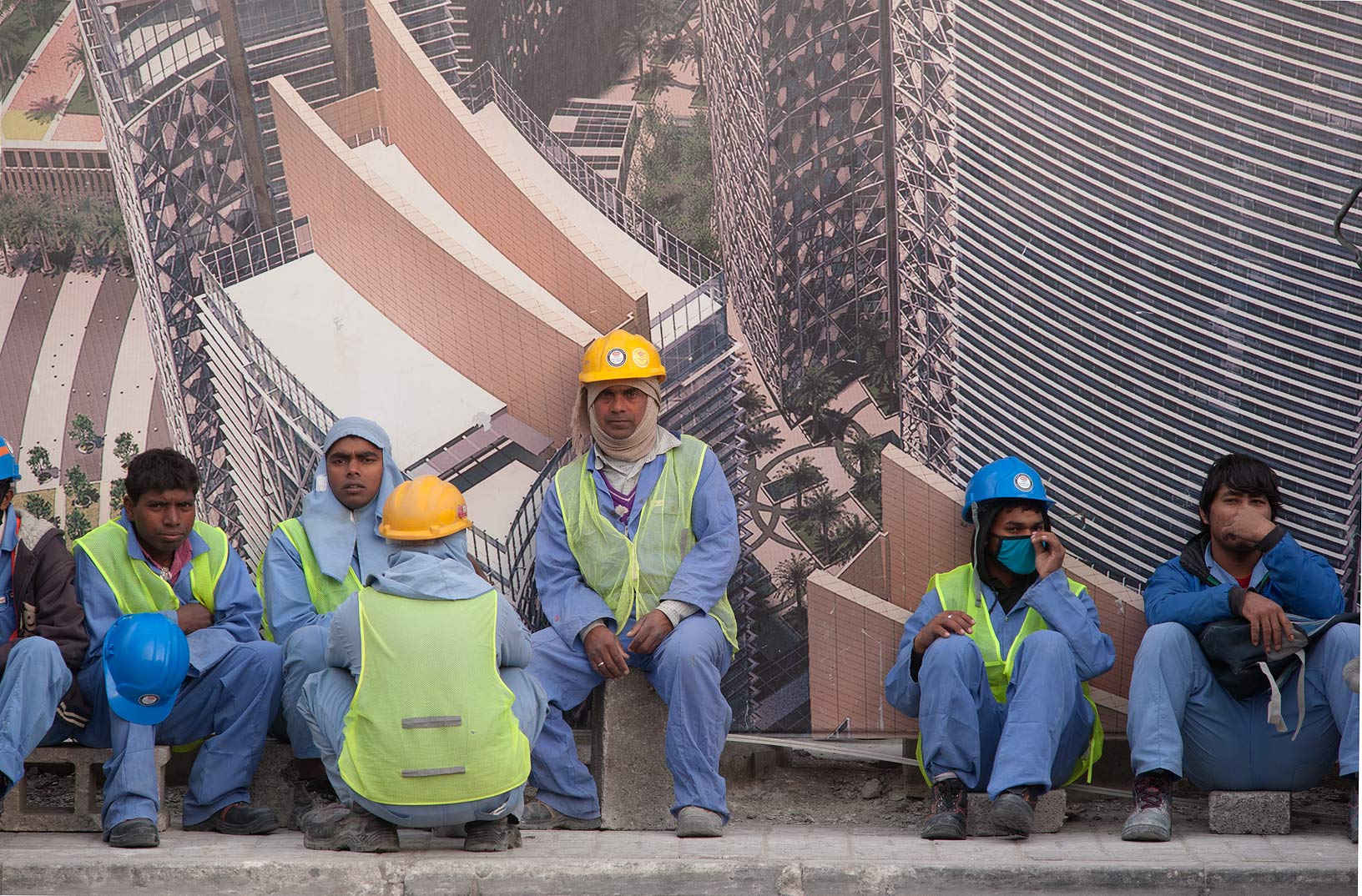
Migrant workers from Asia in Doha, Qatar. Photo: Alex Sergeev/Wikimedia Commons

Despite the island’s remittance economy, there is still no way for Sri Lanka’s migrant worker community to vote from their current location.
“In my 20 years as a migrant worker, I have never voted during a single election. During COVID-19, when migrant workers were trying to return home amidst border closures, some politicians called us ‘COVID bombs’, but when the economy crashed in 2022, they wanted our dollars to save the country,” says Nilu Athukorala, 40, a domestic worker based in Kuwait.
At the age of 18, Athukorala left her village near Kurunegala, a district in North Western Sri Lanka. She obtained her national identity card with the intention of going abroad.
“I have a son in Sri Lanka. I have sent every cent I earned back home. It was only last year that I opened a bank account for myself. I have sent my earnings home for 20 years, but have never depended on any government welfare scheme,” Athukorala told the Center for Investigative Reporting (CIR).
Remittances into Sri Lanka reached over 1,500 million dollars (approximately 452 billion LKR) in the first quarter of 2024, according to the Central Bank of Sri Lanka (CBSL). Yet, over a million Sri Lankans working abroad will not be voting this year too. Nearly a million of them are working in the Middle East on short-term contracts, and plan to return home someday. This is in contrast to those based in the Global North, where obtaining permanent residency remains an aspiration.
Senarath Yapa, Additional General Manager (International Affairs), Sri Lanka Bureau of Foreign Employment (SLBFE), said that ahead of the September 21 Presidential Election, the bureau has received three separate requests from Qatar-based workers to facilitate them to vote.
“These requests were duly forwarded to the Election Commission through the Ministry of Labour and Foreign Employment,” Yapa told CIR.
“We have received many such requests before. This time, requests came from three worker groups,” said Saman Sri Rathnayake, Commissioner General of Elections.
There had been no satisfactory response from the authorities to the demand for facilitating voting from abroad.
Migrant workers, especially those working in the Middle East as low-skilled workers face serious problems, but their plight is largely seen as a distant struggle. However, when the economy crashed, it was the migrant workers the government called upon to help revive the economy.
Votes with no Value
Athukorala argues that voting by migrant workers is not facilitated because politicians fear their power due to the large number of workers.
They cannot predict how we would vote and are possibly worried about having to cater to our demands. We get little or no help from the Sri Lankan authorities when we encounter problems. My calls to the embassies in 20 years have always gone unanswered. –Nilu Athukorala, a domestic worker based in Kuwait.
The Centre for Working Women (CFWW) has been advocating for migrant workers’ voting rights since 1996. CFWW agrees that enabling workers to vote would exert pressure on the authorities to focus on migrant workers’ rights.
“Article 14 of the United Nations Convention on the Rights of All Migrant Workers and Members of their Families specifically refers to their voting rights. Sri Lanka ratified the Convention in 1996 but has not introduced an enabling law. Successive governments have shown no interest in enacting domestic laws to address these issues,” says Amali Kalupahana, President of the CFWW. “Migrant workers face multiple problems in destination countries. They are abused and sometimes abandoned without help or resources. If they are facilitated to vote, them some of these issues will come to the fore and might get addressed through government-to-government labour agreements.”
D.M.V. Dissanayake, an independent election analyst who has observed elections for two decades, insists the non-facilitation of migrant workers to vote amounts to a violation of their fundamental rights.
“Migrant workers in the Middle East are among the most marginalised people yet they line Sri Lanka’s economy,” Dissanayake told.
Meanwhile, the three frontrunning presidential hopefuls this year have included migrant workers’ concerns in their manifestos. Samagi Jana Balawegeya (SJB) candidate Sajith Premadasa has promised to amend the election law to allow workers to vote from abroad while the National People’s Power (NPP) candidate Anura Kumara Dissanayake has pledged to safeguard the voting rights of international labour migrants. Incumbent President Ranil Wickremesinghe’s manifesto promises to amend the Foreign Employment Bureau Act to provide workers with ‘better facilities and working conditions’.
According to Priyantha Weerasekara, AGM (Local Affairs) and Information Officer, SLBFE, the estimated number of migrant workers in the Middle East is around 878,510. However, the total number of Sri Lankan migrant workers around the world is much higher as the bureau has statistics on only those who have registered with the SLBFE.
“We base this number on the data we get from embassies or interior ministries in destination countries – that’s mainly the Middle East and low-skilled workers. We don’t have the numbers from countries like Canada and the United States,” he told CIR, explaining existing data gaps.
Weerasekara added that an estimated 300,000 migrant workers were based in the United Arab Emirates (UAE) – data also reflected in CBSL’s quarterly bulletin on labour migration. The bulletin states that even out of the 75,175 labour migrants in the first quarter of 2024, nearly 81% headed to a Middle Eastern destination.
| Country | Estimated number of Sri Lankan Migrant Workers |
| United Arab Emirates (UAE) | 300,000 |
| Saudi Arabia | 180,000 |
| Qatar | 113,000 |
Source: Sri Lanka Bureau of Foreign Employment (SLBFE)
Out-of-Country Voting
Chandana Sanjeewa Perera, 50, who currently works in Germany, terms the lack of facilitation to vote a “human rights violation”.
“We understand the lack of funds to facilitate migrant workers to vote this time. When Gotabaya Rajapaksa ran for presidency in 2019, many workers returned to Sri Lanka to vote, but this time, workers may not do that. Although we work in countries like Australia, the US and Canada, many cannot bear the travel expenses. We prefer an online voting or similar process. Post election, we plan to exert some pressure on the new administration to address this issue,” said Perera, who had worked in the UK, Italy, and Germany.
In the 2019 Presidential Election, out of 15,992,096 registered voters, only 13,387,951 voters had cast their vote, raising questions as to why over 2.6 million eligible voters did not vote.
Manjula Gajanayake, Executive Director, Institute for Democratic Reforms and Electoral Studies (IRES) told the CIR that out-of-country voting, if facilitated, would allow registered voters living abroad including students and workers.
“Everyone has the right to vote even though some may be living abroad. The problem is facilitation. There are many advance voting systems like voting through embassies but unfortunately, Sri Lanka only uses postal voting as an advance voting mechanism. This results in the exclusion of migrant our worker population,” he said.
READ: What Sri Lanka’s Unpredictable Elections Mean For the World
Kalupahana adds that since 2008, workers have advocated for the national policy and action plan on migration for employment, finally released in 2023. The policy recognises: “The right to vote as a fundamental right of all citizens. Ensuring voting rights for migrant workers will ensure migrant workers’ voices are reflected in national politics, are recognised by the political system and their contribution to national and socio-economic development.”
To move forward, a greater contribution from migrant workers is necessary, Kalupahana added.
“We need to help organise migrant workers as a pressure group,” she said.
Concerns
Kalupahana says that the authorities should ensure any voting process does not result in vote buying and exploitation.
People’s Action for Free and Fair Elections (PAFFREL) Executive Director Rohana Hettiarachchi has similar concerns and speaks of two main problems in an out-of-country voting system.
“Our diplomatic missions are politicised and include political appointees. This means, workers may be influenced when voting, especially when they are unskilled and voiceless. It is possible to pressurise workers to vote in a certain way and use forms of threat or financial bribes. Workers may be living or working far away from the missions abroad. Can domestic workers spend and travel to embassies for voting? Will they secure leave to facilitate voting?” asks Hettiarachchi.
Hettiarachchi adds that securing the right to vote does not only involve the introduction of a new law but also a proper mechanism with checks and balances: “Measures should be taken to prevent the integrity of the electoral result being questioned. There shouldn’t be any allegations of influence from political parties once results are announced. People should be able to trust the election result and an improper mechanism to facilitate out-of-country voting may prove disastrous.”
SLBFE’s AGM (Local Affairs) Weerasekara notes that another option could be to allow migrant workers to vote for their own representative, instead of the other district representatives during the parliamentary elections.
Yet, Commissioner General of Elections, Saman Sri Rathnayake, says their hands will remain tied until the Parliament passes a law to enable migrant workers to vote from their destination states.
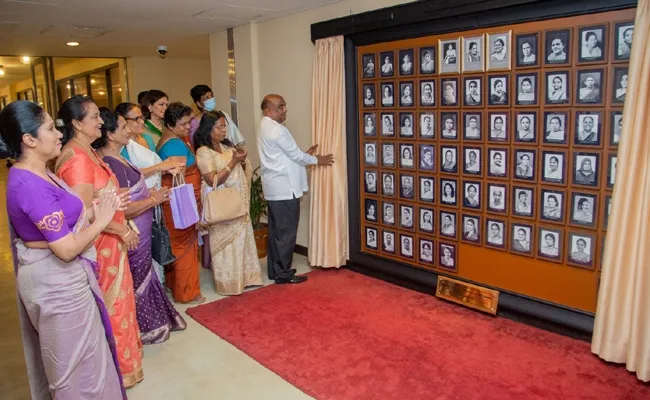
Women’s Caucus in Sri Lanka. Photo: CIR/Sri Lanka Parliament
Female politicians continue to face an uphill battle in politics, especially when obtaining nominations from their mainstream political parties and spending money on their election campaigns. Women representing the current Parliament in Sri Lanka note that structural and financial barriers are forcing them to reckon with their future in politics as they still only have one foot in the door.
A case in point is Samagi Jana Balawegaya (SJB) MP Rohini Wijeratne Kavirathna, who first entered Parliament in 2015, and says that she has sold four lands in the past 10 years to fund her political career and educate her children. In such a context, she questioned how women could even “put their head through the door”.
She said that despite coming from a family with a strong political background (her father was a Deputy Minister while her late husband was a Member of Parliament), the United National Party (UNP) had been reluctant to give her nominations in 2015.
“Other party members were against it – they thought I couldn’t do it due to various reasons such as a lack of financial means. I had my strength of mind and that’s what allowed me to get in.
“The electorate supported me because I was a teacher and due to the political backgrounds of my husband and father. I didn’t have a lot of support in 2015 from the party,” said Wijeratne, adding that if parties did not perceive a female candidate as popular or as a “winning candidate,” they would receive less internal backing.
“I received some financial support in 2015 [from the UNP], but I did hear that others received more support than me. After I entered Parliament in 2015 I worked hard, so at the next General Elections in 2019, I was considered an essential candidate. I was more reluctant to contest in 2019 as the UNP had split in two, but the SJB promised me its backing. The SJB provided me with Rs. 1 million in financial support for the 2020 campaign,” she said.
Patronage Politics and Female Candidates
“Women don’t have as much of a chance to connect with private well-wishers and donors either, to help them with their campaigns. Even the business community will support male candidates because they can open a bottle together and become friends. We don’t have that opportunity to receive support, so it is very difficult for a woman to even enter the political system,” said Wijeratne.
Women Parliamentarians’ Caucus Chair and Parliamentarian Dr. Sudarshini Fernandopulle, who first entered Parliament in 2010, noted too that for female candidates, raising campaign finances was difficult as they did not tend to support illicit deals. “So people think there is no point in supporting us.”
However, Gender and Election Working Group (GEWG) Voluntary Convenor Kanaka Abeygunawardana observed that even female politicians could benefit from the existing patronage system in the country if the political party they represented presented them as a “winning horse”.
“Our political system is based on patronage so you bet on the winning horse. How the party presents the candidate is how they receive prominence in this patronage system. Women are on a sticky wicket because if they’re not dominating or represented as equal to the men in the area, people won’t bet on them. The electorate is not for clean politics, transparency, or accountability either. We need to change the electorate too,” said Abeygunawardana.
Questionable Nomination Processes
Dr. Fernandopulle said that the issue mainly lay with the leadership bodies of political parties that did not consider women as being ‘suitable’ for politics due to its violent and expensive nature.
“I didn’t have a problem with the nomination process as I came in after the assassination of my husband. However, for other women, receiving a nomination is a tough game as there is no clear system through which they can enter. It depends on the party leaders and general secretaries, and their consent. There is no clear nomination process for any candidate – male or female.”
Adding that some political parties did not have women even on their nomination boards, she said that women were only considered as ‘suitable’ by parties after the loss of their male family members: “There is a ready-made electorate there.”
Dr. Fernandopulle contested with the Sri Lanka Podujana Peramuna (SLPP) in 2020. “I didn’t receive any financial backing for my campaign then. I think this was the same for the other candidates as well.”
SLPP MP Muditha Prishanthi too said she had been granted a nomination to contest the 2020 General Elections immediately after the death of her husband, who had been a parliamentarian.
“Prior to that I was involved politically in women’s organisations and in my husband’s politics. The party did not provide me with money to contest, but it did support me in organising in other ways. I was already known in the district due to my husband’s popularity. But someone who enters politics newly would find it difficult. There are financial issues and many women are scared of the campaign trail because they face more ‘kapili’ (sabotage),” said Prishanthi.
Meanwhile, SLPP MP Rajika Wickramasinghe said that when she first contested in 2015, she had received the opportunity to do so because she had been politically involved in women’s organisations and because her husband was in politics. She had lost in 2015 but won in 2020. “I am not from Kegalle, I came to Kegalle due to my marriage so there was a lot of criticism against me, with people saying that someone from Colombo shouldn’t get the vote.”
Abeygunawardana pointed to other social and structural barriers that existed during an election.
Caste plays a major role in most parts of Sri Lanka. If the man representing a particular caste from a district dies, then the best thing for a political party to do is to find his wife. Women are affected because of the perceptions of society – we are not supposed to be talking, we are supposed to be pleasing to the eye. Due to that, we are not given positions within parties as well. — Kanaka Abeygunawardana, Gender and Election Working Group
“Selection procedures are also mainly done by men – sometimes, there is not a single woman. Unless we change those structures slowly, it is very difficult for women to be in politics,” she said.
On the other hand, actress-turned-politician Women’s Affairs State Minister Geetha Kumarasinghe, who currently represents the SLPP, noted that it was her “famous name, wealth, and business income” that had helped her in her political journey.
“I am not from a political family – many women come to politics after their husband or father dies. That is the procedure in Sri Lanka, otherwise women don’t engage in politics. But I was someone who had an established name – that made it easy for me to enter politics. A woman who doesn’t have that can’t even think of coming in. That is wrong, that is not what should happen in politics.
“How can people be committed to politics if they don’t have money? I don’t have any personal problems or many personal expenses, so I can spend on politics. But that is a problem in our political system,” she said.
Kumarasinghe further said that she had not received a “single cent” in financial support from the political parties she had represented since 2010 and little support otherwise.
“There was no support from the party – especially no special support due to my being a woman. The first time I contested, I lost because there were two people contesting from the same seat: Sagara Kariyawasam and me. That was one reason for me to lose that election, yet I campaigned heavily for President Mahinda Rajapaksa at the time.
“During the elections, there were a lot of false rumours about me. The party did ask me whether I could spend on a campaign – that was all they asked. I did hear that men received more financial support than me at the time, in 2010, from the party,” said Kumarasinghe.
Meanwhile, National People’s Power (NPP) MP Dr. Harini Amarasuriya said that the NPP campaigned centrally, as a party, as opposed to running individual campaigns.
“Individual candidates are not expected to spend since local organisers in charge will handle whatever financials are necessary so they are not given money individually. We are not expected to raise funds or spend on our own. Funds are collected by the party’s central fund to organise meetings and print pamphlets,” said Amarasuriya, adding that therefore, the NPP did not consider financial capabilities when handing out nominations.
Meanwhile, Samanmalee Gunasinghe, who contested from the NPP in 2020 and who has been part of the Janatha Vimukthi Peramuna (JVP) for the past 25 years, said that she had witnessed the JVP/NPP change over the years.
“With the political background in the past, there was no chance for women to engage in politics. Politics was done by criminals, drug traffickers, or thugs. In that system, it is unlikely that women would enter politics. Even though our women comrades were willing to enter politics, that environment impacted their entry.
“However, in the past few years we have been forming women’s groups that could face those challenges. Parallel to that, the political background also changed, where more progressive politics became more popular. Our organising and awareness-raising became more strengthened, and with that, women are now ready to face that challenge,” she said, adding that it was unfair to ask women to contest in an election without providing them with the necessary understanding and support so that they would be willing to do so.
Recognising this need, Gunasinghe said that in the past two years the NPP had been involved with women in three ways: awareness-raising about political rights amongst women in a non-partisan manner at the village level, programmes for grassroots NPP women leaders on contesting elections, and forming district women leaders for the party.
Minority Women
Former United People’s Freedom Alliance (UPFA) MP Ferial Ismail Ashraff, one of just two Muslim women to have contested in an election in Sri Lanka and entered Parliament, said that her political career was a “swim against the current”.
Ashraff said that she had received the nomination after her husband passed away as party members had seen how closely she had worked with him. “But there was a bigger half of people saying that a Muslim woman shouldn’t be in politics. The community was not willing to accept it and it was difficult to convince even women to support me. But now, 20 years later, when I speak with young Muslim women and see that they accept what I have done, I consider it as a step forward.”
She added that “nothing much has changed as far as the men are concerned,” but noted the positive development that came after the 25% quota for Local Government (LG) authorities was introduced, which mandated that 25% of LG bodies must be represented by women.
“Even when the quota was being introduced, Muslim parties protested saying that they would not be able to find women to represent them. However, Muslim women activists stepped forward saying that they could find women for the parties. I assume there will be some change that seeps through to the Parliament system too as a result,” she said.
Ambika Satkunanathan, who had been part of the Tamil National Alliance (TNA) National List in 2020, said that she had “zero interest” in entering politics.
“In 2020, I turned down the invitation to contest but was later included in the National List. Throughout this entire process I faced sexist, misogynistic, and abusive personal hate campaigns directed at me, especially on social media, by sections of the TNA itself. There were even claims of being in an inappropriate romantic relationship with a Tamil politician, and a Tamil TV channel telecast a skit alluding to this rumour,” Satkunanathan said, recounting her experience.
She noted that similar to other political parties in the country, Tamil parties too rarely had women holding positions of power within the parties. “Historically, Tamil women have been active in politics and were seen on political stages, even though they didn’t hold positions of power within political parties. Their participation has become less visible and we don’t commonly see women on political stages. The conservative nature of the Tamil community exacerbates the general challenges that women entering politics face.”
Women’s Caucus Attempts
Female MPs said that if the system were to change to increase female representation in Parliament, then the change should come from party leaders themselves.
“The first step should come from the party leaders – they should have the will to increase female representation in Parliament. We can attempt to bring in laws for representation, but those decisions will also be finally taken by men, which means they will get delayed. The decision-making rooms are filled with men. Equality is only there as a sentence in the Constitution,” said MP Wijeratne.
Dr. Fernandopulle said that women unfortunately did not have an equal opportunity as male colleagues to enter politics, as almost all parties were headed by men: “Even within the decision-making bodies of parties, there are very few women.”
She said that on behalf of the Women’s Caucus, she had brought in two private member’s bills – one to mandate parties to provide 50% of the National List seats to women and one to ensure that 30% of party leadership is represented by women.
“We lobbied parties and asked to make voluntary amendments, but we didn’t receive any response. Only the NPP has a manifesto of 50-50 for the National List. But none of the other parties have a plan to increase women’s representation,” she said.
The 25% Quota
Local Government councillors who contested in 2018 noted that the question of financial means was an important one during the interview process conducted by their respective political parties, prior to granting them nominations.
“They asked us to come to Colombo for interviews and asked how much we can spend,” said Achala Rajakaruna Kularatne, an LG Councillor who contested from the UNP in 2018, adding that this meant that “talented ones” rarely got the opportunity to contest in an election.
“We all went through the interview process in 2018. If the husbands of the potential candidates have been involved in politics, they are then prioritised. This happens from the party headquarters, yet some women fight for their spot by showing they have paddy fields and lands to support them during an election,” said Kularatne.
She added that she had supported herself in politics with the income of her husband, who was working abroad, and income obtained through her other assets.
Accordingly, elections researcher and analyst Attorney-At-Law (AAL) D.M. Dissanayake said that this led to only ‘upper-class’ women even stepping up to ask for nominations from their parties, as land rights were mostly only enjoyed by such women.
Dissanayake pointed out that the question of money was a common one that was asked by most parties when determining their nominations for any election. “If they don’t have that financial backing, the chances of them getting the nomination really decrease.”
Sujeewani Nanayakkara, another UNP LG Councillor, also said that she had been asked about her financial means to support an election run during the nomination interview at the party headquarters, while pointing out that the interview panels rarely included women.
Institute for Democratic Reforms and Electoral Studies (IRES) Executive Director (ED) Manjula Gajanayake said that political parties were reluctant to give nominations for women candidates as they did not consider them to be “winning horses”.
“Political parties are constantly treating female candidates as second citizens. Women candidates often pawn their land or other assets to cover the cost of a campaign,” he said.
Party Promises
SJB General Secretary Ranjith Madduma Bandara, noting that they had been part of the Government which had introduced the 25% women’s quota for LG bodies, said that more women needed to come forward for nominations. “We are offering training these days to encourage more women to come forward. The SJB Executive Council is prepared to increase female representation in the coming elections.”
NPP General Secretary Dr. Nihal Abeysinghe said that the party hoped to ensure that each district would have female representation at the next General Elections. “We just haven’t decided on the numbers from each district for women as we still haven’t discussed the General Elections yet. However, we can say with certainty that each district will have female representation.”
SLPP General Secretary Sagara Kariyawasam said that of the current female SLPP MPs in Parliament, only Wildlife and Forest Resources Conservation Minister Pavithra Wanniarachchi had funds: “We selected based on who was with the people.”
“We treat everyone as a candidate and we don’t discriminate based on gender,” Kariyawasam said in response to whether money was being unfairly allocated to male candidates over female ones when campaigning. “We help the way we can and people who don’t need that help do not take it.”
He added: “We have always been of the stance that talented persons should be given a chance. Our party allocated two National List seats to women and has the largest representation of women from any party in the current Parliament.”