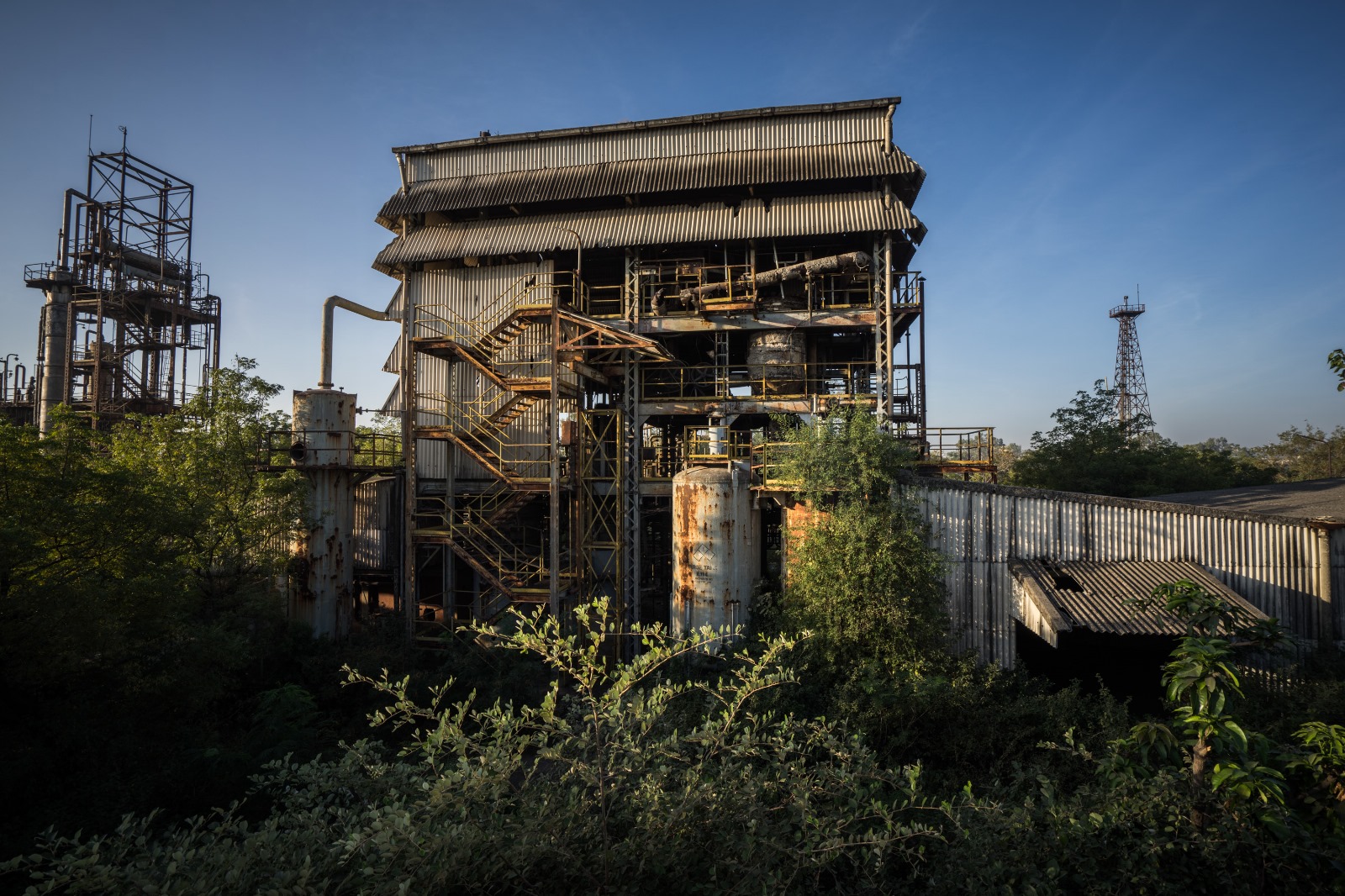
The defunct plant owned by US company Union Carbide, in Bhopal. Photo: Giles Clarke
In the Indian village of Chirakhan, drastic changes in the last few years have upended the lives of 1,697 residents.
Here, Hemraj Patel, the head of the village, recalls how their crop yield has dropped by 40 percent in the last few years. “Green vegetables such as spinach and coriander don’t grow here anymore. We used to have an abundance of mango trees in our village. Now, we have none,” says Patel.
Nearby, among a group of women picking carrots in the field is Seema Bai, who says that their water is undrinkable. “Even after boiling it, a white layer remains on top of the water. It tastes bitter,” she says. “We don’t even want to use it for bathing. But we have no other option. Filtered water costs us INR 15-20 per liter, which we cannot afford.” The water is unfit to irrigate land too, compelling villagers to buy water because the piped water emanates white foam.
Lalita Bai, another villager, says that her community now suffers from skin irritations and mouth ulcers. “And our beautiful, thick hair? We are slowly losing it,” she says. As the men on the fields disappear, the women close in. There have been miscarriages in the area, they say. A handful of women lost their unborn babies during the second or third trimester. Children get sick a lot too.
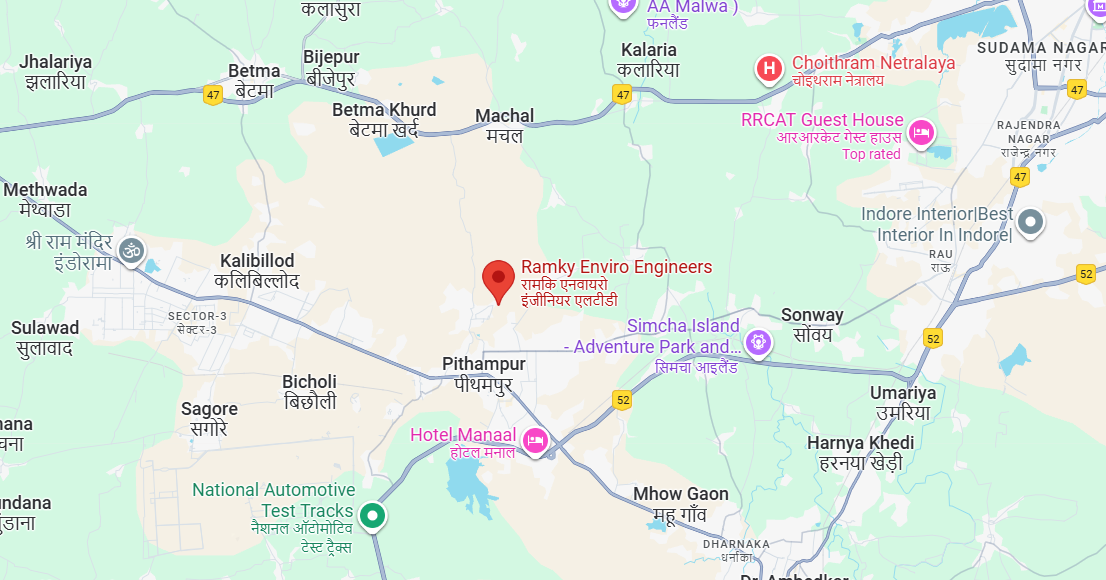
A Google image of the location of Chirakhan in Madhya Pradesh
Chirakhan is among a cluster of 44 villages in Pithampur Industrial Area, in the central Indian state of Madhya Pradesh. In the world’s most populated country where industrialisation is at the heart of its $4.3 trillion-GDP and the world’s fourth-largest economy, designated industrial zones like the one in Pithampur are seen as India’s path to become a global manufacturing powerhouse. Here, one witnesses large-scale industrial activities from sectors ranging from automotive and plastics, to manufacturing and waste management, unfolding in close proximity to villages that have existed for generations.
But in Pithampur, the activities of a multimillion dollar infrastructure development conglomerate has raised concerns among the locals, the civil society and experts.
Ramky, whose group company Ramky Enviro Engineers Ltd (now RE Sustainability) operates the Treatment, Storage and Disposal Facility (TSDF) here, has been at the eye of the storm for their incineration facility since it became operational in 2006.
The location of the plant from the residential areas goes against the guidelines of India’s Central Pollution Control Board, which specifies that hazardous waste facilities should maintain a minimum distance of 500 meters from residential areas. A strong industrial odour emanates near the wall that separates the facility’s boundaries from the village. Based on a visit, this reporter found that the wall is just 50 meters away from the incineration plant. The temperature, too, is higher in this area.
Since 2016, residents from nearby villages have been complaining about contamination of their water. A gynaecologist, who spoke on condition of anonymity, says that infertility rates increased drastically among couples in the area, which, she adds, is potentially linked to the industrial air and ground pollution. Among the common issues she encounters in her patients is miscarriages and polycystic ovarian syndrome.
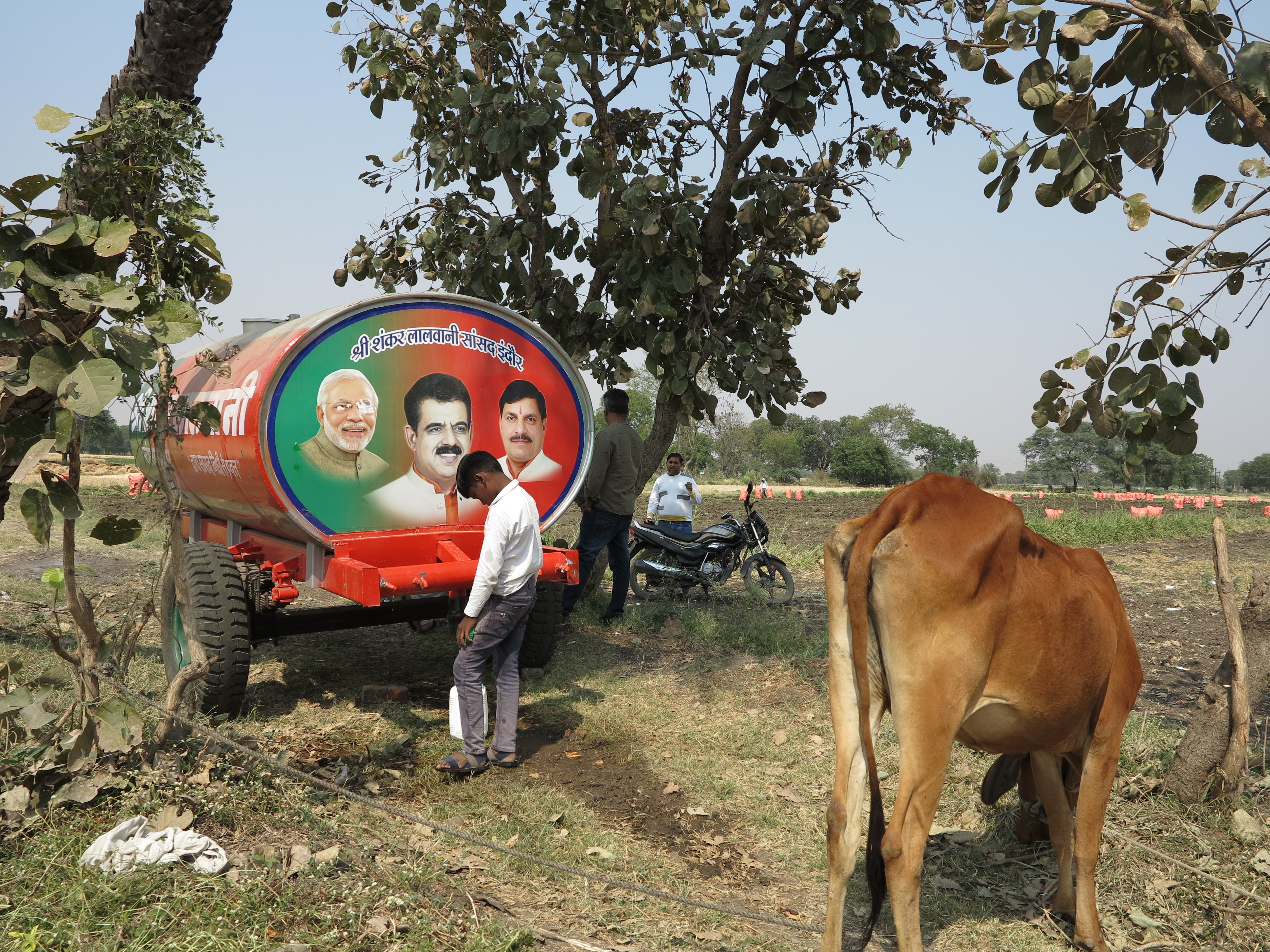
A water tank irrigates the fields of Chirakhan village. Photo: Tulika
“People are slowly leaving our village, selling their land very cheaply,” Patel, the village head of Chirakhan, says. “Who wants to buy this infertile land?” During the reporting of this story early this year, several residents had one plea: “Make this company stop, or we will slowly die. Please tell people what is happening.”
It’s not just the concern of what might become of these villagers in the future. The concerns arise out of what’s already happened in the recent past.
The Toxic Legacy of Bhopal Gas Tragedy
Before Pithampur, there was the Bhopal Gas Tragedy, considered one of the world’s deadliest industrial disasters.
On the night of December 2, 1984, in the Indian city of Bhopal, an estimated 10,000 died in the first three days of a gas leak at a pesticide plant of the US multinational corporation Union Carbide. In the city of a little over one million residents, the death toll is currently estimated at, according to Amnesty International, over 22,000. In the days after the leak, Union Carbide’s CEO Warren Anderson fled the country and his company abandoned the plant. Hundreds of thousands of tonnes of toxic industrial waste lay there for days, seeping into the groundwater.
However, even before the leak, the company had been disposing off the toxic waste between 1969 (the year they set up operations in Bhopal) and 1984 (the year of the leak), wherein toxic waste was buried in 21 unlined pits inside the factory premises. From 1977 onwards, toxic effluents were dumped into solar evaporation ponds near the factory, which would overflow during monsoons. In 1996, sludge from two ponds was moved to a third and buried. However, thousands of tonnes of waste continue to pollute the groundwater.
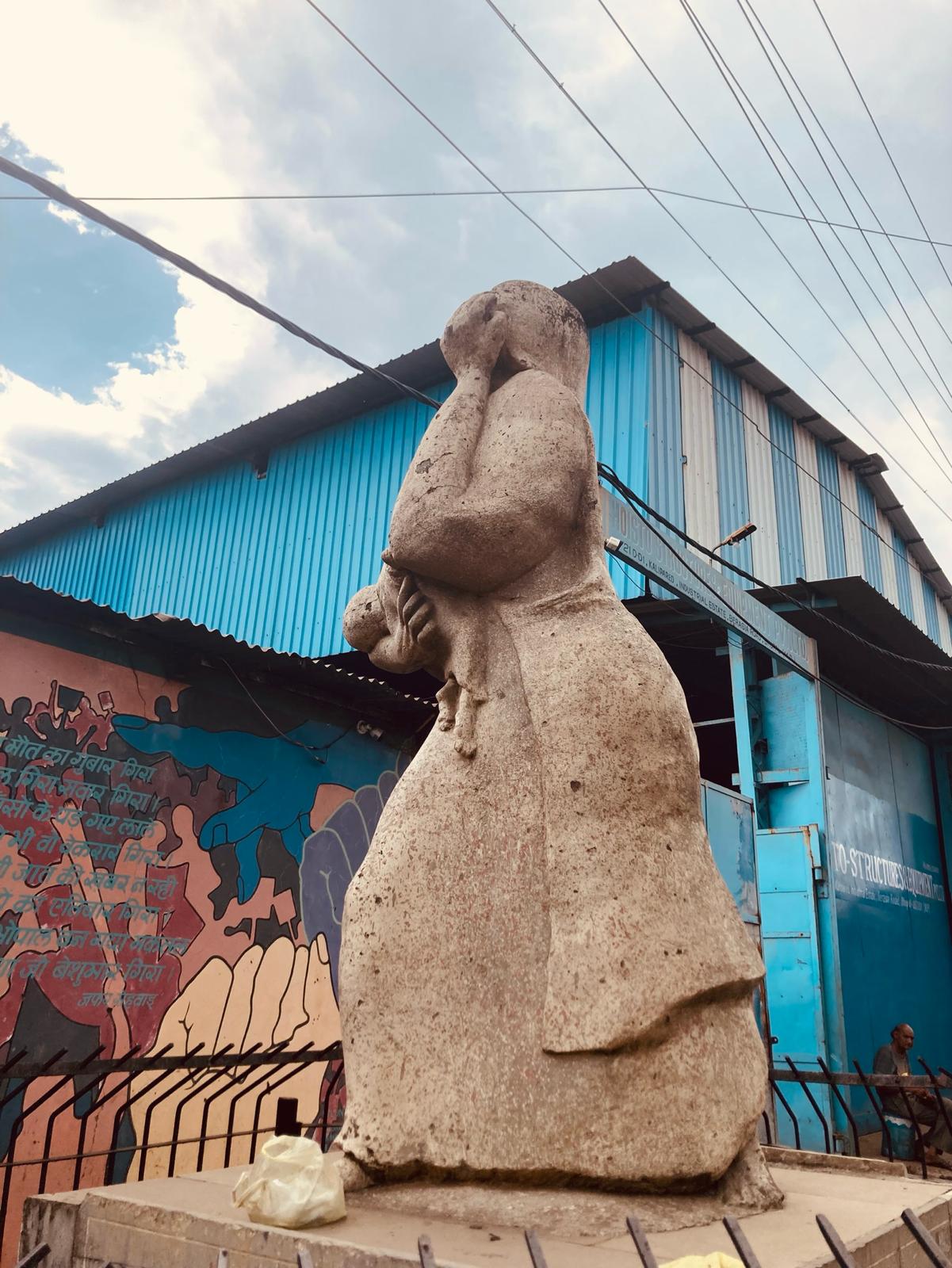
While many global and national studies assessed the impact of toxic pollutants on residents’ health, a 2024 government study confirmed that contamination in a five-kilometre radius from the plant is still ongoing.
In December 2024 – the 40th anniversary of the Bhopal Gas Tragedy – independent UN experts stated that the Union Carbide Company, which is now owned by the US-headquartered Dow Chemical Company, dumped and mismanaged hazardous substances and waste in its facility, creating a “sacrifice zone”. This is where pollution from the contaminated site continues to poison people by contaminating soil and drinking water, which is supplied to an estimated 200,000 people.
(Left) A monument commemorating the Bhopal Gas Tragedy in Bhopal. Photo: Tulika
A 2010 report by National Environmental Engineering Research Institute puts the amount of toxic waste from the Union Carbide factory at over 1.1 million metric tonnes. Despite repeated calls for clean-up and remediation of Union Carbide site and its surrounding areas by the polluters, no adequate action has been taken.
On January 1, 2025, a green corridor was established for the safe transfer of Union Carbide’s waste to Pithampur Industrial Area’s Ramky TSDF plant. Conducted under tight security with over 200 persons in protective gear, this transfer now symbolises the dangerous nature of toxic waste disposal, and irrevocably links the ongoing struggles of Bhopal with the residents of Pithampur.
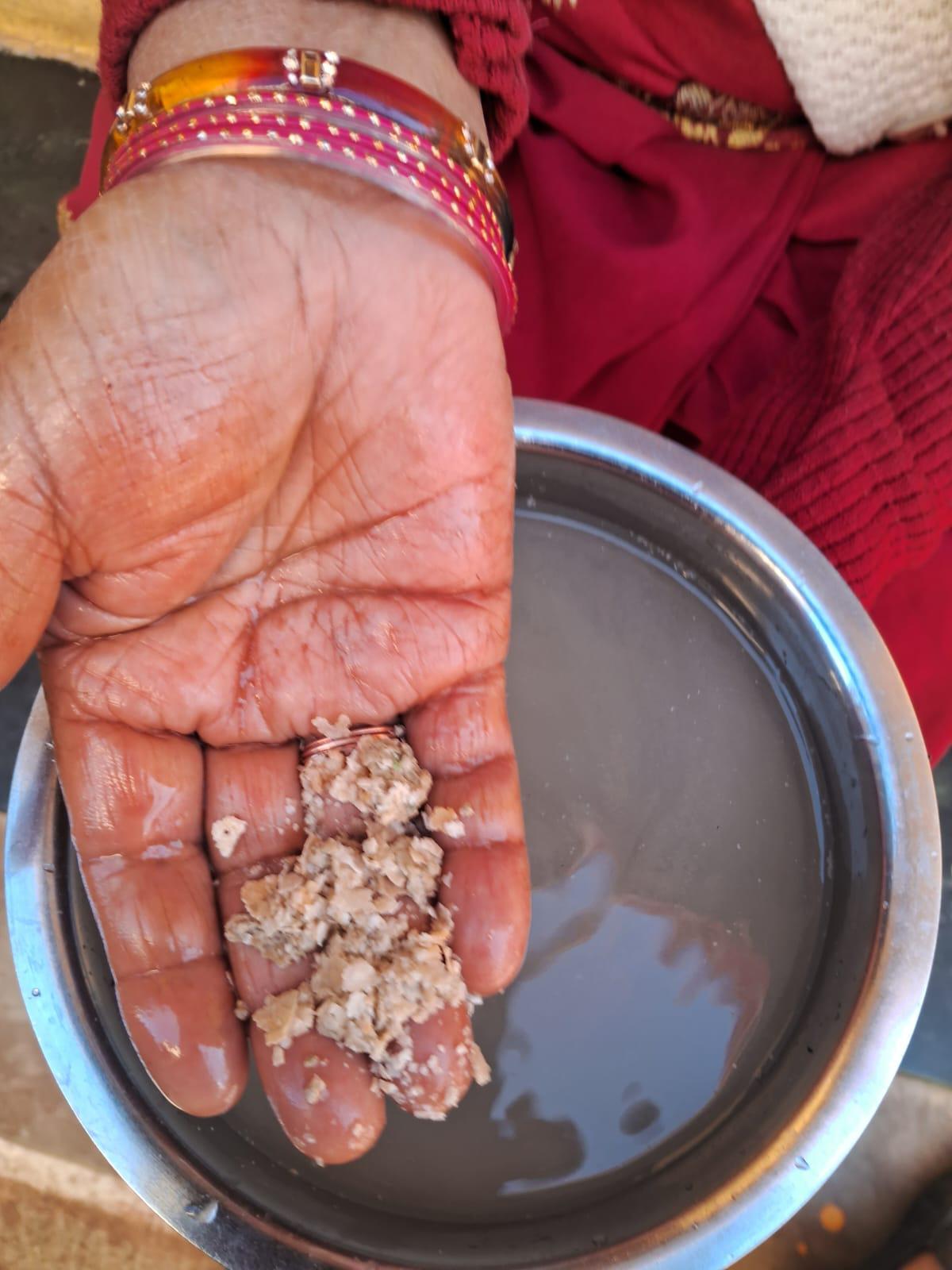
Before Bhopal’s toxic waste transfer started early this year, a group of organisations representing Bhopal Gas Tragedy survivors had raised an alarm over “secret” disposal of toxic waste by Union Carbide at the Pithampur facility between 2010 and 2015. Five of the seven trials failed while particulate and toxic and carcinogenic chemicals including dioxins and furans – which are severely harmful for health – were found at levels several times more than permissible limits.
(Right) Polluted drinking water in Brij Vihar colony, Bhopal. Photo provided by Bhagwati Parshad Pandey, a resident.
In 2012, a survey by an NGO called Lok Maitri found stomach and skin problems along with contamination of water in Tarapur village. In 2015, villagers had reported, among health issues, that the local water bodies turned black, and agricultural output further decreased. In December 2024, Indian news outlet Dainik Bhaskar reported how villagers in Tarpura, Silotya, Bardari and Akolia are abandoning their farm lands for low prices as water from the borewell becomes unusable and farming is no longer viable.
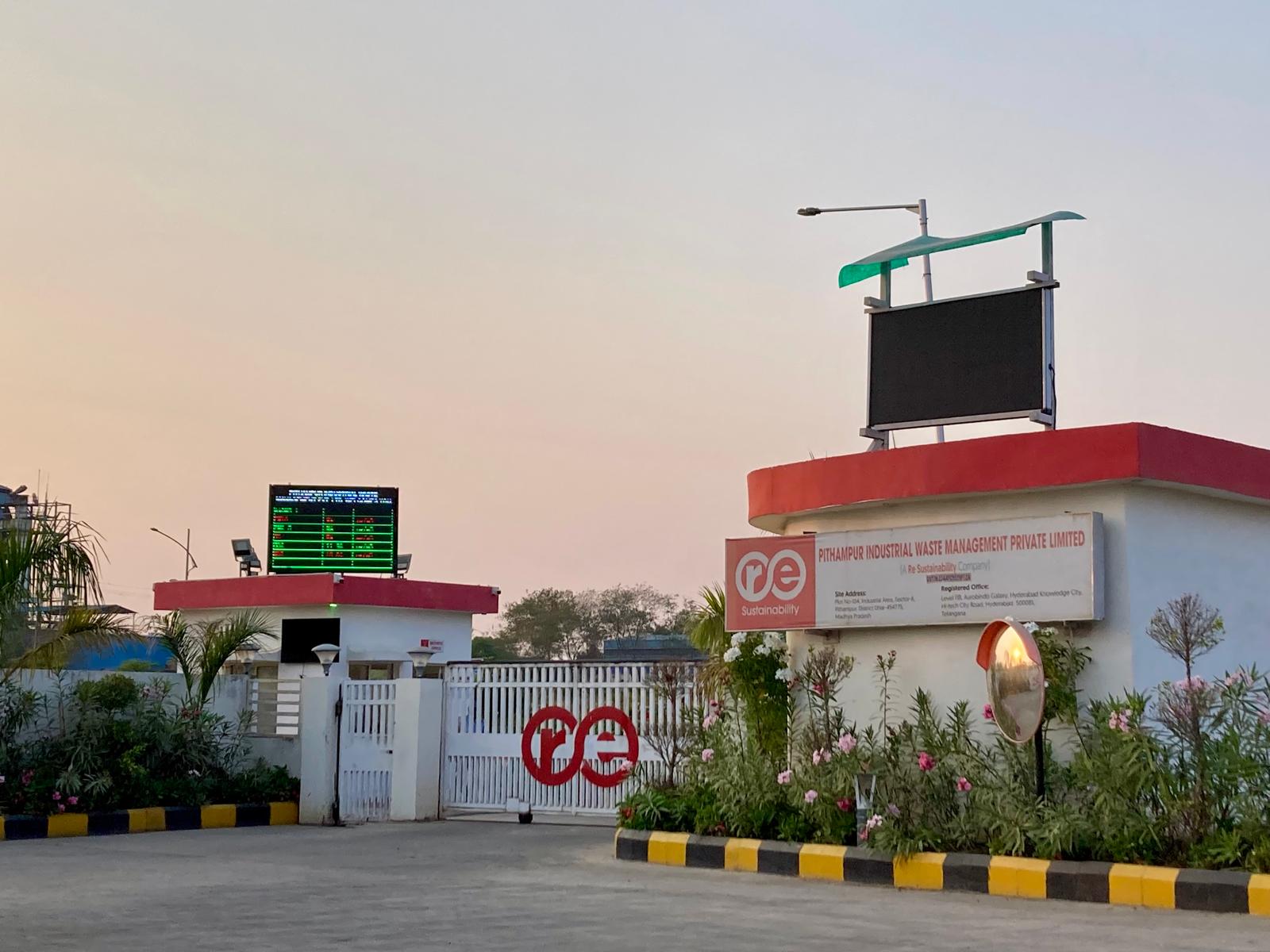
The incineration plant owned by the Ranky Group of Companies in Pithampur Industrial Area. Photo: Tulika
At the heart of the discontent is RE Sustainability and its TSDF unit. Across India, news reports highlight how its other facilities have run into trouble with authorities and residents alike.
In the state of Karnataka, the Mavallipura landfill managed by Ramky and operational from 2003 to 2015, reportedly caused severe environmental impacts, compelling the Karnataka State Pollution Control Board to halt its dumping activities in 2012.
In the state of Tamil Nadu, residents of over 20 villages in Virudhunagar district accused the Ramky biomedical waste incinerator plant for causing health issues including renal failures and respiratory problems. In 2020, the Tamil Nadu Pollution Control Board imposed a fine and in 2023 the pollution board NPCB refused to renew Ramky’s biowaste incinerator.
In 2019, in Pithampur itself, the Central Pollution Control Board fined the TSDF plant INR 1,350,000 (approx $15,700) as “environmental compensation” for failing to install a double composite liner that prevents leachate of hazardous substances.
In 2021, India’s Income Tax department accused the Ramky Group of Companies of faking a INR 1,200 Crore ($140 million) loss to evade taxes. The same year, the World Bank debarred Ramky Enviro Engineers Limited for 20 months citing fraudulent practices in India.
“Waste incineration is big business in India,” says Shashi B Pandit, Secretary of All India Kabadi Mazdoor Mahasangh. “It is supported by the big corporate lobby; companies and their allies benefit from it, while citizens, normal people are the ones losing.”
Asian Dispatch reached out to RE Sustainability on August 14 for comments based on various issues raised in this story. This story will be updated when they respond to our queries. However, in its June 2025 response to Indian publication Economic Times, Masood Mallik, the MD and CEO of RE Sustainability, said that its “competent facility” is equipped to safely manage such hazardous materials. The company added that it has implemented several steps like enhanced filtration and improved absorption, among other measures, to safeguard the environment. “Over the years, PIWMPL has continuously worked to enhance the incineration facility, with public disclosure mechanisms in place,” Mallik told Economic Times.
Fears of Bhopal Gas Tragedy 2.0
Since January, residents, civil society groups and children have been embroiled in an ongoing movement against the arrival of Bhopal’s toxic waste in Pithampur. In response, the Madhya Pradesh government halted the incineration and gave the High Court six weeks – until 18 February – to plan a safe process. At the same time, a pro-incineration campaign, helmed by the Public Relations Office of Dhar district, painted the Ramky plant as safe even as protesters reportedly faced threats of arrest.
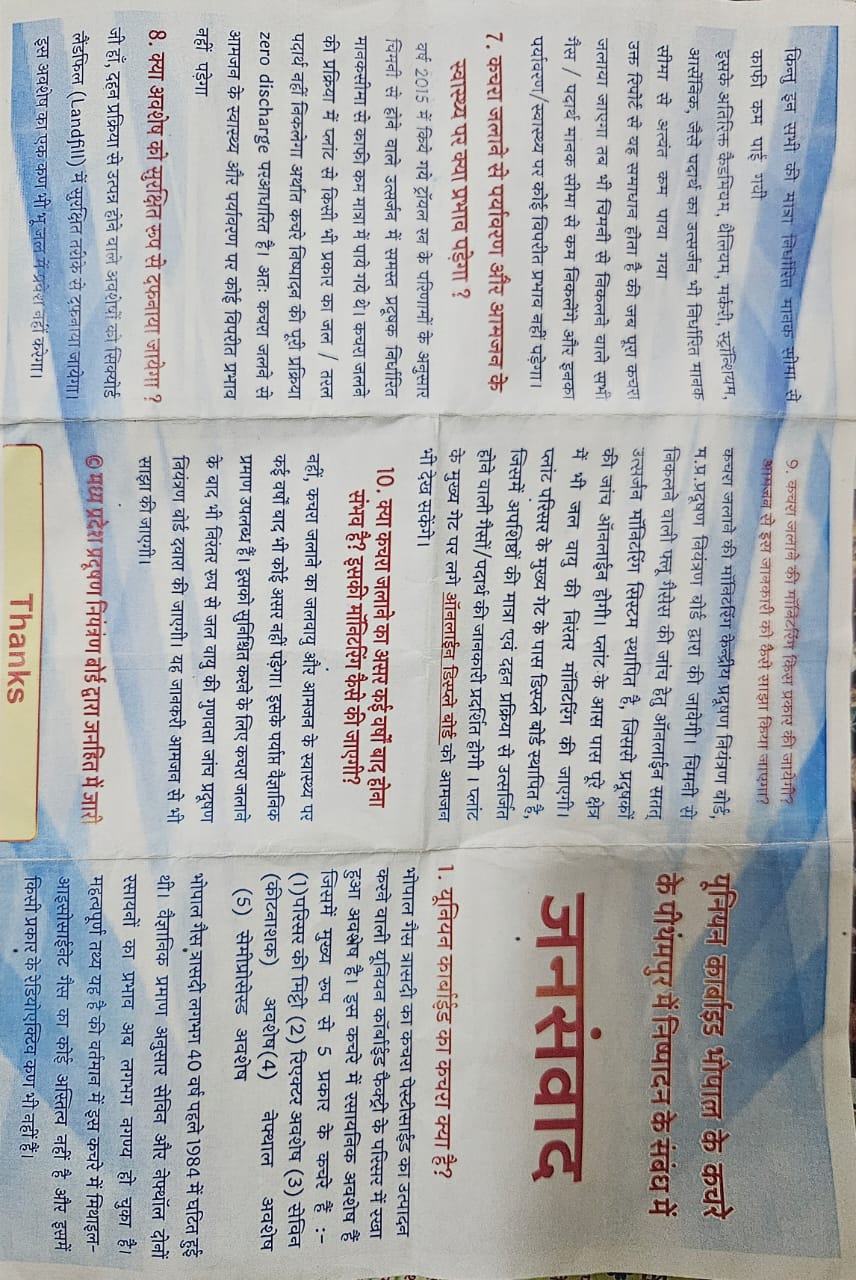
A brochure developed by the Madhya Pradesh government explaining the waste and incineration process in Pithampur.
“We will have to die anyway, so we better keep quiet and carry on with our lives,” says one resident who spoke on condition of anonymity, echoing the sentiments of many who stopped talking openly or to journalists out of fear of retaliation.
Local activists now want the incineration of the toxic waste to take place somewhere else. “Bhopal’s waste should be incinerated in a place where no people live,” says Hemant Hirole, the convenor of Pithampur Bachao Samiti, which has been organising protests against the incinerations. “Villagers are already suffering from asthma, skin diseases and increased cancer rates. With the waste from Bhopal, who knows what will happen further?” In March, the state authorities presented trial reports to the Madhya Pradesh High Court – conducted between February 28 and March 10 – and received its approval to dispose off 300 tonnes of toxic waste.
Over 200 kms away from Pithampur, in Bhopal, this journalist spoke to locals who drew a jarring parallel between their current predicament, and the fate of Pithampur’s people in the years to come.
In Bhopal, Dr Ashwathi, an ayurvedic doctor at Sambhavna Trust Clinic, which treats those impacted by the Bhopal Gas Tragedy, says that patients – including first and second-generation tragedy survivors – still come with gastrointestinal diseases such as constipation, irritable bowel syndrome and reduced appetite, along with skin diseases and urinary tract infections. Less talked about illnesses include reproductive health issues, such as early menopause and PCOS among women, and fertility problems among both men and women.
“Men don’t want to talk about reproductive health issues due to stigma. The blame [for the reproductive issues] goes to the women,” says Ashwathi.
A 2002 study by NGO called Shristi found lead, mercury, pesticide HCH as well as volatile organic compounds and halo-organics in the breastmilk of nursing mothers here. Children exposed to toxic contaminants through polluted groundwater continue to suffer serious health impacts.
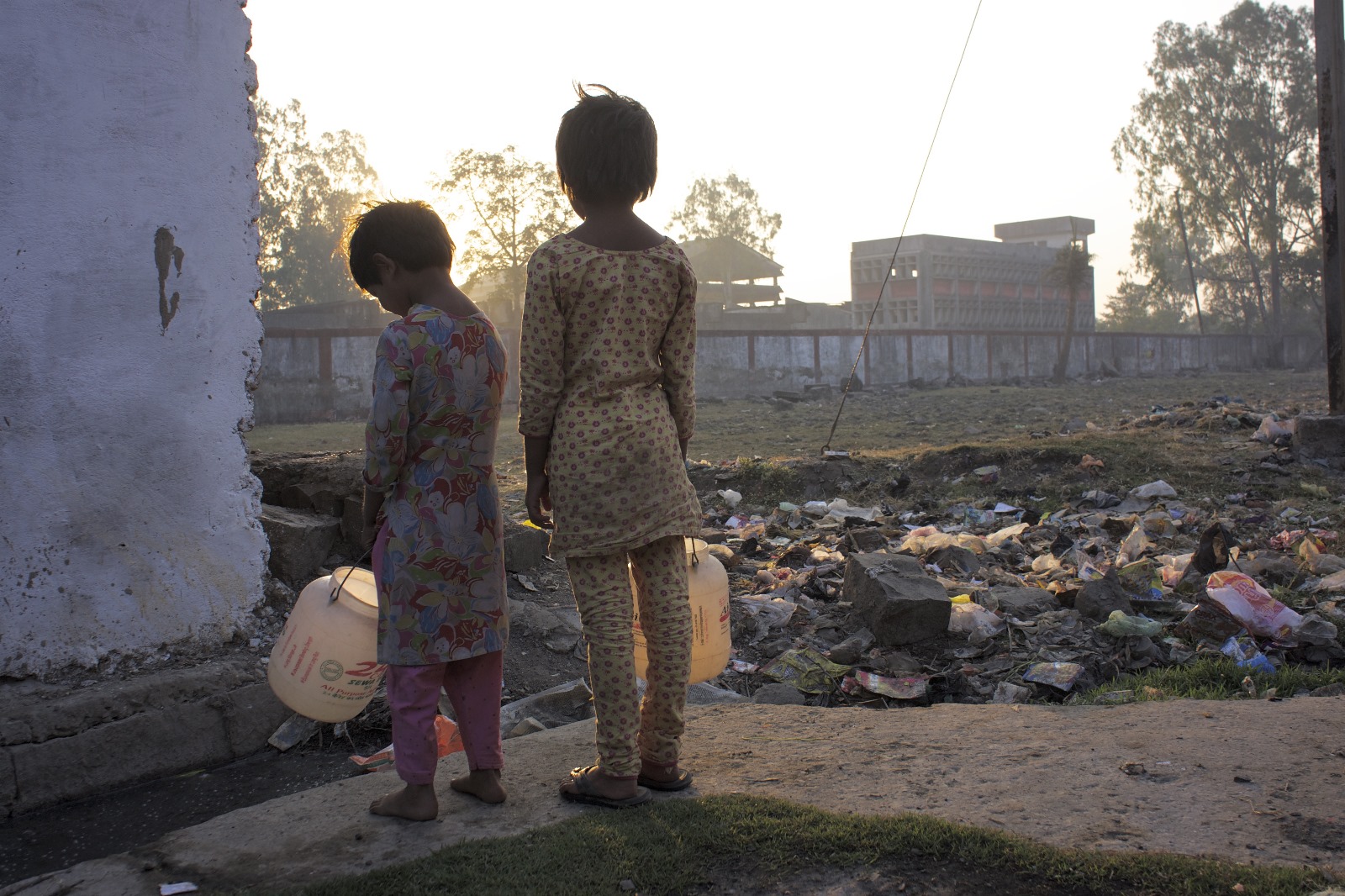
Two girls fetch water near the Union Carbide factory in Bhopal. Photo: Giles Clarke
While some contaminated areas were supplied with safe drinking water, others remain affected. One of them is the city’s Brij Vihar colony, which is located 1.5 kilometres from the Union Carbide factory and comprises roughly 60 households.
A strong stench pervades the air here. Bhagwati Parshad Pandey, 64, who has been living in Brij Vihar since 2010, says that the smell is from the contaminated water in the drains. “I moved here with my family without knowing about the contaminated water,” says Pandey. “Otherwise, I would have never moved here. We only realised there was an issue with the water when we started falling sick.”
Pandey’s wife has kidney stones, while a few years ago, he himself suffered a heart attack. “Everyone in our colony has health issues. Kidney, gallstones and skin infections are the most common ones. We have to pay for expensive medical treatments and medicines,” he says.

Many children in Brij Vihar don’t reach developmental milestones. Molly, Pandey’s granddaughter, is 12 and often has stomach aches and severe hairfall, while Sia, another granddaughter who is nine years old, was born two months premature. Premature births in Brij Vihar are common. Sia’s left eye, arm and leg have been affected, likely due to exposure to toxic water during her mother’s pregnancy. Muskaan, 10, another girl in the colony who doesn’t look older than seven, has developmental issues. She barely speaks.
This reporter found many houses emptied out and locked up. Pandey says that so far, 20 families have already left the colony due to the health impacts.
“While large water tanks have been placed [for residents’ access to clean water], and promises have been made for clean water supply, there is still no clean drinking water,” Pandey continues. “Residents buy their own expensive drinking water which include either tankers of water or bottles of Bisleri. RO systems do not work due to the hard drinking water.”
(Left) Bhagwati Parshad Pandey and his granddaughter Sia in Bhopal’s Brij Vihar colony. Photo: Tulika
Over the past years, the Supreme Court issued directives to ensure clean drinking water. The implementation, however, is negligent. In 2022, the Bhopal Group for Information & Action, a member of the Monitoring Committee for clean drinking water, indicated that the contamination has now spread from 42 colonies to many more due to inaction.
A petition pertaining to the supply of clean drinking water is pending in the Supreme Court.
A Call for Accountability and Transparency
This January, the Pithampur Bachao Samiti published a report of water sampling near the TSDF site at the Pithampur Industrial Area. The report, accessed and reviewed by this reporter, indicates that the groundwater contains the same chemicals as found in the soil and water near the Union Carbide plant in Bhopal.
While many in Pithampur have lost hope, a some residents aren’t giving up.
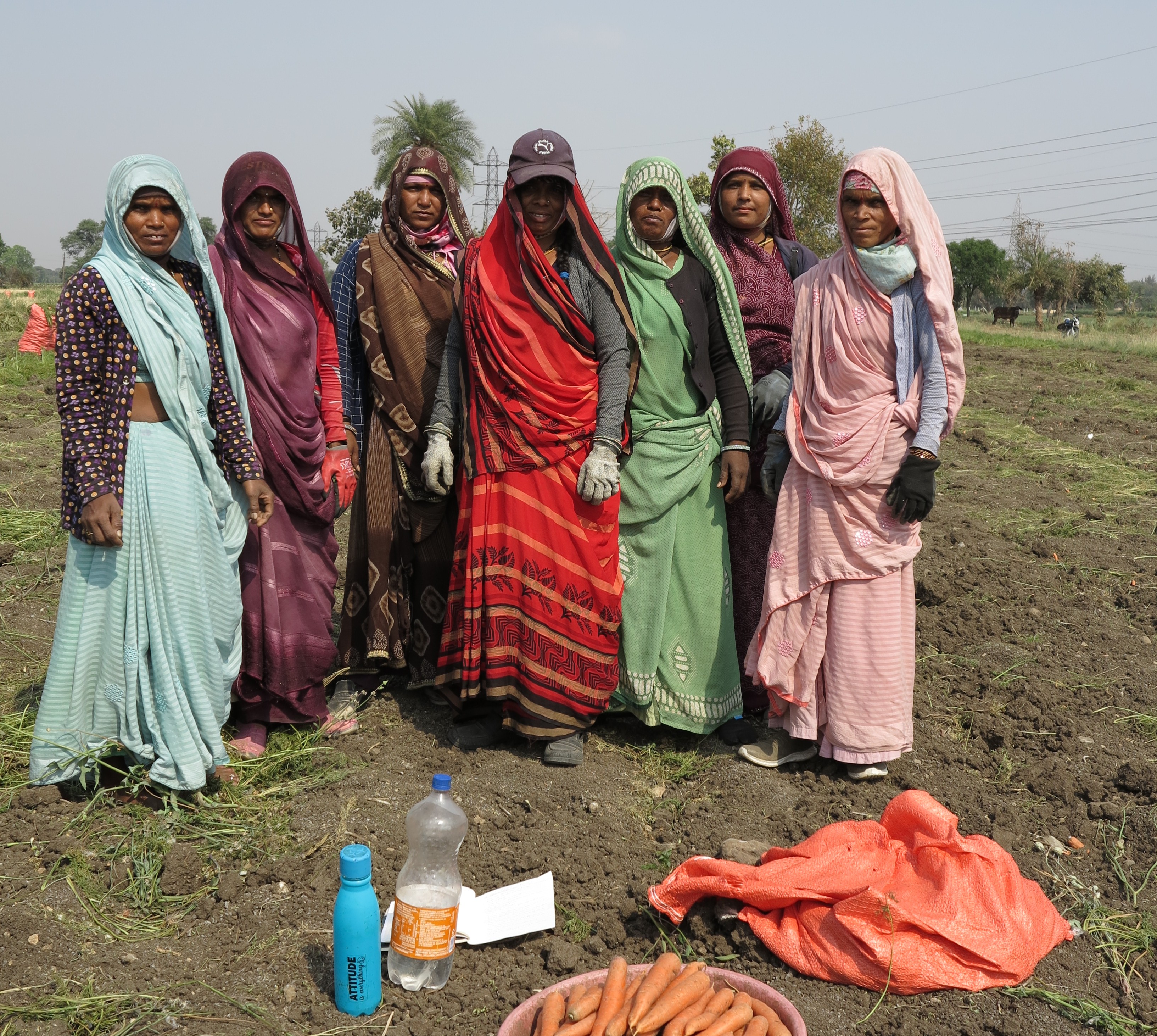
Women from Chirakhan, at the PIthampur Industrial Area, working on contaminated land. Photo: Tulika
Hirole says that the group has submitted a complaint to the Central and Madhya Pradesh Pollution Control Boards to shut down the Ramky facility. “Years from now, nobody should think we did not try, that we sat idle and that we did not put up a fight against this toxic waste,” he says.
By June, the Madhya Pradesh government had completed the incineration of 337 tonnes of toxic waste at the Pithampur TSDF facility. IIT-Hyderabad professor Asif Qureshi, who conducted an independent data analysis of the state government trial-run report, found that the mercury emission ranged from 1.53 to 6.88 kg for 10 tonnes of waste. According to his calculations, during the incineration of a total of 300 tonnes of waste, well over 40-200 kgs of mercury could be released. The World Health Organization notes that there are no safe limits to exposure to mercury.
Currently, approximately 850 tonnes of ash and residue remain stored at the site, pending approval from the Madhya Pradesh Pollution Control Board for final disposal in specially designed and constructed landfills.

While protests go on, experts like Dharmesh Shah, a consultant working with the Center for International Environmental Law, say there are alternatives. He cites the case of Hindustan Unilever Lever (HUL)’s mercury cleanup in Kodaikanal, Tamil Nadu. Shah himself was involved in the HUL case.
(Right) Kodaikanal in Tamil Nadu became the first example of a big corporation cleaning up its toxic industrial waste. Photo: Wikimedia Commons

HUL, which produced thermometers at the Koidakanal plant with mercury from the US, sold glass scrap with residual mercury to a scrap dealer about three kilometres away from its factory, thereby contaminating the soil with 7 tonnes of mercury glass waste. Villagers and former workers at the HUL factory linked the deaths of 45 workers and over a dozen children to mercury exposure. After consistent campaigns by locals, the affected and public interest organisations such as Greenpeace, HUL reached a settlement involving compensation to its ex-workers. In 2019, the Tamil Nadu Pollution Control Board ordered the to remediate the soil, de-contaminate and scrap the thermometer-making equipment at the Kodaikanal site. Eventually, this became a landmark case in India where the toxic waste was sent to a developed nation – the US – as a means of remediation.
“This case demonstrates that companies can take responsibility, and that it is possible to remove and transport contaminated soil to locations where toxic waste management is more advanced,” says Shah.
For now, the fate of the local communities hangs in the air after the recent waste incinerations left behind 850 tonnes of ashes, with fears of radioactive materials and mercury contamination of soil and groundwater from the landfill. On July 31, the Madhya Pradesh High Court acknowledged that the incineration residue could be toxic and asked the state government to consider relocating the landfill site to an inhabited location. The Madhya Pradesh government has now sought more time to give a detailed plan on how they’ll deal with the toxic ash. The matter is listed for September 17.
In the Economic Times response, Mallik of RE Sustainability said that there is no seepage originating from or linked to their TSDF facility, and that the allegations of mercury release during the incineration are unfounded and incorrect.
Monika Solanki, a leader of Pithampur Bachao Samiti, who mobilised hundreds of women for the protests, says, “When it rains and the ashes from the incineration will seep into the groundwater from the planned landfill on the Ramky site, only then we will know more.”
She adds: “Only years from now, like has been the case in Bhopal, will we then feel and suffer the long-term health impacts of the contaminated soil and water due to ‘Bhopal ka kachda’ [Bhopal’s waste].”