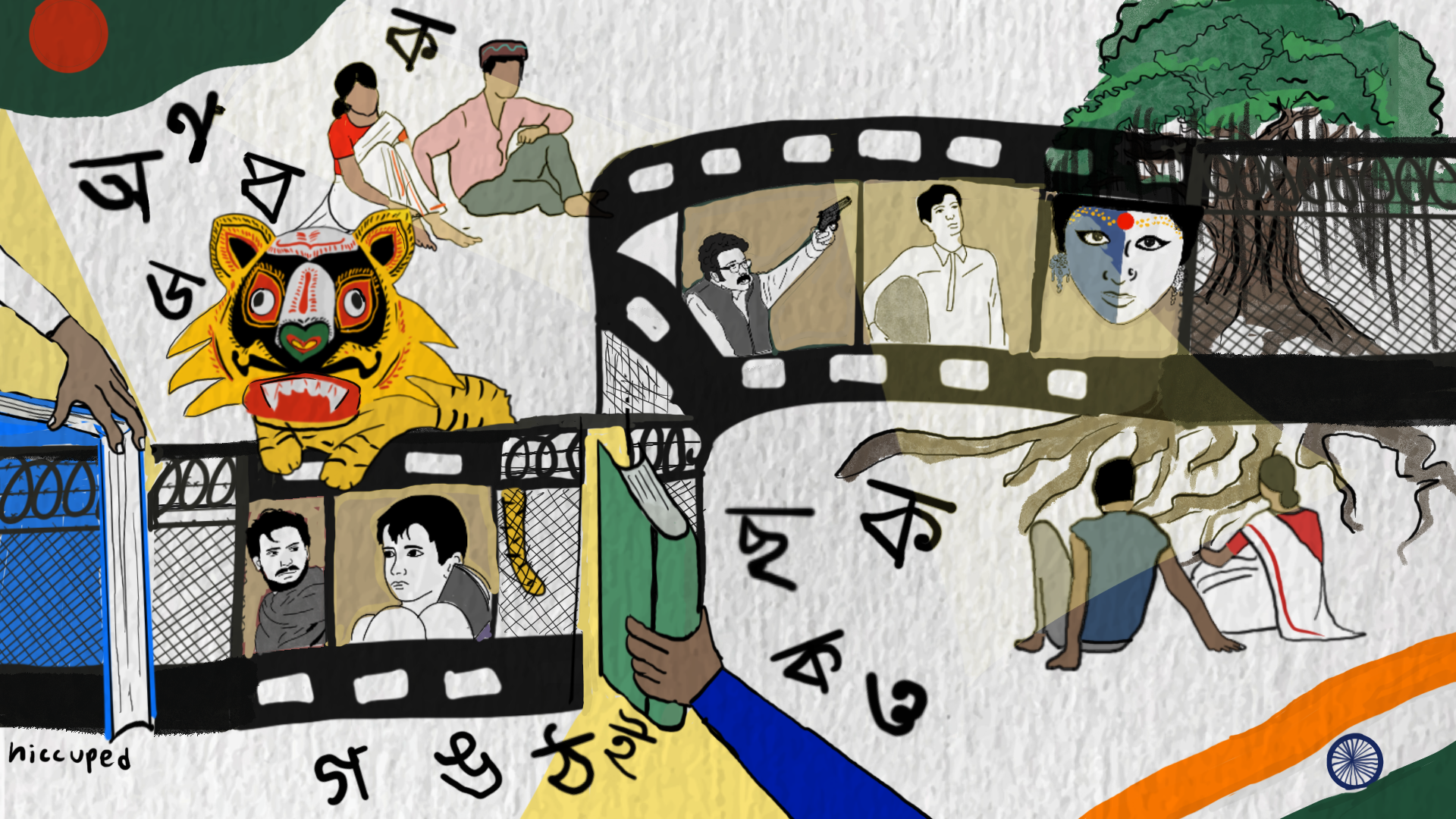
Illustration: Sharanya Eshwar
The 48th international book fair in Kolkata, the capital city of the eastern state of West Bengal in India, opened in January to record crowds but a glaring void. For the first time in 28 years, Bangladesh’s pavilion was absent.
This omission, amid visa denials and alleged complicated government clearances, symbolised a much broader freeze. The literary, cinematic, and artistic exchanges between West Bengal and Bangladesh, nurtured over decades despite partition’s scars, came to a halt under the weight of the regime change in Dhaka and India’s hard stance against illegal migrants.
Bangladesh and West Bengal, once undivided Bengal, share a 2,216-kilometer porous border. Since former Prime Minister Sheikh Hasina’s ouster in August 2024, amid student-led uprising, bilateral relations have plummeted to their lowest in decades, exacerbated by incidents such as the vandalism of Bangladesh’s diplomatic mission in Tripura in December 2024 and Dhaka’s cancellation of a $21 million ocean-going tugboat contract with India earlier in May.
India has intensified its pushback of “illegal” migrants from Bangladesh, drawing accusations of minority persecution, with reports of significant attacks on Hindu temples and symbols in Bangladesh since August last year.
While the possibility of a cultural exchange seems difficult given the prevailing political situation, social observers are optimistic that the Bengali identity will triumph over these barriers.
READ: As a ‘Gen Z’ Journalist, This is How I Felt Witnessing Young Bangladeshis Overthrow Sheikh Hasina
A Dhaka-based filmmaker Tanim Noor, whose genre-bending series Kaiser, a detective drama, has straddled the border in the last few years, embodies this. “Every time I visit Kolkata, it feels like I have not come to a different place. We are so alike,” Noor tells Asian Dispatch.
Growing up in the 1990s, Noor immersed himself in the works of icons from West Bengal such as Satyajit Ray, whose films shaped his cinematic worldview, and Sunil Gangopadhyay, the celebrated novelist whose narratives of identity and history are household reads in Bengali homes. These influences were the bedrock of Noor’s creative foundation, blurring the lines between Dhaka and Kolkata for him.
The Original Fault Lines
The partition of 1947 displaced 10-15 million people and ignited communal riots. East Bengal, as part of Pakistan, faced Urdu imposition marginalising Bengali culture. This led to strain in ties between erstwhile East Bengal and West Bengal, but things started changing with the demand for Bengali’s constitutional recognition in East Pakistan in 1956.
The Bengali Language Movement (Bangla Bhasha Andolon) began in 1948, when Pakistan’s founder Muhammad Ali Jinnah declared Urdu the sole state language, sparking outrage among Bengali speakers who made up the majority in East Pakistan. By February 1952, students at the University of Dhaka defied a government ban on gatherings and demanded Bengali’s inclusion in official use. Police opened fire, killing several protesters.
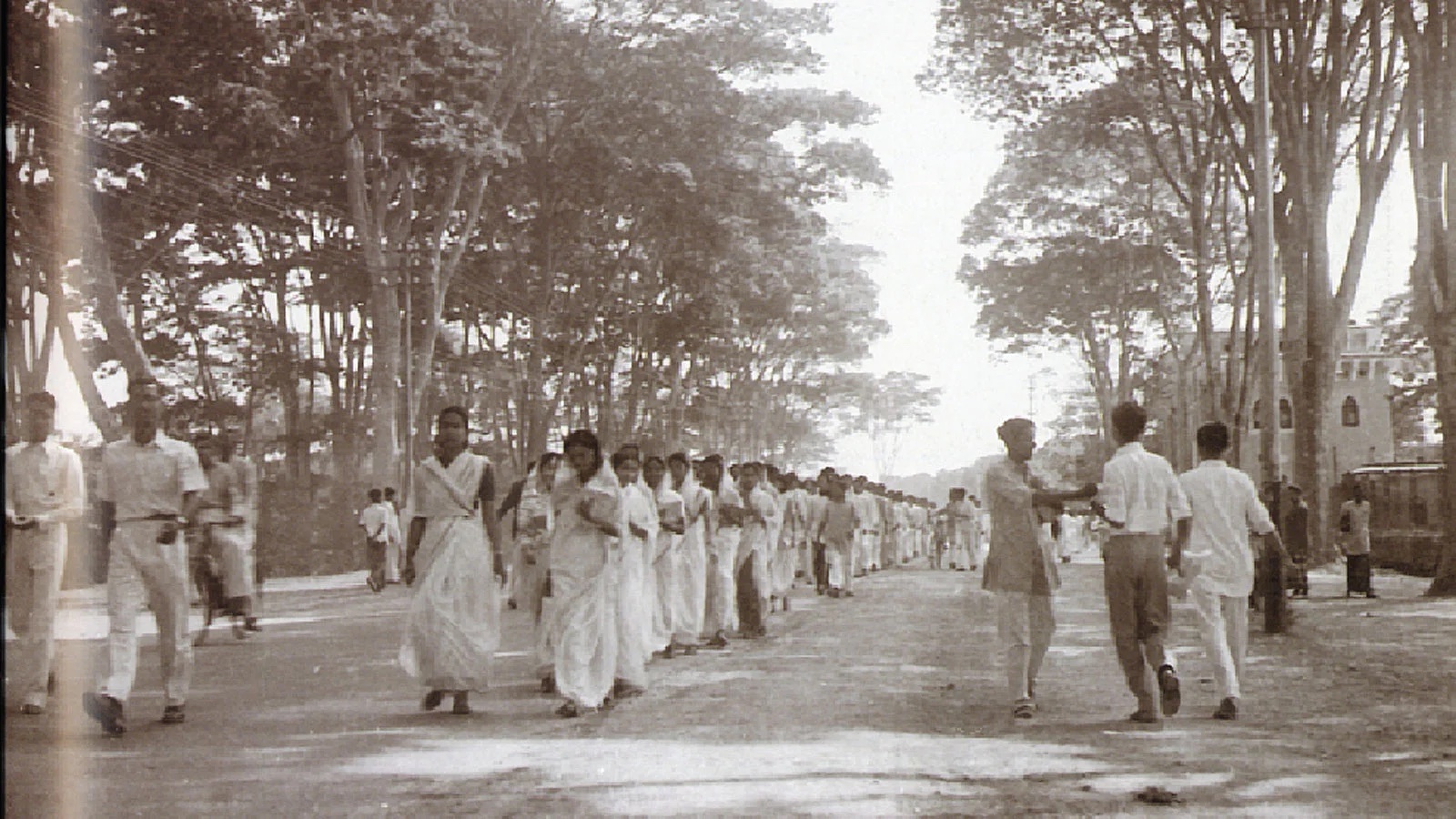
Women students march in February 1952. Photo: Wikimedia Commons

This is when the Bengalis in East Pakistan found support and solidarity from the Bengali speaking Indians. Many historians describe this as a pivotal assertion of cultural identity that echoed across borders.
Post-1971, after Bangladesh’s liberation war, such exchanges surged. “Shared festivals like Pohela Boishakh [the Bengali New Year] and cultural continuities in food, music and clothes acted as bridges,” says Rituparna Roy, founder of The Kolkata Partition Museum Project. “We don’t even realise how connected we are but we are practising it in our everyday lives. We eat the same dishes, perhaps the preparation is a little different, we wear similar clothes, and speak the same language in different dialects. One does not feel the compulsion to do something overt to establish a connection in such a situation.”
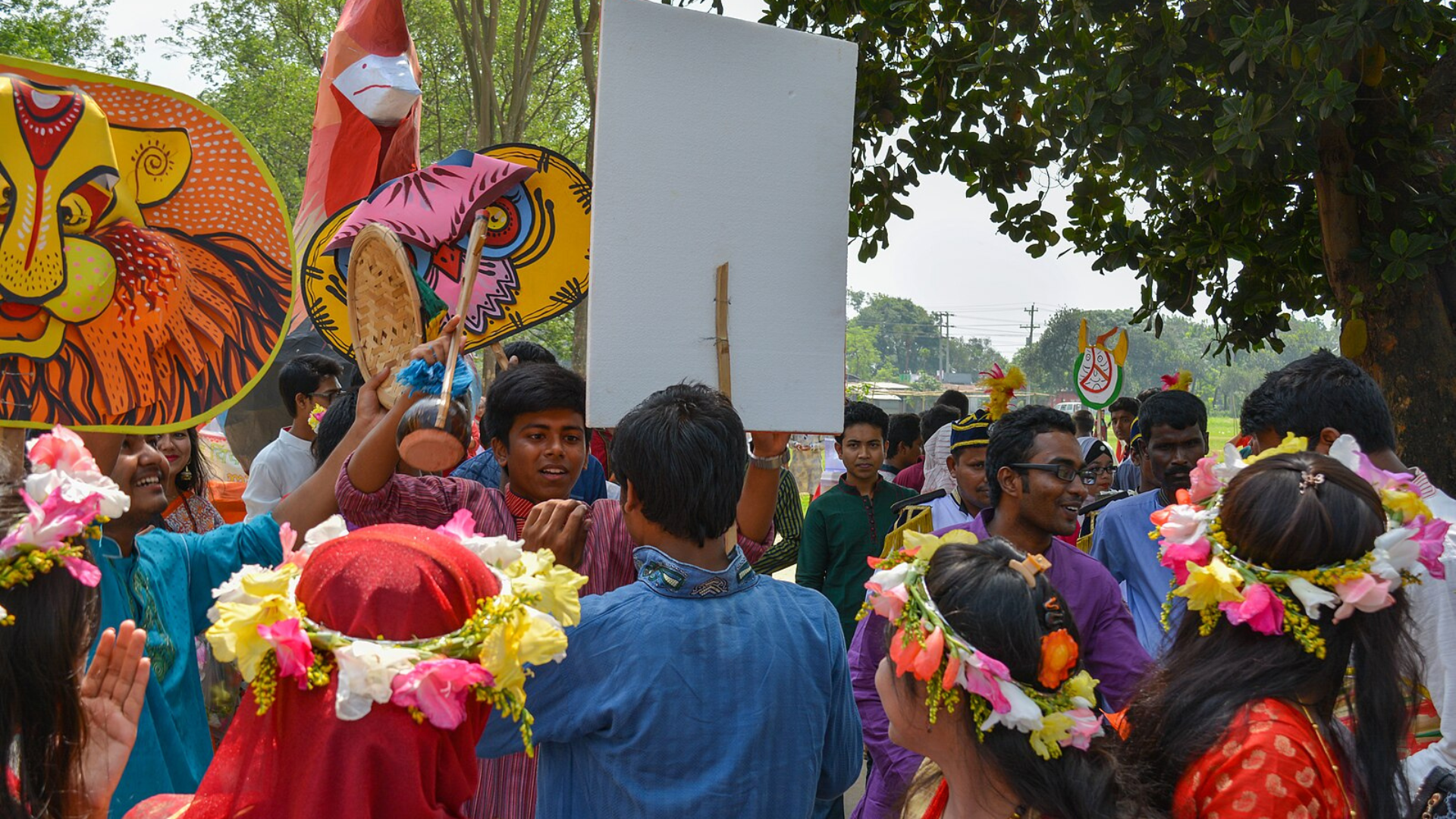
Pohela Boishakh celebrations in Bangladesh. Photo: Syed Sajidul Islam/Wikimedia Commons

There have also been consistent cultural efforts, but some have worked and some have not. “Long before OTT, there were collaborations. Ritwik Ghatak’s legendary film Titas Ekti Nadir Naam was shot in Bangladesh after 1971. In the 80s, directors like Gautam Ghose collaborated with actors from the East. There were also a lot of commercial films with actors from both sides of the border,” she adds.
Author Debjani Sengupta, in her book The Partition of Bengal, notes that despite the political rupture, cultural ties persisted through literature and language, acting as a bridge that defied the new borders and sustained a shared identity.
For Noor, this translated into a sense of belonging — of being among people who speak the same language, like the same food, and share a cultural legacy.
READ: In Bangladesh, Cops Accused of Killing Protesters During 2024 Uprising Roam Free
“It is a unique feeling of being in a different country but being among people who are totally indistinguishable from you. I have felt a special kind of warmth when I visit Kolkata, which is hard to find anywhere except home,” he says.
However, the shift in the political situation post 2024 has resulted in a halt for such exchanges. Publishers, producers, and festival organisers are not planning cross-border projects. Filmmaker Indranil Roychowdhury argues that in the absence of a strong cultural and political movement, the relationship will not be able to overcome the divisions of faith and borders during difficult times.
Binding Relations Through Books
One epochal moment of the revival of a cultural bridge was the International Kolkata Book Fair, inaugurated in 1976. The Bangladesh section started in 1996, modestly with 10-15 stalls but expanded to around 50 by the 2010s.
In 1999 and 2022, Bangladesh was the theme boosting cross-border sales of celebrated Bangladeshi authors such as Humayun Ahmed, whose novels sold millions regionally. Dhaka’s Amar Ekushey Grantha Mela, starting in 1972, also saw West Bengal’s participation from the 1990s. Publishers such as Ananda and Dey sent delegations.
Khandekar Manirul Islam, chief editor and publisher of Bhashachitra, a Dhaka-based imprint dedicated to innovative Bengali literature, has been a frontline witness to this. During his participation at Kolkata’s fairs, Islam regularly encountered questions that reflected a personal connection.
“Many people came to us to know about new writings in Bangladesh. They also asked where in Bangladesh we are from and would tell us how they had some lineage there. That emotion is a story in itself,” he recalls. For Islam, these interactions weren’t mere transactions, they were threads weaving back the fabric of a community, where a simple query about a village could unearth forgotten relationships.
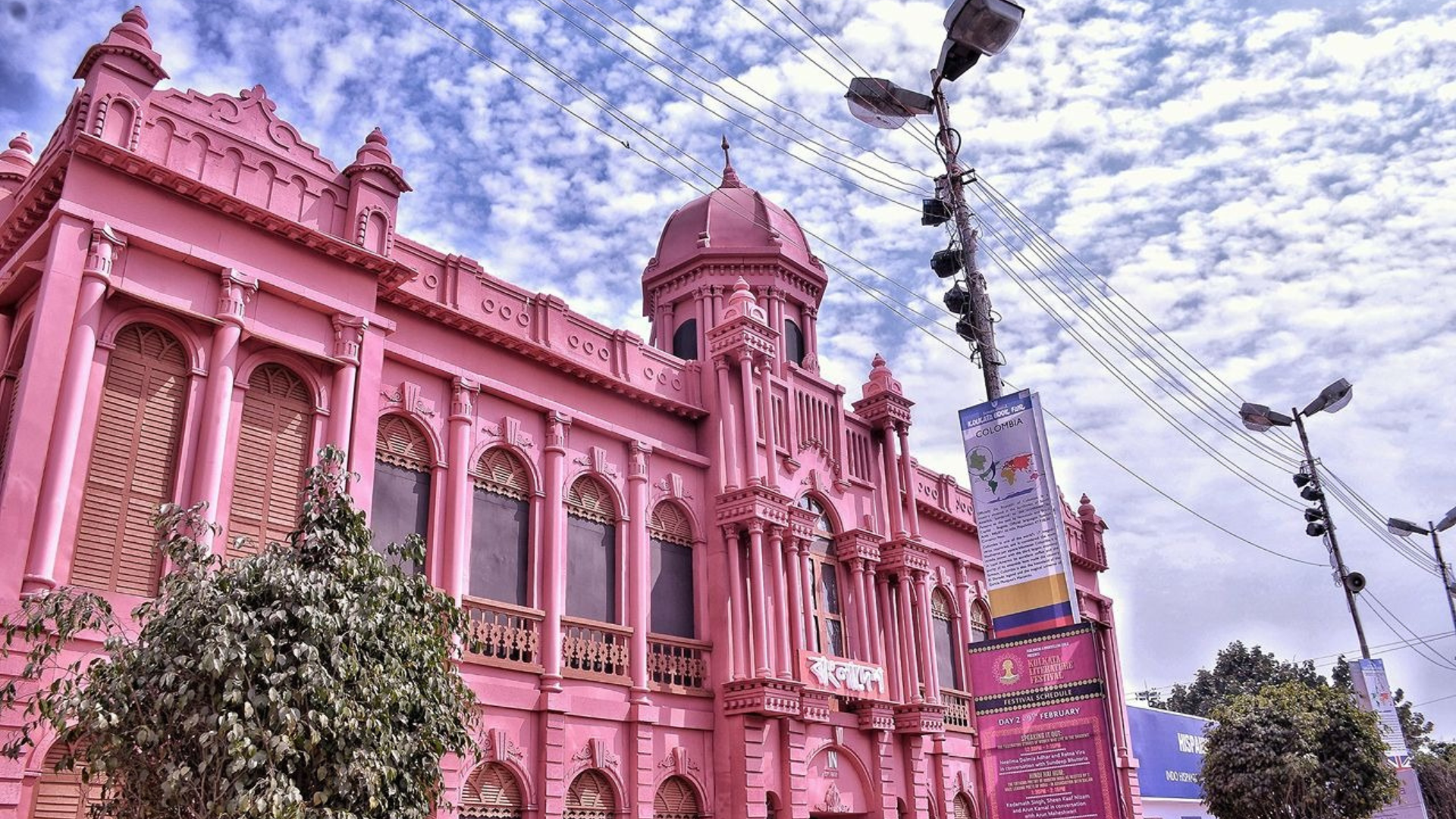
Bangladesh’s pavilion at the Kolkata book fair in 2018. Photo: Khandekar Manirul Islam
But 2025 marked a break.
Bangladesh was absent from the Kolkata book fair, its first since 1996. Ekushey 2025, inaugurated by Muhammad Yunus, also saw muted West Bengal involvement.
But there were other notable shifts as well. Bangladesh’s Bengali New Year celebration, traditionally a major cultural event with Indian participation, saw its name altered and there was significantly less involvement from Indian Bengalis. Artists and writers, who were frequenting fairs and workshops on either side, found it challenging to visit with visa processes becoming harder.
Despite this, Islam continues to view literature as an eternal bridge. “My work is with Bengali literature, so whatever external limitations exist, I will always try to find new works in the language that enrich the reader. It doesn’t matter where they come from,” he asserts.
In November 2024, he hosted an online creative writing workshop that drew nearly equal participation from Bangladesh and India.
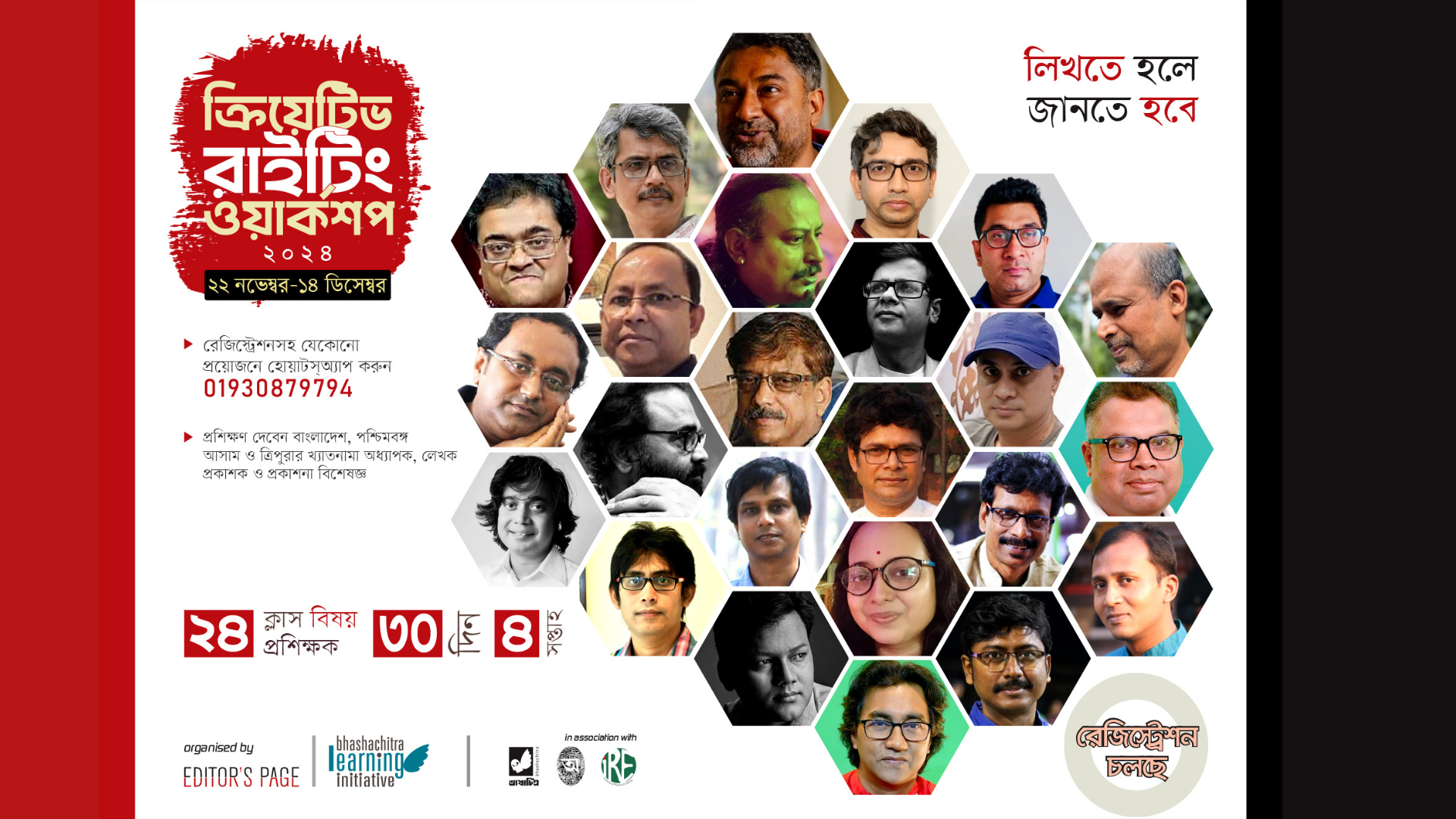
A creative writing workshop hosted by Khandekar Manirul Islam. Graphic: Khandekar Manirul Islam
However, Raja Poddar, publisher of Khowabnama in Kolkata, says that the strain in ties between India and Bangladesh has made people suspicious of each other. Highlighting the dip in demand for books and alluding to the absence of Bangladesh’s pavilion at the book fair, he says, “Though this has happened at a government level, the common [man] hasn’t opposed it either. Rather it is a popular decision at this moment.”
Cinema and OTT’s Golden Era
The advent of OTT platforms in Bengali, spearheaded by Hoichoi in 2017, created a seamless pipeline for content to flow from Dhaka to Kolkata and beyond.
This surge introduced West Bengal audiences to Bangladeshi stars, who quickly became household names, blending raw storytelling with universal themes of identity and resilience. Bangladesh’s Chanchal Chowdhury’s enigmatic intensity in Karagar (2022) catapulted him to fame, earning millions of views. Similarly, Mosharraf Karim’s nuanced roles in series such as Mahanagar drew Kolkata viewers into tales of urban grit.
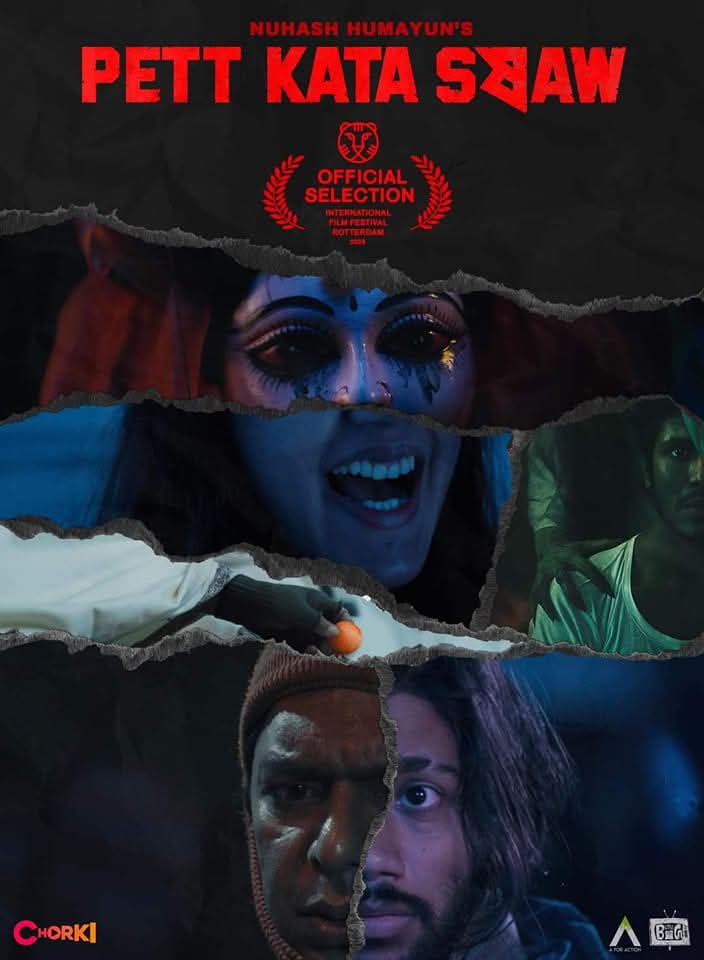
As Anindo Banerjee, former head of content at Chorki, a Bangladeshi OTT platform, observes, “There was a revolutionary high in watching material from across the border.” Chorki’s own hits like Pett Kata Shaw were streamed widely in India. This digital renaissance peaked with cinematic crossovers that packed theatres.
In 2022, during the fourth Bangladesh Film Festival at Kolkata’s iconic Nandan complex, a government-sponsored hub for cinematic awareness, queues stretched for long distances for Mejbaur Rahman Sumon’s mystery-drama, Hawa, starring Chowdhury. Audiences lined up from early morning for free screenings, with the film’s soundtrack Sada Sada Kala Kala becoming a Kolkata anthem.
Photo: Via Anindo Banerjee (right)
Urban stardom for Bangladeshi actors has flourished. Bangladeshi actor Jaya Ahsan won three Filmfare East Awards, while West Bengal actor Parambrata Chatterjee became Dhaka’s favourite through films like Bhuban Majhi (2017), where his role resonated with Bangladeshi audiences.
Noor’s career arc illustrates this fusion. When he began directing, his films quickly garnered fans on both sides, but it was the Hoichoi series Kaiser that catapulted him into the pantheon of cross-border storytellers. The nine-episode series amassed cross-border popularity, with the protagonist played by Afran Nisho, earning him household-name status across Bengal.
“With the current situation in Bangladesh, this kind of collaboration has come to a halt. The absence of new shows and the buzz around them has ensured an overall fall in viewer interest in such projects which was anyway in an early phase of growth,” says Banerjee.
He doesn’t really see an immediate way out but is optimistic that the process will start again. Noor, too, is hopeful of a larger cultural bridge. “The borders and divisions we see today are very short if we consider the history of a culture that has been around for several centuries,” he says.