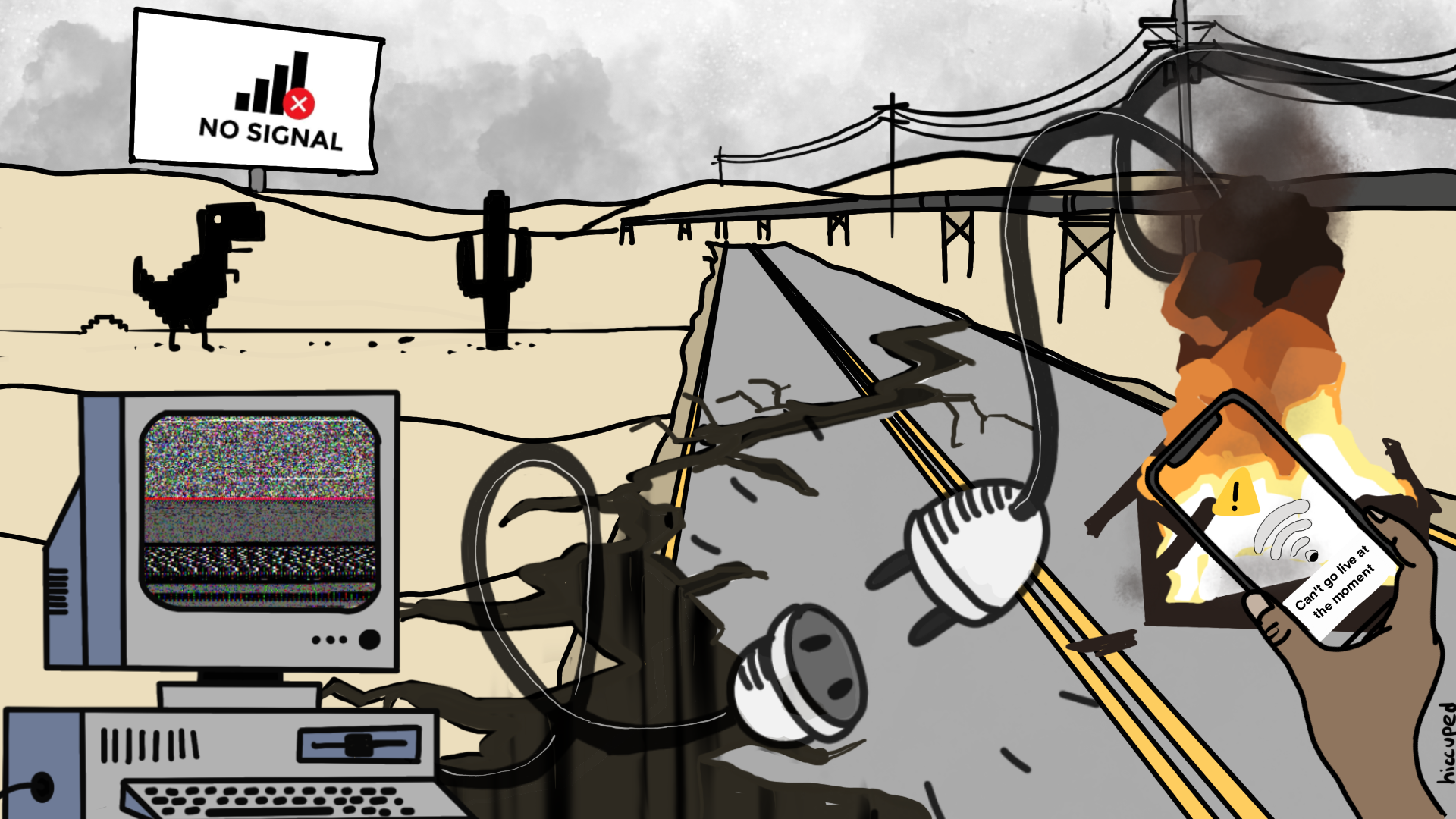
A new Asian Dispatch analysis mapped nearly 400 internet shutdowns in the last five years across South Asia. Illustration: Sharanya Eshwar
Across the world, social media has emerged as a means to collectively voice opinion and advocate for causes since the early 2000s. In South Asia, where internet penetration rates and mobile phone usage are some of the highest in the world, the platforms have been instrumental in democratising freedoms of speech and expression too.
The data speaks for itself. In India, over 70 percent of the population was using the internet as of 2024 data by International Telecommunication Union. In Bangladesh, that rate came up to 44.5 percent in 2024. The mobile broadband subscriptions stand at 899 million users for India and 98 million users in 2024. Looking at data from 2023 for Sri Lanka and Pakistan, we see the connectivity rate at 51.2 percent and 27.4 percent, respectively. The active mobile broadband subscriptions are at 73.5 per 100 people for Sri Lanka and 55.1 per 100 for Pakistan, as of 2024.
At the same time, the digisphere has created a new landscape for non-elite civic participation in everyday politics and political activism, wrote Dr Ratan Kumar Roy, a media studies professor from Bangladesh based in India, in his white paper on digitisation and civic participation. “Politics in the digital age is often subtle and takes on forms different from traditional political activism. This can include liking, sharing or commenting on political content, which can collectively have a large impact,” Roy notes in the report.
According to digital rights group Access Now, South Asia has seen some of the world’s leading internet shutdowns for over six consecutive years until 2024. In their 2024 report, they note that India witnessed 116 internet shutdowns in 2024 and over 500 in the last five years.
Mishi Chaudhary, the founder Software Freedom Law Center (SLFC.in) in India recalls two types of internet shutdowns: Preventive – that are imposed in anticipation of an event that may require the internet to be suspended by the state – and reactive, which are imposed to contain ongoing law and order situations.
Internet shutdowns can take various forms, from blocking of certain websites to partial or full telecommunication and internet shutdowns.
“Internet shutdowns are the easiest tool in the toolbox for governments to control the flow and dissemination of information,” Chaudhary tells Asian Dispatch. “Although no evidence has ever been presented about the effectiveness of shutdowns, state authorities, fearful of the ease of organisation via the internet, are quick to use this blunt instrument of state power.”
In this piece, Asian Dispatch mapped 397 shutdowns between July 2019 and 2024 in India, Sri Lanka, Pakistan and Bangladesh out of which shutdowns in India, Pakistan, Bangladesh and Sri Lanka stand out. This data doesn’t include Afghanistan, Bhutan, the Maldives and Nepal, where internet shutdowns of this measure have not been documented.
Internet shutdowns have tangible real-world costs. In 2024, Pakistan’s economy was estimated to have lost between $892 million and $1.6 billion, according to the Information Technology and Innovation Foundations, a Washington-based think tank working on science and technology policy. In 2018, Sri Lanka faced an estimated $30 million loss due to similar measures, as reported by NetBlocks. The figures for India in 2024 stand at $322.9 million, as per the report by Top10VPN.
Robbie Mitchell, Senior Communication and Technology Advisor for the Internet Society, a global charitable organisation, says that information blackouts resulting from internet shutdowns can, in fact, result in increased violence. He elaborates further by adding that violent tactics of protest are less reliant on effective communication mechanisms and thus they could substitute non-violent protests that rely on the internet for planning and organization in the cases of internet shutdowns.
“In addition, internet shutdowns tend to attract international attention and create pressure on countries that undertake them. This relates to the so-called ‘Streisand effect,’ where the attempt to silence voices or hide information leads to the unintended consequence of bringing more attention to them,” Michelle says.
Left in the Dark
Mandeep Punia, a 30-year-old journalist from India, says that any internet shutdown causes a “fear of the unknown” in the society. Punia has experienced shutdowns first during the 2016 Jat community reservation protests, as well as the 2019 shutdown in Kashmir during the abrogation of article 370, among others. The most recent internet shutdown in India was in the state of Haryana in August 2025, as recorded by the internet tracker maintained by SLFC.
About 3,000 kms away, in Sri Lanka, Oshadi Senanayake, a civil society member and social worker, recalls the communication shutdown during the anti-Muslim violence in Sri Lanka in 2018. The series of violence saw the imposition of a nationwide state of emergency as Sinhalese-Buddhist crowds attacked Muslims and their establishments in the city of Kandy. “When the means of communication were restricted, it was very difficult,” she tells Asian Dispatch. “We were all in the dark, no one knew what was going on and there was no way to find out either.”
The similarity in these narratives connects the dots across South Asia on how internet shutdowns impact people.
In 2024, Pakistan invoked the region’s most recent shutdowns, which was done to curtail mass uprising in support of jailed former prime minister Imran Khan. This was one of the 17 shutdowns Pakistani people faced in the last five years, as per data collected by Asian Dispatch.
The same year, in July, Bangladesh saw mass protests by university students over government jobs, which eventually upended Sheikh Hasina’s 21-year rule. Her government resorted to internet shutdown in order to curb the organised movement. Over 1,000 people were killed during the protests, as per a report released by the interim government led by Nobel Laureate Mohammad Yunus.

At the same time, Asian Dispatch learned of students finding ways to circumvent the internet blackout, specifically by urging the residents to open their Wi-Fi networks, either by removing passwords or using “123456,” to support the movement. Shahriyaz Mohammed, a student at the University of Chittagong, and Raihana Sayeeda Kamal, another student based in Dhaka, confirmed that such appeals were made. According to Roy, who is also a former media studies professor at BRAC University in Bangladesh, this appeal drew widespread response, with many complying.
At the same time, the communication blockade disrupted the academic and professional prospects for many. Kamal said that she graduated last July and was supposed to apply for her postgraduate work permit in Canada. “I couldn’t do it. I was out of touch from Canada. It hampered my job search and communications with my professors, and delayed my application,” she tells Asian Dispatch.
Raihana Sayeeda Kamal, a student based in Dhaka talks to Asian Dispatch about her experience of living through the internet shut down of 2024 in Bangladesh
Mohammed, who lives in Chattogram, the second largest city of Bangladesh, says that internet cuts take place anytime, and that the Internet Service Providers (ISP) do not give any prior notice.
“The internet is the most necessary thing for my occupation and also for my study,” he says. However, due to these shutdowns, he wasn’t able to communicate with his office or get any updates from other parts of the country during the protests which hampered work for him as a budding reporter.
Controlling the Narrative
In 2019, India abrogated Article 370 of the Indian Constitution, which accorded special privileges to the region of Jammu and Kashmir. Along with the announcement came a sweeping communication blockade in order to curb disruptions due to anticipated unrest. The blockade in the region lasted 18 months prior to the services being fully restored. In all, the region experienced 213 days of no Internet and 550 days of partial or no connectivity, as noted by the Internet Society.
“Due to COVID-19, everyone knows what a lockdown looks or feels like. But it was only worse in Kashmir as there was not a restriction to physical spaces but also to virtual spaces,” Sayma Sayyed*, a student at a leading university in India, tells Asian Dispatch on condition of anonymity.
The situation, she added, resembled a pre-digital era, with no internet or mobile reception, forcing people to travel several kilometers just to check in with their loved ones.
The lack of internet creates a void of information in the society, says Sayyed*, a resident of Baramulla in Kashmir. “When I had to fill my form for competitive exams, students had to rush to government offices to do so,” Sayyed added. “So I went to the District Commissioners office to fill my form which is when I realised something has happened. Something I could do on a leisurely day became such a big task.”
Within India, the Union territory of Jammu & Kashmir holds the record of the highest number of shutdowns in the country.
Another student from the valley, who also spoke to Asian Dispatch on condition of anonymity, highlighted the psychological impact of such situations. “You don’t feel normal in places outside Kashmir,” the student said. “When I shifted to Delhi for further studies, I was confused as I was able to carry out my studies without any restrictions. I expressed this to my friends and they, too, agreed with the lack of restrictions. It felt jarring to someone who has seen so many curfews and internet blackouts.”
In this video from 2020, a student from Kashmir Valley in India’s Jammu & Kashmir voices similar concerns to Sayyed’s over the delay in her B.Tech examinations and how due to lack of internet, applying for her sister’s entrance examination became a daunting task. Source: Internetshutdowns.in, a repository of internet shutdowns in India maintained by Software Freedom Law Center, India [SFLC.in]
In Bangladesh, Shamim Hossen, a 28-year-old humanitarian worker and the reporting officer at Muslim Hands International, a charitable organisation, highlights how those solely reliant on mobile data were completely cut off. “I use mobile internet and data, and when I am in my office, I use Wi-Fi. But during the internet shutdown, our office was closed so I have no experience using Wi-Fi during that time,” she tells Asian Dispatch.
Sri Lanka has seen the use of full internet shut downs as well as partial restrictions such as curbing access to social media websites for a certain duration. Incidents such as the Easter bombings in 2019 which saw serial blasts on multiple public and religious sites in Colombo, to the economic crisis of 2022 to the Presidential elections in 2023 saw the use of such measures. The country has seen 5 shut downs from 2019 to 2022, as per data collected by Asian Dispatch.
Amarnath Amarasingam, Assistant Professor at the School of Religion, Department of Political Studies, at Queen’s University in Canada, told Asian Dispatch about the relation between misinformation and shutdowns. “In Sri Lanka, when social media was blocked, citizens turned to alternative, less reliable sources,” he says. “These shutdowns made it difficult for credible journalists and activists to fact-check information, leading to a situation where rumours and conspiracy theories filled the void. In countries with ongoing communal tensions, the spread of false rumours can lead to real-world violence against civilians as well.”
Massive protests in Delhi. All communications have been suspended in select areas where the protests were scheduled to take place. Please report any Internet shutdowns to us @NetShutdowns
Reach out to us – +911143587126#LetTheNetWork #KeepItOn #delhi pic.twitter.com/ziUtYdJEMe— InternetShutdowns.in (@NetShutdowns) December 19, 2019
Women’s safety and internet shutdowns. How internet shutdowns impact women’s safety and travel in the national capital of India, Delhi. Source: Internetshutdowns.in, a repository of internet shutdowns in India maintained by Software Freedom Law Center, India [SFLC.in]
Highlighting the broader implication of using internet shutdowns to control dissent, Amarasingam adds: “Internet shutdowns have significant human rights implications, especially around issues like freedom of speech and access to information. Shutting down internet services curtails individuals’ ability to express dissent, participate in protests, or even access vital services such as health and education. All of this, of course, will impact marginalised communities more than others.”
“In Sri Lanka, these shutdowns particularly affect communities with fewer alternative sources of information and who rely on mobile internet for basic services. In the former war zones in particular, these alternative sources of information are key for receiving information that is not curated by the government.”
“Along with the professional, personal life also gets affected,” adds Aftab Mohmand, a 44-year old senior journalist from Peshawar. Mohmand adds that usually, one can circumvent restrictions through VPN or Wi-Fi. But in Peshawar, there is no such facility. Four of the 35 shutdowns Asian Dispatch has documented from 2019 to 2024 for Pakistan were in Peshawar province. “VPN data is monitored and it can be dangerous too,” says Mohmand. Since 2014, he has been using the phone to make reels, create reports and record everything using the internet.
Disrupting Normalcy
“My clients outside of Peshawar think that people from the region do not work properly due to internet restrictions coming up now and then. We had in fact replied to messages but they would reach one to two hours later, which affected our credibility.”
This is the ordeal of Sufi Ali, a 35-year-old IT officer from Mardan, located in Peshawar, Pakistan. Pakistan has recorded 35 shut downs between July 2024 to July 2019, according to the Asian Dispatch analysis. These include blocking the internet in response to protests such as the ones in support of former Prime Minister Imran Khan in 2022 to allegations of throttling with the internet speed by the government during the testing of speculated possible internal firewall.

Virtual Private Networks (VPNs) are often used to bypass shutdowns or access regionally blocked websites. But Mohmand notes that they significantly slow down internet speeds.
Journalists from India, Sri Lanka and Pakistan told Asian Dispatch that these restrictions make it nearly impossible to verify information for accurate reporting.
“I am a journalist so whenever we go out for conflict reporting, we face [internet shutdown],” says Punia, the rural journalist from India. “But the worst aspect of that is that our [media portals] are also shut down.
His concerns are mirrored by Sandun, a freelance journalist based in Sri Lanka. Talking about covering the 2018 anti-Muslim violence, she says the internet shutdown made their job even more difficult. “We treated every piece of news with suspicion and nothing could be verified. The officials were too silent or evasive and we didn’t have anyone on the ground. We felt like we would risk peddling misinformation,” she says.
READ: In Bangladesh, Cops Accused of Killing Protesters During 2024 Uprising Roam Free
On July 19 alone – the day Sheikh Hasina’s ousted regime enforced an internet blackout – at least 148 people were killed by law enforcement agencies, according to a report by the International Truth and Justice Project (ITJP) and Tech Global Institute.
CIR also identified two “peaks” in violence. The first was on July 18, where killings amounted to a massacre. It all started with the killing of a protester called Abu Sayeed, in Rangpur district, on July 16, which was captured in a now iconic image of him spreading his hands in front of the police force. The second peak in violence was on August 5, the day Hasina resigned and fled to India.
Both these peaks in violence also correspond to internet shutdowns, as Asian Dispatch has investigated.
The Policy Pitfalls
South Asian governments often cite national security and misinformation as reasons for internet shutdowns. However, these terms are frequently undefined or vaguely worded in legislation and policy, prompting global experts to raise concerns about their potential misuse.
In the absence of any explanations by government arms on the reasons behind these moves, speculation is rife. For instance in India, internet shutdowns are governed under the Temporary Suspension of Telecommunication Services Rules, 2024, which, under clause 3, explicitly states that the reason for such measures needs to be released in writing. However, these orders are seldom found in the public domain..
In Pakistan, the legal backing of shutdowns is murky as the Pakistan Telecommunications Authority (PTA) also recently highlighted this legal uncertainty. Numerous laws are speculated at play here, with most shutdowns being informed by PTA, the body responsible for establishing, maintaining and operating telecommunications infrastructure in Pakistan, via orders for enforcement by the Interior Ministry. Other than these orders it is believed that Section 54(3) of Pakistan Telecommunication (Re-organization) Act, 1996 is used for such shut downs, which has been ruled against by the Islamabad High Court in 2018. The opacity of such measures is widely recognised by activists and advocacy organisations in the country as well as globally.
Recently, Pakistani journalist Hamid Mir filed a petition in Islamabad High Court, requesting for clarity on why the internet speed in the country were significantly lagging in the past few months, leading to even voice notes or multimedia on WhatsApp not reaching receivers. The petition comes at a time when speculations are rife about the government installing a “fire wall” that would prevent free and open use of the internet in Pakistan.
Other laws in Pakistan, such as the Prevention of Electronic Crimes Act, 2016 (PECA) under its 2025 amendment-equipped section 26(A) criminalise intentional dissemination of false information in the country. ‘Fake news’ is also the basis of many internet shutdowns, thereby hinting at the indirect use of the act for enforcing such measures.
Sri Lanka, too, sees a similar trend in a mix of non-specific regulations being used to curb internet and social media access in the country. Orders to the Sri Lankan Telecommunications Regulations Commission by the Ministry of Defense have been seen as ways of enforcing such curbs. Reasons for shutdowns range from curbing the spread of misinformation, to stopping demonstrations such as during a state of emergency.
Amarasingam says that the absence of official communication during internet shutdowns often leads to an information vacuum, which can fuel misinformation.
“The problem is that in authoritarian contexts, misinformation merely means critiques of the ruling party. And ‘terrorism’ often just means agitation against the government. And so, these terms are weaponised to curtail fundamental rights. In these contexts, shutdowns may hinder the spread of accurate information, create distrust, and deepen existing societal divisions,” she says.
In India, the law is clearly laid out but often not applied consistently. For this, Chaudhary of SLFC says that the civil society has to constantly approach the courts to enforce their rights. “Time period of shutdowns are extended continuously despite limitations imposed by law. Law requires proportionality,” Chaudhary says, adding that the proportionality of these actions is far more than required for the general good.
“Can shutting down the entire system of social communications and completely crashing the payments economy for months be ‘proportional’ to the necessary problem of preventing the incitement of intercommunal riots? If this government intervention is the ‘least restrictive means,’ what are the other more restrictive means the government would not be allowed to use?” Chaudhary asks. “The mind boggles.”
Mitchell from the Internet Society adds further context to the consequences of these actions: “Internet shutdowns tend to attract international attention and create pressure on countries that undertake them. This relates to the so-called Streisand Effect, where the attempt to silence voices or hide information leads to the unintended consequence of bringing more attention to them.”
Digital Rights are Human Rights
When asked whether they were informed prior to internet shutdowns, there’s an astounding “no” from those interviewed for this piece.
Numerous international statutes reaffirm that the internet is an indispensable part of human rights. The United Nations Human Rights Council enshrines this in Article 19 of the Universal Declaration of Human Rights, which “protects everyone’s right to freedom of expression, which includes the freedom to seek, receive and impart information of all kinds, regardless of frontiers.” Restrictions to right to freedom of expression are only permissible under article 19(3) of the Universal Declaration of Human Rights, although it notes: “When States impose internet shutdowns or disrupt access to communications platforms, the legal foundation for their actions is often unstated.”
In India, on two separate instances – by the High Court of the state of Kerala and then the Supreme Court – access to the internet has been declared a fundamental right under the Indian constitution.
“In India, the law is clearly laid out but often not applied consistently. adds Choudhary of SFLC.in.
In Bangladesh, a similar trend exists. Asian Dispatch spoke to students and young professionals who didn’t receive any prior intimation of internet shutdown orders in the last one year. The trend is to slow down the internet, and then slowly revoke access fully, says Kamal, from Bangladesh.
Noting the impact of shutting down the internet, Michelle says: “Internet shutdowns have far-reaching technical, economic, and human rights impacts. They undermine users’ trust in the internet, setting in motion a whole range of consequences for the local economy, the reliability of critical online government services, and even the reputation of the country itself. Policymakers need to consider these costs alongside security imperatives.”
While law governs social media and not internet shutdowns directly, it is worth noting that the negative effects of problematic regulations become yardsticks for regimes that govern a similar cultural and social landscape.
“It also stops people from both demanding and empowering government action to protect its people,” Chaudhary adds. “Shutdowns don’t create the social and political will to safeguard our people, but rather a cloak for the government to hide its shame.”
Punia, the journalist from India, agrees and adds that freedom of speech and expression are never absolute. “They are only useful until one has to show them as democratic for indexes and rankings and gain marks there,” he says.
These are just a few examples of the broader impact experts point to. Given the concerns raised by individuals like Sayyed in India and Hossen in Bangladesh, a critical review of both the shutdowns and the frameworks enabling them is long overdue. Access restrictions need to be brought to the fore and the internet needs to be given a fair chance to make a case for its freedom.
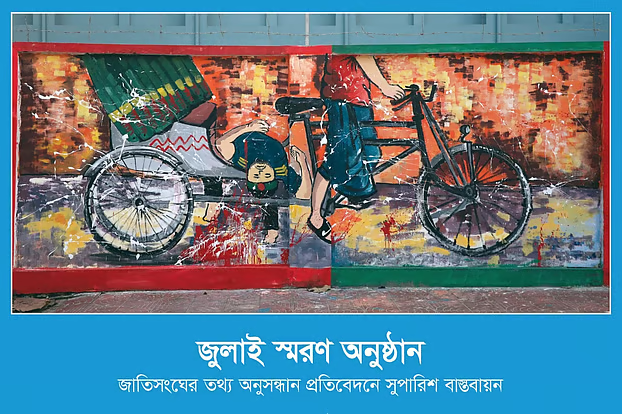
The interim government’s Chief Adviser Professor Muhammad Yunus has reaffirmed his commitment to ensuring justice for human rights violators.
Emphasising the need for reforms, he stated, “This is not just cosmetic change, rather this is a transformation at the deepest level. If we do not bring about such profound reforms, the very autocracy we are speaking against today will return, no matter how much we try to contain it or reform it. We need deeper reform. It is absolutely essential.”
He made these remarks on Tuesday, while addressing a July Commemoration organised by the United Nations’ Dhaka office at a hotel in the capital. The event focused on the July mass uprising and the UN’s investigative report.
Other speakers at the event included Bangladesh Nationalist Party (BNP) Secretary General Mirza Fakhrul Islam Alamgir, Bangladesh Jamaat-e-Islami Ameer Shafiqur Rahman, National Citizen Party (NCP) Secretary General Akhter Hossen, Golam Rahman—father of July uprising martyr Nafis—and Sabrina Afroz Srabonti, sister of martyred activist Saikat.
A recorded message was delivered by UN High Commissioner for Human Rights Volker Türk.
In his address as the chief guest at the closing ceremony, Professor Yunus said, “Alongside conducting reforms, we are committed to bringing to justice those responsible for the grave human rights violations committed in July. Justice is not just about punishment; it is about building a state where power is never again used against the people.”
He further noted that from 1 July to 5 August last year, serious human rights violations occurred, prompting the government to request an independent and impartial investigation by the UN Human Rights Office. The UN’s report, published in February, documented the deaths of around 1,400 people. The report concluded that the violence was planned, coordinated, and executed at the highest levels of the previous government.
READ: In Bangladesh, Cops Accused of Killing Protesters During 2024 Uprising Roam Free
“We are grateful to the UN Human Rights Office not only for documenting this repression but also for offering a wide-ranging set of recommendations to prevent such atrocities from ever happening again,” Professor Yunus said.
He also outlined steps already taken by the incumbent government to protect human rights, including amendments to the Penal Code, Bangladesh’s accession to the international convention on the protection of all persons from enforced disappearance, and the signing of a memorandum of understanding (MoU) with the UN.
Under this MoU, a support mission is being set up in Dhaka to provide technical assistance and training to both government institutions and civil society, he added.
Reaffirming his vision for an inclusive political and social system, the Chief Adviser said, “We are working towards a national consensus for a new political framework that ensures inclusive, participatory, and credible elections.”
In his remarks, Mirza Fakhrul Islam Alamgir stated, “We too want justice for those killings to be delivered swiftly, urgent reforms be implemented without delay. But one thing must be remembered—a government that genuinely represents the people is crucial. Because, there is a clear difference between acting with a mandate and acting without one.”
The senior BNP leader stressed the need to build a democratic Bangladesh. “I believe a democratic system will gradually solve our problems. We cannot expect a revolutionary transformation overnight, but meaningful change will certainly come through democratic means.”
He also expressed hope that a free, fair, and inclusive election will be held, leading to a government truly representative of the people, as promised by the Chief Adviser.
Fakhrul acknowledged the Chief Adviser’s efforts, saying, “Actually, one year is not a long time. But within that time, significant progress has been made. And most notably, they have advanced the reform process.”
Jamaat-e-Islami Ameer Shafiqur Rahman remarked that no election could be held before trying those responsible for crimes against humanity committed by the Awami League during the July movement.
“Justice, reform, and elections must go hand in hand. Holding an election before justice and reform would be a disaster for the nation,” he warned.
He further said, “We demand justice for the Awami League, but it must be just—not vengeful. Let them receive the justice they deserve. If true justice is established, no one will be spared. Those who committed murder must receive their rightful punishment, and the culture of impunity must end.”
NCP leader Akhter Hossen endorsed the UN investigation team’s recommendation for an independent judiciary. He also called for the identification and prosecution of those involved in the July killings who remain in the country, and for extradition of those who have fled abroad.
Golam Rahman, father of July uprising martyr Nafis, alleged that the police officer responsible for killing his son is still serving in Cox’s Bazar. He demanded the officer be brought to trial soon.
Sabrina Afroz Shrabonti, sister of martyr Saikat, said she wanted to see the conclusion of the trial for the July killings and called for the immediate publication of the July Charter.
UN Human Rights Commissioner Volker Türk, in his message, called for swift prosecution of those responsible.
The event was presided over and moderated by Huma Khan, Senior Human Rights Adviser at the UN Office in Dhaka.
A documentary on the martyrs and injured of the July uprising was screened at the start of the closing session.
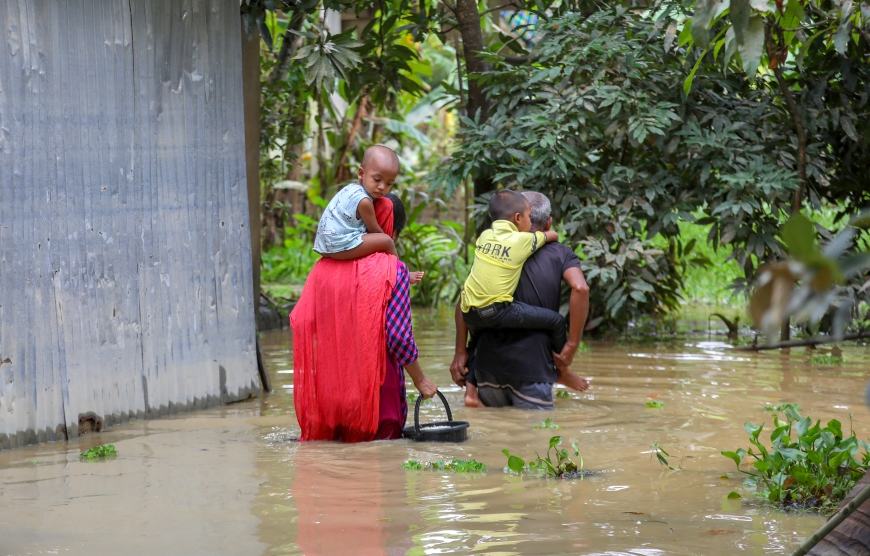
Shimul Chandra Paul, a resident of Parshuram in Feni, woke up to incessant rain for the third consecutive day. The looming risk of flooding, which had seemed unlikely just a day before, had suddenly become a reality. By noon, water had reached his village, rising rapidly with each passing minute. Before he could figure out how to save his belongings, the water level rose too high. Shimul barely managed to save himself, first taking refuge on a tin-shed rooftop before moving to a building in nearby bazaar as the surging waters continued to rise.
“We have never seen such massive rain in our lives. Even our fathers hadn’t,” said Shimul. Although the water rose rapidly, it didn’t recede as quickly. It took over a week for the discharge to begin. By then, Shyamal’s house was in ruins, and his properties were irreversibly damaged.
Shimul, his brothers, extended family, and millions of others in southeastern Bangladesh – along with the people in the Indian state of Tripura – were stranded in the prolonged flood in August 2024. Thousands lost their houses and belongings to the flash floods. But, except for inundating national sympathy and private help in the immediate aftermath of the disaster, many victims found no help as the government came up with little hope for them.
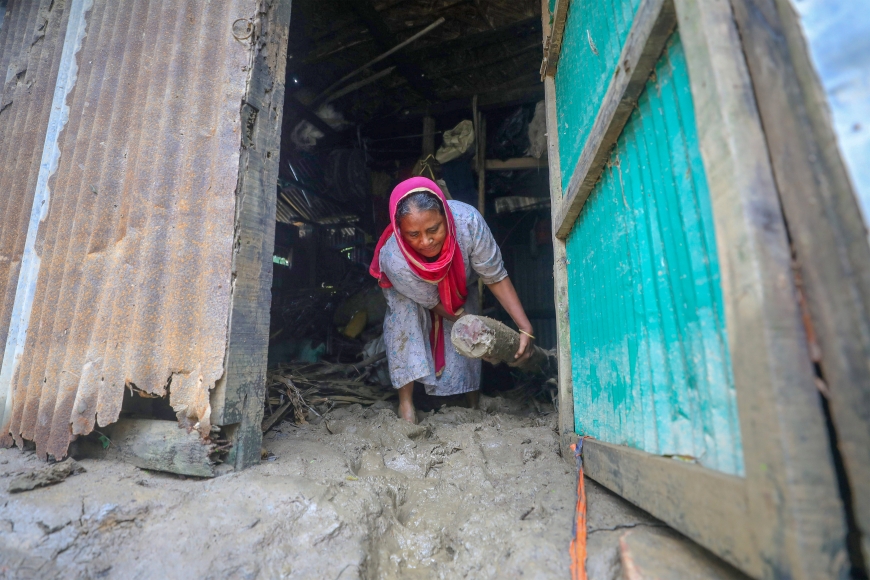
Thousands lost their houses and belongings to the flash floods. Photo: Mohammad Minhaj Uddin
District officials in Cumilla and Feni reported shortages in relief supplies, immediately receiving only 400 metal sheet bundles and Tk12 lakh each, despite much higher demands as thousands of houses were damaged. However, around 300 houses were handed over to the victims by the government this April, while many needs relied on private aid or were simply left unmet as over 8,000 houses were fully or partially damaged in Feni alone.
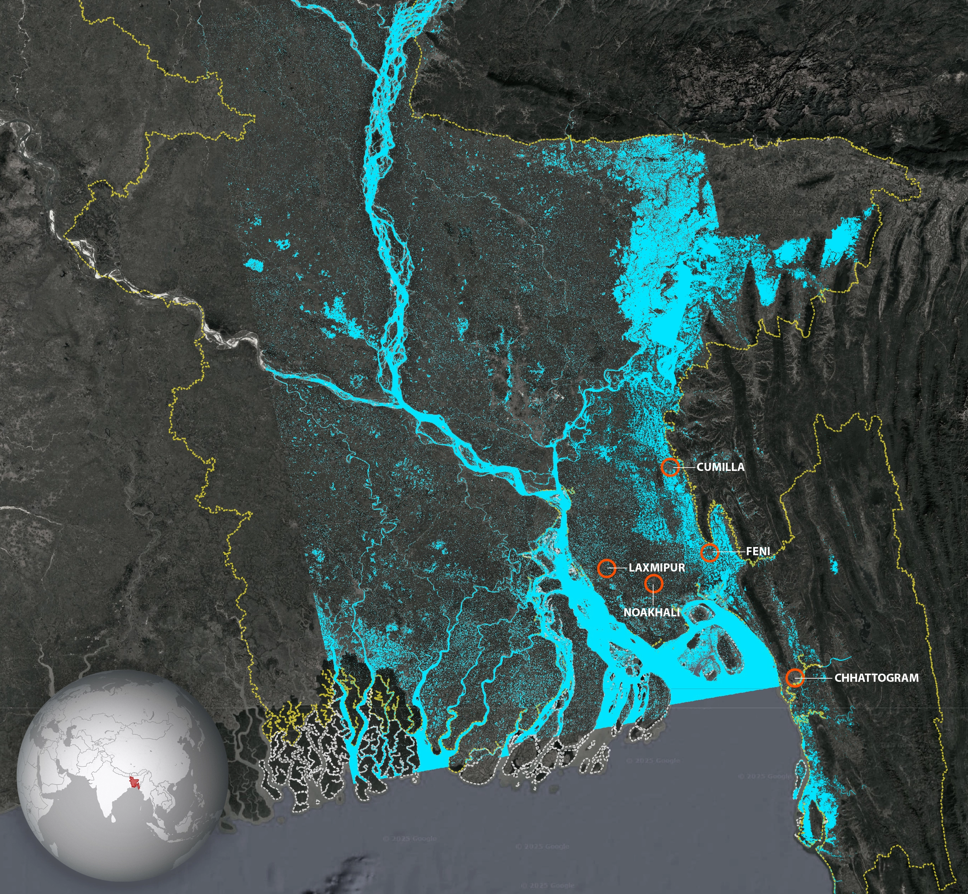
Bangladesh’s Feni has been the most affected besides Cumilla, Noakhali, Chattogram, and Laxmipur, as it rarely experiences floods. So, when consecutive days of heavy rainfall, amounting to hundreds of millimetres, poured down along with a cloudburst, people were caught off guard, lacking prior experience in dealing with floods of this scale.
About 71 people died in southeastern Bangladesh, including 28 in Feni, while 31 lost their lives in the Indian state of Tripura. The floodwater remained for over a week as drainage channels were blocked, and swamps and canals had been lost to encroachment.
As a result, people’s suffering worsened. Although private aid poured into flood-affected areas, many struggled without food and water for days, as relief workers faced difficulties reaching remote areas. Even after the water finally receded, the devastation left behind was staggering. Waves of diseases spread, and many victims received little to no assistance for rehabilitation.
Erratic rainfall – the force behind August disaster
From August 19-23, 2024, Bangladesh’s Feni recorded 832 mm of rain in just five days, while Comilla received 513 mm and Noakhali 605 mm. This erratic downpour, combined with water cascading from the hilly regions across the Indian border in Tripura, triggered the unprecedented flood in southeastern Bangladesh.
Tripura also recorded one of its highest 24-hour rainfall totals on August 22, 2024. For example, South Tripura District (Bokafa) received 493.6 mm, Sepahijala District (Sonamura) 293.4 mm, West Tripura District (Agartala) 233 mm, and Gomati District (Udaipur) 155 mm in 24 hours, exacerbating the flood situation in the Indian state.
K M Abdul Wadud, Additional Secretary at the Ministry of Disaster Management and Relief, said both Feni and Tripura receiving a gigantic amount of rain simultaneously overstrained the discharge channels, which were already encroached.
“Water from both sides was released into the same area. The Gomti, Mohuri, Kohua, and Feni rivers are hilly and shallow, with limited capacity. If it had been only upstream water, we would have had some lead time and an opportunity to issue early warnings.”
On a monthly estimate, in August 2024, Feni recorded a total of 1,787 mm of rainfall.
According to our analysis of 30 years of daily and monthly data, the previous highest recorded rainfall in August for Feni was 858 mm in 1998. Similarly, Noakhali received 1,646 mm of rain in August 2024, whereas its highest in the past 30 years was 897 mm in 1998. Comilla recorded 880 mm, significantly surpassing its previous near-highest record of 523 mm from the previous year.
For instance, in Sylhet, the highest recorded monthly rainfall in June was 1,288 mm in 2006, based on our 30-year data analysis. The average is far below. However, in the past three years, rainfall levels have consecutively far exceeded or come close to this record – reaching 2,124 mm in 2024, 1,485 mm in 2022, and 1,267 mm in 2023.
“The August rainfall in Feni was about three times higher than the 30-year average. Since this massive rainfall occurred in a clustered manner, it became a major trigger for flooding, highlighting the abrupt shift in rainfall patterns due to climate change,” said Dr. Md Sarwar Hossain, Associate Professor at the University of Glasgow’s School of Social and Environmental Sustainability.
A similar erratic rainfall pattern was also observed on the Indian side in Tripura. But questions remain about whether information was exchanged regarding the opening of the Dumbur Dam gates. If it wasn’t shared, we need to determine who is responsible,” he said.
When asked if India notified Bangladesh before releasing water from the Dumbur Dam and whether an agreement mandates such notification, Wadud said, “Yes, regional data is shared”, and emphasized that they “do not rely solely on Indian data. We use our own assumption models.”
What was unusual in the Feni flood was the local rainfall, Wadud said. There was a cloudburst, which added to the regular monsoon rains.
“The Feni event was highly unusual – so many things don’t usually happen all at once,” he added.
Sarwar Hossain said erratic rainfall is likely to increase in the future, but with canals disappearing and rivers narrowing, flash floods will only heighten the risks further. He also emphasised the need for an early warning system and a robust disaster management mechanism to minimise damage from flash floods.
Vanishing waterways and encroachment
Erratic rainfall triggered the initial flooding, but the decay of rivers and the encroachment on waterways, such as canals, worsened the situation in Bangladesh – prolonging the suffering as floodwaters had nowhere to drain. We investigated satellite images and conducted field visits to see first-hand the ruined canals and encroached waterways.
The Pagli Chhara canal in Feni’s Daudpur, for example, illustrates the impact of encroachment and pollution. Once over 30 feet wide, it was navigated by boats and even served as a docking point for cargo ships coming from Noakhali. Now, in some areas, it is less than three feet wide and largely filled in.
“This canal had good water flow even a few years ago, but encroachment has nearly destroyed it,” said Nurul Islam, a local resident.
Other canals, such as the Damdama Canal, have become drains. Locals say that dozens of such water bodies have disappeared from Feni city in the last two decades, with canals and water flow filled in or destroyed. Experts warn that the reduction of water bodies in a city significantly increases flood risks.
“Mohuri, Kohua, and Silonia rivers have been encroached on both sides, narrowing the rivers. Houses have been built in riverbeds, and tree plantations along the riverbed have obstructed water flow,” said M A Hasan, a journalist based in Feni.
When asked what made the Feni flood worse and why no significant river restoration projects had succeeded, Wadud pointed out the negligence in water management systems.
“Our water flows from north to south, yet we keep building roads that cross from east to west, which creates obstacles. But riverbanks aren’t dredged properly – there’s no integrated coordination. We face water shortages during the dry season, yet have overflowing rivers during the monsoon. These are also forms of disaster,” he added.
Nayma Baten, a meteorologist at the Climate Division of the Bangladesh Meteorological Department, said that while erratic rainfall has contributed to flooding, the narrowing of rivers and the disappearance of other water bodies have worsened the flash flood situation.
“Water can no longer flow effectively through the rivers or be released through running water bodies. This was evident when we received heavy rainfall several decades ago – the floods were not as severe because the rivers were free-flowing,” she said.
The Feni River, a vital drainage route for Feni, Khagrachari, and Chittagong, flows approximately 153 km into the Bay of Bengal. Nearby, the 50-km Muhuri Project dam, built in 1984 to protect Mirsarai and Sonagazi from floods, has contributed to the formation of chars. Over time, fish enclosures and ponds, established through occupation or leasing, have further obstructed water flow.
Meanwhile, the Gomti River, which flows through Cumilla, has also dried up and narrowed down in places, obstructing its capacity to carry enough water.
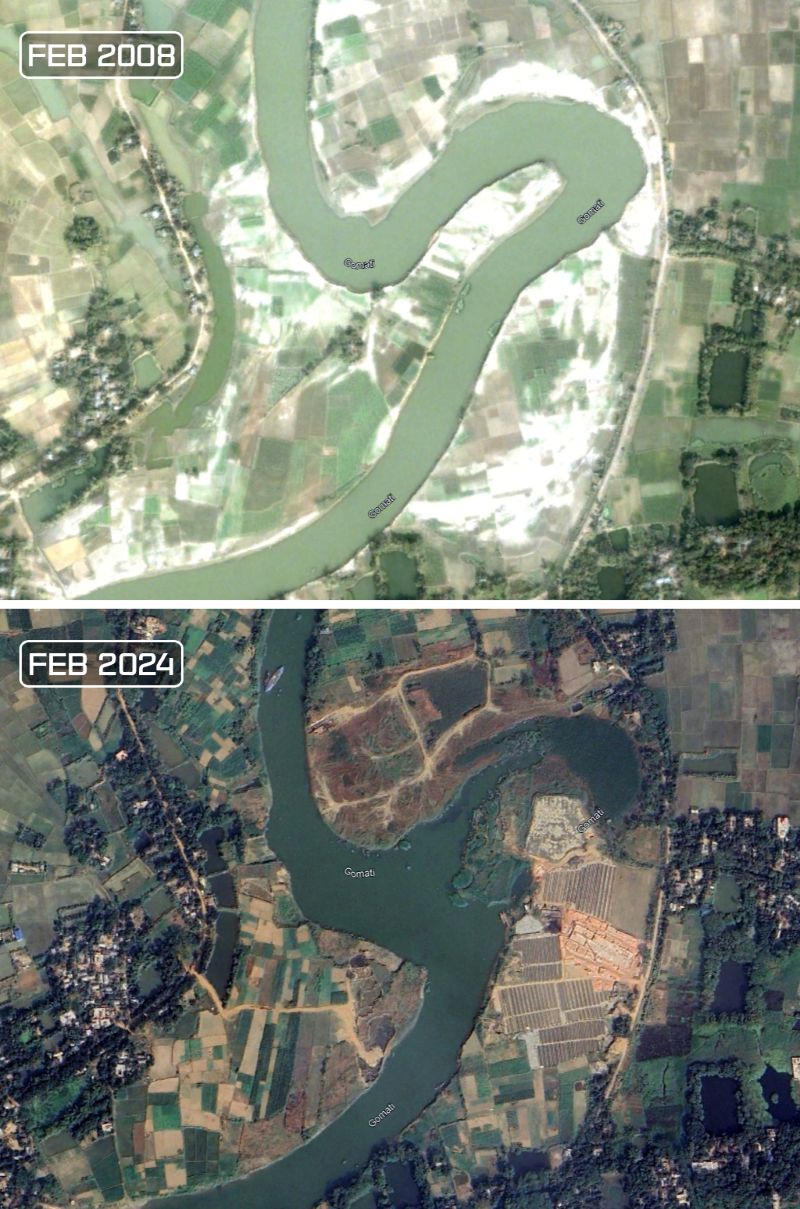
“Gomti didn’t dry out on its own,” said Mohammad Azaz, Chairman of the River & Delta Research Centre (RDRC), referring to the dam in the Indian side of Tripura, which reduced the regular water flow in the river.
“Besides, the swamps and water bodies have also disappeared. The damage done to rivers and water bodies in Bangladesh causes flooding not only in Feni, but also in Sylhet and other areas,” he said.
“All the canals and water bodies in Noakhali, Feni, and Laxmipur have been filled. Re-excavation projects for canals must be launched urgently to ensure water discharge. Without this, it will take a long time for water to flow properly,” he added.
Negligence in post-flood rehabilitation
The August 2024 flood caused massive damage to lives and livelihoods. Flood victims in these districts, having essentially lost everything, needed assistance from the authorities to rebuild and restart.
However, despite private efforts during the flood to save lives, the people in these areas didn’t get adequate support for rehabilitation.
“I got Tk50,000 for rebuilding my house, which was destroyed, but this fund is not enough, so I still couldn’t start the rebuilding of my house,” Shaymol Chandra said. “But my brothers didn’t get a penny from anyone, the flood had damaged their houses too.”
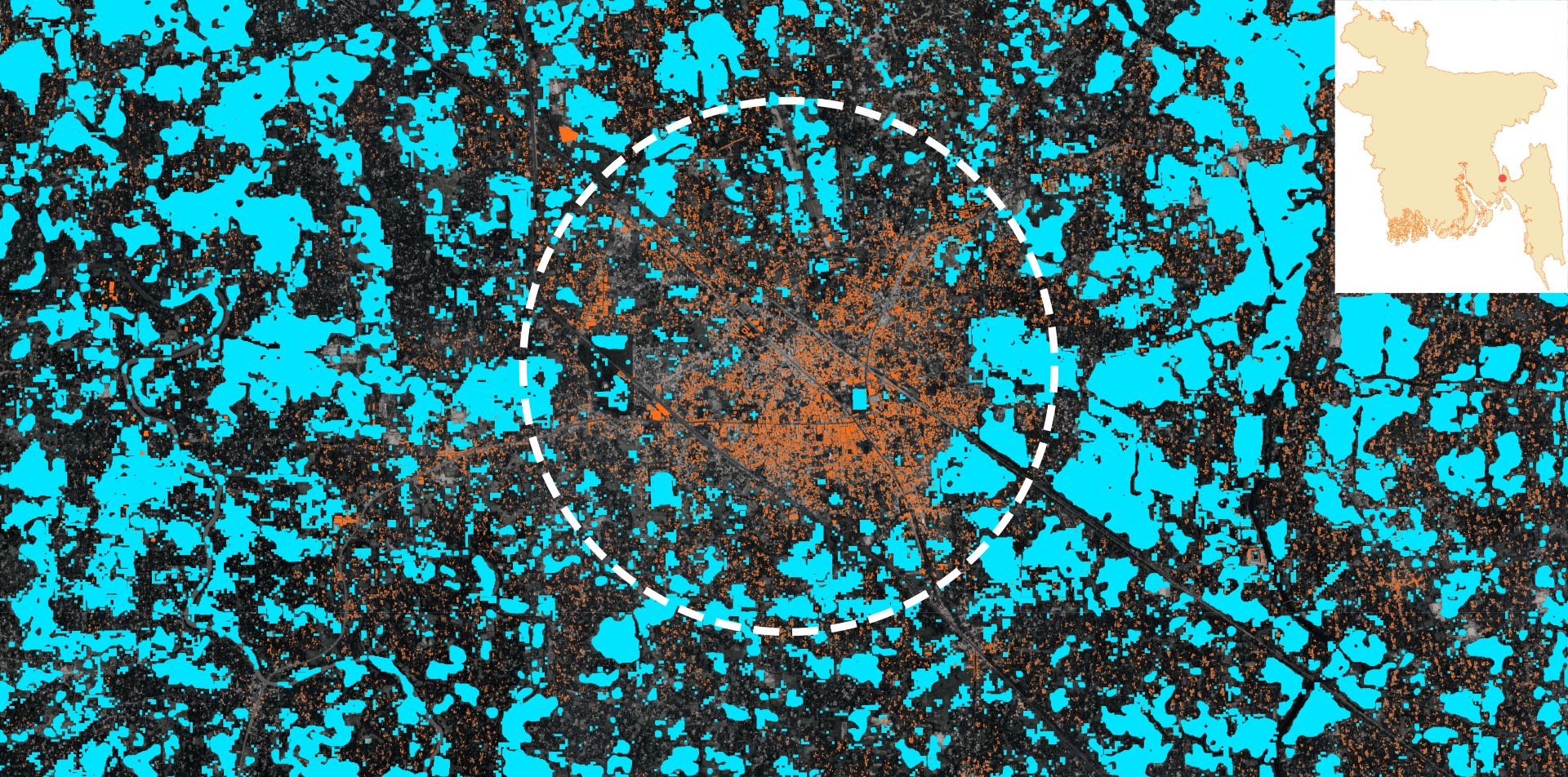
By combining flood extent data from ARIA Water Maps (OPERA Dynamic Surface Water Extent) and the UNOSAT SAR AI model, our analysis shows that at least 8,000 structures in Feni and surrounding areas (orange) with flooded areas (light blue), highlighting the scale of inundation. Credit: Arun Karki
When asked about the gaps in relief distribution and funding for flood rehabilitation, Wadud, addressing the lack of funds, said the budgetary timeframe had something to do with poor government response.
“Our disaster management fund is governed by specific rules – there is a Disaster Management Act that allows local collection of funds, but Deputy Commissioners (DCs) often don’t collect them. Even when funds are available locally, they must be returned to the government by June [budget year end]. But floods usually begin in July. This becomes a major barrier.”
Juel Mahmud, former Programme Coordinator at the International Centre for Climate Change and Development (ICCCAD), said that erratic precipitation patterns themselves hinder resilience capacity.
“We have mechanisms in place to deal with such flood situations. But the erratic nature of it, coupled with the failure of local officials, exacerbated the suffering of the people,” he said.
Md Sirajul Islam, a local social worker, said that flood survivors in remote areas hadn’t received help.
“Our agriculture had been severely damaged. While there has been some effort to support farmers with rice seedlings from the northern area, it has been minimal compared to the actual need. If the government could provide enough seeds, fertilisers, or at least subsidised fertilisers, our farmers could have overcome this crisis.”
“Our land is fertile. Our watermelons meet the demand of several districts. If our farmers are properly supported, they will stand on their own feet again,” Sirajul Islam said.
Mohammad Abed Ali District Relief & Rehabilitation Officer in Cumilla, said that against a demand for one lakh bundles of corrugated metal sheets, they received only 400 bundles and Tk12 lakh. “We submitted our requisition, but the department couldn’t provide us with more,” he said.
In Feni, on the other hand, about 8659 houses were destroyed in full or partially. District Relief and Rehabilitation Officer Mahbub Alam said they also received 400 bundles of corrugated metal sheets and Tk12 lakh besides private help, which was inadequate to the demand.
However, according to a document shared by Mahbub, some other government wings, including the military, have built around 300 houses, which was delivered to the victims this April. The document also lists donations from NGOs and non-profits such as UNDP, WFP, and others.
While most donations ranged between Tk 6,000 and Tk 30,000 – providing a little relief in the rebuilding process – As Sunnah Foundation offered Tk 300,000 per damaged family. However, they were able to assist only 287 families, whereas over 1,700 houses were completely destroyed.
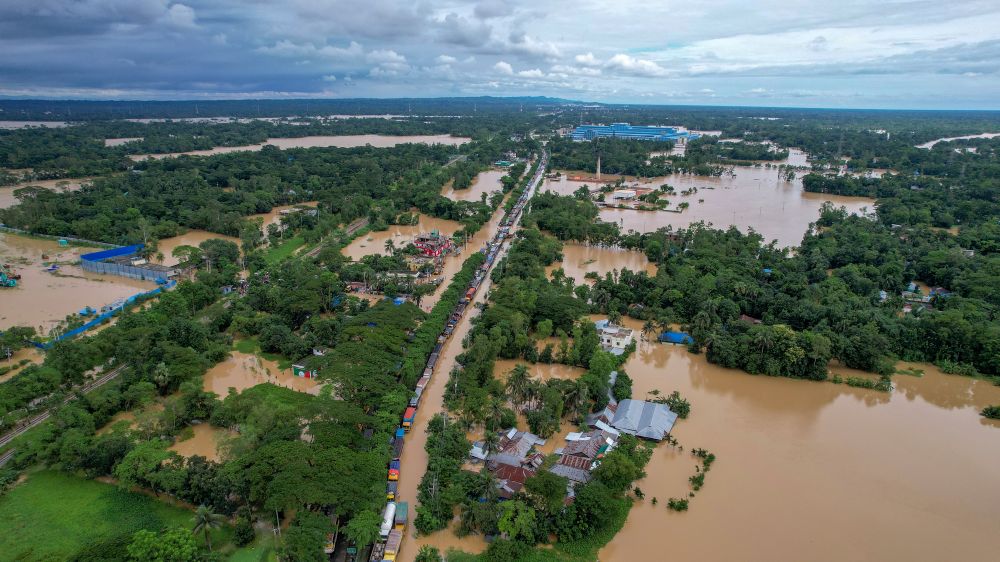
The erratic nature of rainfall and accompanying flash flood exacerbated the suffering of the people. Photo: Mohammad Minhaj Uddin
“The flood claimed everything we had, and most of us are now left alone in the fight to rebuild our lives,” Shimul said. “Only God knows how we will survive if such a disaster strikes us again.”
After last year’s flood, Syeda Rizwana Hasan, adviser to the Ministry of Water Resources, promised embankments in strategic locations, modern surveys, cancellation of illegal sand leases, and eviction of river encroachers to prevent future disasters.
Around a year later, at a recent advisory council meeting, the officials discussed finalising designs for the Musapur Regulator and Bamni Closure, permanent embankments in Feni, and freeing drainage canals in Noakhali.
Pointing out that a year has passed and these project discussions remain “finalising” or “ongoing,” river researcher Sheikh Rokon wrote in a recent column: “It is inevitable to question: what has the government actually done in the past year to tackle flooding in Feni?
Across the beds of Feni’s rivers, there is now cultivation and fish farming. Why couldn’t the government remove these encroachments over the past year? No matter how many embankments or structures are built or repaired, they will not be sustainable without clearing these flow paths,” he added.
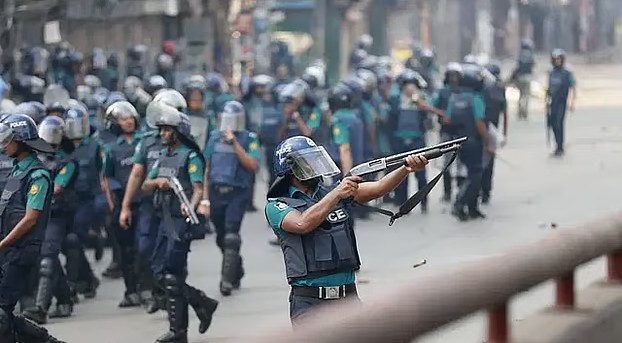
Cases have been filed against 1,059 police officers in various police stations and courts across Bangldesh on charges of shootings and killings during the July 2024 mass uprising. So far, 41 officers have been arrested in connection with these cases.
Among the arrested are former Inspector General of Police (IGP) Chowdhury Abdullah-Al Mamun, former IGP AKM Shahidul Haque, former Dhaka Metropolitan Police (DMP) Commissioner Md. Asaduzzaman Mia, and Joint Commissioner Mashiur Rahman.
Others include Deputy Inspector General (DIG) Mollah Nazrul Islam and former Chittagong Metropolitan Police Commissioner Saiful Islam. However, several high-profile officers remain at large, including former Additional IGP Md. Monirul Islam, former DMP Commissioner Habibur Rahman, and former Additional Commissioner (Detective Branch) Mohammad Harun-ur-Rashid. Some have reportedly fled the country.
According to the police headquarters, the widespread shooting and killing of civilians during the student-led movement from 16 July to 5 August last year has drawn intense criticism, both within and outside the police force. There have been growing demands to identify and hold those responsible accountable.
READ: In Bangladesh, Cops Accused of Killing Protesters During 2024 Uprising Roam Free
The 1,059 police officers facing charges include five former IGPs, 41 former Additional IGPs, 12 former DIGs, 12 current DIGs, two former Additional DIGs, 42 current Additional DIGs, three former Superintendents of Police (SPs), 59 current SPs, 56 Additional Superintendents of Police, 21 Assistant Superintendents of Police, 168 Inspectors, and 638 Sub-Inspectors (SIs), Assistant Sub-Inspectors (ASIs), Naiks, and Constables.
While the police headquarters has not officially disclosed the number of cases against its officers, sources indicate that 656 cases have been filed related to killings during the uprising, while 737 cases involve injuries—bringing the total number of cases linked to casualties to 1,393. Several senior police officers have stated that many of those implicated were close to the ousted Awami League government and were involved in issuing or executing orders to suppress the protests.
However, they also claim that some officers have been accused unfairly. Authorities insist that legal action is being taken after thorough verification, and innocent officers will not be harassed.
IGP Baharul Alam told Prothom Alo in December that a committee has been formed in each of the eight police ranges, led by an Additional DIG, to oversee cases related to the killings. These committees will supervise the investigations, which will be conducted by experienced former and current officers.
In most cases, police officers are being charged alongside other individuals. As a result, the prosecution of those involved in the killings depends on the progress of these investigations.
When asked about the matter, Assistant Inspector General (AIG) of the Police Headquarters’ Media and Public Relations Department, Enamul Haque Sagar, told Prothom Alo that law enforcement is taking these cases seriously and will bring those found guilty to justice.
Apart from cases filed by victims’ families, the killings during the July mass uprising are also being prosecuted at the International Crimes Tribunal. So far, 18 former law enforcement officers have been arrested in connection with those proceedings.
Those Arrested
Among the then-officers of the arrested police are former Deputy Commissioner of DMP Md. Jasim Uddin Molla, Superintendent of Police (SP) Tanvir Salehin, Mohiuddin Farooqui, Abdul Mannan, SM Tanvir Arafat, Asaduzzaman, Md. Abdullahil Kafi, Jewel Rana, Additional Superintendent of Police of Armed Police Battalion (APBN) Md. Rafiqul Islam, Additional Superintendent of Police of Dhaka District Shahidul Islam, Additional Deputy Commissioner of Khulna Metropolitan Police (KMP) Md. Sadeq Kawsar Dastagir, Additional Superintendent of Police of Barisal Alep Uddin, Additional Deputy Commissioner of DMP Mirpur Division Darus Salam Region MM Mainul Islam, Assistant Commissioners of DMP Traffic Division Iftekhar Mahmud and Md. Tanzil Ahmed, Assistant Commissioner of DMP Badda Region Rajan Kumar Saha, Former Officer-in-Charge (OC) of Jatrabari Police Station Abul Hasan, Former OC of Gulshan Police Station Mazharul Islam, among others.
Who face the most cases?
According to the police headquarters, the highest number of cases has been filed against the then Additional Commissioner of Dhaka Metropolitan Police (DMP), Mohammad Harun-or-Rashid, who faces 174 cases. He is followed by former Inspector General of Police (IGP) Chowdhury Abdullah Al-Mamun, against whom 159 cases have been filed. Additionally, former IGP Shahidul Haque faces 23 cases, Benazir Ahmed 11 cases, Hasan Mahmud Khandaker seven cases, and Javed Patwari two cases.
Among other senior officials, former Additional IGP Md. Monirul Islam has been accused in 46 cases, while former DMP Commissioner Habibur Rahman faces 118 cases. Former Dhaka Range DIG Syed Nurul Islam has been named in 16 cases, former Additional DIG Biplab Kumar Sarkar in 128 cases, and Additional DIG SM Mehedi Hasan in 33 cases.
Among DMP deputy commissioners, the highest number of cases has been filed against Mohammad Iqbal Hossain, the then Deputy Commissioner of Wari Division, who faces 27 cases. A video that went viral after the fall of the government shows Iqbal speaking with former Home Minister Md. Asaduzzaman Khan about the shooting of anti-discrimination protesters.
In the footage, Iqbal is seen showing a video on his mobile phone and saying, ”Sir, it seems like shooting and taking down bodies. I shoot, one dies, one is injured. Only one goes, sir, the rest don’t go. This is the biggest fear and worry, sir…” Former IGP Chowdhury Abdullah Al-Mamun and former Home Secretary Jahangir Alam were also present at the time.
The list of accused includes several high-ranking officers such as former Additional IGPs Mokhlesur Rahman, Shafiqul Islam, Iqbal Bahar, Mahbubur Rahman, Atiqul Islam, Banaj Kumar Majumder, Didar Ahmed, Mohammad Ali Mia, M Khurshid Hossain, Selim Mohammad Jahangir, Khandaker Lutful Kabir, Krishnapada Roy, and AKM Hafiz Akhter. Additionally, former DIG SM Mahfuzul Haque Nuruzzaman has also been implicated.
Former IGP Muhammad Nurul Huda told Prothom Alo that the investigation into the July mass uprising cases should be expedited. He emphasised that those who are innocent should be acquitted, while those found responsible should be brought before the court.
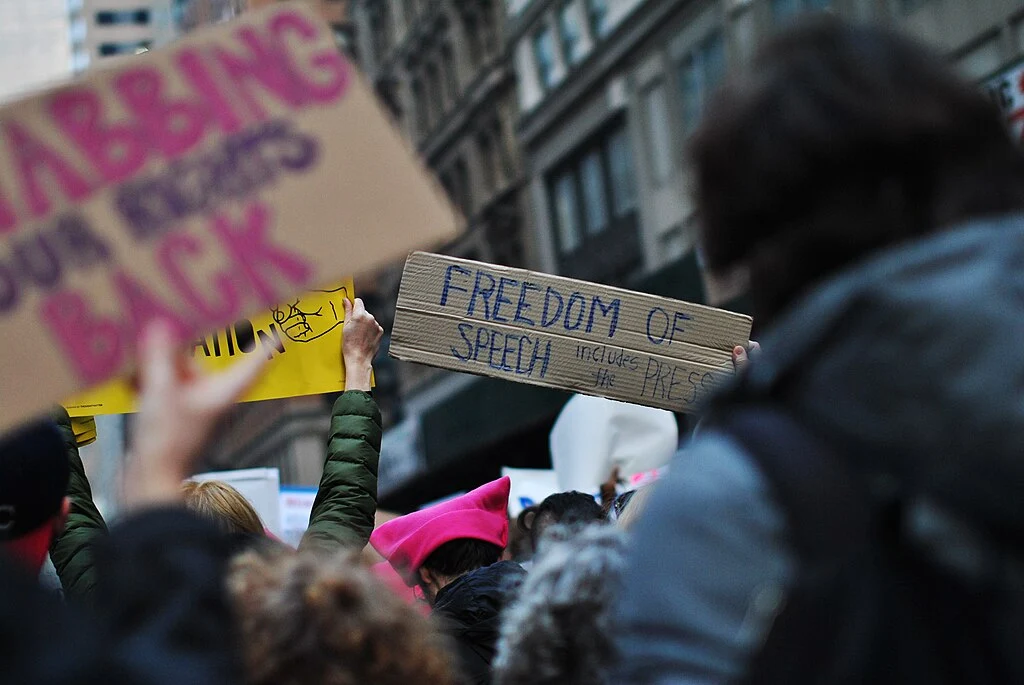
Six months after a mass uprising ousted the increasingly autocratic administration of former Prime Minister Sheikh Hasina, Bangladeshi journalists continue to be threatened and attacked for their work, along with facing new fears that planned legislation could undermine press freedom, according to Committee to Protect Journalists (CPJ).
The New York based non-profit said this in a statement published on its website on Monday, 17 February. It has been republished here in its entirety, via our Bangladeshi member Prothom Alo:
Bangladesh’s interim government — established amid high hopes of political and economic reform— has drawn criticism from journalists and media advocates for its January introduction of drafts of two cyber ordinances: the Cyber Protection Ordinance 2025 (CPO) and Personal Data Protection Ordinance 2025.
While the government reportedly dropped controversial sections related to defamation and warrantless searches in its update to the CPO, rights groups remain concerned that some of the remaining provisions could be used to target journalists. According to the Global Network Initiative, of which CPJ is a member, the draft gives the government “disproportionate authority” to access user data and impose restrictions on online content. Journalists are also concerned that the proposed data law will give the government “unchecked powers” to access personal data, with minimal opportunity for judicial redress.
Democracy cannot flourish without robust journalism. Bangladesh’s interim government must deliver on its promise to protect journalists and their right to report freely. Authorities should amend proposed laws that could undermine press freedom and hold the perpetrators behind the attacks on the press to account. —CPJ Asia Program Coordinator Beh Lih Yi

CPJ’s calls and text messages to Nahid Islam, the information, communication, and technology adviser to the interim government, requesting comment on the ordinances did not receive a reply.
Meanwhile, CPJ has documented a recent spate of beatings, criminal investigations, and harassment of journalists for their work.
READ: In Bangladesh, Cops Accused of Killing Protesters During 2024 Uprising Roam Free
Attacks
A group of 10 to 12 men attacked Shohag Khan Sujon, a correspondent for daily Samakal newspaper, after he and three other journalists investigated allegations of medical negligence at a hospital in central Shariatpur district on 3 February.
Sujon told CPJ that a clinic owner held the journalist’s legs as the assailants hit his left ear with a hammer and stabbed his back with a knife. The three other correspondents — Nayon Das of Bangla TV, Bidhan Mojumder Oni of News 24 Television, and Saiful Islam Akash of Desh TV — were attacked with hammers when they tried to intervene; the attack ended locals chased the perpetrators away.
Sujon told CPJ he filed a police complaint for attempted murder. Helal Uddin, officer-in-charge of the Palang Model Police Station, told CPJ by text message that the investigation was ongoing.
In a separate incident on the same day, around 10 masked men used bamboo sticks to beat four newspaper correspondents — Md Rafiqul Islam of Khoborer Kagoj, Abdul Malak Nirob of Amar Barta, Md Alauddin of Daily Amar Somoy, and Md Foysal Mahmud of Daily Alokito Sakal — while they traveled to a village in southern Laximpur district to report on a land dispute, Islam told CPJ.
The attackers stole the journalists’ cameras, mobile phones, and wallets and fired guns towards the group, causing shrapnel injuries to Mahmud’s left ear and leg, Islam said.
Authorities arrested four suspects, two of whom were released on bail on 10 February, Islam told CPJ. Laximpur police superintendent Md Akter Hossain told CPJ by phone that authorities were working to apprehend additional suspects.
Threats
Shafiur Rahman, a British freelance documentary filmmaker of Bangladeshi origin, told CPJ he received an influx of threatening emails and social media comments after publishing a 30 January article about a meeting between the leadership of Bangladesh’s National Security Intelligence and the armed group Rohingya Solidarity Organisation.
Multiple emails warned Rahman to “stop or suffer the consequences” and “back off before it’s too late.” Social media posts included a photo of the journalist with a red target across his forehead and warnings that Rahman would face criminal charges across Bangladesh, leaving Rahman concerned for his safety if he returned to report from Bangladesh’s refugee camps for Rohingya forced to flee Myanmar.
“The nature of these threats suggests an orchestrated campaign to silence me, and I fear potential real-world repercussions if I continue my work on the ground,” Rahman said.
CPJ’s text to Shah Jahan, joint director of the National Security Intelligence, requesting comment about the threats did not receive a reply.
Criminal Cases
Four journalists who reported or published material on allegedly illicit business practices and labor violations are facing possible criminal defamation charges after Noor Nahar, director of Tafrid Cotton Mills Limited and wife of the managing director of its sister company, Dhaka Cotton Mills Limited, filed a 13 November, 2024, complaint in court against them. If tried and convicted, they could face up to two years in prison.
The four are:
- HM Mehidi Hasan, editor and publisher of investigative newspaper The Weekly Agrajatra
- Kamrul Islam, assignment editor for The Weekly Agrajatra
- Mohammad Shah Alam Khan, editor of online outlet bdnews999l
- Al Ehsan, senior reporter for The Daily Post newspaper
CPJ’s text to Nahar asking for comment did not receive a reply.
Md Hafizur Rahman, officer-in-charge of the Uttara West Police Station, which was ordered to investigate the complaint, told CPJ by phone that he would send the latest case updates but did not respond to subsequent messages.
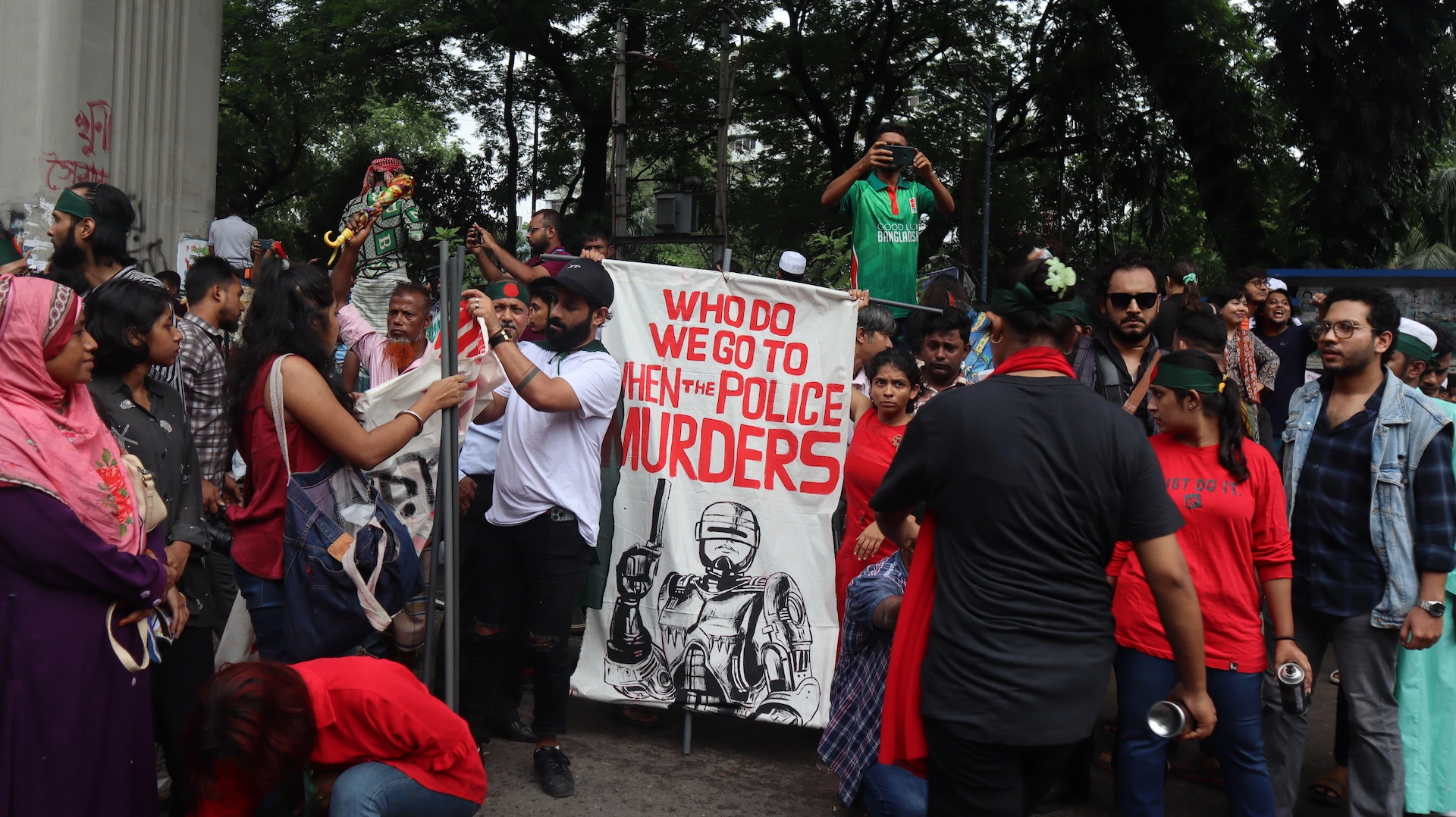
On August 2, 2024, protesters in Dhaka brought a large procession for Hasina’s resignation. Photo: Masum Billah
Imam Hasan Taim had already been shot twice before the camera started recording.
On July 20, 2024, Taim was in Jatrabari, a neighbourhood in Bangladesh’s capital city Dhaka, when the police started firing. He was one of the student protesters in a crowd that had gathered to demand resignation of the now ousted prime minister Sheikh Hasina.
In the now-viral footage, taken by a journalist called Arefin Mahmud Shakil, Taim is seen being dragged by his friend Rahat Hossain to safety. A few seconds in, a police officer is seen shooting Imam at close range. The officer’s name was later identified as Jakir Hossain. Rahat was also injured but he continued to drag Imam. In the next few seconds, Jakir Hossain was seen shooting Imam again — then again. Unable to go on any further, Rahat fled to save his own life.
Ironically the son of a police officer himself, Taim was left at the scene for half an hour before officers carried his body to Jatrabari police station. There, his family claims that the officers trampled their son – who was alive until then – to death.
“My brother would have survived had he been taken to the hospital,” Rabiul Awal, Imam Hasan’s older brother, told Asian Dispatch. “But after they took him to Jatrabari thana, a group of officers led by an officer called Assistant Commissioner (AC) Nahid Ferdous trampled him to death.”
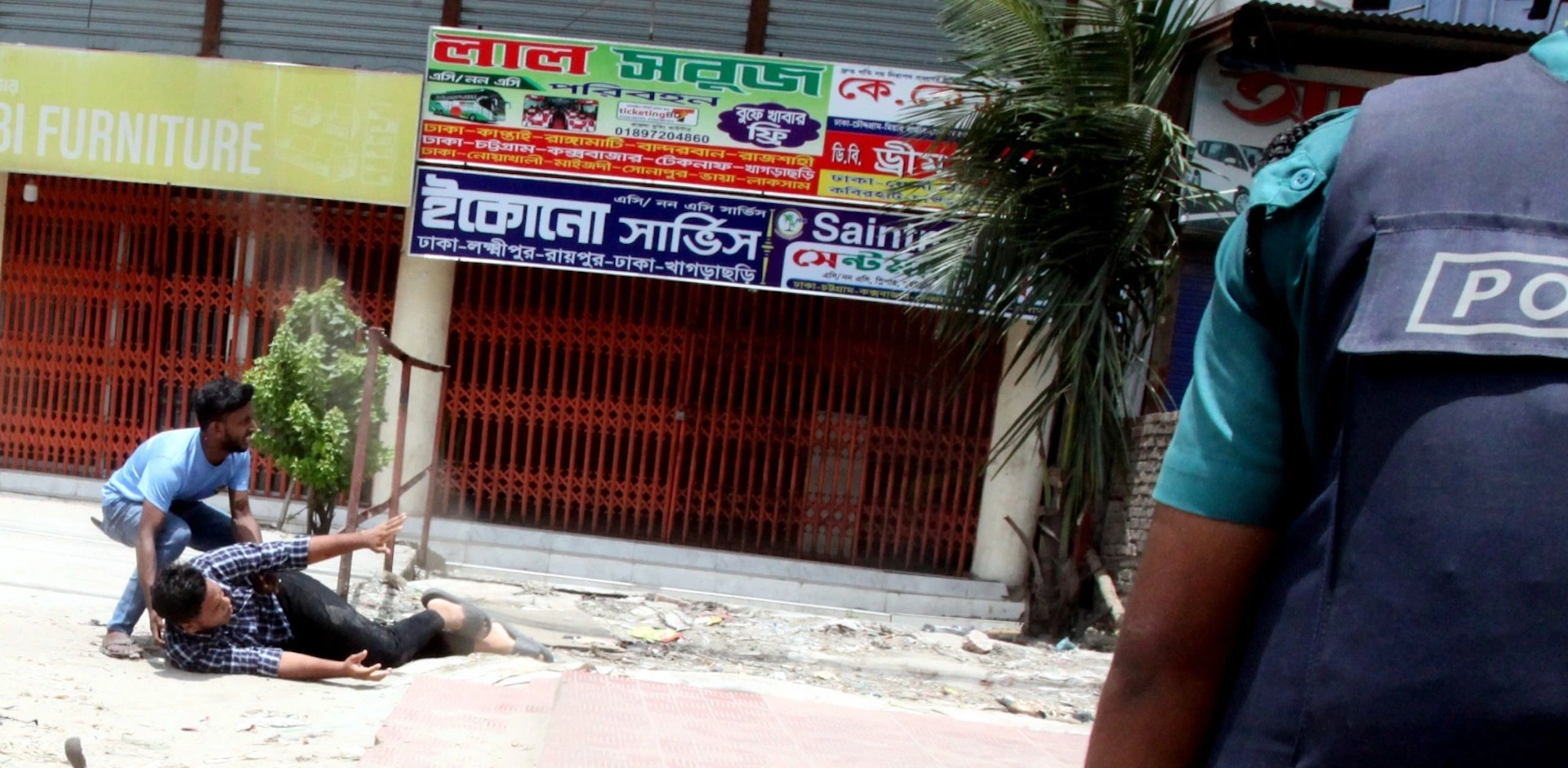
Taim (right) and his friend Rahat being attacked during protests on July 20, 2024. Photo via screengrab.
Taim’s family identified at least eight more police officers from the Dhaka Metropolitan Police alongside Jakir Hossain, including Additional Deputy Commissioners Shakil Mohammad Shamim and Shahadat Ali, and Additional Deputy Commissioner Masudur Rahman.
My brother would have survived had he been taken to the hospital. But after they took him to Jatrabari thana, a group of officers led by an officer called Assistant Commissioner Nahid Ferdous trampled him to death. — Rabiul Awal, Taim’s older brother.
Taim’s brother Awal told this reporter – based on his review of government documents – that out of this group of cops, Nahid Ferdous was later transferred and stationed at a Rapid Action Battalion (RAB) camp in Jhinaidaha district, which is nearly 200 kms from Dhaka. RAB is a paramilitary force in Bangladesh sanctioned by the US for human rights abuses under Hasina’s rule.
Imam’s family filed a case against 10 police officers, including Jakir Hossain, Iqbal Hossain, Shakil Mohammad Shamim, Tanjil Ahmed, Shahadat Ali, Masudur Rahman, Nahid Ferdous, Shudipta Kumar and Wahidul Haque, in a Dhaka court. Among them, only Abul Hasan, Tanjil Ahmed, and Shahadat Ali have been arrested.
The family also filed a case against the accused at the country’s International Crimes Tribunal (ICT), where warrants were issued for several officers, including Nahid.
“The ICT issued warrants for them on November 12. But AC Nahid was on duty until November 20. How is that possible?” Tuhin asked, implying Nahid’s connection with an influential Dhaka Metropolitan Police official. He suspects forces within the police are sheltering the accused officers.
A Tale of Disproportionate Police Violence
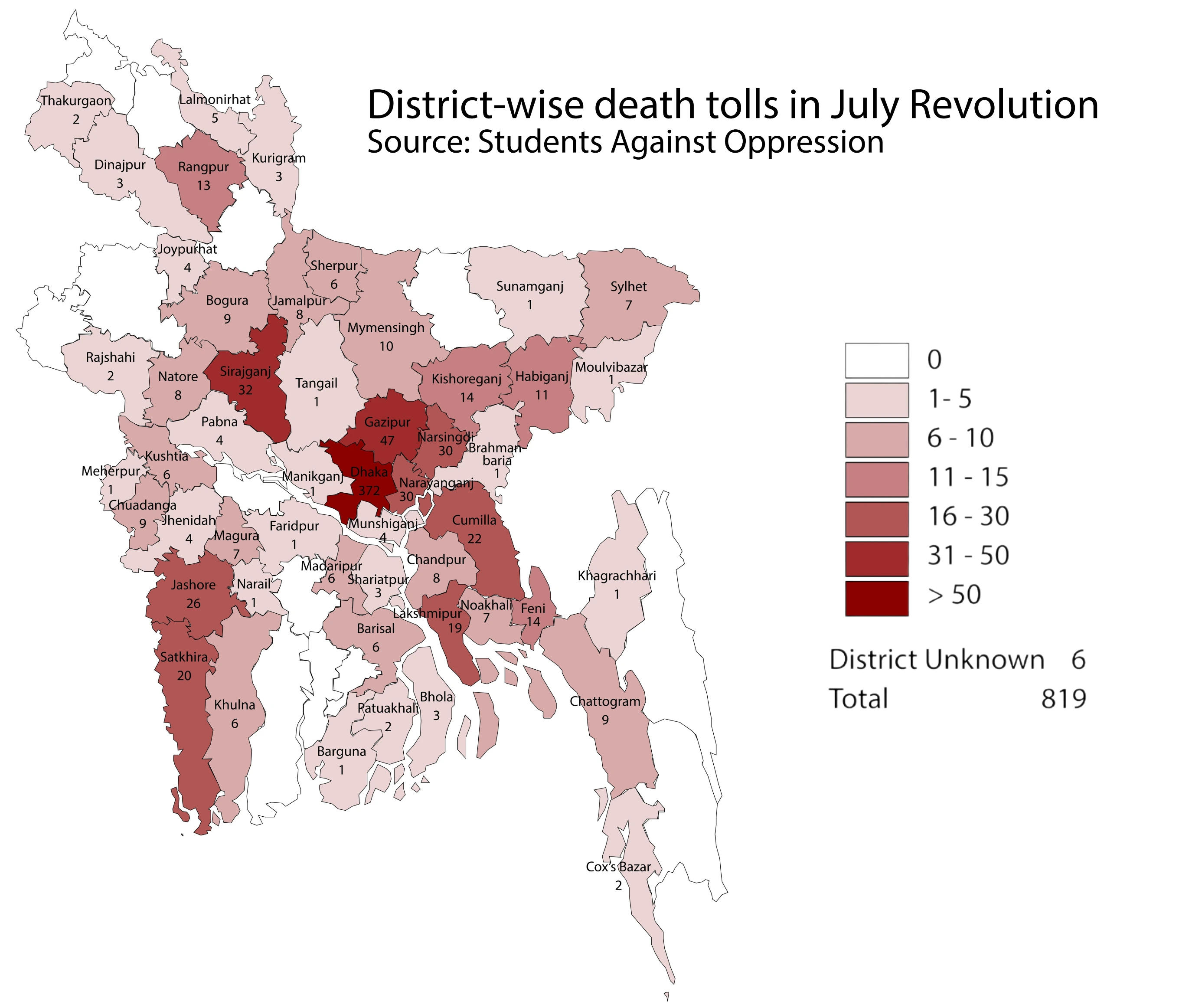
The mass uprising in Bangladesh – South Asia’s youngest country formed in 1971 – was a pivotal moment in the world that saw thousands of people, mostly students, not only shake Hasina’s 16 years of autocratic rule, but dismantle it entirely. Hasina fled the country – she’s currently in hiding in India – but left, in the wake of her ouster, a lasting legacy of police brutality. From July 16 to August 5, 2024, more than 800 people, including at least 89 children, were killed by the police, other security forces and men associated with Hasina’s party.
On July 19 alone – the day the fallen regime enforced an internet blackout – at least 148 people were killed by law enforcement agencies, according to a report by the International Truth and Justice Project (ITJP) and Tech Global Institute.
“Shockingly, 54 of the dead were shot in the head or throat. Many of those killed were not even part of the protests, but bystanders and people who happened to live or work close to the shooting that was completely indiscriminate,” the ITJP report found.
Among them were children as young as four-year-old Abdul Ahad and six-year-old Riya Gope, each shot in the head in front of their parents at home during an attack on protesters in their neighborhood.
In a report by Human Rights Watch (HRW), released on January 27, 2025, a police officer is quoted as saying, “I witnessed officers firing at vital organs…. In many cases, I witnessed live ammunition being fired even when officers’ lives were not in danger.” Another police official described, to HRW, how senior officers in the Dhaka Metropolitan Police headquarters watched live CCTV footage and directed officers on the ground to shoot protesters as if “they were ordering someone to shoot in a video game.”
Many of the July-August killings were captured on video by witnesses, bystanders and journalists. Law enforcement agencies shot citizens from helicopters, killed children in their homes through windows, targeted long-range shooting aimed at protesters, denied treatment and burned bodies after killing people.
I witnessed officers firing at vital organs…. In many cases, I witnessed live ammunition being fired even when officers’ lives were not in danger. — A police officer quoted in Human Rights Watch’s report on 2024 police brutality.
After Hasina fled the country, legal cases against cops poured in by families of the deceased. Top officers, including the then Inspector General of Police Chowdhury Abdullah Al-Mamun, Harun Or Rashid, Monirul Islam and Biplob Kumar Sarker, face dozens of murder charges each. According to a list of cases against police officials obtained by Asian Dispatch, at least 94 officers face charges of murder or torture. Different reports published in local dailies such as Prothom Alo also suggest nearly a hundred police officers being charged.
These statistics are now several months old. Asian Dispatch reached out to various authorities – including Bangladesh’s police headquarters, CID and International Crimes Tribunals – to confirm the estimated number of police officers facing murder charges. None of them provided answers. “We don’t have information about this,” Assistant Inspector General Enamul Haque Sagar, the spokesperson of Police Headquarters, told Asian Dispatch. However, he did confirm that only 34 officers – as of Feb. 5 – have been arrested so far in connection to the July uprising.
READ: As a ‘Gen Z’ Journalist, This is How I Felt Witnessing Young Bangladeshis Overthrow Sheikh Hasina
The Center for Information Resilience (CIR), an international agency that uses open source and digital investigations to expose human rights violations, verified 83 pieces of footage showcasing 52 separate incidents of police brutality in July-August. Of these, 24 showed verified casualties.
The CIR findings also identified “two peaks” in violence. The first was on July 18, where killings amounted to a massacre. It all started with the killing of a protester called Abu Sayeed, in Rangpur district, on July 16, which was captured in a now iconic image of him spreading his hands in front of the police force. The second “peak” in violence was on August 5, the day Hasina resigned and fled to India.
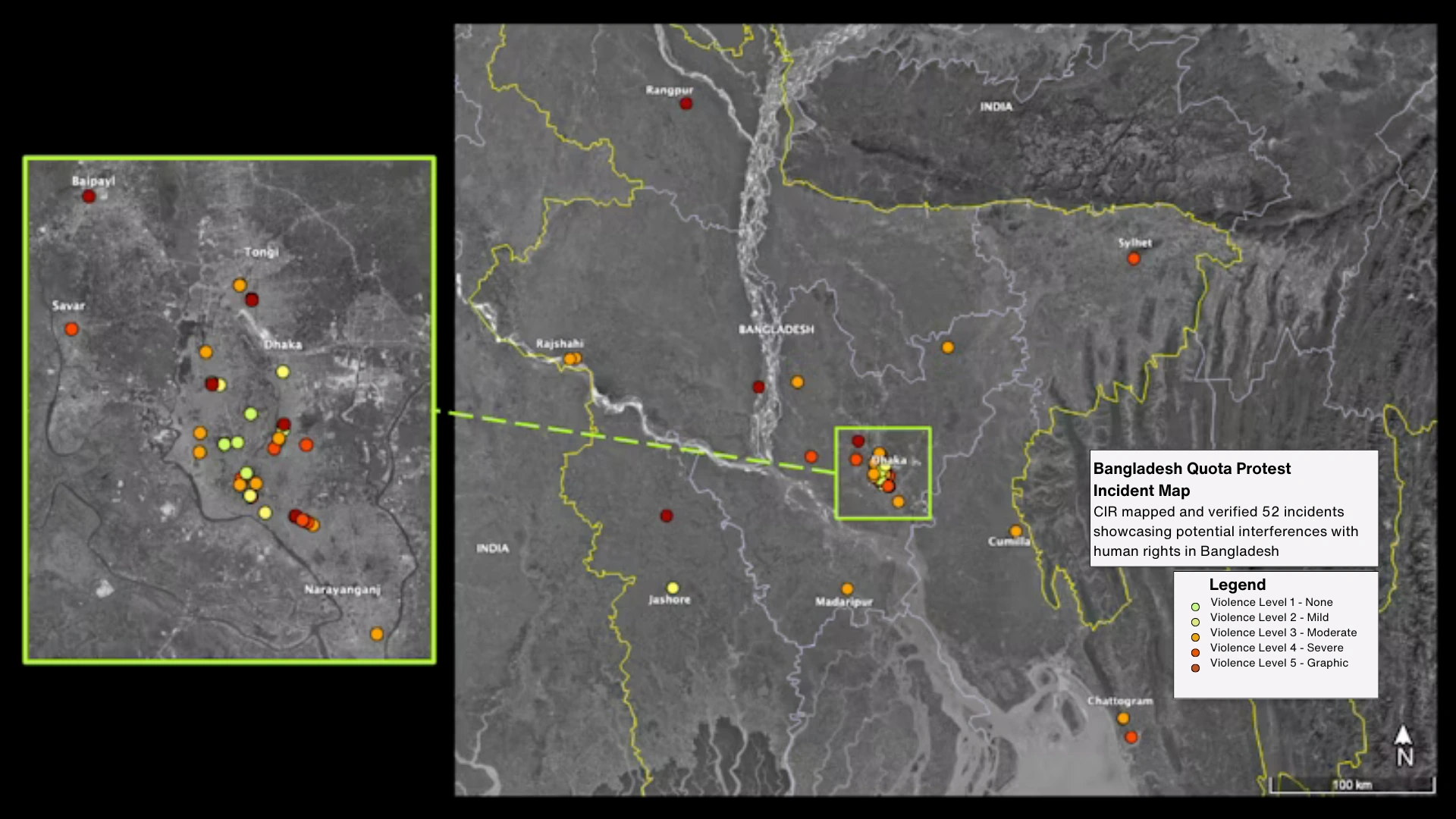
Centre for Information Resilience mapped and verified 52 incidents showcasing potential interferences with human rights in Bangladesh. The key on the right-hand side indicates the graphic level of footage and images collected. Graphics courtesy: CIR
“Within these verified incidents, CIR identified a concerning trend of disproportionate violence by police officers and military personnel, which potentially breaches human rights, including the use of live ammunition against protesters, the desecration of bodies, and the beating of unarmed civilians,” the report states.
Cold-blooded Targeted Killing
On August 5, Mohammed Sujon Hossain, a police officer from the Armed Police Battalion (APBn), a specialised combat unit of Bangladesh Police, was seen shooting a protester. On duty in Dhaka’s Changkharpur area, the official is seen firing a Type 56 semi-automatic carbine – an assault rifle often used by military personnel or armed groups – at protesters located less than 100 meters to the east. In a video that was later aired on Jamuna TV, the official is seen shooting one protester, after which other officers join in. Sujon Hossain is seen leaning on his knee to shoot again and saying, “Someone is dead,” as other officers start shooting at unarmed civilians.
Sujon was arrested on September 12, 2024.
Asian Dispatch got the said footage verified by CIR. The video was shot from Zahir Raihan Road near the Sheikh Hasina National Institute of Burn & Plastic Surgery and Chankharpul General Hospital in the Chankharpul area of Dhaka, geolocated at 23.7238, 90.4010.

Officers fired multiple weapons, including Type 56 semi-automatic carbines (left) and a Type 56 assault rifle (right). Graphics Courtesy: CIR
On this day, more than 10 dead bodies were reportedly brought to Dhaka Medical College Hospital from Chankharpul soon after the shootouts.
One of those shot dead was Shahriar Khan Anas, a 16-year-old student at Gandaria Ideal High School in Dhaka. Before joining the march to Hasina’s residence, Anas had written a letter to his mother saying, “Rather than staying at home like a coward, it is much better to join the struggle and be shot dead like a hero.”
His father, Shahria Khan Palash, filed a case at the ICT, naming Hasina as the prime accused, along with several police officers. He told Asian Dispatch that he asked the ICT to include the then Additional Deputy Police Commissioner (ADPC) Akhtarul Islam in his case. “Whenever I call, they [ICT] say my case is still being processed. But arrest is far away,” Palash said.
When contacted, ICT investigating officer Munirul Islam told Asian Dispatch that they were still investigating the allegations and refused to share any details about charges, including the allegations against Akhtarul Islam.
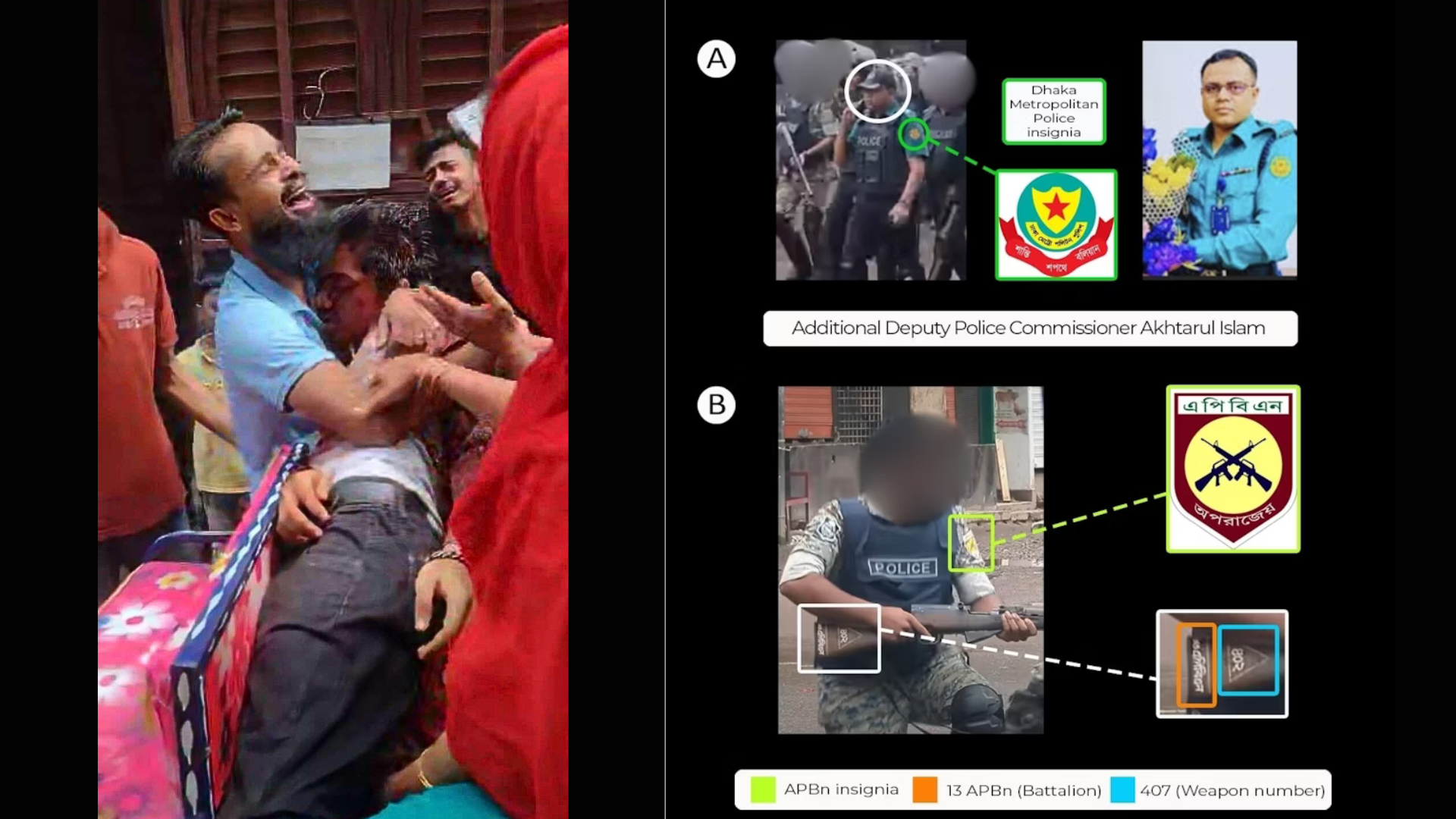
(Left) Shahria Khan Palash holds the body of his son Shahrirar Khan Anas. Photo courtesy: Shahria Khan Palash; (Right) CIR confirmed that Additional Deputy Police Commissioner Akhtarul Islam was present during the incident. Sources: upper left (A): Samakal News, bottom left (B): X. Graphics courtesy: CIR
According to Bangladeshi daily, The Business Standard, ADPC Akhtarul Islam was seen in command in Chankharpul that day. Another police officer present there told The Business Standard that, “Sir Akhtarul himself also fired that day.” When Asian Dispatch asked ICT about Akhtarul Islam’s whereabouts on the aforementioned day, spokesperson Enamul Haque Sagar responded: “We don’t have that information.”
In another part of Dhaka, another police officer called Arafatul Islam was seen in a video near a van where police officers were loading several dead bodies, with at least six other officers in the background. The bodies were later burned on a truck. Arafatul was subsequently arrested for concealing evidence of police brutality. Md Abdullahil Kafi, the additional superintendent of police (crime and operations) in Dhaka, was also arrested in connection to this case.
Escaping Justice
Asian Dispatch reviewed around 100 videos from this time, and corroborated those of over a dozen police officers in connection to the July-August violence. The interim government of Nobel Laureate Muhammad Yunus has, so far, set up a foundation to support the families of wounded and killed, with a funding of TK100 crore ($8.1 million). In January 2025, the Police Reform Commission submitted recommendations to curb abuse of power and excessive force by the police. But mounting evidence shows little to no attempts to bring the accused to justice.
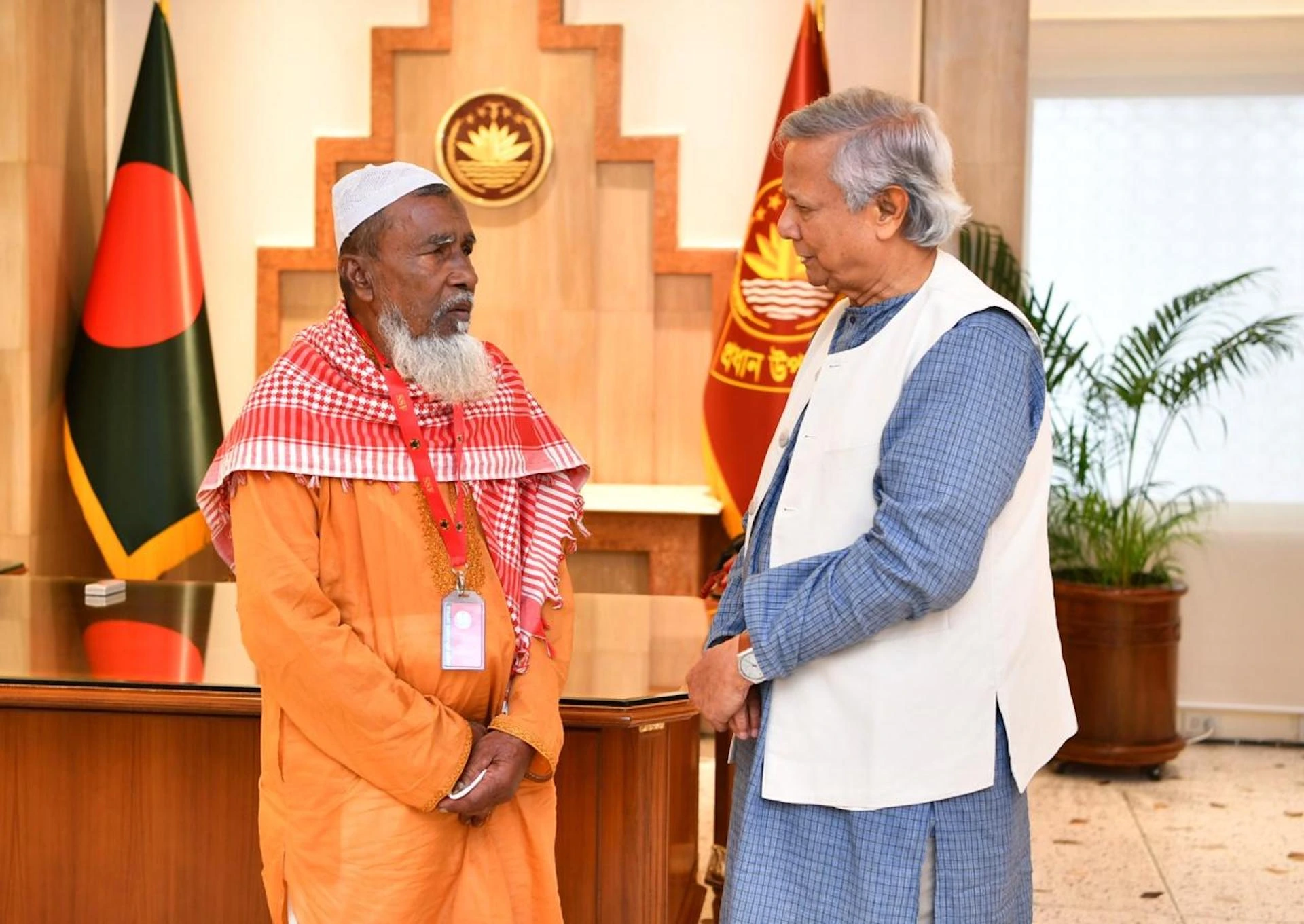
Chief Adviser Professor Yunus meets the father of a student called Abu Syed, a student activist from Rangpur who was shot dead by the Bangladesh police last July. Photo: ChiefAdviserGoB/X
Another accused official, Harun Or Rashid, the then Additional Commissioner (Crime and Operations) of the Dhaka Metropolitan Police and former chief of the Detective Branch, was rumoured to have been detained after Hasina fled. Rashid dismissed those claims in a text message to the Daily Star on August 6. However, despite a travel ban on him by a Dhaka court on August 27, Rashid appeared in an interview with a US-based Bangladeshi journalist in October, where he denied all charges. He continues to be at large. Asian Dispatch couldn’t confirm his whereabouts to secure an interview.
Former head of the Police’s Special Branch (SB), Monirul Islam, who faces several cases too, also remains free. Asian Dispatch found him active on Facebook – his last post on his Facebook account was January 21. Asian Dispatch contacted him via WhatsApp but did not receive a response at the time of publishing this story.
Many other top police officers are believed to have fled Bangladesh after August 5.
Salahuddin Miah, the former officer in-charge of Khilgaon police station in Dhaka during the protests, faces charges but is currently stationed in Rangamati with the Armed Police Battalion.
“The cases against me are related to BNP programs from [2023], not the July uprising,” Salahuddin Miah told Asian Dispatch, referring to police violence against a Bangladesh Nationalist Party (BNP) rally in 2023.
Attempts to reach out to up to 15 police officers facing charges of murder and torture went in vain. Their whereabouts remain unknown and did not respond to text and calls.
The Government’s Efforts and Limitations
On July 20, when Moynal Hossain discovered the lifeless body of his son, Taim – the young protester mentioned at the beginning of this report – riddled with bullets, he called his superior in despair, crying, “How many bullets are necessary to kill a person?”
Moynal Hossain is a senior sub-inspector from the Bangladesh Police. Despite his rank and evidence, the grieving family claims they were denied the right to file a case.
Ramizul Huq, the investigating officer from the Police Bureau of Investigation assigned to Taim’s case, told Asian Dispatch that arresting government officers requires authorisation from the relevant authorities. For instance, arresting an Assistant Superintendent of Police or higher ranks requires permission from the Home Ministry, while constables to inspectors need approval from the Inspector General of Police.
“At the same time, multiple investigating officers were being changed, which caused further delays. Sometimes, following these procedures takes considerable time,” said Huq.
Taim’s family is among many waiting in darkness for justice. Many live in fear of consequences from the charges they’ve pressed against police officers since the accused remain free.
We are scared to talk to the press. If they find out I am speaking against them, I fear we may not be able to sleep peacefully in our own homes. —Kamal Hawlader, whose son was killed in July, told Asian Dispatch.
Enamul Haque Sagar, the Police Headquarters spokesperson, says that the charges are being investigated with “great seriousness.” “The investigations are ongoing, and the process of bringing those found involved to justice is in progress,” he added.
But these words of reassurance aren’t enough.
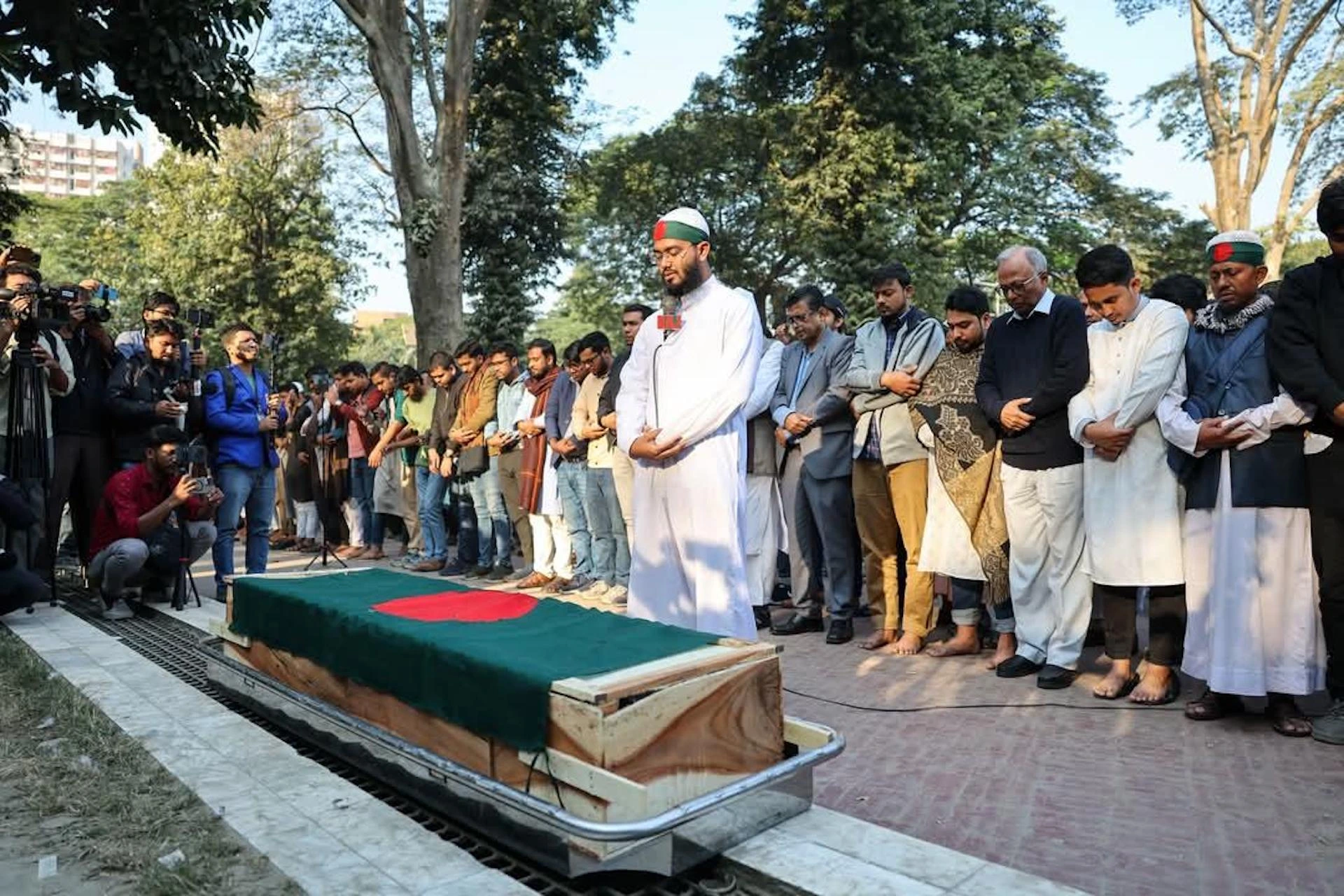
Members of Yunus’s interim government attend the final rites of a 12-year-old boy called Arafat, who was shot during the anti-government protests last year. Photo: Photo: ChiefAdviserGoB/X
Human rights activist Rezaur Rahman Lenin told Asian Dispatch that internal processes and weak systems set by the government allow police officials to evade accountability. “The government faces multiple challenges on various fronts, which they are unable to address due to a lack of commitment, prudence, and bureaucratic transformation,” he said.
Institutional fragmentations among different commissions and the International Crimes Tribunal are both visible and vibrant, he says. “Harmonising legal approaches transparently and effectively is essential to ensure justice,” said Lenin, noting the paradox of relying on the same force accused of killing protesters in order to maintain law and order.
Professor CR Abrar, the president of human rights organisation Odhikar, shared similar concerns.
“It is deeply disconcerting that after such heinous crimes, only 34 are apprehended,” he said. “The evil force protecting the accused officials remains dominant and continues to call the shots.”
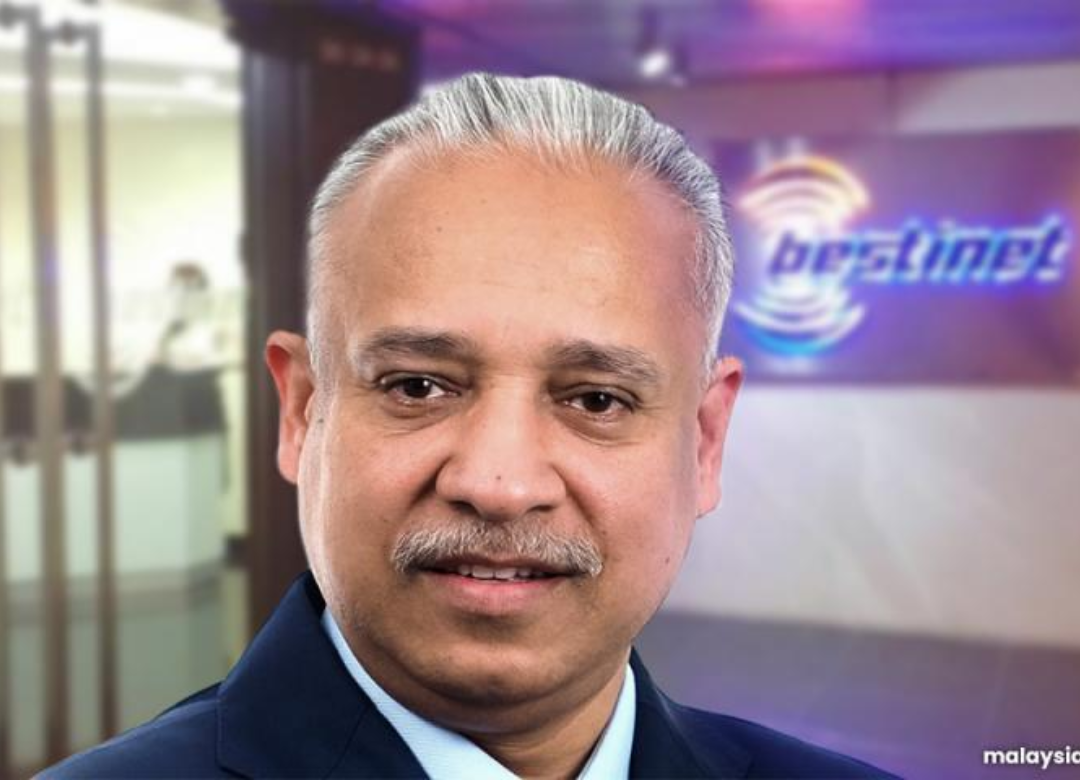
Photo: Malaysiakini
Aminul Islam Abdul Nor has been photographed with ministers and royalty, and his name has graced corporate pages in reports involving multinational deals worth hundreds of millions of ringgit.
But to the larger Malaysian public, how the Bestinet founder became a lynchpin in the lucrative migrant worker business is somewhat mysterious.
Bestinet is the company behind the Foreign Worker Central Management System (FWCMS), a system used by the government to process the hundreds of thousands of migrant workers arriving in Malaysia yearly.
Even before FWCMS issues hit headlines, or the recent money laundering allegations which he denied, the name “Dato Sri Amin” or the more xenophobic “Amin Bangla” has floated about in the Malaysian cybersphere over the years.
In the lead-up to the watershed 2018 general election, one video clip of the Bangladesh-born Malaysian went viral on social media.
In the video, Aminul, dressed immaculately in a suit and tie, is seen in a heated argument, next to a white BMW which is about to get towed.
The person who captured the video is heard claiming that Aminul had bragged that he “brought in thousands of people into Malaysia” and that he “controlled Hulu Kelang” where the BMW, driven by Aminul’s child, collided with another vehicle.
![A viral video clip of the Bangladesh-born Malaysian Nor showing him bragging about “[bringing] in thousands of people into Malaysia”.](https://admin.asiandispatch.net/uploads/editor-image-new/image_202412051733399463675193a764bd6.jpg)
A viral video clip of the Bangladesh-born Malaysian Nor showing him bragging about “[bringing] in thousands of people into Malaysia”.
“I don’t care who you are,” the man said in the video, with a caption alleging that Aminul was a proxy of powerful politicians who were benefiting from the migrant worker industry.
In a separate incident in 2017, Aminul pleaded not guilty to the charge of assaulting Muhammad Nuraiman Danish Erwazri, 17, at the lift area of the Sunway Putra Hotel, at 3.30am on June 17, and he was released on bail.
According to court records, the case was heard by the Magistrate’s Court five times between Aug 14 and Dec 15, 2017, before two magistrates. However, it did not progress further.
Court records did not show the case’s outcome and Malaysiakini has contacted the court registrar for further details.
Malaysiakini’s checks found the incident also involved Aminul’s child, while the alleged victim is the son of businessperson Marina Hashim, who was later involved in a controversial Felda land deal in 2018.
When asked about these two incidents, Aminul declined to comment. He also declined to be interviewed for this article.
Humble beginnings
Minor tussles aside, who is Aminul?
According to five industry insiders in Malaysia and Bangladesh who spoke to Bangladeshi media Prothom Alo, Aminul first came to Malaysia as a migrant worker in the early 1990s.
One of seven brothers, he grew up in humble circumstances in Brahmanbaria district in Chittagong, Bangladesh – some 100km from Dhaka – where he owns a house.
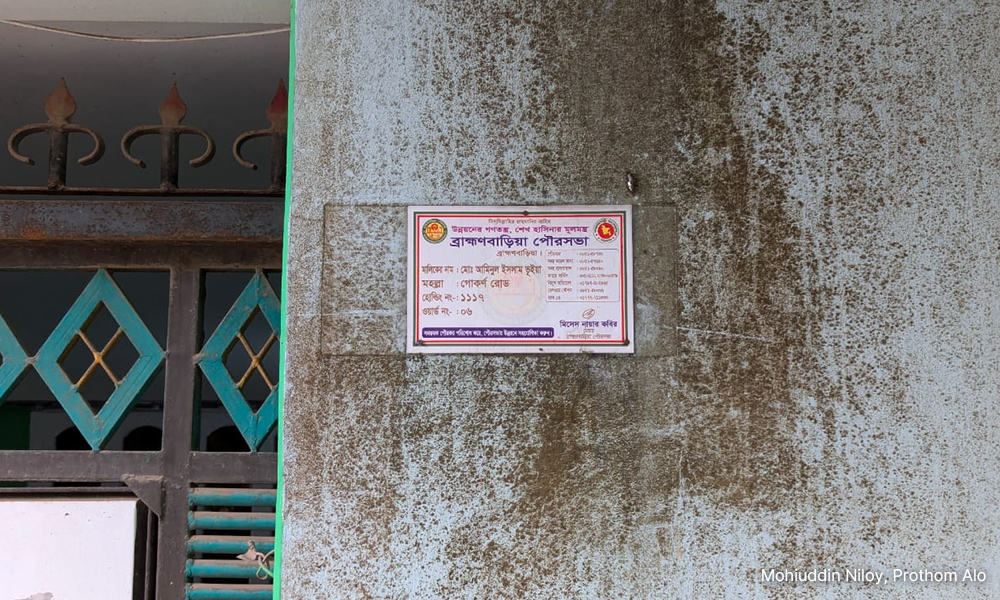
According to the municipal name plate, this home belongs to Nor. Photo: Mohiuddin Niloy/Prothom Alo
During a visit there in June, locals pointed Prothom Alo to a building in his name – the nondescript four-storey Aminul Islam Plaza at Kalibari intersection of Brahmanbaria district city.
He also owns another similar commercial building on the north side of the Pairtala bus stand, named after his father and managed by his brother.
There was also a large mosque under construction, surrounded by seven houses meant for seven brothers. Locals said Aminul funded the project.
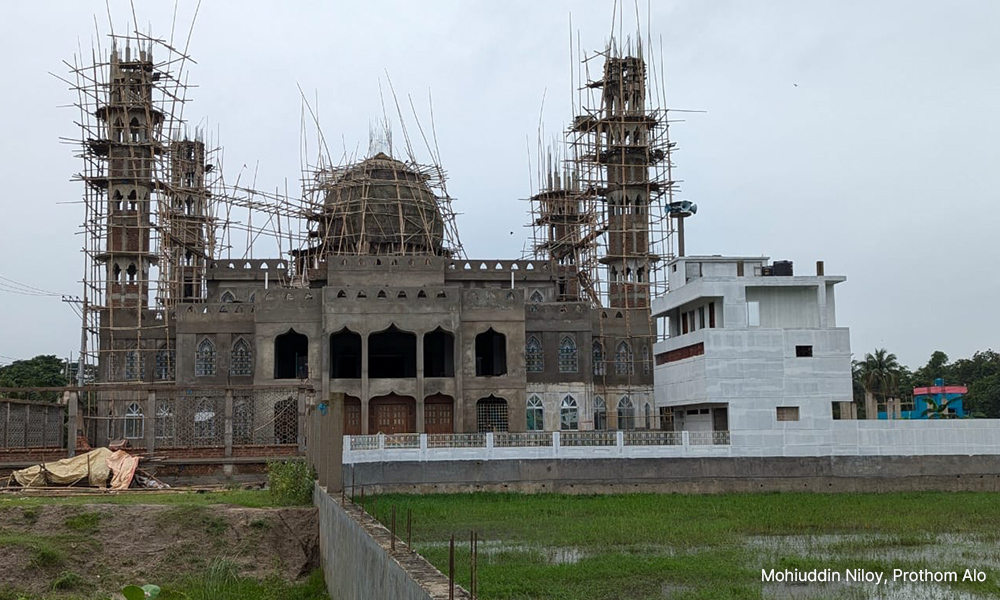
An Aminul-funded mosque under construction in Brahmanbaria, Bangladesh. Photo: Mohiuddin Niloy/Prothom Alo
Prothom Alo learnt that some BDT 140,000 million (RM5.21 million) has already been spent on the construction, with the project managed by Aminul’s younger brother, who runs a local newspaper.
Holding a Bachelor of Arts in Business Management from the University of Chittagong, industry insiders told Prothom Alo that Aminul’s entry into the migrant labour industry started when he parlayed his skills to secure the position as a broker for a businessperson who owned a labour agency.
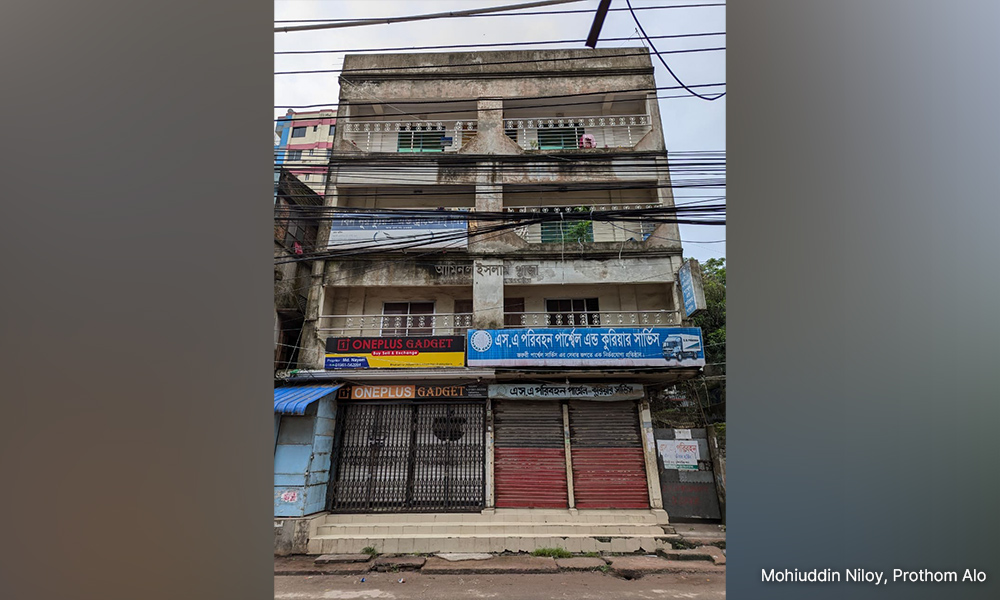
The Aminul Islam Plaza at Brahmanbaria, Bangladesh. Photo: Mohiuddin Niloy/Prothom Alo
His pathway to Malaysian citizenship began when he married a Malaysian – Rusilawati Mohamed Yusoff, known to industry players as Rosie – and the couple started their own business in migrant worker management.
It was around this time that he started having business associations with Ruhul Amin, who is also from Brahmanbaria.
Ruhul, a former secretary-general of the Bangladesh Association of International Recruiting Agencies, is also accused of money laundering.
The Bangladesh authorities have sought Malaysia’s cooperation to arrest and extradite Amin and Ruhul over these charges, but both have denied the claims.
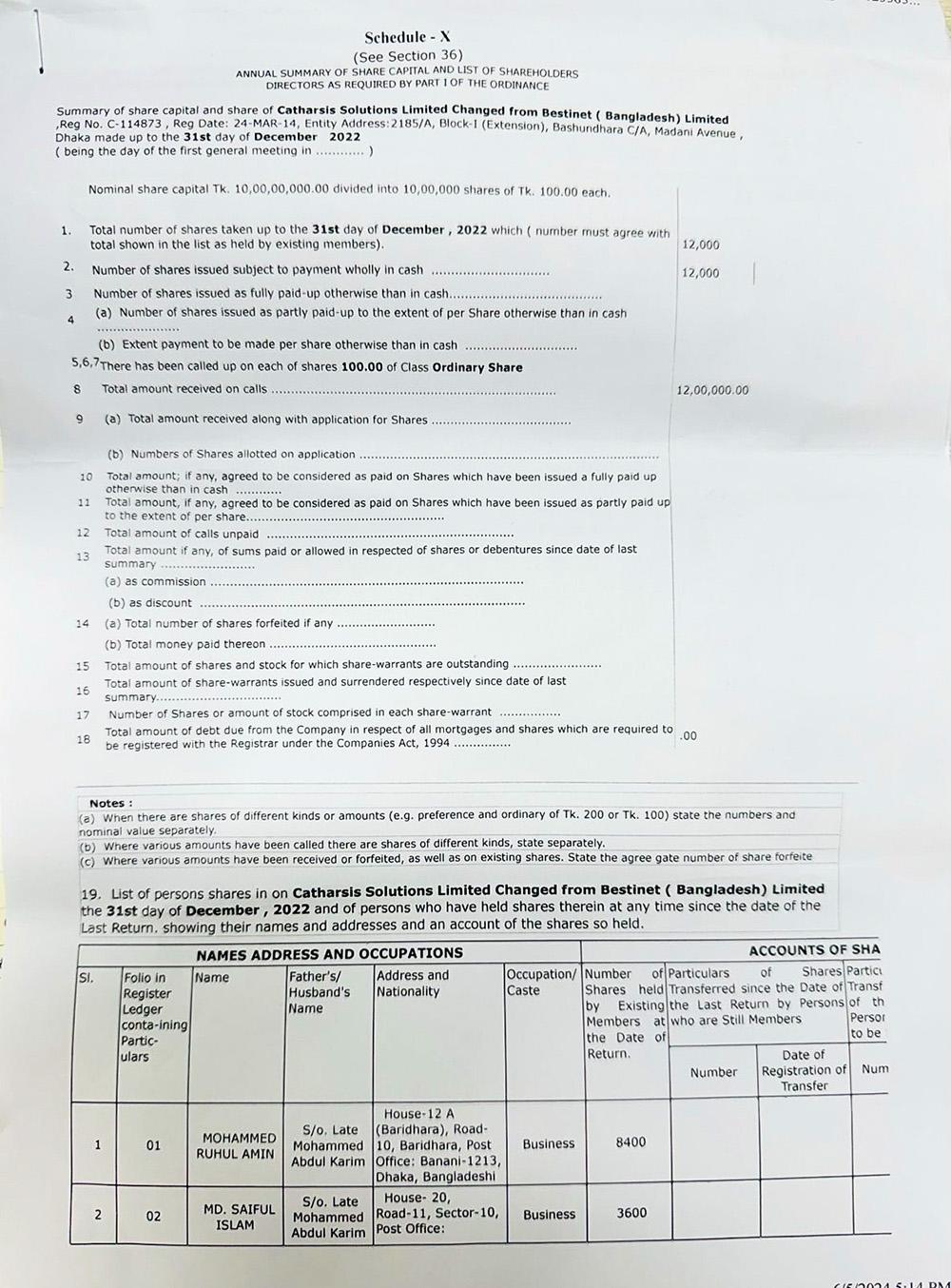
A document showing Ruhul’s company was once known as Bestinet Bangladesh.
Building an empire
Three decades after arriving in Malaysia, no one can say that Aminul’s rise from humble beginnings is less than remarkable.
He now has a significant corporate footprint, with shareholdings in dozens of firms in Malaysia, in a variety of industries including IT, shipping, security, labour recruitment, healthcare, travel, cattle breeding and food.
Although foremost known for being Bestinet’s founder, he has taken steps to pare down his holdings of the company, now owning less than one percent of Bestinet Sdn Bhd.
Still, his name remains connected to an extensive web of companies – at least six of which carry the “Bestinet” name.
They are Bestinet Technology Sdn Bhd, Bestinet FWQS Sdn Bhd (rebranded as Broadfield Natural Resources Sdn Bhd last month), Bestinet IT Solutions Sdn Bhd, Bestinet INTL Solutions Sdn Bhd, Bestinet Healthcare Sdn Bhd (rebranded as G3 Healthcare Sdn Bhd in April) and Bestinet Payment Services Sdn Bhd.
Some of these firms are subsidiaries of JR Joint Resources, a conglomerate established in 1998.
However, Aminul holds shares in only some of the “Bestinet-named” subsidiary companies, and his stake in the parent company, JR Joint Resources, is minimal – less than one percent.
Owners of parent companies and subsidiaries seem to overlap at different intervals, and the companies do business with each other.
For example, in 2021, G3 Global, a public-listed firm where Aminul is a director, acquired a 51 percent stake in Bestinet Healthcare – a distributor of hospital equipment, pharmaceuticals and hospital consumables – from Bestinet Technology.
The next year, Bestinet Healthcare made at least RM32 million supplying two million Covid-19 test kits to a government agency.
Since then, Bestinet Technology has paid G3 Global over RM70 million annually for a suite of services, including comprehensive Covid-19 testing services – ranging from test kit supply and on-site medical personnel to lab coordination and the development and management of end-to-end distribution and tracking systems.
In April this year, Bestinet Healthcare changed its name to G3 Healthcare Sdn Bhd.
Intergenerational wealth
His son, Muhammad Qhailiz Norman Aminul Islam who attended an international school in Kuala Lumpur and a university in London, will likely inherit his father’s empire.
In his twenties, Qhailiz is a substantial shareholder of G3 Global, which in 2022 won an RM118 million contract to provide a security system for both Kuala Lumpur International Airport terminals.
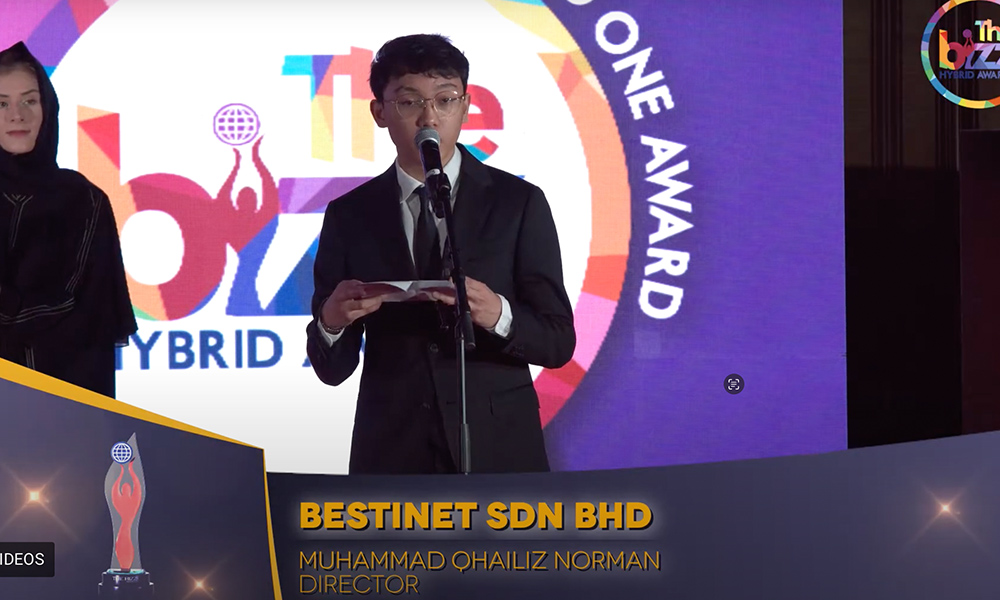
Qhailiz representing Bestinet at an award ceremony in 2021
In June this year, G3 Global’s subsidiary won a 30-year concession to provide migrant worker dormitories in Maldives.
Under the Maldivian government concession, G3 Global will charge employers US$100 (RM445) per worker per month for the first year, after which it will be increased to US$120 per month, out of which US$5 will go to the Maldivian government.
This is similar to the FWCMS deal, where Bestinet collects a fee from each migrant worker, and the government is not charged.
Saravanan: Aminul an honest guy
Like Bestinet, which at different intervals had former home minister Azmi Khalid and Pahang prince Tengku Abdul Rahman Sultan Ahmad Shah as its chairperson, G3 Global also has connected figures on its board.
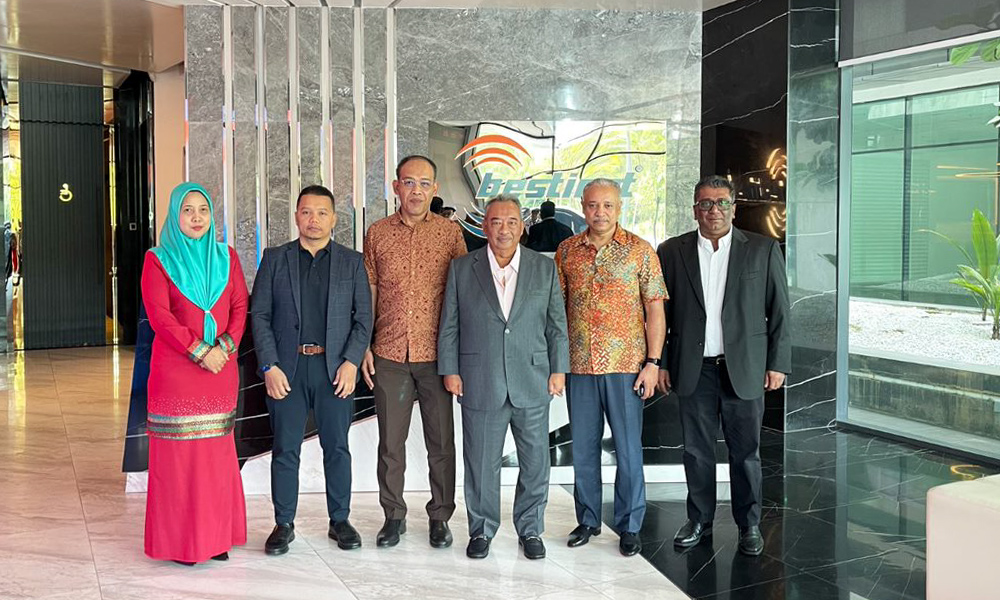
Tengku Muda Pahang Abdul Rahman Sultan Ahmad Shah (third from right) and Aminul (second right) at Bestinet’s office
In G3 Global, Alias Ahmad, former immigration director-general, who retired from the civil service as education secretary-general, is the executive chairperson.
Similarly, like many businesspersons with government deals, Aminul has been seen hobnobbing with government officials and ministers.
Ex-human resources minister M Saravanan in between Aminul and HRD Corp CEO Shahul Hameed Shaikh Dawood (left), with some family members, at Saravanan’s home
Photographs published on then-human resources minister M Saravanan’s social media showed him greeting Aminul and taking a warm photo with Aminul, controversial HRD Corp CEO Shahul Hameed Shaikh Dawood and some family members when he visited the minister at his home for Deepavali in 2023.
A photograph showing them and Shahul allegedly holidaying together at the famous Dubai Miracle Garden also went viral on social media.
MIC senator and Social Security Organisation (Socso) chairperson Haniffa Abdullah was also with them.
When contacted, Saravanan explained that he did not go on holiday with the trio, but that they bumped into each other in Dubai, where Saravanan was on a separate family holiday.
“Since we knew each other, we took a picture. That’s it,” he told Malaysiakini.
From left: Saravanan, Socso chairperson Haniffa Abdullah, Aminul and Shahul in Dubai
The former minister said as a “very friendly and approachable”, and successful businessperson, “everybody was easily attracted to (Aminul)”.
“I am one of them. Till today, we are good friends,” Saravanan said, characterising Aminul as “one of the most honest guys” he has ever met.
“I don’t know why he is always victimised now and then. A lot of people born elsewhere eventually become Malaysian after migrating here, but just because he is successful, everybody targets him,” the MIC leader said.
Malaysiakini has contacted Shahul and Haniffa for comment.
Zahid, Najib cited in lawsuit
Aminul’s lobbying efforts to get the FWCMS deal was confirmed in a messy legal dispute over company shareholdings involving Aminul-owned JR Joint Resources, two of its shareholders Mohd Zaki Jaafar and SH Yahya Sh Mohamed, as well as Mohamed Nizam Jakel Mohamed Jakel, the scion of the Jakel Group textile empire.
If anything, the legal dispute revealed how tenacious Aminul is in reaching his goals, even if it takes many years to come to fruition.
Although he was not directly a party to the suit, he was a central figure in the case and the court heard that he is “the prime mover of the various platforms and is the controlling mind behind these entities.”
Before the lawsuit hit headlines, JR Joint Resources had already caught flak for allegedly mismanaging a government contract to handle the repatriation of foreign workers in an amnesty programme.
In the lawsuit against Nizam, the High Court heard that Aminul had first introduced the idea to then prime minister Najib Abdul Razak at the Putra World Trade Centre in 2011 and Najib agreed that Aminul should approach the Home Ministry with the idea.
In 2012, the Home Ministry’s secretary-general issued a letter informing Bestinet of the ministry’s approval for the proof of concept.
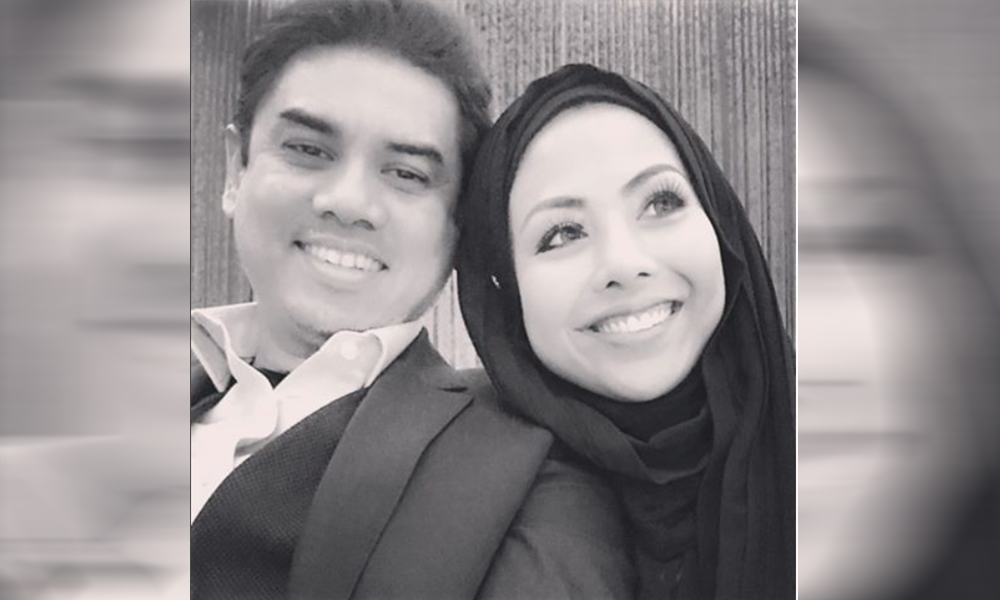
Syed Alman Syed Alwi with his wife, Nurul Hidayah Ahmad Zahid, the daughter of Deputy Prime Minister Ahmad Zahid Hamidi
However, Nizam testified that in late 2014, then-deputy prime minister Ahmad Zahid Hamidi’s son-in-law, the late Syed Alman Syed Alwi, had asked him to work together with Aminul on the project because “Bestinet was having difficulty implementing and strategising the project for the government”.
Some months later in mid-2015, Nizam offered Aminul his services as a “consultant” with ties with “powerful persons” and senior officials, for RM200 million.
However, Aminul testified that ultimately, he felt Nizam did not do enough to warrant the payment and that the 30-plus meetings he claimed he had with officials to facilitate the FWCMS project were meetings on Jakel deals instead.
Coercion over Bestinet shares
In 2017, Nizam tried to co-opt the project altogether by registering his own company named FWCMS Sdn Bhd.
He showed Aminul a letter bearing this company’s letterhead with a notation from Zahid, who was the then-home minister, directing the FWCMS deal be awarded to the company, the court heard.
Nizam then proposed the RM200 million consultancy services agreement be scrapped in exchange for control of Bestinet.
Eventually, he agreed to accept 49 percent of Bestinet shares, 70 percent of two other related companies – Tass Tech Sdn Bhd and Synerflux Sdn Bhd – and a profit-sharing agreement.
Tass Tech, an IT firm, and Synerflux, a labour agency, were owned by the plaintiffs and were in 2017 reportedly on the cusp of winning government contracts.
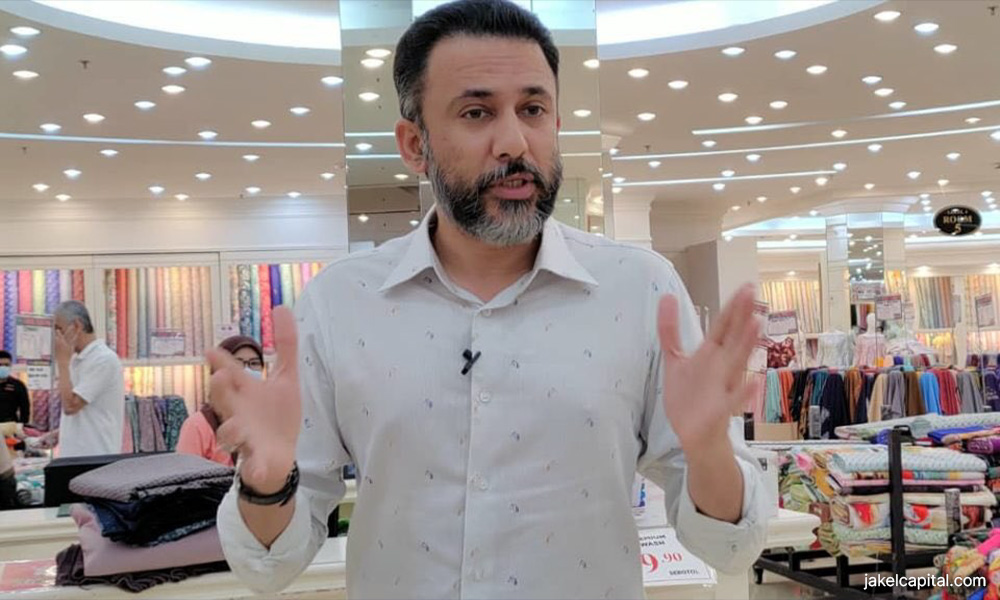
Businessperson Mohamed Nizam Mohamed Jakel
The agreement was drawn up to transfer the shares to Nizam’s wife, Norhana Sharkhan, after which FWCMS Sdn Bhd was wound up.
However, JR Joint Resources, the company which owns Bestinet, challenged the agreement after the fall of the BN government in 2018.
The court found this agreement void because it was drawn up under duress and coercion.
The legal tussle to control Bestinet, even before the FWCMS deal was signed, underlines how lucrative the project promised to be.
So far, it has lived up to its multimillion ringgit promise.
According to its latest filing with the Companies Commission, Bestinet retained earnings of RM128 million and made RM85 million in profits out of RM138.92 million in revenue in the financial year ending Dec 31, 2022.
In fact, recent developments revealed that Bestinet’s revenue should run into billions.
Recently, Bestinet slapped the government with a letter of demand for RM1.63 billion, which it said it was not allowed to collect from migrant workers over three years.
To avoid a financially damaging lawsuit, the government decided to extend the FWCMS deal.
Having secured a renewal of service for the FWCMS for another six years – and with a fee hike from RM100 to RM215 per worker – there is more of that to come.
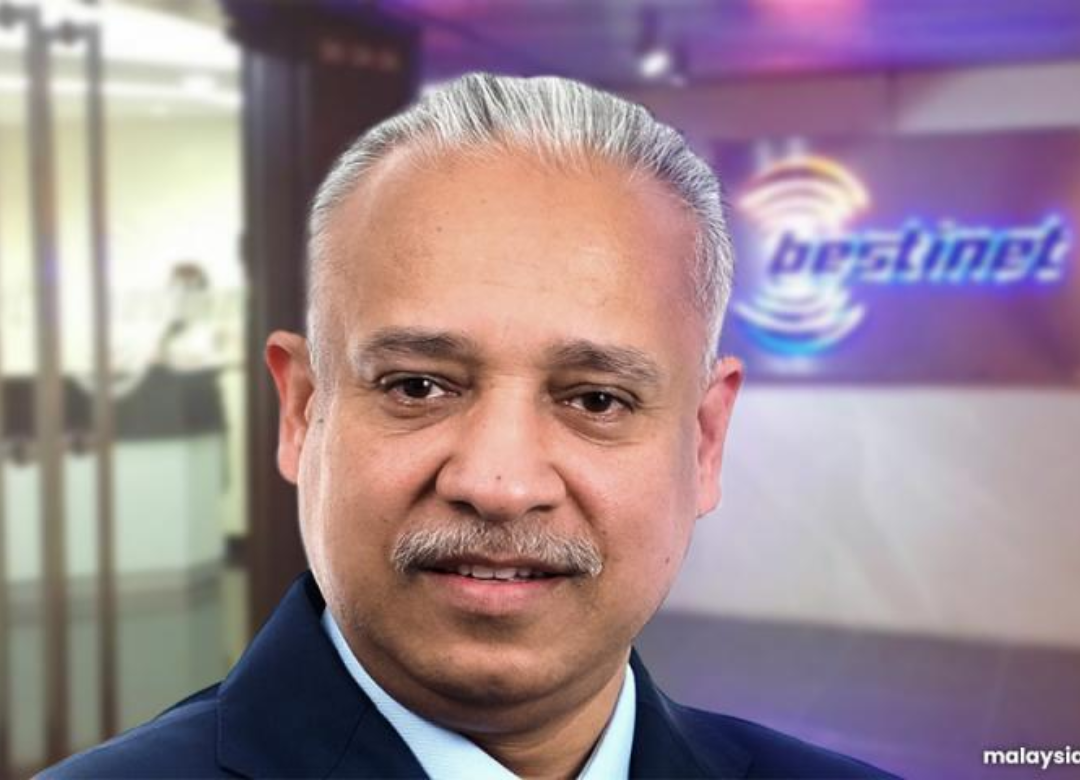
The founder of the controversial migrant recruitment technology company Bestinet Sdn Bhd is among some 300 Malaysians who own luxury properties in Dubai.
According to leaked property data, accessed by Malaysiakini through a consortium of investigative journalists, Bestinet’s former president Aminul Islam Abdul Nor owns a four-bedroom luxury residential property at Sidra Villas, a residential community in the prestigious Dubai Hills Estate.
The posh dwelling has four bedrooms and a build-up area of 3,595.25 sq ft (334.1 sq m), according to property data leaked through a journalism consortium – the Organised Crime and Corruption Reporting Project (OCCRP).
Comparable properties in the same residential area are advertised for sale with an asking price of AED7.5 million (RM8.76 million).
Its developer Emaar Properties describes it as “a prestigious community that epitomises sophisticated urban living.”
“Boasting an array of luxurious properties, including stunning villas and apartments, this development presents a golden opportunity for property investment in Dubai,” it said.
Besides the opulent villa, Dubai property records also showed that Aminul owns two office units at The Binary by Omniyat, an iconic skyscraper in the city’s Business Bay.
According to estimates by property website Bayut.com, office units there are sold between AED700,000 for 896 sq ft of space to AED3.8 million for 3,393 sq ft of space.
The units owned by Aminul are 2,292.93 and 1,647.42 sq ft respectively, the documents revealed.
When contacted, Aminul declined to respond but a source close to him confirmed the properties do belong to him. The source also said they were purchased legitimately.
Owning property in Dubai is not illegal but experts say Dubai’s property market is particularly attractive to real estate speculators, money launderers, and tax evaders in part due to its absence of taxes, particularly tax on capital gains and rents.
The documents reviewed by Malaysiakini do not suggest that Aminul’s assets were purchased through dubious means, or that the source of the income was questionable.
However, Aminul’s upmarket property holdings are in stark contrast with the plight of scores of Bangladeshi migrant workers, who reportedly are forced to mortgage or sell off family land to pay exorbitant fees to come to work in blue-collar jobs in Malaysia.
Money laundering accusations
In late October, the Bangladeshi government wrote to the Malaysian police seeking the arrest and extradition of Aminul and an associate in the migrant worker business, Ruhul Amin @ Swapon, over accusations of money laundering, extortion, and trafficking of migrant workers.
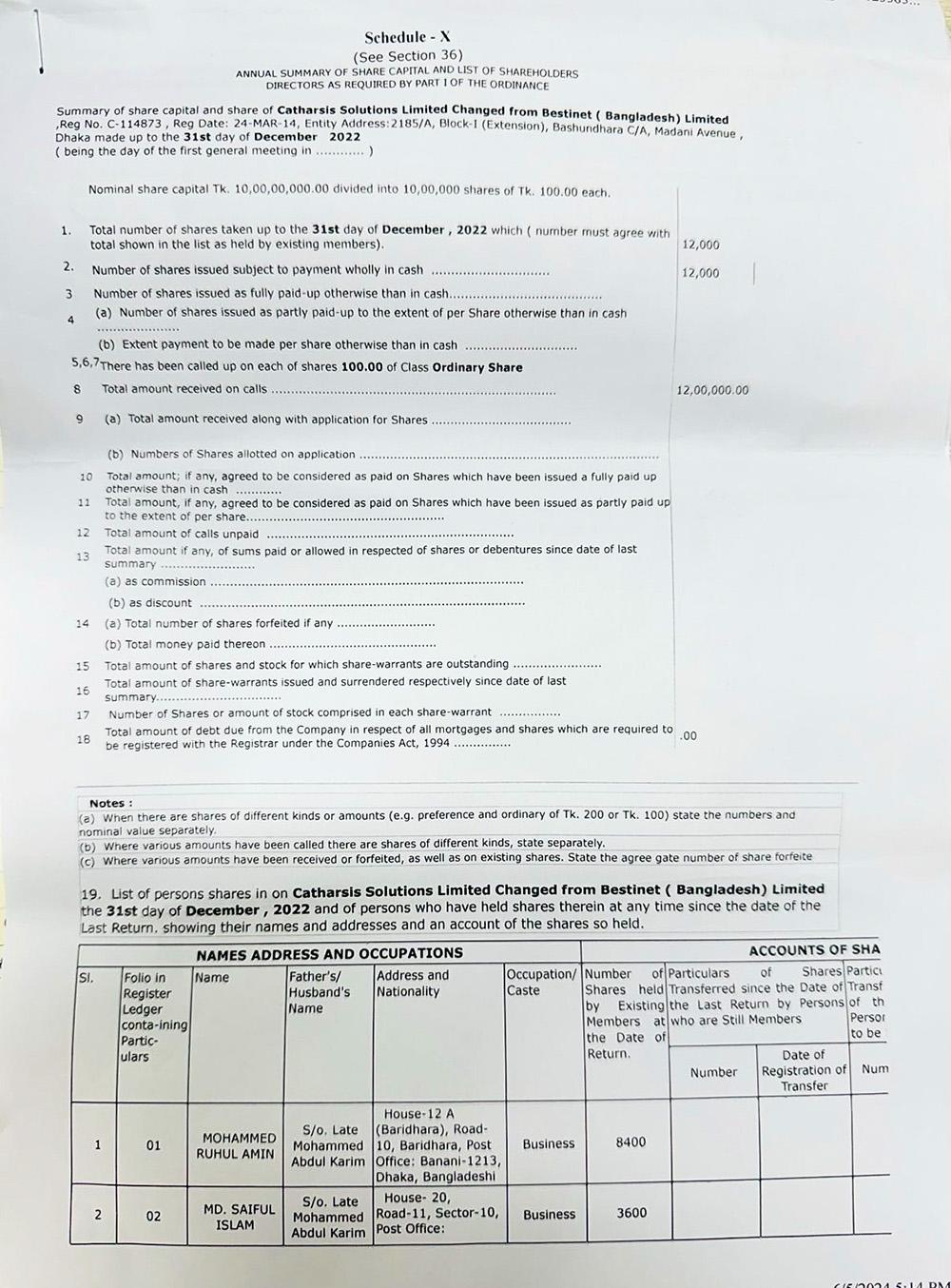
Official document revealing Ruhul Amin’s Catharsis Solutions Ltd was once known as Bestinet Bangladesh.
Ruhul runs Catharsis International, a company which manages migrant worker recruitment in Bangladesh, but he has been widely reported as an associate of Aminul.
According to official documents obtained by Bangladesh newspaper Prothom Alo, Bestinet Bangladesh Ltd was registered there on March 24, 2014, with Aminul as chairperson and Ruhul as managing director.
Aminul transferred all his shares in Bestinet Bangladesh to Ruhul in 2019 and three years later, the company was renamed Catharsis Solutions, according to a document from Bangladesh’s Registrar of Joint Stock Companies And Firms.
Ruhul owns Catharsis International and Catharsis Solutions.
Malaysian authorities confirmed receiving the Bangladesh government’s letter seeking Aminul’s extradition and replied to the letter requesting the Bangladesh police to submit a formal request.
Based on interviews with industry insiders, Prothom Alo reported in September that Aminul and Bestinet were accused of money laundering via migrant worker recruitment fees, to the tune of Tk87.50 billion (RM3.22 billion).
The MACC has cleared the company of the allegations while N Sivanathan, the lawyer representing the company and Aminul, said his clients were falsely accused of money laundering.
Aminul was the primary mover of Malaysia’s Foreign Worker Central Management System (FWCMS) and controlled Bestinet from its inception. Today, however, he only owns one percent of the company.
Celebrity counsellor and life coach Abdullah Sher Kawi Jaafar, famed for his appearance as a trainer in the reality TV show “Akademi Fantasia”, now holds 93.45 percent of the company.
Long controversy
Bestinet has long been dogged by controversy, starting from 2015, when the FWCMS it provided to the government was suspended from use amid claims that it won the deal through political connections, ostensibly with former home minister Azmi Khalid.
In a response at the time, Azmi said the deal was not signed yet and that it was only in the proof of concept stage.
Despite the initial suspension, the system was later reinstated and used by government agencies to process the hundreds of thousands of migrant workers entering Malaysia every year.
However, the Public Accounts Committee (PAC) and Auditor-General’s Department found there was never a formal contract between the government and Bestinet, which collected RM100 from each worker for the service.
The PAC found that the cabinet in August 2015 agreed to trial the FWCMS and another system provided by another provider, called ePPAx.
ePPAx was built by Syarikat Ivy Matrix Sdn Bhd, which won a RM20 million Human Resources Ministry project through an open tender.
The PAC found both the FWCMS and ePPAx served the same purpose of “processing (migrant workers) from the application stage to the end of employment and return to their sending country”.
Unauthorised approvals
Despite the development of ePPAx, the Home Ministry decided to use FWCMS instead, and in 2018 issued an approval letter to Bestinet to develop, supply, provide, and maintain FWCMS for six years from April 1, 2018, to May 31, 2024.
On Dec 22, 2021, the Ismail Sabri Yaakob-led cabinet agreed to use FWCMS exclusively but no formal contract was drawn up. Hamzah Zainudin was the home minister at the time.
“This means that the government/Home Ministry has used the FWCMS system for approximately six years without a finalised contract, clearly violating the regulations set by the government,” the PAC said in a statement.
The PAC also flagged other issues, including system vulnerabilities to hacking and potential fraud in migrant worker management.
Despite these issues, in June, the cabinet agreed to extend Bestinet’s contract for another three years, but with improvements in governance.
On September 1, Swarna Das was attempting to cross the 4096-kilometer-long barbed-wired border – one of the longest and deadliest in the world – between her home country Bangladesh and India, when she was shot dead. The teen – whose age is reported to be between 13 and 16 – was on her way to visit her elder brother, who had been living in the Indian state of Tripura, which borders Bangladesh, along with her mother. On that fateful day, she and her mother were assisted by two local agents in the dead of night when, amid shots, Das’s body dropped dead in the Indian territory. Her body was recovered by India’s Border Security Force (BSF), and 45 hours later, they returned her “bullet-ridden” body to her family after completing formalities.
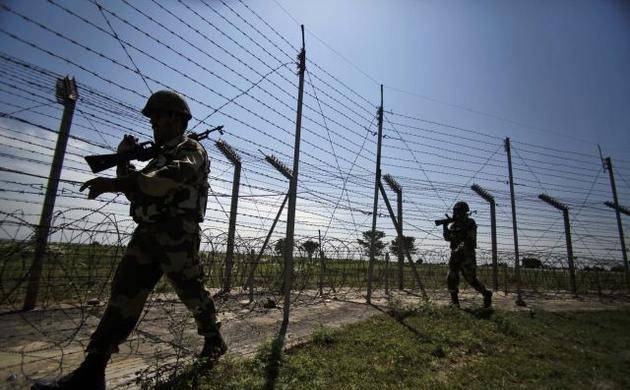
Bangladesh-India border is one of the world’s deadliest. Photo for representational purpose.
Bangladesh and India share friendly political relations but the border that divides the two countries is violent and hostile. Drawn in 1947 by the departing British colonial rulers and built on the foundations of security infrastructure, Bangladesh-India border is home to many residents who have historically moved fluidly across the demarcations not as a form of defiance but because of shared histories, culture and even families. Das, in this case, has family both in Bangladesh and India. Border residents like Das are one of the many to come in the middle of the countries’ troubling border relations.
Data released by Bangladesh’s Ain O Salish Kendra, a human rights organisation, documented at least 522 killings of Bangladesh citizens between 2009 and 2020. But Das’s killing evoked a different response.
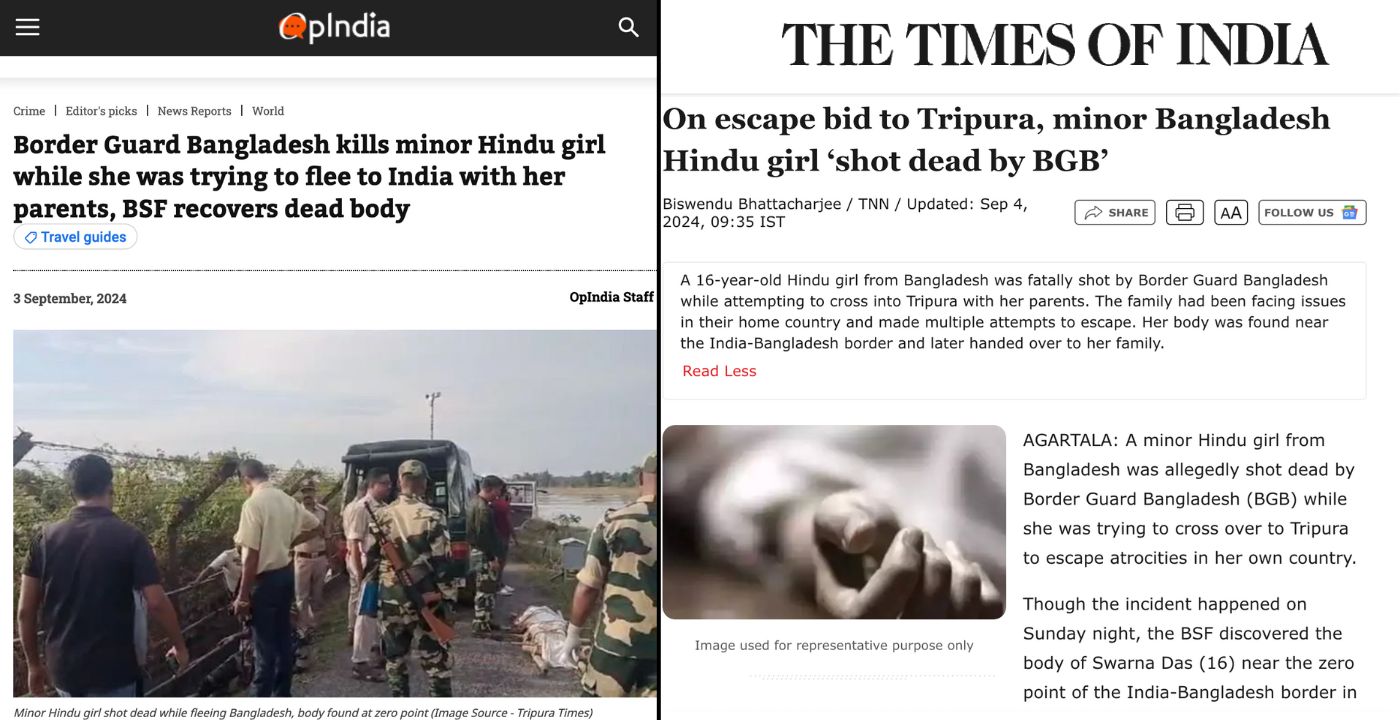
News coverage of Das’s killing in India
As people in Bangladesh and human rights organisations stepped in to demand justice, Das’s killing fuelled a war of narratives between the two South Asian countries. Mainstream media in Bangladesh, a Muslim-majority country of 173 million, reported the role of India’s BSF in Das’s killing, while in Hindu-majority India, the mainstream media including The Times of India and News 18 along with far-right Hindu publications such as OpIndia and Hindu Post published articles blaming Border Guard Bangladesh (BGB) and claimed they shot her dead for fleeing anti-Hindu persecution in Bangladesh.
‘Trigger-Happy’ BSF and a History of Violence at Bangladesh-India Border
India’s BSF has a policy of shoot-on-sight to prevent illegal migration and illicit activities like trafficking and smuggling, a measure that Human Rights Watch called indiscriminate and with a culture of impunity. Bangladesh’s BGB, on the other hand, has long been criticised by their home country for being ineffective against illegal migration and BSF’s violence.
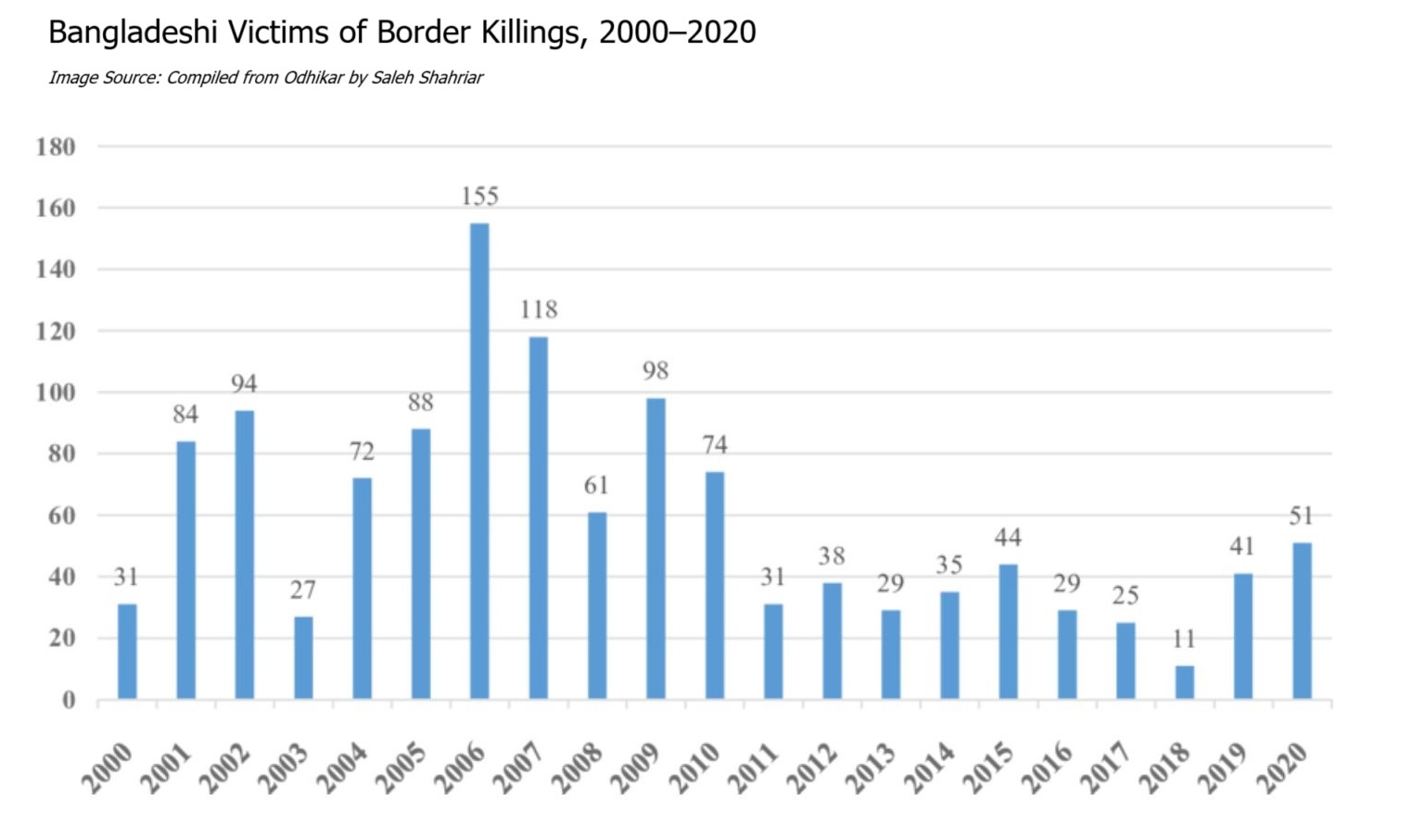
Recent Killings of Unarmed Civilians on the Bangladesh-India Border:
• 2011: Felani Khatun, 15, was shot in the chest and was found hanging on the barbed fences diving India and Bangladesh. In 2013, India acquitted the BSF constable accused of shooting her.
• 2016: Shihab Uddin Sajal, a Bangladeshi teen, was plucking mangoes in a farm when BSF members allegedly physically tortured and shot him. India suspended seven of its BSF troopers connected to his death.
• 2020: Hasinur Rahman Chand, a Bangladeshi shopkeeper, was fishing in a river near the border when he was killed allegedly by the BSF troopers. BSF claimed he was a cattle smuggler.
Das’s killing came on the heels of the student-led uprising in Bangladesh that ousted former prime minister Sheikh Hasina and her Awami League party from power.
The violence reflects the changing political dynamics between Bangladesh and India, says Pritam Das, the Executive Committee Member of Rashtra Sanskar Andolan (RSA), which led a fact-finding mission into Das’s killing. Under the interim leadership of Nobel laureate Muhammad Yunus, Bangladesh has accused India of harbouring Hasina among other discontentments. However, border communities don’t know about these political changes, Pritam adds.
Read More: As a ‘Gen Z’ Journalist, This is How I Felt Witnessing Young Bangladeshis Overthrow Sheikh Hasina
“Swarna Das’s family has relatives in India,” Pritam told Asian Dispatch. “Her mother’s side of the family is in [Indian state] Tripura. They’ve been traveling to India without passports for a long time. This is quite normal for border communities. But right now, there is a new tension around Bangladesh-India relations. Without realising this change, they attempted to visit as they did before.” Das and her mother took the help of agents who often assist people to cross borders without passport or visa, for a fee. As with many, the two were told they’ll be safe. That night, Pritam said, the mother-daughter duo got cold feet and wanted to turn back. However, the agents pressured them to cross.
“Swarna was shot at close range, and the bullet exited through her back while she was holding her mother’s hand,” Pritam says. “After she was shot, she fell into a ditch nearby. Her mother tried to pull her up but because the brokers feared more shots might be fired, they pulled her mother away, leaving Swarna’s body behind.”
“There is no evidence that BGB killed Swarna,” Pritam adds. “However, both the BGB and the police in Bangladesh showed negligence as they didn’t take the incident seriously or investigate it properly.” Asian Dispatch reached out to Kulaura Police Station, where Das’s body was handed over. The officials did not divulge much information and told this reporter that they do not have the post-mortem report.
Asian Dispatch also spoke to Das’s neighbour Dibakar Das, a schoolteacher, who asserted that the claim made by the Indian media outlets, which suggested that Das and her mother were fleeing Bangladesh in the face of minority oppression, is false.
In the days to come, Das’s killing reignited the conversation on the long, deadly history of India’s “trigger-happy” BSF’s border policy towards Bangladeshis. “Incidents of shootings or killings on the border of two hostile neighbouring countries are not rare. But the case of one country regularly shooting and killing citizens of the other country on their common border, when the countries are officially ‘friends,’ is rare,” engineer and writer Kallol Mustafa wrote in an opinion piece on Bangladesh’s top newspaper, The Daily Star.
How Domestic Politics Shaped Media Coverage of Das’s Killing
Shah Mohammad Shamrir Al-Af, a lecturer of International Relations at Dhaka-based Bangladesh University of Professionals, reaffirms the role of the media in shaping public perception on Das’s killing.
“Indian media’s portrayal of Swarna as a victim fleeing religious persecution contrasts sharply with Bangladeshi reports, which suggested an illegal border crossing to meet her brother,” Shamrir Al-Af told Asian Dispatch. “Given her mother is still alive and supports Bangladesh’s narrative, this divergence of reporting highlights how media narratives can be influenced by national interests and political agendas.”
The Indian media coverage blaming Hindu persecution in Bangladesh fuelled several social media users in India to push Islamophobic rhetoric, with #SaveBangladeshiHindus as a hashtag.
In Bangladesh, social media users directed blame towards the BSF, the Indian government and its media.
Mubashar Hasan, a Sydney-based expert in South Asian geopolitics told Asian Dispatch that Hasina’s ouster is a glaring failure of Modi’s foreign policy but the communal undertones of Indian media coverage on Bangladesh diverts the attention from that and serves both Modi’s foreign and domestic agendas.
“Objective reporting on the border issue is nearly impossible due to the high-risk environment,” Hasan added. “Journalists often rely on official statements from the BSF and BGB, which are not neutral sources but reflect institutional priorities. This results in one-sided narratives that feed into the deeper mistrust between Indian and Bangladeshi media, which is closely tied to the domestic politics of both nations.”
The Indian media landscape is increasingly riddled with bias, propaganda and pro-government narrative. At the same time, the country is witnessing declining press freedom and attacks on independent journalists and media houses for asking tough questions from the Indian Prime Minister Narendra Modi’s government. A study by Lokniti and the Centre for the Study of Developing Societies in India found that 82 percent of the surveyed journalists believed most media coverage is favourable or beneficial to Modi’s Bharatiya Janata Party regime.
In Bangladesh, on the other hand, mainstream news media has suffered under several periods of authoritarian rule, martial law and multiple political uprisings. News outlets such as The Daily Star and Prothom Alo have been declared “enemy” of the state by former prime minister Hasina for their critical coverage. Recent decisions and public statements, too, fuels aspersions towards Yunus’s administration. Last month, Mohammad Asaduzzaman, the Attorney General of Bangladesh, called to remove “secularism” and “socialism” from Bangladesh’s Constitution. In August, Yunus’s administration also oversaw the release of Mufti Jashimuddin Rahmani, the chief of Al Qaeda-inspired terror outfit Ansarullah Bangla Team, who was convicted of killing blogger Rajib Haider in 2013. Haider was an atheist blogger who was killed in a spate of assassinations of secular bloggers and writers by extremist groups.
The current state of political turmoil and uncertainty in Bangladesh, especially attacks on Hindus during student uprising in August, fuelled the ongoing far-right Hindu supremacist movement in India. Das’s killing became a part of that narrative.
“In India, the rise of Hindu nationalism and the portrayal of Muslims as ‘outsiders’ (often from Bangladesh) or threats have been amplified by certain media outlets, leading to increased communal tensions and violence,” said professor Shamrir Al-Af. “Such reports or social media posts and interactions can severely deteriorate the bilateral relations between the two countries.”
Justice Delayed is Justice Denied
The information war over Das’s killing isn’t the first – nor the last. This January, the killing of a BGB official, allegedly by the BSF, sparked contrasting narratives in both countries. According to Bangladesh news media, the incident took place near the Dhanyokhola border outpost where a BGB patrol unit confronted a group of suspected cattle smugglers from India crossing into Bangladesh. A chase ensued and one BGB member, who got separated from his unit due to dense fog, went missing. Later, BGB officials received information that he had been injured by BSF fire and was receiving medical treatment in India before succumbing to injuries.
The Indian media reported a different version, which detailed how a BSF soldier accosted a group of cattle smugglers at its Sutia outpost and then fired in self defense after the smugglers allegedly attacked him with sharp-edged sickles. Taking advantage of the fog, the smugglers reportedly fled toward the Bangladesh border, leaving an injured “smuggler” on the Indian side.
Indian journalist Ramananda Sengupta said it’s incredibly challenging to report on border issues sensitively and with accuracy. “It’s because the details about such incidents are usually provided by the local administration or security officials, who are unlikely to admit wrongdoing,” he said. “Even eyewitness accounts can be fudged, manipulated or coerced to buttress the official narrative.”
Sengupta recommends that journalists from both sides should insist on joint briefing by border officials of both countries even though the bigger challenge is the spread of unverified news on social media.
Weeks after Das’s body was returned, the government of Bangladesh lodged a formal protest to the Indian government and called upon the country to review its border policy. At the moment, Bangladesh is one of India’s leading export destinations and the trade value between the two countries is approximately $11 billion (2023). Bangladesh’s Foreign Adviser Mohammad Touhid Hossain told The Daily Star that border killings by the BSF remain “an obstacle to good relations between Bangladesh and India.”
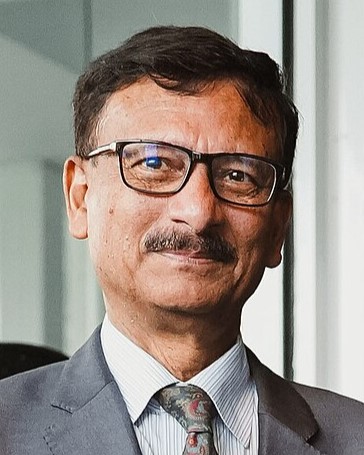
Such incidents do not occur along the borders of other countries unless there is a state of war. If individuals commit crimes, they might be prosecuted in court, but shouldn’t be killed.
—Md Touhid Hossain, Bangladeshi Foreign Affairs Adviser, at a roundtable titled “Bangladesh-India Relations: Expectations, Barriers and Future” in Nov ’24. Image Source: Wikimedia Commons
The incidents of shooting occur when a large number of people come with agents and attempt to infiltrate the border, sometimes attacking our personnel. At that time, in self-defence, our personnel open fire.
–Ravi Gandhi, Additional Director-General of BSF’s eastern command, as quoted by Scroll.in in November 2024. Image Source: @BSF_Gujarat/X
In October, the Bangladesh government sent another letter of protest to the Indian government. This time, a youth from its Cumilla district was shot allegedly by the BSF officials. The Indian media cited the BSF public relations officer who identified the deceased man as a smuggler. As noise dies down on Das’s killing, Asian Dispatch reached out to her brother Pintu for an interview.
He declined this reporter’s interview request, exasperated by the lack of action or any hopes of justice. “Will giving more media statements make my sister come back?” he said, before hanging up.
In Asia, the battle against gender-based violence reveals the harsh realities of society. World Health Organization reports that 1 in 3 women globally have experienced physical or sexual violence. This alarming statistic, while shocking and devastating, only scratches the surface of a more insidious issue: Marital rape. Despite the prevalence of violence within marriage, the laws governing marital rape in most Asian countries remain nonexistent, leaving countless women trapped in a cycle of abuse.
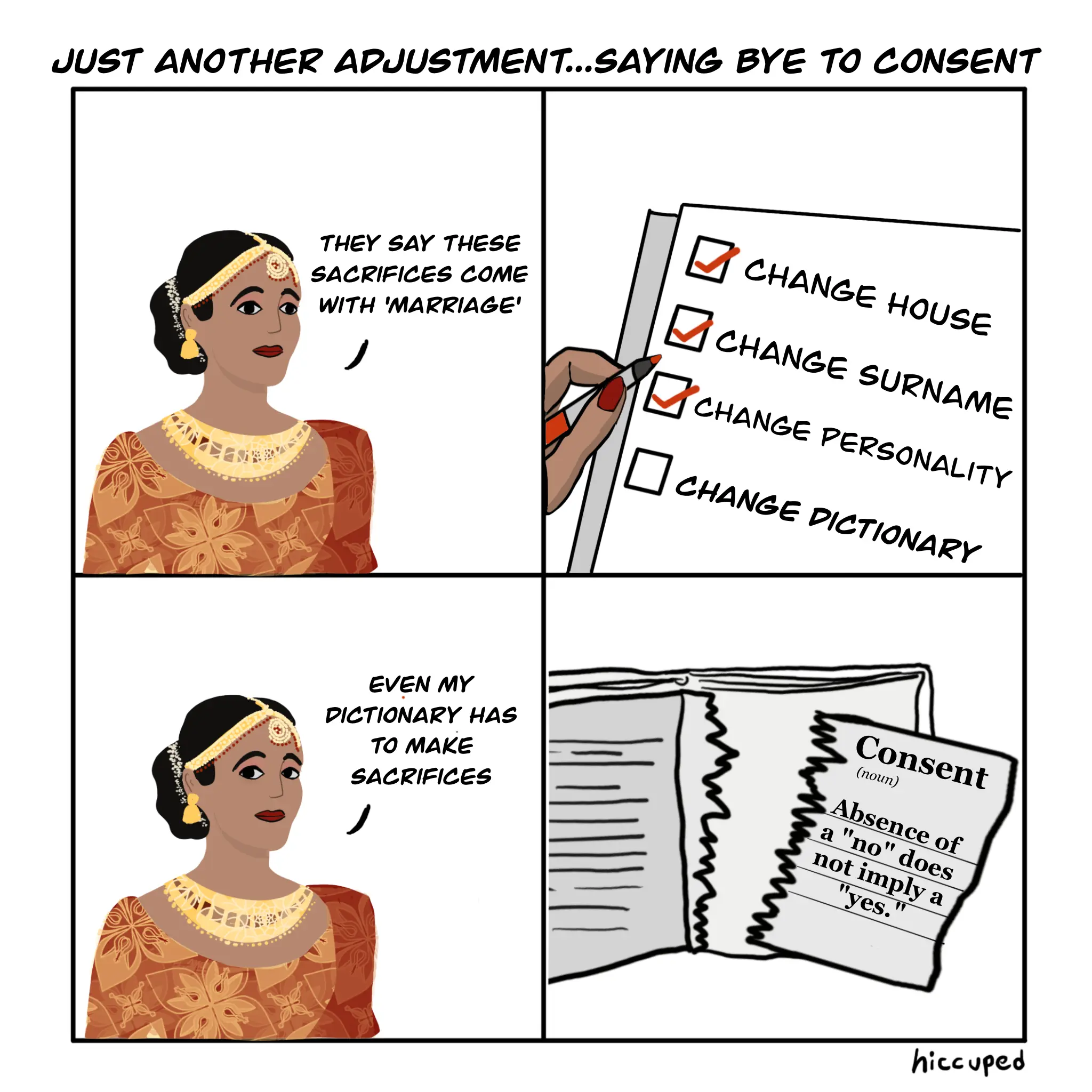
A study by UNESCO reveals that over 37 percent of women in South Asia, 40 percent in Southeast Asia, and up to 68 percent in the Pacific have faced violence from intimate partners. The numbers could be much higher considering that marital rape often goes unreported because women are conditioned to accept, endure and adjust within the confines of marriage. Across Asian societies, marriage is often presented as a sanctuary of security – both economic and physical. But we must ask: Safety for whom? If this institution is meant to protect women, then how are women expected to safeguard themselves from people within the institution? In reality, this “safety” seems illusory, benefitting the patriarchal individuals who designed these institutions.
Illustration: Sharanya Eshwar
While countries like Nepal, Bhutan, Indonesia and the Philippines recognise marital rape as a crime, many Asian countries still lack comprehensive legal frameworks to curb it, thereby prioritising cultural norms over safety of women. For instance, in India, the debate over criminalising marital rape, which is currently under judicial review by the Supreme Court, has its opponents – which include everyone from government officials to conservative groups – arguing that the law could be misused against men, and that not allowing marital rape could destabilise family structures. India prides itself in having one of the world’s lowest divorce rates but that speaks more to societal stigmas around divorce (especially for women) in the country and lengthy legal processes. The arguments against criminalisation of marital rape also reveal a troubling prioritisation of protecting men in patriarchal societies.
It’s not all hunky dory in countries that recognise marital rape, such as in Sri Lanka, Malaysia and Bangladesh. There are conditions and limitations. For instance, in Sri Lanka, marital rape is recognised only if the couple is legally separated. Or in Malaysia, it’s recognised only if the husband is causing hurt in order to have sexual intercourse with the wife. In Bangladesh, unless the victim is under the age of 13, marital rape isn’t recognised.
In Pakistan, there is no explicit laws where forced sex within marriage is criminalised. However, a recent ruling in Karachi marked a notable shift: A man was sentenced to three years for forcing his wife into non-consensual sex. This verdict acknowledged intimate partner violence as a criminal offence. In this case, the survivor’s lawyer, Bahzad Akbar, argued that the act of forced sodomy fell under the definition of rape in the amended Section 375 of Pakistan’s Penal Code.
The institution of marriage, peddled to offer protection and partnership, often serves as a deeply flawed and unfair structure for women. The failure to criminalise marital rape fully is a glaring example of shielding men from accountability, and enabling them to commit violence behind closed doors. Since time immemorial, social expectations and legal loopholes have trapped women in a position where they must choose between their safety and dignity, often leaving them deprived of both. The idea of marriage as a safe haven is distorted when norms of “obedience”, “sacrifice” and “submissiveness” to a husband are culturally imposed, and the legal system upholds these expectations.
The complicity of societal norms and the law in many parts of Asia reflects a troubling reality: Marriage is less about equal partnership and more about control. By framing consent as unnecessary within a marriage, the law not only fails women but actively enables perpetrators.
This complicity is not coincidental—it’s a well-orchestrated team effort between tradition and the legal system, where both reinforce each other to keep women subjugated within marriages. Women deserve legal systems that prioritise their rights and safety over outdated notions of family and honour. Until then, the institution of marriage, as it currently stands in many Asian countries, will continue to fail women.