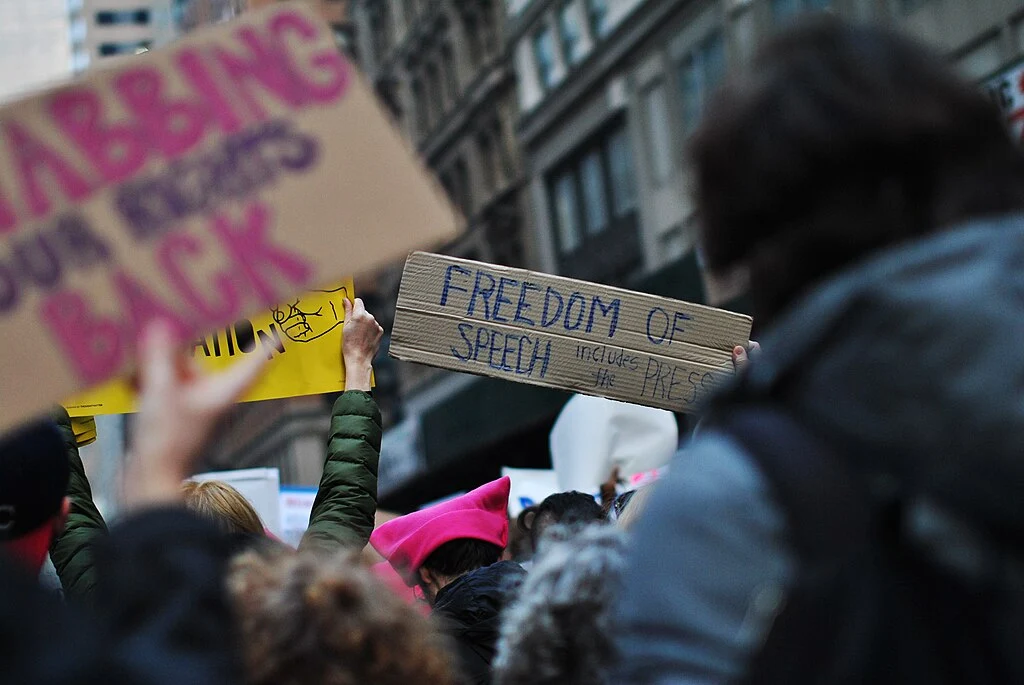
Six months after a mass uprising ousted the increasingly autocratic administration of former Prime Minister Sheikh Hasina, Bangladeshi journalists continue to be threatened and attacked for their work, along with facing new fears that planned legislation could undermine press freedom, according to Committee to Protect Journalists (CPJ).
The New York based non-profit said this in a statement published on its website on Monday, 17 February. It has been republished here in its entirety, via our Bangladeshi member Prothom Alo:
Bangladesh’s interim government — established amid high hopes of political and economic reform— has drawn criticism from journalists and media advocates for its January introduction of drafts of two cyber ordinances: the Cyber Protection Ordinance 2025 (CPO) and Personal Data Protection Ordinance 2025.
While the government reportedly dropped controversial sections related to defamation and warrantless searches in its update to the CPO, rights groups remain concerned that some of the remaining provisions could be used to target journalists. According to the Global Network Initiative, of which CPJ is a member, the draft gives the government “disproportionate authority” to access user data and impose restrictions on online content. Journalists are also concerned that the proposed data law will give the government “unchecked powers” to access personal data, with minimal opportunity for judicial redress.
Democracy cannot flourish without robust journalism. Bangladesh’s interim government must deliver on its promise to protect journalists and their right to report freely. Authorities should amend proposed laws that could undermine press freedom and hold the perpetrators behind the attacks on the press to account. —CPJ Asia Program Coordinator Beh Lih Yi
CPJ’s calls and text messages to Nahid Islam, the information, communication, and technology adviser to the interim government, requesting comment on the ordinances did not receive a reply.
Meanwhile, CPJ has documented a recent spate of beatings, criminal investigations, and harassment of journalists for their work.
READ: In Bangladesh, Cops Accused of Killing Protesters During 2024 Uprising Roam Free
Attacks
A group of 10 to 12 men attacked Shohag Khan Sujon, a correspondent for daily Samakal newspaper, after he and three other journalists investigated allegations of medical negligence at a hospital in central Shariatpur district on 3 February.
Sujon told CPJ that a clinic owner held the journalist’s legs as the assailants hit his left ear with a hammer and stabbed his back with a knife. The three other correspondents — Nayon Das of Bangla TV, Bidhan Mojumder Oni of News 24 Television, and Saiful Islam Akash of Desh TV — were attacked with hammers when they tried to intervene; the attack ended locals chased the perpetrators away.
Sujon told CPJ he filed a police complaint for attempted murder. Helal Uddin, officer-in-charge of the Palang Model Police Station, told CPJ by text message that the investigation was ongoing.
In a separate incident on the same day, around 10 masked men used bamboo sticks to beat four newspaper correspondents — Md Rafiqul Islam of Khoborer Kagoj, Abdul Malak Nirob of Amar Barta, Md Alauddin of Daily Amar Somoy, and Md Foysal Mahmud of Daily Alokito Sakal — while they traveled to a village in southern Laximpur district to report on a land dispute, Islam told CPJ.
The attackers stole the journalists’ cameras, mobile phones, and wallets and fired guns towards the group, causing shrapnel injuries to Mahmud’s left ear and leg, Islam said.
Authorities arrested four suspects, two of whom were released on bail on 10 February, Islam told CPJ. Laximpur police superintendent Md Akter Hossain told CPJ by phone that authorities were working to apprehend additional suspects.
Threats
Shafiur Rahman, a British freelance documentary filmmaker of Bangladeshi origin, told CPJ he received an influx of threatening emails and social media comments after publishing a 30 January article about a meeting between the leadership of Bangladesh’s National Security Intelligence and the armed group Rohingya Solidarity Organisation.
Multiple emails warned Rahman to “stop or suffer the consequences” and “back off before it’s too late.” Social media posts included a photo of the journalist with a red target across his forehead and warnings that Rahman would face criminal charges across Bangladesh, leaving Rahman concerned for his safety if he returned to report from Bangladesh’s refugee camps for Rohingya forced to flee Myanmar.
“The nature of these threats suggests an orchestrated campaign to silence me, and I fear potential real-world repercussions if I continue my work on the ground,” Rahman said.
CPJ’s text to Shah Jahan, joint director of the National Security Intelligence, requesting comment about the threats did not receive a reply.
Criminal Cases
Four journalists who reported or published material on allegedly illicit business practices and labor violations are facing possible criminal defamation charges after Noor Nahar, director of Tafrid Cotton Mills Limited and wife of the managing director of its sister company, Dhaka Cotton Mills Limited, filed a 13 November, 2024, complaint in court against them. If tried and convicted, they could face up to two years in prison.
The four are:
- HM Mehidi Hasan, editor and publisher of investigative newspaper The Weekly Agrajatra
- Kamrul Islam, assignment editor for The Weekly Agrajatra
- Mohammad Shah Alam Khan, editor of online outlet bdnews999l
- Al Ehsan, senior reporter for The Daily Post newspaper
CPJ’s text to Nahar asking for comment did not receive a reply.
Md Hafizur Rahman, officer-in-charge of the Uttara West Police Station, which was ordered to investigate the complaint, told CPJ by phone that he would send the latest case updates but did not respond to subsequent messages.
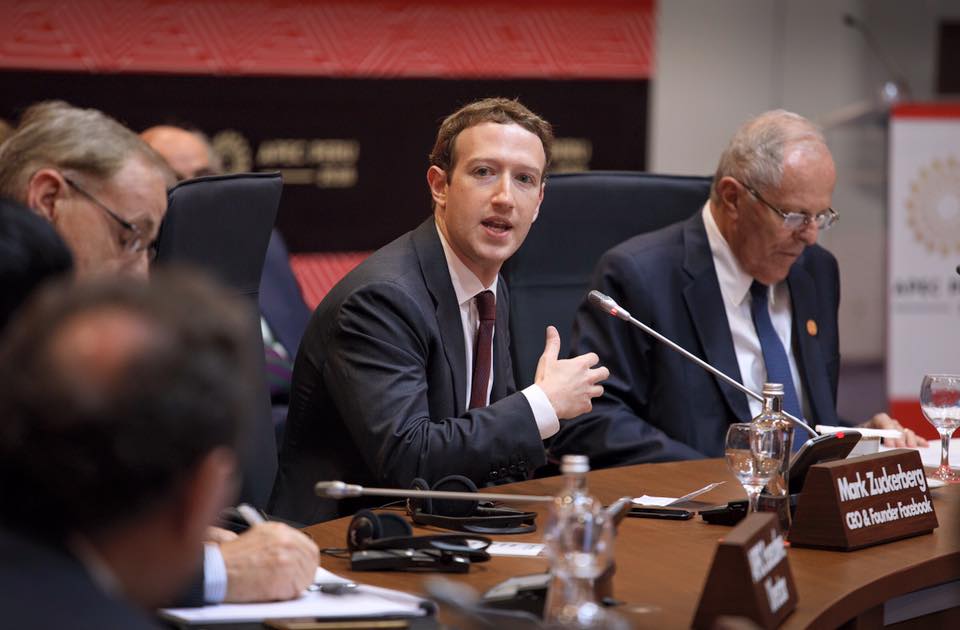
Photo: Mark Zuckerberg/Facebook
When Mark Zuckerberg announced that Meta would end much of the company’s moderation efforts, like third-party fact-checking and content restrictions and replace it with a crowdsourced model, it became clear that the company was shifting the responsibility for identifying and combating misinformation onto its users, leaving them to navigate a vast sea of online misinformation. This wasn’t merely a product pivot; it was a retreat from accountability.
Days ahead of Donald Trump’s presidential inauguration, Zuckerberg outlined an overhaul of Meta’s content-moderation policy that will lead to a fundamental change in how misinformation is addressed on Meta’s platforms in the US, and perhaps eventually in the wider world.
Meta’s fact-checking programme was launched in 2016 after Russia allegedly used Facebook and other platforms to influence American voters during the elections that year. A 2023 statement from Meta said the fact-checking program had “expanded to include nearly 100 organizations working in more than 60 languages globally.”
While fact-checkers did not censor or remove posts, they added critical context and debunked false claims, ensuring users could make informed decisions. After a fact-checker has rated a piece of content as “False”, “Altered” or “Partly False”, it will receive reduced distribution on Facebook and Instagram. As recently as 2022, Meta was bragging about fact-checkers’ contribution in content moderation and that it had invested more than $100 million into global fact-checking. But then last week, fact-checkers were blindsided by Meta’s sudden decision, as many fact-checking organisations signed a new contract to work with Meta in 2025 just two weeks ago — only to wake up on January 6 to the news the programme was being scrapped.
US-first Policy
Meta’s partnerships with fact-checkers weren’t perfect, but they were essential. It was a way to make sure billions of users could navigate the digital world with a little more confidence. For years, it has been the safety net against harmful content, viral conspiracy theories, doctored videos, violent extremist content, and false and unscientific claims. Now beyond immediate job losses in the fact-checking community, Meta’s withdrawal weakens the global infrastructure to combat misinformation.
Meta is also discontinuing key Diversity, Equity, and Inclusion (DEI) programs, effective immediately. The company will dismantle its DEI team and cease efforts to source business suppliers from diverse-owned companies. Meta cited the evolving “legal and policy landscape surrounding diversity, equity, and inclusion efforts in the United States” as the reason for this shift.
This decision offers significant insight into both the future of social media and the shifting dynamics in which the Trump administration is likely to push tech platforms to align more closely with US political sensitivities, prioritising “American interests” over global diversity goals. While this repositioning may offer political or regulatory advantages within the US, it will also expose Meta and other tech companies to heightened international scrutiny and regulatory challenges.
The Big Gamble
Soon after Meta’s fact-check announcement, India’s Parliamentary Committee decided to summon Meta representatives over Zuckerberg’s recent comments about Indian elections stating that India is among “a ton of countries…[wherein] incumbents basically lost [elections due to their handling of Covid-19 pandemic].” Zuckerberg made this statement at the Joe Rogan Experience show podcast, which has, in the past, been accused of spreading misinformation. India was quick to react to this false statement.
“Misinformation on a democratic country maligns its image. The organisation would have to apologise to the Parliament and the people here for this mistake,” Nishikant Dubey, who heads the Parliamentary standing committee on Communication and Information Technology, said in a post on X.
In the European Union, there is already raging discussion on how to protect people from social media harm. The EU regulations require social media companies to take a more proactive approach in combating online harms, including disinformation. The EU’s Digital Services Act mandates platforms to swiftly remove illegal content and mitigate disinformation, with heavy penalties for noncompliance. Under this law, major social media platforms can face fines up to 6% of their annual global revenue for failing to remove illegal content, disclose moderation policies, or address the impact of disinformation.
In Germany, Meta faces some of the toughest regulations. In 2015, Facebook, like other platforms, agreed to remove hate speech within 24 hours of being flagged, as part of an agreement specific to the country. “During the US election campaign, we have already seen disturbing interference from Elon Musk on X, pushing algorithms with his own political beliefs,” Axel Voss, the German Member of parliament who authored the EU Parliament’s copyright bill, told me. “Together with colleagues across party lines we have sent several requests to the European Commission to assess such behavior against the rules of the EU Digital Services Act.”
What does it mean for Asia?
The Asia-Pacific region represents a big market for Meta, with over 1.4 billion monthly active Facebook users—accounting for 40 percent of the platform’s global user base. In 2023, the region generated $36 billion in revenue, contributing 26.8 percent of Meta’s total global earnings. To address the challenge of misinformation on its platforms, Meta has partnered with numerous independent fact-checking organisations across Asia. However, recent policy shifts have introduced uncertainty about the future of these collaborations.
Already, Asian countries such as Indonesia, Malaysia, Singapore, Australia and South Korea want social media platforms to take more responsibility for combating harmful content, disinformation, and other online harms. The growing pressure stems from the platforms’ significant influence on public discourse, national security, and social stability.
In 2018, there was backlash when Facebook was accused of playing a “determining role” in the spread of hate speech against Rohingya Muslims, who were victims of genocide in Myanmar, according to the United Nations.
The Indian government, in particular, views deepfakes as a growing threat and has urged tech companies to actively police deepfakes, proactively identifying and flagging misinformation, or content that impersonates individuals. India’s IT Rules require platforms to proactively address misinformation, under the Information Technology (Intermediary Guidelines and Digital Media Ethics Code) Rules, 2021, a social media platform with more than 5 million registered users is classified as the Significant Social Media Intermediaries (SSMIs). In addition to the due diligence requirements prescribed for all intermediaries, the SSMIs are required to meet additional due diligence requirements, including appointing a Nodal Contact Officer who is available 24/7, enabling the identification of the first originator of information on the platform, using technology-based measures to identify certain types of content, establishing a physical contact address in India and taking down content within 36 hours of receiving a court or government order and providing a grievance redressal mechanism for users or victims.
Political Pressures at Play
Let’s not ignore the elephant in the room: Politics. Meta’s decision isn’t just about simplifying processes or saving costs; it’s about surviving in an environment where political power shapes corporate actions. In response to Meta’s decision to end the fact-checking programme, US President-elect Trump remarked that Meta has “come a long way,” signaling his approval. This, just months after Trump had called for Zuckerberg to face life in prison for alleged interference in US elections. Meta’s decision to align itself with the incoming administration seems almost inevitable. It seems a financially and politically advantageous move, especially as Meta prepares to battle the US Justice Department in an April antitrust case that could force the sale of Instagram.
While Zuckerberg is trying to secure his company’s future, it’s the platform’s users who will bear the brunt of the fallout as the digital landscape grows increasingly divisive worldwide.
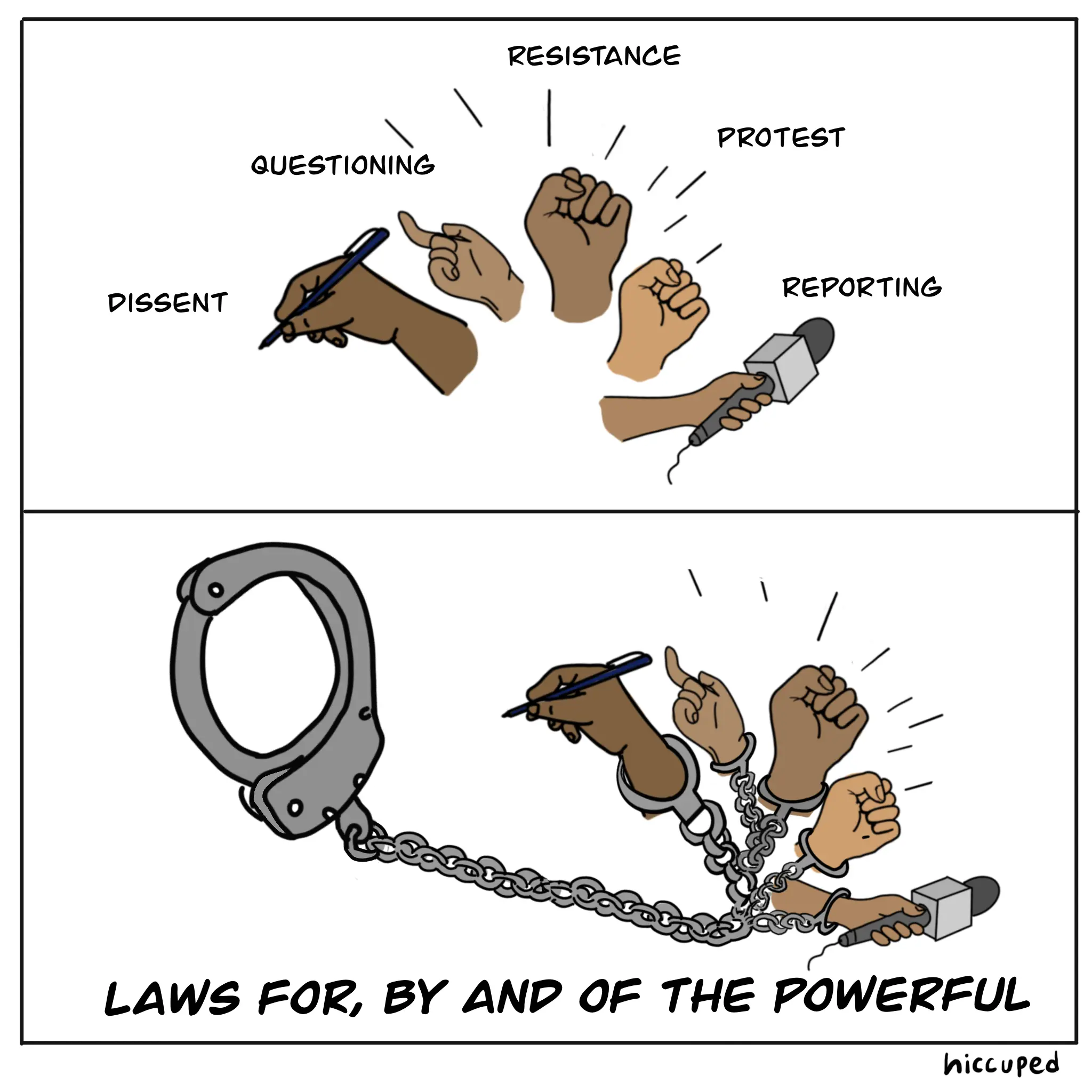
In Asian countries, dissent has severe consequences for journalists, activists and writers. They’re getting silenced by threats not just by the ones opposing their opinions but by the law itself. They are often at the risk of facing imprisonment for reporting, writing on or even questioning the authorities. Doing their job is seen as seditious.
Illustration: Sharanya Eshwar
The Hong Kong court recently sentenced Chung Pui-kuen and Patrick Lam, the editors at Hong Kong-based non-profit news website Stand News, to prison. They were charged under the sedition law. This is not an isolated case. Across Asia, there are colonial-era sedition laws and their modern iterations that are used to target pressrooms and activist circles.
In 2020, Indian Muslim journalist Siddique Kappan was arrested while reporting on a gang rape case in the Indian state of Uttar Pradesh, and charged under the Unlawful Activities Prevention Act (UAPA) and sedition laws. In Myanmar, since the 2021 military coup, at least 176 journalists have been arrested, while four have been killed, and approximately 50 are in prison or police detention, according to the International Federation of Journalists. What came as a surprise was when two journalists Tar Lin Maung and Naung Yo were detained by the armed opposition group Kachin Independence Army, signaling a troubling trend of journalists being targeted irrespective of the regime in Myanmar. Their whereabouts remain unknown.
In Malaysia, activist and artist Fahmi Reza has been arrested several times under Malaysia’s colonial Sedition Act for his satirical work that depicts government corruption and monarchy. Vietnamese journalist and writer Truong Huy San was charged for “abusing democratic freedoms” and arrested for his articles and posts that criticised the government.
The list goes on.
The core issue with such laws is their broad, vague definitions of what constitutes as “unlawful” or an “anti-national” activity. This ambiguity grants the government significant discretion to interpret and apply these laws, often targeting individuals who dissent or criticise state policies. Under such provisions, individuals can be accused of threatening national security or government authority and detained on mere suspicion, without clear or direct evidence. This leeway allows the government to effortlessly suppress any dissent or opposition that challenges their authority or contradicts their views.
In India, the Unlawful Activities (Prevention) Act (UAPA) is an anti-terror law designed to prevent activities that threaten the sovereignty, unity, and security of the country. However, the law has stringent provisions, which allows the authorities to detain individuals without formal charges for extended periods, often without trial or bail. Umar Khalid, a student activist who was arrested in September 2020 under UAPA, has been in prison without bail and trial. Multiple bail requests have been denied on the basis of UAPA’s stringent bail restrictions. Similarly, tribal rights activist and priest Stan Swamy was arrested with charges accusing him of Maoist links. He suffered from Parkinson’s disease and was denied bail multiple times despite deteriorating health. He died in judicial custody. GN Saibaba, a professor and disability rights activist, was arrested in 2014 on charges of having Maoist links and supporting activities deemed “anti-national.” After being in prison for over nine years despite being 90% disabled and wheelchair-bound, Saibaba was sentenced to life in prison in 2017 and was denied necessary medical treatment. This year, he was acquitted of all charges and released. But his health deteriorated soon after, leading to his death.
Thailand’s Lese Majeste law is meant to criminalise defamation, insults, or threats to the monarchy, with punishments of up to 15 years in prison per offense. However, there is no clear definition of what constitutes an insult to the monarchy, which allows authorities to interpret the law broadly and curb free speech.
China introduced the National Security Law, enacted in 2020 criminalising acts of secession, subversion, terrorism and collusion. This law was made in response to the protests that erupted in Hong Kong in 2019, making many dissenting acts illegal. In Malaysia, there is Security Offences (Special Measures) Act (SOSMA) which was enacted in 2012, this provides authorities with extensive powers to detain individuals suspected of security offenses for up to 28 days without charge. In Bangladesh, journalists and activists have been arrested under the Digital Security Act of 2018, which grants authorities the power to detain anyone posting “negative propaganda” or “fake news” that threatens national security.
These laws are broadly defined and are abused by authoritarian governments across Asia. The number of arrests made under these draconian laws reveals a troubling pattern: These regimes not only use these laws to silence dissent but also manipulate the judicial process to ensure that the arrested never see a fair trial. The law no longer protects the people. Instead, it protects the powerful from accountability, silencing the very voices essential to democracy and justice.