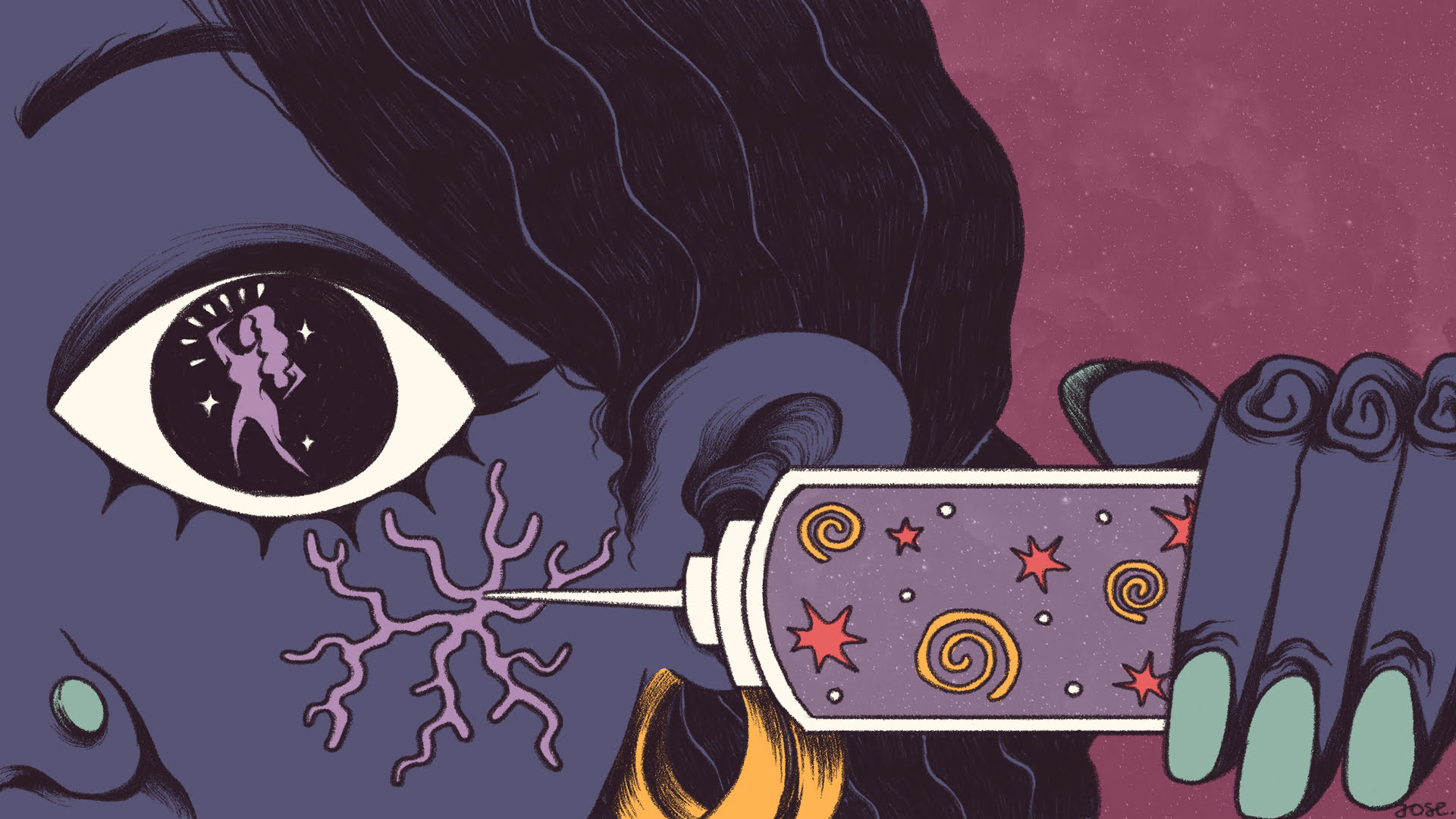
Look how dark I was a few years ago, and look at me now,” said Archana Reena Shaikh, a 27-year-old transgender dancer from the Hijra community in Maharashtra’s Shrirampur city, as she scrolled through photos of herself on her phone. “It took five years for me to transform into the beauty you see today,” she said, speaking of her gender transition journey. Her face lit up as she spoke.
Hijra is a cultural identity in South Asia, involving trans, intersex and nonbinary people.
The difference between the Archana in the photos and the person sitting in front of me was stark. Her skin seemed smoother than before and she was definitely fairer—excessively so in fact, to the point of appearing pale.
The drastic transformation was the result of fairness injections that Archana had used—once every fortnight initially and then once a month—for nearly a year between mid-2023 and 2024. The key ingredient in the injections is an antioxidant called Glutathione, which is sometimes marketed as a “wonder drug” with skin-lightening properties.
According to the National Cancer Institute, Glutathione is naturally produced in the liver and by aiding in the process of detoxification, it helps protect the body from damage caused by toxins, ageing, and pollutants. It is widely used in skincare products since it is considered effective in preventing tanning and other kinds of skin damage caused by the sun.
Cognitive Market Research, a Pune-based market research and consulting firm, noted in its 2025 report that the Indian market for Glutathione was worth 13.39 million dollars in 2024 and is projected to grow at 12.7 percent annually over the next five years.
For Hijra women like Archana, Glutathione holds a particular appeal. As they transition to align their bodies with their gender identity, they say that the beauty standards set by Bollywood and popularised by social media shape their idea of the feminine ideal. Driven by the desire to be accepted and perceived as women, many of them end up chasing the flawless, glowing fair skin epitomised by their favourite actresses. And in the process, Glutathione injections become an integral part of the lives of some Hijra women.
Hijra women are not the only ones taking these injections though. From Bollywood celebrities to ordinary brides, the usage of Glutathione seems to have become so commonplace that it has begun to feature in the storylines of TV shows such as Made in Heaven.
These treatments, which are unregulated and often performed by unscrupulous clinics indulging in predatory practices, can pose health risks and come at a significant financial cost. The results can be unpredictable and begin to fade sometime after the user stops taking the injections. Yet, they seem to have become a trend.
Ease of Access
A few months ago, Taniya Khatun, a hijra woman who also lives in Shrirampur, made a phone call to a clinic in Pune to ask about fairness injections. Taniya recalled a soft-spoken voice answering her call, telling her to visit the clinic whenever she was ready. “We can start the treatment immediately, on the same day,” she said she was told.
“I was already fair, the same as you see me now,” Taniya told me. Yet, she travelled almost 200 kilometres to the clinic in Koregaon Park, Pune to seek treatment. “I took the injections due to peer pressure. It has become a trend [in her community],” she said.
The process was fairly simple. Taniya recalled that when she walked into the clinic, the staff asked for her budget and based on that selected an injection from a range of options. Then, she was told to lie on a bed and hooked up to an intravenous saline drip which contained Glutathione. Once the drip was finished, she said she was charged Rs 3000 and sent on her way.
The only instruction she was given was that for the injection to be truly effective, she needed to avoid exposing her skin to the sun and pollution for too long. Taniya, who is dependent on begging and dancing at public functions for an income, had to mostly ignore the directive. Maybe because of that, she said, she did not notice any change in her skin colour. She went back to the clinic for one more injection after the initial one.
Taniya’s experience is in line with medical knowledge of Glutathione’s effects. “It is a very slow-acting drug so it takes time for it to show effect. You will start seeing noticeable changes in colouration if you take it for the whole year, with the periodicity of an injection every three weeks,” said Shashank*, a dermatologist who works at two private hospitals in the National Capital Region. “But there is no guarantee that the fairness you achieved will last after that. We have seen the older colouration return after 3-4 months if patients stopped taking the injections.
Unlike Taniya, Archana persisted with the injections for much longer, taking 15 in total over the year. But when she stopped taking them, the Glutathione glow started to fade away. “I was even fairer than what you see now. The effects have reduced 50 percent,” she said with a hint of disappointment. Archana had spent Rs 53,000 on the treatment. That is roughly five months of income for her. She said she makes about Rs 10,000 a month through dance performances and begging.
The Hijra women I spoke to in Shrirampur told me that a two-person dance show typically earns them a total of Rs 2,000, while a four-person group performance might bring in Rs 5,000, exclusive of travel costs. Tilotama Patil, a 34-year-old Hijra woman who also lives in Shrirampur, said the Hijra women in her community are only able to get shows twice a month. They rely on tips to bolster their earnings, but Taniya told me that people often do not tip.
Almost all the Hijra women I spoke to for this story said that fairness treatments are becoming a financial burden for them. “We are left with no balance between how much we invest in our bodies and how much we earn. Fairness treatments alone cost more than what we make through dancing,” said Tilotama.
Unregulated and Unsupervised
Glutathione was never meant to make people fair,” said Shashank. “It was an accidental discovery. When doctors were using it to treat patients for liver conditions, they noticed a change in the skin colouration of patients. That is how it came to be marketed as a fairness drug.”
The Central Drugs Standard Control Organisation, India’s national regulatory body for cosmetics, pharmaceuticals, and medical devices, has only approved Glutathione for use in the treatment of liver-related diseases. However, hospitals and clinics across the country now offer it as a treatment to increase fairness and improve skin quality. The drug is also available in tablet and gel form, but injecting it is considered the most effective method to get immediate results.
“From big pharma to small drug manufacturers, everyone is making it. From big hospitals to small roadside clinics, everyone is injecting it,” said Shashank. “Around 2021, when my dermatologist friends and I started providing this treatment, we’d get about 5-6 patients in a month. But now, some of my friends are injecting Glutathione to 3-4 patients every day in Delhi NCR.”
Since its usage as a skin treatment is not officially approved, how it is administered varies wildly from one dermatologist to the next. “There are absolutely no guidelines. No dosage recommendations, no idea about how long it should be given and what is safe or unsafe. People are using it based on their whims and fancies,” said Shashank.
To get a first-hand experience of how easy it is to access Glutathione IV treatment and how predatory the clinics can be, I called up a clinic near my home in Salt Lake, Kolkata and made an appointment. While I was on my way I got three calls from the clinic in 20 minutes to know how far I was.
After I arrived at the clinic, I was then taken into a small chamber where a woman in her late 20s began suggesting fairness treatment options, including Glutathione injections. There were three options for the Glutathione injection — basic, advance, and premier. The basic option would involve 600 mg dosage per injection and cost Rs 36,000 for 15 sessions, advance was 20,000 mg for Rs 48,000, and premier was 90,000 mg for Rs 84,000. The main difference among them, she said, was that the injections with higher doses would lead to an “overall better effect on the skin and health.” When I asked about the side effects, she said, “It is completely safe.” The clinic staff was keen that I start the treatment right away. When I attempted to stall, saying I needed to think about it and discuss the cost with my family, the clinic manager offered discounts as well as EMI options which could be approved in 10 minutes flat.
For those who don’t want to deal with the cost of accessing it through a clinic, procuring Glutathione online is scarily trivial. When I googled “order glutathione injection,” a long list of corporate pharmacies and e-commerce websites showed up, promising to deliver Glutathione vials, in a variety of dosages and prices. Within 10 minutes of sharing my phone number with the e-commerce directory, Just Dial, I received messages from multiple vendors offering to ship the injections to my home.
“In our community, we see that people have started purchasing these injections online and injecting it with the help of nurses who can implant an IV either at home or at local clinics,” said Tilotama. Multiple Hijra women I spoke to in Shrirampur said that this helps them not only cut the cost but also gives them the freedom to take higher doses. Their reasoning is that higher doses, taken more frequently, mean quicker, more effective results.
This kind of unregulated and unsupervised use of Glutathione injections can be harmful. The US Food and Drug Administration warned in a 2019 advisory that potential side effects from Glutathione injections could include harmful impacts on the liver, kidneys and nervous system.
Rashmi Sarkar, Director Professor at the Department of Dermatology, Leprosy, and Venereology at Lady Hardinge Medical College and Hospital, told me that while topical and oral Glutathione are relatively safer, they should not be used indiscriminately without a dermatologist’s advice. The intravenous injection of the same drug is a “strict no because of the side effects.”
“We don’t know in which way it will work. The results can be unpredictable and the procedure can lead to severe side-effects. It can have renal side effects, severe skin reactions, sometimes it can lead to peeling of the entire skin,” she said. Adding that these side effects don’t occur all the time, she emphasised that due to the lack of clinical trials involving Glutathione injections, doctors are flying blind with regard to potential risks. Shashank, however, said that none of his patients ever had any side effects.
In an article published in The Print, Deepali Bhardwaj, a dermatologist and aesthetician, wrote, “Glutathione affects your kidney function in the long run. You need to know what dosage works for you. And you will need to first take a kidney test to see the viability of administering the glutathione injection.” Both Archana and Taniya told me that they were neither asked to undergo any tests before or after taking these injections nor were they told about any potential side effects.
The potential risks do not seem to faze Archana though. “We do not care about the side effects. Most of us live a short life, we rather live it satisfied,” she said firmly.
The Emotional Burden
The quest for fair skin can also have serious implications for the mental health of Hijra persons.
In a 2020 study, 38 percent of Hijra persons reported having some kind of mental health condition. These challenges, the studies note, are systemic and often stem from societal stigma, discrimination, rejection by family and friends, violence and lack of access to appropriate healthcare services.
For the Hijra women of Shrirampur, pre-existing mental health pressures are exacerbated by society’s emphasis on conventional beauty standards, and sometimes lead to a deep sense of isolation and despair.
“For a Hijra woman, it is important to look like a woman. And the image of a woman is all about fair skin, a thin waist, long hair and pink, puffed lips,” said Tilotama. The goal, as she puts it, is to escape the popular imagination of a Hijra woman as “someone with dark and heavy makeup, whose face is packed with layers of foundation that do not match the rest of her body.”
But the quest for acceptance through fair skin among the Hijra community isn’t confined to Shrirampur. Yoga S. Nambiar, who has a PhD in mental health and is the founder of the Global Rights Foundation, an Ulhasnagar-based NGO focused on transgender welfare, said that the phenomenon is widespread. “I can vouch for Delhi, Maharashtra and Punjab and say that around 45 percent of community members are taking these glutathione injections and also pills,” she told me.
This struggle does not end at fair skin but leads them to other treatments too. “From skin whitening treatments to lip fillers and liposuctions (cosmetic fat removal surgery) too, almost all of us save for years to get these procedures done,” Tilotama said. “It is not just about becoming fair, it is about finding self-acceptance.”
From Screen to Skin: the Media’s role
Tilotama sees having fair skin partly as a professional requirement—being perceived as attractive helps Hijra performers get more shows.
It has been 17 years since Tilotama started her gender transition journey. Now 34, she has never taken a Glutathione injection, nor does she wish to take one because she believes she is already fair. She said she can maintain her skin tone by using fairness creams. Tilotama believes that the aggressive marketing of fair skin tones through social media and films is the main reason driving this generational shift.
“Earlier, Hijra women from our community would follow heroines like Kajol and many like her who were not fair; the darker shades were appreciated more back then,” said Tilotama. Kajol, a Bollywood actress who debuted in the early 90s, has spoken of how she was taunted for being dark in her early days in the industry. Her skin has become markedly fairer in the decades since. While she denies using any skin treatments, attributing her fairness to “staying out of the sun,” other Bollywood actresses and social media celebrities are quite open about the treatments they use, including Glutathione.
These kinds of cultural shifts are forcing some Hijra performers to adapt even though many of them may not be able to afford such treatments. Outfits once inspired by traditional, conservative styles have been replaced by revealing costumes: blouses with thin bra-like straps and skirts with thigh-high slits. “Our livelihood depends on adapting to these trends,” Tilotama said. “If we don’t, we’re left behind or forced to perform [only] in rural areas where the pay is significantly lower.”
As a result, Hijra women in rural places like Shirampur find themselves striving to embrace a beauty ideal that can be unattainable or damaging.
Tilotama described to me how when a dancer from a city is hired in their small town, she brings the city fashion with her. After that, she said, audiences only want to see dancers who resemble them. In order to compete, women like Taniya and Archana sign up for endless procedures and treatments to alter their bodies.
“If you open a shop or a parlour, if you decorate that shop and invest in it then only you will be able to attract customers, right? Similarly, we need to invest in our bodies and look pretty, then only we can get work. After all, people only care about outer beauty and not skills anymore,” Tilotama explained.
In Yoga’s opinion, the pressure to be fair comes not just from professional compulsions, but also from wanting to be a desirable romantic partner. “I think transgender people are taking Glutathione because the livelihoods they are dependent on like badhai, toli or begging involve a lot of exposure to the sun, which makes the skin dull. But the general expectation is to look good and attractive so your boyfriend will love you more and stay with you,” she said. “Hijra women really believe that if they start looking more and more like a [cis]woman their boyfriends will come back to them. But, honestly, nothing of that sort happens, boys come, have fun and then leave.”
“There is no shortcut to self-acceptance, one needs to seek support from supportive individuals,” said Meenal Solanki, a Delhi-based counselling psychologist. She believes that the journey towards self-acceptance for Hijra women like Archana needs to include a collective, community-based approach.
“For a queer person, I feel social support—finding your people, other queers, a sense of community—is extremely important,” she said. “Receiving compassion from or even being around queer individuals, who are vibrantly themselves in all their shapes & sizes, who model self-compassion, will be super helpful for queer individuals to fast track self-compassion, along with working in therapy.
But the path Meenal is prescribing is less straightforward than the one offered by skin clinics eager to add to their bottom line.
“Tomorrow is my ex-boyfriend’s marriage and on this occasion, I have decided to put my entire efforts to be prettier than his wife,” Archana’s voice echoes.
Having taken a six-month break, Archana is now planning to start taking Glutathione injections again. She wants to invest whatever spare money she has in beauty and has no plans of saving up for old age.
“My last wish is to die fair and pretty, there is nothing else to this life,” she said.
In the mainstream imagination of India’s medical history and traditions, most people think largely of Ayurveda, Yoga and perhaps of Siddha and Yunani/Unani. But there is far more diversity in South-Asian medicine, and this past and culture has been largely ignored due to the harmful filter of Orientalism.
In this episode, Suno India’s Kiran Kumbhar discusses this history by focusing on the problematic cognitive framework of Orientalism, which has been internalized by most elite Indians including those who write popular forms of history.
How did Orientalism during the British colonial period radically change the ways in which people in the subcontinent looked at their past and present? How does Orientalism continue to shape how we frame our history and culture, including the history of medicine and healthcare?
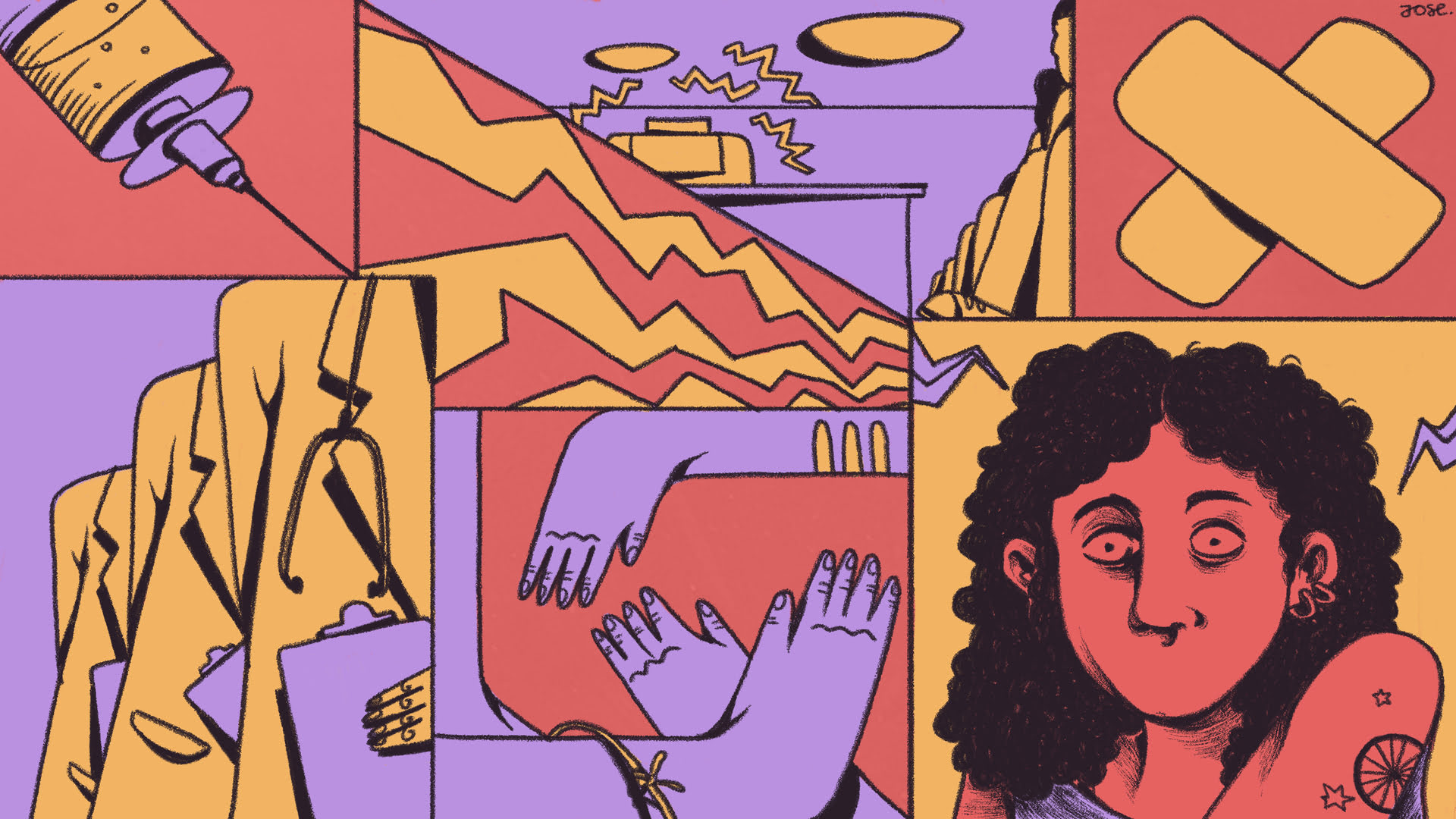
It was a fairly hot October afternoon in Bengaluru, and Arka, a trans-masculine person in their mid-20s living with mixed connective tissue disease (MCTD) and rheumatoid arthritis, was on their way back from a long-due appointment with their rheumatologist. A series of events in interaction with the doctor led to a moment of acute breakdown in communication between them, Arka told me. Arka said they were in tears, while the doctor snapped at them, saying, “If you’re going to behave like this, then don’t ever come back to me.” As we will learn later in the story, Arka’s doctor shut them down for attempting to advocate for their medical history. Arka’s real name, and those of other people in this story have been changed to protect their identities.
Arka found themselves unable to talk. Just about an hour earlier, they had been preparing themselves for several weeks for the day of this appointment. As a highly sought-after specialist in the city, there was a 3-4 week waiting period to get an appointment with him.
While waiting for the appointment, Arka found the hospital to be particularly crowded that day. They started experiencing sensory overwhelm. The constant chatter, beeps of printers, and the sanitized smell that hangs around hospitals added to their sensory issues. The pointed stares of strangers as they seemingly pass silent judgment on your choice of clothes and use of disability aids, can be overwhelming for a disabled, genderqueer person.
In such situations, it can be extremely difficult for some people to find the words to articulate and explain the nuances of one’s experience. This experience has been termed as selective mutism by the American Psychiatric Association, and is widely referred to as ‘selective mutism’ by neurodivergent researchers themselves.
Long studied in young children, it has been described as the absence of speech in select situations in which the child is expected to speak, even though a physical impediment to speech is not evident. In such a situation, the child experiences high levels of anxiety and is therefore unable to articulate themselves. They particularly display sensitivity to verbal interactions with others.
While many children who experience such moments grow out of it, children socialized as girls or those learning a second language because of migrating to a different place have been found to display mutism more often. Furthermore, those who have experienced bullying as a direct result of experiencing mutism might struggle with it well into adulthood. Such disabilities may include being autistic or having ADHD wherein lowered vagal tone, which can affect cardiovascular function and leads to emotional and attentional dysregulation. This, in turn, results in a highly anxious experience that renders them non-verbal. Over the long run, this damages the vagus nerve and can even result in difficulty speaking, loss of voice, difficulty swallowing, and even loss of gag reflex. This reflects how social identities can socially disable-ize people.
When Doctors Don’t Believe You
In the days leading up to the appointment, Arka, had been experiencing a flare-up. “I had been showing symptoms of my autoimmune condition since I was 7 years old,” said Arka. As someone with caste privilege [as a person raised in a Brahmin family in Bengaluru for the most part], and a father who has health insurance, I feel like a lot of barriers in the medical field that might exist for others were not there for me – like, finding the right kind of specialists for my specific, rare auto-immune condition. In some ways, I have it easier than most people,” explained Arka.
Like most people with chronic illnesses and autoimmune conditions, Arka’s symptoms, too, have changed over the course of their life and they turn to doctors to help manage them, especially during flare-ups.
“In my previous flare-up, I had experienced some new symptoms that I was finding difficult to handle. I was having trouble doing work and was sleeping for 12-16 hours everyday. When I asked for advice on how I could support my body through this, the doctor [the specialist they had consulted] remarked that my pain threshold had gone down, and that my psychiatric medication was making me sleep so much.”
Arka tried to explain to their rheumatologist that they had consulted with their psychiatrist prior to the appointment, who had assured them that while such symptoms do show up during the early days following the prescription, since Arka was way past that time window, their medications weren’t causing the reaction. Arka told me, “[The specialist] did not like that I was talking about another doctor [and seemed to perceive it as a defiance of his own expertise]. I had my hands in my lap and he rapped them sharply to make me shut up. It’s not like he hit me hard, but I don’t like to be touched when I am already experiencing a sensory overload. My guards went up and I started crying. Suddenly, the lights felt too bright and like the people around me were talking too much.” Before Arka knew it, the interaction seemed to spiral out of their control. They got up and rushed out of the doctor’s office.
Arka’s experience portrays how experiencing situational mutism as an adult in the context of accessing medical care, can affect the quality of care received.
For years, I had felt myself shutting down in the gynaecologist’s office, unable to answer their questions. Memories of a doctor forcefully conducting a physical examination on a teenaged-me without prior discussion about what it would entail, triggering intense body dysphoria in the process, would rise up every time as if to convince me that others would not understand how I experience my own body.
Jan, an autistic person with ADHD in their early 30s, emphasized on the importance of having doctor-patient relationships built over a period of time. “If you’re going to a ‘family doctor’, they will listen to you, because [they perceive their reputation as being at stake within the community] and expect to be held accountable. That if there are any violations of consent [such as with respect to touch or sharing private medical information], they know that they can’t easily get away with it.”
Queer persons, especially those who live with disabilities and chronic conditions, often find the need to build long-term patient-doctor relationships, so as to feel a sense of trust to be able to open up about one’s identity and medical history over regular consultation sessions spanning across lengthy periods of times.
Arka’s negative experience was despite a 6 year medical relationship with their doctor.
“I was making the effort to communicate [my experiences] to him, and he knows that I usually experience sensory overload at hospitals,” Arka said wistfully. They were visibly hurt over the interaction with their former rheumatologist, which they described as hostile.
The Disabling Power of Casteism in Healthcare
As a Dalit person, Jan shared that ze had never met a Dalit doctor and this meant most healthcare providers were not able to relate to zir’s lived experiences when offering medical advice. “I expect a Dalit doctor to have the cultural knowledge [about the experience of caste in society] to know how to interact with me, and this will make me feel safe and taken care of [when seeking their services].”
Across the world, identities systemically marginalized by gender, race, caste, sexuality, and other markers, have been excluded from being represented in healthcare. This is often due to subtle reasons and hoops that they are often made to jump through, such as internship requirements and regulatory guidelines that gatekeep training opportunities and professional access under the guise of maintaining ‘educational merit’ in medical institutions. “Just the other day, I was reading that most medical students skip the mandatory government posting and instead find a way to pay the ₹10 lakh fine to get out of it,” Jan remarked, observing how class hierarchies often form along the faultlines of caste.
This cements the social model of disability, which puts forward the theory that disability is a creation of society, i.e., a person is not born disabled, but is disable-ized by lack of understanding, accommodation, and community offered to them in private and public spaces. In turn, marginalization due to gender, caste, class, race, mental illness, and neurodivergence can all be disable-izing experiences.
Dating around for doctors whilst in medical need is not only an irksome affair, but often an expensive one as well. “In Mumbai, I went to a doctor who was charging ₹2000 per consultation, and she constantly referred to me as ‘beta’ in a very condescending tone. I found it very annoying, and she wasn’t helpful [with her medical advice] either,” recounted Jan, when asked about their experiences with doctors.
As a queer person, it also means putting oneself out there, making ourselves vulnerable to the judgments of a system that positions itself as an expert of our bodies, and dismisses our own lived experience and preferred ways of navigating through the world. This often means a lack of empathy for our complex experiences of alienation, exclusion, and trauma that becomes compounded by its intersection with caste, mental illness, and disability, among others.
Jan was diagnosed with anxiety when ze were 17, and also had an eating disorder. “[Around the same time], I was suicidal and ended up cutting myself, and had to be taken to the hospital. I was bleeding profusely, but since this was a suicide-related case, [the doctors] wouldn’t start medical treatment immediately until the police arrived.”
In India, Section 309 of the Indian Penal Code continues to criminalize an attempt to suicide, watering the seeds of social stigma around suicidality. According to the Act, behaviors of suicidality (otherwise known as ‘attempt to suicide’) would attract fines and potential imprisonment – a bizarre and damaging response to a person in medical crisis. Despite its decriminalisation by the Mental Healthcare Act, 2017, section 309 of the Indian Penal remained a legal provision. These contradictory terms create a lot of confusion in treatment of supporting suicide victims.
“The psychiatrist at the hospital told my mother that I was on drugs. However, given my anxiety and eating disorder (a high occurrence among transgender and gender-diverse folx when compared to the cis-gendered population), I was behaving in a way that [seemed odd and uncommunicative to them],” Jan shared, when asked about the doctors’ response during this time. At that point, ze was on anxiety medication and without them, couldn’t make an assessment about how ze was feeling or why ze was feeling that way. Jan said, “My competence to consent was very blurry. However, outside of therapists and psychiatrists, the medical fraternity is not aware about how to handle this aspect of our health with sensitivity. [Interacting with them and explaining myself] feels labour-intensive, especially for people who are from a caste and class background such as mine.”
Jan’s experience shows how ableism manifests as a stigma around caste, queerness, and disability among healthcare providers, inhibiting their ability to understand layered experiences of persons at these intersections. Many people continue to refer to disabilities like autism and ADHD as ‘invisible’. However, nothing can be farther from the truth. Such disabilities present themselves in tangible ways – such as situational mutism, where our speech abilities are hampered – affecting our material reality and physical health.
Diversity in Communication Methods: Notes on Bridging the Gap
Sandi is a therapist in her mid-20s living in Mumbai with cerebral palsy (CP). She is also a survivor of cancer, which she was diagnosed with in her teens. “My disability has been mistaken for incompetence a lot of times,” she reflected. “The only reason I was being consulted in my medical decisions [during my chemotherapy] was because people perceived my vocabulary as “proof” of intellectual competence and presence of mind. Being able to speak is the only way that people can believe that my mind is sound. This bothers me immensely because it makes me wonder what would happen if I was one of those whose speech was affected,” she remarked, referring to spastic cerebral palsy (CP), a commonly-occurring form of CP, which renders a person non-verbal due to nervous system disorder and muscle weakness.
During the treatment of such patients, it becomes important to explore Augmentative and Alternative Communication (AAC) tools and approaches. It can be useful to use tools like drawing and art-based therapy, communication boards, AAC apps and speech-generating devices (such as the one popularized by Stephen Hawking) to communicate with people of varying ages, differing speech abilities (or those experiencing situational mutism due to various factors), including those who may be used to communicating in a different tongue altogether.
Gestures, eye gaze, body language, and wordless sounds are all commonly used ways to communicate that do not involve the spoken word. “There are people who may be in pain, but because of their disability, they may not know how to explain it, except maybe through tears. In such a situation, it may not be possible to get direct [written or verbal consent from that person],” explained Sandi, while talking about the different scenarios that need to be considered.
“In an ideal scenario, unless it is an extreme case of intellectual impediment where the person is in comatose or in a state of psychosis where they are hallucinating, you would still want to have a conversation with them in a way that is understandable and feels safe to them. Their comprehension of the message is key to them making a decision, so you may want to explain in a way that they will understand, and their input must be sought regarding how they would like to proceed with the treatment. If they can understand even a part of what is going on, it is important to ask and not assume that they are incompetent to make that decision [for themselves],” Sandi offered, when asked about how care-providers can communicate with a disabled person who may be non-verbal for any of the myriad reasons during a crucial moment of medical care.
As a genderqueer disabled person myself, I dream of a world where healthcare didn’t feel so daunting and inaccessible. Where I didn’t have to put on armor against microaggressions such as misgendering or heteronormative, ableist assumptions about how my body works, even as I feel the dire need for medical attention and support from trained professionals. The answer doesn’t probably lie in yet another medical startup, but a systemic overhaul in how we study and understand the body, and who is considered an expert on it. It requires acknowledging deep-seated social biases, and returning to a modality that promotes healing and ease of living, instead of “betterment.” Now, how do I find the words to tell my doctor all this in a 30-minute consultation slot?
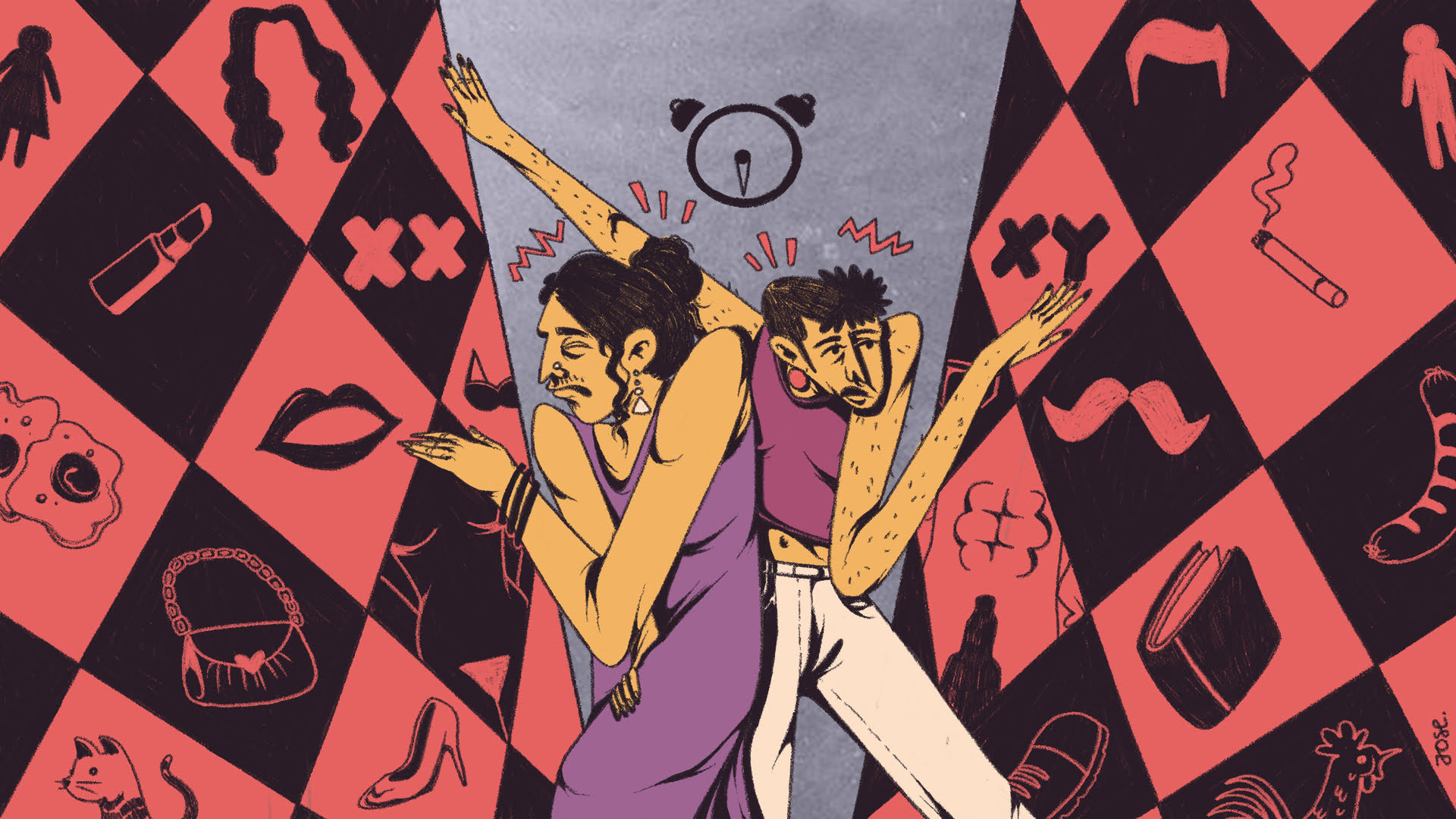
Neel, 23, wakes up early, often before the sun rises over the bustling streets of suburban Kolkata. In the hour or so that he has to himself before leaving for work, he follows a practised routine: he quickly exercises watching YouTube workout and yoga tutorials, freshens up, drinks water soaked with black chickpeas, and gets dressed, usually in comfortable pants and loose shirts. He then drives his electric rickshaw to one of the stands in Ballygunge, a 25-minute drive from his home, a room with a kitchen, where he lives alone. He has been driving the rickshaw, mostly in and around the Ballygunge area, for almost a year now.
Around 1pm he takes a break. He returns home, bathes, eats lunch, and rests briefly before heading back to the stand for the evening shift.
With most of his time spent on the road, Neel often goes 5 to 6 hours without urinating, even when he desperately needs to. Although there are public toilets in the area, he prefers to avoid them. Public toilets in India are typically segregated along the gender binary– for males and females. As a trans man, Neel feels unsafe using the men’s toilet and he is often denied access to the women’s toilet because his presentation is masculine.
About three months ago, when Neel attempted to use a women’s public toilet in Ballygunge, the guard at its entrance stopped him. Neel had to spend some time explaining that he is a trans man before the puzzled guard eventually let him enter. After using the bathroom, when he was washing his hands at a basin, a middle-aged woman shouted at Neel. “What are you doing here? This is a ladies’ toilet,” Neel remembers her saying. She wore a neatly-draped saree, and the id card of a large private sector bank — one which takes great pride in advertising itself as LGBTQIA+-friendly.
Neel responded hesitantly, “I am trans. I am using this toilet because I don’t have any other option.”
“This toilet is for men and women. Go to your own washroom,” retorted the woman, abusing and cursing loudly.
Encountering multiple such instances, Neel feels scared , helpless and sometimes angry. “I can still retort and fight back, but many trans people like me might not. Isn’t going to a bathroom without any resistance our basic right?” sighed Neel.
It has been 10 years since the landmark NALSA judgement of 2014, where the Supreme Court of India directed the central and state governments to provide public restrooms for the transgender community. Since then, ‘transgender toilets’ have been established in a number of cities including Mumbai, Delhi, Bengaluru, Mysore, Chennai, Imphal and Varanasi. However the reach of these initiatives is far from universal.
In a May 2019 article in the Economic and Political Weekly, Durba Biswas, a researcher at the Ashoka Trust for Research in Ecology and the Environment, noted that while policies addressing trans people’s bathroom rights now exist, their implementation remains weak.
In December 2022, Aneel Hegde, a Rajya Sabha MP from Bihar, raised a question in parliament about the progress made in providing safe toilet access to trans people, as mandated by the Transgender Persons (Protection of Rights) Act. The government dodged the question. In his response, A. Narayanaswamy, the Minister of State for Social Justice and Empowerment, stated that the government has constructed a total of 6,36,826 community and public toilet seats under the Swachh Bharat Mission, but did not offer any data on the number of toilets that were specifically built for transgender people.
queerbeat has reached out to the Ministry of Drinking Water and Sanitation, and the Ministry of Housing and Urban Affairs to seek their responses on the current status of toilets for transgender and genderqueer people in India. We will update the story when we receive responses from them.
Restroom Rights and Wrongs
Three years after the NALSA judgement, the Ministry of Drinking Water and Sanitation, in 2017, issued guidelines stating that members of the ‘third gender’ should be allowed to use public toilets of their choice, whether male or female or the ‘other’. Like many government guidelines, these too exist only on paper, show the everyday experiences of trans people like Neel.
When Neel was 19 and lived in Nadia district in West Bengal with his natal family, he said he was physically assaulted by a security guard and a few other men when he tried to use the men’s washroom at the Ranaghat railway station. “They could gauge I am female bodied and kept asking intrusive questions”, shared Neel. Traumatised by that experience, Neel has ever since gotten into the habit of suppressing his need to urinate whilst in public instead of using men’s washroom.
“I am still afraid. People can often tell that I am a female-bodied person, which leads to unsolicited harassment and abuse,” he explained. Although he feels dysphoric when using women’s washrooms, they remain his only option in emergencies.
Studies indicate that retaining urine can potentially lead to urinary tract infections (UTIs) as bacteria may accumulate in the bladder. Prolonged urine retention can pose severe health risks, including kidney disease.
For gender queer people , toilet access therefore becomes a constant, inescapable struggle that forces them to make the impossible choice of accepting either health issues or dysphoria and violence.
Daniella Mendonca, a person with intersex variations, who works as a senior executive for a large real estate company, has struggled to safely access toilets all her life.
She grew up in the chawls of Khar in Mumbai, where a visit to the community restrooms was always fraught with danger for her. “My mother would accompany me to the washroom to make sure I was safe,” she said. “That’s because I have been sexually harassed as a child by neighbours and people of the chawls in these restrooms.”
At school — an all-boys institution — Daniella was constantly teased for being effeminate and even molested by her seniors in the restrooms. “I never never really knew how to express or process this trauma,” she said.
In her teens, Daniella was forced to leave home, and resorted to begging and sex work to make a living. She remembers this time in her life with a lot of disdain. She recalls, “We [trans sex workers] could use the women’s loo during sex work days but the women would stare and pass snide comments at us, and the men’s washroom was out of question because of how ready they were to harass you.”
Despite the visceral violence directed at genderqueer people in restrooms, conversations around making toilets more accessible often end up centering the safety sentiments of cis gender people than genderqueer realities.
Megha, a cis-woman and mother of two, said, “I am all for gender inclusivity, but I once witnessed a trans woman adjust her tuck in a women’s washroom at a rest stop, and it made me visibly uncomfortable. I also had my 8 year old daughter with me. We quickly rushed out. I felt bad, but my conditioning got the better of me at that moment.”
Contrary to such popular perceptions around safety, a 2018 study from the Williams Institute at UCLA School of Law found that letting transgender people use toilets that align with their gender identity does not make the toilets a safety risk for cis gender straight people. In an interview with NBC, Amira Hasenbush, the lead author of the study, stated that opponents of laws and policies ensuring protection and access to public services, such as restroom access for trans and genderqueer people, often claim that such laws leave women and children vulnerable to attacks in public restrooms. “But this study provides evidence that these incidents are rare and unrelated to the laws,” emphasised Amira.
While there are no similar studies in the Indian context, there is plenty of anecdotal evidence of violence against genderqueer people in gender-segregated restrooms in India. Given this reality, does the solution India seems to be trying to adopt — separate ‘third gender’ restrooms — actually centre genderqueer realities or does it merely cater to cis sentiments?
Separate Restrooms: Othering Or Inclusion
Nisha is a trans woman who makes her living by begging at the signal across from Shaheed Tukaram Ombale Udyan in Goregaon, Mumbai. She moved to the city from Tamil Nadu in her teens. Now in her late 30s, she lives in the slums of Goregaon. Her daily routine involves begging from 10 in the morning until around 8 at night, with a short break in the afternoon.
Since Nisha spends most of her day at the signal, she is reliant on public toilets. While accessing gender-segregated washrooms in the past, she has encountered men who’ve threatened to beat her up, and women who have outright asked her to stay out. Often, she’d be forced to find clandestine spots to pee outdoors. This changed in 2022, when a toilet for transgender persons was set up in Goregaon. Now, she tries to stay within the vicinity of that washroom as far as possible.
Located just off the busy Western Express Highway, the Shaheed Tukaram Ombale Udyan, the park within which the trans-only restroom is situated, is a surprisingly spacious slice of quiet away from the honking vehicles outside. The toilet is right by the park entrance, clearly advertised in bold letters as a space reserved for transgender persons.
The security guard, Pramod, said that the washroom has 7-8 regular users who greet him every day.
Nisha was there from the day the toilet was installed. “My guru (leader of a Hijra group) and my entire clan of girls came to witness it. It’s one of the best things we have,” she said.
Trans individuals need to use washrooms to meet other needs too. For example, Maks, a 20-year-old trans man who is pursuing a masters degree in sports management, and has started transitioning three years ago said that he often needs to use the washroom to adjust his binder or deal with menstruation. Going to a male facility is just not a safe option for him, he said
For people like Maks and Nisha, a separate washroom for genderqueer persons is a pragmatic solution. However, other trans folks believe that such initiatives are isolating and perpetuate the notion that genderqueer individuals are somehow dangerous and need to be segregated. “We don’t need separate toilets; we need gender-neutral toilets,” said Grace Banu, a Dalit trans woman activist from Tamil Nadu, in an interview to Hindustan Times.
Apart from the stigma of segregation, separate washrooms come with their own safety risks because they mark out the users. “Even when there is a separate washroom for genderqueer folks, I always prefer to go to the women’s room. Accessing the separate washroom risks my safety, putting me under the gaze of people all over again,” said Pratyay, a 27 year old trans-feminine educator and trainer from Delhi. For her, because she passes as a woman, accessing the women’s washroom is easier.
Given the diversity of experiences that gender queer persons have when it comes to toilet access, what shape would potential solutions take, is a question that the trans community, researchers and queer activists have been grappling with for years.
The future of queer affirming washrooms
When Raju, a public health professional based in Bengaluru, travelled in Europe in June 2023, they felt extremely affirmed by the experience of using stand-alone all-gender washrooms. In such washrooms, individual cubicles have their own entrance and are spacious enough for people to relieve themselves, refresh, change, and go about their day without interacting with others.
“The architecture of the washroom was very useful. You could pull up the commode if you wanted to use it standing or keep it down if someone preferred sitting,” Raju remembers. They were also elated to see syringe disposal facilities in these washrooms, which could be a game-changer for trans-masc people needing to take testosterone shots or other medications.
Often, investing in standalone gender-inclusive cubicles is seen as an expensive and space-consuming affair, which is why it isn’t widely adopted as an effective architectural model. “Nobody really wants to spend money on making good public restrooms including gender-inclusive cubicles,” said Kalpit Ashar, an architect and urban designer based in Mumbai. “We often get told, ‘It’s just a cubicle, not the Taj Mahal.’”
Another approach, which would involve less expense than individual chambers, would be to simply label toilets by function rather than gender. In April 2017, the Barbican performing arts complex in London made its toilets gender-neutral. Interestingly, the Barbican didn’t change the physical layout of the toilets, only the signage. The former men’s toilets, which had urinals, and the women’s toilets, which had cubicles, were simply labelled so that anyone could use either facility. After cis women started tweeting complaints about longer queues—since both spaces were crowded with cis-men and they couldn’t use the gender-neutral toilets with urinals—the Barbican released a statement defending its decision to make its transgender and non-binary visitors feel more welcome. However, they admitted that a wider consultation could have been beneficial.
Most of the trans and genderqueer people queerbeat interviewed for this article said that there is a need for stand-alone bathroom cubicles in India, while acknowledging that the implementation of it has to be thought through. However, as Biswas pointed out in her EPW article, the trans community is not homogenous. “In reality, transgender communities are heterogeneous along the caste, age, and gender axes; all or some combination of these can determine a transgender person’s access to public sanitation,” she wrote.
Vyjayanti Vasanta Mogli, a Telangana-based transgender RTI and human rights activist, echoes the need for multiple solutions. “Gendered bathroom spaces will continue to exist, separate bathrooms for transgender persons are also necessary,” she said.
Neel vividly recalls the first time he encountered and used a separate trans persons’ washroom, at an event organised by Sappho for Equality, a feminist organisation advocating for the rights of sexually marginalised women and trans men. He recalled, “I will never forget that day. I took a picture and kept it as a fond memory. It felt like I was respected.”
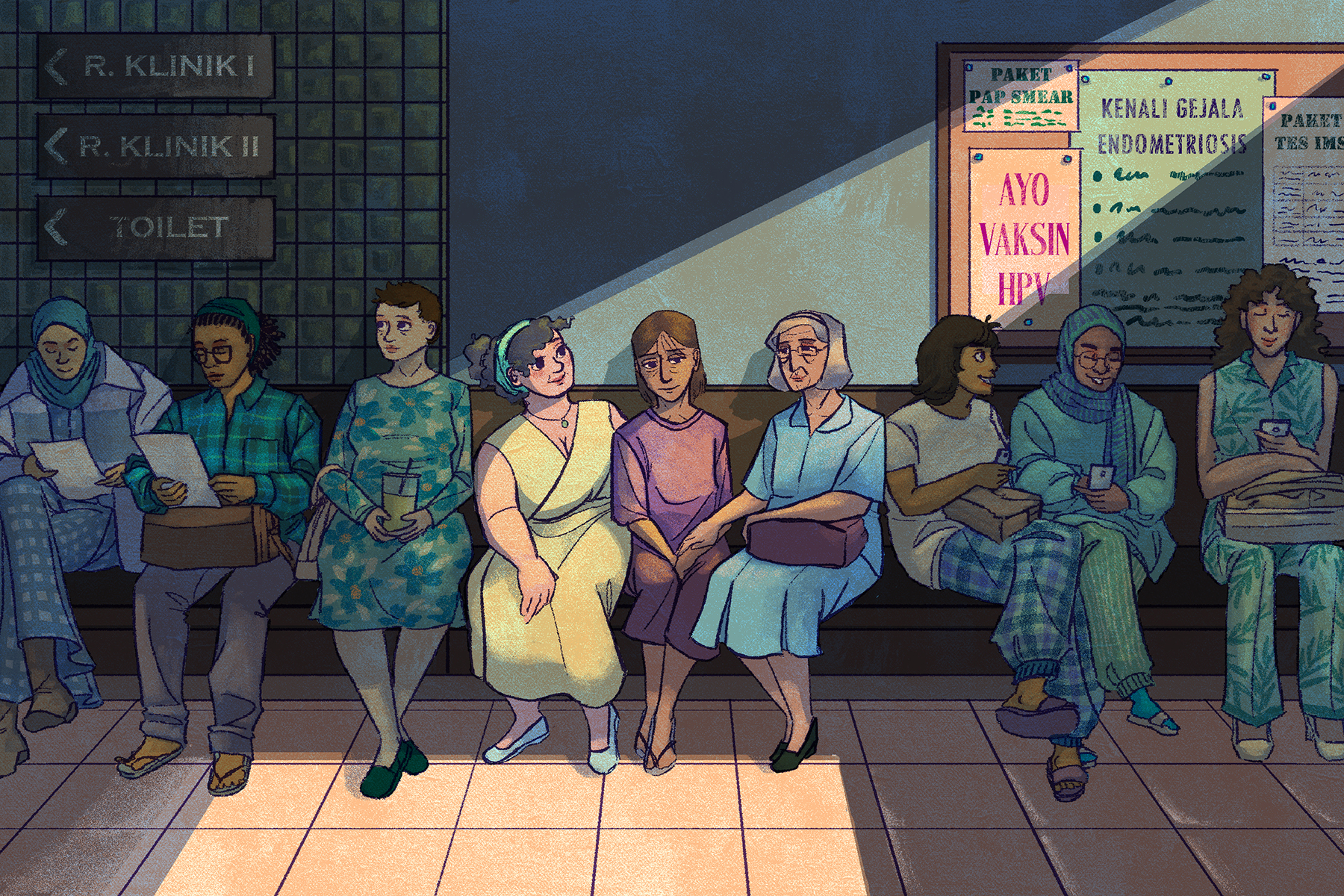
Peringatan: Kekerasan seksual, kehamilan tidak diinginkan, stigmatisasi aborsi
Pembunuhan. Begitu kata seorang dokter kandungan utusan Ikatan Dokter Indonesia (IDI) dan Perkumpulan Obstetri dan Ginekologi Indonesia (POGI) menyebut layanan aborsi bagi korban kekerasan seksual dengan batas usia kehamilan 14 minggu.
Dalam sebuah forum diskusi, dokter yang pernah menjabat sebagai kepala sebuah klinik bayi tabung itu mengatakan, “Ini berlawanan sekali. Yang satu susah punya anak, yang satu membuang-buang anak.”
Pernyataan itu ia lontarkan salah satunya untuk merespons pengalaman Melati, anak usia 12 tahun yang menjadi korban perkosaan pada 2021.
Melati, melalui penuturan pendampingnya, berupaya mengakses layanan aborsi yang sah menurut UU Kesehatan No. 36 Tahun 2009.
Tetapi, birokrasi di lapangan yang rumit, lamban, dan tidak berperspektif korban membuat Melati gagal mengakses layanan tersebut dan mesti menanggung kehamilan tidak diinginkan (KTD) di usia dini.
Tidak sampai di situ, dokter kandungan tersebut meminta para peserta diskusi yang termasuk di antaranya para aktivis perempuan untuk menonton sebuah film propaganda anti-aborsi yang merekam proses aborsi melalui ultrasonografi (USG).
Film yang ia maksud adalah The Silent Scream yang rilis pada 1984. Film propaganda itu menuai kritik dari komunitas kedokteran di New York karena “menyesatkan”, “tidak adil”, dan menggunakan special effects untuk membuat seolah-olah janin tampak meronta.
Dokter kandungan perwakilan POGI dan IDI itu bernama Ilyas Angsar. Ia memberikan pernyataan serupa dalam ajang penampungan pendapat oleh Kementerian Kesehatan terkait penyesuaian pasal aborsi dalam RUU Kesehatan pada 30 Maret.
“…Bagaimana janin di dalam rahim itu disodok-sodok, divakum, dia tidak bisa mengelak, dan harus meninggal dengan pasrah.”
“Teman-teman yang pro-choice mungkin perlu melihat video itu,” katanya. “Problemnya adalah apakah ada dokter spesialis obgyn yang mau melakukan aborsi 14 minggu?”
Dalam kesempatan yang sama, dokter kandungan lain, Rajuddin dari Universitas Syiah Kuala di Aceh, menyampaikan, “Kalau hal ini diberi usia kehamilan sampai 14 minggu, atas dasar apa ini? Itu bukan pemerkosaan lagi. Itu sudah menikmati hubungan seksual.”
Organisasi profesi IDI dan POGI menolak keras pengecualian larangan aborsi untuk korban kekerasan seksual dengan batas kandungan maksimal 14 minggu.
Mereka mendesak pemerintah mengembalikan batas usia menjadi 6 minggu, sesuai dengan UU Kesehatan No. 36 Tahun 2009 terdahulu.
Hanya saja batasan 6 minggu dalam UU tersebut tidak mengacu pada indikasi medis, tetapi merujuk Fatwa MUI No. 4 Tahun 2005 yang membolehkan aborsi untuk korban perkosaan ketika janin berusia di bawah 40 hari atau, dalam kepercayaan Islam, sebelum ruh ditiupkan.
“Kami yang Muslim pasti mengikuti Fatwa MUI. Kita kalau tidak mengikuti ulama-ulama kita akan masuk–akan jadi apa?” kata Ilyas.
Pada Mei 2023, IDI mengadakan forum bertajuk “Kontroversi Aborsi dalam RUU Omnibus Law Kesehatan.” Di forum itu, perwakilan POGI yaitu Wakil Ketua Umum Budi Wiweko dan Ketua Keluarga Berencana & Reproduksi Nurhadi Rahman menyampaikan mereka berpegang pada Lafal Sumpah Dokter yang termuat dalam Peraturan Pemerintah No. 26 Tahun 1960.
Sumpah ini diadopsi dari Deklarasi Jenewa pada 1948 atas penyempurnaan Sumpah Hipokrates. Secara global, sumpah dokter telah mengalami amendemen secara berkala sejak 1948. Amendemen itu tidak ikut terjadi di Indonesia.
SUMPAH DOKTER INDONESIA
DEMI ALLAH saya bersumpah:
Saya akan menghormati setiap hidup insani mulai saat pembuahan.
Pada 2021, Melati yang duduk di bangku SD baru tiga kali menstruasi ketika diperkosa seorang laki-laki paruh baya.
Keluarga mengadukan kasusnya ke Women’s Crisis Center (WCC) di Jombang, Jawa Timur. Usia kandungan Melati sudah memasuki minggu keempat. Sebelumnya, mereka telah melapor ke polsek setempat tetapi tidak ditanggapi dengan serius.
Kata kepolisian, “Jangan sampai menggugurkan kandungan. Nanti berdosa.”
WCC Jombang mendampingi Melati untuk dapat mengakses layanan kesehatan. Tetapi, di tempat Melati tinggal, fasilitas kesehatan tidak ramah korban kekerasan seksual.
Demi akses aborsi, pendamping dan keluarga korban pergi dari satu puskesmas ke puskesmas lainnya untuk mendapatkan rujukan layanan ke tingkat fasilitas kesehatan lebih tinggi. Namun, puskesmas tidak berani memberikan rujukan.
“Di daerah itu susah sekali. Yang mau memberikan rujukan agar korban bisa ke fasilitas kesehatan yang lebih maju, itu sangat susah,” cerita Direktur WCC Jombang yang juga pendamping Melati, Ana Abdillah.
WCC Jombang berinisiatif mengadakan bedah kasus antar-instansi pemerintah daerah yang dipimpin oleh Dinas Pemberdayaan Perempuan (PP) Kabupaten Jombang. Di dalamnya terdiri dari Dinas Sosial Kabupaten Jombang, Polres Jombang, RSUD, dan tim advokat. Akan tetapi, instansi-instansi pemerintahan itu menutup akses untuk Melati.
Kata pihak Dinas Sosial, “Anak sejak usia nol mesti dilindungi.” Pihaknya juga mempertanyakan apakah Melati dapat disebut sebagai “korban perkosaan” seperti yang tertera UU Kesehatan No. 36 Tahun 2009. Sebab UU Perlindungan Anak tidak mengenal istilah perkosaan.
Pihak RSUD Jombang mendorong Melati untuk melanjutkan kehamilannya dengan meyakinkan bahwa, “Bayinya akan tumbuh menjadi anak yang sehat.”
Seorang kepala dinas mendukung WCC Jombang mendampingi Melati mengakses layanan aborsi. Tetapi, katanya, “Jangan bawa-bawa nama dinas, ya. Secara institusi kami nggak bisa.”
Setiap instansi saling lempar tanggung jawab dan enggan mengambil keputusan. Mereka mempertanyakan kebenaran kasus perkosaan dan mencurigai hubungan dengan anak di bawah umur itu terjadi secara sukarela.
Mereka khawatir kasus itu menimbulkan kegaduhan di masyarakat. “Jombang itu kota santri. Kalau memberikan akses aborsi, nanti banyak korban yang minta aborsi juga.”
Kesimpulan dari bedah kasus, layanan aborsi hanya dapat dilakukan dengan adanya rekomendasi dari kepolisian. Tetapi, Polres Jombang saat itu beralasan mereka tidak berpengalaman sehingga tidak dapat memberikan rekomendasi.
Kasat Reskrim Polres Jombang juga memperingatkan pendamping Melati mereka dapat dikriminalisasi atas upaya membantu melakukan aborsi.
Ketika akhirnya Melati mendapatkan rujukan ke RSUD Dr. Soetomo Surabaya, satu-satunya rumah sakit umum daerah di Jawa Timur dengan fasilitas yang mumpuni itu menolak memberikan layanan.
Kata mereka, “Janinnya sehat, kok. Tubuh korban bongsor.”
Kehamilan Melati semakin membesar dan lewat dari batas usia 6 minggu.
Pasien-pasien Korban Kekerasan Seksual
Di klinik pribadinya di DKI Jakarta, Belas, bukan nama sebenarnya, kerap menemui pasien-pasien dengan kehamilan tidak diinginkan karena menjadi korban kekerasan seksual. Belas telah bekerja sebagai bidan selama 19 tahun.
Saking seringnya mendapatkan pasien korban kekerasan seksual, Belas berinisiatif untuk membuka layanan rumah singgah (shelter) bagi mereka yang membutuhkan.
Belas tidak pernah mendapatkan pasien korban kekerasan seksual dengan usia kehamilan kurang dari 6 minggu. Rata-rata kehamilan pasiennya yang mengalami KTD telah berusia 4-5 bulan. Paling rendah berusia 12 minggu.
Beberapa meminta melakukan aborsi. Tetapi, terhalang oleh peraturan hukum Indonesia, Belas tidak dapat melayani mereka. Ada ancaman kriminalisasi bagi tenaga medis dan kesehatan yang berpartisipasi memberikan layanan aborsi di luar hukum yang sah.
Pengalaman-pengalaman itu jadi pergulatan batin di diri Belas. Ia paham bahwa para perempuan yang tidak menginginkan kehamilan itu akan tetap mencari akses aborsi di tempat manapun. Dan mereka berisiko untuk mengakses layanan aborsi yang tidak aman.
“Ada yang bilang ke saya, ‘Kalau Ibu nggak kasih, saya akan cari.’”
“Bahkan ada teman saya sendiri, ‘Gue akan cari. Kalau nanti ada apa-apa sama gue, jangan nyesel ya.’”
Menolak akses ke yang membutuhkan layanan, bagi Belas, adalah hal menyakitkan. “Karena artinya saya menolak. Saya sudah melakukan sesuatu yang unethical dari sumpah jabatan.”
Belas bertemu dengan pasien perempuan yang hamil karena tidak dibolehkan memakai kontrasepsi oleh pasangannya. Perempuan yang diam-diam memakai kontrasepsi tanpa sepengetahuan suaminya. Perempuan pekerja rumah tangga (PRT) yang diperkosa oleh majikan laki-lakinya lalu diusir oleh majikan perempuan (istrinya).
Perempuan yang menyerahkan bayinya ke anggota keluarga lain setelah melahirkan. Perempuan yang menginginkan kehamilan pertamanya, tetapi kehamilan-kehamilan selanjutnya bukan lagi pilihannya.
Sebelum pandemi, Belas mendapatkan pasien seorang anak perempuan yang duduk di bangku SMP. Ia diperkosa oleh pacarnya di kampung halaman. Anak tersebut datang ke Jakarta menemui ibunya yang sedang bekerja, meminta bantuan Belas, dan tinggal sementara di rumah singgahnya. Dengan usia kandungan sudah sekitar 7 bulan, anak itu tak mendapatkan pilihan lain selain melanjutkan kehamilannya.
Si anak dan ibunya hampir meninggalkan bayi yang telah dilahirkan di klinik Belas karena kehamilan tidak diinginkan. Tetapi, mereka mengurungkan niat itu dan membawa serta bayi ke kampung halaman.
Tapi itu bukan happy ending. Karena si perempuan (korban) mengalami banyak hal. Si anak juga mengalami banyak hal. Dibilang anak haram. –kata Belas
Seorang pasien meninggalkan bayinya setelah melahirkan di klinik Belas. “Bayinya ditinggal dalam keadaan rapi di atas tempat tidur,” cerita Belas. Belas meminta pertolongan dinas sosial setempat untuk menampung bayi yang ditinggalkan. Tapi dinas sosial menolak.
“Mereka nggak mau menerima. Nggak ada anggaran, katanya.”
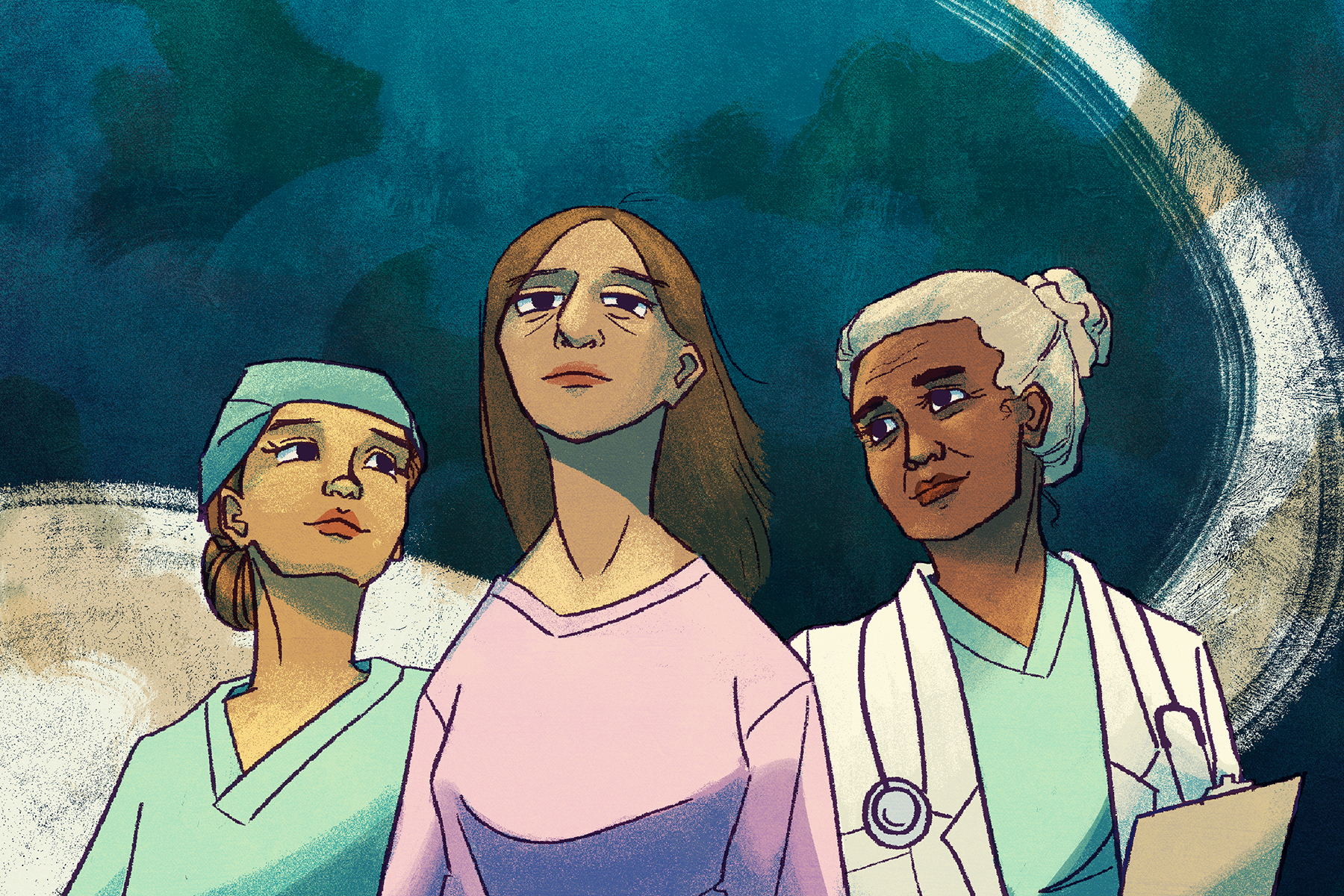
Ilustrasi layanan aborsi untuk korban kekerasan seksual. Illustration: Sekarjoget/Project Multatuli
Aborsi sebagai tindak pidana pertama kali diatur dalam Kitab Undang-undang Hukum Pidana (KUHP), yang lalu diadopsi dalam UU Kesehatan No. 36 Tahun 2009 beserta dengan pengecualiannya.
Pada 2009, ketika UU Kesehatan disahkan, Belas menyaksikan alih-alih UU membuka akses layanan aborsi bagi korban kekerasan seksual yang membutuhkan, peraturan itu justru menguatkan stigma di kalangan tenaga kesehatan dan medis.
Pada 2014, aturan turunan UU Kesehatan berbentuk Peraturan Pemerintah No. 61 Tahun 2014 tentang Kesehatan Reproduksi keluar.
Ketua Umum PB IDI saat itu, Zaenal Abidin, kembali menentang layanan kesehatan ini. Pihaknya menilai aborsi untuk korban perkosaan bertentangan dengan Sumpah Dokter dan kode etik kedokteran.
“Jangan ajak kami. Jangan timbulkan pertentangan batin pada seorang dokter,” kata Zaenal Abidin saat itu.
Dalam PP, penyelenggaran aborsi dengan indikasi kedaruratan medis dan akibat perkosaan harus mendapatkan pelatihan oleh “penyelenggara pelatihan yang terakreditasi”.
Kementerian Kesehatan pada 2016 menetapkan Permenkes No. 3 Tahun 2016 tentang “Pelatihan dan Penyelenggaraan Pelayanan Aborsi atas Indikasi Kedaruratan Medis dan Kehamilan Akibat Perkosaan.”
Peraturan itu mewajibkan pelayanan aborsi diselenggarakan di fasilitas pelayanan kesehatan yang ditunjuk oleh Menteri. Organisasi profesi juga harus ikut serta menyusun kurikulum dan menyelenggarakan pelatihan.
Namun hingga kini, Kementerian Kesehatan belum menunjuk secara terang fasilitas kesehatan yang dapat memberikan akses layanan aborsi aman untuk korban kekerasan seksual.
Marcia Soumokil, dokter umum dan Direktur Yayasan IPAS Indonesia, menyorot sederet persyaratan ini justru mempersulit penyediaan layanan di lapangan.
“Dari seluruh pelayanan kesehatan di Indonesia, tidak ada satu pun pelayanan kesehatan yang harus ditunjuk oleh kementerian. Karena kita sudah punya otonomi daerah. Tapi, khusus layanan aborsi aman, harus ditunjuk oleh kementerian,” sebut Marcia.
Belas pernah bekerja di rumah sakit. Ia menyaksikan ketidakjelasan aturan turunan, implementasi dari UU, beserta dengan ancaman kriminalisasi membuat fasilitas-fasilitas kesehatan merancang mekanisme atau SOP mereka masing-masing.
Bukan untuk melayani pasien, melainkan untuk melindungi diri dari kriminalisasi.
Kecurigaan terhadap perempuan yang mengaku diperkosa juga semakin kuat.
“Ada stigma di sana,” kata Belas. Mereka mempertanyakan, “Apa benar diperkosa?”
Akses Layanan Aborsi yang Aman
Di Indonesia, dari 2,8 juta kehamilan tidak direncanakan/diinginkan sepanjang 2015-2019, lebih dari setengah di antaranya berakhir diaborsi.
Ketentuan pelonggaran batas usia kehamilan aborsi untuk korban kekerasan seksual pada omnibus law UU Kesehatan No. 17 Tahun 2023, selaras dengan revisi KUHP yang telah disahkan Presiden Joko “Jokowi” Widodo pada Januari 2023.
Kedua regulasi itu memperluas pengecualian, tidak lagi “korban perkosaan,” tetapi menjadi “korban kekerasan seksual yang dapat menyebabkan KTD.” Ini merujuk pada UU Tindak Pidana Kekerasan Seksual (TPKS) yang mendefinisikan jenis kekerasan seksual secara luas.
Batas usia kehamilan 14 minggu sesuai dengan pedoman terkini World Health Organization (WHO) yang telah memasukkan layanan aborsi sebagai bagian dari layanan kesehatan esensial.
Khusus untuk usia kehamilan hingga 14 minggu, layanan aborsi dapat dilakukan dengan aman menggunakan obat-obatan atau alat bedah sederhana, kata WHO.
Kendati demikian, IDI menawarkan berbagai macam alasan menolak batas usia kehamilan 14 minggu. Salah satunya faktor keamanan.
Dokter kandungan Ari Kusuma Januarto, anggota advokasi IDI dan Ketua Dewan Pembina POGI mengatakan, “Namanya aborsi itu, itu punya risiko. Risiko pada ibunya jelas. Bisa terjadi pendarahan. Infeksi. Pembiusan.”
Ia juga menambahkan bahwa perubahan dari 6 ke 14 minggu justru memberikan peluang bagi lebih banyak perempuan untuk melakukan aborsi.
Samsara, organisasi yang fokus pada pemenuhan akses informasi kesehatan seksual dan reproduksi, menyimpulkan bahwa pembatasan layanan aborsi sejatinya muncul dari tenaga kesehatan. Pola itu bukan hanya terjadi di Indonesia saja, melainkan juga di negara lain.
Ika Ayu, Direktur Samsara, mengatakan stigmatisasi layanan ini dimulai dengan mengatakan bahwa tindakan hanya akan membawa dampak negatif kepada situasi kesehatan fisik maupun mental seseorang, terlepas dari adanya rekomendasi metode aborsi yang aman.
“Banyak sekali pengalaman korban, perempuan, individu yang dihilangkan,” kata Ika.
Membatasi akses untuk aborsi berisiko membuat perempuan mengakses layanan aborsi yang tidak aman, tetapi tidak mengurangi jumlah perempuan yang mengakses aborsi.
Aborsi tidak aman adalah satu dari lima penyebab utama kematian ibu secara global.
WHO “Abortion Care Guideline” yang terbit pada 2022, merekomendasikan aborsi untuk usia kehamilan kurang dari 14 minggu menggunakan metode bedah vakum aspirasi. Metode ini, terutama aspirasi vakum manual (AVM), direkomendasikan karena lebih aman, cepat, sederhana, dan murah dibandingkan kuretase tajam.
Metode ini dapat digunakan di fasilitas-fasilitas kesehatan dengan sumber daya yang terbatas, karena tidak memerlukan daya listrik, anestesi, dan tidak hanya dapat dilakukan oleh dokter.
Sementara itu, usia kehamilan kurang dari 12 minggu bisa dilakukan dengan obat-obatan seperti mifepristone dan misoprostol yang telah masuk dalam daftar obat-obatan esensial untuk aborsi sejak 2005.
Marcia Soumokil, dokter umum dan Direktur Yayasan IPAS Indonesia, menekankan, “Aborsi dapat dilakukan menggunakan alat bedah sederhana di sistem layanan kesehatan yang sangat standar, bahkan bisa dilakukan di puskesmas di Puncak Jaya (Papua). Syaratnya, alat itu hanya bisa dipakai untuk kehamilan sampai 14 minggu.”
Di Indonesia, metode AVM direkomendasikan oleh Kementerian Kesehatan untuk tindakan asuhan pasca-keguguran, yaitu ketika seseorang mengalami abortus inkomplit atau missed abortion. Tetapi, AVM juga masih terstigmatisasi sebagai metode yang disalahgunakan untuk melakukan aborsi dan belum menjadi standar metode di kebanyakan fasilitas kesehatan di Indonesia.
Jika mengikuti prosedur yang aman dan legal, layanan aborsi memiliki risiko kematian yang lebih rendah dibandingkan melahirkan. Riset pada 2012 menunjukkan bahwa risiko terjadinya komplikasi atau kematian akibat melahirkan 14 kali lebih tinggi dibandingkan aborsi aman.
Untuk Tidak Menghalangi Akses
Sebagai rumah sakit pusat rujukan nasional, RS dr. Cipto Mangunkusumo (RSCM) di Jakarta kerap menerima pasien korban kekerasan seksual yang mengalami KTD dan ingin menggugurkan kandungannya.
Pasien-pasien ini adalah rujukan dari berbagai fasilitas kesehatan di Indonesia. Kebanyakan dari fasilitas kesehatan tersebut gamang mengambil keputusan, lalu menyerahkannya ke RSCM.
Tindakan aborsi, secara teknik, bukan hal yang sulit. Perkaranya, kata dokter kandungan Seno Adjie, adalah decision.
“Kadang-kadang saya pikir, kenapa cuma masalah abortus harus dirujuk? Cuma memang mereka agak gamang memutuskan. Tidak mau menjadi masalah di rumah sakitnya dari sisi hukum maupun etik. Sehingga rujuk ke RSCM,” terang Seno.
Kini, Seno menjabat sebagai Ketua Koordinator Pelayanan Obgyn di RSCM.
Untuk pasien yang diduga adalah korban kekerasan seksual, RSCM memiliki tim kelayakan atau komite etik yang akan memutuskan apakah pasien layak mengakses aborsi atau tidak.
Pasien korban kekerasan seksual yang ingin mendapatkan layanan aborsi tidak dapat langsung mendapatkan tindakan. Ada pertimbangan-pertimbangan yang jadi dasar keputusan tim kelayakan. Mereka akan meminta surat aduan korban ke kepolisian dan hasil visum. Mereka juga akan memeriksa kondisi kesehatan pasien untuk memastikan aborsi dapat secara aman dilakukan.
Jika telah memenuhi persyaratan, tim kelayakan RSCM akan segera melakukan tindakan.
“Biasanya nggak sampai satu minggu. Ketika dilaporkan, langsung dibahas. Karena korban perkosaan ada batas waktu,” ujar Seno.
Tim RSCM tidak mendata jumlah pasien korban kekerasan seksual yang mengakses layanan aborsi setiap tahunnya. Tetapi, Seno mengatakan bahwa setiap tahun selalu ada kasus. “Pasti ada. Dan lebih dari satu kali,” katanya.
Pasien-pasien datang dari berbagai daerah, dari Depok hingga Padang. Ada pula kasus korban perkosaan dengan disabilitas mental. “Oleh tim etik, kami anggap perkosaan. Karena tidak ada consent. Secara hukum sah untuk dikerjakan.”
Dalam perjalanannya, tim kelayakan aborsi juga mempertimbangkan indikasi kedaruratan medis ketika mendapatkan korban kekerasan seksual yang mengalami KTD.
Misalnya, tim kelayakan RSCM menemui pasien anak berusia 10 tahun yang diperkosa oleh tetangga. Kepolisian telah mengeluarkan surat yang menyebutkan ia korban perkosaan. Anak itu mengalami KTD usia 8 minggu.
Tim kelayakan memanggil psikolog anak. Mereka menemukan dampak psikis yang berat jika kehamilan tetap dilanjutkan. “Sehingga, diputuskan ini salah satu indikasi medis. Karena ini medis, lebih dari 6 minggu tidak apa.”
Ada juga perempuan korban perkosaan yang datang ke rumah sakit dengan usia kandungan 27 minggu. Tidak menginginkan kehamilannya, ia berkali-kali melakukan percobaan bunuh diri. “Kami nyatakan ada indikasi medis karena mau bunuh diri. Dikeluarkan.”
Doctors Without Borders dalam situsnya menyebutkan bahwa di banyak negara, hukum aborsi tidaklah hitam putih, legal atau ilegal. Sebagaimana di Indonesia, aborsi dapat sah secara hukum jika bertujuan untuk menyelamatkan nyawa orang yang hamil.
Seno tidak dapat memastikan apakah Kementerian Kesehatan telah secara resmi menunjuk RSCM sebagai fasilitas kesehatan rujukan. Selama ini, tindakan yang dilakukan RSCM sepenuhnya merujuk pada aturan yang ada.
“Kalau memang hal itu menjadi suatu permintaan utama dari korban dan memenuhi syarat secara hukum, sebagai rumah sakit yang memang mematuhi hukum dan melayani masyarakat, kami bisa melakukan tindakan itu,” kata Seno.
Ia tidak memungkiri perdebatan keamanan batas usia kehamilan 14 minggu di kalangan organisasi profesi. “Beberapa mengatakan makin tidak aman,” kata Seno.
Namun, ia meyakini bahwa aborsi tetap aman selama dilakukan oleh tenaga kesehatan yang kompeten dan infrastruktur yang memadai. “Kalau di RSCM, aman-aman saja. Insya Allah mudah-mudahan aman.”
Seno tidak bilang setuju atau tidak setuju dengan aborsi. Ia hanya meyakini aborsi mesti diregulasi untuk menekan angka aborsi tidak aman. “Secara pribadi, saya juga meminta ada perbaikan dari peraturan aborsi kita. Kalau kita ingin mengadakan aborsi yang aman, harus ada perluasan regulasi. Kalau tidak, akan banyak aborsi yang tidak aman.”
Stigmatisasi Berujung Penghalangan Akses
Mengetahui bahwa layanan kesehatan di Indonesia tidak bisa sembarang memberikan akses aborsi, kebanyakan pasien tidak pernah langsung pergi ke fasilitas kesehatan. Mereka memilih mencari cara untuk menggugurkan kandungannya sendiri terlebih dahulu.
Selama delapan tahun berpraktik sebagai dokter umum, Sandra Suryadana mengaku tidak pernah mendapatkan pasien yang terang-terangan meminta akses layanan aborsi.
Permintaan atas layanan aborsi justru kerap Sandra dapatkan ketika ia memberikan layanan via telekonsultasi. Permintaan yang juga ia tidak bisa penuhi. “Mungkin karena mereka tidak berani (datang langsung),” kata Sandra.
Riset Guttmacher Institute dan Universitas Indonesia pada 2018 memperkirakan 43 dari 1.000 perempuan usia 15-49 tahun di Indonesia melakukan aborsi. Dari jumlah perempuan aborsi, hampir sepertiganya melakukannya sendiri dan sedikit lainnya pergi ke penyedia layanan tradisional atau apoteker. Kebanyakan dari mereka mengonsumsi jamu atau pijat tradisional.
Awal 2019, Sandra menggagas platform media sosial Dokter Tanpa Stigma (Instagram: @doktertanpastigma). Melalui platform itu, Sandra dan rekan-rekannya kerap mendengar pengalaman buruk seputar layanan kesehatan dari para audiensnya.
Dalam hal kesehatan dan reproduksi, para audiens Dokter Tanpa Stigma mengeluhkan pengalaman pemeriksaan mereka ke dokter obgyn yang tidak ramah perempuan, menceramahi ranah personal pasien, dan mempermalukan pasien.
Ketika masih bekerja di rumah sakit, Belas menemui rekan-rekan kerjanya yang ogah memberikan akses kontrasepsi kepada pasien. Mengetahui pasiennya adalah seorang janda, mereka mempertanyakan permintaan kontrasepsi oleh pasien. “Ngapain KB? Buat apa?” Belas mengulang kata-kata rekannya.
Mereka juga meragukan pengalaman pasien korban kekerasan seksual. “Ikutan goyang atau nggak?”
Belas pernah menghimpun persepsi tenaga-tenaga kesehatan – bidan, dokter, dokter spesialis – terhadap korban perkosaan dan akses layanan aborsi dalam penelitiannya. “Ada yang memandang itu adalah reinkarnasi dosa masa lalunya. Itu takdirnya. Apapun itu kehamilan harus dilanjutkan.”
Seno selaku dokter kandungan di RSCM juga kerap menemukan sejawat dokter yang menolak memberikan kontrasepsi darurat kepada pasien.
Kontrasepsi darurat adalah obat pencegah kehamilan yang dapat seseorang konsumsi 3-5 hari setelah seseorang melakukan hubungan seks tanpa pengaman. Tenaga kesehatan yang menolak memberikan kontrasepsi darurat menyamakan obat ini dengan tindakan aborsi.
Implikasinya, otonomi pasien atas tubuhnya diabaikan. Perempuan tidak dibiarkan untuk memilih dan menanggung konsekuensi yang ia sanggupi.
“Pendapat pribadi saya, semua perempuan berhak untuk mendapatkan perlindungan reproduksi,” kata Seno. “Kalau seorang obgyn bertanya ke saya, kalau sesuai prinsip atau agama tidak mau kasih, tidak apa. Tapi dia harus tahu bahwa pasien itu berhak. Nggak boleh nggak kasih jalan. Kasih jalan (merujuk) ke dokter lain.”
Praktik yang mencampuradukkan moral dengan etika itu kerap ditemukan di kalangan tenaga kesehatan.
Rasa frustrasi Belas atas kenyataan itu kadang membuatnya melontarkan humor gelap,
“Perempuan harus hampir mati dulu baru dapat layanan.” Ia tertawa kecut.
Deklarasi Jenewa World Medical Association (WMA) telah mengalami perubahan per Oktober 2017. Tetapi, Sumpah Dokter Indonesia yang pertama kali berlaku pada 1960, yang juga didasarkan pada Deklarasi Jenewa 1948, belum mengikuti perubahan Deklarasi Jenewa terkini.
SUMPAH DOKTER (versi World Medical Association)
SEBAGAI ANGGOTA PROFESI MEDIS: SAYA AKAN MENGHORMATI otonomi dan martabat pasien saya*;
SAYA AKAN MENJAGA rasa hormat yang setinggi-tingginya terhadap kehidupan manusia**
*Tidak ada dalam Sumpah Dokter Indonesia.
**Tidak lagi memasukkan “…mulai saat pembuahan.
Pendidikan Kesehatan yang Berorientasi pada Pasien (People-centered)
Sandra berproses menjadi lebih peka setelah ia mengakses berbagai literatur di luar pendidikan kedokteran. Ia juga belajar dari pengalaman di lapangan, bahwa banyak pasien perempuannya adalah korban kekerasan berbasis gender.
Baik di puskesmas, klinik perusahaan, RSUD, rumah sakit swasta, hingga di klinik kecantikan, Sandra bertemu dengan perempuan korban kekerasan.
“Di klinik kecantikan, aku tetap mendengar cerita hal yang sama. Dan itu baru aku. Teman-temanku yang kerja di tempat lain pasti ketemu juga dong? Kok aku nggak pernah dengar ada yang membicarakan ini? Masa sih yang bisa kita lakukan cuma jahit lukanya dia?”
Pemahaman atas layanan yang berorientasi pada pasien (people-centered) dan berperspektif gender tidak Sandra dapatkan ketika ia mengikuti pendidikan kedokteran. Fasilitas-fasilitas kesehatan di tempat Sandra bekerja dulu juga tidak memiliki SOP penanganan yang berperspektif gender.
Menurut Sandra, permasalahan muncul ketika biaya pendidikan kedokteran yang terlampau mahal sehingga hanya kelompok ekonomi atas yang dapat menjangkaunya.
“Tidak banyak ada representasi keberagaman di situ. Itu aja sudah cukup susah membuat mereka dapat relate dengan masalah pasien yang beragam,” terang Sandra.
Begitu juga dengan Belas yang mendapatkan perspektif pelayanan yang humanis ketika ia belajar di luar pendidikan formal kebidanan. Sementara, di pendidikan formal, senioritas justru marak terjadi.
“Lebih ke bagaimana digembleng, harus kompeten, tapi luput bahwa penyedia layanan kesehatan perlu menjadi humanis,” cerita Belas.
Sebagai seorang bidan, Belas lebih nyaman bekerja di kliniknya dibandingkan di rumah sakit. Di klinik yang semula milik ibunya yang sudah pensiun itu, Belas merasa memiliki otoritas. Kewenangan yang tidak ia dapatkan ketika bekerja di rumah sakit dulu.
Ia menyaksikan perlakuan dokter yang sewenang-wenang kepada tenaga kesehatan lain termasuk dirinya. Hardikan dari dokter jadi konsumsi sehari-hari. Ia juga pernah kena pukul di tangan karena ia salah memberikan alat.
Dalam kebidanan, posisi yang hierarkis itu memengaruhi kompetensi dan kewenangan bidan yang menjadi lebih terbatas. Keterbatasan pada akhirnya berpengaruh pada akses layanan untuk masyarakat.
Untuk tindakan aborsi aman di bawah usia 14 minggu dengan metode bedah, WHO merekomendasikan tidak hanya dokter umum maupun dokter spesialis yang berwenang melakukannya, tetapi juga bidan, perawat, hingga tenaga kesehatan tradisional/komplementer.
WHO menyatakan bahwa tugas ini termasuk dalam kompetensi utama bidan. Juga, pasien perempuan umumnya merasa mendapatkan layanan yang lebih suportif di tangan bidan. Di daerah-daerah dengan akses, infrastruktur, dan sumber daya dokter yang terbatas, peran bidan maupun perawat menjadi krusial dalam memperluas akses layanan aborsi.
Tetapi, di Indonesia, kewenangan melakukan tindakan aborsi dominan ada pada dokter spesialis obgyn.
“Sekarang, kita bisa lihat relasi kuasanya: kalau sudah urusan perempuan; maternal health, aborsi, itu approval-nya ke spesialis obgyn. Kalau mereka semua menolak, lalu mau gimana?” kata Belas.
“Bagaimana dehumanisasi itu terjadi di sistem layanan kesehatan yang seharusnya memanusiakan manusia.”
Dalam rapat kerja Komisi IX DPR RI dengan Menteri Kesehatan Budi Gunadi Sadikin tentang RUU Kesehatan pada Januari 2023, Budi Gunadi menyampaikan kekhawatirannya atas relasi kuasa antara dokter dengan tenaga kesehatan lain di Indonesia.
Ia mendapatkan keluhan dari para bidan dan perawat. “Kalau di luar negeri, perawat dan dokter itu setara. Satu tim. Di sini, kastanya begini.” Budi Gunadi memperlebar jarak kedua tangannya yang tadinya bersandingan. “Di luar negeri, dokternya sangat menghargai perawat. Di sini nggak. Perawat itu pesuruh.”
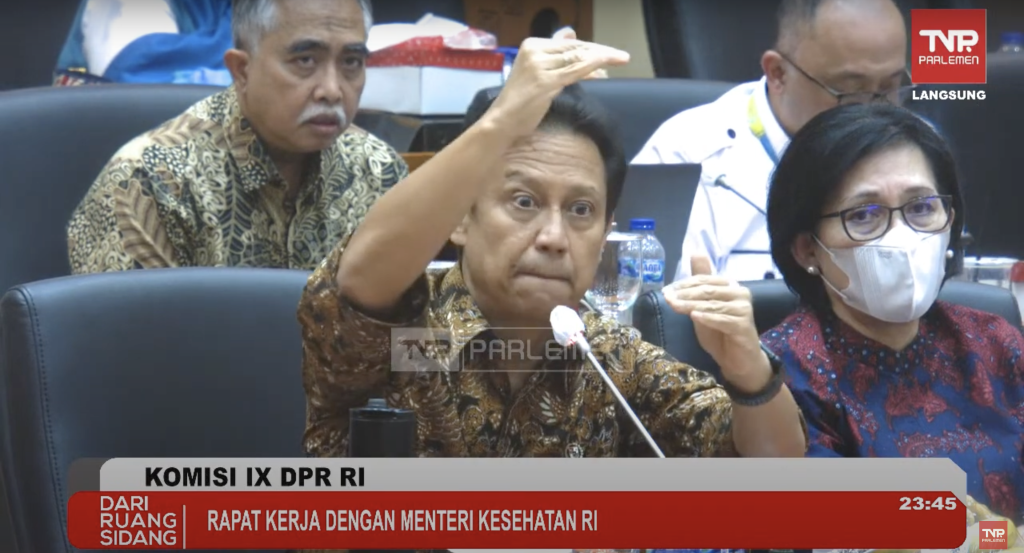
Menteri Kesehatan Budi Gunadi Sadikin saat rapat kerja dengan DPR RI. Screenshot: Tangkapan layar TV Parlemen
Pada 2014, gabungan sejumlah organisasi profesi, termasuk IDI, melakukan judicial review menolak tenaga medis berada dalam satu golongan dengan tenaga kesehatan.
Dalam UU No. 36 Tahun 2014 tentang Tenaga Kesehatan, tenaga medis yaitu dokter, dokter spesialis, dokter gigi, dan dokter gigi spesialis masuk dalam rumpun “tenaga kesehatan”, bersama dengan tenaga kesehatan lainnya seperti psikolog, perawat, bidan, dan lainnya.
Agustus lalu, Kementerian Kesehatan menegur tiga rumah sakit terkait praktik perundungan terhadap dokter-dokter yang sedang mengikuti program pendidikan.
Sikap itu disayangkan oleh perwakilan IDI yang menilai Kemenkes “berlebihan.” Mereka beralasan itu adalah bagian dari pendidikan kedisiplinan, dan bahwa “kelakuan oknum tidak bisa digeneralisir.”
Ketika diwawancarai langsung, perwakilan IDI Ari Kusuma Januarto juga memberikan pernyataan serupa. “Kami sangat khawatir dengan framing dokter saling bully. Kalau ditanya oknum, semua oknum ada.”
Seorang dokter menyebutkan bahwa potensi ancaman memberikan layanan aborsi kepada korban kekerasan seksual bukan hanya dari sisi hukum. Tetapi juga dari organisasi profesi.
Sebelum omnibus law UU Kesehatan No. 17 Tahun 2023 disahkan, seluruh izin praktek dokter dipegang oleh IDI. Pemerintah daerah berwenang untuk mengeluarkan izin praktek, tetapi atas rekomendasi dari IDI. Untuk mendapatkan surat rekomendasi tersebut, setiap dokter mesti mendaftarkan diri sebagai anggota IDI.
“Masalahnya, kalau kami melakukan itu, kami bukan cuma berhadapan dengan tekanan masyarakat. Tapi juga tekanan organisasi profesi,” kata dokter itu. “Kalau kami melawan sikap organisasi profesi, praktek dan karier kami bisa jadi dipersulit.”
Pada 2022, PPH Unika Atma Jaya dan Knowledge Hub Kesehatan Reproduksi Indonesia merilis laporan “Analisis Situasi Aborsi di Indonesia.” Laporan itu menyebutkan bahwa tenaga kesehatan yang memberikan informasi dan layanan aborsi dibayang-bayangi ancaman kehancuran karier.
Seorang narasumber penelitian memberikan kesaksian,
“Dia (dokter yang memberikan konseling) langsung menceritakan bahwa kemarin dokter di (nama rumah sakit) sudah ada yang dipecat karena melakukan ini (aborsi).”
Terlepas pengesahan omnibus law UU Kesehatan yang menuai pro dan kontra, pengalaman sejumlah tenaga kesehatan dan pendamping korban kekerasan seksual menunjukkan bahwa sistem layanan kesehatan yang telah berlaku sedang tidak baik-baik saja.
“Yang sekarang sudah jelas tidak baik. Untuk apa kita bertahan dengan sistem yang sudah tidak baik?” kata seorang dokter.
Layanan yang Menjangkau Korban
Akses layanan aborsi untuk korban kekerasan seksual berkaitan erat dengan penanganan korban kekerasan seksual yang sigap dan terpadu. Dengan batas usia kehamilan yang terbatas, korban kekerasan seksual yang melaporkan kasusnya mesti segera mendapatkan penanganan.
Secara ideal, korban kekerasan seksual berhak untuk mendapatkan pelayanan kesehatan berupa pemeriksaan fisik dan mental, pengobatan luka, pencegahan/penanganan penyakit menular seksual, pencegahan/penanganan kehamilan, terapi psikiatri dan psikoterapi, dan rehabilitasi psikososial.
Hal ini tercantum dalam UU No. 12 Tahun 2022 TPKS.
Hanya saja, di lapangan, prinsip penanganan ini belum terlaksana dengan baik.
Sejak pemerintah mengambil alih kewenangan layanan pendamping korban kekerasan seksual, akses pendampingan menjadi lebih terbatas.
Ana dari WCC Jombang merasakan perubahan itu. Sejak Pusat Pelayanan Terpadu Perlindungan Perempuan dan Anak (P2TP2A) berubah menjadi Unit Pelayanan Terpadu Daerah (UPTD) di bawah pemerintah daerah, birokrasi pelayanan pendampingan korban menjadi lebih tidak fleksibel.
WCC Jombang mendampingi kasus seorang perempuan yang mengalami kekerasan dalam rumah tangga. “Rambutnya diguntingin sama suami, digebukin sampai berdarah-darah,” cerita Ana.
Saat itu tanggal merah. Ketika meminta bantuan UPTD, mereka beralasan tidak bisa melayani karena sedang di luar jam operasional.
Begitu pula akses terhadap rumah aman. “Korban yang butuh akses masih disuruh tunggu. Hari Senin, masuk kerja jam 9, pulang jam 3 sore.”
“Artinya, kita berhadapan dengan sistem yang perspektif, empati, dan responsivitas layanannya tidak dibentuk,” tambah Ana.
Prinsip layanan yang berperspektif korban, menurut Margaretha Hanita, bukan semata layanan yang dapat korban jangkau. Tetapi, “Layanan yang menjangkau korban.”

Ilustrasi layanan aborsi untuk korban kekerasan seksual. Illustration: Sekarjoget/Project Multatuli
Margaretha Hanita adalah seorang dosen, praktisi, dan aktivis di bidang resiliensi perempuan yang pernah bekerja di P2TP2A selama 15 tahun. Ia kini mendampingi Polda Metro Jaya dan sejumlah rumah sakit di DKI Jakarta membangun layanan yang berperspektif korban.
Korban-korban kekerasan seksual, dalam praktiknya, masih menghadapi birokrasi lembaga yang rumit. Misalnya, layanan yang tidak tersedia 24 jam, akses ke rumah aman yang terbatas, persyaratan Nomor Induk Kependudukan (NIK) yang menyulitkan korban yang tidak memiliki/kehilangan kartu identitas, hingga skema pembiayaan yang belum jelas.
Korban kekerasan seksual tidak mendapatkan jaminan pembiayaan dari BPJS yang layanannya merujuk pada penyakit tertentu. “Tapi visum bukan penyakit. Luka akibat kekerasan seksual bukan penyakit. Luka, patah tulang hidung, disiram air keras, itu bukan penyakit,” kata Hanita.
Ketika masih bekerja di P2TP2A dulu, Hanita kerap menemukan anak-anak korban kekerasan seksual yang tidak mendapatkan pelayanan karena ia tidak memiliki NIK. Seorang anak korban perkosaan berkelompok (gang rape) ditemukan di kolong jembatan.
Pemerintah daerah lalu mensyaratkan korban didaftarkan terlebih dahulu ke dukcapil sebelum dapat menerima bantuan dana. “Harus dijadikan warga DKI Jakarta dulu. Harus pakai biometrik dulu,” cerita Hanita.
Ada pula kasus korban tindak pidana perdagangan orang yang kartu identitasnya diambil.
Layanan terpadu untuk korban kekerasan seksual melibatkan koordinasi lintas-sektor.
Di RSUD Kabupaten Bekasi, institusi terkait perlu mengajak setidaknya pihak kepolisian, DPPPA, dan dinas sosial untuk mewujudkan layanan terpadu pasien korban kekerasan seksual.
“Butuh komitmen tinggi untuk membikin PPT. Kami harus melibatkan banyak pihak lintas sektor,” terang Ida Hariyanti selaku Kepala Bidang Pelayanan Medis dan Diagnostik di RSUD Kabupaten Bekasi.
Tahun depan, RSUD Kabupaten Bekasi berencana meresmikan layanan Pusat Pelayanan Terpadu (PPT). Di rumah sakit, pasien dapat sekaligus mengakses pendampingan dari DPPPA. Laporan hasil pemeriksaan dari rumah sakit juga dapat langsung diserahkan ke kepolisian.
Umumnya, pasien korban kekerasan seksual datang ke rumah sakit dengan surat permintaan visum et repertum dari kepolisian kepada dokter forensik.
Tetapi, RSUD Kabupaten Bekasi juga tidak menutup kemungkinan bagi pasien yang belum melapor ke kepolisian untuk datang terlebih dahulu ke rumah sakit. “Kami tangani dulu kegawatdaruratannya, pemeriksaan lengkap, kalau memang perlu kami hubungi kepolisian,” jelas Suryo selaku dokter forensik di RSUD Kabupaten Bekasi.
Dengan koordinasi lintas-sektor, mereka bisa menerapkan pelayanan dalam satu waktu, satu tempat.
RSUD Kabupaten Bekasi jadi satu dari segelintir fasilitas kesehatan yang telah menyiapkan alur khusus menangani korban kekerasan seksual. Tidak banyak pula instansi pemerintahan terkait lainnya yang telah menerapkan prinsip tersebut.
Untuk dapat mewujudkan itu, kata Hanita, “Kita harus punya empati terhadap korban. Bisa dibayangkan korban mau melapor saja sudah syukur.”
Dalam hal akses layanan aborsi untuk korban kekerasan seksual, pelayanan yang belum satu atap, sigap, dan tidak berperspektif korban pada akhirnya ikut menghambat akses tersebut.
“Jangankan korban yang membutuhkan akses aborsi aman, korban yang butuh akses rumah aman aja, masih disuruh tunggu. Entar-entar saja, sampai kehamilannya besar dan melebihi batas yang ditentukan undang-undang,” kata Ana.
Penutup
Melati, anak korban perkosaan di Jombang, tidak pernah mendapatkan haknya atas akses layanan aborsi. Setelah Melati melahirkan, anaknya langsung diadopsi orang lain.
Selama proses kehamilan, keluarga Melati tidak mendapatkan dukungan layanan kesehatan dari pemerintah. “Sebatas kebutuhan sembako,” ujar Ana dari WCC Jombang. Sementara biaya pemeriksaan kehamilan memakai uang pribadi keluarga Melati dan hasil penggalangan donasi.
Melati dan orangtuanya trauma berat. WCC Jombang sempat mengajak orangtua Melati mencarikan baju untuk bayi yang Melati lahirkan. Mereka tidak mau memegang-megang baju di dalam toko. “Jangankan pegang baju bayi. Masuk ke dalam toko saja mereka enggan,” cerita Ana.
Sepanjang WCC Jombang mendampingi korban kekerasan seksual, tidak ada satupun yang pernah dapat mengakses layanan aborsi.
Pada 2021, WCC Jombang mendampingi lima kasus KTD dari total 41 kasus kekerasan seksual terhadap remaja perempuan (8-18 tahun). Pada 2022, ada 7 kasus KTD dari 46 kasus aduan kekerasan seksual.
Seorang korban perkosaan yang mengalami KTD adalah orang dengan disabilitas mental. Seorang korban lain diancam pasal perzinahan ketika hendak melaporkan kasusnya.
Riset PPHK Unika Atma Jaya dan Knowledge Hub Kesehatan Reproduksi Indonesia menemukan terdapat total 160 putusan pidana terkait kasus aborsi sepanjang 2017-2021. Sebanyak 45 perempuan yang membutuhkan akses layanan aborsi menjadi korban kriminalisasi.
Sejumlah kasus dikenakan UU Perlindungan Anak dengan pasal berbunyi: “Setiap orang dilarang melakukan aborsi terhadap anak yang masih dalam kandungan […].”
Sepanjang pengalaman mendampingi korban, akses layanan kesehatan oleh pemerintah untuk korban masih sebatas pada menanggung biaya visum. Ketika korban mengalami kehamilan, biaya rawat jalan, pemeriksaan kehamilan, hingga melahirkan mesti korban tanggung secara mandiri.
Riset menunjukkan sepanjang periode 2015-2019, terdapat total kehamilan mencapai 7,9 juta setiap tahunnya di Indonesia. Dari jumlah tersebut, 2,8 juta kehamilan tidak direncanakan dengan hampir separuhnya berakhir dengan aborsi.
Kata Ana, persoalannya bersifat sistemik menyangkut minimnya kepekaan layanan kesehatan terhadap kebutuhan korban kekerasan seksual. “Ada banyak celah dalam struktur hukum yang tidak punya perspektif terhadap korban. Ke depannya, UU Kesehatan kita harus lebih manusiawi.”
Secara prinsip, peraturan akses layanan aborsi di KUHP dan omnibus law UU Kesehatan membuka peluang bagi perempuan korban kekerasan seksual mendapatkan hak mereka.
Tetapi, undang-undang masih membutuhkan aturan turunan yang akan memastikan kesediaan layanan. Dalam hal UU Kesehatan baru, aturan-aturan itu masih dalam proses penggodokan.
Project Multatuli telah mengirimkan surat permohonan wawancara ke Dirjen Kesehatan Masyarakat Kementerian Kesehatan sejak 8 Agustus 2023. Lalu juga mengirimkannya ke Kepala Biro Komunikasi dan Pelayanan Publik Kemenkes Siti Nadia Tarmizi. Hingga kini, permohonan wawancara tidak mendapatkan respons.
Sepanjang 2015-2016, sebanyak 36% kehamilan di Indonesia tidak direncanakan/diinginkan.
“Ketika undang-undang mengatakan korban kekerasan seksual yang mengalami KTD bisa mengakses layanan itu, harusnya dia bisa mengakses layanan itu.” Marcia menekankan, “Mari memberikan hak kepada mereka yang sudah diatur undang-undang.”
Kamu butuh layanan?
Konseling psikologi:
Yayasan Pulih: https://yayasanpulih.org/konsultasi-online/
Konseling kesehatan seksual dan reproduksi termasuk kehamilan tidak diinginkan:
Perkumpulan Keluarga Berencana Indonesia: https://pkbi.or.id/kontak/klinik-kami/
Samsara: https://samsaranews.com/our-works/
Akses layanan kehamilan tidak diinginkan:
Women on Web: https://www.womenonweb.org/en/
Membutuhkan layanan lain? Cari Layanan: https://carilayanan.com/.
Murder, they called it.
Abortion is largely illegal in Indonesia, with exceptions only made when the mother’s life is at risk, or when the pregnancy is a result of rape. In 2023, the window for seeking legal abortion in such cases was increased from 6 weeks to 14 weeks of pregnancy.
But not without strong opposition from the country’s largest medical associations. Ilyas Angsar, a representative of the Indonesian Medical Association (IDI) and Indonesian Society of Obstetrics and Gynecology (POGI), called this murder. He made his statement at a May 2023 forum discussing the extension, which at the time was under deliberation in the House of Representatives. The revisions were passed into law on July 11.
Angsar maintained his position even when considering the case of Melati, a 12-year-old female child who was raped in 2021. Melati tried to access legal abortion services for weeks, as per her counselor, but bureaucratic red tape and social stigma from health workers prevented her from getting one before the six-week cut-off.
She was legally obligated to carry the pregnancy to term. Her period had started only a few months before the rape.
Indonesia’s 2009 Health Law permits abortion within six weeks of the mother’s last period, which is used as a matter of convenience to define the legal gestational age of the fetus, and allows that window to be extended in the case of a “medical emergency”. It is this window in the Health Law and Criminal Code that was revised in 2023.
But Ilyas, who previously headed an IVF clinic, called this contradictory. “There are people who have difficulty having children, and yet others are throwing their children away,” he said. He had made a similar suggestion at an event organized by the Indonesian Health Ministry to discuss the revisions to the Health Law.
“[See] how the fetus in the uterus is poked at, vacuumed. It cannot escape and has to accept its death with resignation,” Ilyas said. “Maybe those who are pro-choice need to see that video. Is there even an OBGYN [obstetrician-gynecologist] who is willing to perform an abortion up to 14 weeks?”
At the same event, obstetrician Rajuddin of Syiah Kuala University in Aceh asked, “What is the basis for allowing [abortions] up to 14 weeks?” He suggested that if it took that long for a woman to realize she was pregnant, she had not been raped but had been “enjoying sexual relations”.
These statements by prominent doctors in Indonesia reflect the sentiments of the general medical community. The IDI and POGI had insistently called for the abortion cut-off to be held at six weeks. Their objections were based on religious grounds rather than medical ones. Ilyas referred to a fatwa issued by the Indonesian Ulema Council (MUI) in 2005 that declared that abortions were only permissible within 40 days of conception, at which point, according to Islamic belief, the fetus gains a soul.
“Those of us who are Muslim will, of course, follow the MUI fatwa. If we do not follow the ulema, then what will we become?” Ilyas said.
More than 5,000 doctors were registered under POGI as of last year, and 65.7 percent were men. The organization is led by a male doctor, Budi Wiweko, and the organization has 11 men and one woman in its leadership. The four leaders of POGI’s advisory board are also all men.
In May 2023, the IDI held a forum titled “The Abortion Controversy in the Omnibus Health Bill.” At the forum, POGI representatives Budi and Nurhadi Rahman said their opposition to the cut-off extension stemmed from their dedication to the Doctor’s Oath, which was set down in a 1960 government regulation.
The oath was adapted from the World Medical Association’s 1948 Declaration of Geneva, which has been amended six times, the latest in 2017. The Indonesian version has never been amended.
| The Indonesian Doctor’s Oath, never revised | Declaration of Geneva, revised in 2017 |
| By God, I swear I will maintain the utmost respect for human life, from the time of its conception. |
I will respect the autonomy and dignity of my patient; I will maintain the utmost respect for human life; |
When Melati’s family sought help from the Women’s Crisis Center (WCC) in finding an abortion provider in Jombang, East Java, she was already four weeks pregnant. They had previously asked for assistance from the local police station but were rebuffed.
“Don’t abort the fetus,” the police had said, according to the family’s account. “It’s a sin.”
The Jombang WCC tried to assist Melati in accessing the health services she was eligible for. However, the medical facilities where Melati lived were not sympathetic to victims of sexual assault. Her family, with the help of a WCC counselor, went from one community health center to the next to get the referrals needed to obtain a legal abortion at a more advanced facility. But none of the health centers dared to give a referral for an abortion.
In an effort to expedite the process, the Jombang WCC brought a number of representatives of state agencies together to consider the case. The consultation was led by the Jombang Women’s Empowerment Agency and included the Jombang Social Services Agency, the Jombang Police, the Jombang hospital, and Melati’s legal team. But none of the agencies were interested in helping Melati obtain a legal abortion.
The Social Services Agency said children had to be protected from “age zero”. Its representative also questioned whether Melati could rightly be considered a rape victim under the 2009 Health Law because the Child Protection Law made no mention of the word “rape”.
The Jombang Hospital urged the family to have Melati carry the pregnancy to term, saying, “The baby will grow into a healthy child.” One agency head said they supported the Jombang WCC’s effort to help Melati access legal abortion services, but they asked for the agency to be kept out of it.
“As an institution, we cannot [support accessing abortion],” the agency head said, according to the WCC’s account.
Each agency tried to pass the buck to another. They questioned whether Melati had really been raped. Maybe the 12-year-old had had consensual sex? They also claimed an abortion would lead to public unrest.
“Jombang is a city of santri [Islamic boarding school students],” one agency said. “If one victim is given access to abortion, then many other victims will also ask for abortions.”
In the end, the representatives concluded that abortion services could only be provided if the police provided a recommendation. But the Jombang Police claimed they did not have enough experience on the matter to offer such a recommendation. The head of the Jombang Police’s criminal investigation division also warned that the WCC counselors could face criminal charges for trying to help Melati get an abortion.
When Melati finally obtained a referral to Dr. Soetomo Public Hospital in Surabaya, the only public hospital in East Java that had the necessary facilities, the hospital refused to provide abortion services. They said that the fetus was healthy and that Melati’s “plump” frame proved it.
By that point, Melati was more than six weeks pregnant.
Patients Who Are Victims of Sexual Violence
At her private clinic in Jakarta, Belas, a midwife with nearly two decades of experience who asked to use a pseudonym for this report, said she had often come across patients with unwanted pregnancies as a result of sexual assault, so often, in fact, that she decided to open a shelter for people such situations.
Belas said she had never encountered a patient who was a victim of sexual violence who was less than six weeks pregnant. Most were four to five months pregnant by the time she saw them. The earliest she could remember was 12 weeks.
Some patients have asked Belas to perform abortions. However, with the threat of criminal charges for providing an abortion outside the legal limits, Belas has been unable to help them. This has presented an inner struggle for the midwife. She knows that women who do not want their pregnancy will seek abortions elsewhere, and her refusal to perform the procedure could put them at risk of getting an unsafe abortion.
“There was even a friend of mine who said, ‘I’ll look for [an abortion somewhere else]. If something happens to me, don’t regret it.’”
Withholding treatment from those who needed it was painful, Belas said, “because it means I have denied them [medical service]. I have done something that is unethical according to the oath of my profession.”
Belas has met many women seeking medical services because they do not have full control over their own bodies. A woman who became pregnant because her partner did not allow her to use contraception. A woman who used contraception clandestinely and in fear because her husband prohibited her from doing so. A domestic worker who was raped by her employer and then forced out by the employer’s wife. A woman who handed her babies over to other family members after giving birth. A married woman who experienced unwanted pregnancy several times
Before the pandemic, Belas encountered a patient in junior high school who had been raped by her boyfriend in her hometown. The girl came to Jakarta to see her mother, who was working in the city, and asked Belas for help and stayed temporarily at her halfway house. Being about 7 months pregnant at the time, was obligated to carry the pregnancy to term.
The girl and her mother almost abandoned the baby, who was born at Belas’ clinic, but in the end, they decided against it and took the baby with them back to their hometown.
But it wasn’t a happy ending. Because the girl [victim] experienced many [bad] things. Her child also experiences many things and has been called ‘illegitimate’. –Belas, midwife
One patient abandoned her baby after giving birth at Belas’ clinic. “The baby was left neatly on the bed,” said Belas. Belas asked the local social services agency for help in caring for the baby, but the agency declined.
“They didn’t want to accept [the baby]. There was no budget for it, they said.”
The Health Ministry has yet to clearly designate any health facilities that are permitted to provide abortions for victims of sexual violence. Illustration: Sekarjoget/Project Multatuli
Abortion was first regulated as a criminal offense in Indonesia’s Criminal Code and was later carried over to the 2009 Health Law with certain exceptions added in, including the policy for rape victims.
But Belas said that instead of making abortion accessible to victims of sexual violence, the Health Law had actually strengthened the stigmatization of abortion among health and medical workers. She said the lack of clarity in derivative regulations and the threat of criminal charges had caused health facilities to create their own abortion policies, not in the interest of treating patients but to protect themselves from legal trouble.
Rape victims were constantly being doubted, Belas said. They were often asked, “Were you really raped?”
In 2014, the government issued derivative regulations to better define the Health Law’s policies on reproductive health.The chair of the IDI at the time, Zaenal Abidin, again opposed the regulations. He said he considered abortion for rape victims to be contrary to the Doctor’s Oath and the medical code of ethics.
“Don’t ask us [to perform abortions]. Don’t cause inner conflict in the conscience of a doctor,” Zaenal said at the time.
The regulations stated that healthcare providers performing abortions in cases of medical emergency had to have received training from accredited instructors. Further regulations in 2016 required training for health workers who provided abortions for rape victims. The regulations stated that abortions could only be performed at health facilities designated by the Health Ministry and that professional organizations were required to help develop curricula and provide training for abortion services.
The Health Ministry has yet to clearly designate any health facilities that are permitted to provide abortions for victims of sexual violence. Marcia Soumokil, a general practitioner and the director of the IPAS Indonesia Foundation, which was founded to help women obtain access to safe abortions, highlighted that the current rules made it more difficult to provide such services in the field.
“Of all the health services in Indonesia, there is not a single one that must be directly appointed by the ministry, because now we have regional autonomy. But safe abortion services must be specifically designated by the ministry,” said Marcia.
Not a Complicated Procedure
Despite the controversy surrounding the issue, the Omnibus Health Law, which extended the cut-off for legal abortions to a gestational age of 14 weeks, was passed in July 2023. The new window for abortion services was based on guidelines from the World Health Organization (WHO), which includes abortion as an essential health service.
The WHO’s 2022 Abortion Care Guideline recommends the use of vacuum aspiration abortion for gestation periods of less than 14 weeks. The method, particularly manual vacuum aspiration (AVM), is recommended because it is safer, faster, simpler, and cheaper than the sharp curettage method.
AVM can be used in health facilities with limited resources because it does not require electricity or anesthesia and can be performed by a medical worker who is not a doctor. Pregnancies of less than 12 weeks may, according to the WHO guidelines, be aborted with drugs such as mifepristone and misoprostol, which have been on the list of essential drugs since 2005.
Marcia Soumokil, general practitioner and director of the IPAS Indonesia Foundation, said, “Abortion can be done using simple surgical tools in a very standard health service system, it can even be done at the community health center in Puncak Jaya [Papua].”
“The condition is that the device can only be used for pregnancies of up to 14 weeks,” she added.
In Indonesia, the AVM method is recommended by the Health Ministry for post-miscarriage care, specifically when someone experiences an incomplete miscarriage or missed abortion. However, AVM is stigmatized as a method that is misused to perform abortions and is not standard procedure in most of the country’s health facilities.
If safe and legal procedures are followed, abortion services have a lower risk of death than giving birth. Research from 2012 found that the risk of complications or death from childbirth was 14 times higher than with safe abortion. However, IDI made arguments to insist only on the risks.
“Clearly, there are risks for the mother: bleeding, infections, anesthesia,” an obstetrician, Ari Kusuma Januarto, the head of POGI’s advisory board said.
Ika Ayu, the director of Samsara, an organization focusing on the rights to information on sexual and reproductive health, said the barriers for victims to access safe abortion came from the medical workers. Ika said this was a pattern that happened globally. Usually the stigmatizing began with an emphasis on negative consequences of abortions, despite the existence of safe methods. Ika said those who accessed legal, safe abortion underwent counseling and had time to make a decision after seeing things clearly. They got access to the recommended, safe method but the ongoing stigma on abortion dismissed such experience.
Jakarta’s Dr. Cipto Mangunkusumo National Central Public Hospital (RSCM) is Indonesia’s oldest teaching hospital. It is also a national referral hospital, meaning that smaller public hospitals and health facilities will refer patients they do not have the capacity to treat to RSCM. Among these referrals, RSCM often receives patients who are victims of sexual violence and are seeking abortions.
RSCM’s chief obstetrician, Seno Adjie, said abortions were not difficult to perform from a technical standpoint.
“Sometimes I think to myself, why do [smaller health facilities] have to refer [the patient to RSCM] when it’s only an abortion? But the issue is that they don’t want to make the decision. They don’t want to create a problem at their hospital from a legal or ethical perspective. So they refer the patient to RSCM,” said Seno.
For patients who are suspected of being victims of sexual violence, RSCM has an ethics committee that will decide whether the patient is eligible for abortion. They will ask for the victim’s report to the police and the results of the rape kit. They will also check the patient’s medical condition to ensure the abortion can be performed safely.
If the requirements are met, the RSCM team will immediately take action. Seno said the process usually took less than a week, as the team was mindful that there was a ticking clock for rape victims who wanted to access legal abortion. The RSCM team does not record the number of victims of sexual of violence who get an abortion at the hospital. However, Seno said that every year there were cases. “And more than one,” he said.
Patients come from various regions, from Depok, just outside Jakarta, to Padang, some 1000 km away in West Sumatra. Some patients have been rape victims with mental disabilities. The abortion ethics committee also considers indications of medical emergencies when examining cases of victims of sexual violence with unwanted pregnancies.
For example, the RSCM team once had a 10-year old patient who had been raped by a neighbor. By the time the girl was referred to RSCM, she was already 8 weeks pregnant, past the legal abortion cut-off for rape victims at the time. The team called in a child psychologist, who concluded that the girl would experience serious psychological harm if she was forced to continue the pregnancy.
“So it was decided that this was a medical emergency. Because of that, it was possible [to perform an abortion] even though [the pregnancy] was older than 6 weeks,” Seno said.
One rape victim came to the hospital 27 weeks pregnant. In despair about her pregnancy, she had repeatedly attempted suicide. “We concluded that there was a medical emergency because she wanted to commit suicide. [So we performed an] abortion.”
Seno could not confirm whether the Health Ministry had designated RSCM an official abortion provider. But he was certain that RSCM was in full compliance with prevailing regulations.
“If the victim requests it and [the case] meets the legal requirements, as a hospital that complies with the law and serves the community, we can [perform an abortion],” said Seno.
He acknowledged that there was debate about the safety of the 14-week gestational age limit among professional organizations. However, he believed that abortion in the longer window remained safe as long as it was carried out by competent health professionals with adequate infrastructure. “At RSCM, [abortions are] safe.”
Seno did not say whether he personally agreed or disagreed with abortion, but he emphasized the need to provide access to safe abortions. “If we want to have safe abortions, there must be an expansion of regulations. Otherwise, there will be many unsafe abortions.”
Stigma Leads to Unsafe Abortion
Given the barriers to accessing legal abortion, many patients do not seek help at medical facilities and rather try to find other ways to terminate the pregnancy. Research conducted by the Guttmacher Institute and the University of Indonesia in 2018 estimated that 43 out of 1,000 women aged 15-49 years in Indonesia had had an abortion. Of those women, almost a third had done it themselves and a few others had gone to traditional healers or pharmacists. Most of them consumed traditional herbal medicine or got traditional massages to terminate the pregnancy.
In her eight years of practice as a general practitioner, Sandra Suryadana said, she had never had a patient openly ask for access to abortion services in person. However, she had received some requests while providing telemedicine services. “Maybe because they don’t dare [to ask in person],” said Sandra.
In early 2019, Sandra initiated the social media account Doctors Without Stigma (Instagram: @doktertanpastigma). Through this platform, Sandra and her colleagues often hear from the followers about bad experiences seeking health services. Women complained about misogynistic OBGYNs, who would give lectures on their personal behavior and humiliate them.
Many of these complaints match Belas’s previous experience working at a hospital. She encountered coworkers who were reluctant to provide access to contraception to patients. If the patient was a widow, for example, they would ask intrusive questions. “Why do you need contraception? What for?” Belas said, mimicking her colleagues. Some of her co-workers would also question the experiences of patients who were victims of sexual violence. “Did you enjoy it?”
Belas once conducted a study on the views of health workers – midwives, general practitioners, specialists and others – regarding rape victims and access to abortion services.
“There are those who see [pregnancy resulting from rape] as a manifestation of past sins, that it’s their destiny. Whatever happens, the pregnancy must continue,” she said. “Women have to almost die before they can get services.”
Seno, the RSCM obstetrician, also often encounters fellow doctors who refuse to provide emergency contraception to patients.
Emergency contraception is a pregnancy prevention drug that a person can take three to five days after having unprotected sex. Health workers who refuse to provide emergency contraception compare the drug to abortion.
“My personal opinion is that all women have the right to reproductive protection,” said Seno. “If an OBGYN tells me that they don’t want to provide [emergency contraception] because of some moral principle or religious belief, then that’s okay. But they must understand that the patient has a right to it. They cannot obstruct that right. They must provide access [by referring the patient] to another doctor.”
Wherever she has practiced, whether at community health centers, company clinics, regional hospitals, private hospitals or even beauty clinics, Sandra has met women who are victims of violence.
“And that’s just me. My friends who work elsewhere must definitely come across some too, right? How come I’ve never heard anyone talk about this? Why are we all just putting a band-aid on the bullet hole?” she said.
Sandra was not taught the concept of people-centered care in her official medical training. The health facilities where Sandra worked previously also did not have standard operating procedures for offering treatment sensitive to the needs of different genders.
Likewise, Belas developed a people-centered perspective of care when she studied outside of formal midwife education.
“[The focus of formal education] is intense training, to make sure that we are competent, but we forget that health service providers need to be humane,” said Belas.
As a midwife, Belas said she was more comfortable working at her clinic, which once belonged to her now-retired mother, than in the hospital because in the clinic, she feels like she has authority.
When Belas worked at a hospital, she and other non-physicians were subject to domineering and condescending behavior from doctors, she said. Getting berated by a doctor was a daily occurrence. One doctor even slapped her hand when she handed them the wrong tool.
This undermining of non-physician practitioners, particularly midwives, results in severe limitations in access to essential health services, including safe abortions.
For safe abortions under 14 weeks of gestational age using surgical methods, the WHO recommends that not only general practitioners and specialist doctors be authorized to carry it out, but also midwives, nurses and traditional or complementary health workers.
The WHO says the task is among the main competencies of midwives. Also, female patients often report feeling they received more supportive service at the hands of midwives than with other medical professionals. In areas with limited access to doctors, whether through infrastructure and resources, midwives and nurses are crucial in expanding access to abortion services.
However, in Indonesia, abortions are predominantly carried out by OBGYNs, and these doctors are mostly male. According to the POGI website, among the 5,270 OBGYNs registered in 2023, 65.7 percent were male.
“Now, we can see the power dynamic. When it comes to women’s affairs, maternal health, abortion – that requires approval from an OBGYN. If they all refuse, then what?” Belas said.
In a House of Representatives hearing on revisions to Health Law in January 2023, Health Minister Budi Gunadi Sadikin echoed these concerns.
He said he had received complaints from midwives and nurses.
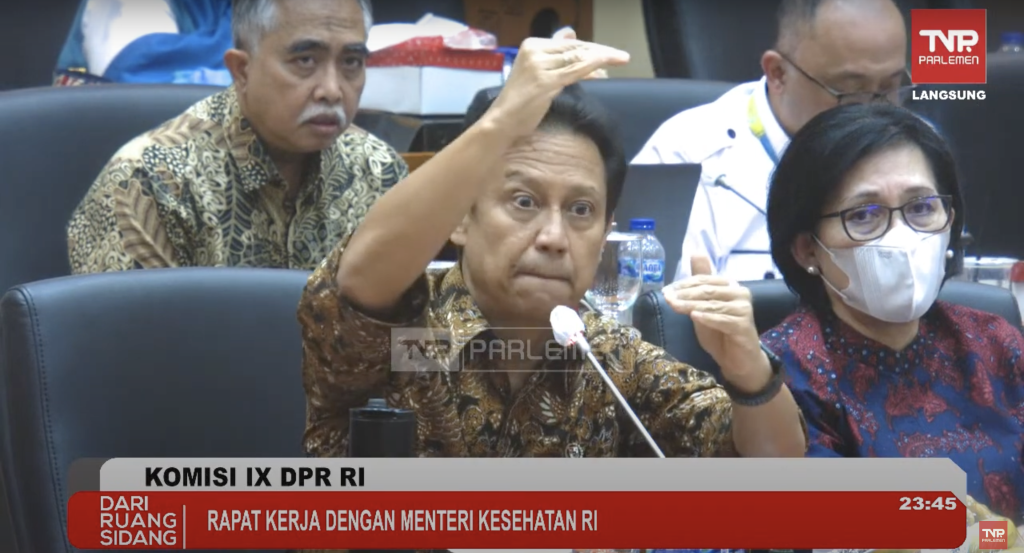
Health Minister Budi Gunadi Sadikin at the House of Representatives, gesturing to indicate the difference in status. Source: Screenshot from TV Parlemen via Project Multatuli
“In foreign countries, nurses and doctors are seen as equals. One team. Here, there is a caste difference,” he said, gesturing to indicate the difference in status. “In other countries, doctors really value and respect nurses. Not here. Nurses are seen as lackeys.”
This status difference matters so much to doctors’ organizations that in 2014, a number of them, including the IDI, petitioned the Constitutional Court to amend a law on health workers to have “medical personnel”, that is doctors, classified differently from other “health personnel”, which included nurses and midwives.
It is not only non-physician practitioners who fall victim to this hierarchical, seniority-based culture. Doctors, particularly younger and more junior ones, are often browbeaten by their fellow doctors.
In August 2023, the Health Ministry reprimanded three hospitals for allowing the bullying of doctors taking part in medical residency programs. IDI representatives called the ministry’s actions “excessive”, arguing that the supposed bullying made for more disciplined doctors.
This culture of fear extends to the provision of abortion services. One doctor said it was not just the threat of criminal prosecution that made some doctors hesitate to perform abortions for rape victims; they also feared what might happen to their careers if they ran afoul of doctors’ organizations.
Before the new health law was passed, the IDI was responsible for all practice permits issued to doctors. Regional governments had the authority to issue practice permits, but only based on recommendations from the IDI. To get a letter of recommendation, doctors had to register as an IDI member.
In 2022, PPH Unika Atma Jaya and the Indonesian Reproductive Health Knowledge Hub released a report entitled Analysis of the Abortion Situation in Indonesia. The report states that health workers who provide abortion information and services are often threatened with career ruin.
One of the people interviewed for the study said one doctor “told me that yesterday a doctor at [a certain hospital] had been fired for performing” an abortion.
Despite the adoption of the new health law, many health workers and counselors for victims of sexual violence say the healthcare system is still not doing well. “Why do we persist with a system that is no longer good?” asked a doctor.
The Need for Victim-Centered Services
Providing access to abortion services for victims of sexual violence is closely related to the swift and integrated handling of those victims’ cases. Given the cut-off time for legal abortion, sexual violence cases must be dealt with rapidly by both law enforcement and health officials.
According to the 2022 Sexual Violence Law, victims have the right to receive health services in the form of physical and mental examinations, treatment of injuries, prevention and treatment of sexually transmitted diseases, prevention and treatment of pregnancy, psychiatric and psychological therapy, as well as psychosocial rehabilitation.
However, in the field, these policies remain poorly implemented. Since the passage of the law, which calls for the government to take over counseling services for victims of sexual violence, access to such counseling has become more limited.
Ana Abdillah of the Jombang WCC has felt the change firsthand. She cited the case of a domestic violence victim.
“Her husband cut off her hair, beat her until she bled,” Ana said.
The incident occurred on a public holiday, so when the victim looked to the local women’s protection unit for help, they said they could not do anything because it was outside the agency’s opening hours. “This shows that we are dealing with a system where perspective, empathy and responsiveness are not priorities,” Ana said.

Victims of sexual violence have to wade through red tape to get the care they needed. Illustration: Sekarjoget/Project Multatuli
According to Margaretha Hanita, victim-centered care required not only that victims could access health services but that such services were actively engaged in reaching victims.
Hanita is a lecturer, practitioner and activist in the field of women’s resilience who has worked at an Integrated Care Center for the Empowerment of Women and Children (P2TP2A) for 15 years. She is now assisting the Jakarta police and a number of Jakarta hospitals in providing people-centered care. Over her 15 years of experience, Hanita witnessed how victims of sexual violence had to wade through red tape to get the care they needed. For example, victims’ health costs are typically not covered by the National Health Insurance program, which only covers official “diseases”.
“But a rape kit is not a disease. Injuries resulting from sexual violence are not diseases. Injuries [like] broken noses, being doused with acid, those are not diseases,” said Hanita.
Hanita has also worked with child victims of sexual violence who were denied care because they did not have a national ID card number (NIK), which are only provided to citizens 17 years old or above. Local governments also require victims to be registered at the local civil registry office before they can receive financial assistance.
“You have to become a resident of DKI Jakarta first. You have to have your biometrics [registered] first,” said Hanita.
Integrated services for victims of sexual violence also involve cross-sector coordination, which adds another level of complexity. The Bekasi Regency Regional Hospital (RSUD Bekasi), which plans to open an integrated service center, must invite at least the police, the local women’s empowerment agency and social services to offer integrated services for patients who are victims of sexual violence.
“It takes a high level of commitment to make an integrated service center. We have to involve many parties across sectors,” said Ida Hariyanti, head of the hospital’s medical and diagnostic services division.
Generally, patients who are victims of sexual violence are required to have a letter from the police requesting a rape kit before they can be examined for rape. However, RSUD Bekasi allows patients who have not reported their assault to the police to come to the hospital first.
“We handle the emergency first, complete the examination. If necessary, we contact the police,” explained Suryo, a forensic doctor at the hospital.
RSUD Bekasi is one of only a handful of health facilities that has prepared a special pathway for treating victims of sexual violence. The fact that most other hospitals and government agencies have not yet adopted this approach means that victims of sexual violence are often blocked from getting an abortion before the legal cut-off.
“Never mind victims who need access to a safe abortion; even victims who need access to a safe house are still told to wait,” said Ana.
Closing
Melati, the child rape victim in Jombang, was never able to access a legal abortion. Her child was adopted by someone else immediately after she gave birth. During her pregnancy, Melati’s family did not receive any healthcare support from the government.
“[Government help] was limited to basic foodstuffs,” said Ana of WCC Jombang. Even Melati’s prenatal check-ups were covered by the family and personal donations from others.
Melati and her parents experienced deep trauma as a result of the pregnancy. The Jombang WCC once accompanied Melati’s parents to buy clothes for the baby. When they got to the store, they didn’t want to hold the clothing.
“They were reluctant to even go into the store,” said Ana.
None of the victims that the Jombang WCC has assisted has been able to access legal abortion services. Research by a center at Catholic University Atma Jaya and the Indonesian Reproductive Health Knowledge Hub found that there were a total of 160 criminal verdicts related to abortion cases in the country from 2017 to 2021. As many as 45 women who sought access to abortion services were charged with crimes. A number of cases were prosecuted under the Child Protection Law, which contains an article that reads: “Everyone is prohibited from carrying out abortions on children who are still in the womb […].”
Ana said the problem was the systemic lack of sensitivity of the healthcare system to the needs of victims of sexual violence. “There are many loopholes in the legal structure that have no perspective on victims. In the future, our Health Law must be more humane,” she added.
In principle, regulations in the Criminal Code and the Health Law provide opportunities for women victims of sexual violence to access abortion services. However, the law still requires derivative regulations to ensure the availability of abortions. These regulations are still in the process of being drafted.
Project Multatuli sent a letter on Aug. 8, 2023, requesting an interview with the Health Ministry’s director general of public health. We also sent one to the head of the communications and public services bureau of the Health ministry, Siti Nadia Tarmizi. As of the publication of this article, the requests had received no response.
“When the law says that victims of sexual violence who experience unwanted pregnancies can access those services, they should be able to access those services,” Marcia said, “Let’s give them the rights that are governed by law.”