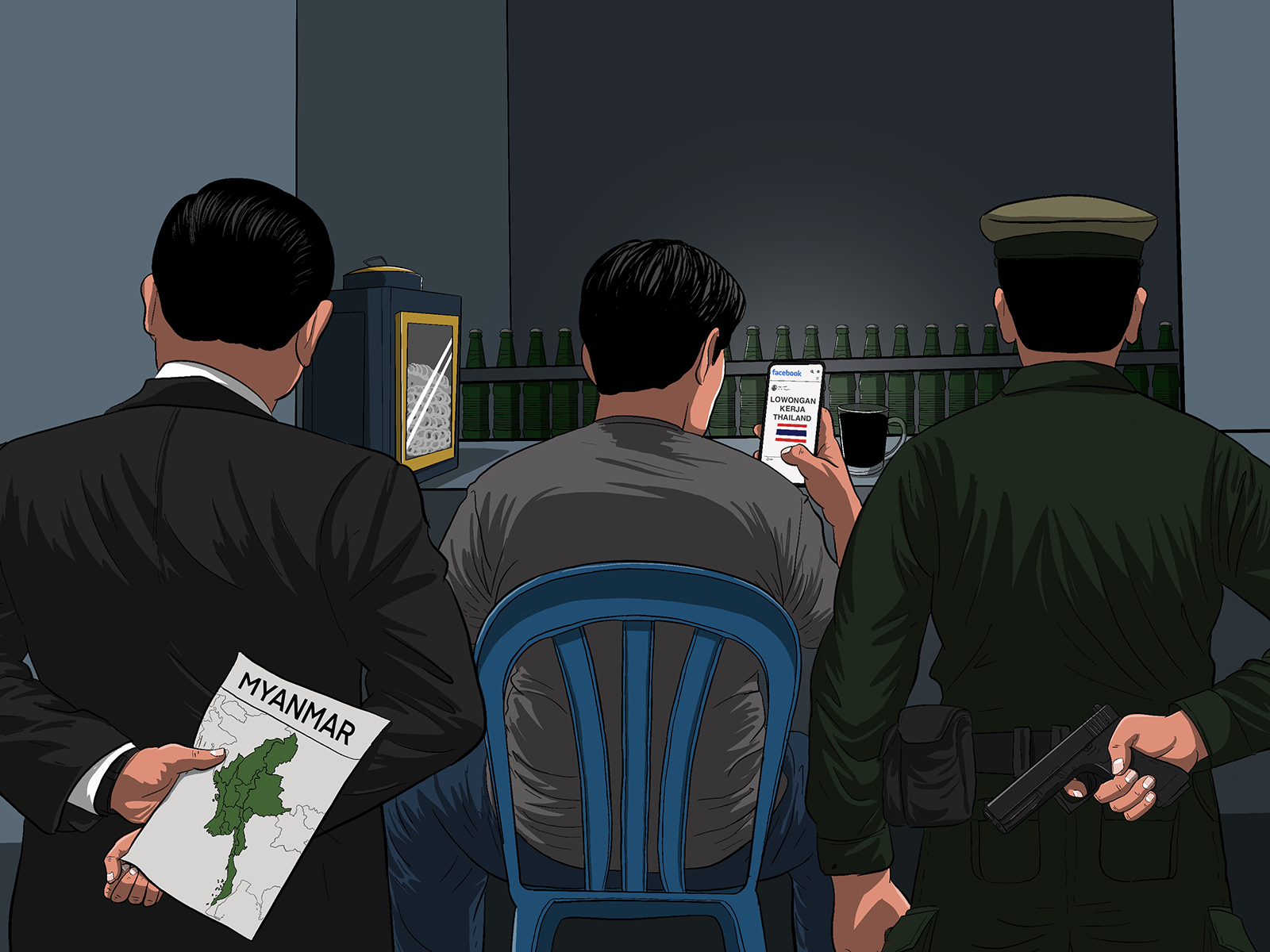
In Jakarta, Indonesia, for two years, the families of human trafficking victims have waited anxiously for the return of their loved ones, who have been forced into slavery in online scam operations in Myanmar. These families continue to hope the Indonesian government will intervene and rescue them.
“Please, Indonesian government. How much longer will our family remain abandoned?” asked Yanti, the sister of one of the victims still trapped in Myanmar.
Myanmar—along with Cambodia, the Philippines, Laos, and Thailand—has become a Southeast Asian hub for pig butchering scams. This form of long-term financial fraud involves perpetrators building trust with victims, often through fake romantic or friendship relationships, before convincing them to invest in fraudulent schemes.
As of March 2024, Indonesia’s Ministry of Foreign Affairs reported that 30 Indonesian citizens remain trapped in Myanmar.
“We truly understand the families’ concerns, and I will do everything possible to bring them home. However, the problem lies in accessing such a dangerous area. No foreigner has ever managed to enter it,” said Rina Komaria, Head of the Southeast Asia Sub-Directorate at the Directorate for the Protection of Indonesian Citizens, Ministry of Foreign Affairs.
Recruitment Pattern
Friend’s Deception
The COVID-19 pandemic devastated lives, leaving household finances in ruins. Many people were laid off, struggled to find new jobs, and became burdened with debt. This situation made some individuals easy targets for human trafficking syndicates.
These organized crime groups recruit victims through various methods. They post fake job advertisements on social media, posing as trusted institutions. They also exploit their own friends––as happened to Siska and her husband, Tito.
The couple’s nightmare began when Ahong, a friend, visited their home and tricked Tito into becoming a victim of human trafficking. As of August 18, 2024, Tito was still trapped in Myanmar.
“Ahong would eat and drink at our house when he was struggling financially. My husband trusted him. They were close friends—how could my husband think badly of him? And then, he deceived my husband,” Siska said.
In the past, Tito and Ahong worked for the same company. But later, Ahong moved to Thailand. When he found out that Tito had been laid off, he invited him to work at “a tech company” in Thailand, promising a monthly salary of Rp8 million (US$510)—a significant amount compared to Indonesia’s minimum wage of around US$286.
At first, Tito declined because he didn’t have money for travel expenses.
“But Ahong was persistent and even offered to cover the costs,” Siska said.
Siska recalled how Ahong reassured them: “Don’t worry, everything’s safe. There’s nothing strange. I’ll handle everything.”
“So my husband agreed. Our financial situation was bad, and he was stressed about our debts,” Siska explained.
In April 2022, after Ahong arranged the administrative and financial matters, Tito left for Thailand alone. At a Bangkok airport, someone claiming to be from the company—an associate of Ahong—picked him up. Tito stayed in a Bangkok hotel for three days, waiting for another worker, a man from Palembang.
On the third day, a company representative took Tito and the man from Palembang on a long journey through the jungle. When they finally arrived at the company, Tito saw Ahong again.
Soon after, Siska began having trouble contacting her husband—the company had confiscated his phone, allowing Tito to use it only twice a week.
Siska occasionally reached out to Ahong for updates, but over time, her husband told her to stop.
“Don’t contact Ahong anymore. If you do, it’s like killing me. He sold me to the Chinese to work as a scammer,” Siska said, recalling her husband’s words.
“At first, my husband thought he was still in Thailand. Later, he realized he was already in Myanmar,” she added.
Siska never discovered her husband’s exact location, and then Ahong disappeared.
“I’ve lost contact with my husband, and Ahong’s number is no longer active. But I’ve heard that Ahong has returned to Indonesia,” Siska said.
According to a May 2024 report by the United States Institute of Peace (USIP), Chinese criminal networks operating in Myanmar shifted their focus during the COVID-19 pandemic.
Initially, from 2017, these criminal organizations controlled illegal cyber gambling businesses along the Myanmar-Thailand border, with support from the Karen Border Guard Force (BGF), which is affiliated with the Myanmar military. In 2020, the Myanmar government shut down many of these operations in Karen State (now called Kayin State). However, following the military coup in February 2021, these criminal organizations resurfaced and expanded into running pig butchering scams.
During the COVID-19 pandemic, China closed its borders, making it difficult for these networks to recruit workers domestically. As a result, they began targeting workers from other countries, including Indonesia.
“Globally distributed human trafficking networks play a role in this process. Their task is to deliver job seekers to scam centers. And Myanmar-based criminal groups are the ones who pay them,” the USIP report stated.
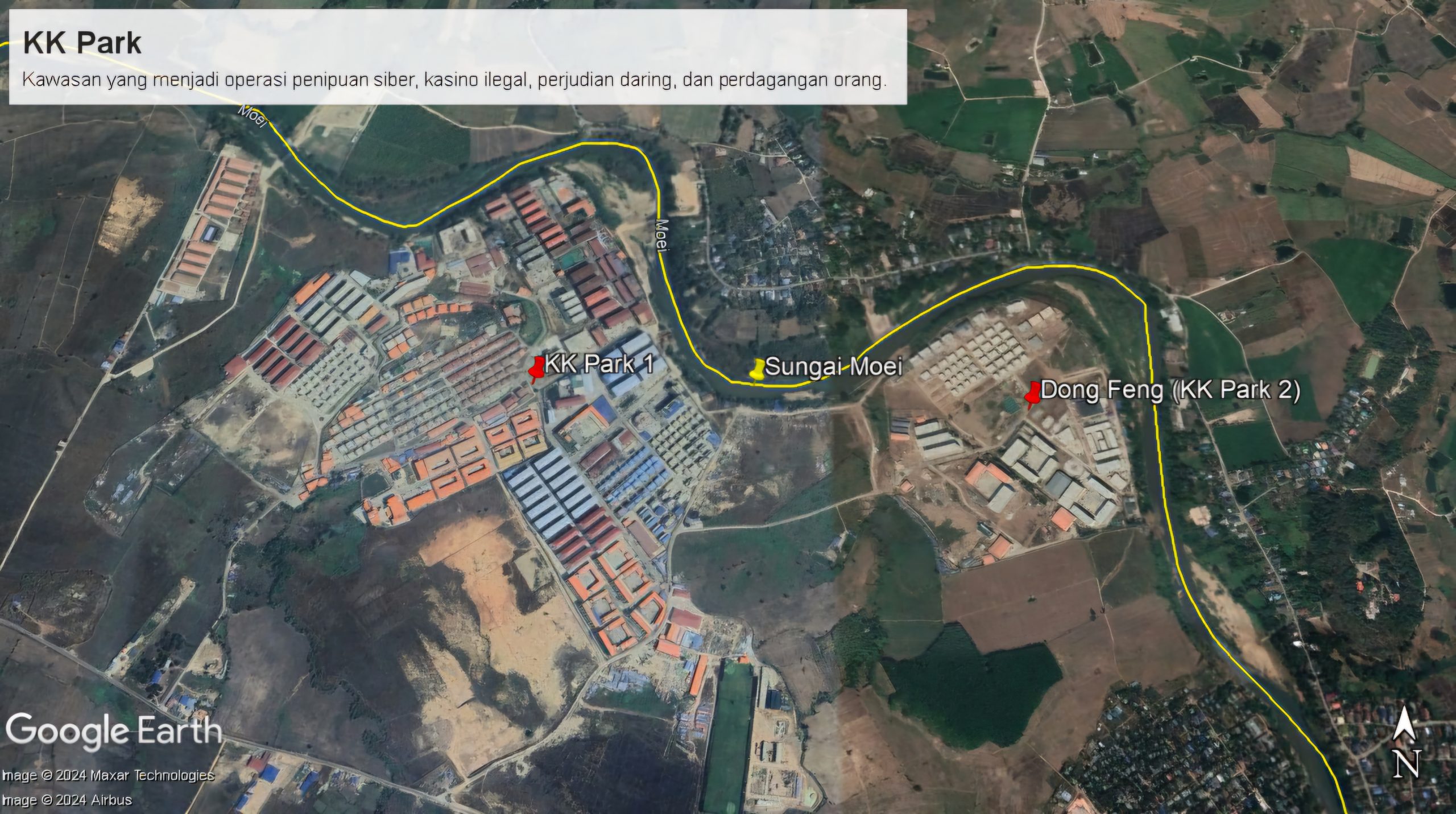
Satellite images of KK Park, an area that has become a base for cyber fraud, online gambling, and human trafficking operations in the state of Myanmar. (Google Earth)
Broker’s Promises
A panel of judges at the Bekasi District Court found Andri Satria Nugraha and Anita Setia Dewi guilty of human trafficking on February 5, 2024. The judges sentenced each of them to eight years in prison and fined them Rp200 million (US$12,763), with an additional four months in jail if they failed to pay the fine. The court also ordered them to jointly pay Rp600 million (US$38,292) in restitution to the victims, or serve an additional six months in prison if they do not pay.
Andri and Anita recruited and deceived dozens of Indonesians, forcing them to work as cyber scammers in Myanmar. Twenty victims recorded a video testimony about the fraud and torture they endured, which went viral on social media and prompted a response from President Joko Widodo.
On May 5, 2023, the Ministry of Foreign Affairs, through the Indonesian embassies in Yangon, Myanmar, and Bangkok, Thailand, successfully evacuated them from Myawaddy, Myanmar. Four days later, the National Police’s Directorate of General Crimes (Bareskrim) arrested Andri and Anita at Sayana Apartment, Kota Harapan Indah, Bekasi Regency.
However, some of Andri’s and Anita’s victims remain trapped in Myanmar.
One of them is Pendi. His wife, Mona, is still fighting for her husband’s return to Indonesia.
The restaurant where Pendi worked went bankrupt due to the COVID-19 pandemic, leaving him with no choice but to work odd jobs. Sometimes, he worked as a motorcycle-taxi driver, and other times as a private driver. His income was barely enough to cover daily expenses.
One day, he met Andri Satria Nugraha and Anita Setia Dewi at Summarecon Mall Bekasi. The couple offered Pendi a job at “a technology company” in Thailand, promising a one-year contract with a monthly salary of around Rp10 million to Rp20 million (US$639 to $1,277).
They also promised to cover his flight, meals, accommodation, and other administrative costs. All that was required was proficiency in English and fast typing skills.
“They soon had a Zoom meeting, where Andri and Anita appeared along with eleven other victims. The departure process moved very quickly after my husband met them,” Mona said.
Mona grew suspicious because Andri and Anita never disclosed the name of the company, saying only that it was located in Bangkok.
“But my husband went anyway because he had good intentions—he wanted to provide for the family. So he accepted the offer to go to Thailand,” Mona said.
Andri and Anita arranged the departures in two groups. Pendi and four others—two women and two men—were part of the first group, which left Jakarta in July 2022. The second group departed from another location at a different time. Meanwhile, Andri and Anita stayed behind in Indonesia.
“When he arrived in Thailand, my husband contacted me. Someone from the company, who seemed to be in charge, picked him up. He looked Chinese but spoke with a bit of a Malaysian accent,” Mona said.
The company representative took the victims to a hotel in Bangkok, where they spent the night. The next day, they were driven 500 kilometers to Mae Sot, a city on Thailand’s western border with Myanmar, before crossing the Moei River. None of the victims realized they had been smuggled into Myanmar.
Once there, the company confiscated their passports and forced them to practice speed typing. They also restricted mobile phone use, making it difficult for Mona to contact Pendi.
“Three weeks later, my husband sent me a letter saying he had realized he’d been tricked. He asked me to report it to the Indonesian authorities,” Mona said.
Language Course Center
Yanti remembers Wahyu as an introverted person, determined to achieve his dreams. Ever since graduating from college, her brother had dreamed of working in South Korea. To pursue that goal, he enrolled in Korean language courses at the Korean Language Center Indonesia (KLCI) in Sukabumi—run by Latif Aliyudin.
“My brother took the Korean language test in Jakarta twice before he finally passed and got his certificate,” Yanti said.
With Latif’s help, Wahyu was almost sent to work at a manufacturing company in South Korea, but the plan was postponed due to the COVID-19 pandemic. In the meantime, Wahyu took on odd jobs, with his last position as a part-time teacher, earning Rp600,000 (US$38) per month.
“Then the course reached out again and offered him another opportunity, asking, ‘Do you still want to work in Korea? Departures have reopened,’” Yanti recalled. “My brother agreed because it was his dream.”
KLCI Sukabumi requested Rp20 million (US$1,278) for Wahyu’s departure costs. His family helped pay in installments—first Rp3 million, then Rp5 million—until the full amount was covered. However, Wahyu never went. KLCI said that processing the visa and work permit for South Korea was still complicated.
As an alternative, Latif suggested that Wahyu take a job at “a Korean subsidiary in Thailand.”
“He said it would only be for three months, at most, before my brother could finally go to South Korea. Wahyu agreed because he was unemployed, getting older, and had already paid in full,” Yanti explained.
Latif introduced Wahyu to a man named Ardli Fajar, who arranged accommodation for Wahyu at the City Park Apartment in Cengkareng. In November 2022, Wahyu departed for Thailand.
After Wahyu moved, Yanti found it difficult to stay in touch with him. His phone was often inactive, and her messages would only show a single check mark.
“I tried messaging him, but it would take three or four days—sometimes even a week—before he replied. He said he was healthy. I stayed positive, thinking maybe he was just adjusting to the work there. By December 2022, I still hadn’t heard much from him,” Yanti said.
Months passed, and Yanti completely lost contact with her brother. The family grew increasingly worried, especially as news reports about fraud and human trafficking in Southeast Asia began to surface.
“One day, I sent him some news articles and asked about his location and how he was doing. Two weeks later, he finally replied. But his messages sounded strange, like he was scared,” Yanti recalled.
Wahyu told her that he had been smuggled into Myanmar through Thailand. He wasn’t working at a manufacturing factory but had been forced to work as a cyber scammer—and he wasn’t getting paid.
“Brother, just escape,” Yanti urged.
“I can’t. I’m trapped behind a mountain.”
“Are they torturing you?”
“Yesterday, they electrocuted me,” Wahyu replied. “Don’t tell Mama. I’m afraid she’ll get sick from stress. Just pray for me to stay strong here.”
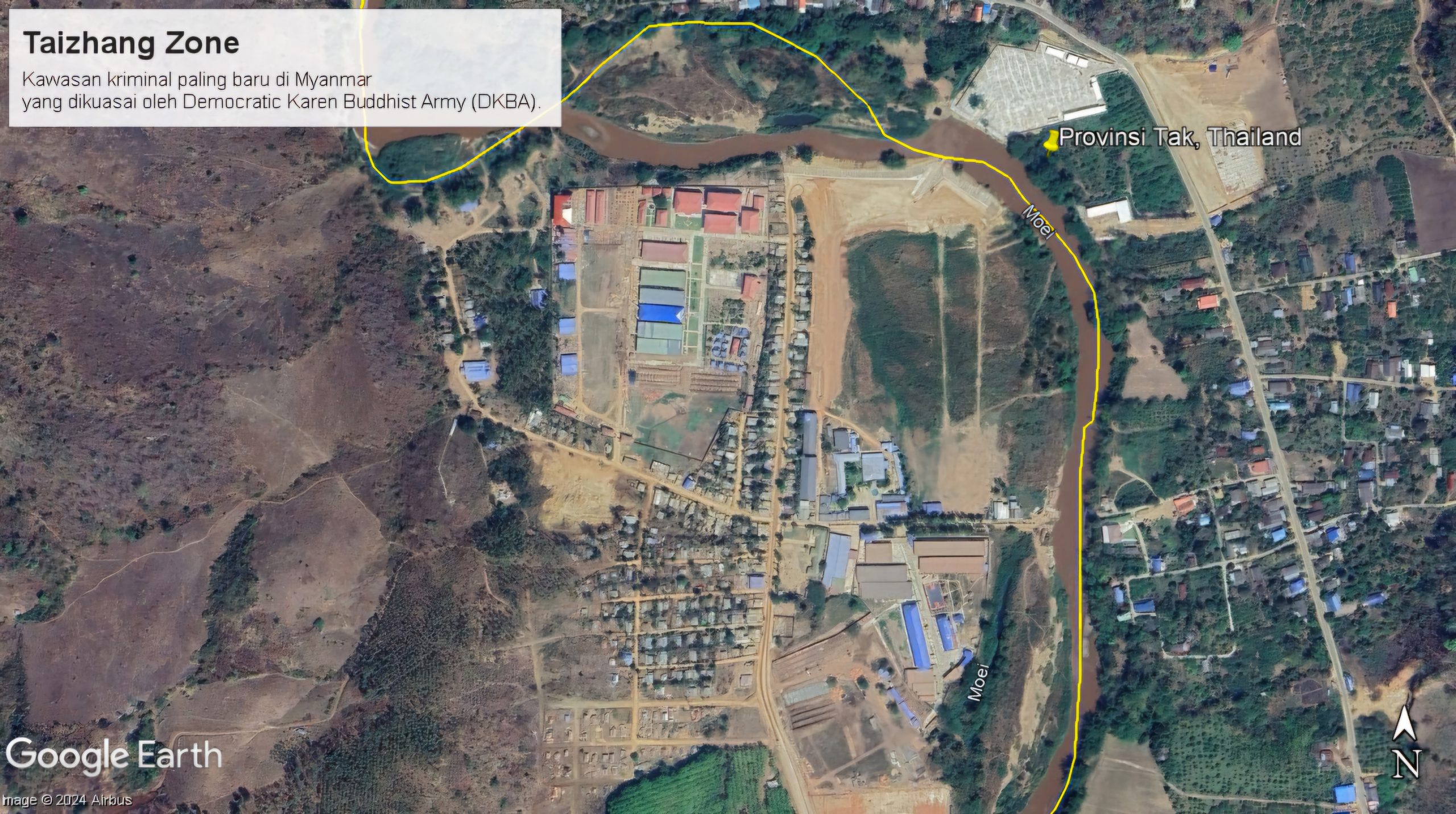
Satellite images of Taizhang Zone, the latest criminal area controlled by armed groups in Karen State, Myanmar. (Google Earth)
Days in the Camp
In Myanmar, Indonesians forced to work as pig butchering scam operators endure extremely long, inhumane working hours—17 to 20 hours a day with only 30 minutes of rest, without holidays or pay.
The cyber fraud organizations force these enslaved workers to scam 100 people each day, primarily targeting citizens from the United States, Canada, and Australia. If they fail to meet their targets, their working hours are extended, or they face physical punishment. These punishments include standing for hours, running 30 laps around a soccer field while carrying a water-filled gallon, doing hundreds of push-ups, being hit with blunt objects, whipped, or even electrocuted—depending on the severity of their failure.
After being electrocuted by the syndicate, Wahyu’s body was covered in bruises, and he struggled to walk.
“His legs hurt, so he had to walk slowly. But even in that condition, he comforted us,” Yanti said.
Yanti recalled her brother telling her: “Don’t worry about me. I wore layers of clothes—thick ones. So when they electrocuted me, it didn’t feel as bad.”
“But being electrocuted is still being electrocuted—it breaks my heart,” Yanti said.
The victims have lost all choice and control over their lives. The company forces them to keep scamming, even though it goes against their conscience.
Siska recalled her husband Tito saying: “Bu, I can’t stand lying to people. When I look at the photos of the people I’m supposed to scam, I see their children and families. It makes me think of you and the kids at home. That’s when they beat me.”
“So my husband just accepted it when they beat his thighs with iron rods and beams until they bruised. Eventually, they hit him on the head. He wanted to fight back, but he couldn’t,” Siska said.
The Pig Butchering Scam
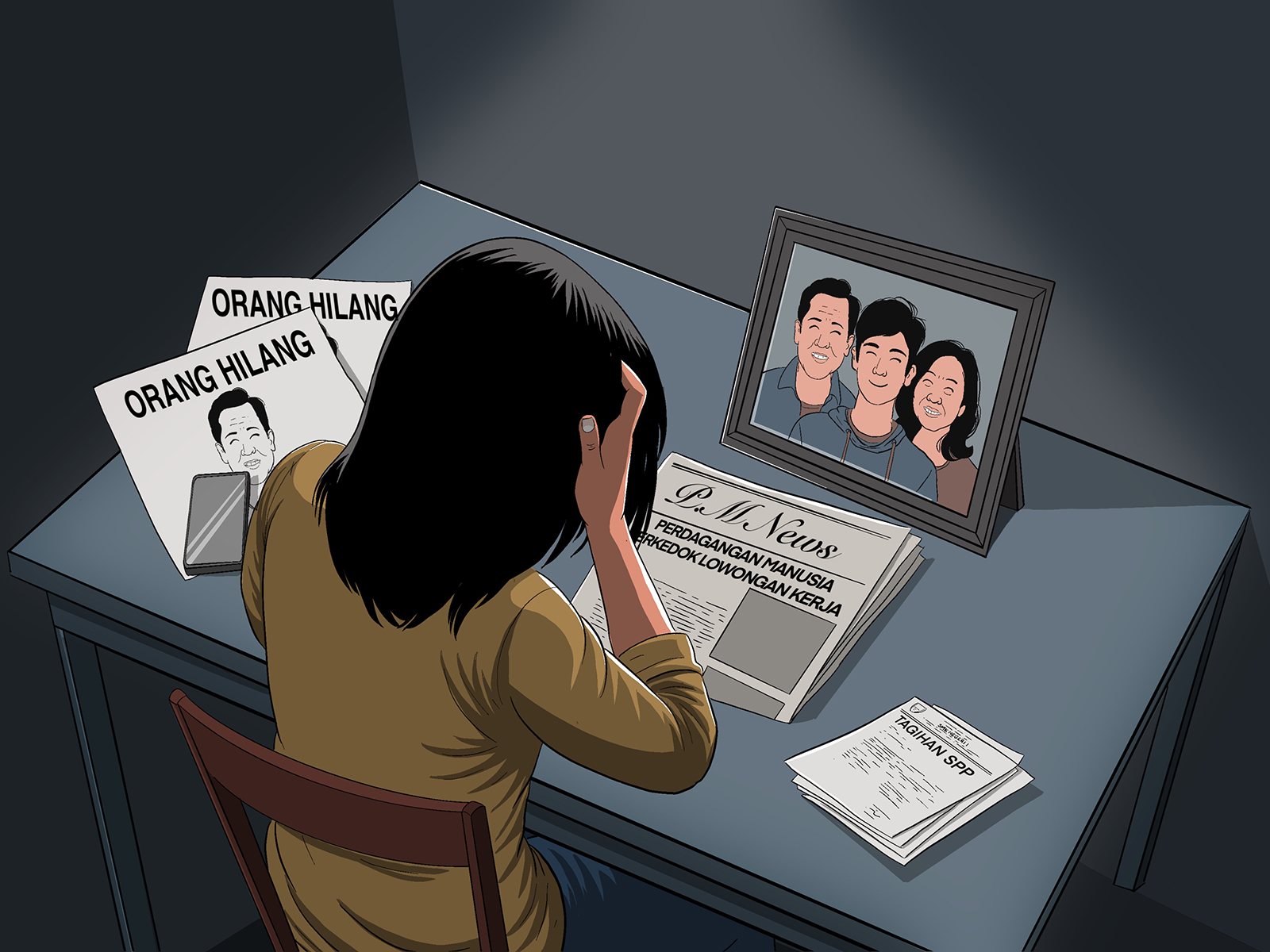
An illustration of the families of human trafficking victims in Myanmar. (Project M/Aan K. Riyadi)
The pig butchering scam is a type of online investment fraud with two stages.
The first stage, known as “fattening the pig,” involves building trust between the scammer and the target. Scammers use fake identities to approach their targets on social media. In some cases, they steal real people’s identities.
The scammers often pose as glamorous, wealthy individuals—attractive, upper-class men or women—who flaunt luxury goods, enjoy horseback riding, travel the world, and drive Ferraris. They use these personas to lure wealthy targets.
Initially, the scammer is warm and friendly, engaging the target as if they’ve known each other for a long time. Once trust is established, the scammer introduces an investment opportunity, promising high returns through fake cryptocurrency trading platforms set up by the company.
The second stage, “butchering the pig,” begins when the scammer embezzles the target’s money. Once the target has invested large sums, the scammer vanishes, along with the investment platform, leaving the target in financial ruin.
But not all scams go as planned.
If the scammer fails to deceive the target, the criminal groups may extort the scammer’s family. For instance, the company might demand a ransom, promising to release the operator if the family pays.
The syndicate once demanded Rp150 million (US$9,560) each from Mona and Yanti for the release of Pendi and Wahyu. Similarly, they asked Siska for US$10,000 to free Tito. When the families couldn’t pay, the company threatened to sell the victims to other criminal groups.
Siska remembered Tito saying: “They sold me to a new company. They confiscated my phone. I can’t take it anymore. Please prepare US$8,000.”
“My husband called me, crying. He couldn’t endure it any longer. The punishments at the second company were even worse. But where was I supposed to get that kind of money?” Siska said.
Mona also had no choice but to accept that her husband would be sold to another company. On average, victims were sold more than twice.
“I asked my extended family for help, but I couldn’t raise that much money. I reached a point where I knew there was nothing else I could do. If my husband was going to be sold again, I just had to accept it,” Mona said.
“We’re also scared. Even if we pay, there’s no guarantee they’ll come home. If not, we’ll just end up in debt,” Yanti added, thinking of her brother, Wahyu.
But the company doesn’t care whether the families have money or not—they just want payment.
Yanti once told the company she couldn’t afford to pay.
“They told me, ‘If you can’t pay, we’ll take him to an underground prison,’” Yanti said.
“At that point, we didn’t know my brother’s condition. We feared the worst—thinking he might die,” she added.
Demanding Repatriation
Transnational crime has a domino effect. The victims’ families—mostly wives—not only suffer emotionally but also bear the financial burden alone.
Siska works tirelessly to support her family and ensure her two young children get enough nutrition.
“Now I have to work harder than ever. In the morning, I run a laundry service from home,” Siska said. “In the afternoon, I work at a clothing store until 10 p.m. If I’m not too tired, I stay up ironing until dawn.”
Mona is in a similar situation, now working as a domestic worker to support her family. Her and Pendi’s two children had to drop out of college to help with the family’s financial struggles.
“They’re working now. We help each other. I feel guilty that their father’s situation has burdened them, especially at such a young age,” Mona said.
These women have taken on multiple roles as they continue to fight for their families. They’ve appealed to the police, BP2MI, the Ministry of Foreign Affairs, the National Commission on Human Rights, and even visited the House of Representatives. Several civil society organizations have supported them, yet they still have no clear answers.
“The government keeps asking us to be patient and wait. We don’t know what the obstacles are—we’re just housewives who don’t understand diplomacy,” Mona said.
“The police still haven’t arrested Latif. They’ve summoned him twice. They should bring him in by force,” Yanti added, referring to Latif Aliyudin, the owner of the Korean Language Center Indonesia (KLCI) in Sukabumi.
“My husband even asked me to seek financial help from people in the village. He said, ‘If the government can’t bring me home, we’ll have to prepare the ransom ourselves,’” Siska said.
Exhausted from fighting alone, the women started a joint movement called “Jerat Kerja Paksa” (Forced Labor Trap), a self-help initiative supporting victims and families of modern slavery in Southeast Asia.
They’ve shared their struggles in public forums and, most recently, sent an open letter to President Joko Widodo on June 26—World Day Against Torture—through the State Secretariat. In the letter, they urged Jokowi and his cabinet to address human trafficking urgently.
“No one deserves to be tortured, and no one should have the right to torture others,” the letter stated.
Meanwhile, the Directorate of Protection of Indonesian Citizens at the Ministry of Foreign Affairs said they have not yet been able to rescue the victims.
The Ministry of Foreign Affairs said they have tried several approaches, including seeking assistance from the Myanmar government, approaching the government of the People’s Republic of China (details of which they cannot disclose), and communicating with the Karen Border Guard Force that controls the Karen State.
“The (Myanmar) government can’t reach the victims because their location is too close to the conflict zone,” said Rina Komaria, Head of the Southeast Asia Sub-Directorate of the Directorate of Protection of Indonesian Citizens at the Ministry of Foreign Affairs.
Myanmar has been engulfed in a prolonged civil war, which intensified after the military staged a coup against the civilian government in February 2021. The conflict has spread across several regions, including Shan, Kachin, Karen, Rakhine and central Myanmar.
“About five to seven people are in the Hpa-An area. It’s extremely remote and close to the heart of the conflict. Not only is it difficult for Indonesians to reach, but even Myanmar authorities struggle to access the area,” Rina added.
Hpa-An is a major city in Karen State, a region that has drawn the attention of international human rights activists due to its role as a hub for transnational criminal operations.
Several areas in Karen State are suspected of being bases for cybercrime, online gambling, illegal casinos, and human trafficking. These include Apollo Park, Yatai New City (Shwe Kokko), Yulong Bay Park, KK Park 1 & 2 (Dongfeng), Dongmei Park and Myawaddy Town.
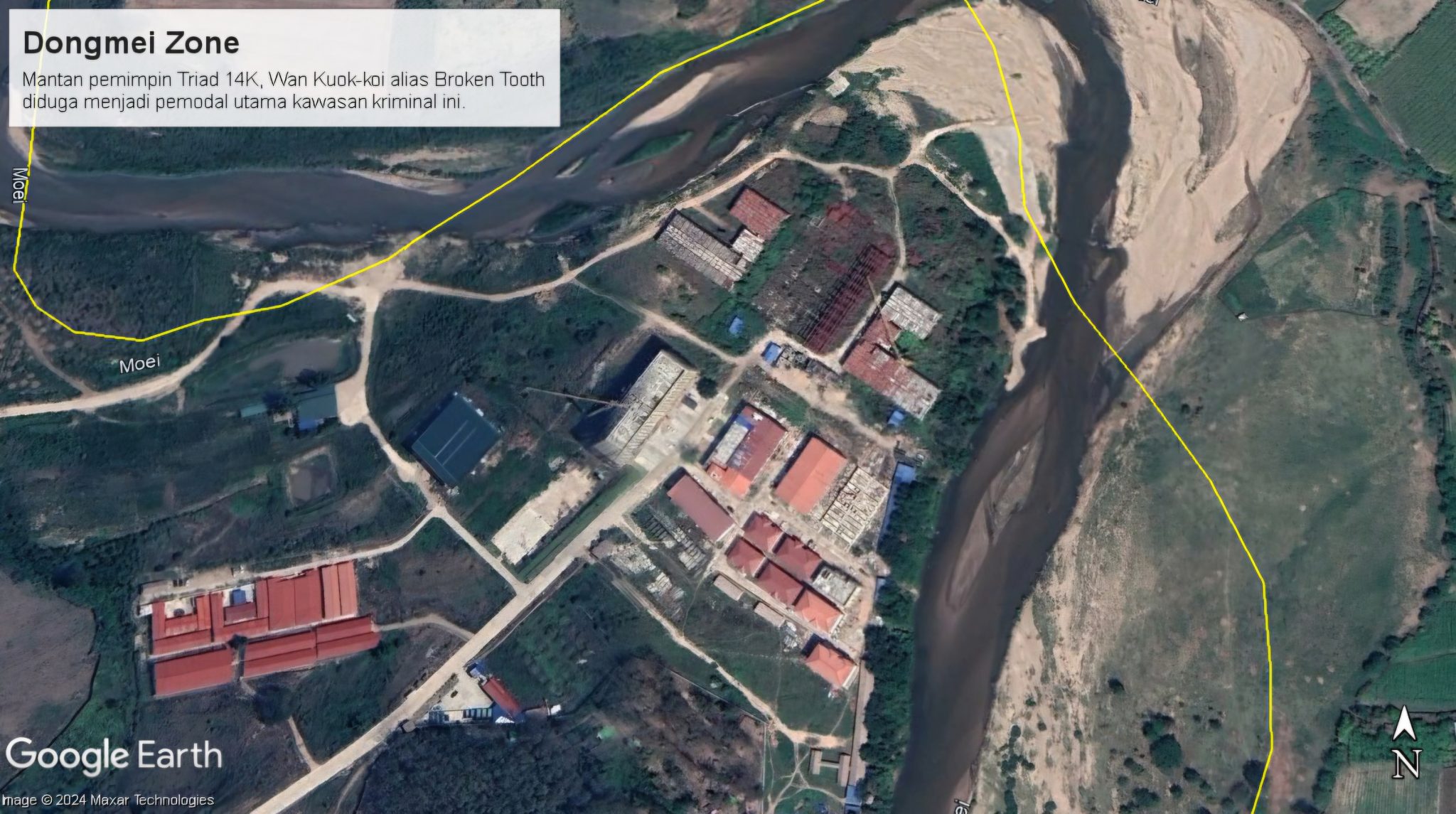
Satellite images of Dongmei Zone, which has become a hub for cyber fraud, online gambling, illegal casinos, and human trafficking in the Myanmar-Thailand border region. (Google Earth)
According to a report by Justice For Myanmar, these transnational criminal operations are controlled by Chinese criminal networks in collaboration with the Karen Border Guard Force (now the Karen National Army). One of the most prominent figures is Wan Kuok-Koi, also known as Yin Gouju or “Broken Tooth,” a former leader of the 14K Triad criminal group and the main investor in Dongmei Park.
Myanmar’s complex political situation is believed to limit the Indonesian government’s options. The success of repatriating Indonesian citizens relied heavily on establishing communication with local power networks.
“There’s no standard method to extract people from these areas. The complexity comes from the presence of numerous armed groups. And those we attempted to contact don’t have the authority to approach these companies directly,” Rina added.
Besides rescue efforts, Rina said the Indonesian authorities must apply preventive measures.
Rina said the Ministry of Foreign Affairs “always coordinates” with the Ministry of Foreign Affairs and “always coordinates” with the Ministry of Communication and Information to remove false recruitment posts from social media. However, she likened the problem to mushrooms: “Cut one, a thousand grow.”
According to the Indonesian Coordinating Ministry for Human Development and Culture (Kemenko PMK), 3,703 Indonesian citizens became victims of human trafficking (TPPO) between 2020 and March 2024, coerced into working as online scam operators.
These individuals were trafficked to Cambodia, followed by the Philippines, Thailand and Myanmar. The victims primarily came from North Sumatra, North Sulawesi, West Kalimantan, Central Java, West Java, DKI Jakarta, East Java, Bali, and Riau.
“Prevention isn’t our main responsibility. Our core work focuses on handling cases and providing services to Indonesian citizens facing problems abroad. If prevention efforts in Indonesia aren’t properly addressed, the Directorate of Protection of Indonesian Citizens will just keep ‘sweeping’ and ‘washing dishes’—because the cases will keep coming,” Rina said.
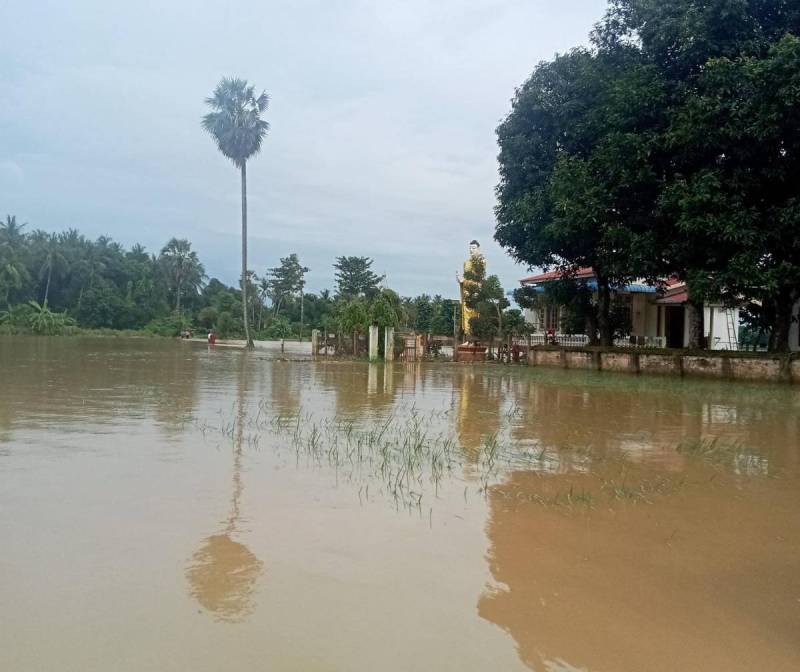
Triggered by heavy rainfall from a tropical cyclone, the Sittaung River in Myanmar has been steadily rising since 19 July, inundating more than 60 low-lying neighbourhoods and villages including Taungoo, Oktwin, Htantabin, Shwekyin, Nyaunglaypin, and Madauk Townships.
Locals report that most wells have been submerged or polluted by floodwater, leaving communities with little to no access to safe drinking water. Many are now relying on stored rainwater for survival.
The wells are flooded. In the town, we can’t even buy purified drinking water anymore, and prices have gone up. Roads are under water, cutting off the supply of goods. The situation is worse in the villages. Places like Oktwin, Htantabin, Madauk, and Shwekyin have completely run out of drinking water. —a local resident.
Communication lines have also been disrupted in many flood-hit areas, with phone and internet services down, hampering coordination efforts and delaying relief operations.
According to a local social welfare group in Taungoo, nearly 50,000 people have been affected in that township alone, where nine relief camps have been set up.
“People are still arriving at the camps. The water hasn’t risen today, but it hasn’t receded either. We’re helping families who are trying to relocate,” an official said.
In Madauk Township, nearly 90 percent of the area remains submerged after more than a week of continuous flooding.
Local sources say that the junta has imposed restrictions on independent relief teams, further limiting access to emergency aid.
“Relief work is only visible in Taungoo. In other areas, no official teams are present. Local authorities and civilians aren’t offering help either. There are military checkpoints between towns. People are desperate,” said a resident of Oktwin.
With no official aid reaching many villages, flood victims have sought shelter with relatives on higher ground or are surviving in makeshift tents. In Madauk’s Nyaunpinpauk village alone, over 10,000 people have reportedly been affected.
“Last year’s flooding was severe, but there was aid. This year, it’s worse, and no camps have been opened,” said a local from Madauk.
The floods have also devastated livelihoods across the region, with many residents cut off from work, food supplies, and essential services. Aid workers warn that thousands now depend entirely on humanitarian assistance to survive.
According to the junta’s Department of Meteorology and Hydrology, the Sittaung River remains above danger levels in Taungoo and Madauk and is likely to stay high for at least another day. The Shwekyin River is also expected to remain above its danger level, though it may drop slightly.
Residents anticipate continued flooding in the Sittaung River basin until early August. While seasonal flooding is common in the Bago Region, this marks the second consecutive year of extreme inundation, with increasing calls for long-term disaster preparedness and immediate emergency relief.
Philippine President Ferdinand Marcos Jr. joined other Southeast Asian leaders in October in a high-level sit-down to renew its calls to end the protracted civil war in Myanmar, with the Philippine leader saying “new strategies” are needed to address the conflict.
Association of Southeast Asian Nations (ASEAN leaders), including Marcos, have admitted the bloc’s peace deal with the Myanmar junta, signed just weeks after the 2021 coup, has failed to provide a lasting solution to the years-long violence that has displaced millions.
But this month also marks nearly a year since five displaced members of Myanmar’s Chin community filed a landmark war crimes case against junta officials in the Philippines. The case rests on the principle of universal jurisdiction, which they say allows them to hold their country’s human rights violators accountable in a court outside of Myanmar.

The leaders of the Association of Southeast Asian Nations (ASEAN) pose for a family picture doing the signature “ASEAN-way” handshake at the ASEAN Summit in Vientiane, Laos, on 9 October 2024. Photo: Philippine Presidential Communications Office
In a February letter, the Department of Justice shot down the complaint and said it falls outside of Philippine jurisdiction. A motion of reconsideration filed in response to the letter said the complaint did not even reach the dockets.
For one of the group’s Filipino legal representatives, the case is an opportunity for the Philippine justice system — and by extension — the president, to step in where ASEAN’s negotiated solution has faltered.
“ASEAN needs to put up an institution or mechanism for accountability with regard to what’s happening in Myanmar. We think that action in the Philippines can be a foundation for that mechanism in the long run,” said Romel Bagares, international law professor and one of the lawyers representing the Chin minority group.
The pursuit of justice for the atrocities committed by the Myanmar junta against the Christian minority group is a “case of accountability for impunity” in Southeast Asia, Bagares told Philstar.com in an interview.
“To start the process, we can begin with the Philippines,” said Bagares.
Devastation of ‘Biblical proportions’
Represented by Filipino lawyers, five Chin individuals sued ten high-ranking junta officials in October 2023, including the top junta chief Senior Gen. Min Aung Hlaing. They accused the military regime of committing grave human rights abuses against the Chin community since the ouster of Myanmar’s democratically elected government in 2021.
The allegations include the murder of civilians, mutilation of bodies, arson of hundreds of homes, destruction of churches, and the weaponization of humanitarian aid.
For Salai Ling, one of the complainants, the junta’s abuses against minority Christians like him are “apocalyptic” and unprecedented in history, especially as the Chin State was one of the most impoverished in Myanmar even before the coup.
“We have literally half of the population displaced in a matter of four years,” said Salai Ling, who is also the deputy executive director of the Chin Human Rights Organization. “We have not even begun to reel back from the devastating effects of the COVID-19 pandemic when the junta launched an all-out military assault on our land and unleashed unimaginable atrocities against our people.”
“They destroyed everything in their paths, razed the villages, destroyed livelihoods, arrested, tortured and killed civilians and combatants alike, and forced relocated communities and forced them into exile,” he said. “It is a devastation of Biblical proportions.”
The group, Bagares said, is undeterred by the justice department’s rejection of their complaint. They have already filed a motion for reconsideration and have been on an uncertain months-long wait for action on the case.
A copy of the motion for reconsideration, as seen by Philstar.com, assails the justice department for not even docketing the complaint, which it said should have been a routine and ministerial step. It points out that returning the undocketed complaint is irregular and violates established rules.
The motion also argues that the February letter confirmed there was enough evidence to start a preliminary investigation because the allegations involve war crimes under Philippine law.
“This case is noble for that reason. We expect all sorts of challenges to be lodged in the way of a complaint like this. But we think that we have strong grounds for invoking universal jurisdiction based on our study of international humanitarian law that we have in the Philippines,” Bagares said.
Why the Philippines?
Bagares cites Republic Act 9851 or the Philippine Act on Crimes Against International Humanitarian Law, Genocide, and Other Crimes Against Humanity as being of sufficient basis to try those accused of war crimes. The international law explained that the Philippines has a long history of prosecuting war crimes, with an established law and a judicial tradition that dates back to post-World War II. This includes successful prosecutions related to the Marawi and Zamboanga sieges, which invoked RA 9851.
Both Bagares and Salai Ling also cited the Philippines’ old reputation of being a human rights champion on the international stage — a view that would sharply drop during the Duterte administration and his launch of a deadly war on drugs. “We used to be the darling of the human rights community when it comes to atrocities and crimes… [But] as you know, the last administration brought us so low,” Bagares said.
The international law expert pointed out that the current Marcos administration is, contrary to its original position, now more open to the idea of holding Duterte accountable for rampant human rights violations committed during the drug war.
Marcos has, as several observers pointed out, constantly framed himself as a human rights champion during his overseas tours even as his government has kept Duterte’s drug war going. Hostilities with the Duterte family this year have seen Marcos’ allies in Congress change their tune and, for the first time, seek answers to the abuses during Duterte’s presidency.
“I think that it will become inevitable that the government will answer to the demands of international accountability concerning the drug war,” Bagares said. “And if the government is going to accept a role in pursuing international accountability with respect to the drug war, then it should not be a problem for the Philippines… to take a stronger role on the Myanmar crisis.”
With ASEAN largely unable to rein in the junta’s continued abuses, Bagares said: “Our action in the Philippines is something that can spur a regional mechanism.”
Marcos’ response—or lack thereof—to the complaint of the Myanmar junta’s victims will test how serious he is about his pronouncements in the international arena that the Philipines is “ready to take the mantle for human rights,” Bagares said.
Salai Ling is banking on the Philippines’ reputation as “one of the most democratic countries in the region” to act on their case, especially with its upcoming chairpersonship of the ASEAN bloc in 2026.
“We believe that President Ferdinand Marcos Jr. has a special interest in providing a leadership that engages the global community with pride and deeds, and not with a conscience that keeps your head down for having failed to protect human rights, prevent atrocities and injustices in our own backyards,” Salai Ling said.
“The president can start providing the groundwork by supporting initiatives that have been started on Philippines soil that seek justice and accountability in Myanmar, to hold its military junta accountable for international crimes,” he added.
Early this week, Hollywood actor Meryl Streep called out the Taliban at the UN headquarters in New York, accusing their government of allowing more rights to “cats” and “squirrels” than women and girls in Afghanistan. The Taliban took great offense at this comment and said they “highly respected” women and would “never compare them to cats.” But one only needs to look at Afghanistan’s current government’s “morality laws”, the first such law to be codified ever since the armed militia took control over the country in August 2021, to understand which statement is closer to reality.
The 114-page code, published by the Ministry of Propagation of Virtue, Prevention of Vice and Hearing Complaints, enforces many restrictions on men and women but it goes as far as to impose literal silence on women. Women aren’t allowed to show their faces and bodies when they come out in public in order to “avoid temptation and tempting others.” In a country that ranks last in the Global Gender Gap Index (2023), the law not only deprives women living there of an identity but also effectively erases them from public life. However, soon after the law came into effect, Afghan women uploaded videos of themselves singing. By singing songs, the women have not only brought global attention but also inspire more women to stay resilient in the face of such adversity.

Today’s ‘Double Take’ – in which this journalist probes deeper into the socio-political events in Asia from an intersectional gendered lens – takes off from these small acts of resistance in Afghanistan, and looks into how women in other parts of Asia too have resisted oppression through art, music, and culture.
Women in Iran are prohibited from singing or performing in public and yet they defy such bans by performing at underground concerts and online.
Illustration: Sharanya Eshwar
Chuu Wai Nyein is an artist from Myanmar who chose to empower Burmese women in a society marked by harassment and abuse through her artwork. Her revolutionary art serves as a form of resistance against the ongoing military coup in Myanmar.
In India, men and women of the Dalit community – considered outside the stringent Hindu caste hierarchy and once deemed “untouchables” – have been using art forms like rap, gaana (music genre that originated in north chennai as the expression of the oppressed), and street theater (koothu) to fight caste and gender oppression.
Iranian visual artists Mahdieh Farhadkiaei and Atieh Sohrabi have used their art as a form of protest, boldly challenging oppressive norms such as their dress laws and advocating for freedom and change through their powerful, thought-provoking work.
As bold and empowering as these movements and actions may be, they often come with severe repercussions. Throughout history and even today, countless women who dare to speak out or create revolutionary art are censored, silenced, or even met with violent retaliation. From artists having their works banned to activists facing imprisonment or exile, the path of dissent against oppressive systems is fraught with risk. Yet, despite the dangers, these women continue to rise, their courage inspiring others to challenge the very forces that seek to suppress them.
As political activist and street artist Banksy aptly puts it, “Art should comfort the disturbed and disturb the comfortable.”

When it comes to feminist movements, are some women more equal than others? Are the brave voices we hear those of a privileged few? And do they really represent the diverse realities of all women? With the emergence of various waves of feminism across Asia, feminist movements have created quite a ripple by making significant progress. However, many have also been criticised for lacking inclusivity.
Today’s illustration for ‘Double Take’ – in which this journalist probes deeper into the socio-political events in Asia from an intersectional gendered lens – looks into this question of intersectionality when it comes to radical movements such as feminism.
Illustration: Sharanya Eshwar
The illustration above is based on actual events from last month in India, after protests broke out across the country against the brutal sexual assault of a doctor in the eastern Indian city of Kolkata.
In Mumbai – one of the world’s most expensive cities – one such protest took place at an upscale neighbourhood called Powai. Upper-class women took to the streets to demand safety for women. However, when women from a slum neighbourhood, comprising of historically marginalised and oppressed communities – the Dalits (outside the Indian caste hierarchy) and Adivasis (indigenous people) – joined them, the women from Powai told them they weren’t welcome to take part in “an exclusive protest only for residents of the Hiranandani complex (a posh residential building in Powai).”
The incident underscores how women of oppressed communities often find their struggles sidelined even though they face disproportionately more violence with little access to justice. Their experiences are deemed “different,” highlighting a divide in how feminist activism engages with caste-based oppression.
We’ve seen similar examples, such as in South Korea, where the ‘Escape the Corset’ campaign and the 4B movement advocate for women to fight against oppressive patriarchal norms, but has been criticised for not directly addressing the systemic and institutional barriers that perpetuate gender inequality in their society. This disproportionately impacts rural and economically disadvantaged women, potentially excluding them from the movement’s discourse and benefits.
In another instance, the annual Aurat March (which translates to “Women’s March”) in Pakistan aims to advance women’s rights but has drawn backlash for its controversial slogans that overshadow discussions on inclusivity and intersectionality.
In Myanmar, there are questions around whether the Rohingya women, who are further marginalised because of their identity, are ever a part of feminist efforts or discourse. In Indonesia the feminist movement’s elitist tendencies continue to exist and ostracise marginalised women.
There is a dire need for feminists to engage at a grassroots level to counter conservative movements and avoid remaining a minority confined to the middle class.
While feminism in Asia is increasingly aware of the need for intersectionality, there is still much work to be done to ensure that the voices of all women, regardless of caste, ethnicity, sexuality, education, sexual orientation, location or class, are heard and represented. The challenge is to eliminate further marginalisation of women based on other identities. As the famous civil rights icon Fannie Lou Hamer said, “Nobody’s free until everybody’s free.”
Dai Kaung, a 19-year-old Kachin young man, has lived in a refugee camp in Waingmaw Township since the military coup. After spending over two years in the camp, he found work at a rare earth mining site in the Pangwa area in early January 2024. He wanted to support his struggling family in the refugee camp.
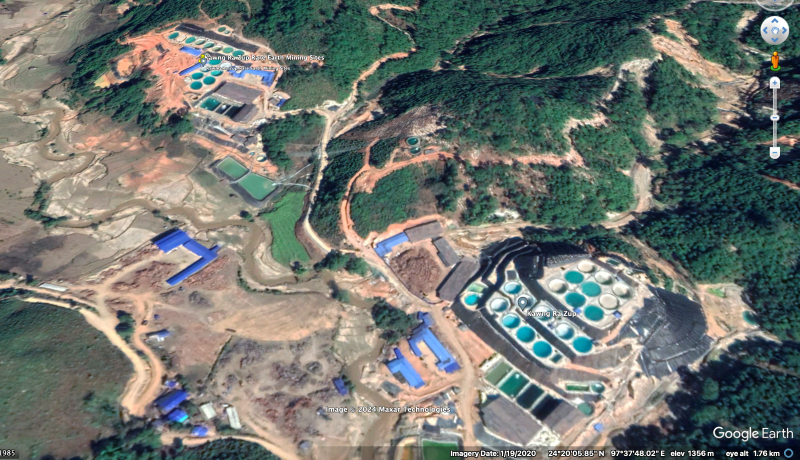
Aerial view of a block being mined in Momok Township. Photo: Mizzima
Pangwa, located in northern Kachin State, is under the control of the Kachin militia led by Zakhung Ting Ying, who is loyal to the Myanmar military. This region is one of Myanmar’s largest producers of rare earth minerals, which are in high demand in neighbouring country China. Despite local opposition due to the environmental and livelihood impacts, rare earth production increased significantly after the military coup.
Dai Kaung was aware that rare earth production could severely harm the local environment and livelihood, but he needed the daily wage of 100 yuan (RMB) to support his family. Unfortunately, on May 29, the mining took his life when the mining site collapsed.
Along with him, some Chinese workers also went missing. Of the approximately 20 missing workers, only five bodies were recovered, and 12 people were confirmed dead.
“They told us he died. It rained heavily that day. He was such a good child, always helping his parents,” said Dai Naw, Dai Kaung’s sister. The family, including his parents, sister, and a younger brother, remained in the refugee camp and could not afford to hold a funeral for him.
Natural Resources and the Resistance after the Coup
Since the coup, Myanmar’s natural resource management has significantly deteriorated. The military’s administration has weakened, and previously ongoing environmental protection and management efforts have collapsed. Many youths have taken up arms against the military’s oppressive rule. Consequently, the number of armed groups across the country has reached nearly 900, according to political research organizations.
“We need money to fight the military. We rely on public donations and have to find other sources of income from the areas we control. The primary goal is to overthrow the military regime,” said a member of the current resistance movement.
They added that the need for funding and weapons for the armed resistance has driven the involvement in resource extraction activities.
Due to this situation, once-covert mining activites, opposed by local communities, are now onducted openly. Previously, only the militia, allies of the military, were involved in extensive rare earth production. Now, the Kachin Independence Army (KIA/KIO) is also heavily involved in these activities, leading to increased pressure and protests from local Kachin communities. However, as the belief strengthens that selling these natural resources to fund weapon purchases is crucial for toppling the military dictatorship, local Kachin environmental activists find themselves in a challenging position, unable to resist and left to watch helplessly.
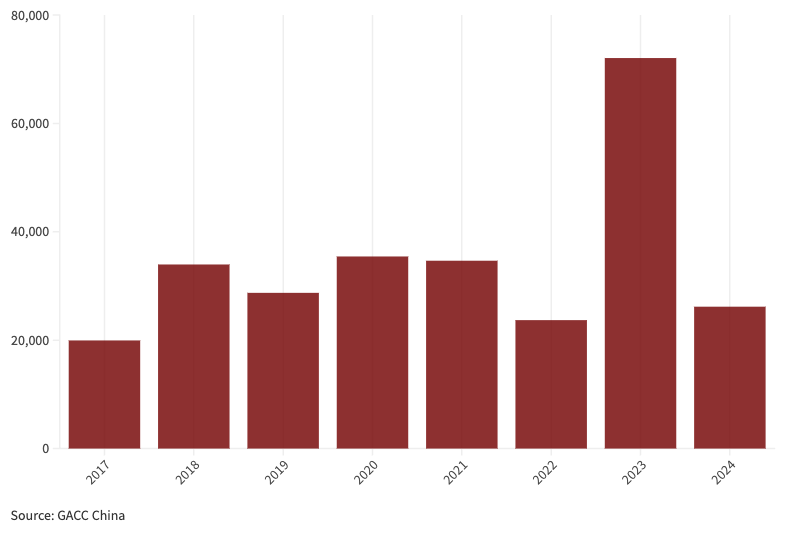
China’s General Administration of Customs (GACC) records from the past four years show that Myanmar has been one of the top 20 countries supplying rare earth minerals to China. According to ISP – Myanmar, a think-tank, Myanmar has sold rare earth minerals worth approximately 2.6 billion USD to China since 2017, with about 2 billion USD worth sold after the coup.
Rare earth extraction in Kachin State has increased significantly since the coup. Before the coup, there were 114 rare earth mining sites in Kachin State, but now there are over 340 sites.
We need weapons and money to fight the military dictatorship. On the one hand, the environmental damage is severe, and Myanmar will suffer the consequences. This is already happening in Kachin and other regions. —an environmental expert who requested anonymity due to security reasons.
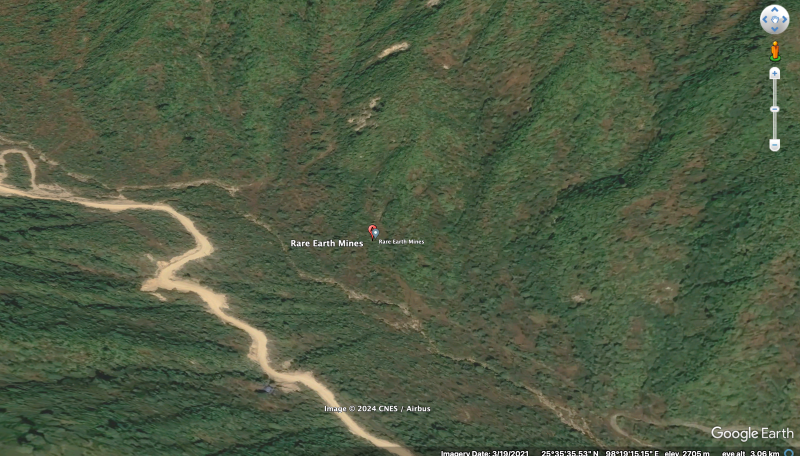
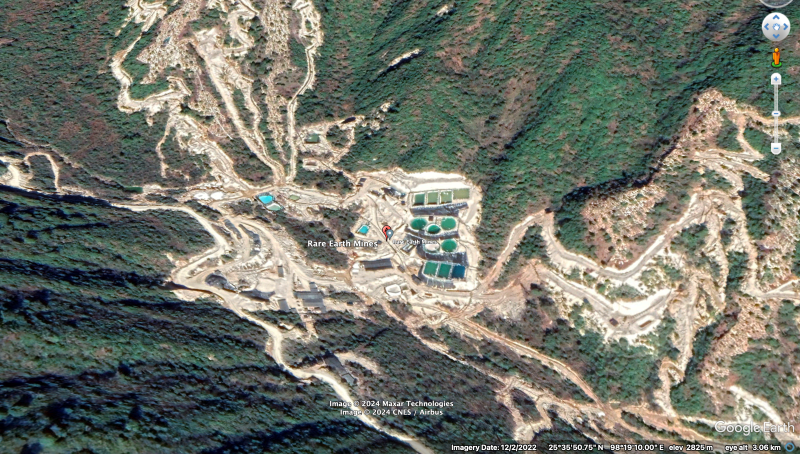
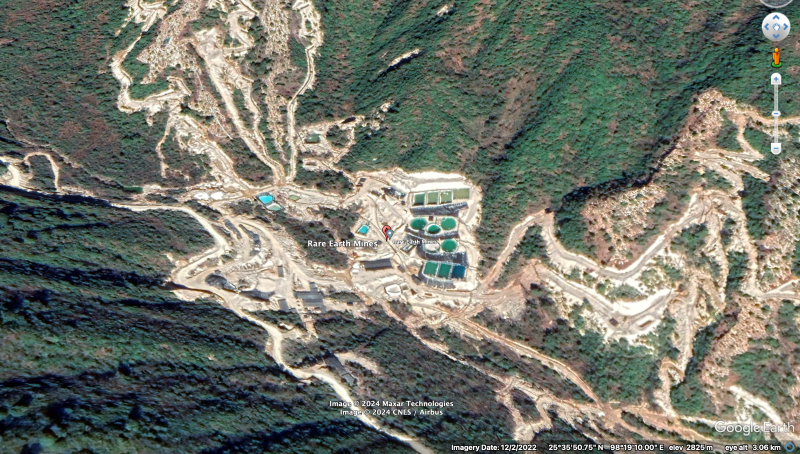
Before and After: Rare Earth Mineral Block in Chiphue Township in March 2021 (left) and February 2022 (right). Photo: Google Earth/Mizzima
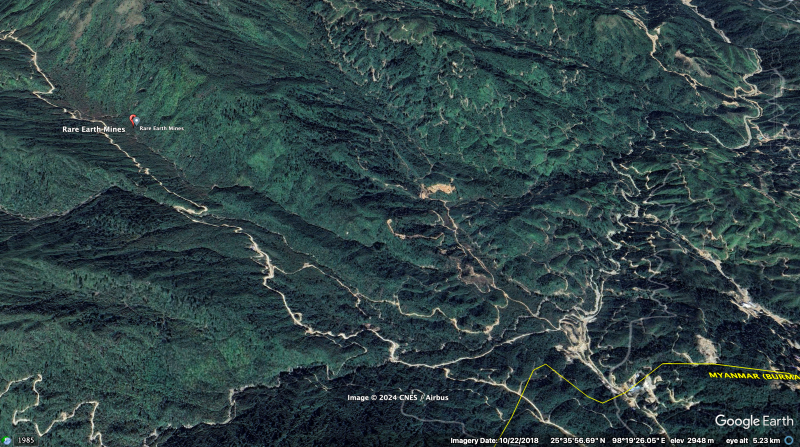
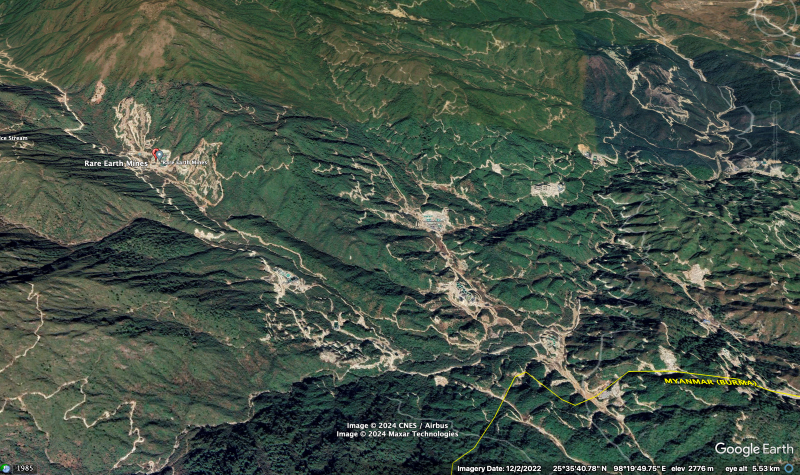
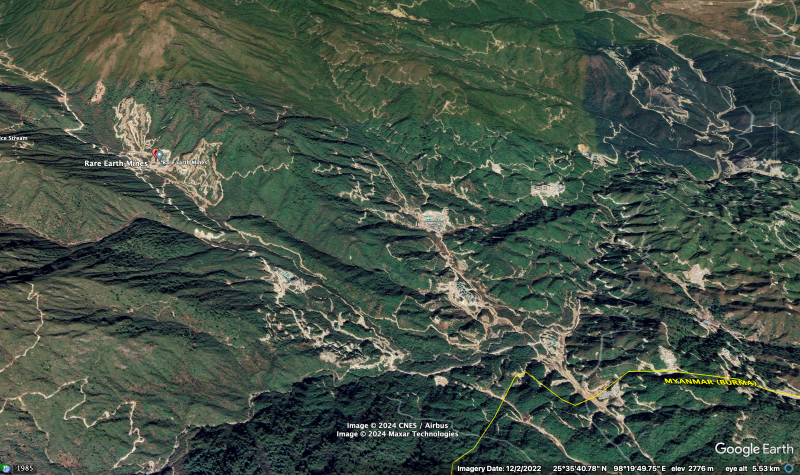
Before and After: Mountain Ridge in Chiphue Township in October 2018 (left) that turned into a cluster of rare earth blocks by December 2022 (right). Photo: Google Earth/Mizzima
Number of Tons of Rare Earth Minerals exported from Myanmar to China by year
Why is Rare Earth so important to China?
Rare earth mining is mainly conducted in Chipwi, Momauk, and Mansi townships in Kachin State. Satellite images show extensive environmental damage in these mining areas.
Rare earth minerals are vital for the production of smartphones, vehicles, and military goods, making them highly valuable to China. China is also the world’s largest exporter of rare earth minerals, using this capacity to build political and economic power. Over the past four years, 80% of the rare earth minerals China imported came from Myanmar.
“They exploit rare earth from struggling countries like Myanmar, ruining local communities. Meanwhile, they use it to gain economic, political and diplomatic advantages over the US and Western countries,” said an expert on China-Myanmar relations.
Conflict between Rare Earth Mining, Local Communities, and Authorities
During Aung San Suu Kyi’s government, experts and activists voiced concerns about Myanmar’s natural resources and environmental issues, including rare earth mining. However, environmental policies were hard to implement amid conflicts with the military and ethnic armed groups. The areas controlled by the militia have always been weak in terms of civilian government influence, largely due to their cooperation with the military. Now, the situation has worsened significantly. Previously, the Kachin Independence Army (KIA/KIO) listened to the voices of local Kachin communities and refrained from rare earth mining. However, in the current situation, they have begun allowing rare earth mining in their controlled areas.
“They make holes on the mountains, and put acid into it. It destroys the environment. Streams that used to flow are now polluted or dry up,” said Tin Baung, a local from Pangwa. “The land is severely damaged. From an aerial view, Pangwa looks like a sore spot.”
In these dire conditions, another young Kachin, 16-year-old Shun Tu, lost his life. A seventh-grade student, he worked at a rare earth mining site because of his strength. He died within months after falling ill.
“People say he drank contaminated water from the mining site. Others have had similar experiences. Losing a son is indescribable,” his mother told Mizzima.
As rare earth mining sites increased, people in Chipwi Township, Phare locals said they could no longer let their chickens, pigs, buffaloes, and cows roam freely. Contaminated water from the mining areas killed the animals. We can’t farm or raise livestock anymore. It’s hard to survive here, they said.
Regarding the environmental issues in Kachin State, Khawn Zang, one of the leaders of the Transparency and Accountability Network Kachin (TANK), an environmental watchdog in Kachin said, “In the past, the chemicals they used caused many problems. Now, there are more environmental issues. They dig into people’s fields more often, leading to more protests. The situation has worsened.”
About 150,000 people live in the three main mining townships of Chipwi, Momauk, and Mansi, and their livelihoods are increasingly threatened by mining activities, according to environmental researchers.
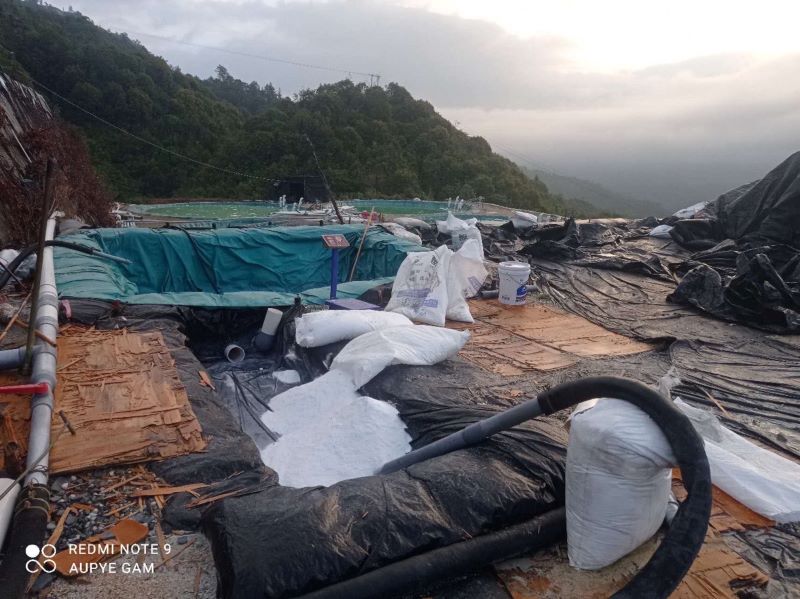
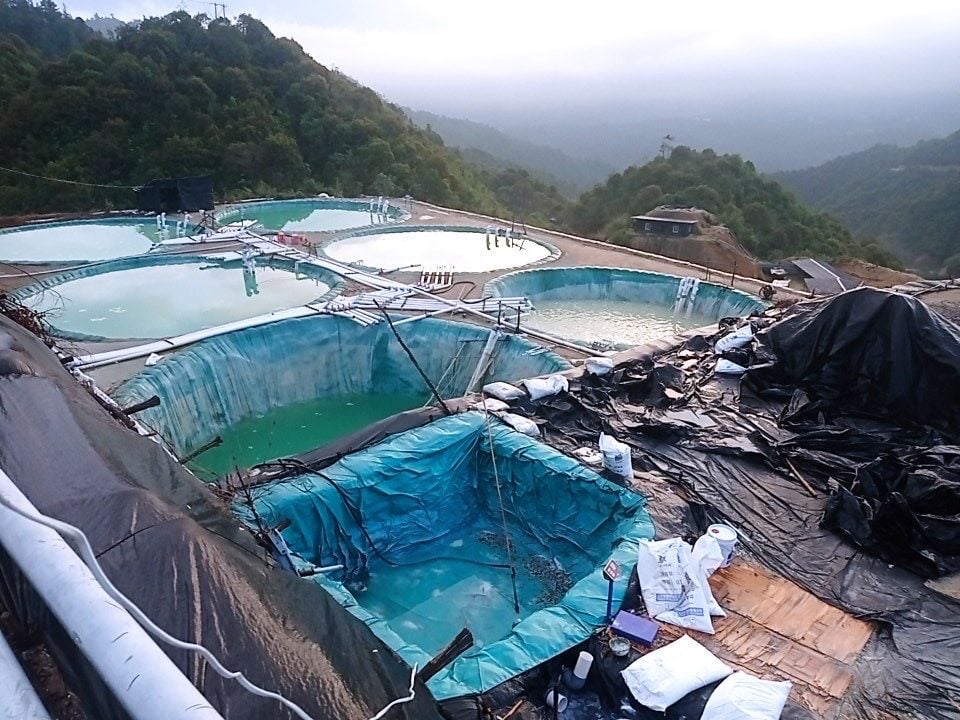
Work Sites in Chiphue Township. Photo: Mizzima
Deforestation and the Resistance War in Sagaing
“People can’t continue farming or other regular jobs because of the fires and military raids. So they cut and sell trees to brokers to make a living,” said Tun Tun, a former forest department officer from Monywa District who joined the Civil Disobedience Movement (CDM) after the coup.
Sagaing’s famous timber areas like Yinmarpin, Monywa, Kathar, Kalay, Banmauk, Wuntho, and Chaung-U experienced illegal logging even before 2020, but forests remained. After the coup, deforestation skyrocketed. Valuable timber such as teak, ironwood, and tamalan attracted demand from China.
The NLD’s government had policies to protect forests, but these were abandoned after the coup when forest officers joined the CDM. The military’s involvement in forest management led to rampant illegal logging.
The resistance groups also relied on logging for funding their fight, Sagaing locals said. “They cut a lot of trees. All groups are involved. The checkpoints are manned by PDFs and the military. Each checkpoint costs between 500,000 to 1 million kyats. Brokers from Monywa and Mandalay handle it,” a local resident told Mizzima.
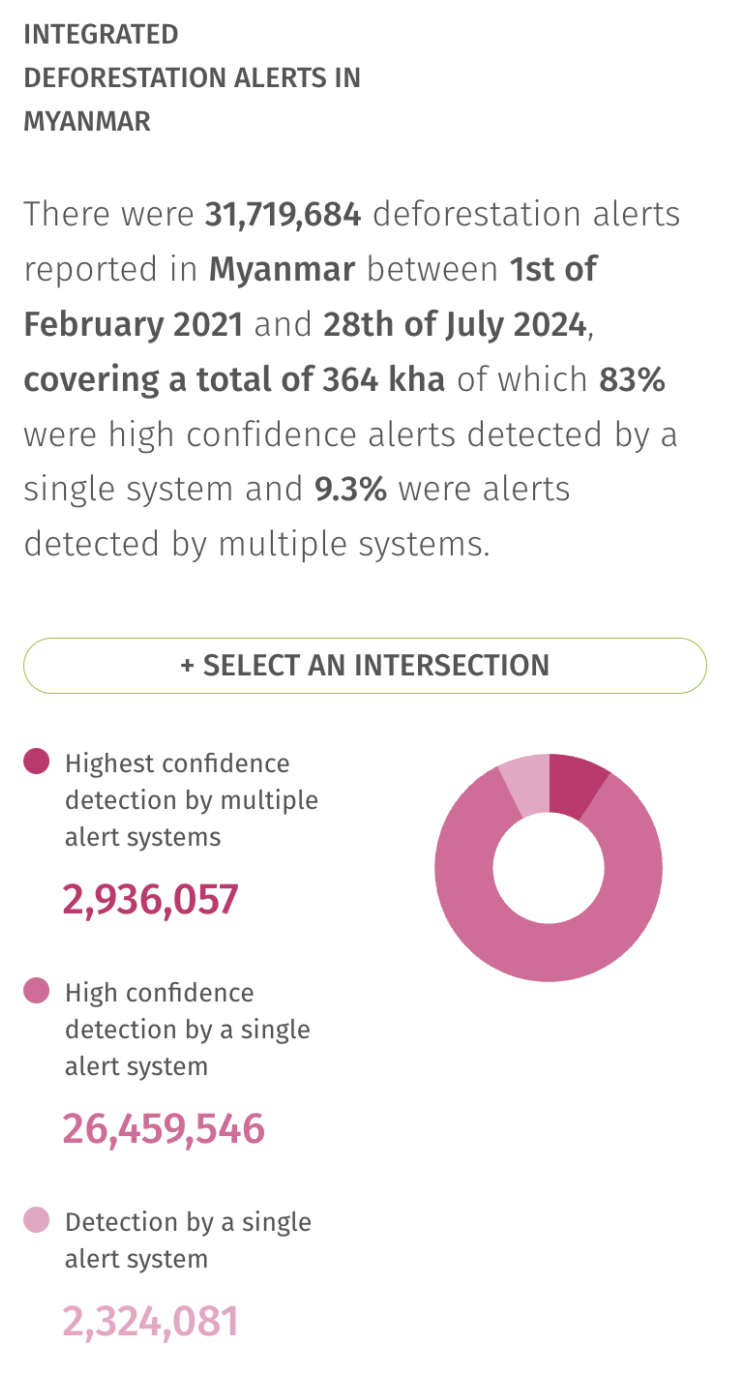
According to the Global Forest Watch (GFW), Myanmar had more than 31.7 million forest alerts from February 1, 2021, to March 27, 2024. Environmental researchers pointed out that this indicates the extent of logging.
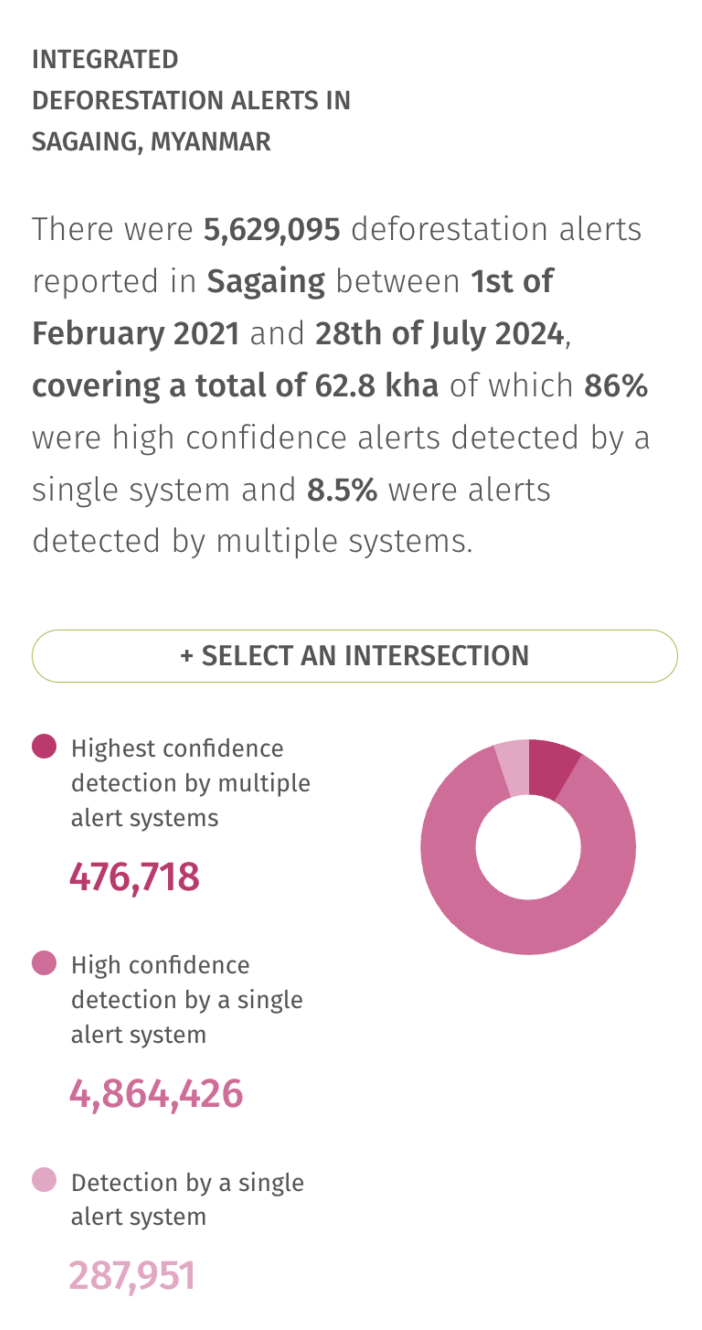
With over 220 of the 330 townships in Myanmar experiencing some form of armed conflict, deforestation in Sagaing is a serious issue. Sagaing’s 45 townships include 19 severely affected by military violence. Villages have been burned, and airstrikes have been conducted by the military, resulting in over 90,000 homes burned nationwide, with 60,000 in Sagaing alone, according to Data for Myanmar.
Locals and experts say it is challenging to prioritize environmental protection amid the struggle for survival. “It’s not easy to get weapons. We have a lot of struggles. Some timber merchants used to trade guns for timber. Not all of them, though. Timber is transported to China. It’s sad to see the forests disappear. We will have to recover them later (after the overthrowing of Myanmar military junta),” a local close to Sagaing’s public administration PDF told Mizzima.
These logging activities are not only happening in Sagaing but also in the ASEAN Heritage Park of Alaungdaw Kathapa National Park. This park, spanning over 540 square miles, is a safe haven for wildlife. Now, even these forests are disappearing.
“After the coup, logging trucks started taking timber daily. It’s not a small amount,” a local eyewitness told Mizzima. Chinese merchants favor tamalan wood due to its beautiful grain, making it highly sought after by furniture manufacturers, locals said.
“A few months after the coup, the frequency of trucks coming to cut and transport wood has increased significantly,” a local eyewitness told Mizzima. The Alaungdaw Kathapa Forest is rich with teak and ironwood, and the Mahamyaing Reserve, not far from Alaungdaw Kathapa, has a high output of tamalan, a type of wood highly prized by Chinese merchants due to its beautiful grain, making it very popular among furniture makers, according to locals.
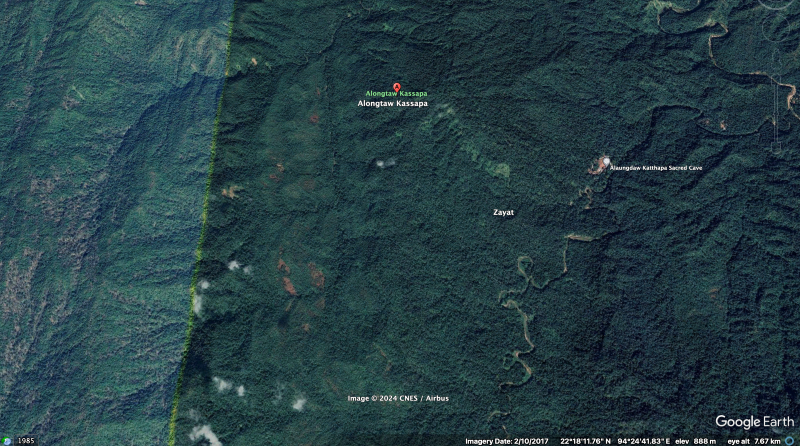
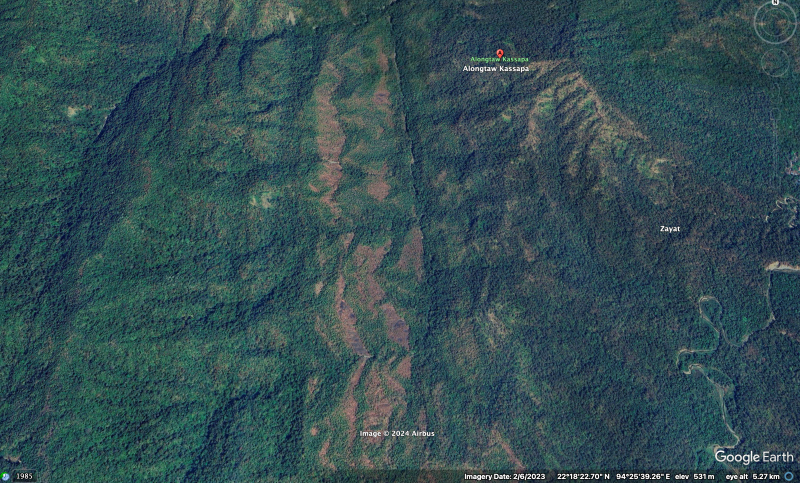
Before and After: Alongtaw Kassapa region in 2017 (left) and 2023 (right). Photos: Google Earth/Mizzima
Illegal logging poses a significant threat to the environment in Sagaing. However, Sagaing has long faced environmental challenges. The Letpadaung Copper Mine, which previously generated over two million USD in revenue per day, is one such challenge.
Since the coup, the mine has not been operating as visibly, but the military has erected fences and destroyed the homes of local residents near the project area. Copper from the mine continues to be transported with the help of Myanmar military forces, leading to frequent clashes between resistance forces and the military.
Similarly, the Taguang Nickel Plant in Tagaung Township, Sagaing, is another project of significant importance to China. This project is notorious for displacing local residents, violating human rights, and damaging the environment. At the end of July, the People’s Defense Forces (PDF) under the National Unity Government (NUG) seized control of the plant.
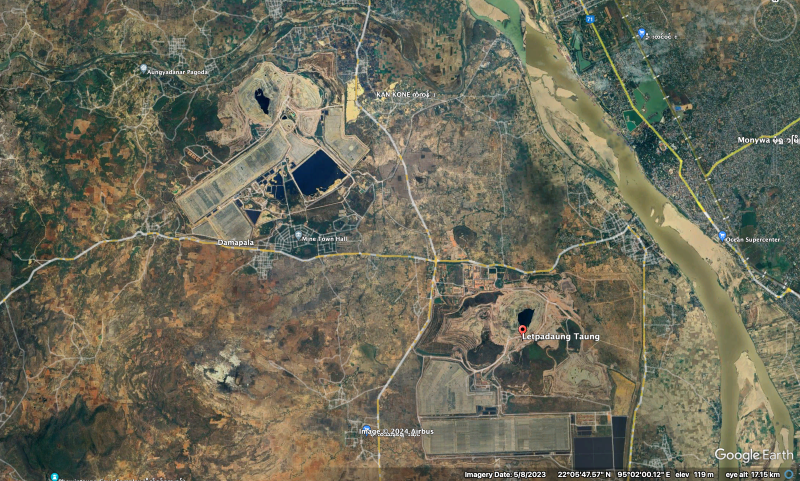
Aerial view of Letpadaung Copper Mine. Photo: Google Earth/Mizzima
However, due to pressure from the Chinese government, the resistance has assured that the project will be protected. This situation highlights that while Chinese projects may harm local communities and the environment, those involved in the conflict in Myanmar cannot easily resist China’s influence, both politically and economically.
Shan State’s Projects in Darkness
The escalating conflict and the instability following the military coup have silenced many local community-based organizations that once worked to raise awareness about the negative impacts of various projects and led protests against them. These organizations have had to flee their homes and now live under constant threat from armed groups, rendering them unable to speak out against ongoing projects, which are now proceeding unchecked.
In Shan State, after Operation 1027 launched in October last year, many strategically important Chinese projects in the region came under the control of Three Brotherhood Alliance (3BHA). These armed groups are reportedly close to Chinese influence, leading to situations where these projects could later be subject to negotiations with the armed groups. This scenario raises concerns about environmental impacts, especially if it results in conditions where the rights and voices of the local people are suppressed.
There is no rule of law to protect the people at this time. The public is not protected by the law, so businesses exploit them, and there are human rights violations, but the people can’t speak out. —an environmental activist based in Shan State, reflecting on the current situation.
In recent years, Chinese mining companies have operated in Shan State, but local residents are often kept in the dark about essential information. “With the country in ruins, those with weapons and power are doing whatever they can for their own benefit. For ordinary people, this means they can no longer cultivate their land or are increasingly exposed to environmental hazards. But right now, survival is the priority,” said a young displaced person from Shan State.
According to research by ISP-Myanmar, the combined value of projects planned and currently being implemented in Shan State by Chinese companies is over $23 billion, representing almost half of China’s total investment in Myanmar.
The military junta is currently facing both military and economic crises. The junta, which once profited from various trade routes, has lost control of many border trading posts connecting Myanmar with China, India, Bangladesh, and Thailand.
Since Operation 1027, they have lost control of five major trading posts, which account for nearly 40% of the total trade volume. Although the junta regained control of the Myawaddy post on the Thailand-Myanmar border with the help of the Karen Border Guard Force, trade flows have not returned to pre-conflict levels.
The economic situation in Myanmar has deteriorated significantly. The value of the kyat has plummeted from around 1,330 kyats per dollar in February 2021, at the time of the coup, to over 6,000 kyats per dollar today. The World Bank’s June report highlighted that due to ongoing conflict, labour shortages, and currency instability, conducting business in Myanmar has become extremely challenging, with poverty levels reaching their highest point in six years.
Given the country’s economic collapse, it raises the question of whether addressing environmental and resource destruction is still a priority or if more pressing issues have taken precedence.
However, the ongoing extraction and exploitation of resources make it increasingly difficult to mitigate environmental damage, as noted by an environmental expert. “There is practically nothing we can do now. Even if we try to revive the environment, it will take a long time. Right now, nothing is possible. The Chinese are buying up everything they can get their hands on,” the expert said.
Currently, most of the rare earth minerals from Kachin State are being directed to China, just as the majority of timber from Sagaing and Bago is also destined for China.
“Not everyone in the resistance is ignorant of environmental issues. Some are well aware. But with the pressing need for weapons and funding, they have no choice but to take this path. This makes it difficult to mitigate the damage,” the environmental expert explained.
The Chinese have also seized the opportunity to secure their influence in the resistance, with Chinese merchants capitalizing on the situation. The funds generated from selling timber to China are reportedly being used to purchase weapons. “Trucks are leaving Kachin every day, heading to China. Every group, regardless of who controls the area, is selling the timber to Chinese merchants. They handle transportation and clearing the routes,” a source close to the Sagaing resistance explained.
The path to effectively managing and conserving Myanmar’s natural environment and resources has always been fraught with challenges. However, the current situation represents an unprecedented difficulty. Amid political upheaval and the ongoing resistance, the continued exploitation of resources resembles a self-inflicted wound that exacerbates the country’s plight.
အသက် ၁၉ နှစ်အရွယ် ကချင်အမျိုးသား ဒိုင်ခေါင်ဟာ ဝိုင်းမော်မြို့နယ်ထဲက စစ်ဘေးရှောင်ဒုက္ခသည် စခန်းတခုမှာ နေခဲ့ရပါတယ်။ စခန်းမှာ နှစ်နှစ်ကျော်နေခဲ့ပြီးတဲ့နောက် ၂၀၂၄ ခုနှစ် ဇန်နဝါရီလဆန်းပိုင်းမှာတော့ ပန်ဝါဒေသမှာရှိတဲ့ မြေရှားသတ္တုထူးဖော်ရေးလုပ်ငန်းခွင်ထဲကို ရောက်ရှိလာခဲ့ပါတယ်။ ဒါကလည်း ဒုက္ခသည်စခန်းထဲက မိသားစုကို ထောက်ပံ့ပေးနိုင်ဖို့ပါ။
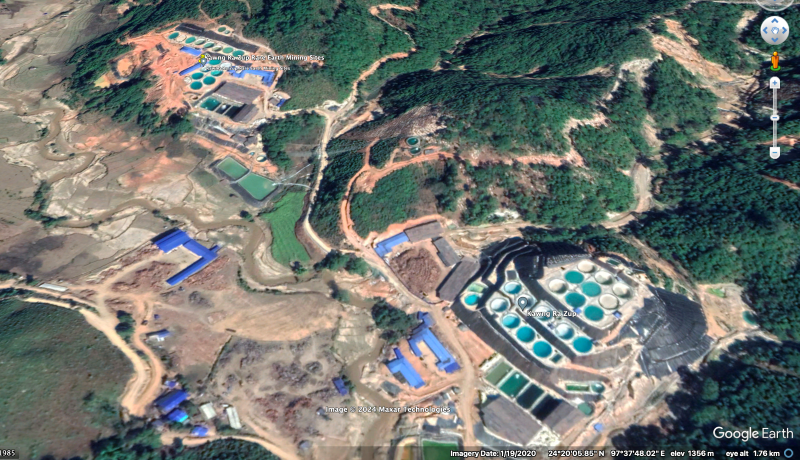
မိုးကုတ်မြို့နယ်တွင် မိုင်းခွဲသည့်လုပ်ကွက်တစ်ခုကို ဝေဟင်မှမြင်ကွင်း။ Photo: Mizzima
ပန်ဝါဆိုတာ ကချင်ပြည်နယ်မြောက်ပိုင်း၊ ချီဖွေမြို့နယ်ထဲကဖြစ်ပြီး နေပြည်တော်ရဲ့သစ္စာခံ ဇခုန်တိန့်ယိန်းဦးဆောင်တဲ့ ပြည်သူစစ်ရဲ့ ထိန်းချုပ်မှုအောက်မှာ ရှိနေတဲ့နေရာပါ။ နောက်ပြီး အဲ့ဒီဒေသဟာ မြန်မာရဲ့ မြေရှားထုတ်လုပ်မှုအမြင့်ဆုံးသောနေရာဒေသတွေထဲက တခုဖြစ်ပြီး အိမ်နီးချင်းအင်အားကြီး တရုတ်နိုင်ငံက အသည်းအသန်လိုအပ်နေတဲ့ မြေရှားအတွက်လည်း အရေးကြီးတဲ့နေရာဖြစ်ပါတယ်။
ဒီလို မြေရှားထုတ်လုပ်နေတာတွေဟာ ကချင်ဒေသခံပြည်သူတွေအဖို့ သဘာ၀ပတ်ဝန်းကျင် ထိခိုက်နစ်နာမှုတွေအပြင် ဘ၀နေထိုင်မှုကိုပါထိခိုက်စေတဲ့အတွက် ပြင်းပြင်းထန်ထန် ကန့်ကွက်နေခဲ့ကြပေမဲ့ စစ်အာဏာသိမ်းပြီးနောက်ပိုင်း ထုတ်လုပ်မှုတွေက ပိုမိုများပြားလာခဲ့ပါတယ်။
တရက်လုပ်ခ ယွမ် ၁၀၀ ဆိုတဲ့ ဒိုင်ခေါင်နေ့စားခက မိသားစုစားဝတ်နေရေးအတွက် တဒင်္ဂအဖြေသာဖြစ်ခဲ့ပါတယ်။ ဘာကြောင့်လဲဆိုတော့ ငါးလ ဝန်းကျင်သာ အလုပ်လုပ်ခဲ့ရလို့ပါ။ မေ ၂၉ ရက်မှာတော့ ဒိုင်ခေါင် အလုပ်လုပ်နေတဲ့ မြေရှားလုပ်ကွက် ပြိုကျပြီး သူလည်းတွင်းထဲမှာ သေဆုံးသွားခဲ့ပါတယ်။ အဲ့ဒီနေ့က ပျောက်ဆုံးသွားသူတွေထဲမှာ တရုတ်နိုင်ငံသားအလုပ်သမားတချို့လည်း ပါဝင်ခဲ့ပါတယ်။ အလောင်း ငါးလောင်းပဲ ပြန်ရပြီး လူ ၁၂ ဦး သေဆုံးတယ်လို့သာ တာဝန်ရှိသူ တရုတ်အကြီးအကဲတွေက စာရင်းသွင်းခဲ့ပါတယ်။
“သူ သေတယ်လို့ သတင်းလှမ်းပေးတယ်။ သူတို့ဘက်ကပြောတာတော့ မိုးတွေအရမ်းရွာတယ်တဲ့ အဲ့နေ့က။ သူက အရမ်းလိမ္မာတဲ့ ကလေးပါ။ မိဘကိုလည်း ကူတယ်” လို့ ဒိုင်ခေါင်ရဲ့ အစ်မဖြစ်သူ ဒိုင်နော်က မဇ္ဈိမ ကို ပြောပါတယ်။ ဒိုင်ခေါင်တို့ မိသားစုမှာ ဖခင်၊ မိခင်၊ အစ်မနဲ့ ညီငယ်လေးတဦး ကျန်ရစ်ခဲ့ပါတယ်။ သူတို့ အားလုံးလည်း အခုတော့ စစ်ရှောင်ဒုက္ခသည်စခန်းထဲမှာ နေရဆဲဖြစ်လို့ ဒိုင်ခေါင်ရဲ့ အသုဘကို မလုပ်ပေးနိုင်ခဲ့ဘူးလို့လည်း ဆိုပါတယ်။
အာဏာသိမ်းခြင်းနောက် သယံဇာတနှင့် ခုခံစစ်
စစ်အာဏာသိမ်းပြီးတဲ့နောက်မှာ မြန်မာနိုင်ငံရဲ့ သဘာ၀သယံဇာတ စီမံခန့်ခွဲမှုဟာ သိသိသာသာ ပိုမိုပျက်စီးခဲ့ပါတယ်။ စစ်ကောင်စီရဲ့ အုပ်ချုပ်ရေးယန္တရားဟာ ယိုင်နဲ့နေခဲ့ပြီး အာဏာမသိမ်းခင်အချိန်ကာလများက အစိုးရအနေနဲ့ ကိုင်တွယ်ဖြေရှင်းဖို့ လိုအပ်ဆဲ၊ လုပ်ဆောင်နေဆဲဖြစ်တဲ့ သဘာ၀ပတ်ဝန်းကျင်ဆိုင်ရာ ထိန်းသိမ်းရေး၊ စီမံခန့်ခွဲရေးကိစ္စတွေဟာလည်း ပျက်စီးသွားခဲ့ပါတယ်။ အာဏာသိမ်းတာကိုကန့်ကွက်တဲ့ နိုင်ငံတဝှမ်း ငြိမ်းချမ်းစွာဆန္ဒပြမှုကို စစ်ကောင်စီက လက်နက်နဲ့ဖြိုခွင်းမှုတွေအပြီး လူငယ်အများအပြားဟာ လက်နက်ကိုင်တော်လှန်ဖို့ ရွေးချယ်ခဲ့ကြပါတယ်။ နိုင်ငံအနှံ့အပြားမှာ ပေါ်ထွက်လာခဲ့တဲ့ လက်နက်ကိုင် အဖွဲ့ကြီး၊ အဖွဲ့ငယ် အရေအတွက်ဟာ ၉၀၀ နီးပါး ရှိလာခဲ့ပြီလို့ နိုင်ငံရေးဆိုင်ရာ သုသေသနအဖွဲ့အစည်းတွေရဲ့ မှတ်တမ်းတွေအရ သိရပါတယ်။
“စစ်တပ်ကို တိုက်တော့ ငွေလိုတယ်လေ။ ပြည်သူတွေ လှူကြတာလည်း မှီခိုရတာပေါ့။ ကိုယ်အုပ်ချုပ်ထားတဲ့ နေရာတွေကနေ ရပေါက်ရလမ်းတွေလည်း ရှာကြရတာပေါ့။ အဓိက အရေးက စစ်အာဏာရှင်စနစ်ပျက်သုဉ်းရေးဖြစ်နေတယ်” လို့ လက်ရှိစစ်အာဏာရှင်တော်လှန်ရေးရဲ့ ခုခံစစ်ထဲမှာ ပါဝင်လုပ်ဆောင်နေသူတဦးက မဇ္ဈိမကို ပြောပါတယ်။ အဲ့ဒီအဖွဲ့တွေကို လက်နက်တပ်ဆင်ပေးတာတွေ၊ သင်တန်းပေးတာတွေကို တာဝန်ယူကြတဲ့ တိုင်းရင်းသားတော်လှန်ရေးအဖွဲ့ကြီးတွေရဲ့ ငွေကြေးလိုအပ်မှုတွေနဲ့ သယံဇာတထုတ်လုပ်မှုတွေဟာ ချိတ်ဆက်နေတယ်လို့လည်း သူက ဆိုပါတယ်။
အရင်က ဒေသခံတွေရဲ့ ကန့်ကွက်မှုတွေကြားမှာ သိုသိုသိပ်သိပ်လုပ်ခဲ့ကြတဲ့ မြေရှားသတ္တုတူးဖော်မှုဟာ အခုမှာတော့ ပြောင်ကိုပဲလုပ်နေခဲ့ကြပါတော့တယ်။ အရင်က မြန်မာစစ်တပ်ရဲ့လက်အောက်ခံ ကချင်ပြည်သူ့စစ်တွေကသာ မြေရှားထုတ်လုပ်မှုကို လုပ်ခဲ့ကြပေမဲ့ အခုအခါမှာတော့ ကချင်လွတ်မြောက်ရေးတပ်မတော် (KIA/KIO) အနေနဲ့ပါ ထုတ်လုပ်မှုတွေမှာပါဝင်နေခဲ့တာဖြစ်လို့ ကချင်ဒေသခံတွေက ကန့်ကွက်မှုတွေ၊ ခေါင်းဆောင်တွေအပေါ်ဖိအားပေးမှုတွေလည်း ရှိခဲ့ပါတယ်။ ဒါပေမဲ့ ဒီလိုသယံဇာတရောင်းချ ခြင်းဟာ စစ်အာဏာရှင်စနစ်ဖြုတ်ချရေးအတွက် လိုအပ်တဲ့အရာဖြစ်တယ်လို့ ယူဆချက်ကြီးကြီးမားမားရှိလာတဲ့ အခါ ကချင်ဒေသခံသဘာ၀ပတ်ဝန်းကျင်တက်ကြွလှုပ်ရှားသူတွေလည်း မတတ်သာလို့ လက်ပိုက်ကြည့်ရတဲ့ အနေအထားကို ရောက်ရှိလာခဲ့ပါတယ်။
တရုတ်နိုင်ငံရဲ့ အကောက်အခွန်အထွေထွေအုပ်ချုပ်မှုအာဏာပိုင်အဖွဲ့ (General Administration of Customs of China – GACC) ရဲ့ ပြီးခဲ့တဲ့ လေးနှစ်တာ မှတ်တမ်းတွေအရ မြန်မာဟာ တရုတ်ဆီ မြေရှားတင်သွင်းတဲ့ ထိပ်တန်းနိုင်ငံ ၂၀ စာရင်းမှာ ပါဝင်ခဲ့ပါတယ်။ တရုတ်အရေးကို အထူးပြုလေ့လာနေတဲ့ ISP – Myanmar ရဲ့ အချက်အလက်တွေအရတော့ မြန်မာဟာ ၂၀၁၇ ခုနှစ်ကနေ အခုအချိန်ထိ စုစုပေါင်း အမေရိကန်ဒေါ်လာ ၂.၆ ဘီလီယံတန်ဖိုးရှိတဲ့ မြေရှားသတ္တုတွေကို တရုတ်နိုင်ငံထံ ရောင်းချခဲ့ပြီး အဲဒီအထဲက နှစ်ဘီလီယံဝန်းကျင်တန်ဖိုးဟာ စစ်အာဏာသိမ်းပြီးမှ ရောင်းချခဲ့တာလို့ သိရပါတယ်။ အာဏာသိမ်းမှုမတိုင်ခင်က ကချင်ပြည်နယ်မှာ မြေရှားလုပ်ကွက်ပေါင်း ၁၁၄ လုပ်ကွက် ရှိခဲ့တာကနေ လက်ရှိအချိန်မှာတော့ လုပ်ကွက်ပေါင်း ၃၄၀ ကျော်အထိ ရှိလာပါတယ်။
“စစ်အာဏာရှင်ကို အမြစ်ပြတ်တိုက်ဖို့ဆိုတဲ့ အရေးကိစ္စမှာ လက်နက်လိုတယ်။ ပိုက်ဆံလိုတယ်ပေါ့။ ကျွန်တော်တို့ အမြင်မှာတော့ အဲ့ဒီအခြေအနေက တပိုင်း။ သယံဇာတတွေ ပျက်ဆီးသွားပြီး နောင်ဆို မြန်မာနိုင်ငံမှာ သဘာ၀ပတ်ဝန်းကျင်ဆိုင်ရာ ဆိုးကျိုးတွေ ပိုခံစားလာရမယ်ဆိုတာ သတိပြုစေချင်တာပါ။ အခုလည်း ကချင်နဲ့ တခြားနေရာတွေမှာပါ ဖြစ်နေပါပြီ” လို့ အမည်မဖော်လိုသူ သဘာ၀ပတ်ဝန်းကျင်ပညာရှင်တဦးက မဇ္ဈိမကိုပြောပါတယ်။
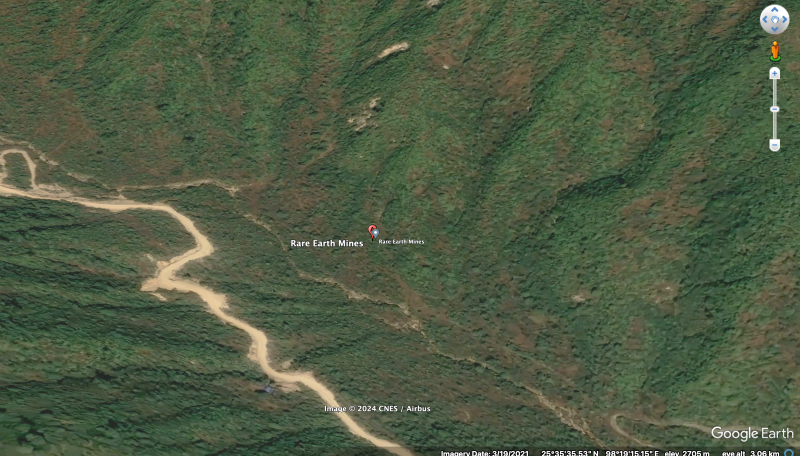
Left: ချီဖွေမြို့နယ်အတွင်းရှိ မြေရှားသတ္တု လုပ်ကွက်တခုဖြစ်လာမည့် တောင်ကို ၂၀၂၁ ခုနှစ် မတ်လတွင် မြင်ရပုံ.
Right: ချီဖွေမြို့နယ်အတွင်းရှိ မြေရှားသတ္တု လုပ်ကွက်တခုအဖြစ်အသွင်ပြောင်းသွားသည့် တောင်ကို ၂၀၂၂ ခုနှစ် ဖေဖော်ဝါရီ လတွင် မြင်ရပုံ. Photos: Mizzima
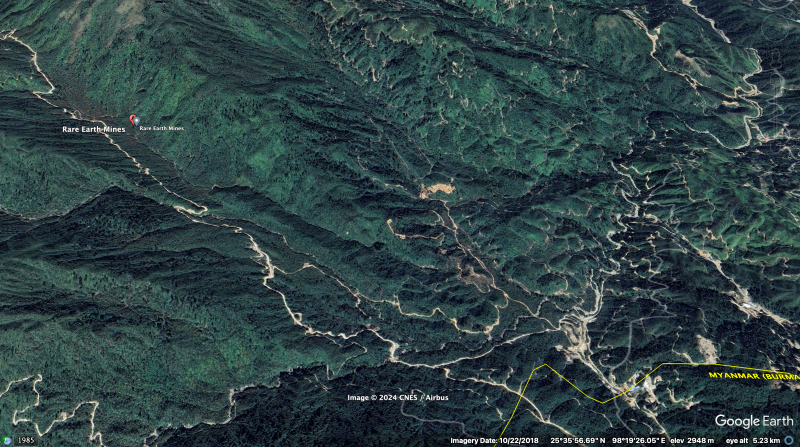
Left: ချီဖွေမြို့နယ်အတွင်းရှိ မြေရှားသတ္တု လုပ်ကွက်များအစုအဝေးဖြစ်လာမည့် တောင်ကြောကို ၂၀၁၈ ခုနှစ် အောက်တိုဘာလတွင်တွေ့ရစဥ်.
Right: ချီဖွေမြို့နယ်အတွင်းရှိ မြေရှားသတ္တု လုပ်ကွက်များအစုအဝေးအဖြစ်အသွင်ပြောင်းသွားသည့် တောင် ကြောကို ၂၀၂၂ ခုနှစ် ဒီဇင်ဘာလ တွင်တွေ့ရစဥ်. Photos: Mizzima
မြန်မာနိုင်ငံမှ တရုတ်နိုင်ငံသို့ တစ်နှစ်ထက်တစ်နှစ်တင်ပို့သည့် ရှားပါးမြေတွင်းထွက်သတ္တု တန်ချိန်များစွာရှိသည်။
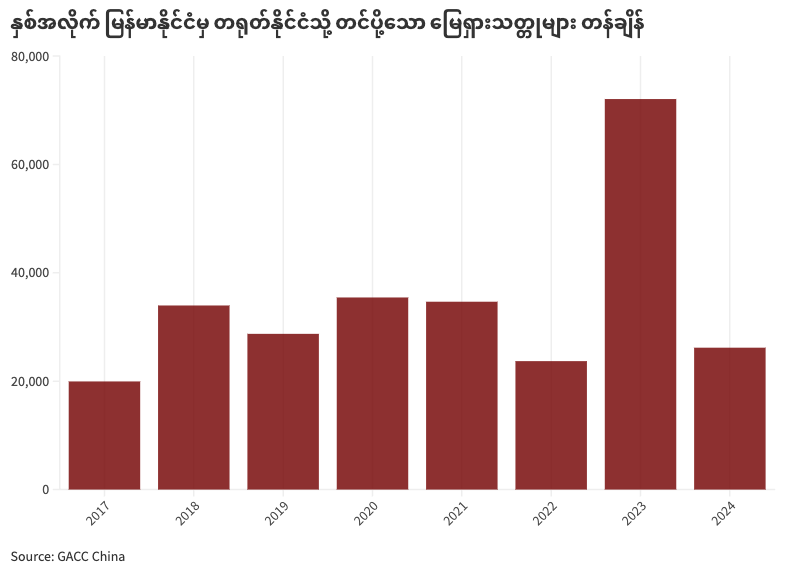
တရုတ်အတွက် ဘာကြောင့်မြေရှားက အရေးပါသလဲ
ကချင်ပြည်နယ်မှာ မြေရှားသတ္တုကို ချီဖွေ၊ မိုးမောက်၊ မန်စီစတဲ့ မြို့နယ်တွေမှာ အဓိကအားဖြင့် တူးဖော်ကြပါတယ်။ ဂြိုလ်တုကနေ ရိုက်ယူတဲ့ ကောင်းကင်ဓာတ်ပုံတွေအရ ချီဖွေမြို့နယ်ထဲမှာ သဘော၀ပတ်ဝန်းကျင် ရုပ်ပျက်ဆင်းပျက် ပျက်စီးနေတဲ့ မြေရှားလုပ်ကွက်တွေကို တွေ့မြင်ရပါတယ်။ စမတ်ဖုန်း၊ မော်တော်ကားကနေ စစ်ဘက်ဆိုင်ရာကုန်ထုတ်လုပ်မှုတွေအထိ အသုံးဝင်နေတဲ့ မြေရှားဟာ တရုတ်အတွက်တော့ ရသလောက်ဝယ်ယူနေမယ့် သတ္တုရတနာဖြစ်နေပါတယ်။ တဘက်မှာလည်း တရုတ်ဟာ နိုင်ငံတကာကို မြေရှားတင်ပို့ရောင်းချတဲ့နေရာမှာလည်း ကမ္ဘာ့အင်အားအကြီးဆုံးဖြစ်နေတယ်။ တရုတ်ဟာ ကမ္ဘာကို နိုင်ငံရေးနဲ့ စီးပွားရေးဆိုင်ရာ ပါဝါ၊ ဩဇာတည်ဆောက်တဲ့ ကစားကွက်မှာ မြေရှားတင်ပို့နိုင်မှုကလည်း အကြောင်းတစ်ရပ်ဖြစ်တယ်။ ပြီးခဲ့တဲ့ လေးနှစ်အတွင်း တရုတ်က တခြားနိုင်ငံတွေကဆီက ဝယ်ယူခဲ့တဲ့ မြေရှားသတ္တုအားလုံးရဲ့ ၈၀ ရာခုန်နှုန်းဟာ မြန်မာက ဖြစ်နေခဲ့တာပါ။
သူက မြန်မာနိုင်ငံလို ဖွံ့ဖြိုးဖို့ အခက်အခဲတွေ ရင်ဆိုင်နေရတဲ့ နိုင်ငံငယ်တွေဆီကနေ လူမှုဘ၀တွေကို ပျက်စီးစေတဲ့ မြေရှားကို ဂုတ်သွေးစုပ် ဝယ်တယ်။ ပြီးတော့ အမေရိကန်နဲ့ အနောက်နိုင်ငံတွေကိုကျတော့ သံခင်းတမံခင်းအရရော၊ စီးပွားရေးအရရော အသာစီးယူတာတွေကို လုပ်တယ်” လို့ တရုတ်မြန်မာဆက်ဆံရေးဆိုင်ရာ လေ့လာသုံးသပ်သူတဦးက မဇ္ဈိမကိုပြောပါတယ်။
မြေရှားသတ္တု၊ ဒေသခံ၊ တာဝန်ရှိသူတို့ကြား ပဋိပက္ခ
လက်ရှိ စစ်ကောင်စီက ထောင်ချချုပ်နှောင်တာခံနေရတဲ့ နိုင်ငံတော်အတိုင်ပင်ခံပုဂ္ဂိုလ် ဒေါ်အောင်ဆန်းစုကြည်အစိုးရ ဦးဆောင်ခဲ့တဲ့ ကာလတွေထဲမှာပဲ ပညာရှင်တွေ၊ တက်ကြွလှုပ်ရှားသူတွေဟာ မြန်မာနိုင်ငံရဲ့ သဘာ၀သယံဇာတနဲ့ သဘာ၀ပတ်ဝန်း ကျင်ဆိုင်ရာအရေးကိစ္စတွေအတွက် ဝေဖန်ထောက်ပြမှုတွေ၊ တောင်းဆိုမှုတွေ ရှိခဲ့ပါတယ်။ အဲ့ဒီအထဲမှာ မြေရှားကိစ္စလည်း ပါဝင်ခဲ့ပါတယ်။ ဒါပေမဲ့ စစ်ဘက်-အရပ်ဘက်အာဏာခွဲဝေအုပ်ချုပ်မှုအောက်မှာ ဒေါ်အောင်ဆန်းစုကြည်ရဲ့ အမျိုးသားဒီမိုကရေစီအဖွဲ့ချုပ် (NLD) အစိုးရဟာ မြေရှားနဲ့ ပတ်သက်ရင် မကိုင်တွယ်နိုင်ခဲ့ပါဘူး။ ပြည်သူ့စစ်တွေ ထိန်းချုပ်တဲ့နေရာဖြစ်ပြီး စစ်တပ်နဲ့အကျိုးတူလုပ်ကိုင်နေတာတွေကြောင့် အရပ်သားအစိုးရရဲ့ ဩဇာသက်ရောက်မှု မရှိသလောက်ကို အားနည်းခဲ့ပါတယ်။ အခုတော့ ပိုမိုဆိုးရွားတဲ့အခြေအနေဆီ ရောက်လို့ လာခဲ့ပါတယ်။ အရင်က ကချင်ဒေသခံတွေရဲ့ စကားကို နားထောင်ပြီး မြေရှားတူးဖော်မှုကို မလုပ်ခဲ့တဲ့ KIA/KIO အနေနဲ့လည်း အခုအချိန်မှာ သူရဲ့ ထိန်းချုပ်နယ်မြေတွေမှာ မြေရှားတူးဖော်မှုတွေကို ပေါ်တင်ပဲ လုပ်လာခဲ့ပါတယ်။
“ တောင်တွေ အားလုံးကို ဖောက်ပြီးလုပ်ကြတဲ့အခါကျတော့ သဘာ၀ပတ်ဝန်းကျင် ပျက်စီးတာပေါ့။ အရင်ကစီးတဲ့ ချောင်းတွေက ရေတွေနောက်သွားတယ်။ မစီးဆင်းတော့တာတွေလည်း ဖြစ်တယ်” လို့ ပန်ဝါဒေသခံ ဦးတိန့်ဘောမ့်က မဇ္ဈိမကိုပြောပါတယ်။ “မြေတွေကတော့ တော်တော်တော့ ပျက်စီးသွားပြီပေါ့။ ပန်ဝါမြို့ မြေပုံကို အပေါ်က ကြည့်ရင် ယားနာဖြစ်နေတဲ့ တင်ပါးလို ဖြစ်နေပြီ” လို့ သူက ဆက်ပြောပါတယ်။
အခြေအနေဆိုးထဲမှာ ဒိုင်ခေါင်လို အသက်ပေးခဲ့ရတဲ့ နောက်ထပ်ကချင်လူငယ်တယောက်ကတော့ ၁၆ နှစ်အရွယ် ရှန်တူးပါ။ သူက သတ္တမတန်းကျောင်းသားဖြစ်ပြီး ၁၆ နှစ် အရွယ်သာရှိသေးပေမဲ့ မြေရှားလုပ်ကွက်မှာ အလုပ်သွားလုပ်ခဲ့တာ လပိုင်းအကြာမှာပဲ ဖျားနာပြီး သေဆုံးသွားပါတယ်။
“အကုန်လုံးကတော့ မြေရှားတူးတဲ့နားက ရေတွေ သောက်မိလို့ ဆုံးရတာလို့ ပြောကြတယ်။ တခြားသူတွေလည်း အဲ့လိုဖြစ်တာတွေ ရှိတယ်တဲ့လေ။ သားလေးတယောက်ဆုံးတဲ့ ခံစားချက်က ပြောမပြတတ်အောင်ပဲ” လို့ မိခင်ဖြစ်သူက မဇ္ဈိမကို ပြောပါတယ်။
မြေရှားထုတ်လုပ်မှု လုပ်ကွက်တွေ များလာတဲ့နောက် ကြုံတွေ့ရတဲ့အခြေအနေတွေနဲ့ ပတ်သက်လို့တော့ ချီဖွေမြို့နယ်၊ ဖရဲဒေသံခံတဦးကတော့ သူတို့အနေနဲ့ ကြက်၊ ဝက်၊ ကျွဲ၊ နွားစတဲ့ အိမ်မွေးတိရစ္တာန်တွေကို အရင်ကလို လွှတ်ကျောင်းလို့ မရတော့ဘူးလို့ ဆိုပါတယ်။ လွှတ်ကျောင်းလိုက်ရင် မြေရှားထုတ်လုပ်မှုဘက်ကလာတဲ့ ဓာတုဓာတ်တွေရောနေတဲ့ရေတွေ သောက်မိပြီး သေဆုံးကုန်တယ်လို့လည်း ဆိုပါတယ်။ “စိုက်ပျိုးရေးရော၊ မွေးမြူရေးရော မရတော့ဘူး။ နှစ်ရှည်ပင်တွေလည်း စိုက်လို့ မရတော့ဘူး။ ဒီမှာတော့ အသက်ရှင်ဖို့ တော်တော်ခက်နေပြီ” လို့ သူက ဆိုပါတယ်။
ကချင်ပြည်နယ်သဘာ၀ပတ်ဝန်းကျင်အရေးလှုပ်ရှားတဲ့ Tank အဖွဲ့ခေါင်းဆောင် ဦးခေါင်ဇောင်းကလည်း မြေရှားသတ္တု ပိုတိုးထုတ်လာတာဟာ ပြဿနာတွေ ပိုကြီးလာတယ်လို့ ပြောပါတယ်။
ဟိုအရင်ကတော့ (တူးတဲ့အခါမှာ) သူတို့ သုံးတဲ့ ဓာတုပစ္စည်းတွေကြောင့် ပြဿနာဖြစ်တာ များတာ။ အခုက သဘာ၀ပတ်ဝန်းကျင်ပြဿနာတွေလည်း များလာတယ်။ ပြည်သူတွေရဲ့ ခြံတွေထဲမှာ ဝင်တူးတာလည်း များလာတယ်။ အဲဒါကြောင့် ဆန္ဒပြတာတွေ များလာတာ။ အခြေအနေက ပိုဆိုးလာလို့ပေါ့” လို့ သူက ဆိုပါတယ်။
မြေရှားသတ္တုတူးဖော်မှုကို အဓိကအားဖြင့် လုပ်ကိုင်နေတဲ့ ချီဖွေ၊ မိုးမောက်၊ မန်စီ မြို့နယ် သုံးခုမှာ နေထိုင်သူ ဒေသခံပြည်သူပေါင်း ၁၅၀,၀၀၀ ဝန်းကျင်ရှိနေတာဖြစ်ပြီး သူတို့ရဲ့ ဘ၀နေထိုင်မှုအပေါ် သက်ရောက်မှုကြီးတယ်လို့ သဘာ၀ပတ်ဝန်းကျင်လေ့လာသူတွေက ဆိုပါတယ်။
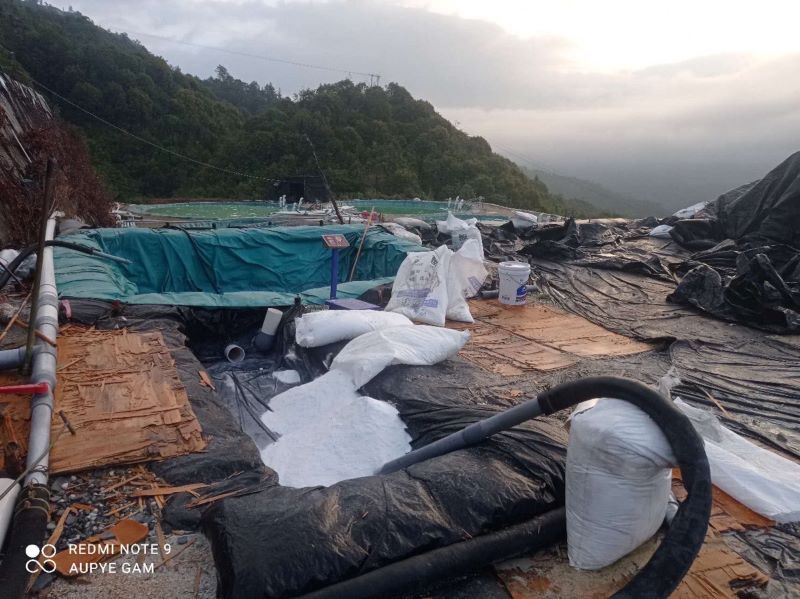
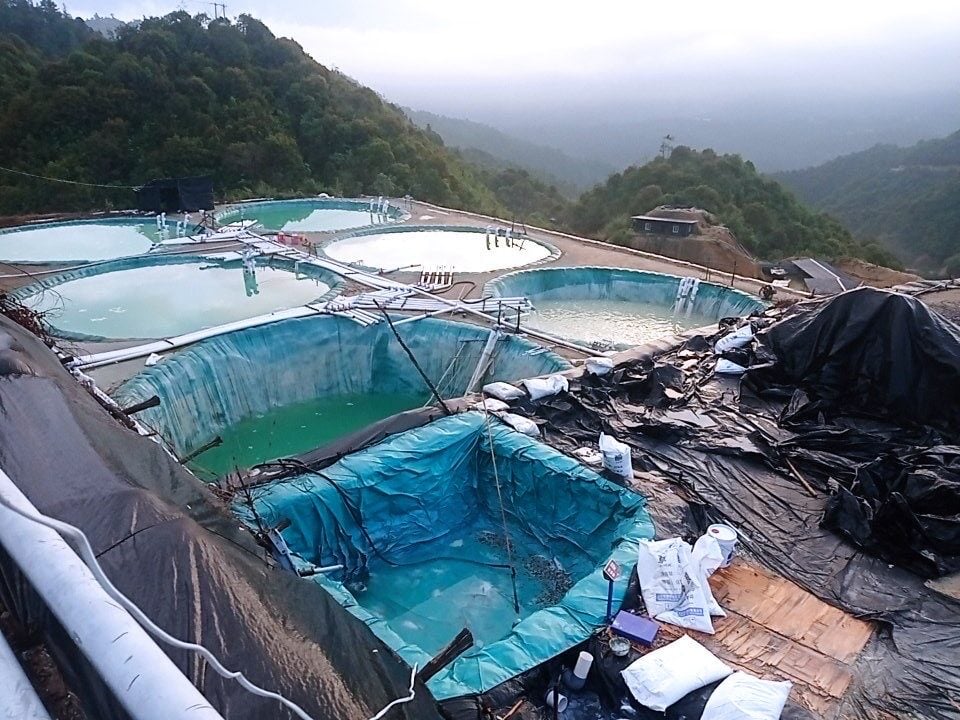
Left: ချီဖွေ မြို့နယ်ရှိ မြေရှားလုပ်ငန်းခွင်တခုအားတွေ့ရစဥ် (၁)
Right: ချီဖွေ မြို့နယ်ရှိ မြေရှားလုပ်ငန်းခွင်တခုအားတွေ့ရစဥ် (၂). Photos: Mizzima
စစ်ကိုင်း၊ ခုခံစစ်နဲ့ သစ်တောပြုန်းတီးမှု ပြဿနာ
အိမ်တွေ မီးလောင်လိုက်၊ စစ်တပ်က ဝင်စီးလို့ ပြေးရလိုက်နဲ့ လူတွေလည်း ပုံမှန်လုပ်နေတဲ့ စိုက်ပျိုးရေးနဲ့ တခြားအလုပ်တွေ လုပ်ဖို့ ခက်ခဲလာတယ်ဗျ။ အဲတော့ သူတို့တွေက နီးစပ်ရာတွေက သစ်တွေကို ခုတ်၊ ဝယ်လက်ရှိတဲ့ ပွဲစားတွေဆီ ရောင်းပြီး စားဝတ်နေရေးဖြေရှင်းရတာတွေ ရှိလာတယ်” လို့ စစ်တပ်အာဏာသိမ်းပြီးနောက် သစ်တောဌာနကနေ CDM လုပ်ခဲ့တဲ့ အရာရှိဟောင်းတဦးဖြစ်တဲ့ ကိုထွန်းထွန်း (အမည်လွှဲ) က ပြောပါတယ်။
စစ်ကိုင်းရဲ့ နာမည်ကြီး သစ်ထွက်ရာနေရာတွေဖြစ်တဲ့ ယင်းမာပင်၊ မော်လိုက်၊ ကသာ၊ ကလေး၊ ဗန်းမောက်၊ ဝန်းသို၊ ချောင်းဦးစတဲ့နေရာတွေဟာ ၂၀၂၀ ပြည့်နှစ်အထိ သစ်ခိုးထုတ်မှုတွေ ရှိနေခဲ့တာဆိုပေမဲ့ အာဏာသိမ်းပြီးနောက်မှာတော့ သစ်တောပြုန်းတီးမှုဟာ အဆမတန်မြင့်တက်လာခဲ့ပါတယ်။ ကျွန်းသစ်နဲ့ သစ်မာပင်တွေနဲ့ တမလန်းသစ်တွေဟာ အဆိုပါဒေသတွေရဲ့ နာမည်ကျော်ထွက်ကုန်တွေဖြစ်ပြီး တရုတ်နိုင်ငံရဲ့ သစ်လိုအပ်ချက်ကို ဆွဲဆောင်နိုင်ခဲ့တဲ့ သစ်တွေလည်း ဖြစ်ပါတယ်။
NLD အစိုးရလက်ထက်မှာ သစ်တောတွေ ထိန်းသိမ်းဖို့ ကြိုးစားခဲ့တဲ့ မူဝါဒတွေဟာ အာဏာသိမ်းလို့ သစ်တောအရာရှိတွေ အာဏာသိမ်းစစ်အုပ်စုနဲ့မပူးပေါင်းအလုပ်မဆင်းတဲ့ (CDM )လုပ်ခဲ့အခါ ရပ်တန့်ခဲ့ပါတယ်။ နောက်ပြီး စစ်တပ်ဘက်က သစ်တောရေးရာစီမံခန့်ခွဲရေးထဲ ထဲထဲဝင်ဝင်ရောက်ခဲ့တဲ့အခါ သစ်ထုတ်လုပ်မှုဟာ စာရင်းပျောက် အဆမတန်ဖြစ်လာခဲ့ပါတော့တယ်။ ပြည်သူ့ကာကွယ်ရေးတပ်တွေဘက်ကလည်း ခုခံစစ်အတွက် လိုအပ်တဲ့လက်နက်တွေနဲ့ ရိက္ခာတွေ ဝယ်နိုင်ဖို့ ကြိုးစားရှာဖွေကြရာမှာ ဒီသစ်ထုတ်လုပ်မှုတွေနဲ့ ပတ်သက်လာရတယ်လို့ စစ်ကိုင်းဒေသခံတွေက ဆိုပါတယ်။
“သစ်က တော်တော်ထုတ်တာ။ အဖွဲ့တွေတော့ အကုန်ပါတာပဲ။ ဂိတ်တွေက PDF (ပြည်သူ့ကာကွယ်ရေးတပ်) ဂိတ်တွေ၊ စစ်တပ်ဂိတ်တွေပေါ့။ တဂိတ်ဖြတ်တိုင်း ငါးသိန်းကနေ ဆယ်သိန်းအထိ ပေးရတယ်။ မုံရွာနဲ့ မန္တလေးက ပွဲစားတွေပဲ လုပ်တာ” လို့ စစ်ကိုင်းဒေသခံတဦးက မဇ္ဈိမကို ပြောပြပါတယ်။
ကမ္ဘာ့သစ်တောလေ့လာစောင့်ကြည့်ရေးအဖွဲ့ (GFW) ရဲ့ အဆိုအရ အာဏာသိမ်းတဲ့နေ့ဖြစ်တဲ့ ၂၀၂၁ ခုနှစ်၊ ဖေဖော်ဝါရီ ၁ ရက်ကနေ ၂၀၂၄ ခုနှစ်၊ ဇူလိုင် ၂၈ ရက်အထိ မြန်မာနိုင်ငံအတွက် သစ်တောပြုန်းတီးမှုဆိုင်ရာ သတိပေးသည့်အကြိမ်ရေ သိန်း ၃၀၀ ကျော် ရှိခဲ့တယ်လို့ သိရပါတယ်။ ဒီအခြေအနေကို ကြည့်ခြင်းအားဖြင့် သစ်ထုတ်လုပ်မှုအနေအထားကို မှန်းဆနိုင်မယ်လို့လည်း သဘာ၀ပတ်ဝန်းကျင်လေ့လာသူတွေက ထောက်ပြပါတယ်။
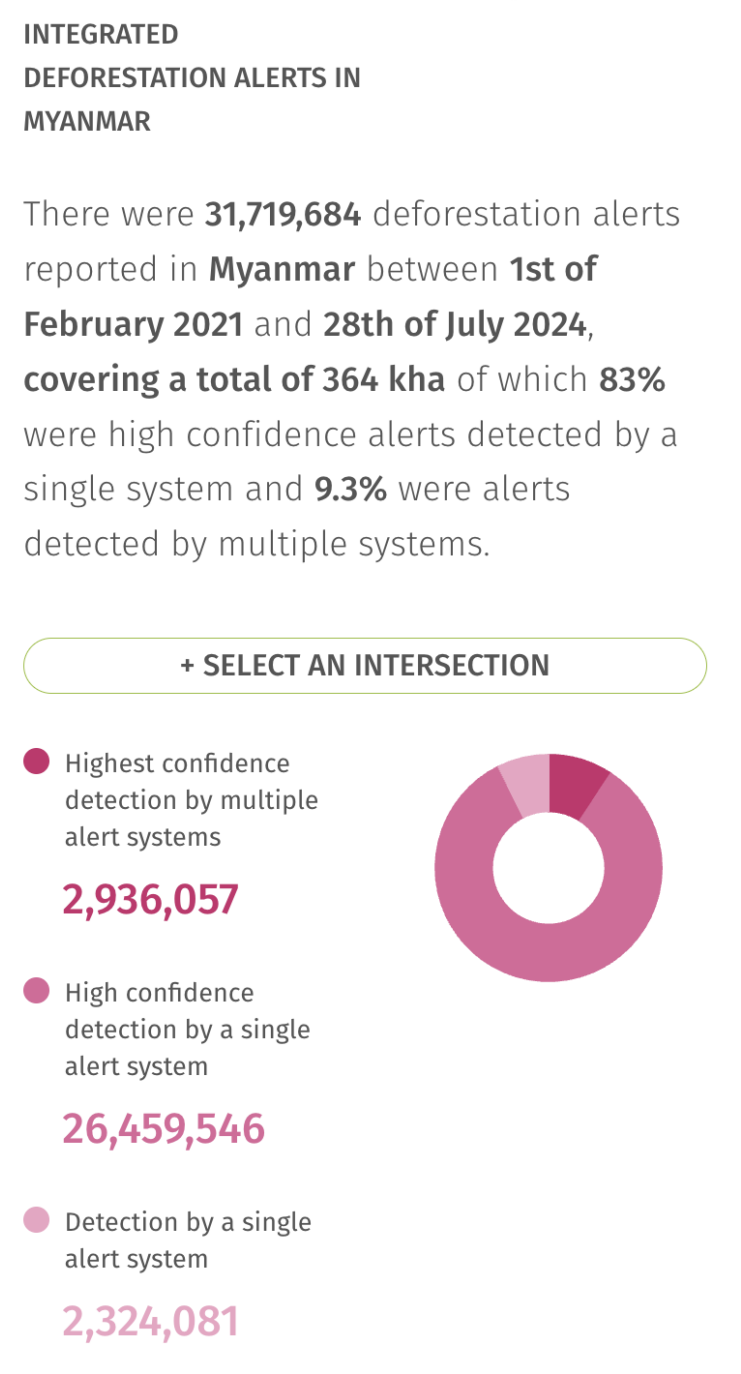
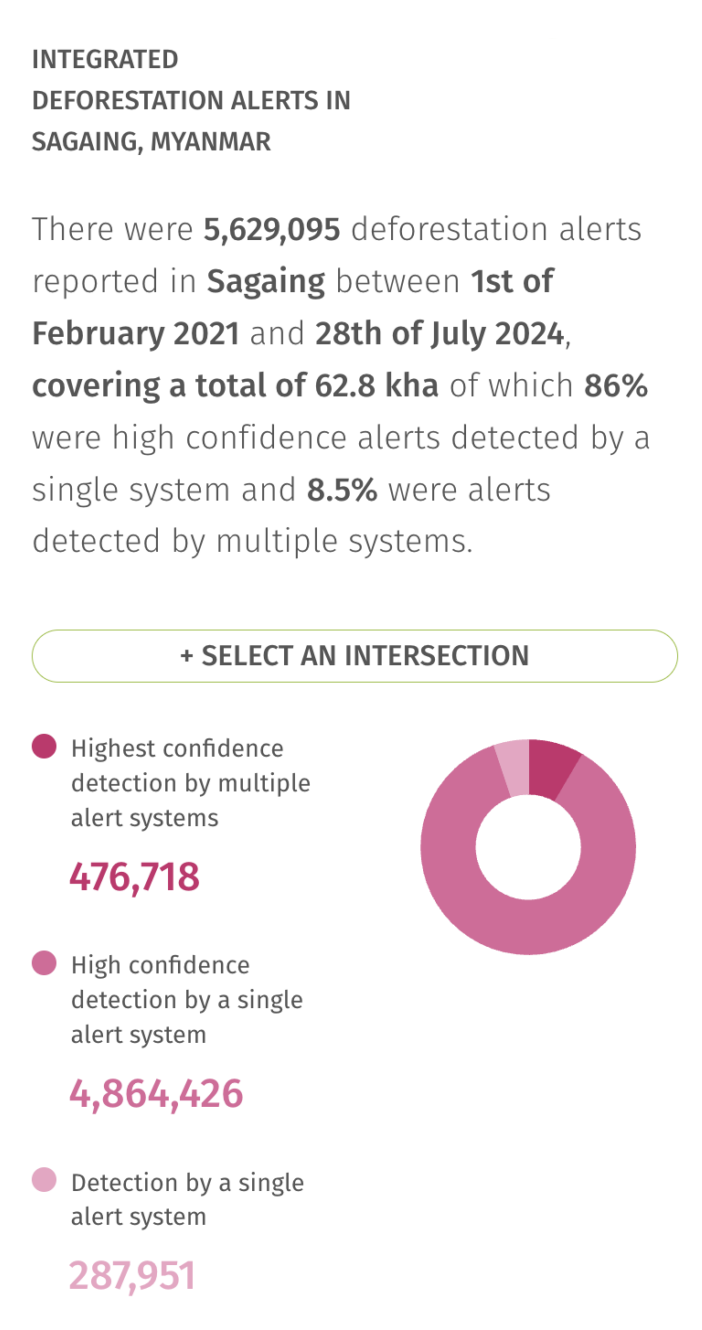
အခုဆိုရင်မြန်မာနိုင်ငံရဲ့ စုစုပေါင်း မြို့နယ် ၃၃၀ မှာ ၂၂၀ ကျော်ဟာ တိုက်ပွဲကြီး၊ တိုက်ပွဲငယ်၊ ချောင်းမြောင်းပစ်ခတ်မှုစတဲ့ အခြေအနေ တခုမဟုတ် တစ်ခုနဲ့ ကြုံတွေ့နေရပြီဖြစ်ပါတယ်။ စစ်ကိုင်းမှာ ၄၅ မြို့နယ်ရှိတဲ့အထဲက ၁၉ မြို့နယ်ဟာလည်း စစ်ဘေးအန္တရာယ်အောက်ကို ကျရောက်နေခဲ့ပြီးဖြစ်ပါတယ်။ ပြည်သူ့ကာကွယ်ရေးတပ်တွေ ထိန်းချုပ်ထားရာနေရာတွေကို လက်နက်ကြီးနဲ့ ပစ်ခတ်မှုတွေ၊ လေယာဉ်နဲ့ ဗုံးကြဲတာတွေ၊ နေအိမ်တွေ ရွာတွေကို မီးရှို့တာတွေ စစ်ကောင်စီတပ်က လုပ်နေခဲ့ပါတယ်။ တနိုင်ငံလုံး အတိုင်းအတာနဲ့ နေအိမ်ပေါင်း ၉၀,၀၀၀ ဝန်းကျင် မီးရှို့ခံခဲ့ရတဲ့အထဲမှာ စစ်ကိုင်းက ၆၀,၀၀၀ဝန်းကျင်ဖြစ်တယ်လို့ Data for Myanmar အဖွဲ့အစည်းရဲ့ အချက်အလက်တွေအရ သိရပါတယ်။
ဒီလိုအခြေအနေတွေနဲ့ ကြုံတွေ့နေရတဲ့စစ်ကိုင်းအတွက် သဘာ၀ပတ်ဝန်းကျင်နဲ့ သစ်တောတွေကို ဂရုစိုက်နိုင်ဖို့ထက် လူတွေ မသေအောင်ဘဲ ပိုဂရုစိုက်နေရတယ်လို့ စစ်ကိုင်းပြည်သူ့အုပ်ချုပ်ရေးပိုင်းနဲ့ နီးစပ်သူတဦးက မဇ္ဈိမကို ပြောပါတယ်။ “လက်နက်ရဖို့က မလွယ်ဘူးဗျ။ ဒီလိုပဲ ရုန်းကန်ကြရတာ။ အရင်က သစ်ကုန်သည်တွေထဲက တချို့ဆို သေနတ်နဲ့ သစ်နဲ့ လဲပေးတာမျိုး ကမ်းလှမ်းတာတွေလည်း ရှိပါတယ်။ အကုန်တော့မဟုတ်ဘူး။ သစ်က တရုတ်ကို အများဆုံး သယ်နေတာ။ သစ်တောတွေ ကုန်တာတွေတော့ ဝမ်းနည်းတယ်ဗျာ။ ပြီးမှ ပြန်တည်ဆောက်ကြတာပေါ့ဗျာ” လို့ သူက ဆိုပါတယ်။
ဒီသစ်ထုတ်လုပ်မှုတွေဟာ ဒီနေရာတွေမှာသာမကဘဲ အာဆီယံအမွှေအနှစ်ဥယျာဉ်ရယ် သတ်မှတ်ထားတဲ့ အလောင်းတော်ကဿပသစ်တောမှာလည်း ဖြစ်နေခဲ့ပါတယ်။ အလောင်းတော် ကဿပအမျိုးသားဥယျာဉ်ဟာ စတုရန်းမိုင် ၅၄၀ ကျော် ကျယ်ဝန်းပြီး တိရစ္ဆာန်တွေကို ဘေးမဲ့ပေးရာတောလည်း ဖြစ်ပါတယ်။ အခုအချိန်မှာတော့ အဲ့ဒီက သစ်တောတွေလည်း ပြုန်းကုန်ပြီဖြစ်ပါတယ်။
“အာဏာသိမ်းပြီး လပိုင်းတွေအကြာမှာပေါ့။ တရက်တရက်ကို ကားတွေနဲ့ ခုတ်ပြီး သယ်ကြတာ မနည်းဘူး” လို့ မျက်မြင်တွေ့ခဲ့တဲ့ ဒေသခံတဦးက မဇ္ဈိမကို ပြောပါတယ်။ အလောင်းတော်ကဿပသစ်တောမှာ ကျွန်းသစ်နဲ့ သစ်မာတွေတွေ ပေါများပြီး အလောင်းတော်ကဿပနဲ့ မဝေးတဲ့ မဟာမြိုင်ကြိုးဝိုင်းမှာတော့ တရုတ်ဘက်က ကုန်သည်တွေကြိုက်တဲ့ တမလန်းသစ်တွေ အထွက်များပါတယ်။ တမလန်းသစ်မှာ အလွန်လှပတဲ့ အပွေးအရစ်လေးတွေ ရှိတာမို့ ပရိဘောဂ ထုတ်လုပ်သူများ အလွန်ဝယ်လိုအားများကြောင်းလည်း ဒေသခံတွေက ဆိုပါတယ်။
“သစ်ခိုးထုတ်တာတွေက အရင်တည်းက ရှိတယ်ဗျ။ ဒါပေမဲ့ ဒီလောက်တော့ စည်းမဲ့ကမ်းမဲ့ မဖြစ်ခဲ့ဘူး။ အခုက တိုင်းပြည်ပျက်သွားတာဗျ။ အလောင်းတော်ကဿပဆို အရမ်းဝမ်းနည်းဖို့ကောင်းတာ။ သစ်တောတွေကောင်း၊ တိရစ္ဆာန်တွေလည်း ခိုလှုံ၊ စစ်ကိုင်းရဲ့ သစ်တောဂေဟစနစ်အတွက်လည်း အဖိုးတန်ဗျာ။ အခုတော့ တော်တော်ထိခိုက်ကုန်တာပဲ” လို့ မန္တလေးမြို့မှာ နေထိုင်တဲ့ သစ်တောပညာရှင်တဦးက သုံးသပ်ပြပါတယ်။
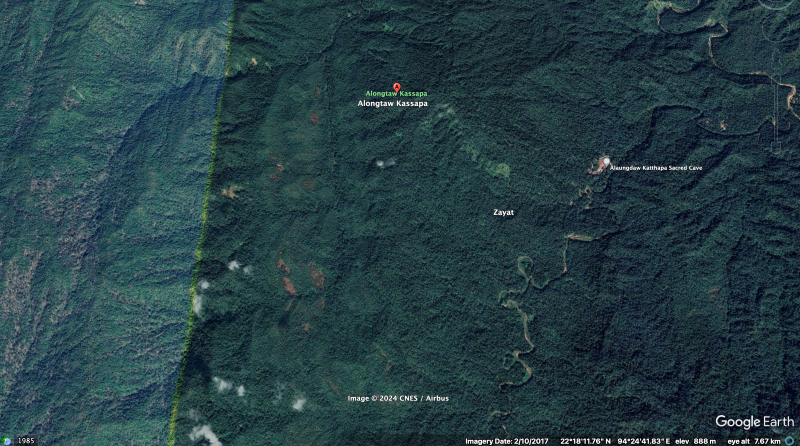
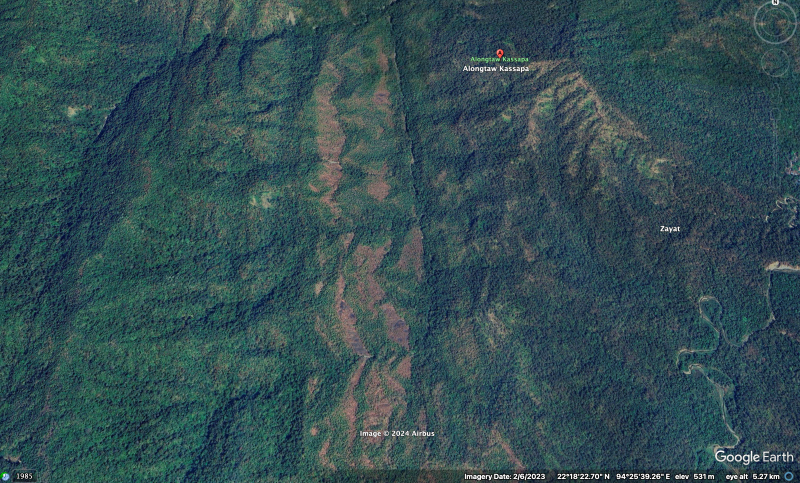
Left: အလောင်းတော်ကဿပကြိုးဝိုင်းဧရိယာကို ၂၀၁၇ခုနှစ်တွင် ကောင်းကင်ဓာတ်ပုံမှမြင်ရပုံ
Right: အလောင်းတော်ကဿပကြိုးဝိုင်းဧရိယာကို ၂၀၂၃ ခုနှစ်တွင် ကောင်းကင်ဓာတ်ပုံမှမြင်ရပုံ. Photos: Mizzima
သစ်မှောင်ခိုထုတ်မှုတွေကသာ စစ်ကိုင်းရဲ့ သဘာ၀ပတ်ဝန်းကျင်ပျက်စီးမှုကို အကြီးအကျယ်ခြိမ်းခြောက်နေပါတယ်။ ဒါပေမဲ့ စစ်ကိုင်းဟာ အရင်တည်းက သဘာ၀ပတ်ဝန်းကျင်ဆိုင်ရာ စိန်ခေါ်မှုတွေက ရှိနေခဲ့တာပါ။ အရင်က တရက်ကို အမေရိကန်ဒေါ်လာ နှစ်သန်းကျော်လောက် ဝင်ငွေရစေတဲ့ လက်ပံတောင်းတောင်ကြေးနီတောင် စီမံကိန်းဟာလည်း စစ်ကိုင်းရဲ့ စိန်ခေါ်မှုတခုပါပဲ။ ဒီစီမံကိန်းဟာ အာဏာသိမ်းပြီးတဲ့နောက်မှာ သိသာထင်ရှားစွာ လည်ပတ်နေတဲ့ အခြေအနေ မရှိတော့ပါဘူး။ ဒါပေမဲ့ စီမံကိန်းနယ်မြေရဲ့ အပြင်ဘက်အထိ ခြံစည်းရိုးတွေခက်တာတွေ လုပ်ခဲ့ပြီး ပြည်သူတွေရဲ့ အသက်အိုးအိမ်တွေကို ဖျက်ဆီးပစ်တာတွေ စစ်တပ်က လုပ်ခဲ့ပါတယ်။ တဘက်မှာလည်းကြေးနီတွေကို စစ်တပ် အစောင့်အရှောက်နဲ့ သယ်ထုပ်တာ စီမံကိန်းကို စစ်ကောင်စီတပ်သားတွေက အကာအကွယ်ပေးတာတွေကြောင့် တော်လှန်ရေးတပ်တွေနဲ့ စစ်ကောင်စီ တပ်တွေကြားမကြာခဏ ပဋိပက္ခတွေ လည်းဖြစ်ပွားခဲ့ပါတယ်။
ကြေးနီးစီမံကိန်းလိုပဲ စစ်ကိုင်းတိုင်း ထီးချိုင့်မြို့နယ်ထဲက တကောင်းနီကယ်စက်ရုံဟာလည်း တရုတ်အတွက် အင်မတန်အရေးပါတဲ့ စက်ရုံဖြစ်ပါတယ်။ အဲ့ဒီစီမံကိန်းကလည်း ဒေသခံပြည်သူတွေကို နေရာရွှေ့ပြောင်းခိုင်းတာ၊ လူ့အခွင့်အရေး ချိုးဖောက်တာနဲ့ သဘာ၀ပတ်ဝန်းကျင်ထိခိုက်တာတွေကြောင့် နာမည်ဆိုးနဲ့ကျော်ကြားပါတယ်။
ဒီစက်ရုံကို အမျိုးသားညီညွှတ်ရေးအစိုးရ (NUG) လက်အောက်မှာရှိတဲ့ ပြည်သူကာကွယ်ရေးတပ်တွေက ဇူလိုင်လကုန်က သိမ်းပိုက်ခဲ့ပါတယ်။ ဒါပေမဲ့ တရုတ်အစိုးရကြောင့် ဒီစီမံကိန်းကို အကာကွယ်စောင့်ရှောက်ပေးမယ်လို့ တော်လှန်ရေးအစိုးရဘက်က အာမခံထားရပါတယ်။ ဒီအခြေအနေ ကိုကြည့်ရင် တရုတ်စီမံကိန်းတွေဟာ လူမူနဲ့သဘာဝ ပတ်ဝန်းကျင်ကိုထိခိုက်ပေမဲ့ နိုင်ငံရေးအရ စီးပွားရေးအရ မြန်မာနိုင်ငံက ပဋိပက္ခမှာပါဝင်နေသူတွေက တရုတ်ကိုမလွန်ဆန်နိုင်တဲ့ အခြေအနေဟာပေါ်လွင်နေပါတယ်။
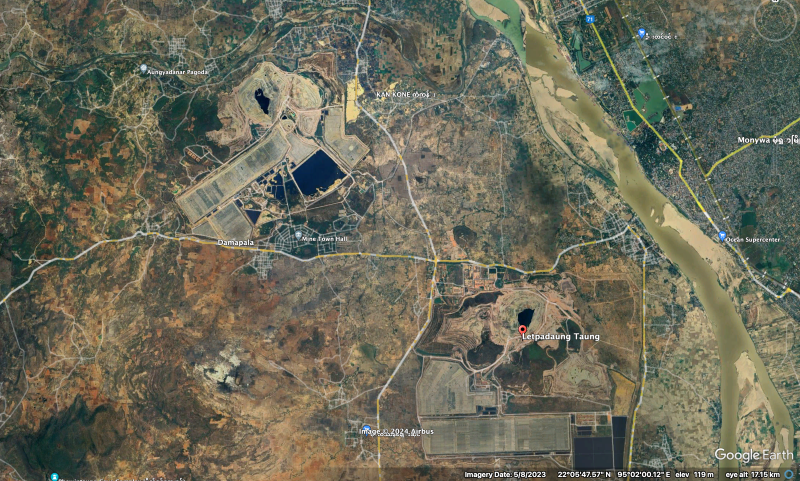
လက်ပံတောင်းတောင် ကြေးနီမိုင်းတွင်းပုံကို ကောင်းကင်မှမြင်ရပုံ. Photo: Mizzima
အာဏာသိမ်းမှုနောက်ပိုင်းမှာ အရင်က သဘာဝပတ်ဝန်းကျင်မှုထိခိုက်မှု၊ လူမှုဘဝထိခိုက်မှုတွေကြောင့် ရပ်တန့်ထားတဲ့ သံယံဲဇာတ စီမံကိန်းကြီးတွေ (အထူးသဖြင့်ကျောက်မီးသွေး တူးဖော်ရေး လုပ်ငန်း၊ ရေကာတာ စီမံကိန်းတွေ၊သံမဏိစက်ရုံတွေ၊သတ္တုတွင်းစီမံကိန်းတွေ) ဟာ အလျိုလျိုပြန်လည် စတင်ကြလာပါတယ်။
ဒီစီမံကိန်းတွေထဲမှာ တရုတ်နိုင်ငံက အကောင်အထည်ဖော်နေတဲ့စီမံကိန်းတွေ အများဆုံးဝင်ပြီး တီကျစ်ကျောက်မီးသွေးစီမံကိန်း၊ ပင်းပက် သံမဏိစက်ရုံ၊ ဘော်ဆိုင်းသတ္တုတွင်းတွေပြန်လည်စတင်ခဲ့သလို ပြည်သူတွေ အပြင်းအထန်ကန့်ကွက်ခဲ့တဲ့ ရေကာတာစီမံကိန်းကြီးတွေကို စတင်ဖို့ပြင်ဆင်လာကြပါတယ်။ ဒီလိုစီမံကိန်းတွေပြန်စတဲ့နေရာမှာ စစ်ကောင်စီသာမက တိုင်းရင်းသား လက်နက်ကိုင်တွေပါဝင်လာကြပါတယ်။
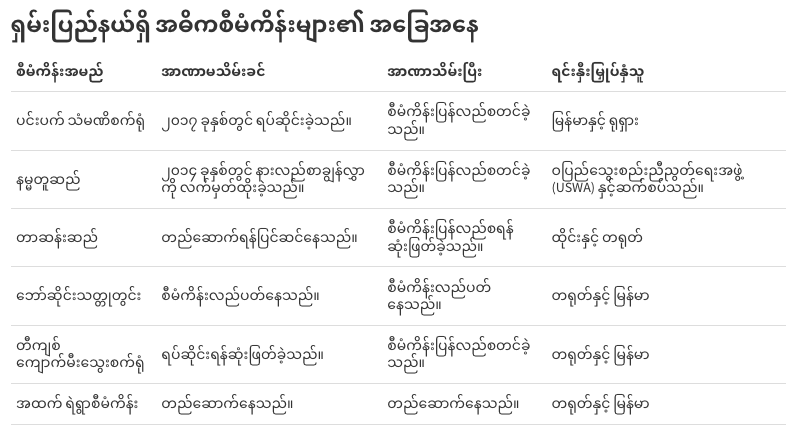
ရှမ်းပြည်နယ်ရှိ စီမံကိန်းများအခြေအနေ. Photo: Mizzima
အာဏာသိမ်းပြီး ရှုပ်ထွေးနေတဲ့ ပဋိပက္ခတွေကြောင့် အရင်ကစီမံကိန်းတွေနဲ့ပတ်သက်တဲ့ ဆိုးကျိုးတွေကို ပြည်သူသိအောင် လုပ်နေတဲ့၊ စီမံကိန်းတွေကို ကန့်ကွက်ဖို့ဦး ဆောင်နေတဲ့ ဒေသခံလူထုအခြေပြုအဖွဲ့အစည်းတွေဟာလည်း နေရပ်စွန့်ခွာ ထွက်ပြေးရတဲ့အပြင် လက်နက်ကိုင်တွေရဲ့ချိန်းခြောက်မှုတွေကြောင့် နူတ်ဆိတ်နေရတဲ့အနေအထားတွေနဲ့ နေထိုင်နေရတာကြောင့် စီမံကိန်းတွေကို ပေါ်ပေါ်ထင်ထင်ပဲ လုပ်နိုင်တဲ့အခြေအနေ ဖြစ်သွားပါတယ်။ ရှမ်းမြောက်မှာ ပြီးခဲ့နှစ် အောက်တိုဘာလမှာစတင် ဖြစ်ပွားခဲ့တဲ့ စစ်ဆင်ရေး ၁၀၂၇ နောက်ပိုင်းမှာတော့ မဟာဗျူဟာကျ တရုတ်စီမံကိန်းတွေ ရဲ့နေရာတော်တော်များများကို မြောက်ပိုင်းက တော်လှန်ရေးမဟာမိတ်အဖွဲ့တွေ ထိန်းချုပ်မိသွားပါတယ်။ ဒီအဖွဲ့တွေဟာ တရုတ်ရဲ့သြဇာ မလွတ်ကင်းဘူးလို့ လူသိများကြပြီး နောက်ပိုင်းမှာ ဒီစီမံကိန်းတွေဟာ သက်ဆိုင်ရာတပ်ဖွဲ့တွေနဲ့ လက်သိပ်ထိုးပြီးမှ လုပ်နိုင်တဲ့ အခြေအနေတွေကို ရောက်သွားခဲ့ပါတယ်။
“လူထုကိုအကာအကွယ်ပေးမယ့် Rule of Law (တရားဥပဒေစိုးမိုးမှု) က ဒီအချိန်မှာ ဘာမှရှိမနေဘူး။ လူထုက ဥပဒေရဲ့အကာအကွယ်မှာရှိမနေဘူးဆိုတော့ စီးပွားရေးလုပ်ငန်းရှင်တွေက လက်ဝါးကြီးအုပ်တာတွေ လူ့အခွင့်အရေးချိူးဖောက်တာတွေရှိတယ်။ ဒါပေမဲ့ လူထုကအသံထွက်လို့မရတော့တဲ့အခြေအနေ” လို့ လက်ရှိရှမ်းပြည်မှာ ဖြစ်နေတဲ့ စီမံကိန်းတွေနဲ့ ပတ်သက်ပြီး ရှမ်းပြည်အခြေစိုက် သဘာ၀ပတ်ဝန်းကျင်အရေးလှုပ်ရှားသူတဦးက ဆိုပါတယ်။ ယခုနှစ်များအတွင်း တရုတ်ဘက်မှာ သတ္တုတူးဖော်ရေး ကုမ္ပဏီများက ရှမ်းပြည်နယ်အတွင်း ဝင်ရောက်လုပ်ကိုင်နေသော်လည်း ဒေသခံပြည်သူတို့အတွက် သိသင့်တဲ့အချက်အလက်များကို အမှောင်ချထားတယ်လို့ သူက ဆိုပါတယ်။
“တိုင်းပြည်က ပျက်နေတော့ လက်နက်ရှိတဲ့စစ်တပ်နဲ့ အင်အားကြီးတဲ့ သူတွေက သူတို့အကျိုးအမြတ်အတွက်ပဲ လုပ်ကုန်ရော။ သာမန်ပြည်သူတွေအတွက်ကတော့ စိုက်ပျိုးစားလို့ မရတာတွေ၊ သဘာ၀ ဘေးအန္တရာယ်ဆိုးကျိုးခံရတာတွေ ထပ်ဖြစ်နေဦးမှာပဲ။ ဒါပေမဲ့ အခုအချိန်မှာ အသက်ဘေးက ပိုအရေးကြီးတယ်” လို့ ရှမ်းပြည်နယ်မှ ဒေသခံစစ်ဘေးရှောင်လူငယ်တဦးက ဆိုပါတယ်။
ISP- Myanmar အဖွဲ့အစည်းရဲ့ သုသေသနတွေ့ရှိချက်တွေအရ ရှမ်းပြည်အတွင်းမှာ တရုတ်ဘက်က အကောင်အထည်ဖော်ဖို့ ပြင်ဆင်ထားတာတွေရော၊ လက်ရှိအနေအထားမှာ အကောင်အထည် ဖော်နေတာရော ပေါင်းလိုက်မယ်ဆိုရင် စုစုပေါင်း အမေရိကန်ဒေါ်လာ ၂၃ ဘီလီယံကျော်လောက် ဖြစ်ပါတယ်။ ဒီပမာဏဟာ တရုတ်ရဲ့ မြန်မာနိုင်ငံအတွင်း မြှုပ်နှံမှုတန်ဖိုးရဲ့ ထက်ဝက်ခန့်ဖြစ်ပါတယ်။
ဘယ်လိုကုစားကြမလဲ
စစ်ကောင်စီဟာ လက်ရှိအချိန်မှာတော့ စစ်ရေးအကြပ်အတည်းရော၊ စီးပွားရေးအကြပ်အတည်းပါ ရင်ဆိုင်ကြုံတွေ့နေရတာဖြစ်ပါတယ်။ ကုန်သွယ်လမ်းကြောင်းများစွာကနေ ဝင်ငွေတွေရခဲ့တဲ့ စစ်ကောင်စီဟာ လက်ရှိအချိန်မှာတော့ တရုတ်၊ အိန္ဒိယ၊ ဘင်္ဂလားဒေ့ရှ်နဲ့ ထိုင်းစတဲ့ ကုန်သွယ်မှုစီးဆင်းတဲ့နိုင်ငံတွေနဲ့ ချိတ်ဆက်နေတဲ့ ကုန်သွယ်ဂိတ်တွေ၊ နယ်စပ်ဧရိယာတွေများစွာကို ဆုံးရှုံးခဲ့ပြီးလည်း ဖြစ်ပါတယ်။
၁၀၂၇ စစ်ဆင်ရေးနောက်ပိုင်း ဒီလိုမျိုး ကုန်သွယ်ဂိတ်တွေ ဆုံးရှုံးလာခဲ့တာဖြစ်ပြီး လက်ရှိအခြေ အနေမှာတော့ အရေးကြီးတဲ့ ကုန်သွယ်ဂိတ် ငါးခုကို လက်လွတ်ခဲ့ရပါတယ်။ မြန်မာနိုင်ငံရဲ့ နယ်စပ်ကုန်သွယ်ရေးပိုင်းမှာ ကုန်သွယ်ဂိတ်ပေါင်း ၁၇ ခုရှိတဲ့အထဲက အဲ့ဒီ ငါးဂိတ်ဟာ စုစုပေါင်း ကုန်သွယ်မှုရဲ့ ၄၀ ရာခိုင်နှုန်းအထိနီးပါး ကုန်စည်စီးဆင်းမှု အားကောင်းတဲ့ ဂိတ်တွေလည်း ဖြစ်ပါတယ်။ ထိုင်း-မြန်မာနယ်စပ်က မြ၀တီဂိတ်ကို စစ်ကောင်စီက လက်လွတ်ခဲ့ရပေမဲ့ ကရင်နယ်ခြားစောင့်တပ်နဲ့အတူ ပြန်လည် ထိန်းချုပ် နိုင်ခဲ့ပါတယ်။ ဒါပေမဲ့ အရင်ကလို ကုန်သွယ်စီးဆင်းမှုအားကောင်းတဲ့ အခြေအနေမျိုး ပြန်မရရှိသေးပါဘူး။ တချို့သော ကုန်သွယ်ဂိတ်တွေဟာလည်း စစ်ကောင်စီရဲ့ ထိန်းချုပ်မှု အောက်မှာ ရှိနေသေးတယ်ဆိုပေမဲ့ ကုန်စည်စီးဆင်းမှုတော့ ရပ်တန့်နေပါတယ်။
အာဏာသိမ်းစဉ်ကာ ၂၀၂၁ ဖေဖော်ဝါရီ ၁ မှာ ဒေါ်လာစျေးဟာ ကျပ် ၁၃၃၀ ဝန်းကျင်သာရှိခဲ့ပေမဲ့ လက်ရှိအချိန်မှာတော့ ကျပ် ၆၀၀၀ ကျော်လာခဲ့ပါပြီ။ ပြီးခဲ့တဲ့ ဇွန်လက ထုတ်ပြန်ခဲ့တဲ့ World Bank ရဲ့ အစီရင်ခံစာမှာလည်း ပဋိပက္ခတွေ၊ အလုပ်သမား ရှားပါးမှုတွေ၊ ငွေကြေးတန်ဖိုး မငြိမ်သက်မှုတွေကြောင့် မြန်မာနိုင်ငံမှာ စီးပွားရေးလုပ်ငန်းတွေ လုပ်ကိုင်ဖို့ ခက်ခဲလွန်းနေကြောင်း ထောက်ပြခဲ့ပါတယ်။ ၂၀၂၃-၂၄ မှာ ဆင်းရဲမွဲတေမှုက ပြီးခဲ့တဲ့ ခြောက်နှစ်အတွင်းမှာ အမြင့်ဆုံးဖြစ်လာခဲ့တယ်လို့ ဆိုပါတယ်။
တနိုင်ငံလုံးအတိုင်းအတာနဲ့ ဒီလိုမျိုးစီးပွားရေးအရ ချွတ်ခြုံကျနေတဲ့ အခြေအနေမှာ သဘာ၀ပတ်ဝန်းကျင် ပျက်စီးမှုနဲ့ သယံဇာတဆုံးရှုံးမှုတွေအကြောင်းဟာ အရေးတယူလုပ် တင်ပြကြဖို့ ကုစားကြဖို့ လိုအပ်နေပါလား၊ ဒီထက်ပိုအရေးကြီးတဲ့အကြောင်းအရာတွေက ပိုရှိနေတာမဟုတ်ဘူးလားဆိုတဲ့ ယူဆချက်တွေက ခုခံစစ် ဆင်နွှဲနေသူတွေဘက်မှာလည်း ရှိနေပါတယ်။ ဒါပေမဲ့ ပဋိပက္ခတွေနဲ့အတူ အကျိုးစီးပွား ရယူနေသူတွေကြောင့် သယံဇာတဆုံးရှုံးမှုကတော့ အဖက်ဆယ်ဖို့ ခက်ခဲနေခဲ့ပါပြီလို့ သဘာ၀ပတ်ဝန်းကျင်ပညာရှင်တဦးက ဆိုပါတယ်။
“တကယ်က ဘာမှ လုပ်လို့ မရတော့ဘူးဗျ။ သေသေချာချာ မွေးမြူရင်တောင် အချိန်အကြာကြီး လုပ်ရမှာလေ။ အခုက ဘာမှကို လုပ်လို့ မရတော့ဘူး။ တရုတ်ကလည်း ရသလောက် ဝယ်နေတာ” လို့ ၎င်းက ဆိုပါတယ်။
လက်ရှိအချိန်မှာတော့ ကချင်က မြေရှားဟာ တရုတ်ဆီကိုပဲ ဦးတည်နေရသလို၊ စစ်ကိုင်းနဲ့ ပဲခူးရိုးမက သစ်တွေရဲ့ အများဆုံးလားရာဟာလည်း တရုတ်ဆီပဲ ဖြစ်နေခဲ့ပါတယ်။
“တော်လှန်ရေးဆင်နွှဲနေသူတွေထဲမှာ သဘာ၀ပတ်ဝန်းကျင်ကို နားမလည်တဲ့သူတွေချည်း မဟုတ်ဘူး။ တချို့က အတော့်ကို သိတာ။ ဒါပေမဲ့ လက်နက်လိုအပ်ချက်၊ ငွေကြေးလိုအပ်ချက်တွေ ရှိလာတဲ့အပေါ်မှာ ဒီလမ်းကိုပဲ ရွေးကြရတော့တာ။ အဲ့ဒါကြောင့် အဖက်ဆယ်ဖို့ ခက်ခဲသွားပြီလို့ ပြောချင်တာ” လို့ အဆိုပါ သဘာ၀ပတ်ဝန်းကျင် ပညာရှင်က ရှင်းပြပါတယ်။
တရုတ်ဘက်ကလည်း တော်လှန်ရေးမှာ ဩဇာရှိတဲ့အခြေအနေတစ်ရပ်ကို မိမိရရ ဆုပ်ကိုင်ထားနိုင် တာဖြစ်ပြီး တရုတ်သူဌေးတွေဟာ ဒီအခြေအနေတွေပေါ်မှာ အကောင်းဆုံးချယ်လှယ်နေနိုင်တာ တွေ့ရတယ်လို့ စစ်ကိုင်းတော်လှန်ရေးနဲ့ နီးစပ်သူတဦးက ဆိုပါတယ်။ တရုတ်ဘက်ကို ရောင်းတဲ့ သစ်တွေကနေရတဲ့ ငွေကြေးဟာလည်း လက်နက်ဝယ်ယူဖို့အတွက် အများကြီးအထောက်အကူဖြစ် တယ်လို့ ဆိုပါတယ်။
“သစ်ကားတွေလည်း နေတိုင်း ကချင်ဘက်ကနေ တရုတ်ကို ထွက်နေတာ။ ဘယ်အဖွဲ့မဆို သူတို့ထိန်းထားတဲ့နေရာက သစ်တွေကို တရုတ်သူဌေးတွေဆီ ရောင်းလိုက်ရုံပဲ။ သယ်တာတွေ၊ လမ်းကြောင်းရှင်းတာတွေ သူတို့ပဲ တာဝန်ယူလုပ်တယ်” လို့ သူက ပြောပြပါတယ်။
မြန်မာနိုင်ငံမှာ သဘာ၀ပတ်ဝန်းကျင်ကို ကောင်းမွန်စွာထိန်းသိမ်းရေးနဲ့ သဘာ၀သယံဇာတတွေအပေါ် မူဝါဒခိုင်ခိုင်မာမာနဲ့ စီမံခန့်ခွဲအသုံးပြုနိုင်ဖို့ဆိုတဲ့ ခရီးဟာ အမြဲတစေ စိန်ခေါ်မှုတွေနဲ့ ပြည့်နှက်နေခဲ့တာပါ။ ဒါပေမဲ့ ဒီတကြိမ်ကြုံတွေ့ရတဲ့ ပုဒ်စာကတော့ အတော့်ကို ခက်ခဲလွန်းတယ်လို့ ဆိုရပါမယ်။ နိုင်ငံရေး အလှည့်အပြောင်း၊ တော်လှန်ရေးရဲ့ အလင်းရောင်စတဲ့ မျှော်လင့်ချက်တွေကြားထဲမှာ ကိုယ့်အသား ကိုယ်ပြန်လှီး ကြသလို၊ ကိုယ့်ဘ၀တွေ ကိုယ့်ကိုယ်တိုင် ပြန်ပစ်ချကြသလိုမျိုး သယံဇာတတွေ ရင်းနှီးပြီး အဖြေရှာရတဲ့ အခြေအနေတွေဟာ ဆက်သွားနေဦးမှာပဲ ဖြစ်ပါတယ်။