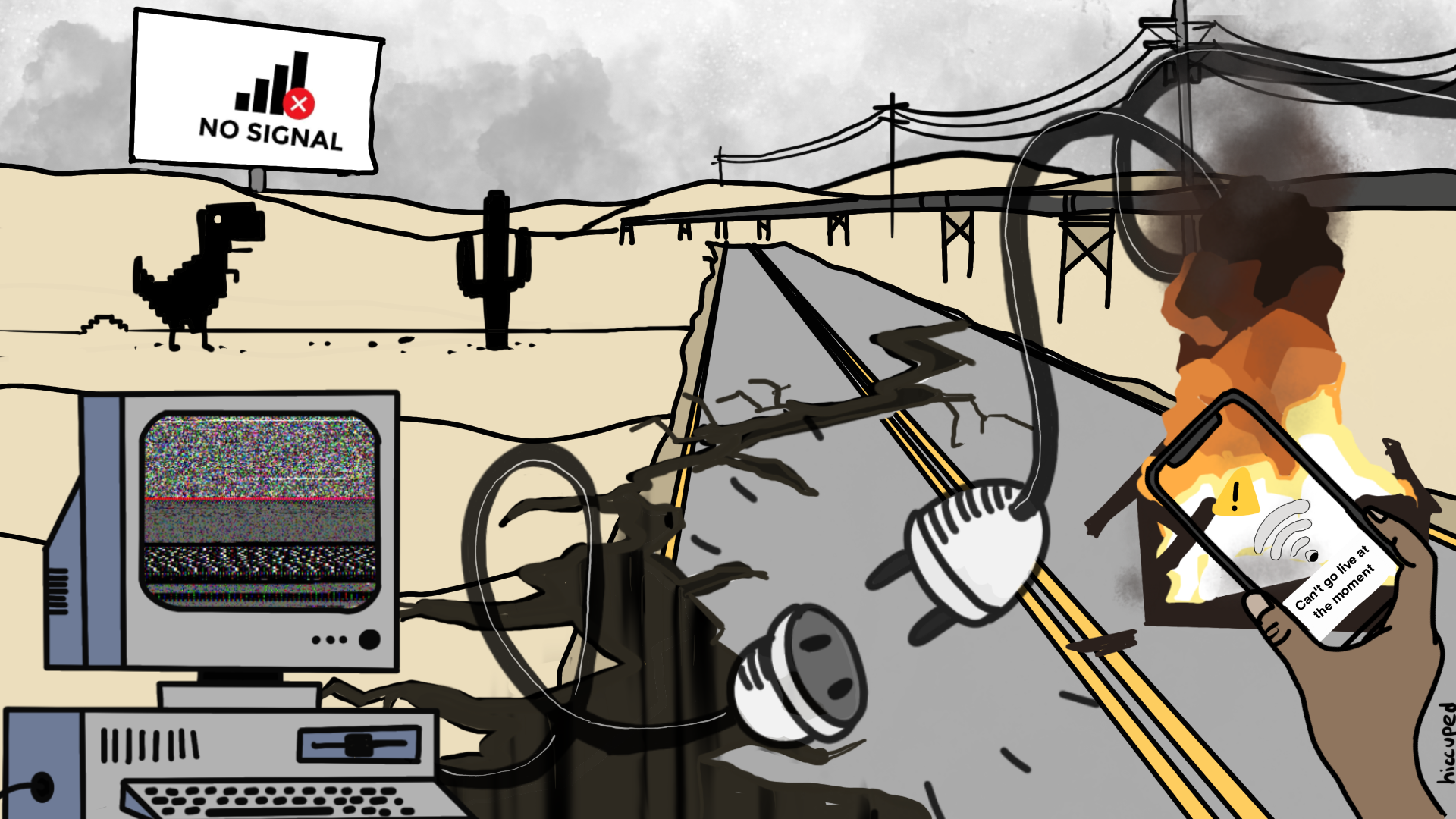
A new Asian Dispatch analysis mapped nearly 400 internet shutdowns in the last five years across South Asia. Illustration: Sharanya Eshwar
Across the world, social media has emerged as a means to collectively voice opinion and advocate for causes since the early 2000s. In South Asia, where internet penetration rates and mobile phone usage are some of the highest in the world, the platforms have been instrumental in democratising freedoms of speech and expression too.
The data speaks for itself. In India, over 70 percent of the population was using the internet as of 2024 data by International Telecommunication Union. In Bangladesh, that rate came up to 44.5 percent in 2024. The mobile broadband subscriptions stand at 899 million users for India and 98 million users in 2024. Looking at data from 2023 for Sri Lanka and Pakistan, we see the connectivity rate at 51.2 percent and 27.4 percent, respectively. The active mobile broadband subscriptions are at 73.5 per 100 people for Sri Lanka and 55.1 per 100 for Pakistan, as of 2024.
At the same time, the digisphere has created a new landscape for non-elite civic participation in everyday politics and political activism, wrote Dr Ratan Kumar Roy, a media studies professor from Bangladesh based in India, in his white paper on digitisation and civic participation. “Politics in the digital age is often subtle and takes on forms different from traditional political activism. This can include liking, sharing or commenting on political content, which can collectively have a large impact,” Roy notes in the report.
According to digital rights group Access Now, South Asia has seen some of the world’s leading internet shutdowns for over six consecutive years until 2024. In their 2024 report, they note that India witnessed 116 internet shutdowns in 2024 and over 500 in the last five years.
Mishi Chaudhary, the founder Software Freedom Law Center (SLFC.in) in India recalls two types of internet shutdowns: Preventive – that are imposed in anticipation of an event that may require the internet to be suspended by the state – and reactive, which are imposed to contain ongoing law and order situations.
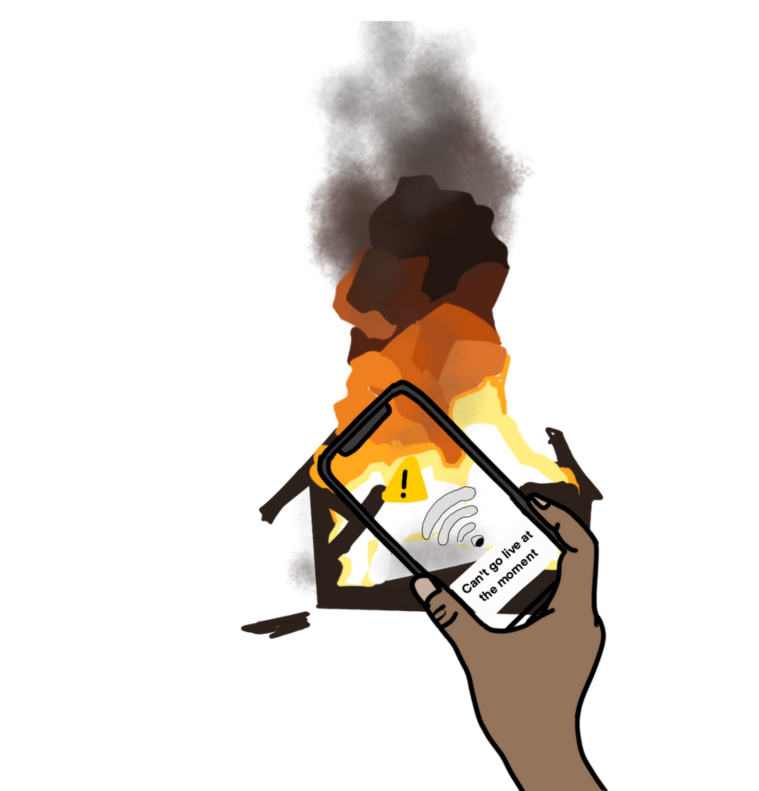
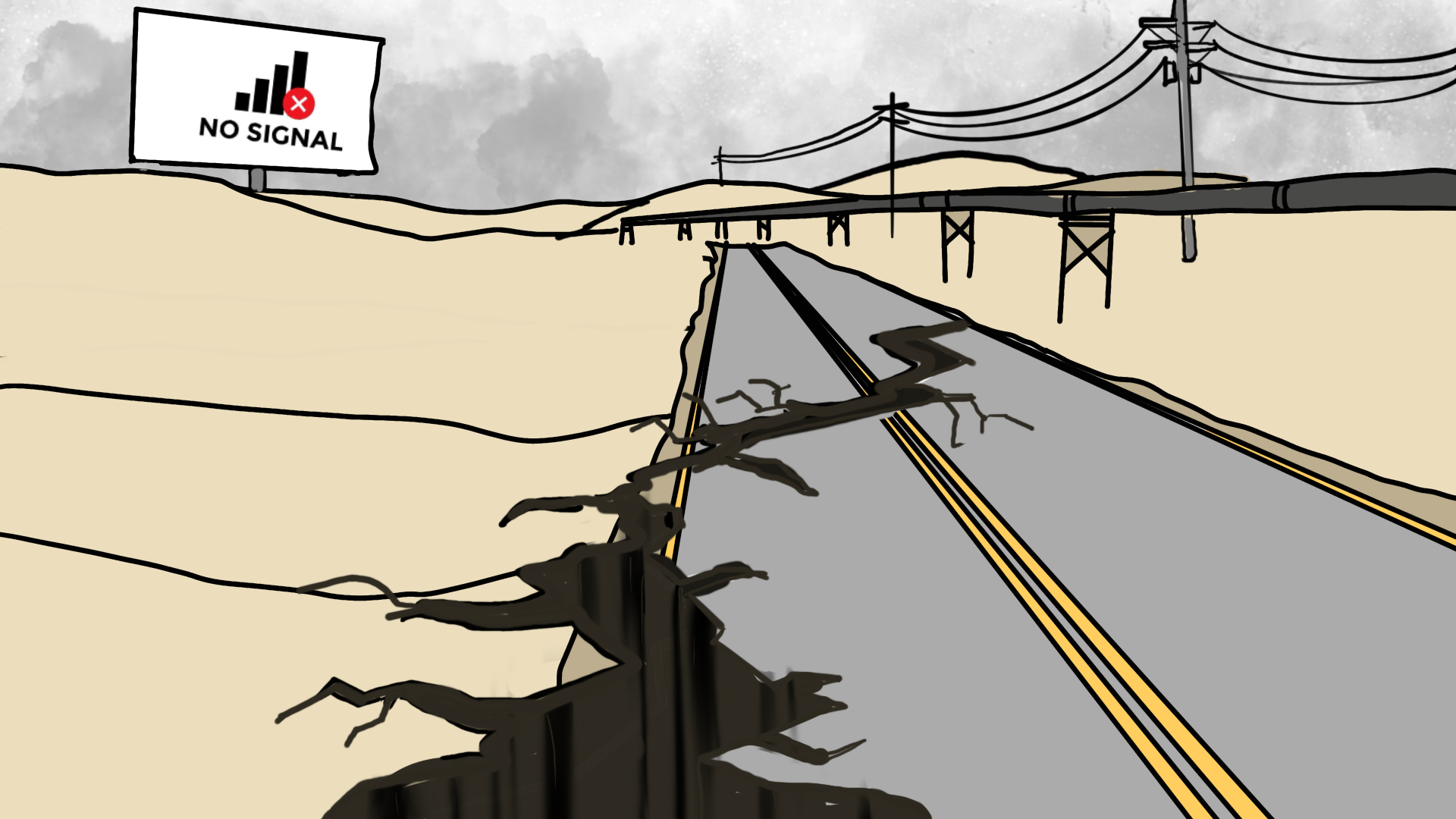
Internet shutdowns can take various forms, from blocking of certain websites to partial or full telecommunication and internet shutdowns.
“Internet shutdowns are the easiest tool in the toolbox for governments to control the flow and dissemination of information,” Chaudhary tells Asian Dispatch. “Although no evidence has ever been presented about the effectiveness of shutdowns, state authorities, fearful of the ease of organisation via the internet, are quick to use this blunt instrument of state power.”
In this piece, Asian Dispatch mapped 397 shutdowns between July 2019 and 2024 in India, Sri Lanka, Pakistan and Bangladesh out of which shutdowns in India, Pakistan, Bangladesh and Sri Lanka stand out. This data doesn’t include Afghanistan, Bhutan, the Maldives and Nepal, where internet shutdowns of this measure have not been documented.
Internet shutdowns have tangible real-world costs. In 2024, Pakistan’s economy was estimated to have lost between $892 million and $1.6 billion, according to the Information Technology and Innovation Foundations, a Washington-based think tank working on science and technology policy. In 2018, Sri Lanka faced an estimated $30 million loss due to similar measures, as reported by NetBlocks. The figures for India in 2024 stand at $322.9 million, as per the report by Top10VPN.
Robbie Mitchell, Senior Communication and Technology Advisor for the Internet Society, a global charitable organisation, says that information blackouts resulting from internet shutdowns can, in fact, result in increased violence. He elaborates further by adding that violent tactics of protest are less reliant on effective communication mechanisms and thus they could substitute non-violent protests that rely on the internet for planning and organization in the cases of internet shutdowns.
“In addition, internet shutdowns tend to attract international attention and create pressure on countries that undertake them. This relates to the so-called ‘Streisand effect,’ where the attempt to silence voices or hide information leads to the unintended consequence of bringing more attention to them,” Michelle says.
Left in the Dark
Mandeep Punia, a 30-year-old journalist from India, says that any internet shutdown causes a “fear of the unknown” in the society. Punia has experienced shutdowns first during the 2016 Jat community reservation protests, as well as the 2019 shutdown in Kashmir during the abrogation of article 370, among others. The most recent internet shutdown in India was in the state of Haryana in August 2025, as recorded by the internet tracker maintained by SLFC.
About 3,000 kms away, in Sri Lanka, Oshadi Senanayake, a civil society member and social worker, recalls the communication shutdown during the anti-Muslim violence in Sri Lanka in 2018. The series of violence saw the imposition of a nationwide state of emergency as Sinhalese-Buddhist crowds attacked Muslims and their establishments in the city of Kandy. “When the means of communication were restricted, it was very difficult,” she tells Asian Dispatch. “We were all in the dark, no one knew what was going on and there was no way to find out either.”
The similarity in these narratives connects the dots across South Asia on how internet shutdowns impact people.
In 2024, Pakistan invoked the region’s most recent shutdowns, which was done to curtail mass uprising in support of jailed former prime minister Imran Khan. This was one of the 17 shutdowns Pakistani people faced in the last five years, as per data collected by Asian Dispatch.
The same year, in July, Bangladesh saw mass protests by university students over government jobs, which eventually upended Sheikh Hasina’s 21-year rule. Her government resorted to internet shutdown in order to curb the organised movement. Over 1,000 people were killed during the protests, as per a report released by the interim government led by Nobel Laureate Mohammad Yunus.

At the same time, Asian Dispatch learned of students finding ways to circumvent the internet blackout, specifically by urging the residents to open their Wi-Fi networks, either by removing passwords or using “123456,” to support the movement. Shahriyaz Mohammed, a student at the University of Chittagong, and Raihana Sayeeda Kamal, another student based in Dhaka, confirmed that such appeals were made. According to Roy, who is also a former media studies professor at BRAC University in Bangladesh, this appeal drew widespread response, with many complying.
At the same time, the communication blockade disrupted the academic and professional prospects for many. Kamal said that she graduated last July and was supposed to apply for her postgraduate work permit in Canada. “I couldn’t do it. I was out of touch from Canada. It hampered my job search and communications with my professors, and delayed my application,” she tells Asian Dispatch.
Raihana Sayeeda Kamal, a student based in Dhaka talks to Asian Dispatch about her experience of living through the internet shut down of 2024 in Bangladesh
Mohammed, who lives in Chattogram, the second largest city of Bangladesh, says that internet cuts take place anytime, and that the Internet Service Providers (ISP) do not give any prior notice.
“The internet is the most necessary thing for my occupation and also for my study,” he says. However, due to these shutdowns, he wasn’t able to communicate with his office or get any updates from other parts of the country during the protests which hampered work for him as a budding reporter.
Controlling the Narrative
In 2019, India abrogated Article 370 of the Indian Constitution, which accorded special privileges to the region of Jammu and Kashmir. Along with the announcement came a sweeping communication blockade in order to curb disruptions due to anticipated unrest. The blockade in the region lasted 18 months prior to the services being fully restored. In all, the region experienced 213 days of no Internet and 550 days of partial or no connectivity, as noted by the Internet Society.
“Due to COVID-19, everyone knows what a lockdown looks or feels like. But it was only worse in Kashmir as there was not a restriction to physical spaces but also to virtual spaces,” Sayma Sayyed*, a student at a leading university in India, tells Asian Dispatch on condition of anonymity.
The situation, she added, resembled a pre-digital era, with no internet or mobile reception, forcing people to travel several kilometers just to check in with their loved ones.
The lack of internet creates a void of information in the society, says Sayyed*, a resident of Baramulla in Kashmir. “When I had to fill my form for competitive exams, students had to rush to government offices to do so,” Sayyed added. “So I went to the District Commissioners office to fill my form which is when I realised something has happened. Something I could do on a leisurely day became such a big task.”
Within India, the Union territory of Jammu & Kashmir holds the record of the highest number of shutdowns in the country.
Another student from the valley, who also spoke to Asian Dispatch on condition of anonymity, highlighted the psychological impact of such situations. “You don’t feel normal in places outside Kashmir,” the student said. “When I shifted to Delhi for further studies, I was confused as I was able to carry out my studies without any restrictions. I expressed this to my friends and they, too, agreed with the lack of restrictions. It felt jarring to someone who has seen so many curfews and internet blackouts.”
In this video from 2020, a student from Kashmir Valley in India’s Jammu & Kashmir voices similar concerns to Sayyed’s over the delay in her B.Tech examinations and how due to lack of internet, applying for her sister’s entrance examination became a daunting task. Source: Internetshutdowns.in, a repository of internet shutdowns in India maintained by Software Freedom Law Center, India [SFLC.in]
In Bangladesh, Shamim Hossen, a 28-year-old humanitarian worker and the reporting officer at Muslim Hands International, a charitable organisation, highlights how those solely reliant on mobile data were completely cut off. “I use mobile internet and data, and when I am in my office, I use Wi-Fi. But during the internet shutdown, our office was closed so I have no experience using Wi-Fi during that time,” she tells Asian Dispatch.
Sri Lanka has seen the use of full internet shut downs as well as partial restrictions such as curbing access to social media websites for a certain duration. Incidents such as the Easter bombings in 2019 which saw serial blasts on multiple public and religious sites in Colombo, to the economic crisis of 2022 to the Presidential elections in 2023 saw the use of such measures. The country has seen 5 shut downs from 2019 to 2022, as per data collected by Asian Dispatch.
Amarnath Amarasingam, Assistant Professor at the School of Religion, Department of Political Studies, at Queen’s University in Canada, told Asian Dispatch about the relation between misinformation and shutdowns. “In Sri Lanka, when social media was blocked, citizens turned to alternative, less reliable sources,” he says. “These shutdowns made it difficult for credible journalists and activists to fact-check information, leading to a situation where rumours and conspiracy theories filled the void. In countries with ongoing communal tensions, the spread of false rumours can lead to real-world violence against civilians as well.”
Massive protests in Delhi. All communications have been suspended in select areas where the protests were scheduled to take place. Please report any Internet shutdowns to us @NetShutdowns
Reach out to us – +911143587126#LetTheNetWork #KeepItOn #delhi pic.twitter.com/ziUtYdJEMe— InternetShutdowns.in (@NetShutdowns) December 19, 2019
Women’s safety and internet shutdowns. How internet shutdowns impact women’s safety and travel in the national capital of India, Delhi. Source: Internetshutdowns.in, a repository of internet shutdowns in India maintained by Software Freedom Law Center, India [SFLC.in]
Highlighting the broader implication of using internet shutdowns to control dissent, Amarasingam adds: “Internet shutdowns have significant human rights implications, especially around issues like freedom of speech and access to information. Shutting down internet services curtails individuals’ ability to express dissent, participate in protests, or even access vital services such as health and education. All of this, of course, will impact marginalised communities more than others.”
“In Sri Lanka, these shutdowns particularly affect communities with fewer alternative sources of information and who rely on mobile internet for basic services. In the former war zones in particular, these alternative sources of information are key for receiving information that is not curated by the government.”
“Along with the professional, personal life also gets affected,” adds Aftab Mohmand, a 44-year old senior journalist from Peshawar. Mohmand adds that usually, one can circumvent restrictions through VPN or Wi-Fi. But in Peshawar, there is no such facility. Four of the 35 shutdowns Asian Dispatch has documented from 2019 to 2024 for Pakistan were in Peshawar province. “VPN data is monitored and it can be dangerous too,” says Mohmand. Since 2014, he has been using the phone to make reels, create reports and record everything using the internet.
Disrupting Normalcy
“My clients outside of Peshawar think that people from the region do not work properly due to internet restrictions coming up now and then. We had in fact replied to messages but they would reach one to two hours later, which affected our credibility.”
This is the ordeal of Sufi Ali, a 35-year-old IT officer from Mardan, located in Peshawar, Pakistan. Pakistan has recorded 35 shut downs between July 2024 to July 2019, according to the Asian Dispatch analysis. These include blocking the internet in response to protests such as the ones in support of former Prime Minister Imran Khan in 2022 to allegations of throttling with the internet speed by the government during the testing of speculated possible internal firewall.

Virtual Private Networks (VPNs) are often used to bypass shutdowns or access regionally blocked websites. But Mohmand notes that they significantly slow down internet speeds.
Journalists from India, Sri Lanka and Pakistan told Asian Dispatch that these restrictions make it nearly impossible to verify information for accurate reporting.
“I am a journalist so whenever we go out for conflict reporting, we face [internet shutdown],” says Punia, the rural journalist from India. “But the worst aspect of that is that our [media portals] are also shut down.
His concerns are mirrored by Sandun, a freelance journalist based in Sri Lanka. Talking about covering the 2018 anti-Muslim violence, she says the internet shutdown made their job even more difficult. “We treated every piece of news with suspicion and nothing could be verified. The officials were too silent or evasive and we didn’t have anyone on the ground. We felt like we would risk peddling misinformation,” she says.
READ: In Bangladesh, Cops Accused of Killing Protesters During 2024 Uprising Roam Free
On July 19 alone – the day Sheikh Hasina’s ousted regime enforced an internet blackout – at least 148 people were killed by law enforcement agencies, according to a report by the International Truth and Justice Project (ITJP) and Tech Global Institute.
CIR also identified two “peaks” in violence. The first was on July 18, where killings amounted to a massacre. It all started with the killing of a protester called Abu Sayeed, in Rangpur district, on July 16, which was captured in a now iconic image of him spreading his hands in front of the police force. The second peak in violence was on August 5, the day Hasina resigned and fled to India.
Both these peaks in violence also correspond to internet shutdowns, as Asian Dispatch has investigated.
The Policy Pitfalls
South Asian governments often cite national security and misinformation as reasons for internet shutdowns. However, these terms are frequently undefined or vaguely worded in legislation and policy, prompting global experts to raise concerns about their potential misuse.
In the absence of any explanations by government arms on the reasons behind these moves, speculation is rife. For instance in India, internet shutdowns are governed under the Temporary Suspension of Telecommunication Services Rules, 2024, which, under clause 3, explicitly states that the reason for such measures needs to be released in writing. However, these orders are seldom found in the public domain..
In Pakistan, the legal backing of shutdowns is murky as the Pakistan Telecommunications Authority (PTA) also recently highlighted this legal uncertainty. Numerous laws are speculated at play here, with most shutdowns being informed by PTA, the body responsible for establishing, maintaining and operating telecommunications infrastructure in Pakistan, via orders for enforcement by the Interior Ministry. Other than these orders it is believed that Section 54(3) of Pakistan Telecommunication (Re-organization) Act, 1996 is used for such shut downs, which has been ruled against by the Islamabad High Court in 2018. The opacity of such measures is widely recognised by activists and advocacy organisations in the country as well as globally.
Recently, Pakistani journalist Hamid Mir filed a petition in Islamabad High Court, requesting for clarity on why the internet speed in the country were significantly lagging in the past few months, leading to even voice notes or multimedia on WhatsApp not reaching receivers. The petition comes at a time when speculations are rife about the government installing a “fire wall” that would prevent free and open use of the internet in Pakistan.
Other laws in Pakistan, such as the Prevention of Electronic Crimes Act, 2016 (PECA) under its 2025 amendment-equipped section 26(A) criminalise intentional dissemination of false information in the country. ‘Fake news’ is also the basis of many internet shutdowns, thereby hinting at the indirect use of the act for enforcing such measures.
Sri Lanka, too, sees a similar trend in a mix of non-specific regulations being used to curb internet and social media access in the country. Orders to the Sri Lankan Telecommunications Regulations Commission by the Ministry of Defense have been seen as ways of enforcing such curbs. Reasons for shutdowns range from curbing the spread of misinformation, to stopping demonstrations such as during a state of emergency.
Amarasingam says that the absence of official communication during internet shutdowns often leads to an information vacuum, which can fuel misinformation.
“The problem is that in authoritarian contexts, misinformation merely means critiques of the ruling party. And ‘terrorism’ often just means agitation against the government. And so, these terms are weaponised to curtail fundamental rights. In these contexts, shutdowns may hinder the spread of accurate information, create distrust, and deepen existing societal divisions,” she says.
In India, the law is clearly laid out but often not applied consistently. For this, Chaudhary of SLFC says that the civil society has to constantly approach the courts to enforce their rights. “Time period of shutdowns are extended continuously despite limitations imposed by law. Law requires proportionality,” Chaudhary says, adding that the proportionality of these actions is far more than required for the general good.
“Can shutting down the entire system of social communications and completely crashing the payments economy for months be ‘proportional’ to the necessary problem of preventing the incitement of intercommunal riots? If this government intervention is the ‘least restrictive means,’ what are the other more restrictive means the government would not be allowed to use?” Chaudhary asks. “The mind boggles.”
Mitchell from the Internet Society adds further context to the consequences of these actions: “Internet shutdowns tend to attract international attention and create pressure on countries that undertake them. This relates to the so-called Streisand Effect, where the attempt to silence voices or hide information leads to the unintended consequence of bringing more attention to them.”
Digital Rights are Human Rights
When asked whether they were informed prior to internet shutdowns, there’s an astounding “no” from those interviewed for this piece.
Numerous international statutes reaffirm that the internet is an indispensable part of human rights. The United Nations Human Rights Council enshrines this in Article 19 of the Universal Declaration of Human Rights, which “protects everyone’s right to freedom of expression, which includes the freedom to seek, receive and impart information of all kinds, regardless of frontiers.” Restrictions to right to freedom of expression are only permissible under article 19(3) of the Universal Declaration of Human Rights, although it notes: “When States impose internet shutdowns or disrupt access to communications platforms, the legal foundation for their actions is often unstated.”
In India, on two separate instances – by the High Court of the state of Kerala and then the Supreme Court – access to the internet has been declared a fundamental right under the Indian constitution.
“In India, the law is clearly laid out but often not applied consistently. adds Choudhary of SFLC.in.
In Bangladesh, a similar trend exists. Asian Dispatch spoke to students and young professionals who didn’t receive any prior intimation of internet shutdown orders in the last one year. The trend is to slow down the internet, and then slowly revoke access fully, says Kamal, from Bangladesh.
Noting the impact of shutting down the internet, Michelle says: “Internet shutdowns have far-reaching technical, economic, and human rights impacts. They undermine users’ trust in the internet, setting in motion a whole range of consequences for the local economy, the reliability of critical online government services, and even the reputation of the country itself. Policymakers need to consider these costs alongside security imperatives.”
While law governs social media and not internet shutdowns directly, it is worth noting that the negative effects of problematic regulations become yardsticks for regimes that govern a similar cultural and social landscape.
“It also stops people from both demanding and empowering government action to protect its people,” Chaudhary adds. “Shutdowns don’t create the social and political will to safeguard our people, but rather a cloak for the government to hide its shame.”
Punia, the journalist from India, agrees and adds that freedom of speech and expression are never absolute. “They are only useful until one has to show them as democratic for indexes and rankings and gain marks there,” he says.
These are just a few examples of the broader impact experts point to. Given the concerns raised by individuals like Sayyed in India and Hossen in Bangladesh, a critical review of both the shutdowns and the frameworks enabling them is long overdue. Access restrictions need to be brought to the fore and the internet needs to be given a fair chance to make a case for its freedom.
Motherland, the second documentary about Tharparkar from Islamabad-based magazine Earthwise, explores how the advent of coal mining has deprived the people of Tharparkar of their land rights. Often coerced into relinquishing their homes and hearths for coal mines, they have lost access to their pastures and farmlands that once guaranteed a self-sufficient way of life.
Many of them have also received little or no compensation even after waging a decade-long legal struggle. This documentary records changes brought about in their lives by coal-related developments. It tells the story of a once prosperous people reduced to pecuniary, feeling imprisoned by their changed circumstances and forced to take up menial jobs.
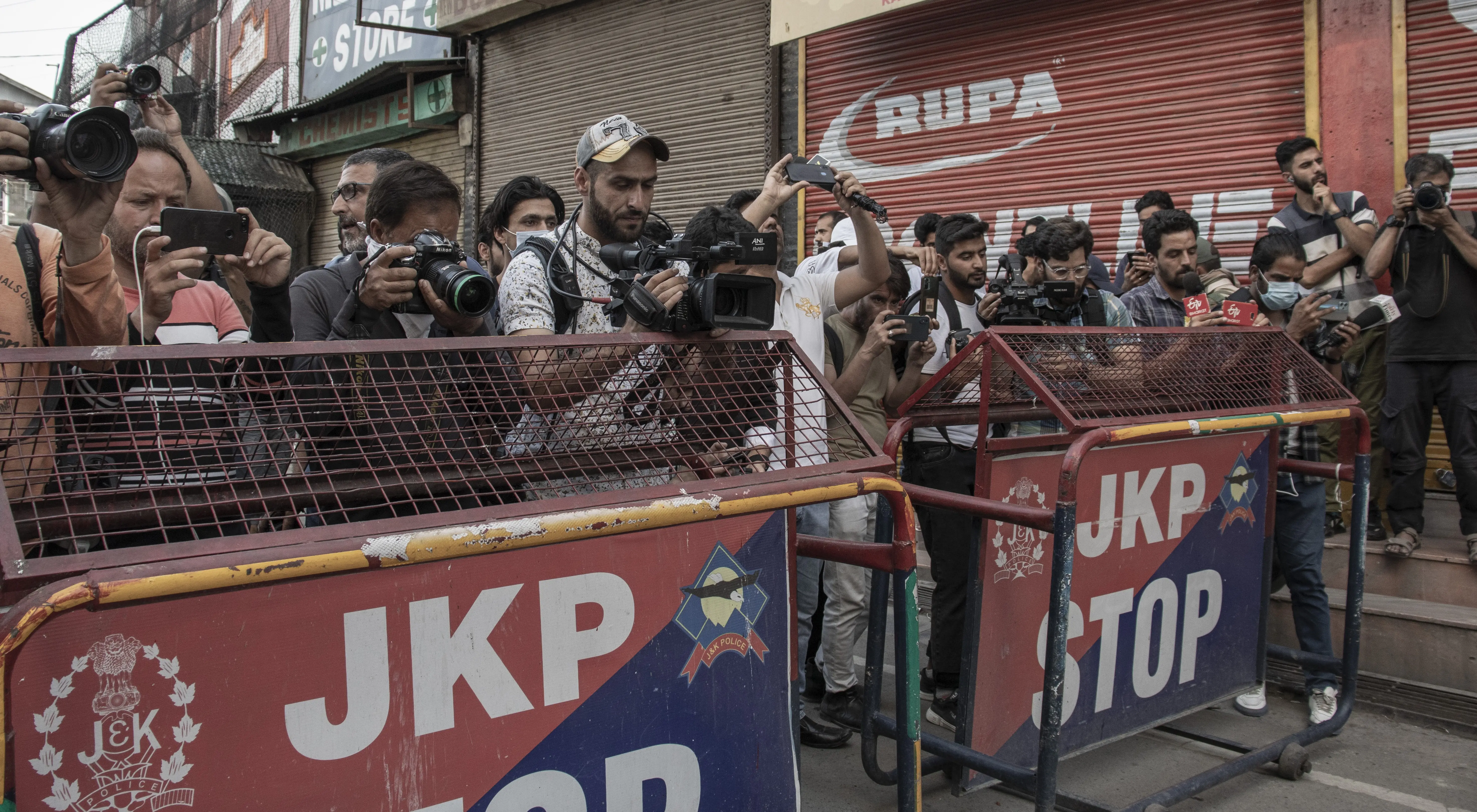
Journalists in the Union territory of Jammu & Kashmir report from behind a barricade in 2022. Photo: Zainab
Earlier this month, India and Pakistan engaged in a military conflict over a course of four days, until a ceasefire was brokered on May 10. Alongside, the two nuclear-armed countries were embroiled in a hailstorm of misinformation, disinformation and propaganda, fuelled by state-backed mainstream media and unverified social media content.
Mainstream TV channels showcased bombings, drones and “invasions” using unverified footage, speculating hour upon hour, and goading their respective militaries to annihilate the other. Internet and network blackouts disrupted communication and the people, desperate for news, had no option but to sift through the barrage of information and videos to judge the truth for themselves.
In the middle of this, journalists on both sides of the border fought a parallel war where they struggled to access impacted areas and report from the ground.
“Independent journalists are the first to reach [impacted] areas, and often the only ones who continue coverage when legacy media goes silent, without any TRP-led bias,” says Suhail Bhat, a Delhi-based journalist from the Union territory of Jammu & Kashmir. TRP refers to Television Rating Point, a metric used by channels to measure the popularity of a segment to determine revenues. “But still, I was stopped by forces many times simply because I’m not affiliated with any particular media house,” Bhat adds.
National and international media outlets are able to provide press cards and appropriate gear to their journalists, while freelancers operate without them. But reporting under editorial mandates of legacy media often means that some crucial stories and aspects can slip through the cracks — a gap that needs local and independent journalism.
“[Non-local journalists] will report that this many people are dead, this many injured, but it’s as if bhed bakriyan mar rahi hai [sheep and goats are dying]. The people have names, families, homes and towns they’re leaving behind. But they’re confined to numbers, or not treated as humans but subjects for stories,” said Gafira Qadir, an independent journalist from the Union territory of Jammu & Kashmir.
The media industry also prioritises viewership and ‘story breaks’, which often means that reporters are sent to the ground at the last moment to capture the first impressions – irrespective of the context. At that, legacy media houses ensure appropriate gear, security checks and access for their journalists. These assets are not provided to freelancers by the newsrooms hiring them on contract for specific assignments.
“TV news channels based in New Delhi always have the upper hand when it comes to access as compared to local reporters. We see it in front of our eyes—a TV reporter can cross a line that other reporters cannot,” said L*, another journalist from the Union territory of Jammu & Kashmir.
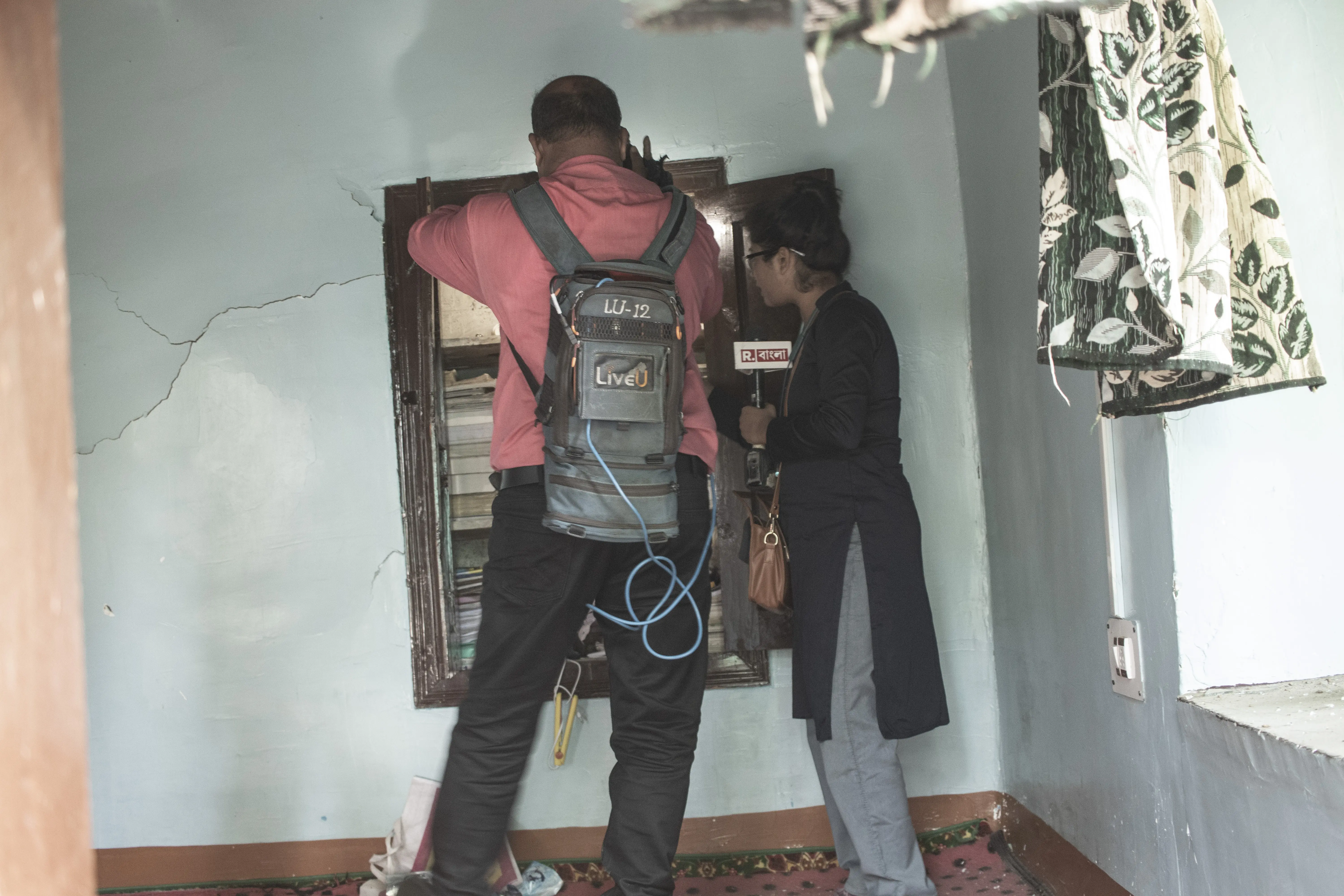
Crew from a prominent Indian TV news channel at a local residence in South Kashmir’s Tral in April 2025. Photo: Zainab
This inequality of access leaves opportunities for sensationalism by certain sections of the media in order to influence public sentiment.
“We’re in these times when the health of the industry isn’t looking good, and people’s faith in the media is at its lowest. At the same time, great journalism is still happening and a lot of it’s coming from independent journalists,” said Karan Deep Singh, an independent journalist and a former Staff Reporter and Visual Journalist with The New York Times and The Wall Street Journal.
Reporting from the frontlines is a different ballgame, and media watchdogs like the Committee to Protect Journalists (CPJ) highly recommend the use of Personal Protective Equipment (PPE) like vests and helmets while covering war zones.
While that is often not an option for independent journalists, proper safety measures aren’t a priority even in established newsrooms, says Kunal Majumdar, CPJ’s India representative.
“There are no mechanisms, no due diligence, not even a basic safety checklist. Does the journalist have a backup plan? An exit strategy? No one takes safety seriously, and the excuse is always cost. Newsroom managers need to understand that journalist safety isn’t just about expensive equipment—it’s about having a clear safety strategy in place,” adds Majumder, formerly a Delhi-based editor with media houses like Tehelka and The Indian Express.
In Kashmir, access is particularly challenging, and journalists are already at risk due to government clampdowns on both sides. During a full-blown conflict, these challenges were exacerbated.
Singh, the Delhi-based journalist, believes that the industry pressure to be the first to publish, combined with how hard it is to make a living off journalism, means that safety and training often take a backseat.
“Most journalists can’t think about it because they’re really trying to get the story, and their entire situation has been so perilous. The industry puts a lot of pressure, and only if they get the story do they get the paycheck. So safety, even for some newsrooms, is an afterthought,” said Singh.
Bhat says that the contracts he signs for a story as an independent journalist for international organisations might be 50-pages long, with clauses on deadlines, compliances and legal liabilities. But safety is not addressed.
“Rarely, if ever, do they mention what happens if the journalist gets injured, arrested or harassed. There is no word on insurance, safety briefings, ethical trainings, or even equipment support,” said Bhat.
On the other side of the border, Islamabad-based journalist Haroon Janjua said that even as drones hovered overhead, the organisations he works with did not provide any protective gear, nor has he received any HEFAT [Hostile Environment and Emergency First Aid Training] yet. This experience was mirrored by all journalists Asian Dispatch spoke to, in both India and Pakistan.
“This lack of gear significantly impacted my ability to work, preventing me from going on the ground to gather accurate and fair information about casualties and the emotions of those affected by the war,” said Janjua.
Others said that the lack of gear doesn’t affect the coverage, because the story must still be told.
“Journalists risk their lives to get the story out. The public sees the news, but they don’t see the emotional, mental, and physical toll it takes on the person behind the camera or mic. That’s the real cost,” said Pakistan-based journalist D*, who requested anonymity to protect their identity over fears of industry backlash.
The Journalist versus ‘Creators’
On May 10, Badar Alam rushed from Islamabad to Lahore to his daughter, who was nervous about the conflict. Upon reaching, he found that the major source of his daughter’s anxiety were Instagram accounts that were posting updates on areas that had been attacked. One of the recent updates that had shaken her was a post about blasts less than 2 kilometers away from her Lahore home. This was not true.
Alam, a seasoned Pakistani journalist, was aghast, and told his daughter that if there really were blasts that close to their home, she would have heard something. “Wouldn’t people around them feel the impact?” he asked her.
Pakistan-based journalist D* said this conflict saw many emotionally-charged local people filming and sharing content using smartphones, without verifying facts.
This negative impact of social media content creators is twofold: It can spread falsehoods, and it undermines journalists trying to find out the truth.
“Local ‘citizen journalists’ were quick to report from their areas whenever a missile or drone hit. They filmed what they could and gave live commentary – often without using the right words, checking facts or understanding journalistic ethics. The rush for instant content and social media engagement is replacing responsible reporting,” said D*.
Journalists and independent newsrooms in both countries are being increasingly targeted and silenced through raids, censorship, intimidation via legal actions, corporate takeovers, court summons, and outright arrests and detention.
This problem is amplified in the Union territory of Jammu & Kashmir, where the Kashmir Press Club – an independent media body – was shut down, making it difficult for freelance journalists to get accreditation, which is an official acknowledgement of a journalist’s credentials.
“Since 2019, we have had ‘Facebook journalists’ who found an opportunity [in the lack of accreditation], resulting in some of them operating very unethically while calling themselves journalists. They don’t ask people before filming and upload their videos online. And then [when we approach people for actual journalistic work], people won’t talk to us because they have been mistreated by these social media creators,” said Qadir. “They put [their content] on Instagram, and make Reels. They’re not reporting, they’re selling.”
Divided by Borders, United in Suppression
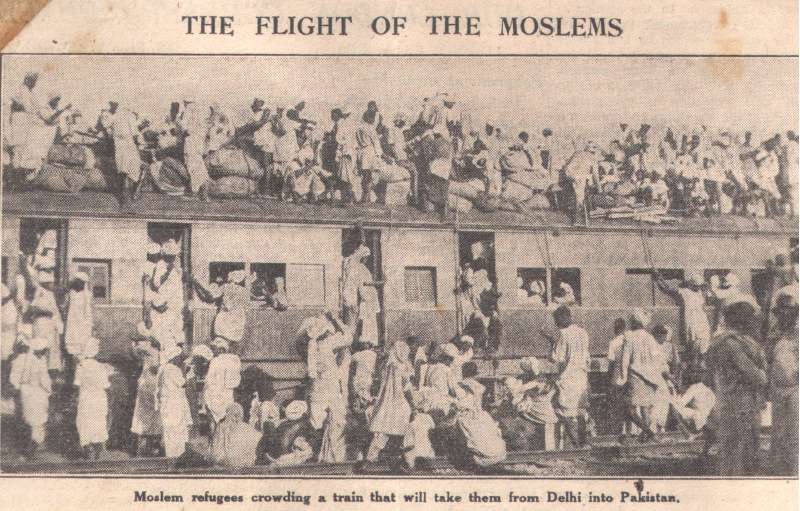
Since their partition in 1947, India and Pakistan have come to blows three times over disputed territories, particularly in Kashmir. Currently, different parts of Kashmir are administered by India, Pakistan, and China.
But it’s not just disputed borders that separate the two countries. India and Pakistan’s separation was influenced by an enduring belief that one should be a nation for Hindus, the other for Muslims, and that these two identities are incompatible.
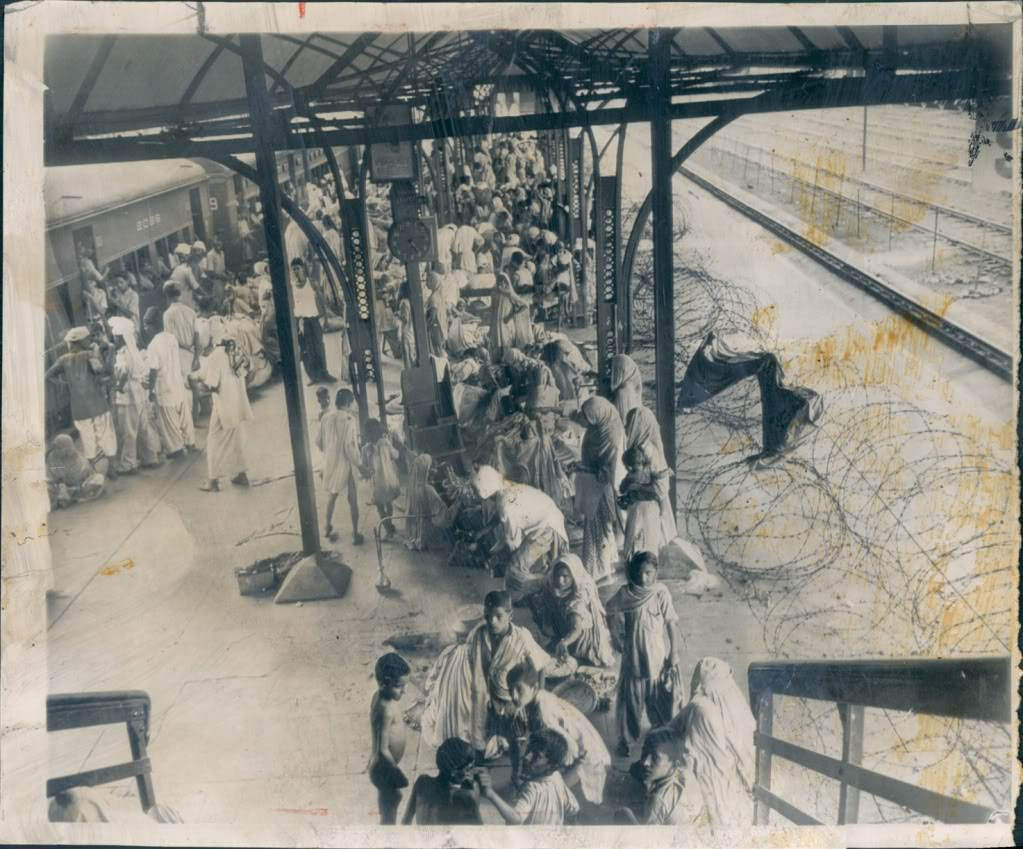
1) An archival image from the Chicago Sun-Times of the Lahore train station in September, 1947, where coils of barbed wire separate the waiting areas. Source: Fran Pritchett’s Archive
2) An archival image of a Delhi train station during Partition, published in The Manchester Guardian in September, 1947. Source: Fran Pritchett’s Archive
Attacks and persecution of minority populations in both India and Pakistan have been increasing. In Hindu-majority India, over 200 million Muslims face rising discrimination, hate and violence, while in Muslim-majority Pakistan, Hindus are among the top minorities who face religious persecution and violence such as forced conversions.
And with restrictions on cross-border communications, travel and trade, successive governments and militaries have controlled public perceptions.
“We’re working in an atmosphere that’s politically charged on both sides, and both sides seek to gain politically from the conflict. So as journalists, our job is very crucial because we are media-literate, and we can see through propaganda versus hard-core evidence-backed information,” said Singh.
Often, it’s the local journalists who are able to get that evidence.
“Independent journalists can move anywhere, without any kind of set direction in our heads, or from our bureau chiefs. So in that way, we are free to document what’s happening on-ground,” said Adil Abass, a 30-year-old independent journalist from the Union territory of Jammu & Kashmir.
Alam, co-founder of Islamabad-based magazine Earthwise, says that the media response on both sides during this conflict was worse than any he had ever seen, not during the Kargil war, during terrorist incidents, slug fests or shouting matches.
“During this conflict, journalists simply lost their ethics in a way that they never have on both sides of the border. This was something different. The state was following what the media was doing, and the media was egging the state to annihilate the other side. And journalism really died in that battle,” he said.
But he believes that like all challenges, it presents an opportunity, even a collaboration between like-minded sane voices from both sides.
“Journalists who do not monger war, who are sick and tired of the lies and fabrication in the news, social media and by the state, must step forward with the courage to hold hands across the border and work together,” said Alam. “It’s a huge challenge for Pakistani and Indian journalists, but that’s what the spirit of journalism is—to be able to take the first step in that direction.”
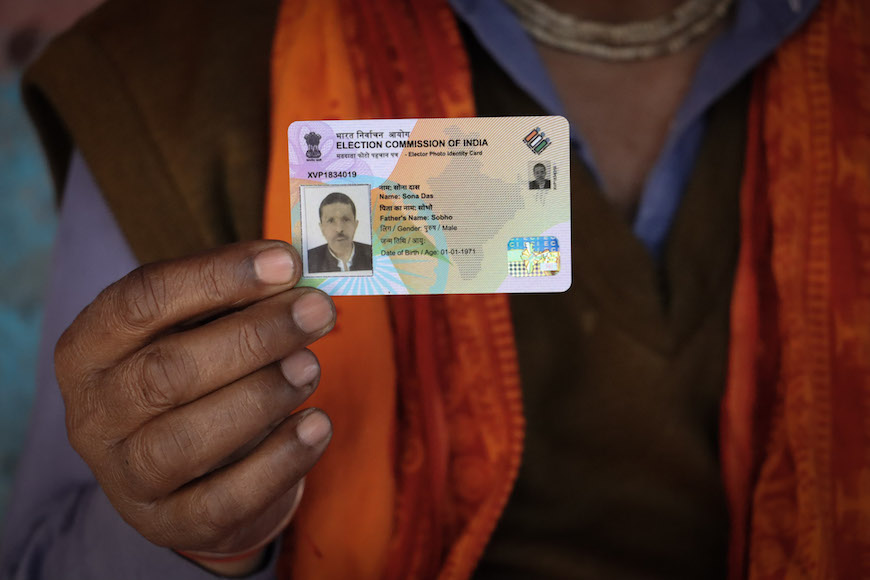
Das holds up his voter ID card ahead of the Delhi Assembly elections, a milestone in his journey as a newly-minted citizen under the CAA law. Photo: Shivalika Puri
Sona Das never imagined he would leave Pakistan, the country of his ancestors where he built a home, where his children took their first steps, and where he worked as a farmer to provide for his family.
Sitting inside their makeshift home in Majnu Ka Tilla refugee colony, located in northern Delhi, Das’s wife Rani prepares a cup of tea as her husband sits cross-legged, his shoulder draped in a thin blanket. The couple recalls the day they left their home in Pakistan’s Hyderabad city, located in Sindh province, calling it a “difficult decision.”
In 2011, Das and Rani traversed the hostile borders between the two nuclear-armed South Asian countries – India and Pakistan – on a religious visa. They were among the first Pakistanis fleeing years of discrimination and religious persecution that nearly 4.4 million Hindus face in their country.
Although there is no official figure, an estimated 300 Pakistani Hindus will be a part of history and vote as citizens – the second time in India since 2022 when over 1,000 Pakistani Hindus, who were awarded citizenship by local authorities, voted in the western Indian state of Gujarat.
Today, India’s capital New Delhi went to polls where Aam Aadmi Party, an upstart party set up in 2013, will battle it out against Bharatiya Janata Party (BJP), which has, since its first election as the national ruling party in 2014, campaigned hard on issues of identity, specifically Hindu nationalism.
In fact, Das is the beneficiary of the BJP’s Citizenship Amendment Act (CAA), which grants citizenship to Hindus, Sikhs, Buddhists, Jains, Parsis and Christian refugees from Muslim-majority Pakistan, Afghanistan and Bangladesh who came to India before December 2014. The law sparked widespread protests in 2019, mainly from India’s largest religious minority, the Muslims. Muslims from other South Asian countries are not included in this safe passage.
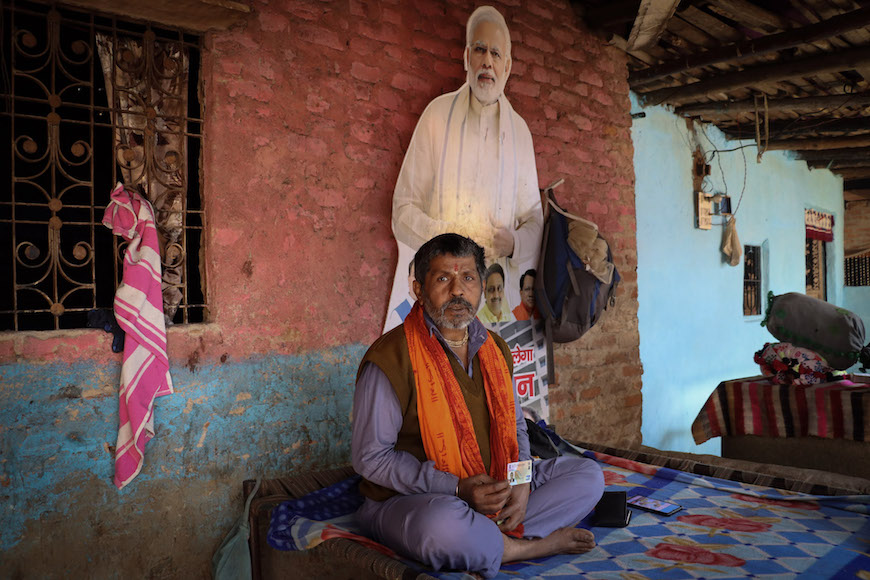
Sona Das sits inside his makeshift home in New Delhi’s refugee colony. Beside him stands a cutout of Indian Prime Minister Narendra Modi, whom he reveres as a god. Photo: Shivalika Puri
For 54-year-old Das, the CAA was a turning point. “We were uncertain about our future in Sindh,” he says. “But this law gave us a sense of belonging and hope for our children. It made us Indian.”
Sona’s story reflects the larger challenges faced by many Hindus in Sindh, Pakistan, where economic hardships, religious discrimination, and insecurity have driven countless families to seek refuge in India. A 2023 report by the Human Rights Commission of Pakistan (HRCP) documented key drivers of forced migration, including insecurity, economic hardship, threats to women, and worsening climate conditions. The report also states that much of the violence and discrimination is targeted against communities of lower castes or Dalits.
Das says that even when his family would ask for food or water, Muslims in their previous home town would use separate utensils. “At first, we endured it, thinking we could manage. But when we thought about our children’s future, we decided to leave our home,” he said.
An estimated 5,000 Hindus migrate from Pakistan to India annually, according to data presented at Pakistan’s parliament in 2014, often on grounds of deteriorating human rights conditions for the community, especially in Sindh. In Pakistan, successive governments have downplayed the issue, or denied it. A 2015 BBC report documented 1,200 people having set up camps in Delhi since 2010, awaiting citizenship.
The forced migration of Pakistani Hindus also has roots in the violent colonial history of the partition between India and Pakistan, which left in its wake a Hindu-majoritarian India, which has Muslims as its largest religious minority group, and Muslim-majority Pakistan with Hindus as the largest minority. Both religious minorities in those countries have been documented to face human rights violations.
READ: Why the 2024 Indian Election Results Shook the Nation
Assad Iqbal Butt, the chairman of HRCP in Pakistan, emphasised the need for cross-border support.
“It’s not an easy decision for our Hindu brothers to leave Sindh,” he told Asian Dispatch. “They are refugees, leaving behind their ancestral land to seek a new life in India. This is not just about asylum seekers in India and Pakistan, but about the broader South Asian region, which must foster cross-border support and cooperation.”
He also acknowledged New Delhi’s efforts in granting Pakistani Hindus the right to vote, calling it a significant step. “Granting these refugees voting rights in India is not only a lesson for Pakistan but for the whole of South Asia and many more governments to come,” he added.
For Das and wife Rani, the choice this election season is clear. Despite being housed in a makeshift settlement in Majnu Ka Tilla, which is also home to Tibetan refugees, the duo have only some pieces of second-hand furniture, some utensils and a charpai to their name. Next to their furniture is a large cutout of BJP leader and Indian Prime Minister Narendra Modi.
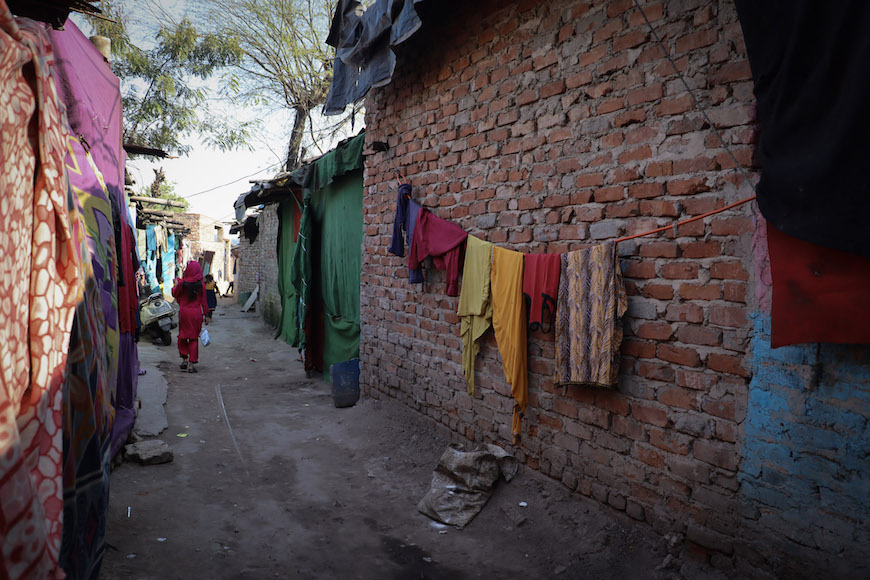
Majnu Ka Tilla, New Delhi, is home to hundreds of Pakistani Hindu refugees, where small makeshit homes are tightly packed together. Photo: Shivalika Puri
“There is no one like him,” Das says. “What he did for us is something no other leader or government would have even thought of. I am willing to sacrifice my years of life to extend his.”
It’s not an easy decision for our Hindu brothers to leave Sindh. They are refugees, leaving behind their ancestral land to seek a new life in India. This is not just about asylum seekers in India and Pakistan, but about the broader South Asian region, which must foster cross-border support and cooperation. — Assad Iqbal Butt, chairman of the Human Rights Commission of Pakistan.
But not all recently-coined citizens share the same perspective.
For 30-year-old Jamna, who has lived in Majnu Ka Tilla with her husband for eight years, life is a daily struggle. As she sits and sews a pillow cover – like most Pakistani Hindu girls and women in the colony – she says, “I’ve sewn every day for the past eight years. But I don’t want this life for my children. Right now, no one from our settlement has an office job or a government job. We’re surviving by either selling phone accessories or street food.”
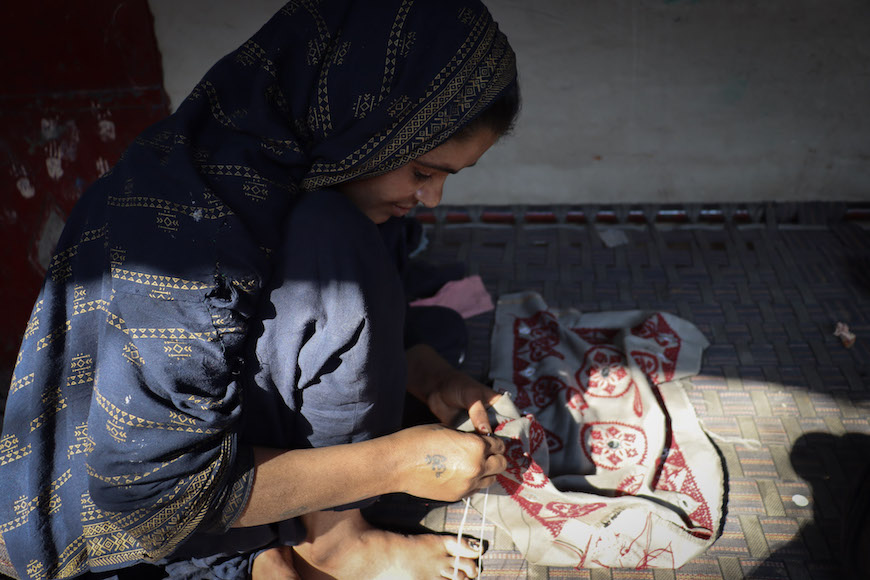
A Pakistani Hindu refugee woman weaves a pillowcase, threading hope into every stitch inside her makeshift home in the Majnu Ka Tilla refugee colony. Photo: Shivalika Puri
Her words reflect the struggles of young people here. Many young men remain unemployed or engage in menial labour. Young women, on the other hand, are confined to their homes, with parents focused on getting them married early.
Rajkumari Gulab, 18, spoke to Asian Dispatch with a sense of defeat even as she prepared for her final senior school examination. “I want to be a police officer, but this dream feels next to impossible,” she says. “Almost every day, men and their families visit my parents to ask for my hand in marriage. I wish the youth in our community had more support to find decent jobs and become successful.”
Equal rights and dignity of life to Hindus from Pakistan has been Modi’s campaign material since 2014. Last year, ahead of the General Elections in India, Modi met Pakistani Hindu refugees who got Indian citizenship under CAA. Modi’s party won the elections through a coalition of parties. While CAA has been at the heart of BJP’s rhetoric, its implementation has not been smooth. In 2022, Seemant Lok Sangathan, an Indian rights group advocating for Pakistani minority migrants, found that around 800 Pakistani Hindus who came to India in 2021, returned after no progress was made on their citizenship.
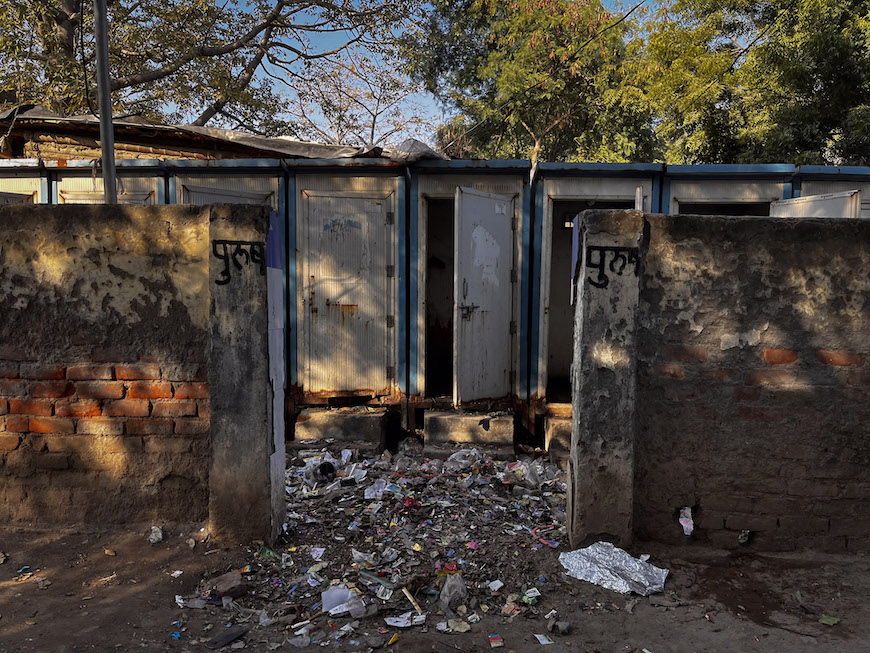
Neglected toilet facilities in Majnu Ka Tilla refugee colony, with overflowing garbage highlighting the lack of proper sanitation. Photo: Shivalika Puri
Many are still waiting. Under New Delhi’s Signature Bridge, spanning India’s sacred river Yamuna, an informal settlement has become home to Pakistani Hindus since 2014. They’re still waiting for citizenship. Not only are they excluded from voting rights but also welfare schemes. In Delhi’s harsh weather conditions, the refugees face everything from dangerous levels of air pollution to flooding.
READ: Kashmir’s First Election in a Decade Shows the Changing Face of Political Participation
A 50-year-old woman, who requested anonymity, says they have to be alert all the time. “We are surrounded by a jungle here. There are snakes and wild animals. Then, during floods every monsoon, our tents get submerged, forcing us to move to higher ground for safety. We don’t need money or food ration. All we want is a decent place to live.”
Hindu Singh Sodha, the founder and president of Seemant Lok Sangathan, emphasised that the real challenge goes beyond just granting citizenship.
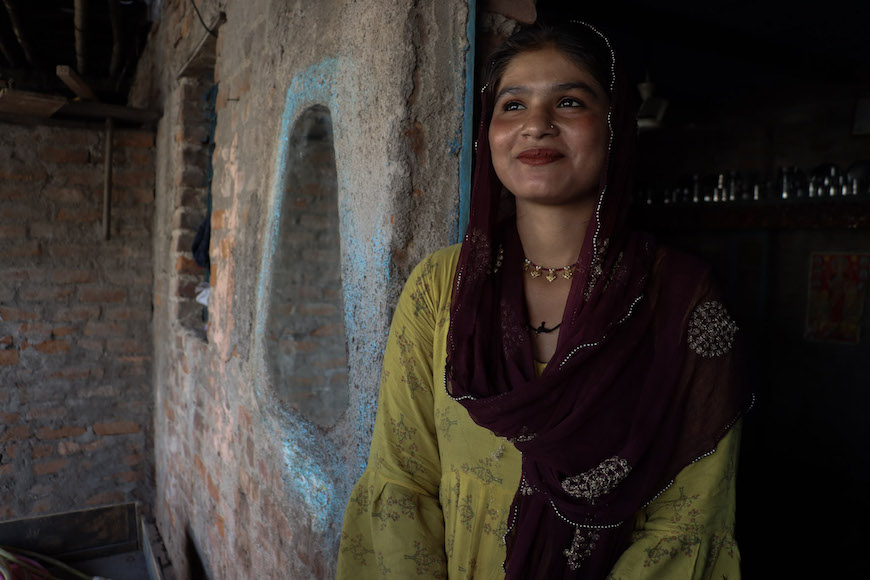
Rajkumari Gulab, 18, poses for a portrait inside her makeshift home in Majnu Ka Tilla refugee colony. Photo: Shivalika Puri
“Under the CAA, citizenship is only granted to those who arrived before December 31, 2014. So what about those arriving today? Has the persecution and discrimination against them stopped?” Sodha told Asian Dispatch. “I believe having a cut-off date for CAA eligibility is not justified. This is one area where the government needs to reflect and reform the law.”
Sodha also highlighted the complex and lengthy process to gain citizenship in India, which sidelines the real issue of rehabilitation. “[The citizenship process] can take 20 to 25 years but that alone does not solve their problems if [refugees] continue living in deplorable conditions,” he said. “The government must go beyond legal recognition and focus on structured resettlement, which includes access to housing, healthcare, and opportunities for livelihoods. Currently, there are no proper rehabilitation measures in place.”
As the fate of refugees and newly-minted citizens remains uncertain, Sodha says the government’s duties are far from over. “If refugees are left stranded, it will damage the government’s credibility and the trust of those who believed in India’s commitment to them.”
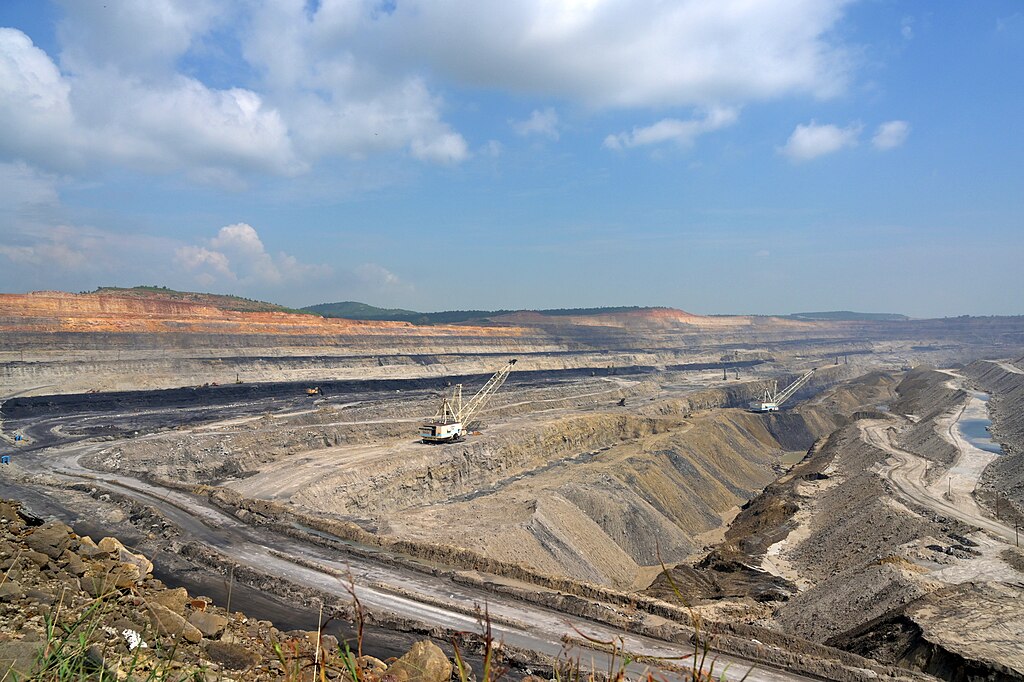
Representative image of an Indian coal mine. Photo: Wikimedia Commons

Coal has long been a primary energy source, fueling industries ranging from electricity generation to steel production, cement manufacturing, pharmaceuticals, and chemical synthesis. However, its use comes at a significant cost. The combustion of coal releases harmful gases such as carbon dioxide, sulfur dioxide, nitrogen oxides, and carbon monoxide, all of which pose serious threats to human health and the environment.
According to global research, air pollution caused by coal combustion claims approximately 800,000 lives annually, with the highest death tolls reported in countries like India and China. Recognising these dangers, the UN has consistently advocated for reducing coal use. UN Secretary-General António Guterres has called for an end to what he terms the “deadly addiction” to coal, emphasising that phasing out coal from power generation is essential to achieving the Paris Agreement’s goal of limiting global warming to 1.5°C.
Despite these warnings, countries including Pakistan continue to rely heavily on coal.
The Role of Energy Sources in Environmental Pollution
Pakistan ranks as the sixth-largest country globally in terms of coal reserves, with an estimated 184 billion tons, predominantly located in Sindh province. Senior journalist Raja Muhammad Saqib, based in Karachi, shed light on the environmental and health consequences of coal usage during an interview with TNN.
“While coal is undoubtedly an energy resource, its impact on human lives and the environment is devastating,” Saqib noted. He highlighted that the largest coal reserves are found in Tharparkar, with additional mines in Jamshoro. The Sindh Coal Mining Authority has divided the Tharparkar coalfields into six blocks, all of which are currently operational.
Currently, the Thar coal power plants generate 2,640MW of electricity, which is fed into the national grid. Future expansion plans aim to increase output to 3,960MW. Despite the sparse population in Jamshoro and Tharparkar districts, Saqib emphasised that coal-induced pollution affects millions of people.
“These effects are not confined to the districts or even the country—they cross borders, impacting communities on both sides,” he stated.
A 2020 study warned that emissions from Thar’s coal-fired power plants could affect nearly 100,000 individuals and result in over 29,000 deaths in the next 30 years. Respiratory diseases like asthma are on the rise, while children face increased rates of congenital respiratory conditions, diabetes, and heart diseases.
Experts estimate that Pakistan contributes only 0.8 percent to global carbon emissions. Even with the operation of coal-fired plants, this figure would not exceed 3 percent. Despite this, the environmental and health toll from coal usage remains alarming.
The discovery of coal in Tharparkar’s desert region, ranked among the world’s 20 largest coal reserves, has been hailed as a milestone. Electricity generation has already commenced under a public-private partnership, signaling a new chapter in Pakistan’s energy production. However, the long-term environmental and public health implications remain a pressing concern.
Pakistan’s Efforts to Reduce Dependence on Coal: A Push for Cleaner Energy
Pakistan has made various commitments over the years to reduce its reliance on coal as an energy source in alignment with international agreements. On December 12, 2020, then-Prime Minister Imran Khan announced during the “Climate Ambition Summit” that Pakistan would increase its dependence on renewable energy sources and pledged not to install new coal-fired power plants. However, despite these assurances, coal continues to play a significant role in the country’s energy production.
Recently, Federal Minister for Energy, Owais Leghari, highlighted steps taken by the Ministry of Energy to challenge planned projects for the next decade. These projects include major hydropower ventures like the Diamer Bhasha Dam, nuclear power initiatives, and renewable energy projects, all assessed for feasibility based on their cost-effectiveness for consumers and the economy.
Speaking at a hydroelectric power event in Islamabad on January 10, the minister revealed that under the “Power Generation Expansion Plan” for the next 10 years, only 87MW of the planned 17,000MW would meet the low-cost energy principle for integration into the system. He emphasised that transitioning from coal to cleaner energy sources would not disrupt the country’s energy needs. The government also plans to convert local coal into liquid or gas forms for energy use, avoiding direct combustion.
According to the minister, by 2030, 60 percent of Pakistan’s energy will come from alternative, environmentally friendly sources, and 30 percent of vehicles will run on electricity. These measures aim to combat the adverse effects of climate change, which have disproportionately affected Pakistan in recent years.
Environmental organisations such as the Alliance for Climate Justice and Clean Energy have welcomed these steps as a move in the right direction. They believe this strategy will help Pakistan reduce greenhouse gas emissions and mitigate environmental damage.
According to a BBC report, Pakistan’s solar energy production stood at 1,000MW in March last year. By March of this year, it had surpassed 1,800MW, reflecting a rapid increase in renewable energy capacity.
The shift towards cleaner energy is crucial for Pakistan as it battles the dual challenge of meeting its growing energy demands while addressing the pressing need for climate resilience. By focusing on renewable energy and reducing dependence on coal, the country is taking steps toward a sustainable and greener future.
“Approximately 90 percent of coal mines in Pakistan, particularly in Khyber Pakhtunkhwa, operate illegally, while only 10 percent are registered,” says Abid Yar, General Secretary of the Shangla Mines Workers Welfare Association (SAOMA). According to Yar, more than half of the coal miners in Pakistan hail from Shangla district. Even before Pakistan’s creation, Shangla’s labor force worked in coal mines and tunnels across Balochistan. Unfortunately, the lack of safety measures in these mines frequently results in fatal accidents. Over the years, many workers have lost their lives, while thousands have been left disabled.
Challenges in Mine Oversight and Worker Safety
Yar highlighted the inadequate oversight in Khyber Pakhtunkhwa, where only 14 inspectors are assigned to monitor thousands of coal mines across the province. “How can such a small team effectively inspect all these mines?” he questioned. He also blamed the contractor system for neglecting worker safety, stating that contractors prioritize profits over worker welfare.
Coal mines often contain hazardous gases, but safety equipment and precautionary measures are rarely provided. Additionally, there are no medical facilities or dispensaries near these mines to address emergencies. According to Yar, hundreds of accidents occur annually, yet no action is taken against mine owners or contractors. It is estimated that between 300 and 400 workers lose their lives every year in these mines.
Yar accused authorities of negligence, alleging that inspection agencies often accept bribes from contractors, turning a blind eye to safety violations.
The Paradox of Black Gold
Coal, often referred to as “black gold,” plays a critical role in the country’s economy. It is used in the production of bricks, cement, steel, and, most importantly, electricity. A single ton of coal sells for approximately PKR 50,000 to 60,000, and daily coal extraction from a single mine ranges from 200 to 300 tons. Given its high profitability, Yar claims that bureaucrats, politicians, and officials are complicit with mine owners in exploiting the sector for financial gain.
Despite coal’s economic significance, workers remain underpaid and exposed to life-threatening conditions. Laborers, earning between PKR 45,000 and 60,000 monthly, risk their lives daily in these mines. According to Yar, the coal mining industry operates like a powerful mafia, with government oversight appearing weak and ineffective.
Dr Habib Jan, Director of the Khyber Pakhtunkhwa Environmental Protection Agency (EPA), emphasises the detrimental impact of coal usage on the environment and human health. Speaking to TNN, he explained that coal combustion releases toxic gases like carbon monoxide and nitrogen oxides, which pose severe risks to both individuals and the ecosystem.
The EPA has repeatedly warned against the use of coal and advocates for alternative energy sources. Jan suggested adopting technologies such as the zigzag kiln method, which has already been introduced in brick production. “Zigzag technology prevents carbon particles from escaping into the atmosphere, thereby mitigating environmental damage,” he explained. In Khyber Pakhtunkhwa, 12 brick kilns have successfully transitioned to this cleaner technology.
Jan called for the closure of coal-based power plants due to the hazardous emissions they produce. He recommended focusing on cleaner, sustainable energy solutions such as hydropower, windmills, and solar energy. “Switching to these alternatives can not only meet energy demands but also protect the environment from further degradation,” he stated.
The Road to Green Energy
In 2023, the UN cautioned Pakistan about the potential risks associated with shutting down coal-powered energy plants. The UN emphasised that addressing these challenges requires a comprehensive evaluation of energy security, environmental and economic impacts, and alternative methods for power generation.
According to the report, nine out of Pakistan’s eleven coal-based power plants are tied to the China-Pakistan Economic Corridor (CPEC) agreements. China’s 2021 decision to halt investments in overseas coal projects presents a critical opportunity for Pakistan to transition away from coal. The report also stressed the importance of increasing investments in green energy from 2021 levels by 2030 to place the country on a path to stability. This involves reallocating funds toward low-carbon fuels, enhancing energy efficiency, and reducing investments in fossil fuels.
Despite contributing minimally to global pollution, Pakistan remains highly vulnerable to the effects of climate change. Transitioning to sustainable energy sources is not only essential for environmental protection but also for mitigating the adverse impacts of climate change that disproportionately affect the country.
The UN’s recommendations highlight an urgent need to prioritise renewable energy investments to ensure a greener, more resilient future for Pakistan.
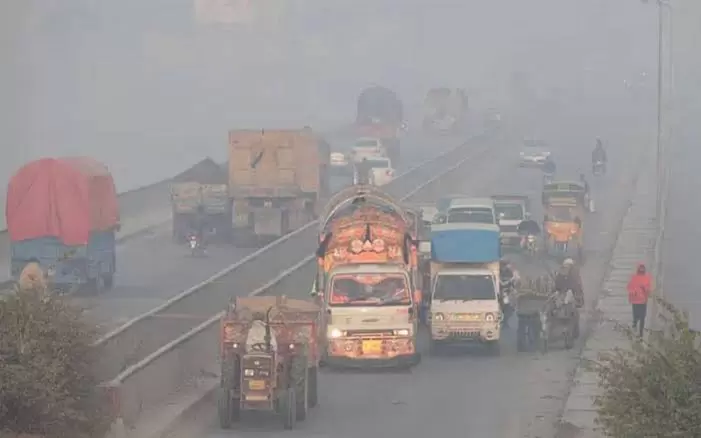
Representative Image
Reports across media outlets have frequently cited Lahore as the most polluted city worldwide, with toxic air levels posing significant health risks. Following Lahore, cities like Multan, Islamabad, Peshawar, Rawalpindi, Haripur, and Karachi rank high on the pollution index. However, climate change has intensified the smog crisis, lengthening its seasonal duration.
A primary driver of smog is vehicle and factory emissions, along with smoke from burning crop stubble, coal, waste, and tires. These pollutants accumulate in the atmosphere and manifest particularly during winter, persisting through the season. Yet, recent years have seen climate change exacerbate this process.
In exploring the climate and smog connection, TNN spoke with Dr. Muhammad Faheem, head of the Peshawar Meteorological Department. Dr. Faheem noted that climate change has altered local weather patterns, affecting rain schedules and intensifying smog duration. “Previously, winter rains began around late November or December and continued until March. However, due to climate change, December is now notably dry, and rainfall in November has also reduced, which in turn extends the duration and severity of smog and fog, posing dangers to the ecosystem and public health.”
Fog Formation and its Duration in Pakistan’s Plains
Dr. Faheem explained that fog forms when skies are clear, wind speeds are negligible, and humidity levels are high, creating ideal conditions for fog to persist. The occurrence of fog isn’t restricted to specific months but is common from October onward in plains regions. In these areas, as the ground cools, any incoming humid air can result in condensed vapor droplets, creating fog.
Due to reduced December rainfall in recent years, fog episodes now last longer. Additionally, if January and February also remain dry, fog and smog can extend into late February. Climate shifts have contributed to this prolonged duration, bringing about hazardous implications for urban environments and the communities within them.
With Lahore currently topping the global list of most polluted cities, Pakistan faces an intensifying air quality crisis, particularly affecting major cities like Multan, Islamabad, and Karachi. Recent reports indicate that climate change has extended the duration of smog and fog across the country, worsening public health and environmental conditions.
Dr. Muhammad Faheem from Peshawar’s Meteorological Department highlighted how prolonged fog can disrupt aviation, and road traffic, and impact respiratory health, especially in vulnerable groups. “People with respiratory illnesses may experience significant challenges breathing, creating dangerous conditions,” he stated, adding that fog-related accidents and delays are also common on motorways and major roads.
Health experts warn that smog and fog pose serious health risks for children and elderly citizens, leading to illnesses like throat infections, eye irritation, allergies, and respiratory issues.
Distinguishing Smog from Fog
Dr. Faheem clarified that, though visually similar, fog and smog have distinct compositions and impacts. Fog occurs when moisture condenses due to low temperatures, creating a thick white haze, while smog combines this moisture with pollution, darkening the air and forming a dense, dirty mist. Unlike fog, which dissipates with the sun, smog lingers and is laden with airborne pollutants, causing noticeable eye and respiratory irritation.
The World Air Quality Index recently ranked Lahore as the world’s most polluted city, underscoring a crisis that experts argue is exacerbated by insufficient governmental intervention. The United Nations’ Intergovernmental Panel on Climate Change (IPCC) has repeatedly urged global policymakers to address climate change as a priority. However, Pakistan, although ranked among the five most climate-vulnerable countries, has yet to implement effective measures beyond paperwork.
Experts emphasize the urgent need for concrete policies and actions to combat air pollution and address climate impacts as Pakistan faces an escalating environmental and public health crisis.
In Asia, the battle against gender-based violence reveals the harsh realities of society. World Health Organization reports that 1 in 3 women globally have experienced physical or sexual violence. This alarming statistic, while shocking and devastating, only scratches the surface of a more insidious issue: Marital rape. Despite the prevalence of violence within marriage, the laws governing marital rape in most Asian countries remain nonexistent, leaving countless women trapped in a cycle of abuse.

A study by UNESCO reveals that over 37 percent of women in South Asia, 40 percent in Southeast Asia, and up to 68 percent in the Pacific have faced violence from intimate partners. The numbers could be much higher considering that marital rape often goes unreported because women are conditioned to accept, endure and adjust within the confines of marriage. Across Asian societies, marriage is often presented as a sanctuary of security – both economic and physical. But we must ask: Safety for whom? If this institution is meant to protect women, then how are women expected to safeguard themselves from people within the institution? In reality, this “safety” seems illusory, benefitting the patriarchal individuals who designed these institutions.
Illustration: Sharanya Eshwar
While countries like Nepal, Bhutan, Indonesia and the Philippines recognise marital rape as a crime, many Asian countries still lack comprehensive legal frameworks to curb it, thereby prioritising cultural norms over safety of women. For instance, in India, the debate over criminalising marital rape, which is currently under judicial review by the Supreme Court, has its opponents – which include everyone from government officials to conservative groups – arguing that the law could be misused against men, and that not allowing marital rape could destabilise family structures. India prides itself in having one of the world’s lowest divorce rates but that speaks more to societal stigmas around divorce (especially for women) in the country and lengthy legal processes. The arguments against criminalisation of marital rape also reveal a troubling prioritisation of protecting men in patriarchal societies.
It’s not all hunky dory in countries that recognise marital rape, such as in Sri Lanka, Malaysia and Bangladesh. There are conditions and limitations. For instance, in Sri Lanka, marital rape is recognised only if the couple is legally separated. Or in Malaysia, it’s recognised only if the husband is causing hurt in order to have sexual intercourse with the wife. In Bangladesh, unless the victim is under the age of 13, marital rape isn’t recognised.
In Pakistan, there is no explicit laws where forced sex within marriage is criminalised. However, a recent ruling in Karachi marked a notable shift: A man was sentenced to three years for forcing his wife into non-consensual sex. This verdict acknowledged intimate partner violence as a criminal offence. In this case, the survivor’s lawyer, Bahzad Akbar, argued that the act of forced sodomy fell under the definition of rape in the amended Section 375 of Pakistan’s Penal Code.
The institution of marriage, peddled to offer protection and partnership, often serves as a deeply flawed and unfair structure for women. The failure to criminalise marital rape fully is a glaring example of shielding men from accountability, and enabling them to commit violence behind closed doors. Since time immemorial, social expectations and legal loopholes have trapped women in a position where they must choose between their safety and dignity, often leaving them deprived of both. The idea of marriage as a safe haven is distorted when norms of “obedience”, “sacrifice” and “submissiveness” to a husband are culturally imposed, and the legal system upholds these expectations.
The complicity of societal norms and the law in many parts of Asia reflects a troubling reality: Marriage is less about equal partnership and more about control. By framing consent as unnecessary within a marriage, the law not only fails women but actively enables perpetrators.
This complicity is not coincidental—it’s a well-orchestrated team effort between tradition and the legal system, where both reinforce each other to keep women subjugated within marriages. Women deserve legal systems that prioritise their rights and safety over outdated notions of family and honour. Until then, the institution of marriage, as it currently stands in many Asian countries, will continue to fail women.
In a historic victory, an alliance of opposition political parties has won the assembly elections in the Indian Union Territory of Jammu & Kashmir. Omar Abdullah – who previously held the office from 2009 to 2014 – will make a comeback after nine years.
The election outcome is significant for one of the world’s most militarised zones, which is holding its first assembly elections for the first time in a decade. Voters turned up in historic numbers to elect 90 members for the union territory’s Legislative Assembly.
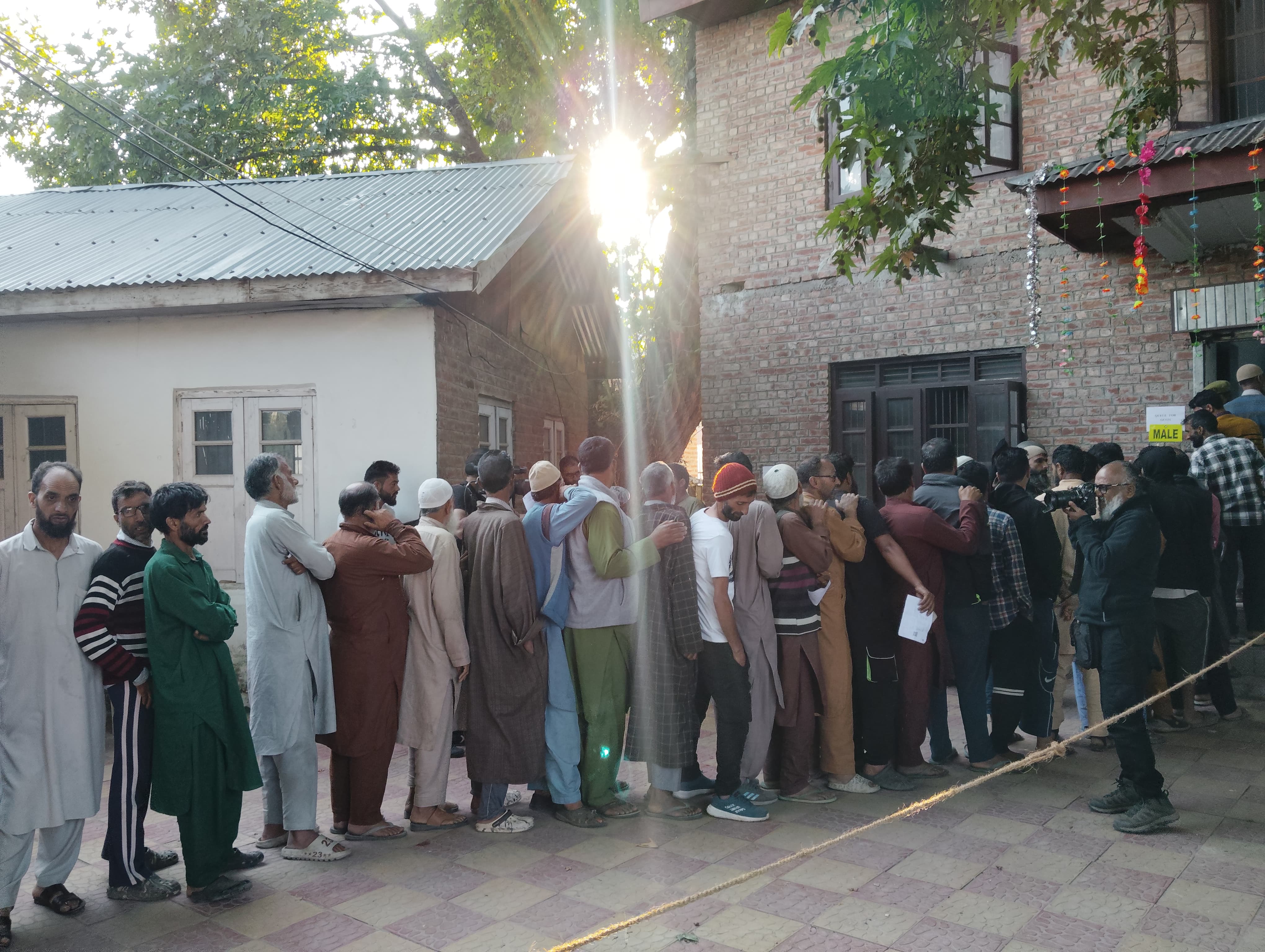
People line up at a voting booth in Pulwama district of Kashmir on September 19, 2024. Photo: Nasir Khuehami
The Kashmir region is at the heart of conflict between India and Pakistan. Both the nuclear-armed countries govern parts of the region but claim it in its entirety. For the last three decades, an armed separatist movement in the Union territory of Jammu & Kashmir has led to the deployment of around 130,000 military personnel, of which around 80,000 are stationed at the country’s border with Pakistan. The fate of Kashmir is an international issue and many of India’s powerful allies, including the US, avoid taking sides while maintaining that the two countries should consider the wishes of the people of Kashmir.
In August 2019, Indian Prime Minister Narendra Modi and his ruling Bharatiya Janata Party (BJP) revoked a long-held autonomous status – secured within Article 370 and 35A of Indian Constitution – of Jammu and Kashmir. For the BJP, it was an election promise meant to restore India’s administrative control over India’s only Muslim-majority state. For the Kashmiris, the move led to rising unemployment, continued violence and free reign by the federal government over its profitable natural resources.
These elections came three years after the timeline promised by the Modi government, and were held after the Supreme Court issued an order last December. In the past few decades, Kashmiris have boycotted elections in the region as a protest against the demotion of Kashmir.
Autonomous or not, Kashmiris exhibited their electoral choices after a long time this time.
Changing face of Political Participation
The election saw Modi’s BJP pitted against an alliance of the National Conference (NC), the Indian National Congress (INC), National Panthers Party and Communist Party of India (Marxist). The NC and its dynastic Abdullah family have dominated politics in Kashmir for decades.
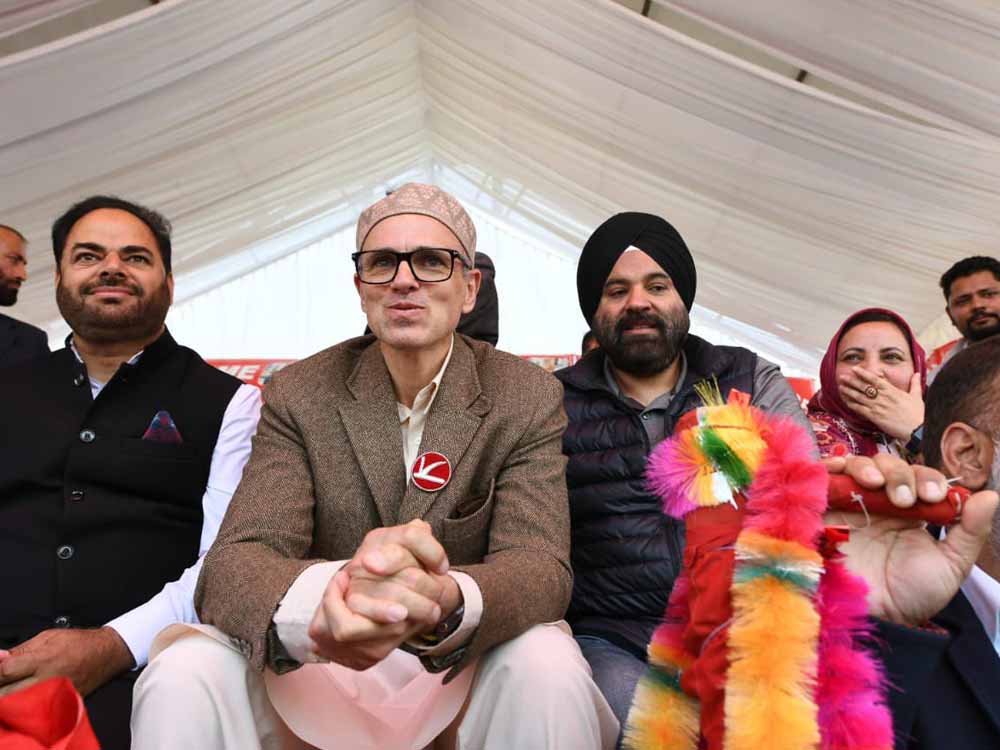
Omar Abdullah (center) is set to be the Chief Minister of Jammu & Kashmir once again. Photo: JKNC
These elections also saw the rise of independent candidates, some of whom had been arrested during the protests after the abrogation of 370 and 35A in 2019. One of them is Abdul Rashid Sheikh, an independent candidate known widely as “Engineer Rashid”, who was arrested under India’s draconian anti-terror law, the Unlawful Activities (Prevention) Act (UAPA) in 2019. He defeated Abdullah in the 2024 Lok Sabha Elections and last month, he was granted bail to campaign for these elections.
As the Indian opposition accused the BJP of having “non-locals running Jammu and Kashmir”, local representatives like Rashid came to symbolise the rising political participation of Kashmiris.
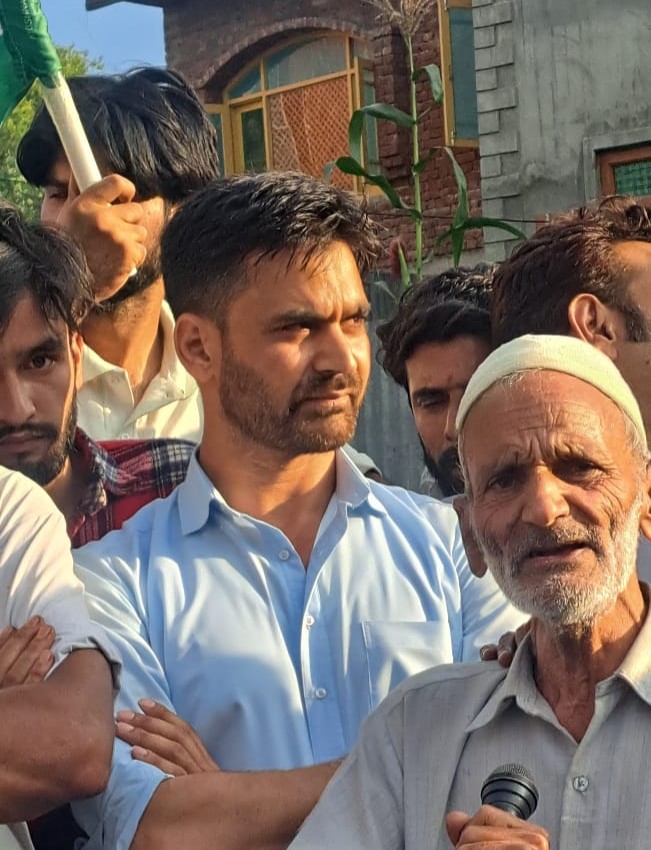
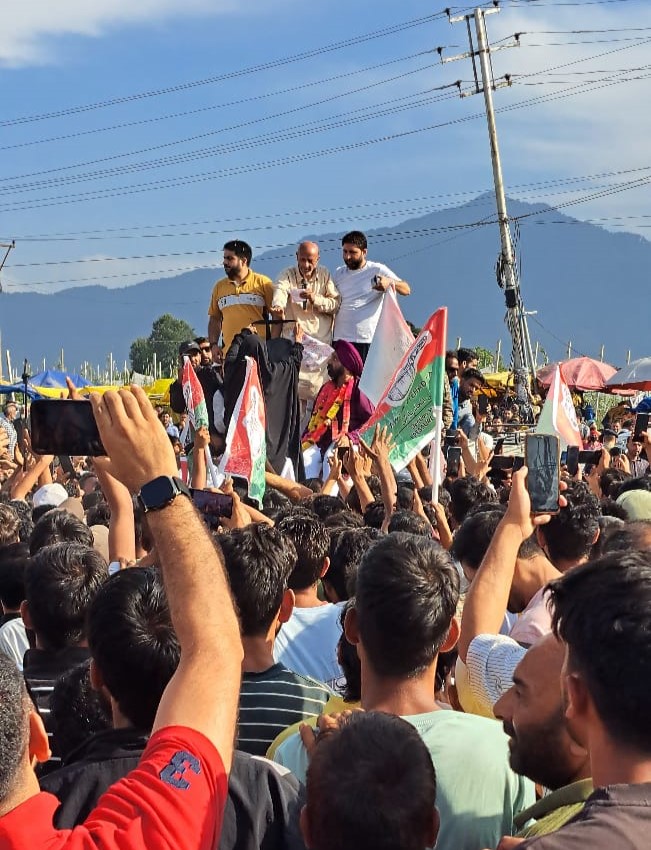
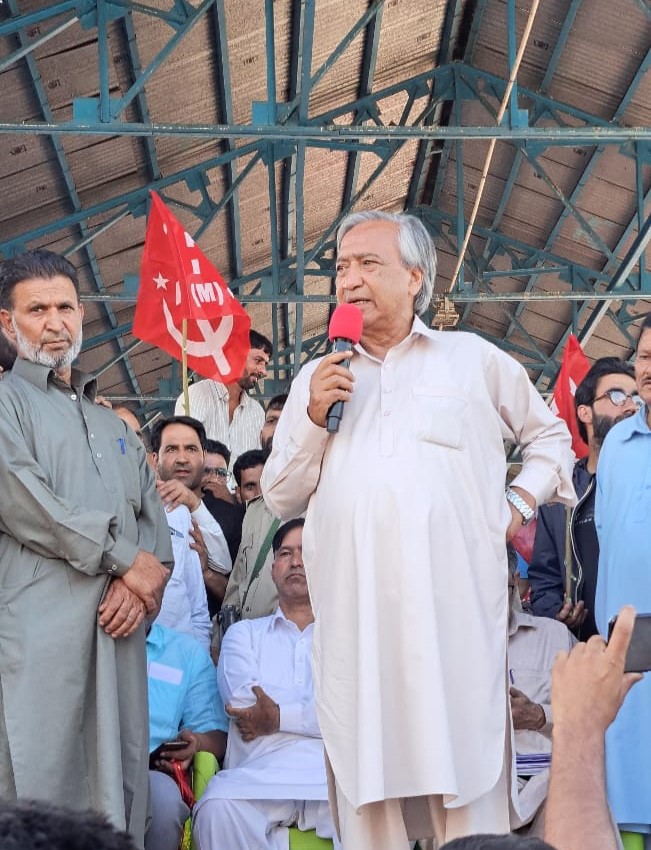
Caption: (from left to right) a) PDP’s Waheed Para, who won Pulwama seat b) Engineer Rashid addressing a crowd c) CPI(M) leader Mohammed Yousuf Tarigami. Photos: Naseer Ahmad
“Since 2019 particularly, a feeling of disenfranchisement has run very deeply in the Kashmiri psyche,” Yaqoob-Ul-Hassan, a research analyst at the Indian government-funded think tank Manohar Parrikar Institute for Defence Studies and Analyses, told Asian Dispatch. “[The Kashmiris] may dislike the NC or the PDP as entities, but they still see the representatives from these parties as one of their own.”
For Sumantra Bose, a comparative political scientist and author of Kashmir at the Crossroads: Inside a 21st Century Conflict, the popularity of representatives like Rashid is a gesture of protest. But it also reflects Kashmiris’ dissatisfaction with legacy parties.
“Both Omar Abdullah and the NC party have a long history of what many in the Kashmir valley regard as collaboration with Indian authorities,” Bose told Asian Dispatch. “Even though NC is the historic party for the region, Omar Abdullah was Chief Minister during the stone pelting uprising of 2010, which was suppressed very harshly.”
In 2010, Indian Army soldiers killed three Kashmiri civilians, citing it as an anti-militancy operation against Pakistani infiltrators but was later found to be staged. The incident triggered state-wide protests demanding reduction of troops. The Indian government grants special privileges to the armed forces in Kashmir – under the The Armed Forces (Jammu and Kashmir) Special Powers Act – to operate under impunity and emergency powers. The 2010 protests killed over a hundred people – mostly civilians.
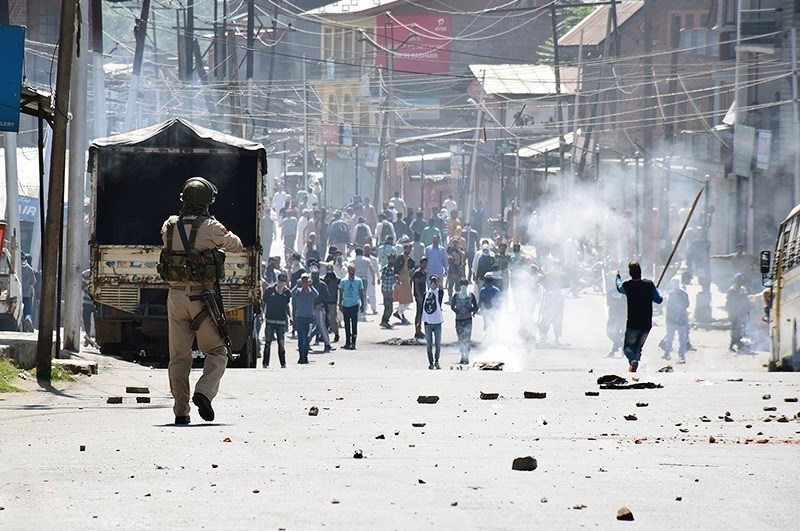
Police confront protestors in Kashmir during a December 2018 demonstration. Photo: Seyyed Sajed Hassan Razavi via Wikimedia Commons

Bose added that other legacy parties including the People’s Democratic Party (PDP) and its leader Mehbooba Mufti are similarly infected too. Mufti was the chief minister during the violence of 2016-17. At that time, her party’s failed coalition with the BJP left the region at the mercy of federal rule.
However, Waheed Para, the PDP candidate from Pulwama constituency who won the seat by over 8,000 votes yesterday, reaffirmed the popularity of his party and told Asian Dispatch that these elections are different.
“For the first time, all sorts of ideologies met at the ballot box. From the so-called ‘anti-nationals’ to the UAPA-accused, to the detained people to mainstream— all political ideologies are participating in the process,” said Para. “Today, democracy is seen as defiance and a means of resistance. It is not about violence anymore. So young people are inspired to vote.”
Bose added: “Rather than the product, it is the process that is more important. The people are getting to vote again, and the turnout over three polling days has been significant. It signals the return in some form of normal cognitive politics.”
In the Hindu-majority Jammu region, the BJP dominated and won 29 seats out of 43. However, that win doesn’t dilute the misgivings Kashmiris have about the events of 2019.
An election in the shadows of 2019
In 1947, when India gained freedom from British colonisation, the state of Jammu and Kashmir was granted special autonomy that allowed self-governance on issues ranging from transfer of land to defining permanent residents and granting state benefits. The provision has been at odds with successive governments, who used presidential orders to gradually reduce those privileges. In August 2019, when the BJP abrogated Article 370 and 35A, it created the Union Territories of Kashmir and Ladakh, which places the region directly under the federal government.
Since then, human rights watchdogs such as Amnesty International have highlighted consistent efforts by the federal government to crush political participation that opposes the BJP. Activists, journalists and academics have been detained and harassed arbitrarily. Dissenters are widely punished through the ambiguous public safety laws. The federal government has announced many plans to bring private investment in, which is likely to be a double-edged sword for a region that is also on the frontlines of climate change.
“Grassroots political activity was stifled through fear and persecution. Even the likes of Omar Abdullah and Mehbooba Mufti have been imprisoned for considerable periods,” said Bose. “The agenda was to virtually erase competitive politics from Jammu & Kashmir.”
The current election, locals told Asian Dispatch, may have fuelled local political participation. But 2019 looms large in public memory.
INC’s Suhail Bukhari told Asian Dispatch that the people have clearly indicated that the central government’s actions in Kashmir are unacceptable, and that the results favour anybody who stands against the BJP and the Rashtriya Swayamsevak Sangh, BJP’s ideological parent.
“Generation after generation, Kashmiris have given so much to this country. By blood and conviction, we’re Indian — and yet, we are treated differently,” Nasir Khuehami, the National Convenor of the Jammu & Kashmir Students Association, told Asian Dispatch. “Our leadership was stripped away, ignored and detained, and if the condition of local politicians and activists has been so terrible — think of the common man.”
What next?
In the lead up to the current elections, the rhetoric of Naya Kashmir, or “New Kashmir”, has dominated mainstream Indian media narrative, which is in line with the BJP’s co-opting of the 1944 manifesto that outlined the autonomous status of the region. Modi’s government turned the term around to signal massive changes as part of its campaign to dominate regional politics in Jammu and Kashmir.
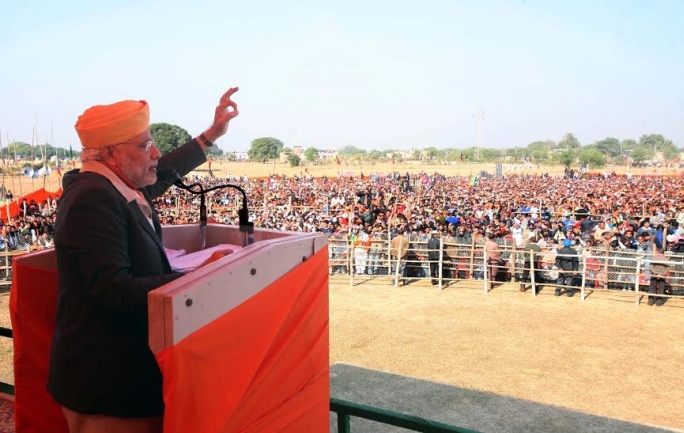
BJP’s Narendra Modi speaks at a campaign rally in Jammu & Kashmir in December, 2014. Photo: Prime Minister’s Office via Wikimedia Commons

Khuehami told Asian Dispatch that many issues such as high levels of unemployment, especially among the youth, directly counter the Naya Kashmir narrative. Since 2019, the Modi government has also been hosting foreign diplomats and dignitaries for guided tours of Kashmir, which critics say is designed to establish an insincere global narrative of a supposed normalcy and acceptance of the BJP’s 2019 ruling among the people.
“[The Modi government] brought all these sheikhs from Dubai, these big businessmen, with promises of jobs and recruitment. But on the ground, the reality is very different. Where is the prosperity? Where is the development?” said Khuehami.
Hassan, the research analyst, says that the BJP’s proclamation of Naya Kashmir isn’t entirely false. “The violence has gone down, there are no protests or strikes, and tourists have been coming in great numbers,” he countered before adding, “But militancy going down does not mean it won’t come back. We’ve seen the decline of insurgency [in Kashmir] in the past also,” he said. “But with some sort of a click, it could go up again. It’s down, but not gone.”
Violence and deaths in Kashmir has continued, with spikes in militant deaths and no sustained decline in civilian deaths, but official figures claim an era of peace. Bose says that figures of declining violence is a myth and artificially generated.
“It’s true that stone-pelting has declined post-2019 but that’s because of extremely draconian repression. There’s no guarantee that just as insurgency hasn’t gone away, that kind of uprising won’t come back,” he said. “(The decline) should come about through a genuine improvement in people’s situations.”
In the current elections, almost all parties promised restoration of statehood in some form. After the results, Abdullah reiterated that his party would work with the central government to bring back Article 370. Previously, Modi had also promised to reinstate statehood too but that “only the BJP will fulfil this commitment”.
National Conference spokesperson Tanveer Sadiq told Asian Dispatch that the people have reaffirmed their faith in them, and they look forward to doing everything to restore Kashmir’s political status while also ensuring jobs and work on everyday issues. However, Safiq added, a working relationship with the Center is vital for any of that to happen.
“The BJP-led government in the Center has to understand that now that people have given the mandate to the NC-Congress alliance, it becomes incumbent on the Central government to have a cordial relationship,” said Sadiq. “The Center and State need each other to ensure that states like Jammu & Kashmir become prosperous.”
Khuehami is optimistic about the question of accountability in the state. “We know that if they don’t stand up for us, we can vote them out. This is why people came out and voted,” he said. “We kept aside our political differences to preserve our identity, to get back our dignity—through this vote.”