“As I saw the barbed wire, it seemed to be the end of everything… I thought I’d never be able to return to my homeland. My dado’s dado [great grandfather] used to live right here in Murshidabad. My nani [maternal grandmother] lived in this village in Bhagawangola [block] where we have our home now.”
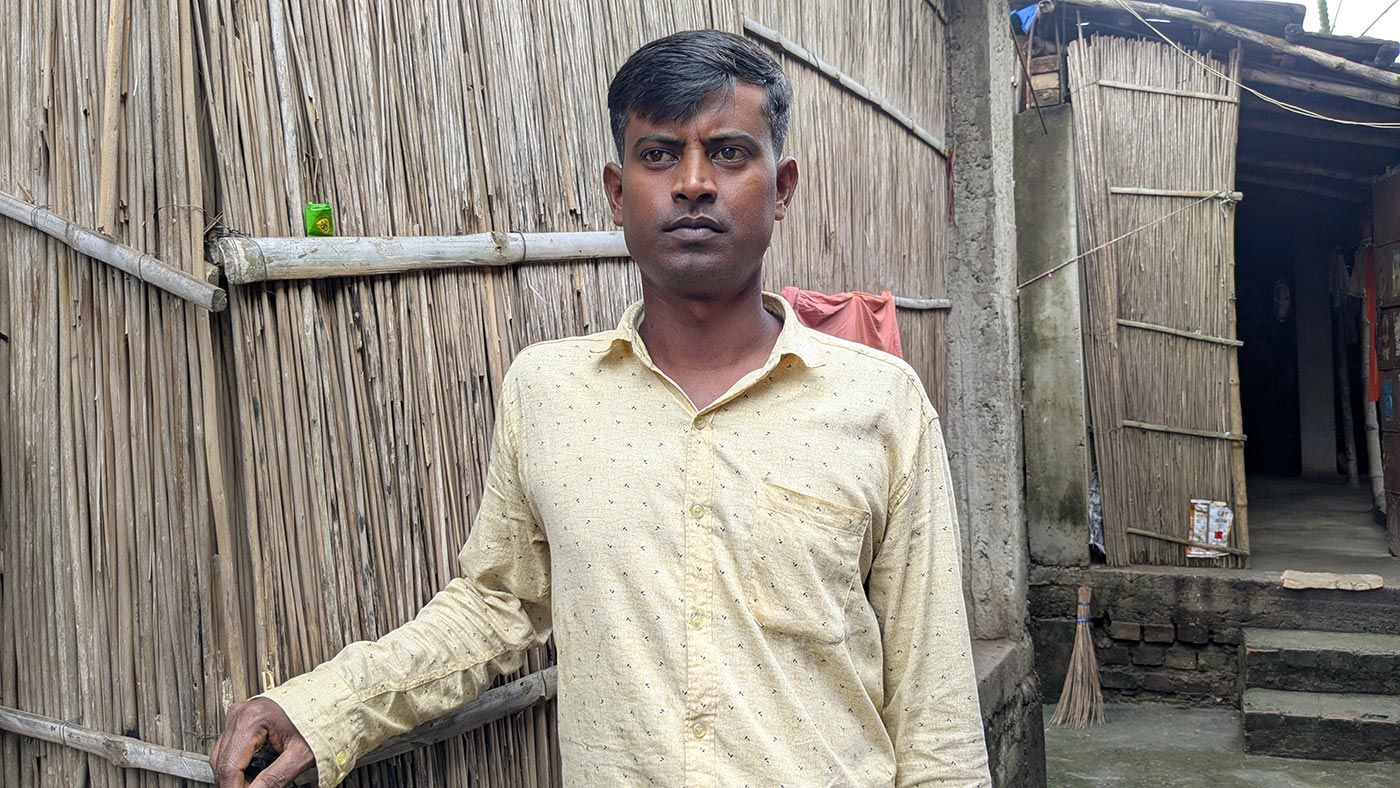
A visibly upset Mehbub Sheikh, 36, explains his family’s historic roots in Murshidabad district to us at his home in Balia Hasennagar. It’s barely a month since he was labelled a ‘Bangladeshi infiltrator’ and shoved across the border.
“Voter card, ration card, Aadhaar card – I have every single one. I have toiled hard and bought some land as well. How come they call me a Bangladeshi now?” asks the migrant labourer.
Mehbub is not alone. Migrants from Murshidabad across the country – construction labourers, domestic workers, street vendors and hawkers – ask the same question: why are Bengali-speaking Muslim migrant labourers of our district being targeted in various states?
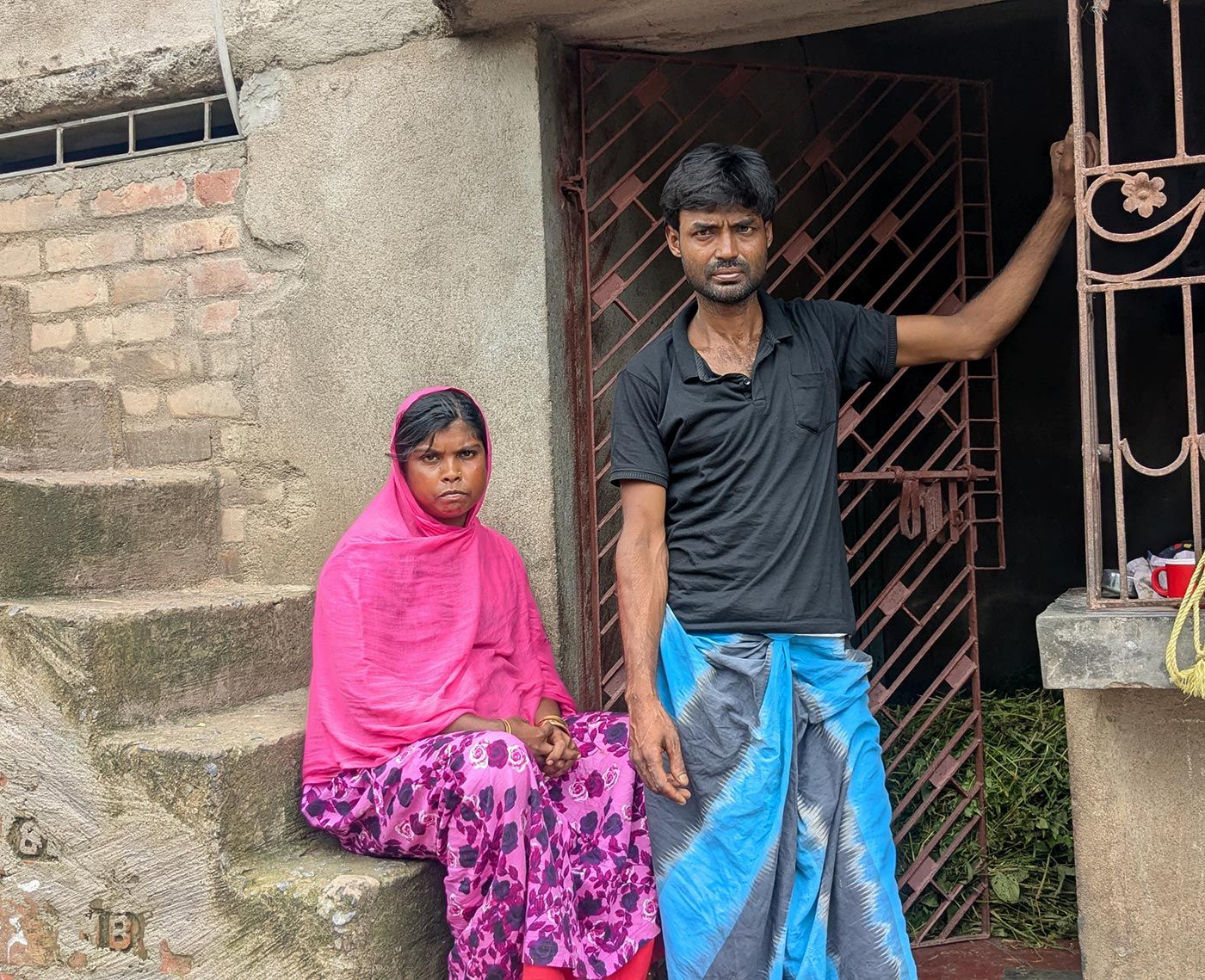
![‘No one raised a question [about our being Indians] until now. But with all these troubles [us] Bangali Musalman workers everywhere, we can’t help getting worried,’ says Bishakha Mondal (name changed), a domestic worker in Delhi. Photo: Anirban Dey/PARI](https://admin.asiandispatch.net/uploads/editor-image-new/image_20250917175810580868ca90d0f2dc0.jpg)
(Left) Mehbub Sheikh with his wife Surna Bibi at their home in Murshidabad’s Balia Hasennagar. On June 9, 2025, he was picked up by Maharashtra police and asked for documents to prove his citizenship. He was eventually pushed back and abandoned in Bangladesh.
(Right) ‘No one raised a question [about our being Indians] until now. But with all these troubles [us] Bangali Musalman workers everywhere, we can’t help getting worried,’ says Bishakha Mondal (name changed), a domestic worker in Delhi. Photos: Anirban Dey/PARI
“No one raised a question [about our being Indians] until now,” says Bishakha Mondal, 52 (name changed) from Gokarna village in Kandi. “But with all these troubles [us] Bangali Musalman workers everywhere, we can’t help getting worried.” She has been a domestic worker in Delhi for three decades. Her labour in five households there brings in Rs. 25,000 a month. She has an authentic voter card and ration card. Also an Aadhaar card and bank account linked to her Delhi address.
Murshidabad, administrative centre of undivided Bengal till the British shifted the capital to Kolkata, was once famed for its prosperity. Today, it supplies the biggest out-migrant workforce from West Bengal. Till May 2025, close to 4 lakh workers from here had registered for the Migrant Workers Welfare Scheme of West Bengal. (Curiously, the document citing these numbers has vanished from the government site). Independent estimates by different migrant organisations suggest there are more than a million such workers in Murshidabad. A state education ministry official says on condition of anonymity, “no government data would ever mention it… but the reality is, countless child labourers are [also] moving out for work every day.”
Both Mehbub’s younger brother Mujibar Sheikh,33, and their father Hossein Sheikh in his early sixties, worked as migrant labourers. Hossein still works in Kolkata as a mason. Mujibar, now a driver, had been to Delhi and Mumbai with Mehbub, for masonry work. Both brothers remember childhood as an incessant battle with poverty. Mehbub remembers: “There was a time when I used to graze the goats of others. I have not studied much. Ours was a very needy family. The burden of poverty had me working from an early age.”
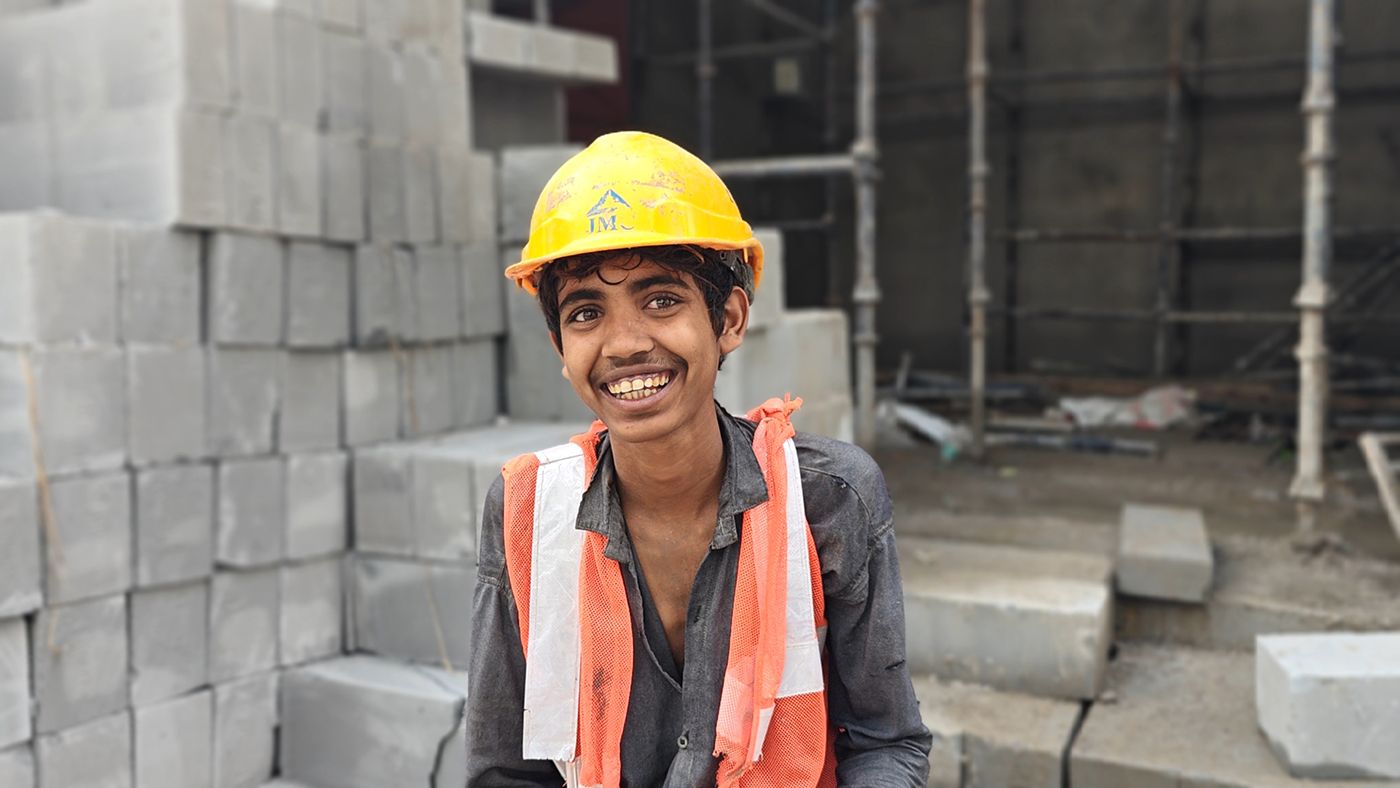
Babu Islam (doesn’t wish to reveal his real name) from Dhuliyan in Murshidabad fled Odisha when the attacks on Bengali Muslim migrant workers began around September, 2024. He says: ‘I am better now. I came back and took this work in Kolkata. I miss my home’. Photo: Smota Khator/PARI
At 17, Mehbub migrated out in search of a livelihood with his inheritance of masonry skills. As someone who has worked in states like Delhi, Punjab, Tamil Nadu, Rajasthan and elsewhere, he finds the awful changes in his migrant workplaces baffling. Media reports and personal accounts record several instances of migrant labourers like him being pushed out on flimsy grounds to Bangladesh.
There is a palpable atmosphere of suspicion and distrust. That’s unsurprising: For more than a year, they have been targeted by law enforcement agencies of both central and state governments. “Our names don’t sound like yours. That’s why we are humiliated,” Mujibar tells us. Over the last one year, Muslim migrant labourers from West Bengal have been picked up, branded as ‘Bangladeshi’, ‘Rohingya’, ‘Ghuspethia’ (infiltrator) or ‘illegal’.
All of them recognise and speak of hatred based on language, religion, caste, or regional identity having intensified in the last decade, leading to the current escalation. The Muslim migrant workforce is the most vulnerable segment, bearing the brunt of hate speech propagated by the fundamentalist outfits and political leaders.
“We are having to choose between life and work,” people in Diarjali Bagicha complained to this reporter. Nejema Bibi, 32, who lives here in a two-room brick house with unplastered walls, fears for her husband Rafiqul Islam working in Kanpur, Uttar Pradesh. “My heart sinks if he doesn’t pick up my calls for even just a few hours,” she says.
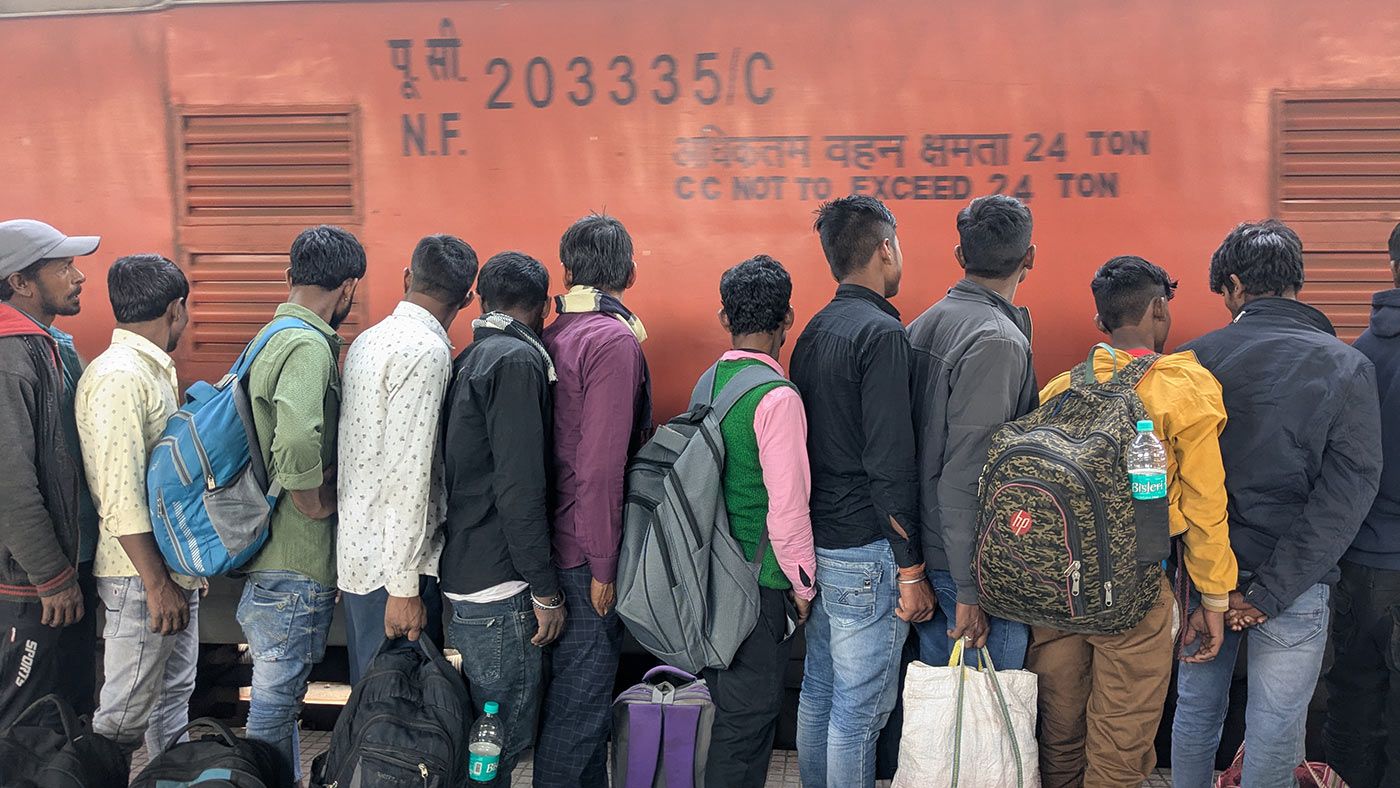
Young migrants in search of work wait to board a train to Andhra Pradesh at the Howrah rail terminus. Photo: Anirban Dey/PARI
Mehbub returned to Balia Hasennagar this May to celebrate Eid al-Adha (in early June, 2025) with his family. Their two-and-a-half storey house was built brick by brick over years by this family of masons. It has five rooms and some space on the ground floor to set up a shop in future. The part where Mehbub lives with his wife and homemaker Surna Bibi, 30, and their three children, is as yet unplastered on either side. Their eldest son Bakul Sheikh,16, having dropped out of school, is working in a nearby shop. The younger sons – Sagar Sheikh,12, and Rehan Sheikh,7 – are studying in a local school. On the occasion of holy qurbani and Mehbub’s homecoming, his family even made arrangements for the ritual sacrifice.
It didn’t happen. “Repeated calls from the construction site at Thane,” summoned him back.” Mehbub flew back to Maharashtra and resumed his work – leaving family and celebrations behind.
On June 9, while having tea at a local stall, he was picked up by police without explanation and taken to an outpost of theirs near the Shree L R Tiwari College of Engineering in Mira Road, Thane. At night, he was transferred to the Mira Road Police Station where he was asked for documents to prove his citizenship.
“‘You are a Bangladeshi, right?’ The officers asked me in Hindi. I said, ‘I am from West Bengal’ and showed them my Aadhaar and PAN card. They said, ‘these can be bought for five rupees nowadays’,” Mehbub told this reporter.
Somehow, he stealthily phoned his family in Balia Hasennagar who immediately contacted the local gram panchayat at Mahishasthali and sent all the necessary documents to the Mira Road Police Station. “For four long days,” says Mehbub, “I endured immense mental torture. Through daytime I was made to sit outside the station and was put in a police camp during nights.”
The Mira Road police contest Mehbub’s account of wrongdoing on their part. Senior Inspector Meghna Burade stated that they were “not at fault.” And that the detention of Mehbub Sheikh and others was carried out on a police commissioner’s order.
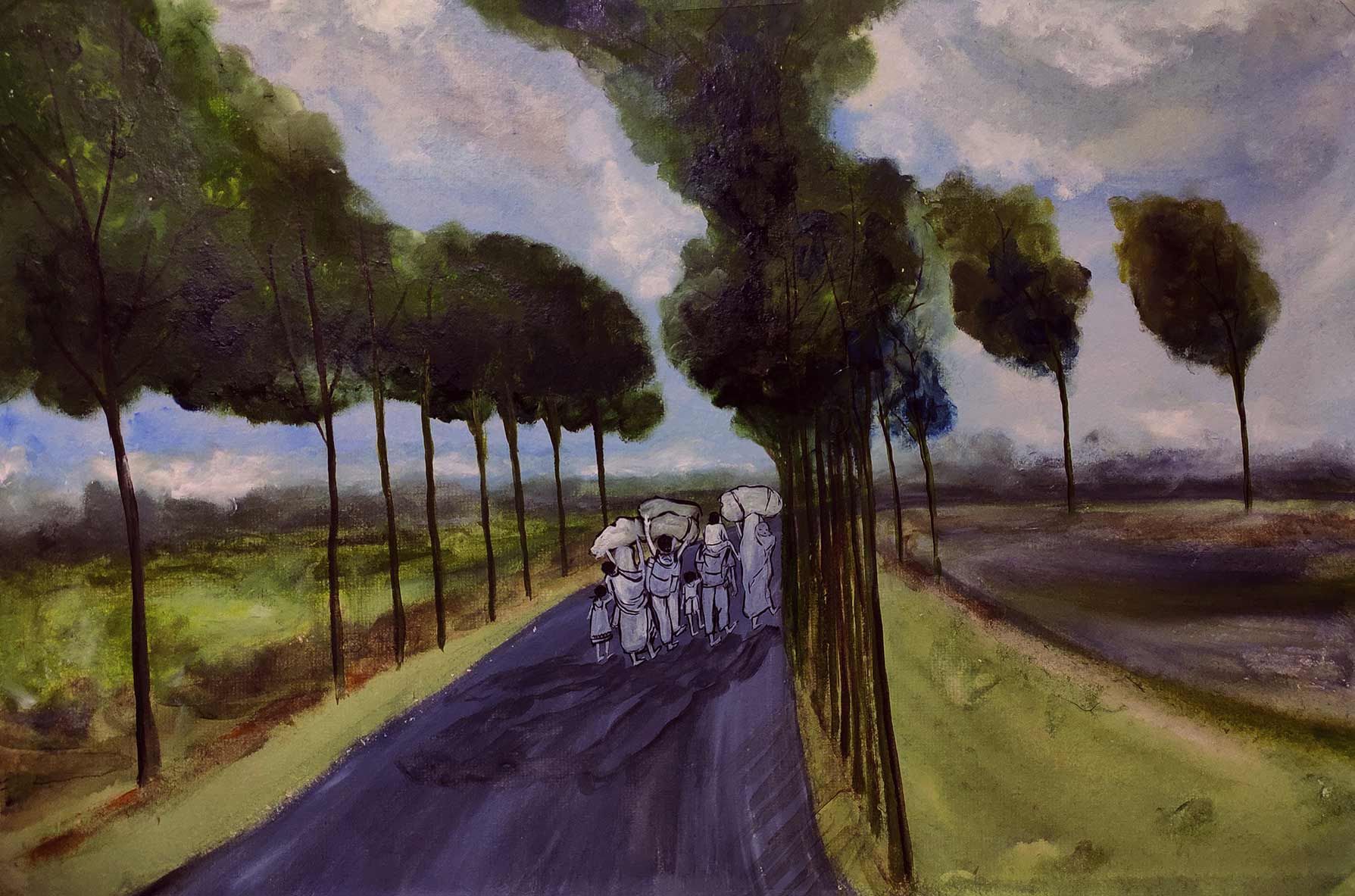
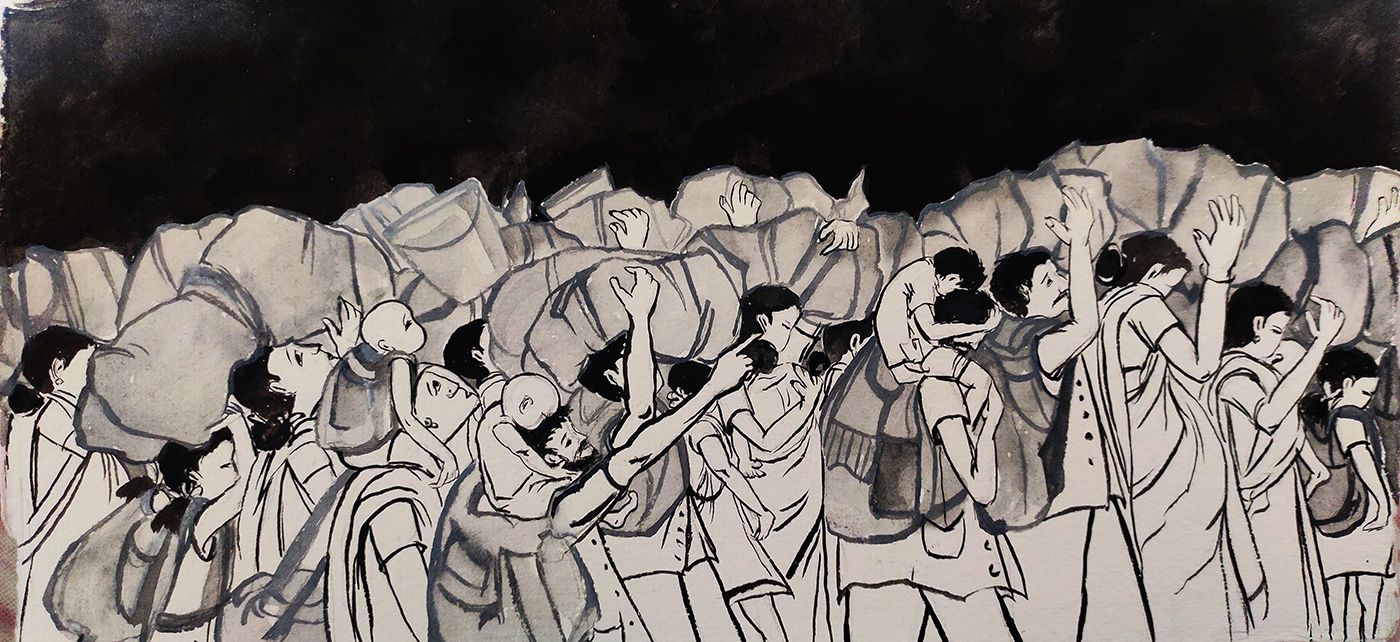
‘We are having to choose between life and work,’ say Muslim labourers from West Bengal who have been branded as illegal immigrants increasingly over the last year. Illustration: Labani Jangi/PARI
For Mehbub, though, June 13 was to prove dreadful.
“That day we were picked up in a large police van covered with wire-mesh. Many more cars piloted us, like we were some important leaders or ministers,” says Mehbub. “The car finally stopped at some security camp near Panvel.”
On June 14, the same vehicle ferried almost 30 people including Mehbub to the Pune airport. At 2 p.m. they were swiftly put onto a flight. On getting off the plane Mehbub realised it was the Bagdogra airport in West Bengal. “They made a head count and divided us into small groups,” he says. “I had heard criminals face head count. But why count us the same way? Suspicion crept in…” From the airport they were taken to the Siliguri Border Security Force (BSF) camp and from there a new journey began towards an unknown destination.
“The vehicle ran some five-six hours at a stretch. Then they dropped us in the middle of a jungle at a small BSF camp. The handful of officers there got us down and asked, ‘Where are you from?’ I told my address. Immediately, a brutal beating ensued. They even held loaded guns at our throat. Then the BSF officers clicked our photos and asked us to walk off through the forest.
“Where to go? And how? We didn’t have the least idea. We worried that if we got spotted, BSF or Border Guard Bangladesh (BGB) would straightaway shoot us. Fear gripped our hearts. The forest became our hideout for the night,” a traumatised Mehbub recalls.
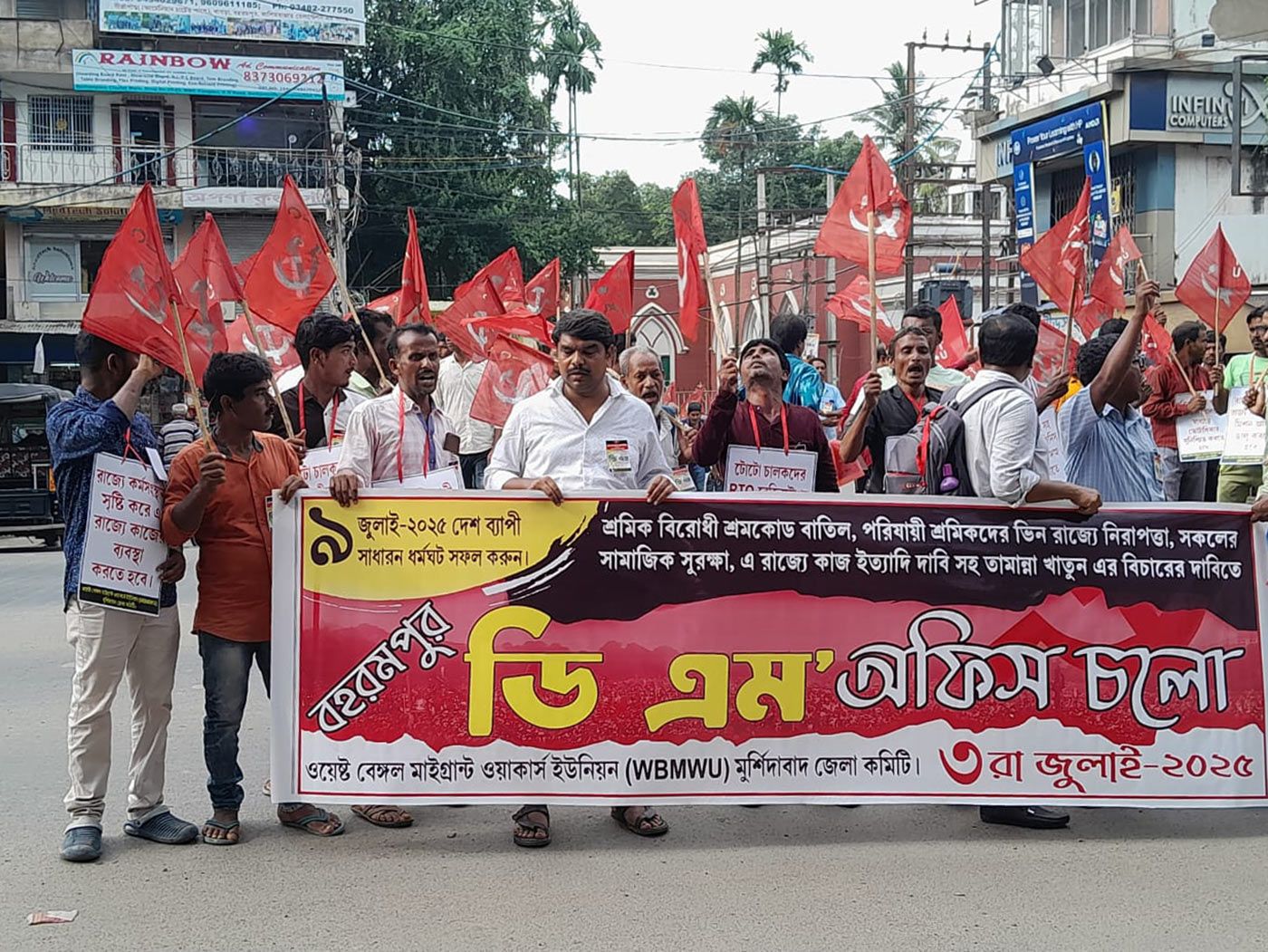
(Left) In light of workers being harassed, a rally was organised by the West Bengal Migrant Workers’ Union in Baharampur demanding the right to secure and dignified work. Photo: Anirban Dey/PARI
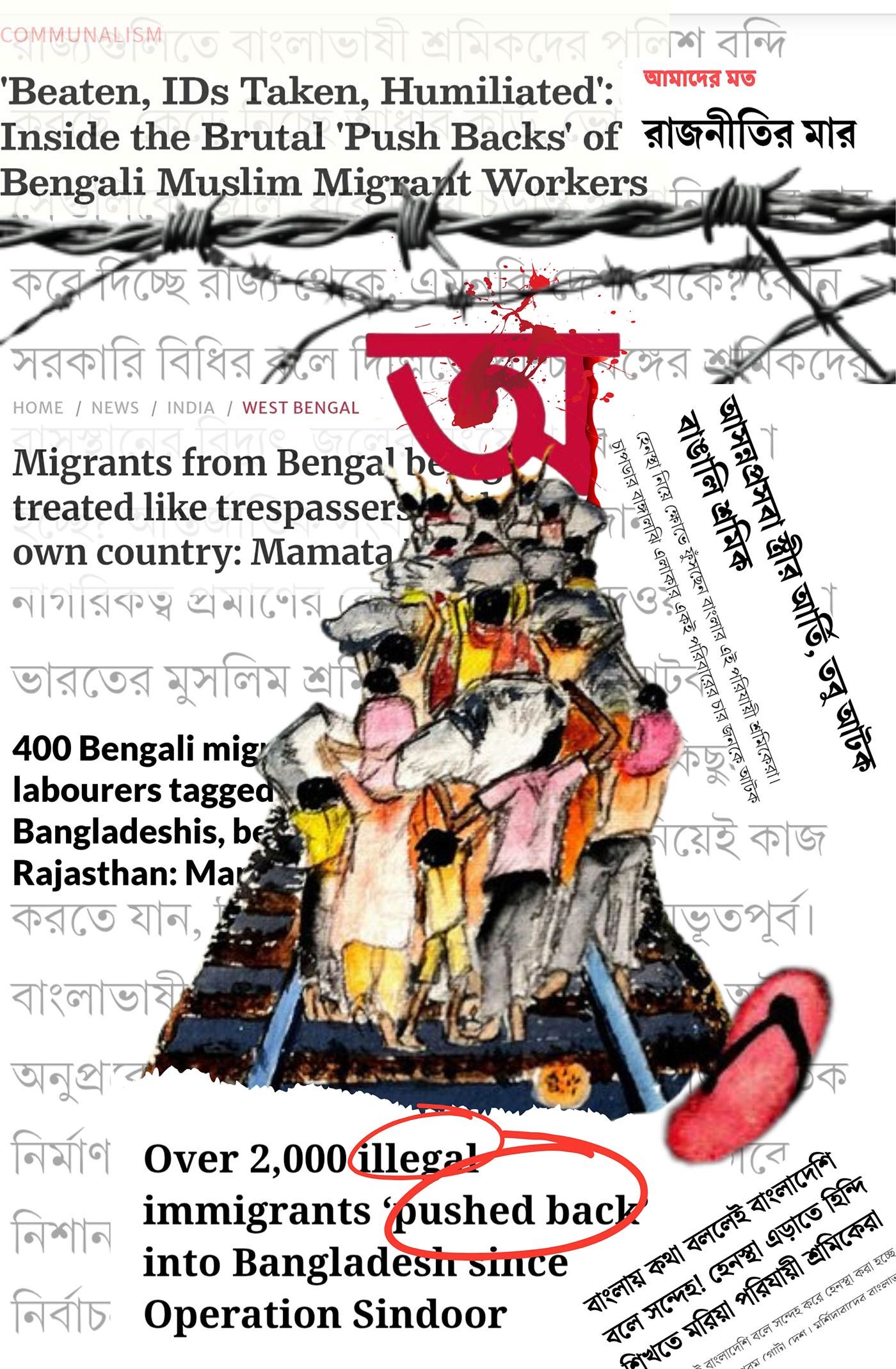
(Right) A collage of recent news headlines on atrocities against Bengali-speaking migrant workers across different states. Photo: Aunshuparna Mustafi/PARI
Daybreak brought more stress. The last they’d eaten something was at the Pune airport. And 24 hours had passed since, without a single morsel of food. “It felt like we would collapse and die right there,” says Mehbub. “There were only trees all around us. We were walking in a group.” He pauses some moments, then continues, “It was around 2 p.m. when we walked up to a small settlement in Bangladesh. We told the people that we were Indians. They suggested we take a bath, and gave us rice to eat. [With their help] I contacted my family through Imo app [a mobile app that enables chats and international calls]. I was crying. My voice choked. I could barely speak …”
Mehbub lost all hope of ever returning. Meanwhile, his brother Mujibar ran around many places including Siliguri and Raiganj, going door to door seeking help and support. From the panchayat office to district administration, even to state-level sarkari officials. Finally, Mehbub could make his way back home. “Even after bringing him back, sarkari people [departmental affiliations unknown] visited our house wanting to verify the land deeds.”
The relief was short lived and did not end their anxieties. From Mehbub, we learn the compulsions of migration. “Sitting idle at home means zero income. I can earn 800-1,200 rupees a day there [other states]. I can even work double shifts for additional income…” But fear has shattered his confidence. “I have been working as a mason in cities like Pune, Mumbai and Thane for years. Never thought I would witness such a time.”
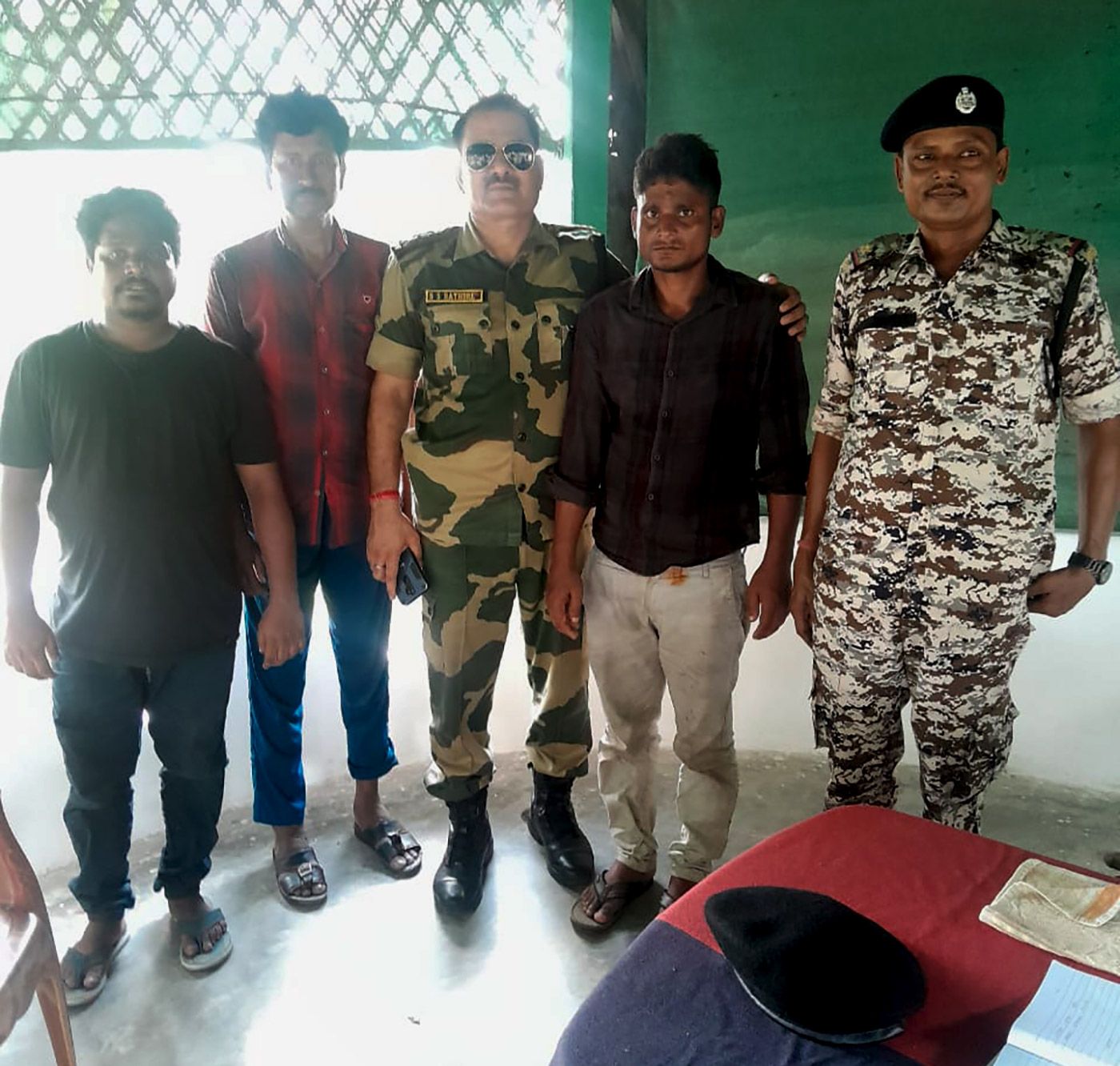
(Left) Nazimuddin Mondal (in black shirt), Mostafa Kamal Sheikh (in red shirt) and Minarul Sheikh (left) seen here with security officials. They were pushed out to Bangladesh on June 13 and rescued back on June 15.
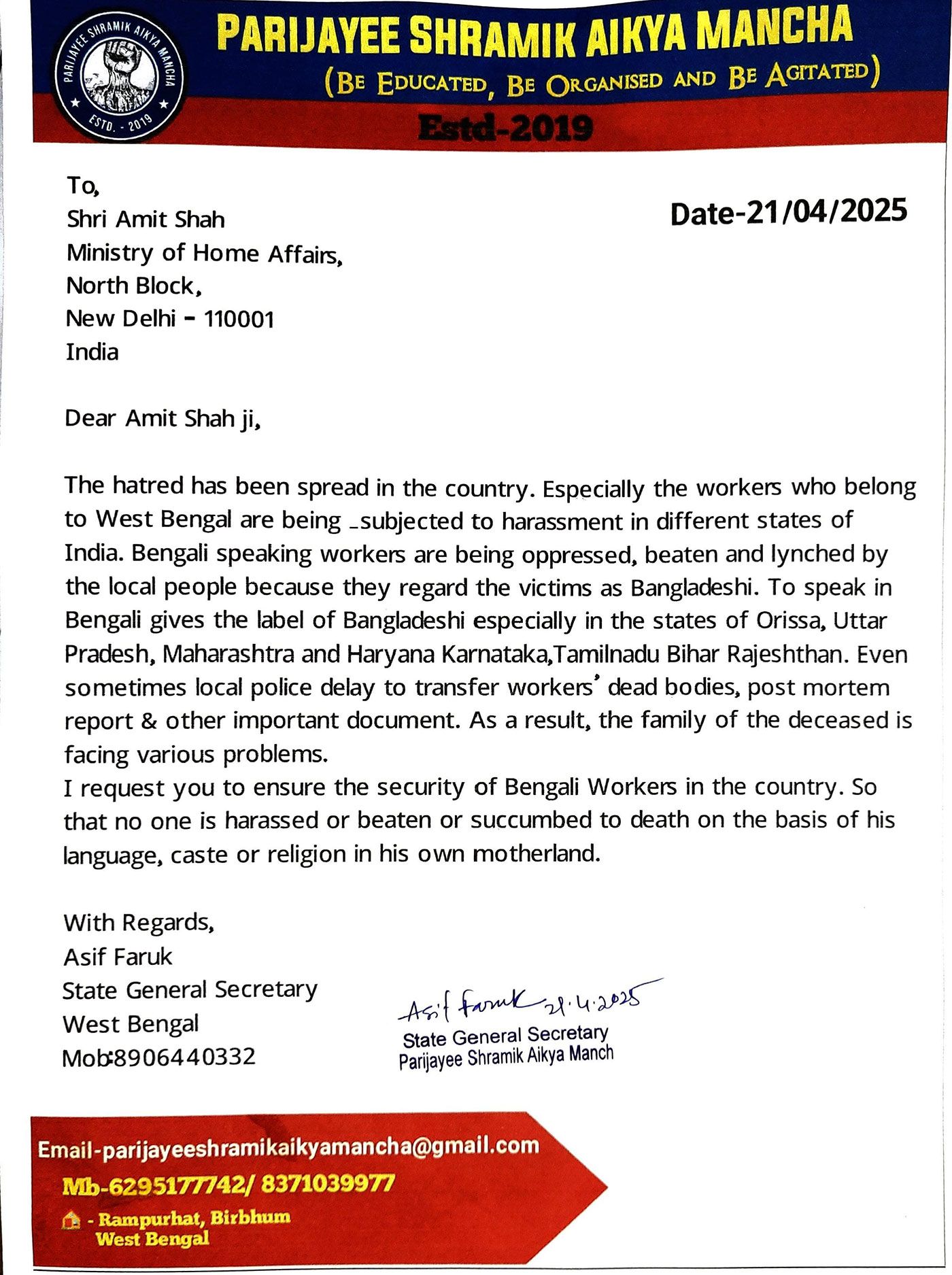
(Right) Parijayee Shramik Aikya Mancha – an organization fighting for the rights of migrant workers from West Bengal – sent out a letter to the Union Home Minister seeking immediate action against harassment of Bengali migrant workers. Photos: Courtesy of Parijayee Shramik Aikya Mancha via PARI
On seeing this reporter, Nazimuddin Mondal could barely control his anger. This resident of Murshidabad’s Hariharpara Block is as resentful of the media as he is of government and administration. Ever since a video of Nazimuddin abandoned by Indian state authorities in Bangladesh went viral, journalists have frequently quizzed this 35-year-old mason from Tartipur village about being pushed across the border. “What have you got to do with that?” he bursts out. “Why can’t you write about the torture [inflicted on us]? Why on earth are we being tagged as Bangladeshis? It’s high time the media speak out.”
The silence of most media on the current situation worries Nazimuddin even more. He sees clearly that in the name of news, some media houses actually promote suspicion about Bangla-speaking Muslim labourers.
The “push-back” experience traumatised Nazimuddin. The thought of leaving his wife and a teen daughter – in Class 10 – at home for work in a distant state now terrifies him. “[I have] worked in the Mira Road Police Station earlier,” he says. There, he did masonry and repair work. “Now police from the same station picked me up from my rented room at the dead of night and called me ‘Bangladeshi’. What kind of system is this?” The Maharashtra police had raised questions regarding his birth certificate. “I was born in Hariharpara 35 years ago. That’s where my baap-dada [father and grandfather] was born. None of my parents got formal education. They didn’t obtain my birth certificate either. Poverty made things difficult. I couldn’t even finish primary schooling,” clarifies Nazimuddin.
His belongings remain in the room at Mira Road, Maharashtra. No one knows how he can collect the wages the contractor still owes him. His mobile phone, confiscated by the police, is yet to be returned. “It’s really hard to get work in a new place. Working somewhere for five long years results in having some contacts and ease. How can that be taken away like this?” he asks angrily.
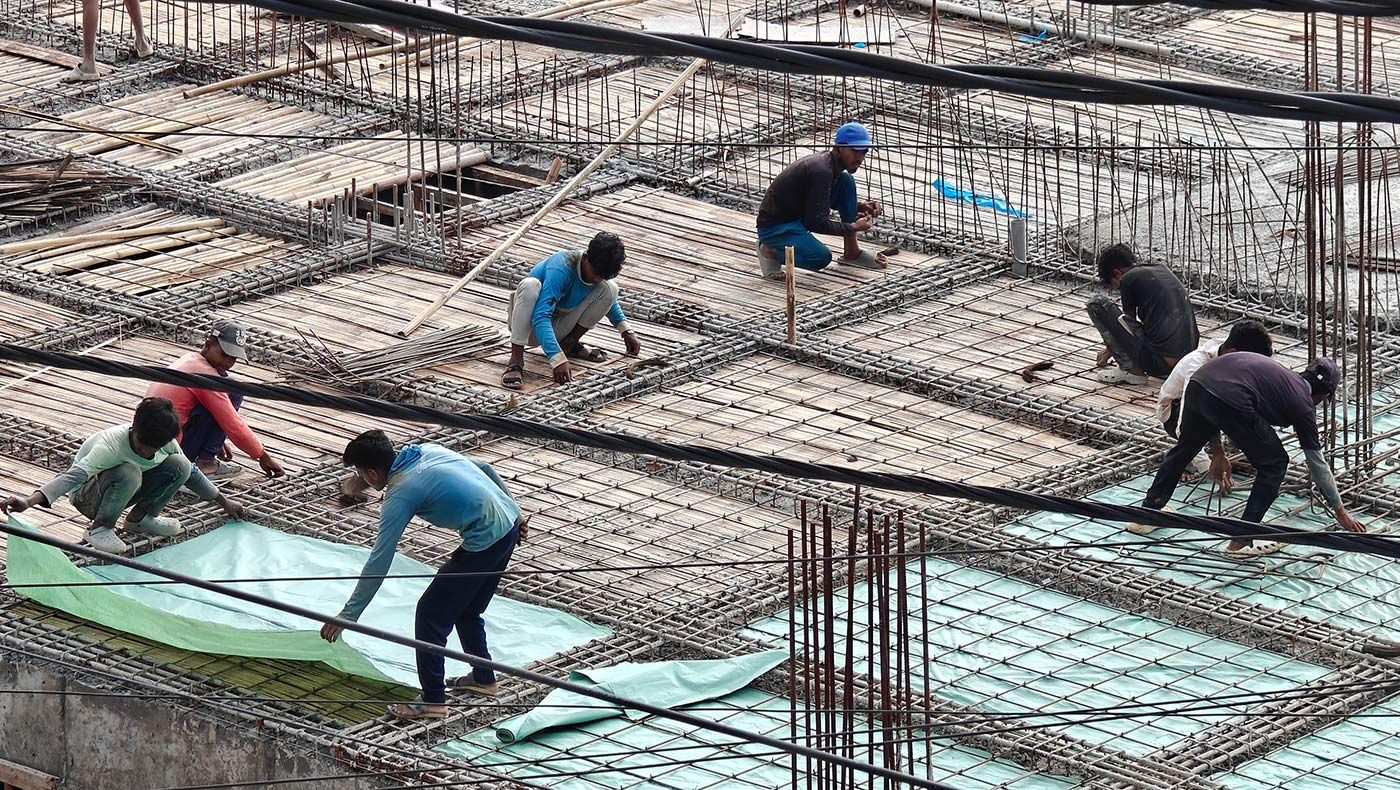
Lack of decent employment opportunities and an increasingly fruitless agriculture sector forces young people from Murshidabad to migrate to distant states from Mizoram (seen in the photo) to Maharashtra. Photo: Smita Khator/PARI
Two brothers of Nazimuddin work as labourers in Kerala and Tamil Nadu. Workers here generally say the southern-Indian states are a lot safer for Bengali migrant workers. Many labourers, forced to return from Maharashtra, Gujarat or Delhi, are now trying to find wage work in the south.
Nazimuddin says that Minarul Sheikh from Kazisaha, Beldanga I, Murshidabad, and Mostafa Kamal Sheikh from Monteshwar in Barddhaman district shared his ordeal. “On June 13 [2025] we were deported to Bangladesh via Siliguri and got rescued on the 15th.”
“After this…it won’t be easy to move out again. But remaining in our village means a meagre 500 rupees per day [on days that work is available] and expenditure of 250. [In the other states], the daily expense might be 300 rupees, but the wage is 800 a day. We can send 500 rupees to the family. So, leaving [migration] is the only way out,” explains Nazimuddin. “We must return to work [outside] at our own risk.”
There is a dearth of steady work, even that at just survival wage level, across Murshidabad district. The 100 days of employment guaranteed under MGNREGA is still stuck in limbo. Migration seems the only option for working-class people. Murshidabad, one of India’s most underdeveloped districts, is mostly rural. Roughly 80 per cent of its people live in 2,166 villages. At 66 per cent, its literacy rate is way below the state average of 76 per cent (Census 2011). Two-thirds of the population are Muslims. It is obviously they – marginalised in class, region, and religious terms – who account for most of the forced labour migration.
The situation in in Diarjali Bagicha, a hamlet under Habaspur panchayat, captures that reality. In over 60 per cent of households, at least one member is a migrant worker. Residents Latibul Haque, Ainal Haque and Rajjak Hossein Sheikh, who once worked as porters, left their jobs and went to Odisha to earn a better wage as street vendors. They explained to us on phone that the mahajans (moneylenders) lend them various household and stationery items. They load these items on their cycles or motorbikes and sell them across the villages. On average, it earns them Rs. 700-800 a day after deducting the contractor’s share. They live together in groups in small, rented rooms.
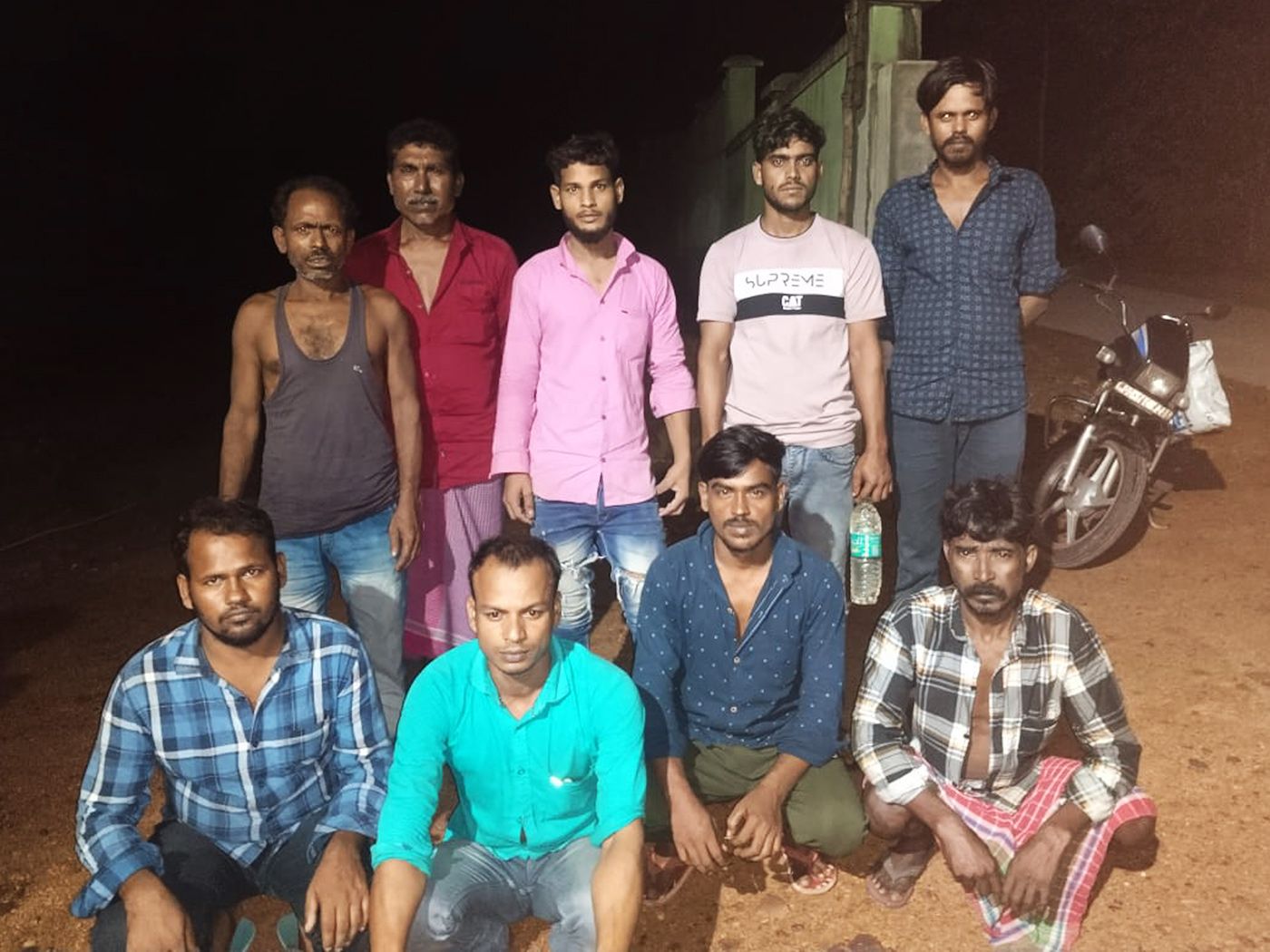
(Left) Migrant workers from Murshidabad were detained for four days at Lakhanpur Police Station in Jharsuguda, Odisha. They were eventually released after the intervention of their native gram panchayat back in Dakshin Hanumanta Nagar. Photo: Courtesy of WB Migrant Workers’ Union via PARI
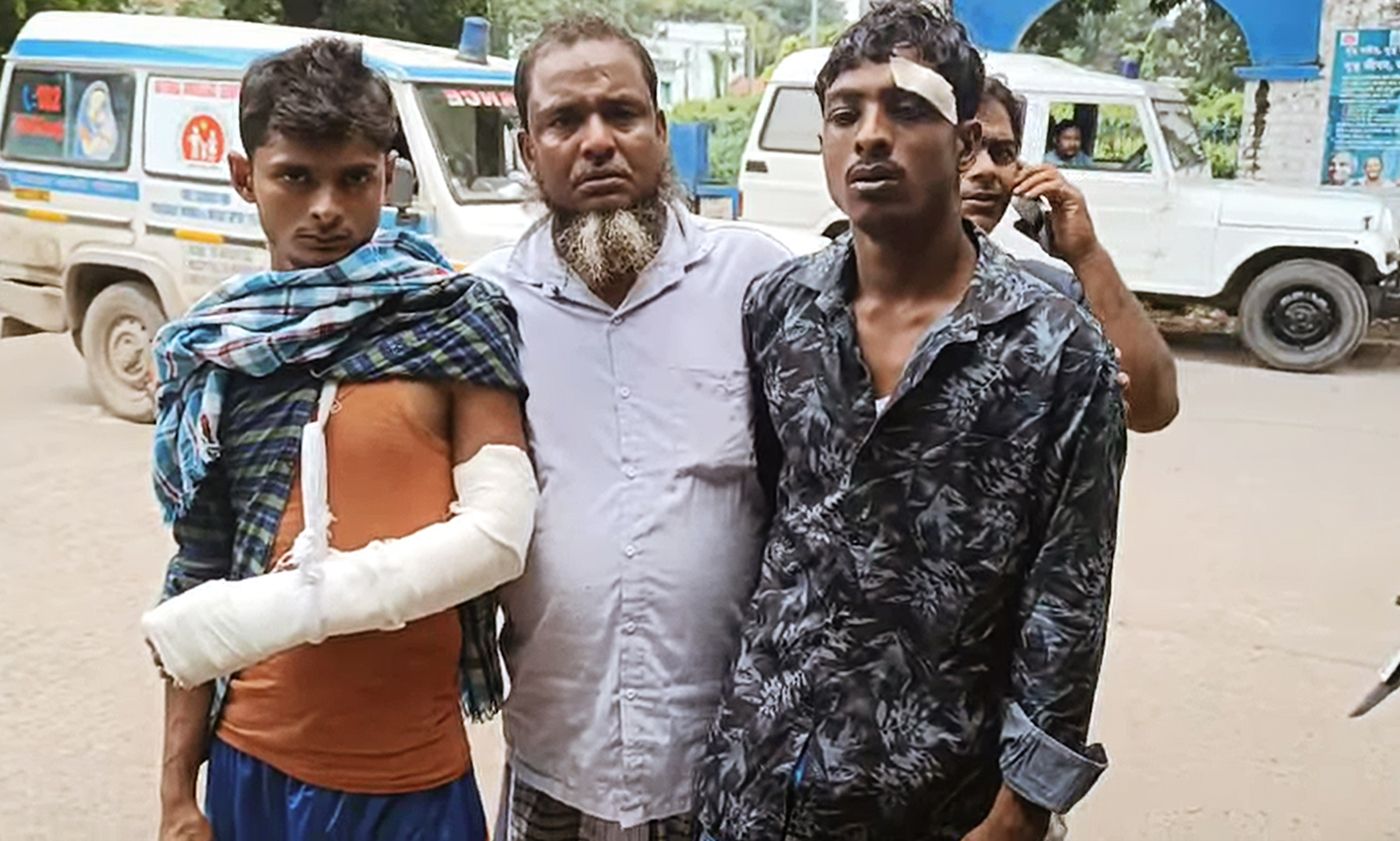
(Right) Three migrant labourers from Lalbagh Police Station in Murshidabad working at a construction site – Milan Sheikh, Ismail Sheikh and Babu Sheikh – were attacked in Chennai, Tamil Nadu, on July 15, 2025, as they were speaking in Bengali among themselves. Photo: Courtesy of Parijayee Shramik Aikya Mancha via PARI
Family members of these migrants told us in Diarjali Bagicha that since September 2024 many travelling Bengali Muslim salesmen from Murshidabad have been attacked and detained in Odisha. That, on the pretext of the violence against Hindus in Bangladesh and in Murshidabad’s Samserganj. But what is panicking the migrants is the increasing involvement of Odisha police in such incidents.
When the police there questioned the validity of Latibul Haque’s documents, his family members in Diarjali Bagicha sought help from the Bhagwangola Police Station. Latibul and others were set free only after the documents were exchanged between the police stations, but are still stuck in Odisha. Latibul who was confined in one of the camps in Jharsuguda for four days tells us on phone: “The police said they are still verifying our documents related to Indian citizenship and instructed us not to return to our home state for a month.”
The families of labourers toiling in distant states like Maharashtra, Odisha, Uttar Pradesh and Delhi are now rattled. In Diarjali Bagicha, we met Ainal Haque’s mother Madina Bibi, 60, frail, but with keen eyesight. Her deft fingers fly while weaving kanthas (hand-embroidered quilts) of intricate design as she speaks to us. People get her to weave and stitch kanthas, paying her just 20 to 30 rupees a piece. However meagre, that amount helps in sustaining the family. With her son and grandsons all toiling in Odisha, Madina can’t hold back her tears as she talks about the ordeal and harassment they’ve been through.
“When they said my son and pota [grandson] are all Bangladeshis, how could I keep calm?” Madina asks. “My second son Ainal Haque and two grandsons from my eldest son – Amir and Rajjak Hossein – live in Odisha. The police detained them for four days. I didn’t get any sleep those days.”
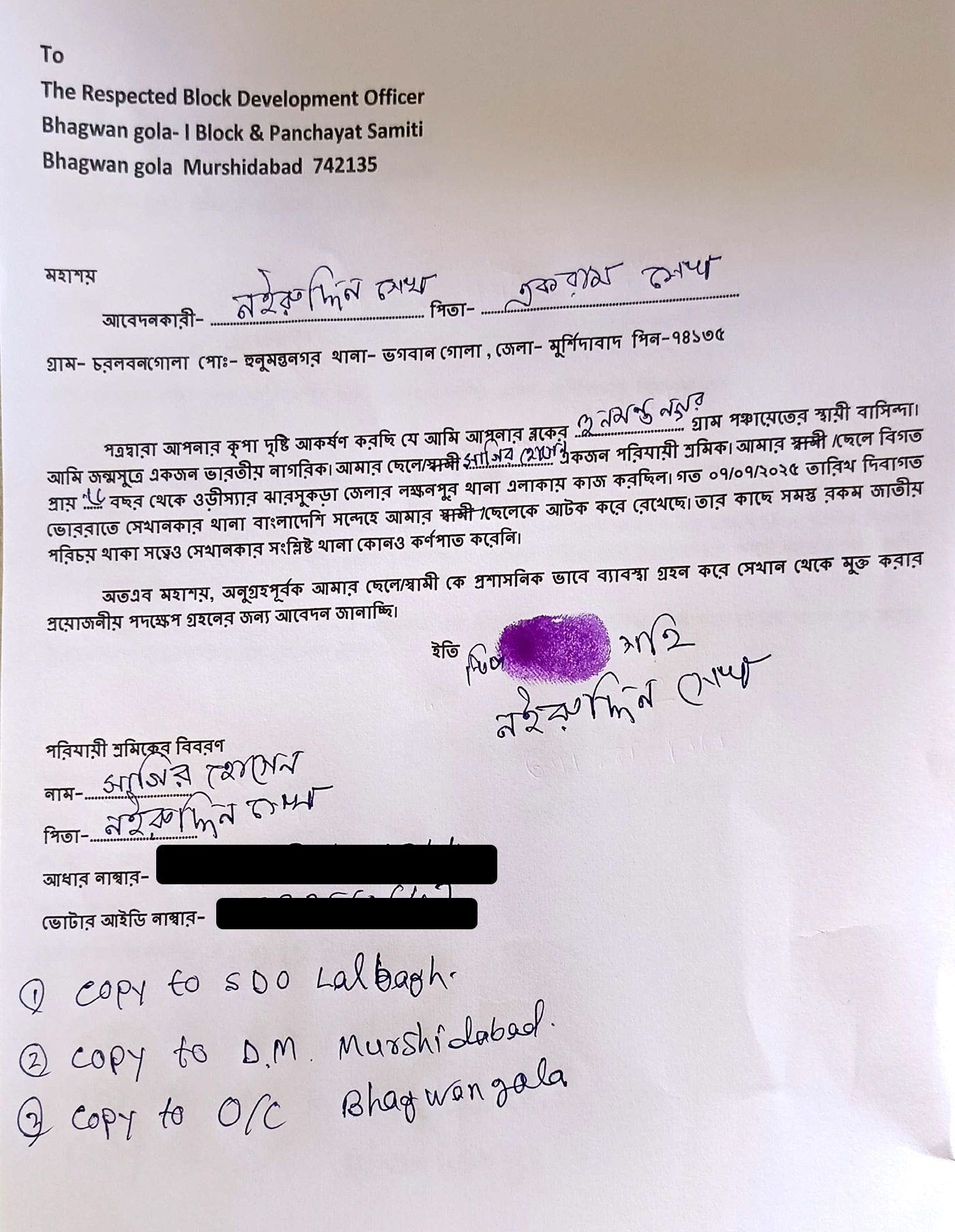
(Left) Father of detained migrant worker Sagir Hossein has sent an application to various government officials detailing his son’s proof of Indian citizenship. He appeals for the immediate release of Sagir, a resident of Dakshin Hanumanta Nagar, Murshidabad. Photo: Courtesy of WB Migrant Workers’ Union via PARI
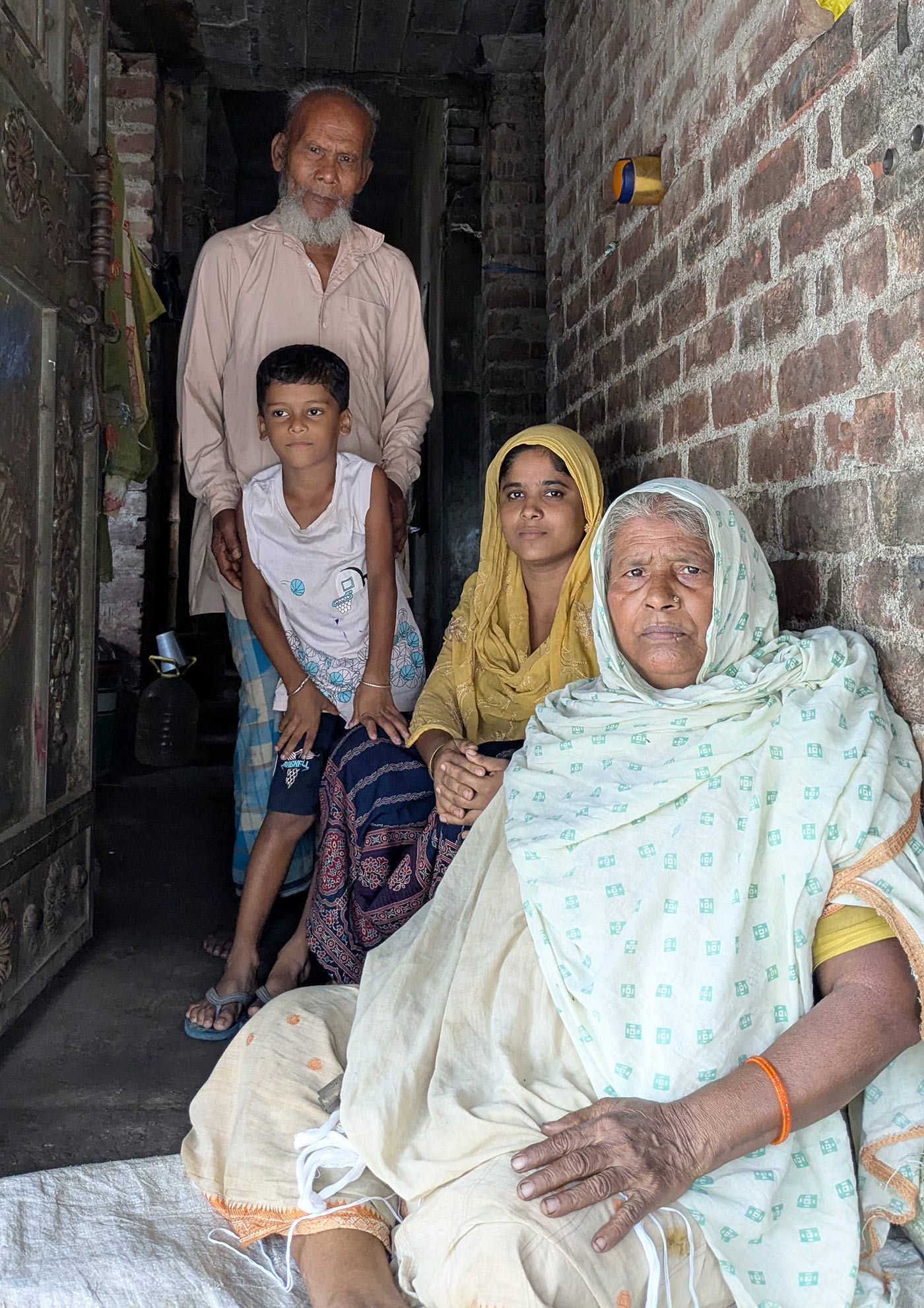
(Right) Detained migrant worker Ainal Haque’s wife, Shiuli Bibi with his mother Madina Bibi, father Moinul Sheikh and their son at the family home. Photo: Anirban Dey/PARI
The phone call Shiuli Bibi – Ainal Haque’s wife – received, terrified the whole family. Documents such as Aadhaar and ‘admit card’ of the secondary board examination [class-10] had to be found and submitted. Ainal Haque’s father Moinul Sheikh, in his late 60s, had to take all these papers to the police station. “There, they even snapped at me for being late. But what could I do? I was totally numb and dumbfounded, thinking of my son’s situation…” recalls the old gentleman.
A distraught Madina Bibi tells us: “After his secondary exam, my son [Ainal] said, ‘I must work to fill our bellies.’ He ran chores for the malik at a brick kiln and would get 800 rupees a month. Later, he carried loads in a godown. Even that would only get him 10,000 rupees a month at best. We were crushed by debt. That’s the reason he went outside…It’s been two years now. We are merely trying to survive,” she says. “[My] father-in-law, even his father, are all from India… Yet, the fear refuses to leave me.”
On July 7, 2015, Amirul Sheikh, in his mid-30s, from Charlabangola village in Bhagawangola I, were also detained in Lakhanpur Police Station of Jharsuguda in Odisha with 30 other migrant workers from West Bengal. On getting the news, family members ran frantically from Bhagawangola Police Station to the local Dakshin Hanumanta Nagar gram panchayat office. Finally, the detained workers were released four days later from Lakhanpur Police Station, Odisha. “I have worked 10 years in Odisha as a hawker. But everything has changed. People have been beaten up before, but this time we are straightway being labelled as Bangladeshis,” says a shaken Amirul on phone. Still, he has no choice but to remain in Odisha to support his family in Charlabangola.
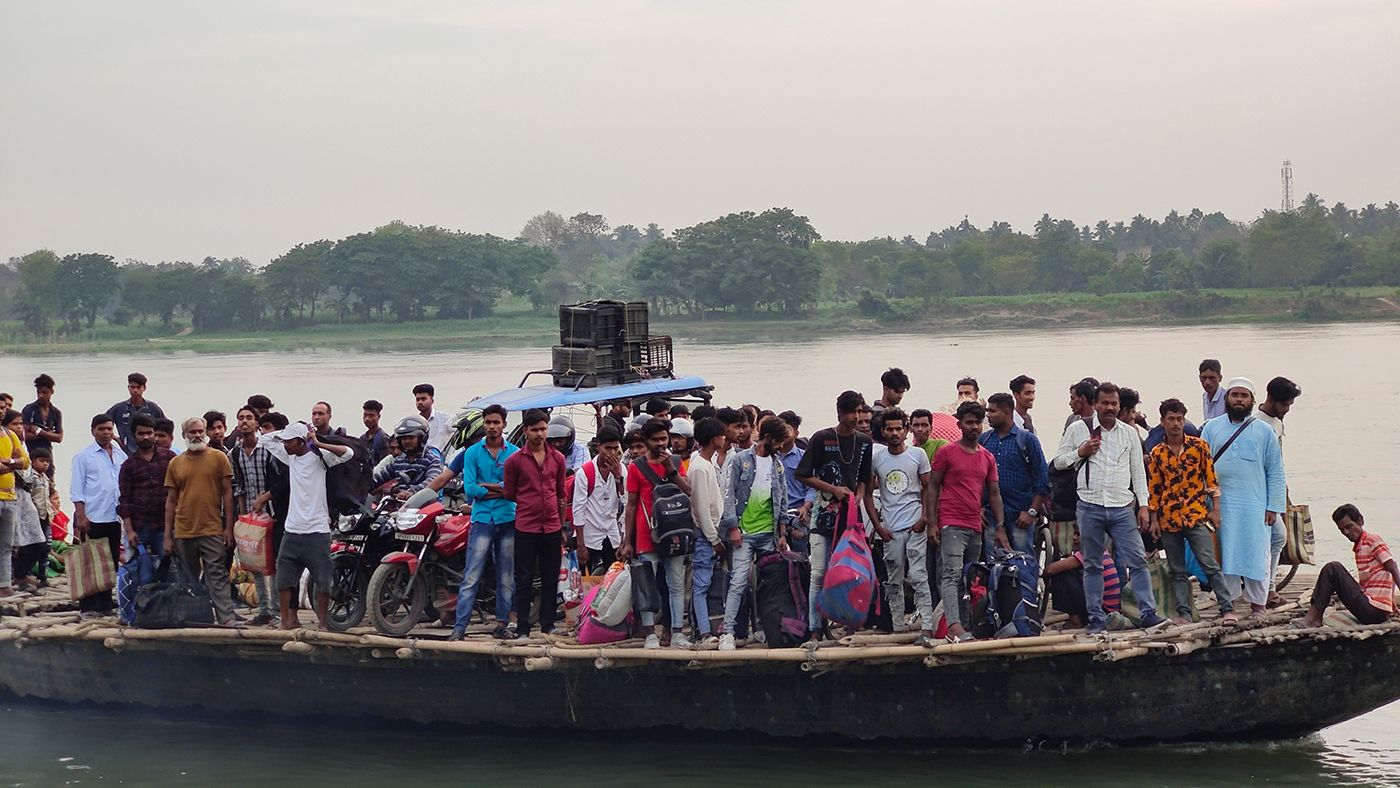
Migrant workers returning from Bihar report growing intolerance against Muslim workers. Photo: Smita Khator/PARI
“In this year alone, more than 5,000 migrant labourers from Murshidabad have been harassed by police in Odisha,” says Asif Faruk. He is secretary of Parijayee Shramik Aikya Mancha (PSAM) – an organisation fighting for the rights of migrant workers from West Bengal. “In different regions of Odisha including Jharsuguda and Paradip, many Murshidabad labourers have been detained in police camps for four to five days and are being interrogated to prove their citizenship status.”
The political storm between Centre and State governments, highlighted by the speeches of leaders of both, isn’t helping. A press release by the Central Government’s Ministry of Labour months ago lauded the projects and schemes undertaken by them for the welfare of the migrant labourers in India. But there have been no official statements, no condemnation of the violence against them.
The Border Security Force has not issued any official statement on the charges of unlawful conduct during the ongoing crackdown on people alleged to be unauthorised Bangladeshi infiltrators in several Indian states. Villagers in Bhagawangola say: “The lower rank [BSF] jawans tell us ‘we are merely doing as instructed by the oporwalas [higher authority]’.”
The state government has promised to defend the rights of citizens and deal with the issue of people being pushed across the border. Asif Faruk of the PSAM believes the “West Bengal government is trying to rescue and bring the victims back.” And “from April, we started a helpline for the workers.”
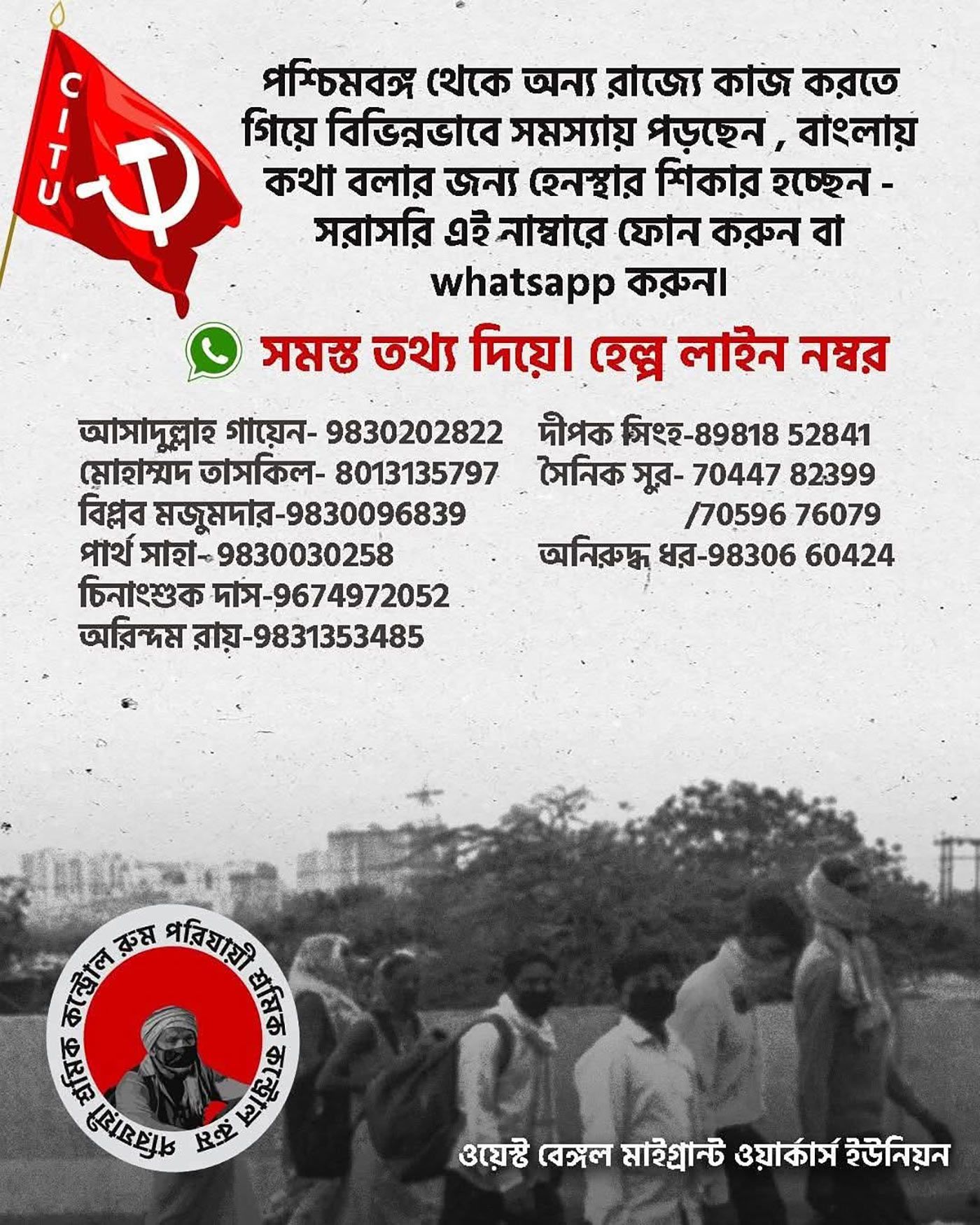
(Left) West Bengal Migrant Workers’ Union has started a helpline for workers facing atrocities in other states and their concerned families back home. Photo: Courtesy of WB Migrant Workers’ Union via PARI
(Right) Safiqul Islam from Diarjali Bagicha fears the safety of his brother Rafiqul Islam, a mason working in Kanpur, Uttar Pradesh. He has noticed a sharp surge in reports of harassment of Bengali-speaking Muslim migrants circulated in social media platforms. Photo: Anirban Dey/PARI
The organisation has also filed a Public Interest Litigation in the Calcutta High Court seeking immediate action against harassment of Bengali migrant workers. And the West Bengal Migrant Workers’ Union organised a procession in Murshidabad district headquarters, Baharampur, demanding security for the labourers in other states. “MPs [Members of Parliament] from the concerned districts,” says Kamal Hossein, WBMWU district secretary, “must visit and intervene in the states where the migrant labourers are under attack.”
Meanwhile, the Centre-State squabble sidelines the question: had there been decent employment in Murshidabad, and serious intervention in the agriculture sector – would people have had to migrate in the first place?
Back in Balia Hasennagar, a panic-stricken Mehbub Sheikh, wonders how he will sustain his family now. “The [construction] company is calling me [from Mumbai] to resume work, but they are not willing to take any responsibility…”
Disappointment grips the master mason: “Where shall I find work now? I don’t have any answer to this…”
“যখন কাঁটাতার দেখলাম, মনে হল সব শেষ… মনে হল, এই জীবনে আর দেশে ফিরতে পারব না। আমার দাদোর দাদো (ঠাকুরদার ঠাকুরদা) এই মুর্শিদাবাদেই থাকতেন। আমরা এখন ভগবানগোলা [ব্লকের] যে গ্রামে থাকি সেটাও আমার নানির গ্রাম।“
বালিয়া হোসেন নগর গ্রামে নিজের বাড়িতে বসে মুর্শিদাবাদ জেলার সঙ্গে তাঁর পরিবারের আজন্মকালের সম্পর্কের খতিয়ান দিচ্ছিলেন বছর ৩৬-এর মেহেবুব শেখ। চোখেমুখে আতঙ্কের ছাপ। মাসখানেক আগেই ভয়ঙ্কর এক অভিজ্ঞতার মধ্যে দিয়ে গিয়েছেন। দেশের প্রশাসন তাঁকে ‘বাংলাদেশি অনুপ্রবেশকারী’ হিসেবে দাগিয়ে ঘাড়ধাক্কা দিয়ে সীমার ওপারে চালান করেছিল।
“আমার ভোটার কার্ড, আধার কার্ড, রেশন কার্ড সবই আছে। গায়ে গতরে খেটে জমিও কিনেছি। তারপরেও আমি বাংলাদেশি হই কেমন করে?” জানতে চান মেহেবুব, পেশাগত পরিচয়ে তিনি পরিযায়ী শ্রমিক।
মেহেবুবের মতোই এই প্রশ্নের উত্তর খোঁজার চেষ্টা করছেন তাঁর জেলাতুতো আরও হাজার হাজার দেশান্তরি শ্রমিকেরা। তাঁদের কেউ নির্মাণশ্রমিক, কেউ গৃহশ্রমিক, কেউ ফেরিওয়ালা, কেউ বা হকার। হঠাৎ নেমে আসা অস্তিত্বের সংকটে জেরবার দিন আনি দিন খাই এই মজুরদের ঠিক ঠাহর হচ্ছে না কেন মুর্শিদাবাদের বাংলাভাষী মুসলমান পরিযায়ী শ্রমিকেরা ভিনরাজ্যে কাজে গিয়ে আক্রান্ত হচ্ছেন।
(Left) স্ত্রী সুরনা বিবির সঙ্গে মুর্শিদাবাদের বালিয়া হোসেন নগরে নিজেদের বাড়িতে মেহেবুব শেখ। ২০২৫-এর ৯ জুন এই পরিযায়ী রাজমিস্ত্রিকে তুলে নিয়ে যায় মহারাষ্ট্র পুলিশ, তাঁর নাগরিকত্বের প্রমাণ হিসেবে কাগজপত্র চায়। শেষপর্যন্ত তাঁকে জোর করে বাংলাদেশে রেখে আসা হয়।
(Right) মুর্শিদাবাদের কান্দি ব্লকের গোকর্ণ গ্রামের বিশাখা মণ্ডল (নাম পরিবর্তিত) দিল্লিতে গৃহশ্রমিক হিসেবে কাজ করছেন তিন দশক হল। তিনি বলছেন: ‘আমাকে এখনও কেউ [আমরা ভারতীয় কিনা] কিছু বলেনি। কিন্তু চারদিকে এত ঝামেলা হচ্ছে [আমাদের মতো বাঙালি মুসলমানদের নিয়ে], আমরাও চিন্তিত’। Photos: Anirban Dey/PARI
“আমাকে এখনও কেউ [আমরা ভারতীয় কিনা] কিছু বলেনি,” বলেন বছর বাহান্নর বিশাখা মণ্ডল (নাম পরিবর্তিত)। কান্দি ব্লকের গোকর্ণ গাঁয়ে তাঁর ঘর। “কিন্তু চারদিকে এত ঝামেলা হচ্ছে [আমাদের মতো] বাঙালি মুসলমানদের নিয়ে, আমরাও চিন্তিত।” দিল্লিতে তিন দশক ধরে গৃহশ্রমিক হিসেবে কাজ করছেন তিনি। পাঁচ বাড়ি খেটে মাসে ২৫০০০ টাকা আয় করেন। ভোটার কার্ড, রেশন কার্ড সবই যথাযথ আছে তাঁর। রয়েছে আধার কার্ড, মায় দিল্লির ঠিকানার সঙ্গে লিংক করা ব্যাঙ্ক অ্যাকাউন্টও।
ইংরেজরা কলকাতায় রাজধানী স্থানান্তরের আগে পর্যন্ত অবিভক্ত বাংলার প্রশাসনিক কেন্দ্র মুর্শিদাবাদ পরিচিত ছিল তার সম্পদ আর প্রাচুর্যের জন্য। বর্তমানে অবশ্য তার পরিচয় রাজ্যের সর্বাধিক পরিযায়ী শ্রমিক সরবরাহকারী জেলা হিসেবে। ২০২৫ সালের মে মাস পর্যন্ত পাওয়া হিসেব অনুযায়ী মুর্শিদাবাদ জেলার মোটামুটি ৪ লক্ষ শ্রমিক পশ্চিমবঙ্গ রাজ্য সরকারের মাইগ্র্যান্ট ওয়ার্কার্স ওয়েলফেয়ার স্কিমে নাম নথিভুক্ত করেছেন।[আশ্চর্যের বিষয়, উক্ত নথি অধুনা অপ্রকাশিত হয়েছে সরকারি সাইট থেকে]। বিভিন্ন পরিযায়ী সংগঠনের বেসরকারি হিসেব বলছে মুর্শিদাবাদ জেলায় পরিযায়ী শ্রমিকের সংখ্যা ১০ লক্ষেরও বেশি। নাম প্রকাশে অনিচ্ছুক শিক্ষা দপ্তরের জনৈক সরকারি আধিকারিক এও জানান, “সরকারি কোনও পরিসংখ্যানেই নাবালক শ্রমিকদের উল্লেখ থাকবে না। কিন্তু বাস্তব এটাই যে জেলার অসংখ্য নাবালক শ্রমিক বাইরে কাজে যাচ্ছে প্রতিদিন।“
মেহেবুব শেখের দাদা ৩৩ বছরের মুজিবর শেখ আর বাবা হোসেন শেখও ছিলেন পরিযায়ী শ্রমিক। ষাটের কোঠার গোড়ায় পৌঁছে হোসেন আজও কলকাতা শহরে রাজমিস্ত্রির কাজ করেন। ভাইয়ের সঙ্গে মুজিবরও দিল্লি, মুম্বইয়ে রাজমিস্ত্রির কাজে গিয়েছেন। এখন গাড়ি চালান তিনি। দুই ভাই-ই চরম দারিদ্র্যের সঙ্গে লড়াই করে বড়ো হয়েছেন। মেহেবুব বলছেন, “এক সময় গ্রামে অন্যদের বাড়িতে ছাগলও চরিয়েছি। স্কুলে বেশিদিন যাইনি। অভাবের সংসার। ছোটো থেকেই খাটছি।”
‘এখন বরং ভালো আছি। ফিরে এসে কলকাতায় এই কাজ নিয়েছি। বাড়ির কথা মনে পড়ে,’ বলেন মুর্শিদাবাদের ধুলিয়ানের বাবু ইসলাম (আসল নাম জানাতে চাননি)। ২০২৪ সালের সেপ্টেম্বর মাস নাগাদ ওড়িশায় বাঙালি মুসলিম পরিযায়ী শ্রমিকদের ওপর অত্যাচার শুরু হলে সেখান থেকে পালিয়ে আসেন তিনি। Photo: Smota Khator/PARI
সতেরোয় পা দিয়েই, বংশ পরম্পরায় শেখা রাজমিস্ত্রির বিদ্যেটুকু সম্বল করে কাজের তাগিদে ভিনরাজ্যে পাড়ি জমান মেহেবুব। সেই থেকে দিল্লি, পঞ্জাব, তামিলনাডু, রাজস্থান-সহ বিভিন্ন রাজ্যে কাজ করে আসা এই ওস্তাদ রাজমিস্ত্রি বিশ্বাসই করতে পারছেন না যে চারপাশ এতটা বদলে যাবে। মেহেবুবের মতো বহু পরিযায়ী শ্রমিককে সন্দেহের বশে গ্রেফতার করে বাংলাদেশের ভূখণ্ডে পাঠিয়ে দেওয়ার মতো ঘটনাও সামনে এসেছে সংবাদমাধ্যমের রিপোর্ট আর প্রকাশিত নানান প্রত্যক্ষ বয়ান এবং অভিজ্ঞতার মারফত।
বাতাসে ভাসছে সন্দেহ আর অবিশ্বাসের বিষ। তাতে অবশ্য অবাক হওয়ার কিছু নেই: এক বছরেরও বেশি সময় ধরে রাজ্য ও কেন্দ্রীয় সরকারের আইন প্রয়োগকারী সংস্থাগুলো আক্রমণ শানিয়েছে তাঁদের বিরুদ্ধে। “আমাদের নামগুলো শুনতে আপনাদের মতো না। সেজন্যই আমাদের এই অবস্থা,” ক্ষুব্ধ স্বরে বলেন মুজিবর। গত একবছর যাবত পশ্চিমবঙ্গ থেকে বাইরে যাওয়া পরিযায়ী শ্রমিকরা নিশানা হচ্ছেন বারবার। ‘বাংলাদেশি’, ‘রোহিঙ্গা’, ‘ঘুসপেটিয়া,’ ‘অনুপ্রবেশকারী’, ‘ইল্লিগাল’ ইত্যাদি তকমা জুটছে তাঁদের।
বিগত এক দশকে ধর্ম, ভাষা, জাতি তথা স্থানিক পরিচিতির ভিত্তিতে যে বিদ্বেষমূলক আচরণ নিয়ম করে বেড়েছে, প্রত্যেকেই খেয়াল করেছেন সেটা। বর্তমান বাড়বাড়ন্ত সেসবেরই এক চরম পর্যায়। মৌলবাদী সংগঠন ও রাজনৈতিক দলের নেতানেত্রীদের ঘৃণাপ্রসূত বয়ান তথা ভাষণের জেরে সর্বাধিক আক্রান্ত হয়েছেন মুসলমান পরিযায়ী শ্রমিকেরা।
“হয় জান, নয় কাম, একটা বেছে নিতে বাধ্য হচ্ছি আমরা,” এই প্রতিবেদকের কাছে ক্ষোভ উগরে দেন ডিয়ার জালি বাগিচার বাসিন্দারা। এখানেই ইটের গাঁথনি দেওয়া প্লাস্টার বিহীন দুই কামরার ঘরে থাকেন ৩২ বছরের নাজেমা বিবি, উত্তরপ্রদেশের কানপুরে কর্মরত স্বামীর জন্য ভয়ে-ভাবনায় দিন কাটছে তাঁর। “এখন কয়েক ঘণ্টা ফোন না ধরলেই বুক কাঁপে,” জানান তিনি।
মুর্শিদাবাদ জেলা জুড়ে স্থিতিশীল কাজের আকাল ও দিন গুজরানের জন্য যথেষ্ট মজুরির অভাবে শ্রমজীবী মানুষদের কাছে দেশান্তরি হওয়া ছাড়া উপায় থাকে না। ছবিতে দেখা যাচ্ছে, হাওড়া স্টেশন থেকে অন্ধ্রপ্রদেশগামী ট্রেনে ওঠার অপেক্ষায় আছেন তরুণ পরিযায়ী শ্রমিকেরা । Photo: Anirban Dey/PARI
চলতি বছরের জুন মাসের প্রথম দিকে ঈদ উল আজহা সপরিবারে পালন করবেন বলে মে মাসেই বালিয়া হোসেন নগর ফিরেছিলেন মেহেবুব। বহুকষ্টে তিল তিল করে দাদা, ভাই, বাবা – তিন রাজমিস্ত্রি মিলে আড়াই তলা পাকা বাড়িটা বানিয়েছেন। ৫টা ঘর। নিচে দোকান করার মতো কিছুটা জায়গা রাখা। গৃহিণী স্ত্রী সুরনা বিবি (৩০) আর তিন সন্তানকে নিয়ে মেহেবুব যে দিকটায় থাকেন সেদিকে এখনও ভিতর বা বাইরে কোথাও-ই প্লাস্টার হয়নি। বড়ো ছেলে বকুল শেখ (১৬) পড়াশোনা ছেড়ে এখন কাছেই একটা দোকানে কাজ করে। বাকি দুই ছেলে সাগর শেখ (১২), রেহান শেখ (৭) স্কুলে পড়ছে। মেহেবুব ঈদে ফিরেছেন দেখে বাড়ির সব আত্মীয় পরিজনেরা মিলে পবিত্র কুরবানির জন্য পশুর ব্যবস্থাও করেছিলেন।
কিন্তু বাধ সাধল কাজের চাপ। থানে শহরে যে ইমারতি সাইটে কাজ করতেন তিনি, “সেখান থেকে বারবার ফোন আসতে থাকে।” অগত্যা পরিবারের সঙ্গে পরব না কাটিয়েই প্লেনে চেপে মহারাষ্ট্র ফিরে রাজমিস্ত্রির কাজে যোগ দেন মেহেবুব।
জুন মাসের ৯ তারিখ কাজের ফাঁকে খানিক বিরতি নিয়ে কাছেই একটা দোকানে চা খেতে বেরিয়েছিলেন তিনি। হঠাৎ সেখান থেকেই তাঁকে তুলে নিয়ে যাওয়া হয় থানের মীরা রোডে শ্রী এল আর তিওয়ারি ইঞ্জিনিয়ারিং কলেজের পাশে পুলিশ চৌকিতে। রাতেই সেখান থেকে নিয়ে যাওয়া হয় মীরা রোড পুলিশ স্টেশনে। দেখতে চাওয়া হয় কাগজ।
“’তুই বাংলাদেশি?’ হিন্দিতে এই প্রশ্নই করছিল পুলিশ অফিসাররা। আমি বলি, ‘আমার বাড়ি পশ্চিমবঙ্গে’। আধার কার্ড, প্যান কার্ড দেখাই। পুলিশ বলে, ‘এসব পাঁচ টাকায় পাওয়া যায়’,“ প্রতিবেদককে জানালেন মেহেবুব।
কোনও মতে থানা থেকেই লুকিয়ে বাড়িতে ফোন করে সব কথা জানান তিনি। বালিয়া হোসেন নগরে তাঁর পরিবারের সদস্যরা তক্ষুনি যোগাযোগ করেন তাঁদের স্থানীয় মহিষাস্থলী গ্রাম পঞ্চায়েতের সঙ্গে। সেখান থেকেও যাবতীয় নথিপত্র পাঠানো হয় মহারাষ্ট্রের মীরা রোড থানায়। “চারদিন ধরে চলে অসহ্য মানসিক নির্যাতন। সারাদিন থানার বাইরে বসিয়ে রাখত। রাতে পাঠিয়ে দেওয়া হত একটা পুলিশ ক্যাম্পে।“
যদিও মেহেবুবের বয়ানে উঠে আসা নিজেদের যাবতীয় অপরাধ সটান খারিজ করে মীরা রোডের পুলিশ। সিনিয়র ইন্সপেক্টর মেঘনা বুরাডে জানান, তাঁদের কোনও “দোষ ছিল না” এবং এক পুলিশ কমিশনারের আদেশমাফিকই মেহেবুব শেখ সহ বাকিদের আটক করা হয়।
‘হয় জান, নয় কাম, একটা বেছে নিতে বাধ্য হচ্ছি আমরা,’ বলছেন লাগাতার ধরপাকড় ও ‘বাংলাদেশি ঘুসপেটিয়া’ তকমায় দিশেহারা পশ্চিমবঙ্গের পরিযায়ী শ্রমিকরা । Illustration: Labani Jangi/PARI
মেহেবুবর জন্য, অবশ্য ১৩ জুন দিনটা ছিল ভয়াবহ।
“সেদিন থানা থেকে আমাদের বড়ো একটা জাল দেওয়া গাড়িতে তোলা হয়। সামনে পিছনে আরও অনেক গাড়ি। মনে হচ্ছিল, নেতা মন্ত্রী যাচ্ছে,” বলছেন মেহবুব। “গাড়ি পানভেলের সিকিউরিটি ফোর্সের ক্যাম্পে এসে থামে।“
১৪ তারিখ সেই একই গাড়ি করে মেহেবুব-সহ প্রায় তিরিশ জনকে নিয়ে যাওয়া হয় পুণে বিমান বন্দরে। দুপুর ২টোয় বিমানে তোলা হয়। নামার পর মেহেবুব বুঝতে পারেন, পশ্চিমবঙ্গের বাগডোগরা বিমান বন্দরে এসে পড়েছেন। তাঁর কথায়, “এয়ারপোর্টে গুণতি করা হয়। আমাদের ছোটো ছোটো গ্রুপে ভাগ করে দেয়। আসামীদের গুণতির কথা শুনেছি। আমাদেরও এই রকম গুণতি কেন হচ্ছে? সন্দেহ হয়…” এয়ারপোর্ট থেকে তাঁদের আনা হয় শিলিগুড়ির বিএসএফ এর ছাউনিতে। সেখান থেকে অজানা গন্তব্যের পথে যাত্রা শুরু হয়।
“প্রায় পাঁচ, ছয় ঘণ্টা গাড়িতে গিয়েছি। যেখানে নামাল সেখানে জঙ্গল। একটা ছোটো বিএসএফ’এর ক্যাম্প। অল্প কয়েকজন অফিসার। নামিয়ে প্রশ্ন করল, ‘বাড়ি কোথায়?’ ঠিকানা বললাম। বেধড়ক মার শুরু হল। গলায় বন্দুক অবধি ঠেকানো হল। এরপর বিএসএফ অফিসাররা আমাদের ছবি তুলল। বলল, হেঁটে চলে যেতে জঙ্গল দিয়ে।”
“কোথায় যাব? কীভাবে যাব কিছুই জানি না। অনেকে বলছে, বিএসএফ বা বিজিবি (বর্ডার গার্ড বাংলাদেশ) দেখলে গুলি করে দেবে। ভয় হচ্ছিল। জঙ্গলে লুকিয়ে থাকলাম সারারাত,” আতঙ্কের সেই রাতের কথা জানাচ্ছেন বিধ্বস্ত সন্ত্রস্ত মেহেবুব।
(Left) ভিনরাজ্যে পরিযায়ী শ্রমিকদের নিরাপত্তার দাবি জানিয়ে মুর্শিদাবাদের সদর শহর বহরমপুরে একটি মিছিলের ডাক দেয় ওয়েস্ট বেঙ্গল মাইগ্রান্ট ওয়ার্কাস ইউনিয়ন। Photo: Anirban Dey/PARI
(Right) ভারতের বিভিন্ন রাজ্যে বাংলাভাষী পরিযায়ী শ্রমিকদের ওপর নেমে আসা অত্যাচার নিয়ে সাম্প্রতিক কিছু সংবাদ-শিরোনামের কোলাজ। Photo: Aunshuparna Mustafi/PARI
সকাল হতেই কষ্ট বেড়েছে। পুণে বিমান বন্দরে তাঁদের খেতে দিয়েছিল বিএসএফ। তারপর আর ২৪ ঘণ্টা পেটে কিচ্ছুটি পড়েনি। বলছেন, “মনে হচ্ছিল এখানেই মরে যাব। চারদিকে শুধুই গাছ। আমরা কয়েকজন একসঙ্গে থাকছিলাম।” খানিক থেমে আবারও বলেন মেহেবুব, “দুপুর ২টো নাগাদ হাঁটতে হাঁটতে যেখানে গেলাম সেখানে বাংলাদেশের ছোটো একটা বসতি ছিল। ওদের গিয়ে বললাম যে আমরা ভারতীয়। ওরা আমাদের স্নান করতে বলল, ভাত খেতে দিল। [ওদের সাহায্যে] ইমো অ্যাপ [আন্তর্জাতিক কল এবং চ্যাট করার মোবাইল অ্যাপ] থেকে বাড়িতে ফোন করলাম। কাঁদছিলাম। কথা বলতে পারছিলাম না…”
সেই অবস্থা থেকে যে কোনওদিন ফিরে আসবেন, ভাবতে পারেননি। মেহেবুব শেখকে উদ্ধারের জন্য তাঁর দাদা মুজিবর শিলিগুড়ি, রায়গঞ্জ কত না জায়গায় ছোটাছুটি করেছেন। স্থানীয় পঞ্চায়েত অফিস থেকে শুরু করে জেলা আর রাজ্য প্রশাসনের নানান সরকারি কর্তাব্যক্তির দ্বারস্থ হয়েছেন। অবশেষে মেহেবুব ফিরতে পেরেছেন ঘরে। “মেহেবুবকে উদ্ধার করে নিয়ে আসার পরেও বাড়িতে সরকারি লোকজন এসেছে। জমির কাগজও দেখতে চেয়েছে।“ তবে তাঁরা কোন দপ্তর থেকে এসেছিলেন সেটা পরিবারের কাছে স্পষ্ট নয়।
ফিরে এসেও চিন্তা আর শেষ হচ্ছে কোথায়? তাঁদের জন্য বাইরে যাওয়া যে আর ছাড়া গতি নেই, সেকথাই বুঝিয়ে বলেন মেহেবুব। “ভিনরাজ্যে দিনে যে ৮০০ থেকে ১২০০ টাকা আয় হয়, ঘরে বসে তো সেসব বন্ধ। অনেকসময় ওখানে আবার ডবল শিফটেও কাজ করি আমরা।“ অথচ মনে গেড়ে বসেছে চরম ভয়। বলছেন, “বছরের পর বছর পুণে, মুম্বই, থানে শহরে রাজমিস্ত্রির কাজ করেছি। এইরকম দিন দেখব কখনও ভাবিনি।”
(Left) ১৫ জুন উদ্ধার পাওয়ার পর নিরাপত্তা আধিকারিকদের সঙ্গে নাজিমুদ্দিন মণ্ডল (কালো শার্ট গায়ে), মোস্তফা কামাল শেখ (লাল শার্ট গায়ে) ও মিনারুল শেখ (বাঁদিকে)। ১৩ জুন জবরদস্তি বাংলাদেশ পাঠিয়ে দেওয়া হয় এই তিন পরিযায়ী শ্রমিককে ।
(Right) পশ্চিমবঙ্গ থেকে বহির্গামী শ্রমজীবীদের অধিকার নিয়ে কর্মরত সংগঠন পরিযায়ী শ্রমিক ঐক্য মঞ্চের তরফ থেকে পরিযায়ী শ্রমিকদের ওপর হামলার বিরুদ্ধে অবিলম্বে ব্যবস্থাগ্রহণের দাবি জানিয়ে কেন্দ্রীয় স্বরাষ্ট্রমন্ত্রীকে চিঠি দেওয়া হয়েছে। Photos: Courtesy of Parijayee Shramik Aikya Mancha via PARI
সাংবাদিক দেখেই মুর্শিদাবাদেরই হরিহরপাড়া ব্লকের নাজিমুদ্দিন মণ্ডল নিজের রাগ বিরক্তি উগরে দেন। সরকার, প্রশাসনের পাশাপাশি তাঁর সমান ক্ষোভ সংবাদমাধ্যমকে ঘিরেও। যবে থেকে রাষ্ট্রের হাতে ঘাড়ধাক্কা খেয়ে বাংলাদেশ পৌঁছনো নাজিমুদ্দিনের একটি ভিডিও সমাজমাধ্যমে ছড়িয়ে পড়েছে, সাংবাদিকরা প্রশ্নে প্রশ্নে জেরবার করে তুলেছেন তাঁকে। পেশায় রাজমিস্ত্রি, তরতিপুর গ্রামের ৩৫ বছর বয়সি নাজিমুদ্দিনকে হঠাৎ বাংলাদেশি তকমা দিয়ে ওদেশে ঠেলে দেওয়া প্রসঙ্গে জানতে চাওয়া হচ্ছে বারবার। ক্ষোভে ফেটে পড়েন তিনি, “কি করবেন জেনে? আপনারা লিখতে পারেন না কেন [আমাদের উপর] অত্যাচার করা হচ্ছে? কেন আমাদের বাংলাদেশি বলা হচ্ছে? মিডিয়াকেও তো বলতে হবে।”
সাম্প্রতিক পরিস্থিতি বিষয়ে মিডিয়ার বড়ো অংশের নীরবতা বিচলিত করে নাজিমুদ্দিনকে। অনেকেই যে আবার খবরের নামে বাংলাভাষী শ্রমিকদের ঘিরে সন্দেহের বাতাবরণ তৈরি করতে তৎপর, সেটাও নজর করেছেন তিনি।
বাংলাদেশে ঠেলে দেওয়ার অভিজ্ঞতায় এখনও আতঙ্কিত নাজিমুদ্দিন। বাড়িতে ক্লাস টেনের পড়ুয়া মেয়ে আর স্ত্রীকে রেখে ভিনরাজ্যে পাড়ি দিতে এখন রীতিমতো ভয় হচ্ছে তাঁর। “মীরা রোড [আমি] থানাতেও কাজ করেছি,” বলেন তিনি। রাজমিস্ত্রির কাজ, মেরামতি সবই করেছেন সেখানে। “সেই থানার লোকে এসেই মাঝরাতে ভাড়ার ঘর থেকে তুলে নিয়ে গেল। বলল, ‘বাংলাদেশি’। এ কেমন নিয়ম?” প্রশ্ন করছেন নাজিমুদ্দিন। মহারাষ্ট্র পুলিশ প্রশ্ন তুলেছিল জন্ম সার্টিফিকেট নিয়ে। নাজিমুদ্দিন বলছেন, “৩৫ বছর আগে জন্ম হরিহরপাড়ায়। এখানেই বাপ, দাদাদের জন্ম। বাবা, মা কেউই পড়াশোনা জানেন না। জন্মসার্টিফিকেটও তোলেননি। আমার বাড়ির অবস্থা খুব খারাপ ছিল। আমি প্রাইমারি স্কুলটাও পাশ করিনি।”
মহারাষ্ট্রের মীরা রোডে সেই ঘরে এখনও জিনিসপত্র পড়ে আছে। ঠিকাদারের কাছে মজুরির টাকাও বকেয়া আছে। সেসবের কী হবে তারও কোনও ঠিক নেই। পুলিশ মোবাইল ফোন কেড়ে নিয়েছে। সেই ফোনও ফেরত পাননি। “নতুন জায়গায় কাজ খোঁজা মুশকিল। পাঁচ বছর ধরে যে জায়গাটা তৈরি হয়েছে। সেটা এইভাবে কেড়ে নেওয়া যায়?” প্রশ্ন তাঁর।
অবৈধ বাংলাদেশি অনুপ্রবেশকারী সন্দেহে মানুষজনকে লাগাতার হেনস্থা নিয়ে কেন্দ্র-রাজ্য তরজার মাঝে চাপা পড়ে যাচ্ছে গোড়ার প্রশ্নটাই: মুর্শিদাবাদে যদি ঠিকঠাক কাজের সুযোগ থাকত, কৃষিক্ষেত্রে যদি একটুও সুযোগ-সুবিধে মিলত – বাসিন্দাদের কি আদৌ মিজোরাম (ছবিতে) কি মহারাষ্ট্রের মতো নানান রাজ্যে পাড়ি দিতে হত? Photo: Smita Khator/PARI
নাজিমুদ্দিনের অন্য দুই ভাইও পরিযায়ী শ্রমিক। একজন কেরালায়, অন্যজন তামিলনাড়ুতে কাজ করেন। এলাকার শ্রমিকরা প্রতিবেদককে জানাচ্ছেন, দক্ষিণের রাজ্যগুলিতে বাঙালি শ্রমিকদের উপর তেমন অত্যাচার হচ্ছে না। তাই মহারাষ্ট্র, গুজরাট, দিল্লি থেকে ফিরে আসা শ্রমিকরা এখন মরিয়া হয়ে দক্ষিণের রাজ্যে কাজ খুঁজছেন।
মুর্শিদাবাদের বেলডাঙা ১ ব্লকের কাজিসাহা গ্রামের বাসিন্দা মিনারুল শেখ এবং বর্ধমান জেলার মন্তেশ্বর থানা এলাকার বাসিন্দা মোস্তফা কামাল শেখকেও তাঁর সঙ্গে একই দুর্ভোগের শিকার হতে হয়েছিল বলে জানান নাজিমুদ্দিন। “১৩ জুন আমাদের শিলিগুড়ি দিয়ে বাংলাদেশে পাঠিয়ে দেওয়া হয়। উদ্ধার পাই ১৫ জুন।
“যা হয়ে গেল… এরপর বাইরে যাওয়াই এখন মুশকিল। দেশে দিনে [যে-কদিন কাজ জোটে] ৫০০ টাকা রোজগার। ২৫০ টাকা খরচ। বাইরে [ভিনরাজ্যে] ৩০০ টাকা খরচ হলেও [আয়] ৮০০ টাকা রোজ। ৫০০ টাকা হাতে থাকে। বাড়িতে পাঠাতে পারি। তাই বাইরে যাওয়া ছাড়া উপায় নেই,” সহজ হিসেবটা বুঝিয়ে বলছেন নাজিমুদ্দিন। “ঝুঁকি নিয়েই [বাইরে] কাজে ফিরে যেতে হবে।“
জেলা জুড়ে মজুরি নির্ভর নিয়মিত কাজ অমিল। যা মজুরি মেলে তাতে দিন গুজরান অসম্ভব। বন্ধ মনরেগার ১০০ দিনের কাজও। অগত্যা দেশান্তরি হওয়া ছাড়া আয়ের আর পথ নেই শ্রমজীবী মানুষের মধ্যে। দেশের অনগ্রসরতম জেলাগুলির মধ্যে অন্যতম মুর্শিদাবাদ পরিসংখ্যানের নিরিখে আদতে গ্রামীণ – জেলার শতকরা ৮০ শতাংশ মানুষ ২,১৬৬টি গ্রামে বাস করেন। শতকরা ৬৬ শতাংশ সাক্ষরতার হার নিয়ে মুর্শিদাবাদ রাজ্যের গড় ৭৬ শতাংশের চেয়ে অনেকখানি নিচে অবস্থান করছে (তথ্যসূত্র: জনগণনা ২০১১)। মুর্শিদাবাদের মোট জনসংখ্যার দুই তৃতীয়াংশই মুসলমান সম্প্রদায়ভুক্ত। ফলে এই অবশ্যম্ভাবী অভিবাসন এবং সে সংক্রান্ত যাবতীয় সমস্যার সর্বাধিক ভুক্তভোগী শ্রেণি, ধর্ম, আঞ্চলিক পরিচিতির নিরিখে জেলার প্রান্তিকতম মুসলিম জনগোষ্ঠী।
ভগবানগোলার হাবাসপুর গ্রাম পঞ্চায়েতের ডিয়ার জালি বাগিচা গ্রামের দিকে তাকালেই ছবিটা স্পষ্ট হয়ে যায়। এই গ্রামে ষাট শতাংশেরও বেশি বাড়ির অন্তত একজন ভিনরাজ্যে আছেন। এখানকার বাসিন্দা লতিবুল হক, আইনাল হক, আমির হোসেন, রাজ্জাক হোসেন শেখ মুটে শ্রমিকের কাজ ছেড়ে ফেরিওয়ালা হিসেবে কাজ শুরু করেছিলেন ওড়িশার ঝাড়সুগুডায়, খানিক ভদ্রস্থ রোজগারের আশায়। ফোনে জানান, তাঁরা মহাজনের কাছ থেকে হরেক মনিহারি মালপত্র বাকিতে নিয়ে সেসব সাইকেল, বাইকে করে গ্রামে গ্রামে ঘুরে বিক্রি করেন। ঠিকাদারের ভাগটুকু বাদ দিলে গড়পড়তা দৈনিক ৭০০-৮০০ টাকা আয় থাকে। দলবেঁধে ঘর ভাড়া নিয়ে একসঙ্গে থাকেন তাঁরা।
(Left) ওড়িশার ঝাড়সুগুডার লাখনপুর থানায় চারদিন আটক রাখা হয়েছিল মুর্শিদাবাদের ভগবানগোলা ১ ব্লকের এই পরিযায়ী শ্রমিকদের দলটিকে। পশ্চিমবঙ্গে তাঁদের দেশ-গাঁ দক্ষিণ হনুমন্ত নগর গ্রাম পঞ্চায়েত থেকে হস্তক্ষেপ করার পর ১১ জুলাই ছাড়া পান তাঁরা। Photo: Courtesy of WB Migrant Workers’ Union via PARI
(Right) মুর্শিদাবাদের লালবাগ থানা এলাকার এই তিন পরিযায়ী শ্রমিক – মিলন শেখ, ইসমাইল শেখ ও বাবু শেখ – তামিলনাড়ুর চেন্নাইয়ের একটি নির্মাণক্ষেত্রে কাজ করেন। ২০২৫ সালের ১৫ জুলাই নিজেদের মধ্যে বাংলায় কথা বলায় আক্রান্ত হতে হয় তাঁদের । Photo: Courtesy of Parijayee Shramik Aikya Mancha via PARI
ডিয়ার জালি বাগিচা গ্রামে তাঁদের পরিবারের লোকেরা জানালেন, গত সেপ্টেম্বর (২০২৪) মাস থেকেই মুর্শিদাবাদের অনেক বাঙালি মুসলিম ফেরিওয়ালাকে ওড়িশায় কাজ করতে গিয়ে আক্রান্ত হতে হচ্ছিল, চলছিল ধরপাকড়। কখনও বাংলাদেশের সাম্প্রদায়িক সমস্যার অজুহাত দেখিয়ে, কখনও মুর্শিদাবাদ জেলার সামশেরগঞ্জে ধর্মীয় উত্তেজনার দায়ে তাঁরা হয়রানির শিকার হচ্ছিলেন। তবে ক্রমশ ওড়িশা পুলিশও আরও বেশি করে এই কাজে মদত দেওয়ায় প্রমাদ গুনছেন শ্রমিকরা।
লতিবুল হকের কাগজপত্রের সত্যতা নিয়ে সেখানকার পুলিশের তরফ থেকে প্রশ্ন তোলা হলে, ডিয়ার জালি বাগিচায় তাঁর পরিবারের সদস্যরা ভগবানগোলা থানার দ্বারস্থ হন। থানা থেকে নথি পাঠানোর পরে ছাড়া হয় লতিবুল সহ বাকি শ্রমিকদের। তবে এখনও তাঁরা ওড়িশাতেই আটকে আছেন। ঝাড়সুগুডার একটি ক্যাম্পে প্রায় চারদিন বন্দি থাকা লতিবুল হক ফোনে জানালেন, “পুলিশ বলল আমরা ভারতীয় কিনা সেই কাগজ যাচাই হচ্ছে। একমাস রাজ্যে যাওয়া যাবে না।“
মহারাষ্ট্র, ওড়িশা, উত্তরপ্রদেশ, দিল্লির মতো বিদেশবিভুঁইয়ে থাকা শ্রমিকদের কথা ভেবে দেশগাঁয়ে চরম ত্রাসে দিন কাটাচ্ছে পেছনে ফেলে আসা তাঁদের পরিবারগুলিও। ডিয়ার জালি বাগিচা গ্রামের এমন কয়েকটি বাড়ির মেয়েদের সঙ্গে কথা বলতে গিয়ে আইনাল হকের মা, বছর ষাটের মদিনা বিবির সঙ্গে সাক্ষাৎ হল। উৎকণ্ঠায় জর্জরিত প্রৌঢ়ার শরীর অশক্ত হলে কি হবে, চোখের দৃষ্টি প্রখর। নিবিড় হাতে কাঁথা বোনেন। কাঁথা বুনিয়ে, সেলাই করিয়ে নিয়ে কেউ কুড়ি টাকা, কেউবা তিরিশ টাকা দেন। তাতে সংসারের কিছুটা সাহায্য হয়। ভিনরাজ্যে আছে তাঁর ছেলে আর নাতিরা। তাঁদের উপর অত্যাচার, হেনস্থার প্রসঙ্গে চোখ ভিজে ওঠে তাঁর।
“যখন বলল, ছেলে, পোতা [নাতি] সবাই বাংলাদেশি তখন কি আর মন মানে?” আর্তি ছাপিয়ে ওঠে মদিনা বিবির গলায়। তাঁর মেজ ছেলে আইনাল হক আর বড়ো ছেলের দুই সন্তান আমির হোসেন, রাজ্জাক হোসেন চারদিন কাটিয়েছেন ওড়িশা পুলিশের হেফাজতে। “ছেলে আর দুই পোতাকে ওড়িশায় পুলিশ চারদিন ধরে আটকে রেখেছিল। ছাড়া পেয়েছে। কিন্তু ওই চারদিন আমিও ঘুমাতে পারিনি।”
(Left) নিজের ছেলের নাগরিকত্বের প্রমাণ হিসেবে খুঁটিনাটি তথ্য জানিয়ে নানান সরকারি আধিকারিকদের কাছে এই আবেদনপত্রই দাখিল করেন আটক হওয়া পরিযায়ী শ্রমিক সাগির হোসেনের বাবা। মুর্শিদাবাদের দক্ষিণ হনুমন্ত নগরের বাসিন্দা সাগিরের অবিলম্বে মুক্তির আবেদন জানান তিনি।Photo: Courtesy of WB Migrant Workers’ Union via PARI
(Right) আটক পরিযায়ী শ্রমিক আইনাল হকের স্ত্রী শিউলি বিবি, তাঁদের ছেলে, মা মদিনা বিবি আর বাবা মইনুল শেখ, ভগবানগোলার ১ ব্লকের ডিয়ার জালি বাগিচা গ্রামে নিজেদের বাড়িতে।Photo: Anirban Dey/PARI
আইনাল হকের স্ত্রী শিউলি বিবির কাছে ফোন এসেছিল। সেই ফোনেই ঘুম উড়েছিল সারা পরিবারের। আধার কার্ড, মাধ্যমিকের অ্যাডমিট কার্ড সব জোগাড় করে পাঠাতে হয়েছে থানায়। এই সব কাগজপত্তর নিয়ে থানায় গিয়েছিলেন আইনাল হকের বাবা শেষ ষাটের মইনুল শেখ। বলছেন, “দেরি করে যাওয়ার জন্য থানাতে ধমকও খেয়েছি। কিন্তু কী করব? ছেলের কথা ভেবে বাকহারা হয়ে গিয়েছিলাম…”
সন্তানসন্ততির চিন্তায় মনের কোণে গভীর আতঙ্ক জেগে আছে মদিনা বিবির। “মাধ্যমিক দেওয়ার পর ছেলে (আইনাল) বলল পেটে খেতে হবে তো, কাজ করতে হবে। শুরুতে একটা ইটভাটায় মালিকের কাজকাম করে দিয়ে মাসে আটশো টাকা মজুরি পেত।“ তারপর টানা বহুদিন প্রতি বস্তার হিসেবে, “গোডাউনে কাজ করেছে বস্তা তোলার। সেখানেও মাসে দশ হাজারের বেশি আসত না। দেনা হচ্ছিল। তাই দুই বছর ধরে ছেলে বাইরে। পেট চালাতে গিয়ে এই রকম অবস্থায় পড়তে হবে কেন?” সওয়াল তাঁর। জানান, “[আমার] দাদাশ্বশুর, শ্বশুর, সবাই তো ইন্ডিয়ার। এখনও আতঙ্ক লেগে থাকে।”
ভগবানগোলা ১ ব্লকের চরলবণগোলা গ্রামের মধ্য তিরিশের আমিরুল শেখকে, ৭ জুলাই ওড়িশার ঝাড়সুগুডার লখনপুর থানায় আটক করা হয়। সেখানেই ছিলেন পশ্চিমবঙ্গের আরও প্রায় তিরিশ জন শ্রমিক। খবর পেয়ে পরিবারের সদস্যরা কখনও ভগবানগোলা থানায় কখনও স্থানীয় দক্ষিণ হনুমন্তনগর গ্রাম পঞ্চায়েতে ছোটাছুটি করেছেন। থানায় জমা করেছেন দরখাস্ত। চারদিন পর আটক শ্রমিকেরা ছাড়া পান ওড়িশার লখনপুর থানা থেকে। স্পষ্টতই বিপর্যস্ত আমিরুল শেখ ফোনে জানালেন, “১০ বছর ধরে ওড়িশায় ফেরিওয়ালার কাজ করি। কিন্তু গত কয়েক বছরে সব যেন পালটে গেছে। আগেও অনেককে মারধোর করা হয়েছে। কিন্তু এবার তো সরাসরি বাংলাদেশিই বলে দেওয়া হচ্ছে।“ কাজ না করলে সংসার চলবে না, কাজেই এখনও ওড়িশাতেই থাকছেন আমিরুল।
বেলডাঙা ১ ব্লকের কুমারপুর ফেরিঘাটে এই বিহারফেরত তরুণ পরিযায়ী শ্রমিকেরাও জানান মুসলিম শ্রমিকদের বিরুদ্ধে ক্রমবর্ধমান অসহিষ্ণুতার কথা। Photo: Smita Khator/PARI
“এই বছরই মুর্শিদাবাদ জেলার ৫ হাজারেরও বেশি পরিযায়ী শ্রমিককে ওড়িশায় পুলিশি হেনস্থার শিকার হতে হয়েছে,” জানাচ্ছেন আসিফ ফারুক। পরিযায়ী শ্রমিক ঐক্য মঞ্চ (পিএসএএম) নামে পশ্চিমবঙ্গ থেকে বহির্গামী শ্রমজীবীদের অধিকার নিয়ে কর্মরত একটি সংগঠনের সম্পাদক তিনি। “ওড়িশার ঝারসুগুডা, পারাদ্বীপ সহ বিভিন্ন এলাকায় চার থেকে পাঁচদিন করে মুর্শিদাবাদের বহু শ্রমিককে পুলিশ ক্যাম্পে আটকে রেখে দেশের নাগরিকত্বের প্রমাণ চাওয়া হচ্ছে।“
ওদিকে কেন্দ্র আর রাজ্য সরকারের মধ্যে রাজনৈতিক তরজা অব্যাহত, দুদিকের নেতানেত্রীদের ভাষণে সেটাই স্পষ্ট হচ্ছে বারবার। তবে, কাজের কাজ কিছুই হচ্ছে না তাতে। কয়েক মাস আগে কেন্দ্রীয় শ্রম মন্ত্রকের একটি প্রেস বিজ্ঞপ্তিতে পরিযায়ী শ্রমিকদের কল্যাণার্থে কেন্দ্র সরকারের গৃহীত নানান যোজনা আর প্রকল্পের কথা ফলাও করে বলা হয়েছে। অথচ তাঁদের উপর এহেন অত্যাচারের নিরিখে কোনওরকম সরকারি বিবৃতি তো আসেইনি, নিন্দাটুকুও জানানো হয়নি কেন্দ্রের তরফে।
ভারতের বিভিন্ন রাজ্যে অবৈধ বাংলাদেশি অনুপ্রবেশকারী সন্দেহে লাগাতার হেনস্থার মতো যেসব অনৈতিক কাজকর্মের অভিযোগ আনা হয়েছে, তার ভিত্তিতেও কোনও সরকারি বিবৃতি জারি করেনি সীমান্তরক্ষী বাহিনী বা বিএসএফ। ভগবানগোলার গ্রামবাসীদের কথায়: “নিচুপদের সেনা [অধস্তন বিএসএফ জওয়ানরা] বলছে, ‘আমরা তো ওপরওয়ালাদের হুকুমে কাজ করছি’।”
যদিও, নাগরিকদের অধিকার রক্ষা ও জবরদস্তি সীমান্ত-পার করানোর বিষয়টি খতিয়ে দেখা হবে বলে প্রতিশ্রুতি দেওয়া হয়েছে রাজ্য সরকারের তরফে। পরিযায়ী শ্রমিক ঐক্য মঞ্চের সম্পাদক আসিফ ফারুকের বয়ান, ইতিমধ্যেই “পশ্চিমবঙ্গ সরকার আক্রান্ত শ্রমিকদের উদ্ধারের চেষ্টা করছে।“ তিনি আরও জানাচ্ছেন, “এপ্রিল মাস থেকেই পরিযায়ী শ্রমিকদের জন্য হেল্পলাইন চালু করেছি আমরা।”
(Left) ভিনরাজ্যে আক্রান্ত শ্রমিক আর গ্রামে তাঁদের নিজের নিজের পরিবারের জন্য একটি হেল্পলাইন চালু করেছে ওয়েস্ট বেঙ্গল মাইগ্রান্ট ওয়ার্কাস ইউনিয়ন। Photo: Courtesy of WB Migrant Workers’ Union via PARI
(Right) উত্তরপ্রদেশের কানপুরে কর্মরত, পেশায় রাজমিস্ত্রি, ভাই রফিকুল ইসলামের জন্য চিন্তায় থাকেন ডিয়ার জালি বাগিচা গ্রামের সফিকুল ইসলাম। বাংলাভাষী মুসলিমদের ওপর হামলা, ধরপাকড় ও জবরদস্তি সীমান্ত পার করানোর মতো ঘটনা যে উত্তরোত্তর বাড়ছে ফেসবুক-সহ নানান সমাজমাধ্যমের কল্যাণে তা বেশ খেয়াল করেন বলে জানান সফিকুল। Photo: Anirban Dey/PARI
দেশজুড়ে বাঙালি পরিযায়ী শ্রমিকদের হেনস্থা অবিলম্বে বন্ধ করার দাবিতে কলকাতা হাইকোর্টে একটি জনস্বার্থ মামলাও দায়ের করেছে পরিযায়ী শ্রমিক ঐক্য মঞ্চ। অন্য একটি সংগঠন – ওয়েস্ট বেঙ্গল মাইগ্রান্ট ওয়ার্কাস ইউনিয়নও ভিনরাজ্যে পরিযায়ী শ্রমিকদের নিরাপত্তার দাবি নিয়ে ৩ জুলাই মুর্শিদাবাদের সদর শহর বহরমপুরে একটি মিছিল করে। ইউনিয়নের জেলা সম্পাদক কামাল হোসেন স্পষ্ট ভাষায় নিজেদের দাবি তুলে ধরেন, “যে যে রাজ্যে শ্রমিকরা আক্রান্ত হচ্ছেন, [নির্দিষ্ট] জেলার সাংসদদের সেই সব রাজ্যে গিয়ে হস্তক্ষেপ করতে হবে।“
এদিকে, কেন্দ্র-রাজ্যের দায় ঠেলাঠেলির মাঝে চাপা পড়ে যাচ্ছে গোড়ার প্রশ্নটাই: মুর্শিদাবাদে যদি ঠিকঠাক কাজের সুযোগ থাকত, কৃষিক্ষেত্রে যদি একটুও সুযোগ-সুবিধে মিলত – বাসিন্দাদের কি ভিনরাজ্যে পাড়ি দিতে হত আদৌ?
ওদিকে, বালিয়া হোসেননগর গ্রামে সংসারের অন্নসংস্থানের কি উপায় হবে ভেবে কূলকিনারা পাচ্ছেন না তাড়া খাওয়া শ্রমিক মেহেবুব শেখ। “[নির্মাণ] কোম্পানির লোকজন কাজের জন্য ফোন করছে [মুম্বই থেকে]। কিন্তু জিম্মা (দায়িত্ব) নিতে চাচ্ছে না…”
জমাট হতাশা তাঁর গলায়: “এবার কোথায় কাজে যাব? সে প্রশ্নের উত্তর জানি না…”
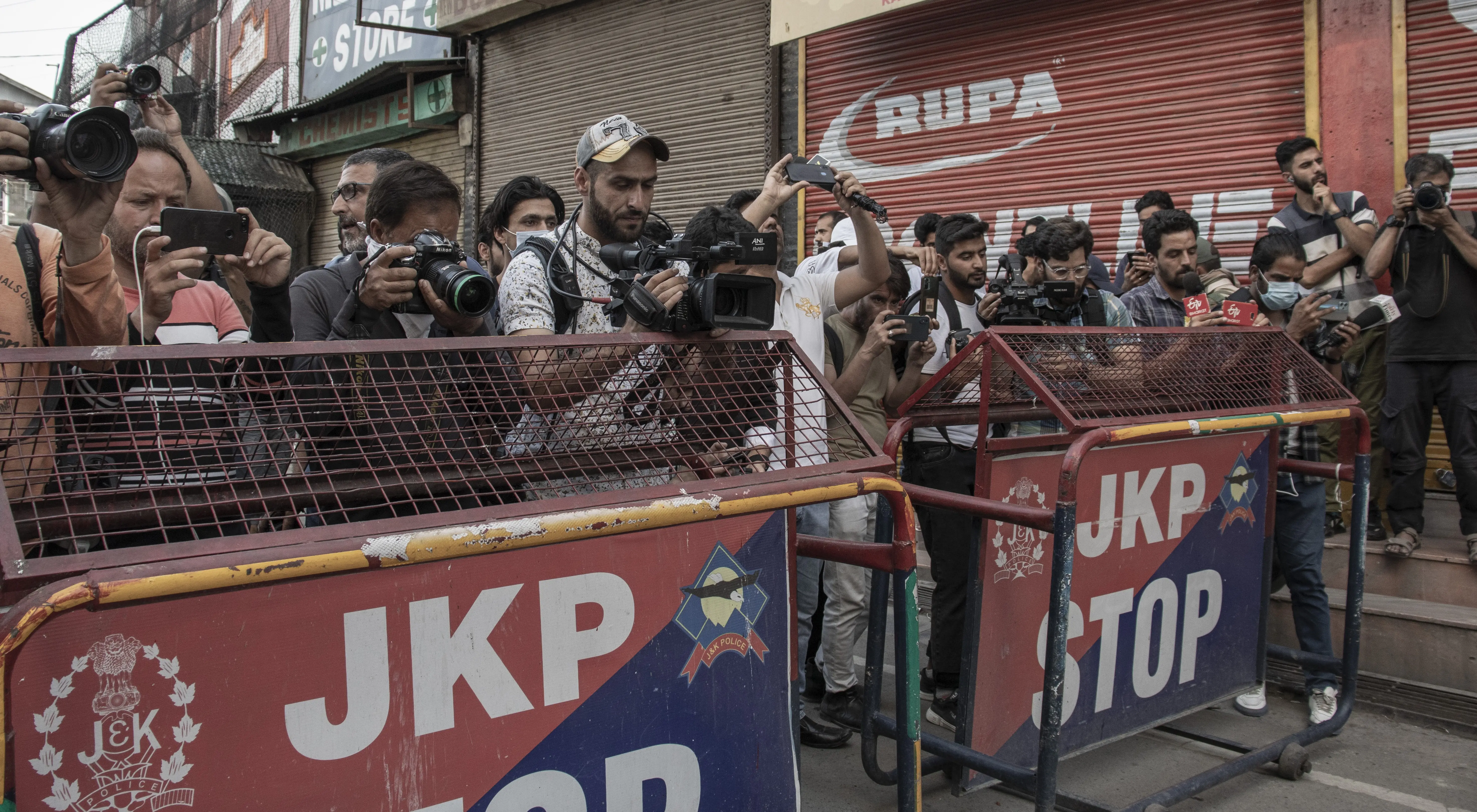
Journalists in the Union territory of Jammu & Kashmir report from behind a barricade in 2022. Photo: Zainab
Earlier this month, India and Pakistan engaged in a military conflict over a course of four days, until a ceasefire was brokered on May 10. Alongside, the two nuclear-armed countries were embroiled in a hailstorm of misinformation, disinformation and propaganda, fuelled by state-backed mainstream media and unverified social media content.
Mainstream TV channels showcased bombings, drones and “invasions” using unverified footage, speculating hour upon hour, and goading their respective militaries to annihilate the other. Internet and network blackouts disrupted communication and the people, desperate for news, had no option but to sift through the barrage of information and videos to judge the truth for themselves.
In the middle of this, journalists on both sides of the border fought a parallel war where they struggled to access impacted areas and report from the ground.
“Independent journalists are the first to reach [impacted] areas, and often the only ones who continue coverage when legacy media goes silent, without any TRP-led bias,” says Suhail Bhat, a Delhi-based journalist from the Union territory of Jammu & Kashmir. TRP refers to Television Rating Point, a metric used by channels to measure the popularity of a segment to determine revenues. “But still, I was stopped by forces many times simply because I’m not affiliated with any particular media house,” Bhat adds.
National and international media outlets are able to provide press cards and appropriate gear to their journalists, while freelancers operate without them. But reporting under editorial mandates of legacy media often means that some crucial stories and aspects can slip through the cracks — a gap that needs local and independent journalism.
“[Non-local journalists] will report that this many people are dead, this many injured, but it’s as if bhed bakriyan mar rahi hai [sheep and goats are dying]. The people have names, families, homes and towns they’re leaving behind. But they’re confined to numbers, or not treated as humans but subjects for stories,” said Gafira Qadir, an independent journalist from the Union territory of Jammu & Kashmir.
The media industry also prioritises viewership and ‘story breaks’, which often means that reporters are sent to the ground at the last moment to capture the first impressions – irrespective of the context. At that, legacy media houses ensure appropriate gear, security checks and access for their journalists. These assets are not provided to freelancers by the newsrooms hiring them on contract for specific assignments.
“TV news channels based in New Delhi always have the upper hand when it comes to access as compared to local reporters. We see it in front of our eyes—a TV reporter can cross a line that other reporters cannot,” said L*, another journalist from the Union territory of Jammu & Kashmir.
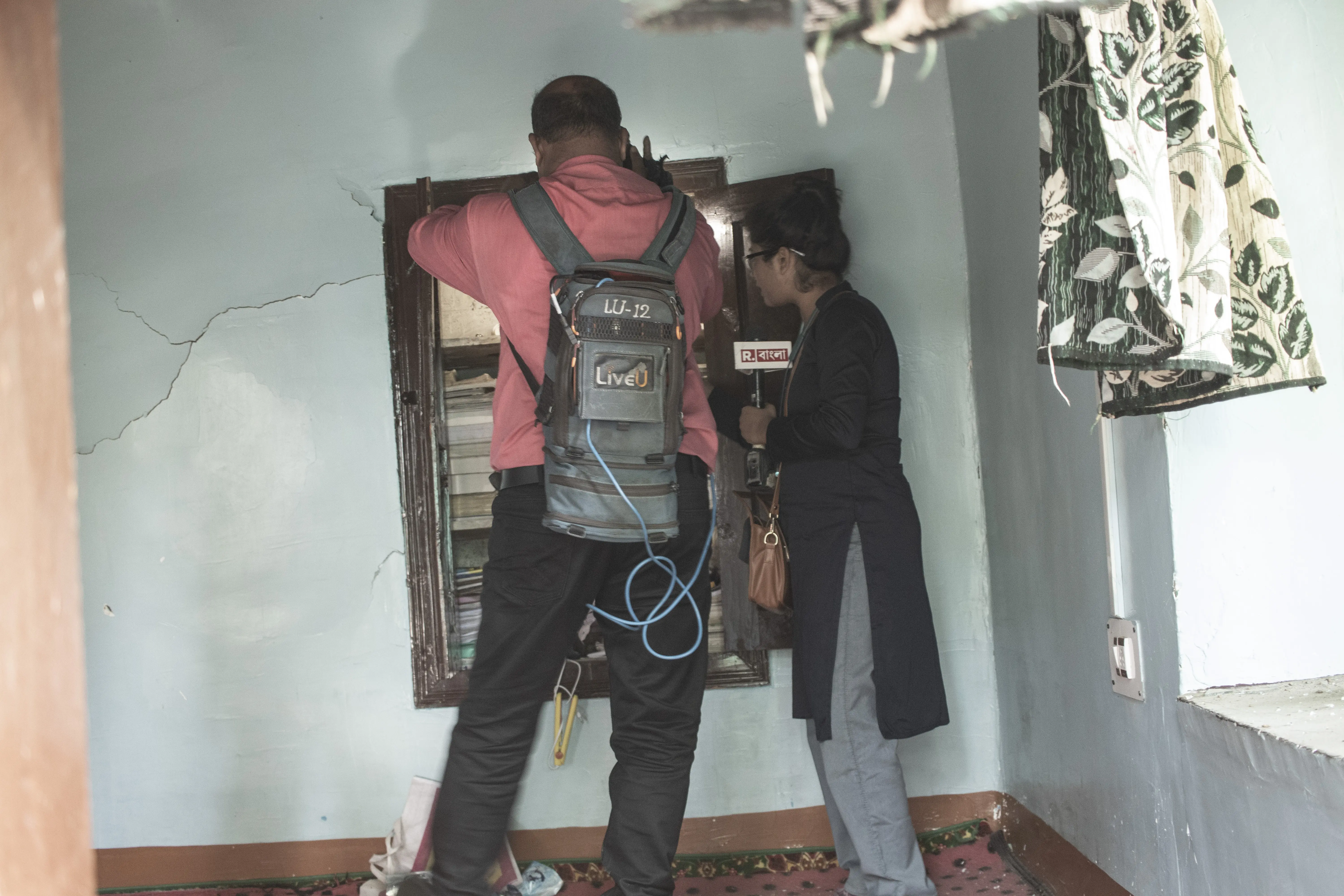
Crew from a prominent Indian TV news channel at a local residence in South Kashmir’s Tral in April 2025. Photo: Zainab
This inequality of access leaves opportunities for sensationalism by certain sections of the media in order to influence public sentiment.
“We’re in these times when the health of the industry isn’t looking good, and people’s faith in the media is at its lowest. At the same time, great journalism is still happening and a lot of it’s coming from independent journalists,” said Karan Deep Singh, an independent journalist and a former Staff Reporter and Visual Journalist with The New York Times and The Wall Street Journal.
Reporting from the frontlines is a different ballgame, and media watchdogs like the Committee to Protect Journalists (CPJ) highly recommend the use of Personal Protective Equipment (PPE) like vests and helmets while covering war zones.
While that is often not an option for independent journalists, proper safety measures aren’t a priority even in established newsrooms, says Kunal Majumdar, CPJ’s India representative.
“There are no mechanisms, no due diligence, not even a basic safety checklist. Does the journalist have a backup plan? An exit strategy? No one takes safety seriously, and the excuse is always cost. Newsroom managers need to understand that journalist safety isn’t just about expensive equipment—it’s about having a clear safety strategy in place,” adds Majumder, formerly a Delhi-based editor with media houses like Tehelka and The Indian Express.
In Kashmir, access is particularly challenging, and journalists are already at risk due to government clampdowns on both sides. During a full-blown conflict, these challenges were exacerbated.
Singh, the Delhi-based journalist, believes that the industry pressure to be the first to publish, combined with how hard it is to make a living off journalism, means that safety and training often take a backseat.
“Most journalists can’t think about it because they’re really trying to get the story, and their entire situation has been so perilous. The industry puts a lot of pressure, and only if they get the story do they get the paycheck. So safety, even for some newsrooms, is an afterthought,” said Singh.
Bhat says that the contracts he signs for a story as an independent journalist for international organisations might be 50-pages long, with clauses on deadlines, compliances and legal liabilities. But safety is not addressed.
“Rarely, if ever, do they mention what happens if the journalist gets injured, arrested or harassed. There is no word on insurance, safety briefings, ethical trainings, or even equipment support,” said Bhat.
On the other side of the border, Islamabad-based journalist Haroon Janjua said that even as drones hovered overhead, the organisations he works with did not provide any protective gear, nor has he received any HEFAT [Hostile Environment and Emergency First Aid Training] yet. This experience was mirrored by all journalists Asian Dispatch spoke to, in both India and Pakistan.
“This lack of gear significantly impacted my ability to work, preventing me from going on the ground to gather accurate and fair information about casualties and the emotions of those affected by the war,” said Janjua.
Others said that the lack of gear doesn’t affect the coverage, because the story must still be told.
“Journalists risk their lives to get the story out. The public sees the news, but they don’t see the emotional, mental, and physical toll it takes on the person behind the camera or mic. That’s the real cost,” said Pakistan-based journalist D*, who requested anonymity to protect their identity over fears of industry backlash.
The Journalist versus ‘Creators’
On May 10, Badar Alam rushed from Islamabad to Lahore to his daughter, who was nervous about the conflict. Upon reaching, he found that the major source of his daughter’s anxiety were Instagram accounts that were posting updates on areas that had been attacked. One of the recent updates that had shaken her was a post about blasts less than 2 kilometers away from her Lahore home. This was not true.
Alam, a seasoned Pakistani journalist, was aghast, and told his daughter that if there really were blasts that close to their home, she would have heard something. “Wouldn’t people around them feel the impact?” he asked her.
Pakistan-based journalist D* said this conflict saw many emotionally-charged local people filming and sharing content using smartphones, without verifying facts.
This negative impact of social media content creators is twofold: It can spread falsehoods, and it undermines journalists trying to find out the truth.
“Local ‘citizen journalists’ were quick to report from their areas whenever a missile or drone hit. They filmed what they could and gave live commentary – often without using the right words, checking facts or understanding journalistic ethics. The rush for instant content and social media engagement is replacing responsible reporting,” said D*.
Journalists and independent newsrooms in both countries are being increasingly targeted and silenced through raids, censorship, intimidation via legal actions, corporate takeovers, court summons, and outright arrests and detention.
This problem is amplified in the Union territory of Jammu & Kashmir, where the Kashmir Press Club – an independent media body – was shut down, making it difficult for freelance journalists to get accreditation, which is an official acknowledgement of a journalist’s credentials.
“Since 2019, we have had ‘Facebook journalists’ who found an opportunity [in the lack of accreditation], resulting in some of them operating very unethically while calling themselves journalists. They don’t ask people before filming and upload their videos online. And then [when we approach people for actual journalistic work], people won’t talk to us because they have been mistreated by these social media creators,” said Qadir. “They put [their content] on Instagram, and make Reels. They’re not reporting, they’re selling.”
Divided by Borders, United in Suppression
Since their partition in 1947, India and Pakistan have come to blows three times over disputed territories, particularly in Kashmir. Currently, different parts of Kashmir are administered by India, Pakistan, and China.
But it’s not just disputed borders that separate the two countries. India and Pakistan’s separation was influenced by an enduring belief that one should be a nation for Hindus, the other for Muslims, and that these two identities are incompatible.
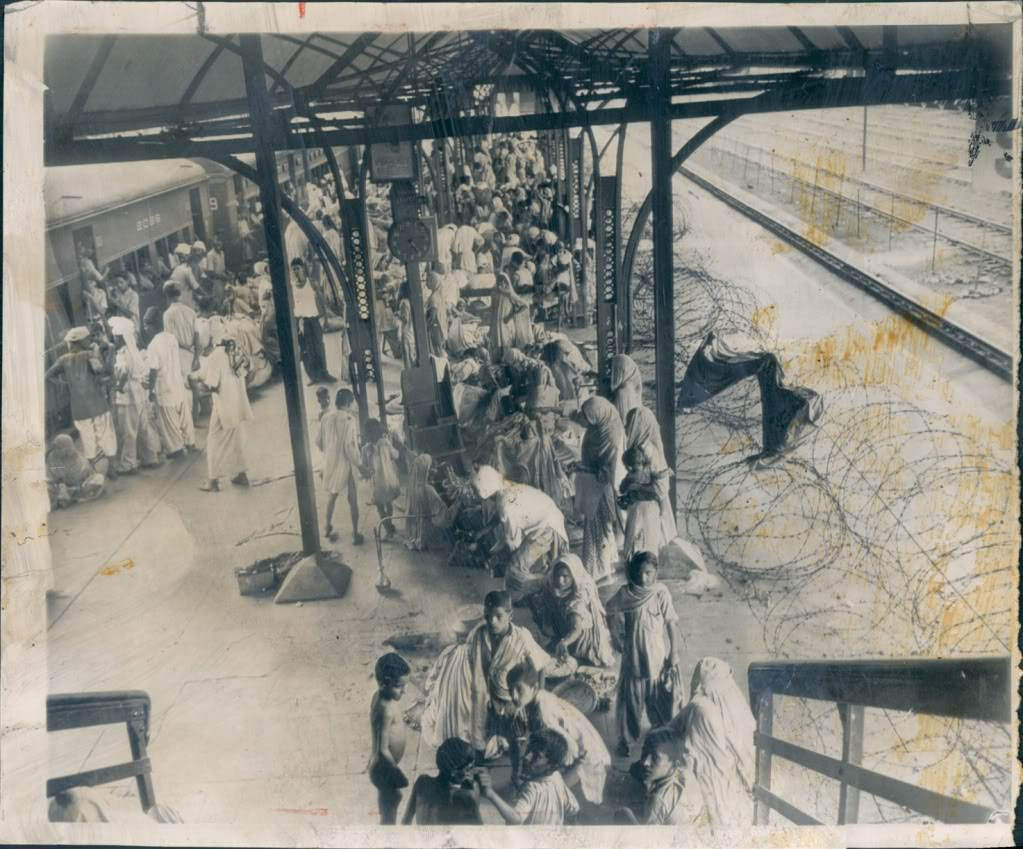
1) An archival image from the Chicago Sun-Times of the Lahore train station in September, 1947, where coils of barbed wire separate the waiting areas. Source: Fran Pritchett’s Archive
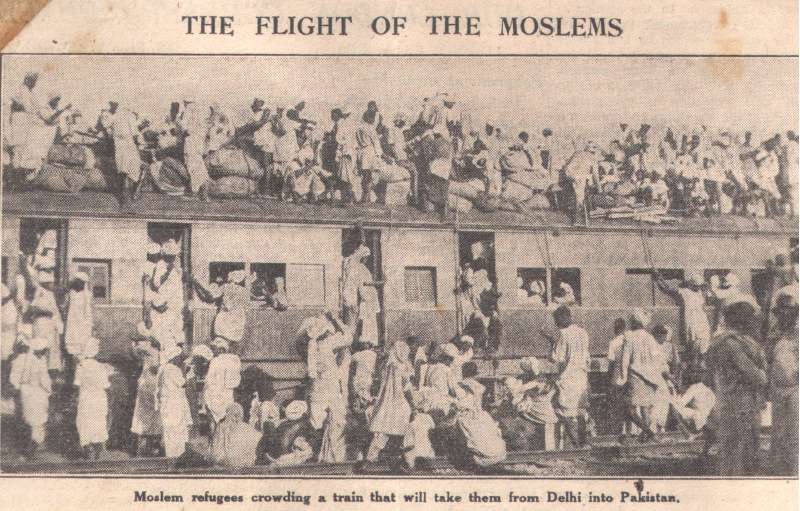
2) An archival image of a Delhi train station during Partition, published in The Manchester Guardian in September, 1947. Source: Fran Pritchett’s Archive
Attacks and persecution of minority populations in both India and Pakistan have been increasing. In Hindu-majority India, over 200 million Muslims face rising discrimination, hate and violence, while in Muslim-majority Pakistan, Hindus are among the top minorities who face religious persecution and violence such as forced conversions.
And with restrictions on cross-border communications, travel and trade, successive governments and militaries have controlled public perceptions.
“We’re working in an atmosphere that’s politically charged on both sides, and both sides seek to gain politically from the conflict. So as journalists, our job is very crucial because we are media-literate, and we can see through propaganda versus hard-core evidence-backed information,” said Singh.
Often, it’s the local journalists who are able to get that evidence.
“Independent journalists can move anywhere, without any kind of set direction in our heads, or from our bureau chiefs. So in that way, we are free to document what’s happening on-ground,” said Adil Abass, a 30-year-old independent journalist from the Union territory of Jammu & Kashmir.
Alam, co-founder of Islamabad-based magazine Earthwise, says that the media response on both sides during this conflict was worse than any he had ever seen, not during the Kargil war, during terrorist incidents, slug fests or shouting matches.
“During this conflict, journalists simply lost their ethics in a way that they never have on both sides of the border. This was something different. The state was following what the media was doing, and the media was egging the state to annihilate the other side. And journalism really died in that battle,” he said.
But he believes that like all challenges, it presents an opportunity, even a collaboration between like-minded sane voices from both sides.
“Journalists who do not monger war, who are sick and tired of the lies and fabrication in the news, social media and by the state, must step forward with the courage to hold hands across the border and work together,” said Alam. “It’s a huge challenge for Pakistani and Indian journalists, but that’s what the spirit of journalism is—to be able to take the first step in that direction.”
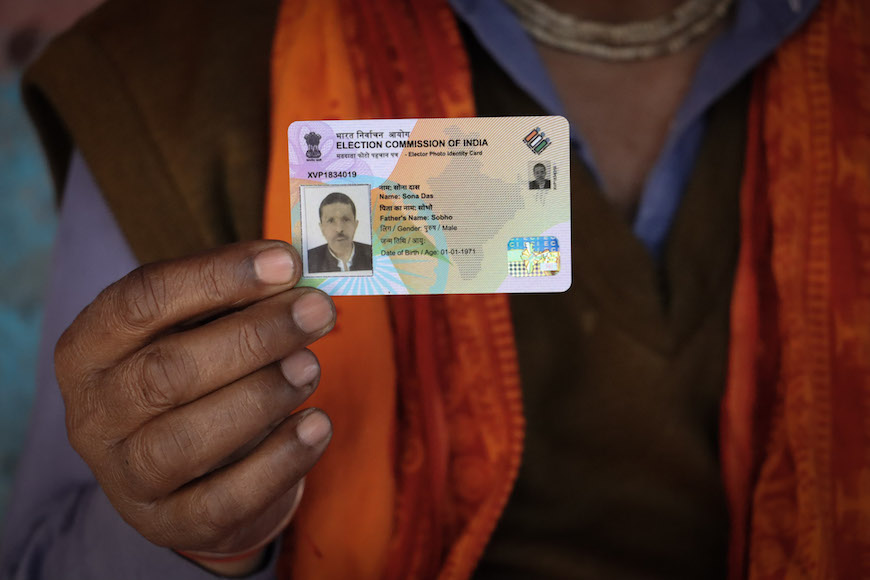
Das holds up his voter ID card ahead of the Delhi Assembly elections, a milestone in his journey as a newly-minted citizen under the CAA law. Photo: Shivalika Puri
Sona Das never imagined he would leave Pakistan, the country of his ancestors where he built a home, where his children took their first steps, and where he worked as a farmer to provide for his family.
Sitting inside their makeshift home in Majnu Ka Tilla refugee colony, located in northern Delhi, Das’s wife Rani prepares a cup of tea as her husband sits cross-legged, his shoulder draped in a thin blanket. The couple recalls the day they left their home in Pakistan’s Hyderabad city, located in Sindh province, calling it a “difficult decision.”
In 2011, Das and Rani traversed the hostile borders between the two nuclear-armed South Asian countries – India and Pakistan – on a religious visa. They were among the first Pakistanis fleeing years of discrimination and religious persecution that nearly 4.4 million Hindus face in their country.
Although there is no official figure, an estimated 300 Pakistani Hindus will be a part of history and vote as citizens – the second time in India since 2022 when over 1,000 Pakistani Hindus, who were awarded citizenship by local authorities, voted in the western Indian state of Gujarat.
Today, India’s capital New Delhi went to polls where Aam Aadmi Party, an upstart party set up in 2013, will battle it out against Bharatiya Janata Party (BJP), which has, since its first election as the national ruling party in 2014, campaigned hard on issues of identity, specifically Hindu nationalism.
In fact, Das is the beneficiary of the BJP’s Citizenship Amendment Act (CAA), which grants citizenship to Hindus, Sikhs, Buddhists, Jains, Parsis and Christian refugees from Muslim-majority Pakistan, Afghanistan and Bangladesh who came to India before December 2014. The law sparked widespread protests in 2019, mainly from India’s largest religious minority, the Muslims. Muslims from other South Asian countries are not included in this safe passage.
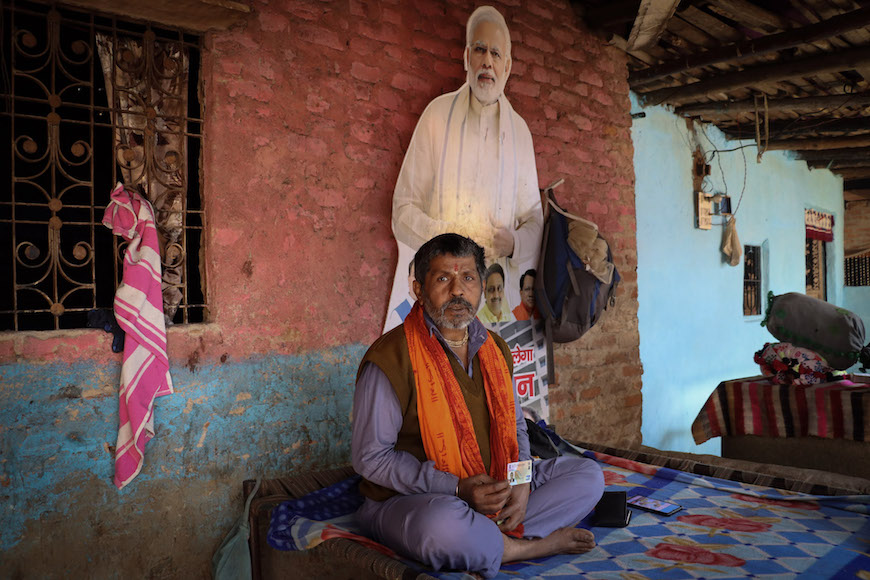
Sona Das sits inside his makeshift home in New Delhi’s refugee colony. Beside him stands a cutout of Indian Prime Minister Narendra Modi, whom he reveres as a god. Photo: Shivalika Puri
For 54-year-old Das, the CAA was a turning point. “We were uncertain about our future in Sindh,” he says. “But this law gave us a sense of belonging and hope for our children. It made us Indian.”
Sona’s story reflects the larger challenges faced by many Hindus in Sindh, Pakistan, where economic hardships, religious discrimination, and insecurity have driven countless families to seek refuge in India. A 2023 report by the Human Rights Commission of Pakistan (HRCP) documented key drivers of forced migration, including insecurity, economic hardship, threats to women, and worsening climate conditions. The report also states that much of the violence and discrimination is targeted against communities of lower castes or Dalits.
Das says that even when his family would ask for food or water, Muslims in their previous home town would use separate utensils. “At first, we endured it, thinking we could manage. But when we thought about our children’s future, we decided to leave our home,” he said.
An estimated 5,000 Hindus migrate from Pakistan to India annually, according to data presented at Pakistan’s parliament in 2014, often on grounds of deteriorating human rights conditions for the community, especially in Sindh. In Pakistan, successive governments have downplayed the issue, or denied it. A 2015 BBC report documented 1,200 people having set up camps in Delhi since 2010, awaiting citizenship.
The forced migration of Pakistani Hindus also has roots in the violent colonial history of the partition between India and Pakistan, which left in its wake a Hindu-majoritarian India, which has Muslims as its largest religious minority group, and Muslim-majority Pakistan with Hindus as the largest minority. Both religious minorities in those countries have been documented to face human rights violations.
READ: Why the 2024 Indian Election Results Shook the Nation
Assad Iqbal Butt, the chairman of HRCP in Pakistan, emphasised the need for cross-border support.
“It’s not an easy decision for our Hindu brothers to leave Sindh,” he told Asian Dispatch. “They are refugees, leaving behind their ancestral land to seek a new life in India. This is not just about asylum seekers in India and Pakistan, but about the broader South Asian region, which must foster cross-border support and cooperation.”
He also acknowledged New Delhi’s efforts in granting Pakistani Hindus the right to vote, calling it a significant step. “Granting these refugees voting rights in India is not only a lesson for Pakistan but for the whole of South Asia and many more governments to come,” he added.
For Das and wife Rani, the choice this election season is clear. Despite being housed in a makeshift settlement in Majnu Ka Tilla, which is also home to Tibetan refugees, the duo have only some pieces of second-hand furniture, some utensils and a charpai to their name. Next to their furniture is a large cutout of BJP leader and Indian Prime Minister Narendra Modi.
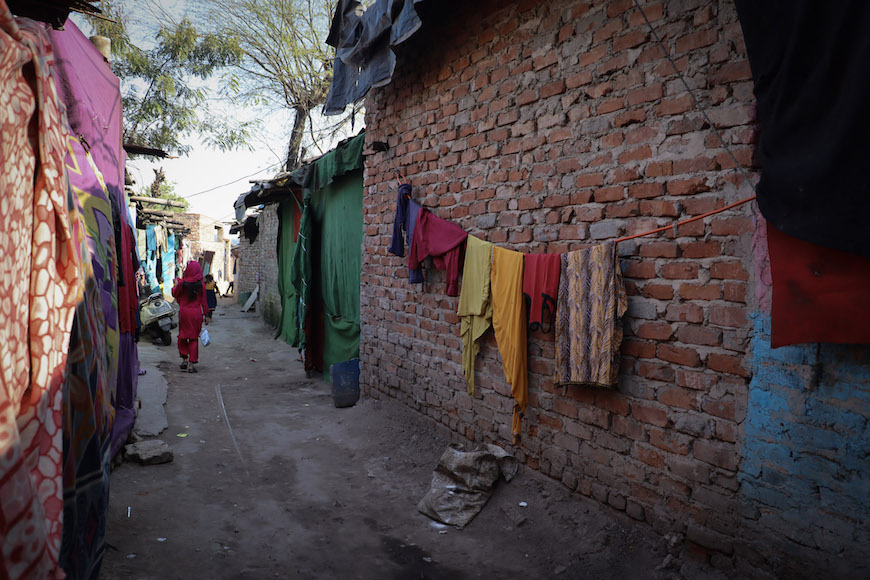
Majnu Ka Tilla, New Delhi, is home to hundreds of Pakistani Hindu refugees, where small makeshit homes are tightly packed together. Photo: Shivalika Puri
“There is no one like him,” Das says. “What he did for us is something no other leader or government would have even thought of. I am willing to sacrifice my years of life to extend his.”
It’s not an easy decision for our Hindu brothers to leave Sindh. They are refugees, leaving behind their ancestral land to seek a new life in India. This is not just about asylum seekers in India and Pakistan, but about the broader South Asian region, which must foster cross-border support and cooperation. — Assad Iqbal Butt, chairman of the Human Rights Commission of Pakistan.
But not all recently-coined citizens share the same perspective.
For 30-year-old Jamna, who has lived in Majnu Ka Tilla with her husband for eight years, life is a daily struggle. As she sits and sews a pillow cover – like most Pakistani Hindu girls and women in the colony – she says, “I’ve sewn every day for the past eight years. But I don’t want this life for my children. Right now, no one from our settlement has an office job or a government job. We’re surviving by either selling phone accessories or street food.”
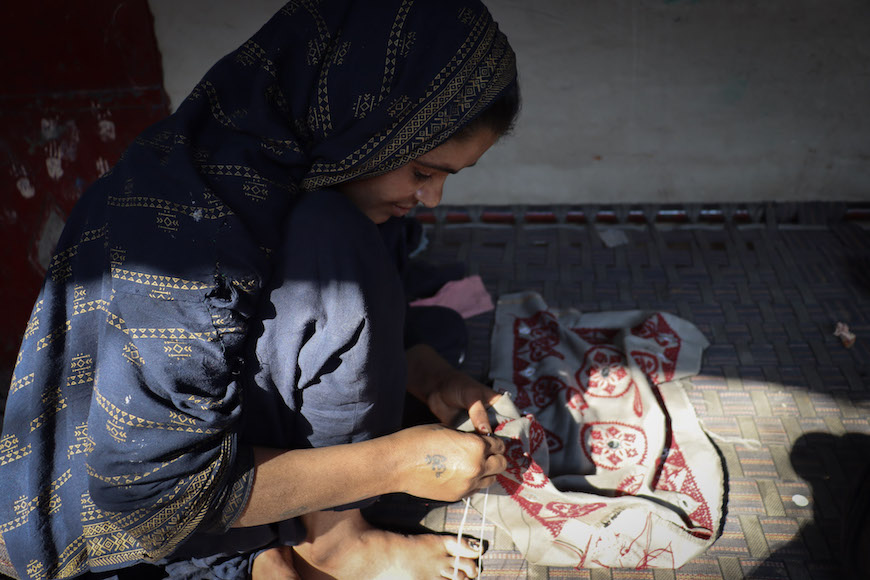
A Pakistani Hindu refugee woman weaves a pillowcase, threading hope into every stitch inside her makeshift home in the Majnu Ka Tilla refugee colony. Photo: Shivalika Puri
Her words reflect the struggles of young people here. Many young men remain unemployed or engage in menial labour. Young women, on the other hand, are confined to their homes, with parents focused on getting them married early.
Rajkumari Gulab, 18, spoke to Asian Dispatch with a sense of defeat even as she prepared for her final senior school examination. “I want to be a police officer, but this dream feels next to impossible,” she says. “Almost every day, men and their families visit my parents to ask for my hand in marriage. I wish the youth in our community had more support to find decent jobs and become successful.”
Equal rights and dignity of life to Hindus from Pakistan has been Modi’s campaign material since 2014. Last year, ahead of the General Elections in India, Modi met Pakistani Hindu refugees who got Indian citizenship under CAA. Modi’s party won the elections through a coalition of parties. While CAA has been at the heart of BJP’s rhetoric, its implementation has not been smooth. In 2022, Seemant Lok Sangathan, an Indian rights group advocating for Pakistani minority migrants, found that around 800 Pakistani Hindus who came to India in 2021, returned after no progress was made on their citizenship.
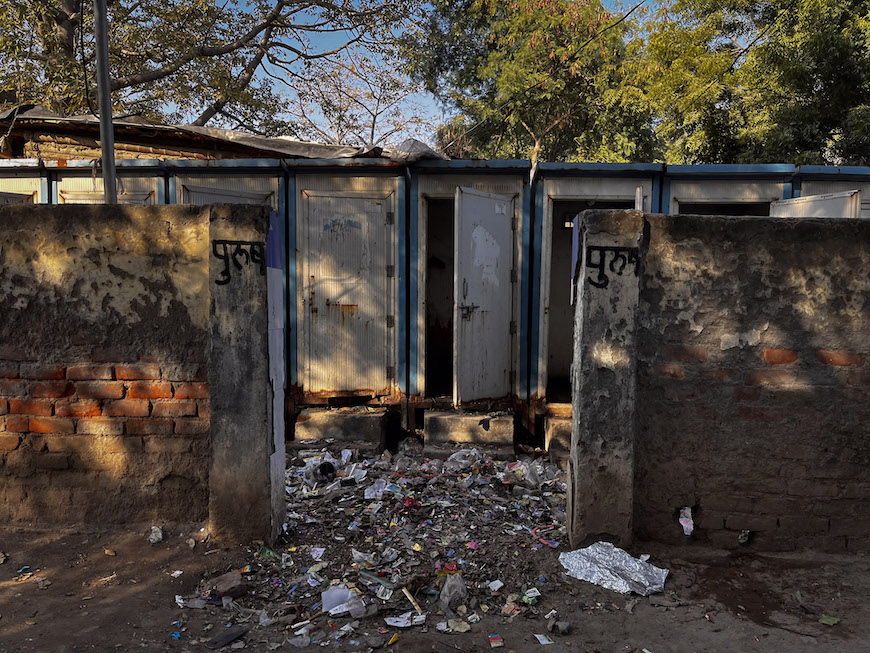
Neglected toilet facilities in Majnu Ka Tilla refugee colony, with overflowing garbage highlighting the lack of proper sanitation. Photo: Shivalika Puri
Many are still waiting. Under New Delhi’s Signature Bridge, spanning India’s sacred river Yamuna, an informal settlement has become home to Pakistani Hindus since 2014. They’re still waiting for citizenship. Not only are they excluded from voting rights but also welfare schemes. In Delhi’s harsh weather conditions, the refugees face everything from dangerous levels of air pollution to flooding.
READ: Kashmir’s First Election in a Decade Shows the Changing Face of Political Participation
A 50-year-old woman, who requested anonymity, says they have to be alert all the time. “We are surrounded by a jungle here. There are snakes and wild animals. Then, during floods every monsoon, our tents get submerged, forcing us to move to higher ground for safety. We don’t need money or food ration. All we want is a decent place to live.”
Hindu Singh Sodha, the founder and president of Seemant Lok Sangathan, emphasised that the real challenge goes beyond just granting citizenship.
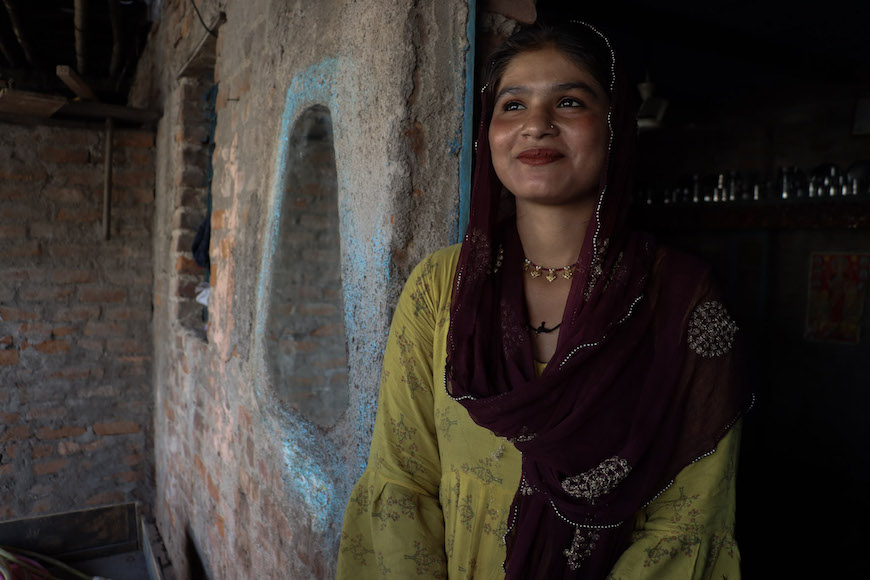
Rajkumari Gulab, 18, poses for a portrait inside her makeshift home in Majnu Ka Tilla refugee colony. Photo: Shivalika Puri
“Under the CAA, citizenship is only granted to those who arrived before December 31, 2014. So what about those arriving today? Has the persecution and discrimination against them stopped?” Sodha told Asian Dispatch. “I believe having a cut-off date for CAA eligibility is not justified. This is one area where the government needs to reflect and reform the law.”
Sodha also highlighted the complex and lengthy process to gain citizenship in India, which sidelines the real issue of rehabilitation. “[The citizenship process] can take 20 to 25 years but that alone does not solve their problems if [refugees] continue living in deplorable conditions,” he said. “The government must go beyond legal recognition and focus on structured resettlement, which includes access to housing, healthcare, and opportunities for livelihoods. Currently, there are no proper rehabilitation measures in place.”
As the fate of refugees and newly-minted citizens remains uncertain, Sodha says the government’s duties are far from over. “If refugees are left stranded, it will damage the government’s credibility and the trust of those who believed in India’s commitment to them.”
Rajkumar Thing, a six-year-old boy from Phulbari in Marin Rural Municipality, Ward no. 4, Sindhuli, Nepal, is playing near his house. As soon as Kana Thing from Deurali, a neighboring village, meets him, he proposes to take Rajkumar to study at a monastery in India. Luring the innocent child, he promises, “If you go to study at a monastery in India, you will become a great Lama, earn a lot of money, and get free food, accommodation, and education.”
Rajkumar, at a playful age, is thrilled by the proposal to go far away from home.
Kana, a 28-year-old man, had arrived in Phulbari on the first week of Jestha, 2076 (May, 2019) searching for boys of Rajkumar’s age to take them to a monastery to become monks. He followed Rajkumar, whom he had met on the street, all the way to his house.
Kana proposed to Rajkumar’s mother, Sunimaya, to take him to India for education. Sunimaya agreed to send her son as Rajkumar also expressed a desire to go to the monastery and Kana’s offer seemed reasonable. Kana had already proposed the offer to Rajkumar’s friends, Mingmar Moktan(8) and Man Bahadur Yonjan(12). Mingmar’s mother, Anita, and Man Bahadur’s mother, Kanchhimaya, also agreed to send their sons. Sunimaya feels comfortable sending her son because he will be going with his friends from the village who play and study together.
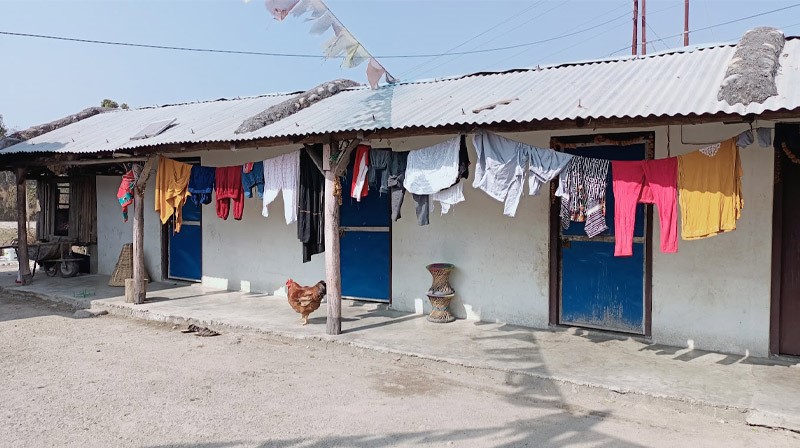
Home of Somraj Thing. Photo: Kalpana Bhattarai/NIMJN
The parents send their sons to India based solely on the promise of being taken to a monastery in India, without any knowledge of the location, purpose, method or duration of their stay. In total, 18 boys from Marin, including Rajkumar, Mingmar, and Man Bahadur, were taken to India through the Malangwa border checkpoint in Sarlahi in Jestha, 2076 (June, 2019). Their own parents helped them cross the border. They left their children in the care of Lal Singh Bal, Kalsang Lama and Kana before returning home.
Rajkumar, who went to the Drepung Gomang Monastery in Karnataka, South India, with the dream of studying and becoming a great monk, initially enjoyed himself there. However, as days passed, he wanted to return home. When he spoke to his mother through someone from the monastery, he expressed his strong desire to come home permanently and asked her to come get him soon.
His parents, who had no idea where to go or how to get him when they sent him to study, were now in a dilemma. Their son, who they had expected would return only after completing his education, was now insisting on coming back midway. So, they asked the people at the monastery to bring Rajkumar home.
Since Rajkumar refused to stay and was adamant about returning, the people from Drepung Gomang Monastery brought him to a monastery in Kathmandu in the first week of Asar, 2080 (June, 2023). Sunimaya, who had accompanied her son to the border in Sarlahi in 2019, went to Kathmandu herself to bring him back four years later, in 2023. When she had left him earlier, she had cried for a month. It was the same this time around too. The only difference was that the tears she shed earlier were of separation, while now these were tears of reunion.
After learning about Rajkumar’s return, we visited his home in Chyane, Marin, Rural Municipality-4, Sindhuli for the second time on Shrawan 27, 2080 (August 12, 2023). Six months prior to this, on Magh 28, 2079 (February 11, 2023), we visited Chyane and Deurali in Kapilakot Rural Municipality, Ward no. 6, for the first time. Back then, we had met some children who had returned from monasteries in India. Our purpose for visiting again was to understand why Rajkumar agreed to go to the monastery, how he was taken to India, what happened there, and why and how he returned.
Braving the monsoon rain and flooded local rivers, we reached there to find Rajkumar playing with his friends, just like he was when Kana met him in 2076 (2019). “We couldn’t play like this there,” he said, stopping his game to talk to us. “We had to follow strict discipline and rules.” When asked about his experiences at the monastery in India, he replied, looking scared. Considering his state, we talked to him in the presence of his parents. Even then, he answered with a downcast gaze and kept fidgeting with his fingers.
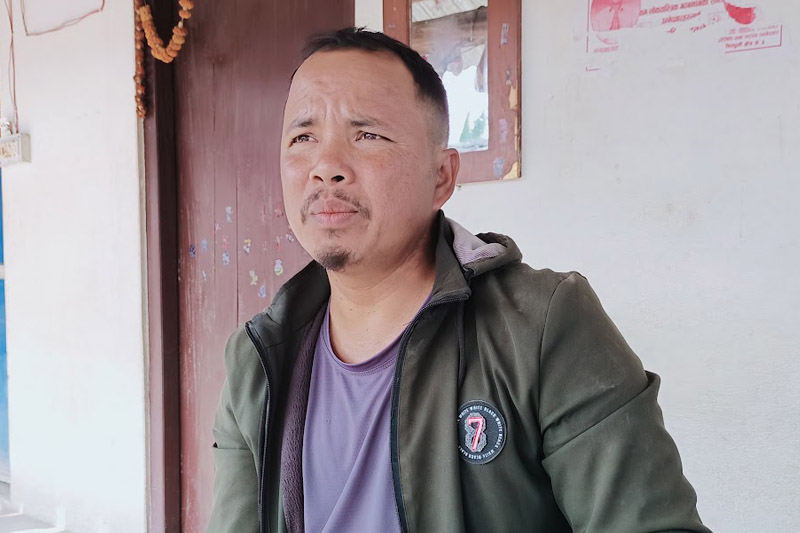
Somraj Thing (Rajkumar’s father). Photo: Kalpana Bhattarai/NIMJN
Rajkumar, who is now enrolled in grade 4 at Khayarsaal Madhyamik Vidyalaya in the village after returning home, finds a vast difference in teaching methods between here and the monastery. In the monastery, he had to study from 5:30 am till 12:00 midnight. He was required to understand and recite the day’s lessons at night. By the time he could go to bed, it would be 1:00 am. If he couldn’t complete his classwork properly or made mistakes, he would be beaten.
“The teacher would hit me wherever he could reach,” Rajkumar narrated his ordeal. “I have been beaten with sticks and even phone charger cables. Whenever I was beaten, I would cry, thinking about home and my village.” He feels that the fear of being beaten always loomed over him whenever he had to present his classwork.
Rajkumar vividly remembers a time when he was severely beaten for accidentally dropping and breaking a cup during a prayer ceremony in the monastery. “My whole body was bruised, it is healing only now,” he says.
According to him, the monastery provided food, accommodation, and education. However, any mistake resulted in harsh beatings, which is why many of his friends there also wanted to return home. “I would be exhausted after studying all day, and if I could not complete the classwork at night, I would not be allowed to sleep,” says Rajkumar. “I could not take it anymore, so I came home. I have no desire to go back there ever again.” When he went to India, he was six years old. Now, he is 10.
Sunimaya, his mother, was initially unaware of the problems her son faced at the monastery. She says that initially, their phone conversations with Rajkumar were limited to answering their questions, and he would not share anything else. The first time they spoke to him after he was sent to the monastery in 2076 (2019) was two months later.
His father, Somraj, says it took time for Rajkumar to adjust to being back with the family and talk openly. “Things are slowly getting better,” he says.
We reached out to the Drepung Gomang Monastery and the Delhi Police to ask about the minors, including Rajkumar Thing, being taken to India to study. We have not received any response from them as of June 24, 2024.
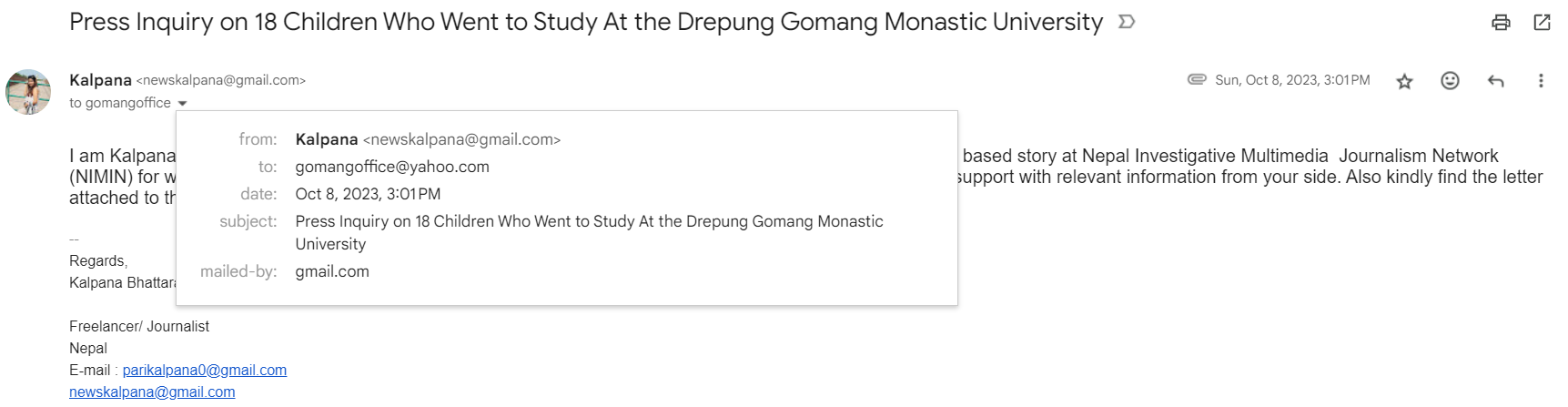
Screenshot of email sent to Drepung Gomang Monastery. Image: NIMJN
According to Sub-section 2 of Section 15 of the Act Relating to Children (2018), every child has the right to free and compulsory basic education and free secondary education in a child-friendly environment, as per the prevailing laws. Similarly, Sub-section 3 states that every child has the right to education through appropriate learning materials and teaching methods according to their specific physical and mental conditions, as per the prevailing laws. Taking Rajkumar to India to make him a monk and the hardships he endured at the monastery clearly demonstrate a violation of these rights and an injustice done to him, according to child rights activist Milan Dharel.
Neglect of the authorities
During the scorching heat of Jestha (May), Rajkumar said goodbye to his mother. He along with 18 other boys crossed into India with Lal Singh Bal, Kalsang Lama and Kana. After spending three days in Delhi, they boarded a train to Karnataka. At the Nizamuddin Railway Station in Delhi, the sight of 18 children without guardians on their way to Karnataka alarmed the Delhi Police, who took them into custody. Upon learning that the children were Nepali, the police suspected smuglling and immediately informed the Nepali Embassy in Delhi. Coincidentally, the then Prime Minister Pushpa Kamal Dahal ‘Prachanda’ was on a visit to India at that time. Busy with welcoming the prime minister, the embassy officials sent a Nepali organization called ‘Afanta Nepal’ (KIN) to check on the condition of the children apprehended at the railway station.
According to Navin Joshi, the then rescue officer at Afant Nepal who reached the police station, it was confirmed that the children were brought through illegal means. However, instead of sending them home, they were allowed to proceed to their destination. Documents were requested from the Karnataka monastery to release the children from police custody. These documents mentioned that the children were being taken to become novice monks. Joshi further states that the people accompanying the children had nothing but birth certificates.
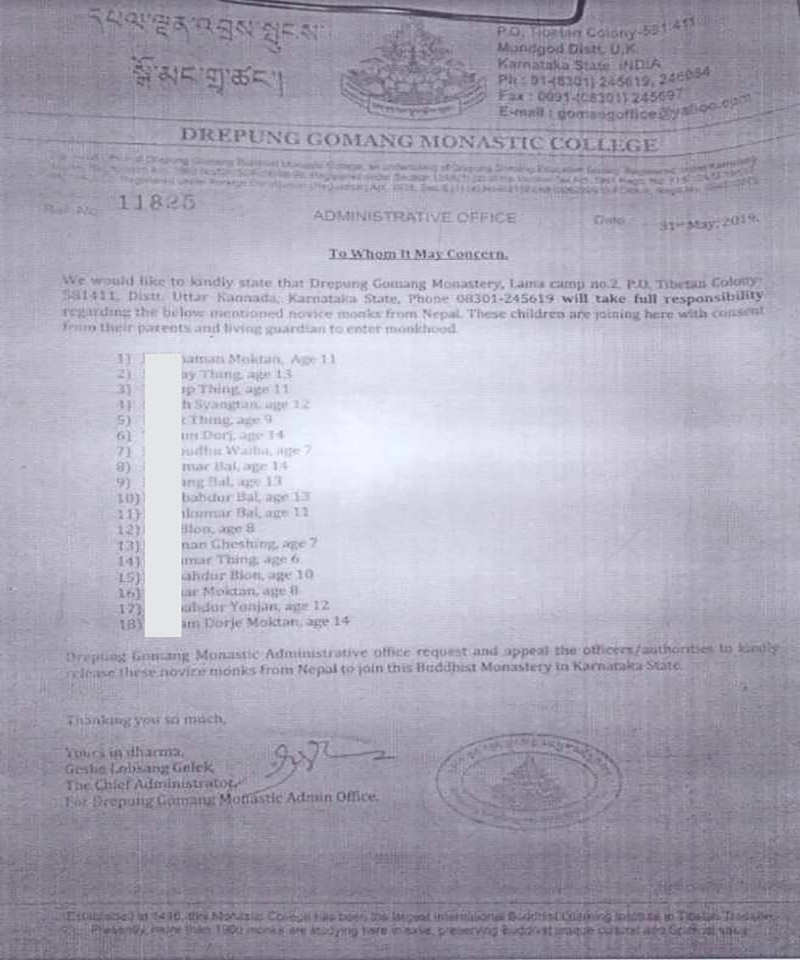
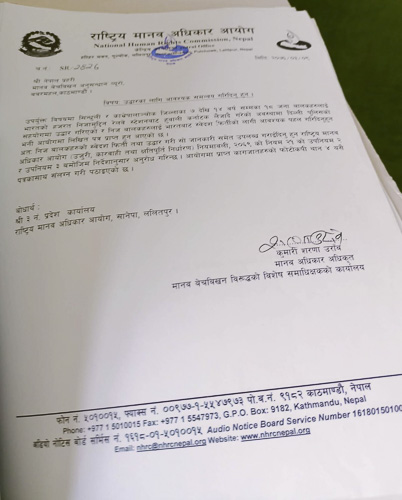
(Left) Letter sent from the Karnataka’s Gumba to the Indian Police. (Right) Letter sent by the Human Rights Commission to the police. Images: NIMJN
Even though the children were allowed to go to the monastery, Joshi wrote letters to the Human Trafficking Investigation Bureau, the Child Rights Council, and the Human Rights Commission, urging them to take immediate action to rescue the children and return them to Nepal due to the risk of trafficking.
Based on this, the Human Rights Commission also wrote a letter on Asar 9, 2076 (June 24, 2019), requesting the Human Trafficking Investigation Bureau to rescue the children, return them to Nepal, and provide information on the matter. In response, the Human Trafficking Investigation Bureau’s letter stated, “Sent with parental consent and in touch with family.”
The letter mentioned that contact could not be established with the parents of three of the 18 children: Chhenmong Dorje Tamang, Raju Bholan and Sang Bahadur Waiba. There were meetings, discussions and debates between government and non-government agencies regarding whether or not to repatriate the children who were taken to the monastery illegally without completing the process.
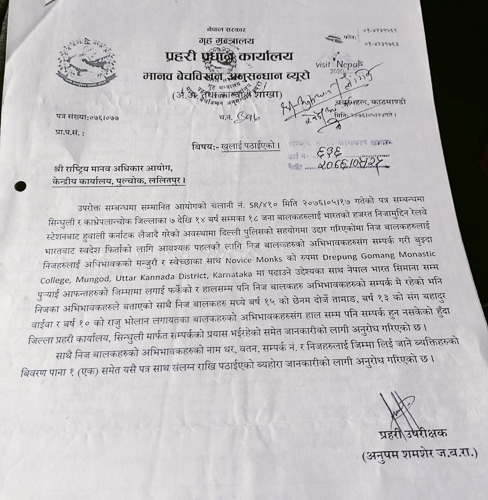
Letter sent by the Human Trafficking Investigations Bureau to the Human Rights Commission. Image: NIMJN
The discussions also raised concerns about the children’s rights, well-being and protection. However, investigating the situation of the children sent there did not fall under anyone’s responsibility. Anupam Rana, the then Superintendent of Police at the Human Trafficking Investigation Bureau, states, “In the end, the case was closed with a light comment saying they were sent to study.”
Somraj Thing, Rajkumar’s father, says he only found out about the illegal method used to take his son after the police stopped him in Delhi. According to him, the Kapilakot Area Police Office in Marin called them and asked them to sign documents stating they could contact their son by phone and that he was safe.
The documents we found at the Kapilakot Area Police Office on Asar 27, 2080 (July 12, 2023) confirm this. Records show that the Human Trafficking Investigation Bureau wrote to the Sindhuli District Police Office In Bhadra of 2076 (mid-August to mid-September, 2019), who then forwarded it to the Kapilakot Area Police Office.
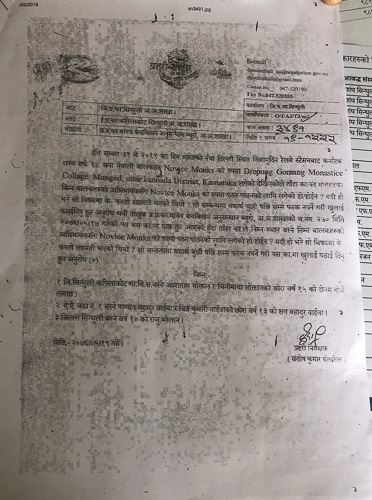
Response made by the police
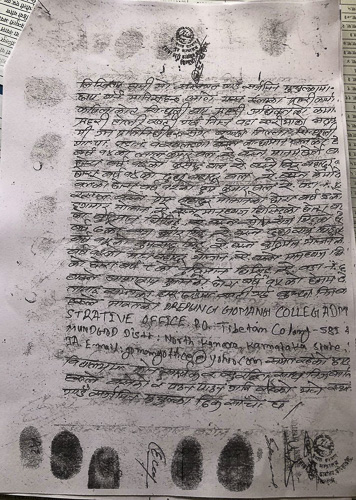
Report prepared in Kapilakot
(Left) Response by the police. (Right) Report prepared in Kapilakot. Images: NIMJN
According to records from the then Kapilakot Police Office, a local investigation report was created in the presence of the then Ward Chairmen, Kursang Lama (Ward 6) and Dhan Bahadur Syangtan (Ward 4) of Marin Rural Municipality. This report stated that the children were ‘safe and studying’, and the parents were made to sign and stamp it. However, Kursang Lama, the then Ward Chairman of Ward 6, was himself involved in collecting children from the village and sending them to the monastery in India. It appears the police created this report solely based on what the parents were told, without contacting the monastery or verifying the children’s well-being.
Article 3 of the Palermo Protocol defines such movement as falling within the definition of trafficking. The article defines trafficking as the recruitment, transportation, transfer, harboring or receipt of persons, by means of threat or use of force or other forms of coercion, of abduction, of fraud, of deception, of the abuse of power or of a position of vulnerability, or of the giving or receiving of payments or benefits in exchange for a person’s consent to having control exercised over that person. Based on this definition, it can be argued that these 18 children were victims of trafficking and smuggling. However, the authorities, including the Human Trafficking Investigation Bureau, normalized the movement of these children.
Binod Sharma, Superintendent of Police at the Sindhuli District Police Office, acknowledges the mistake. “The police should not have done that,” he says. “How did such a mistake happen back then?” However, he claims he does not have any information about the incident as he recently joined the office.
Who benefits from smuggling children?
There is no exact data on the number of children from Marin who have been sent to monasteries in India. Kajiman Thing, coordinator of the Tamang Ghilin organization in Marin-4, estimates that the number could be between 50 and 60. He says that poor parents send their children hoping for a better life, but emphasizes that separating young children from their families in the name of religion and cultural preservation is worriying. Thing fears that being raised far from family and their country could lead to a loss of language, culture and identity.
“Parents assume their children are well cared for but they lack information about the environment, treatment or educational quality at the monasteries,” Thing says.
There have not been any studies on the conditions within these monasteries. Neither the parents nor the people taking the children seem to consider the children’s interests or psychology, often using the guise of traditional religious and cultural preservation. This has a negative impact on the children’s mental, social and emotional development. Thupten Tamang, a Buddhist philosophy scholar, observes that children brought to monasteries at a young age tend to develop problems like being socially distant, aggressive, and withdrawn.
Thupten has witnessed similar issues in children of his relatives who were sent to study at a young age and other children who studied in monasteries.
Even non-Buddhist children are in monasteries
There are cases where children from non-Buddhist communities are also lured to monasteries in India under the pretense of being educated in Buddhism and preserving the culture.
For example, in Bhadra of 2078 (August 2021), 14 Dalit children from Kunji and nearby areas in Ward 5 of Mustang’s Thasang Rural Municipality were rescued from being taken to India on the pretext of becoming Lamas (Buddhist monks). Sunil Dahal, the then Deputy Superintendent of Police at the Kakarvitta Area Police Office, explains that the children were dressed in Lama clothing and were being taken across the border illegally when they were rescued. Police records indicate that smugglers often take children from the East through western borders and vice versa.
Basanta Maharjan, a Buddhist writer and scholar, states that the practice of collecting children from villages and taking them to Indian monasteries is old. According to him, neither the ward offices nor the municipalities have any information about the children taken in this way. “To which monasteries are they being taken? From where are they all being collected? What happens to them after they are taken to the monasteries?” He questions. He further says, “We have no data on how many children are studying in monasteries in India.”
Sexual abuse of children in monasteries
There have been cases of violence and sexual abuse against children kept in monasteries and religious institutions in India. According to an online article published in the Daily Tribune in 2018, 15 boys were subjected to beatings and sexual abuse. The police arrested Bhante Shanghpriya Sujoy, a Bangladeshi citizen who headed the ‘Prasanna Jyoti Buddhist School and Meditation Center in Bodh Gaya, Bihar, India. He was accused of beating, sexually abusing and forcing the boys in the monastery to dance naked.
Following his arrest, the International Buddhist Council (IBC) held an emergency meeting and passed a resolution condemning the heinous crime against children in the name of religious education. The resolution also proposed expelling any institution involved in such acts from the Council’s membership. It is important to note that many monasteries in India operate without registering with the IBC.
In 2020, Rinpoche Gyana Vajra, President and Head Lama of Shakya Academy in Dehradun, India, was accused of beating 51 Nepali students aged 6 to 17 who requested permission to return home for the Dashain-Tihar holidays. He allegedly beat and confined the students who submitted the request. The incident became public after the victims themselves spoke up. The Nepali Embassy in India and an organization called Help Cross rescued the students and brought them back to Nepal.
Section 64 (1) of the Act Relating to Children (2018) allows the children themselves or concerned individuals to file a complaint with the local government or the local government’s judicial committee if a child’s rights are violated or if the responsibilities towards the child as outlined in Section 3 are not fulfilled. However, no complaints have been registered regarding these issues.
Why Nepali children?
According to Buddhist writer and scholar Basanta Maharjan, monasteries prefer young children because of the belief that their strong memory allows them to memorize religious texts (sutras) more easily. Memorizing becomes more difficult after a certain age. He explains, “Younger children can grasp things better than older ones. They focus on memorizing until a certain age, after which it becomes harder.”
Monasteries with a larger number of students can also use them to impress donors and gain financial or other advantages. Therefore, they strive to have a high number of students. Since there are fewer children studying in monasteries in India, they specifically target Nepali children.
Lal Singh Bal, who takes children to monasteries, claims that the education and facilities are better in Indian monasteries compared to Nepal. He argues that Nepali children are the preferred choice for Indian monasteries because they (especially those from poor and disadvantaged communities) are easier to convince and can be offered fewer amenities.
The plight of returnees
Based on information provided by relatives in Nepal after finding 18 children, including Rajkumar, at the Nizamuddin Railway Station in Delhi, the Human Rights Commission urged the Human Trafficking Investigation Bureau to rescue the children.
The commission’s letter provided us with the names and addresses of the children. Following these addresses, on Magh 28, 2079 (February 11, 2023), we first reached Chyane in Ward 4 and Kapilakot Deurali in Ward 6 of Marin Rural Municipality, Sindhuli.
At that time, we learned that Kulsaang Thing (13) and Dhudraj (14) from Kapilakot had returned home after three-and-a-half years. Buddhabahadur Bal, also from Kapilakot, had been back for eight months. They were convinced to leave by their neighbor Lalbahadur Bal, who promised they could earn a lot of money after becoming Lamas (Buddhist monks), while they were still in grade 6 in the village school.
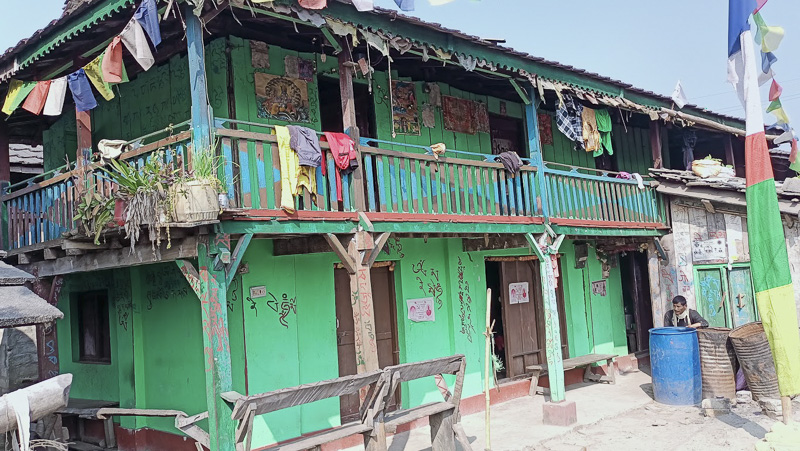
Man Bahadur Yonjan’s house. Photo: Kalpana Bhattarai/NIMJN
Sushil, Man Bahadur’s elder brother, also went to study at the same monastery in Karnataka. Their mother, Kanchhi Maya, says she sent them due to their insistence on studying. According to her memory, she only made phone contact with her older son, Sushil, after a year of him being gone.
For a long time, Kanchhi Maya has been tormented by the memory of her younger son, Man Bahadur, who is seven hundred kilometers away from home. While Sushil has returned, Man Bahadur remains there. She says, “If my son returns, I do not plan to send him back.”
Kulsang, who returned home after three-and-a-half years, says he did not know what studying to be a Lama entailed, how the studies would be conducted, or what his future would hold. He came back because the environment and the style of teaching did not suit him. Now 16 years old, Kulsang says, “Going there made me miss my studies here. Now I plan to learn about Lama teachings in the village itself.”
He does not know if this knowledge will help him earn a living, but currently, he does not have any other option. Dudhraj, who returned home with him, has started working at a hotel in Kathmandu because he could not find any other choice. He has the responsibility of supporting his family.
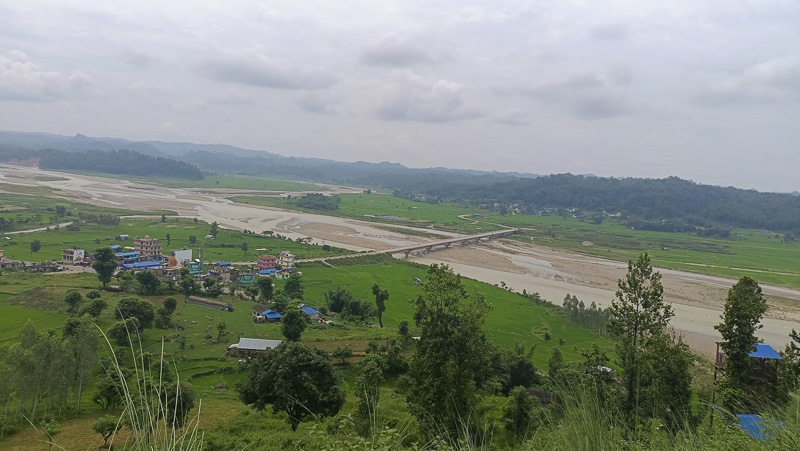
Marin Village. Photo: Kalpana Bhattarai/NIMJN
Sushil Tamang from Marin Fulbari is preparing to go to Malaysia for foreign employment. He returned because he thought studying to be a Lama in the monastery would take too long. The monastery taught Tibetan, Russian and Nepali students together. However, Nepali students were excluded when it came to making Aadhaar cards.
The person who had taken him, Kana had also taken the 18 boys. Even Kana had been sold to a hotel by a person in the village, according to Lalsingh Bal. While working at the hotel, he met people from the monastery and was then taken there. Since the time he was studying, Kana had been working for the monastery itself. Kanchhi Maya says that Kana not only took her two sons but also used to take other children and teenagers from the village. Kana passed away two years ago.
Starting school again
Supuwang Lama from Kapilakot returned home after studying for five years at a monastery in India. At the age of 13, he and 12 others from the village left to study at a monastery in Siliguri, India. They lacked clear information about the environment and subjects before going. A relative from the same village who was already studying at that monastery took them there.
Supuwang spent five years at the monastery before returning at the age of 18. He had completed grade 5 before leaving for the monastery, but upon returning, he enrolled in grade 8. However, while at the monastery, he forgot his own language. He could not read or write Nepali well enough to take exams.
Most of the 10 who returned with him are now working abroad. Now that educational certificates are required almost everywhere, Supuwang has resumed his studies in the village. At the age of 23, he is taking the SEE (Secondary Education Examination) exams. He says, “I am learning Lama knowledge and skills here in the village, but I regret not being able to complete both paths of education.”
In his view, many leave Lama studies incomplete because it is difficult. His younger brother Wangsen, who had been studying at the same monastery for six years, refused to return home.
Supuwang’s experience suggests that those who drop out of their studies lack sufficient knowledge. Additionally, the teachings in some Indian monasteries may not align with Nepali religion and culture and may not be practical. The knowledge he received at the monastery itself did not fit well with the village culture either. According to Supuwang, some monasteries do not provide proper education and skills, resulting in monks who have not learned much even after 10 years of study. He advises that before going, one should thoroughly understand the teaching style, culture, and environment of the monastery.
Quoting his fellow monks whom he met at an event for Buddhist monks and Lamas in Bodh Gaya, India, he says, “Some monasteries in Sikkim make students studying to be monks cut grass, milk cows and do cleaning chores.”
The Act Relating to Children (2018) guarantees several rights for children, including protection from economic exploitation (Section 7 (6) (a)) and from any act that could cause harm, hinder their education or impede their physical, mental, moral or social development (Section 7 (6) (b)). However, children sent to monasteries seem to be deprived of these rights.
Mental health problems of children separated from families
According to a 2010 article titled ‘Families Not Orphanages’ published in the Better Care Network Working Journal, residential institutions with strict rules limit interaction with family and society. This makes it difficult for children to establish and maintain healthy relationships from childhood to adolescence. The study also found that the mental development of children in residential institutions was 33% lower than that of children who are integrated with their families and communities.
Hasina Shrestha, a clinical child psychologist at the Kanti Children’s Hospital, emphasizes the need for a safe and secure environment in residential schools and institutions where children are placed for education. “A bad environment can lead to lifelong psychological problems,” she says. According to Shrestha, children in such situations may exhibit symptoms of depression, anxiety, withdrawal, irritability, isolation, fear and even suicidal thoughts. When children are unable to contact their families for extended periods, they may try to run away or self-harm.
There are monasteries for higher education in Nepal
Nepal already has well-equipped monasteries in places like Swayambhu, Chobar, Boudha and Pharping. However, there is a trend of sending underprivileged children aged 6-17 from villages to monasteries in India.
Buddhist writer and scholar Basanta Maharjan argues that there is no need to send children abroad since Nepal already has well-equipped monasteries that offer higher education. “There are language barriers when studying in another country,” he says. “They teach in Tibetan, Hindi and the local language. By the time they return to Nepal, they may have forgotten Nepali.”
Maharjan adds that even if English is taught, these children might only be able to go to Europe or America. Otherwise, they would be limited to staying within the monastery. He believes it is better to keep children in the country and teach them their own courses. “If we can teach our children our own courses,” Maharjan says, “even if they go abroad, they will have knowledge of Nepali religion and culture. They will be able to speak confidently about their own religion and culture.”
He argues that by properly raising and educating Lamas, they can then educate followers abroad and promote Nepali religion and culture. Maharjan mentions how foreigners come to Nepal to see and understand Nepali Buddhism and culture. He says, “This can contribute to the promotion of Nepal’s historical, religious and cultural tourism.”
Maharjan clarifies that he is not against sending children abroad for studies altogether, but that priority should be given to monasteries and schools within Nepal. There is still demand for children in monasteries – Lal Singh Bal, the person responsible for taking children to monasteries.
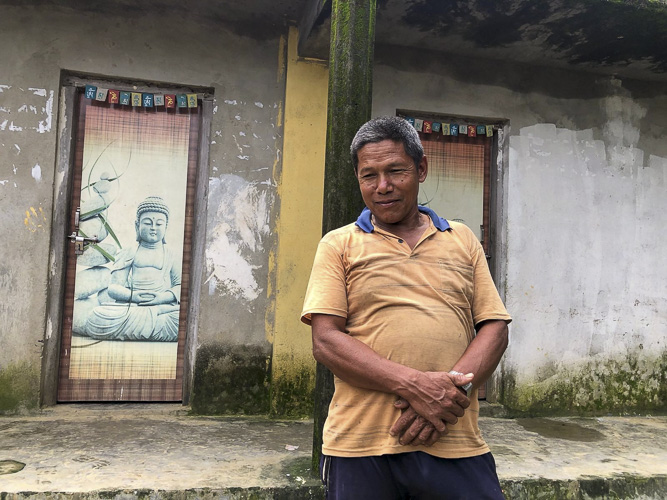
Lal Singh Bal. Photo: Kalpana Bhattarai/NIMJN
No one knows exactly when the practice of taking children from Nepal to monasteries in India began. However, I know that children have been taken from places like Marin in Sindhuli since around 1998.
There are currently 60 children studying at the Drepung Gomang Monastery in Karnataka, India. When the monastery needs more students, they collect children from villages.
Once they cross the border, people associated with the monastery come to pick them up. These monasteries sometimes operate restaurants in various locations in India, and people from those restaurants may also come to collect the children.
In Jestha, 2076 (June 2019), we were caught by the police in Malangwa, Sarlahi, while trying to put 18 children on a train to Delhi. The police released them only after the monastery provided documents. There were no documents or recommendations made when taking them from Nepal. We went without them because the ward office would not provide a recommendation, and the monastery was pressuring us to bring the children. They do not provide anything except food, snacks and travel expenses when taking them from here. They do not provide any documents except a pamphlet with the monastery’s contact number.
Previously, when we prepared to send 8 or 9 children, they were caught by the police at the border in Sunauli. After the police released the children who were accompanied by their parents, they were sent again through the Malangwa checkpoint.
The monastery is still asking for children but the ward has not provided a recommendation this time. It is difficult to cross the border without documents, so I have not been able to take them.
Since the ward would not give a recommendation and it became difficult to cross the border, I have not been sending children anymore. They were sent to study Buddhist philosophy, religion and culture. But I do not know much about what happens over there or what kind of education they receive.