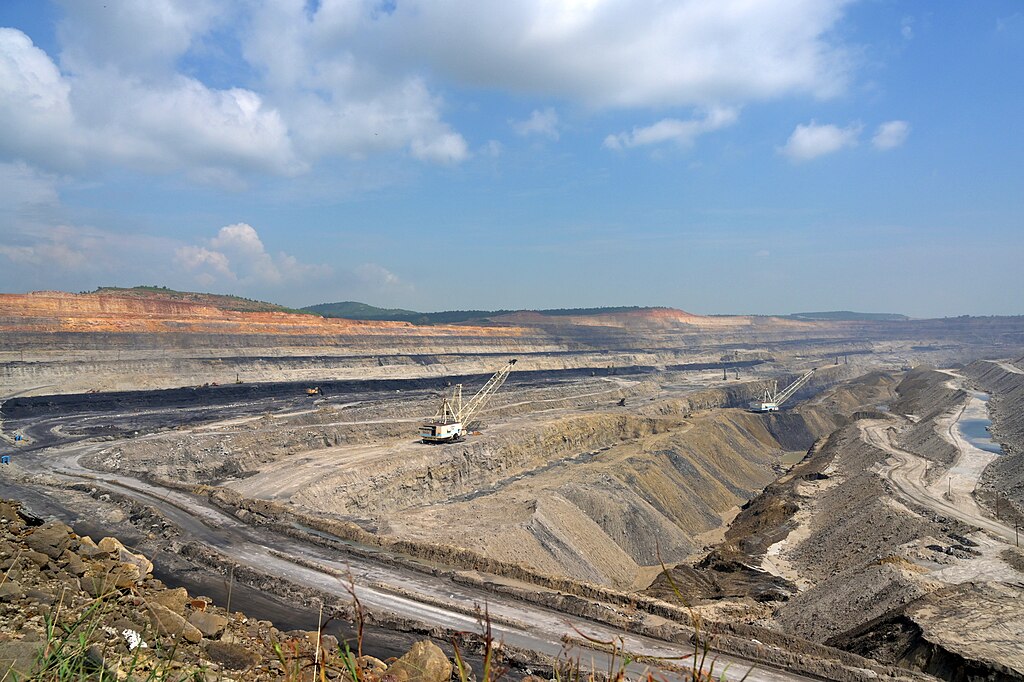
Representative image of an Indian coal mine. Photo: Wikimedia Commons

Coal has long been a primary energy source, fueling industries ranging from electricity generation to steel production, cement manufacturing, pharmaceuticals, and chemical synthesis. However, its use comes at a significant cost. The combustion of coal releases harmful gases such as carbon dioxide, sulfur dioxide, nitrogen oxides, and carbon monoxide, all of which pose serious threats to human health and the environment.
According to global research, air pollution caused by coal combustion claims approximately 800,000 lives annually, with the highest death tolls reported in countries like India and China. Recognising these dangers, the UN has consistently advocated for reducing coal use. UN Secretary-General António Guterres has called for an end to what he terms the “deadly addiction” to coal, emphasising that phasing out coal from power generation is essential to achieving the Paris Agreement’s goal of limiting global warming to 1.5°C.
Despite these warnings, countries including Pakistan continue to rely heavily on coal.
The Role of Energy Sources in Environmental Pollution
Pakistan ranks as the sixth-largest country globally in terms of coal reserves, with an estimated 184 billion tons, predominantly located in Sindh province. Senior journalist Raja Muhammad Saqib, based in Karachi, shed light on the environmental and health consequences of coal usage during an interview with TNN.
“While coal is undoubtedly an energy resource, its impact on human lives and the environment is devastating,” Saqib noted. He highlighted that the largest coal reserves are found in Tharparkar, with additional mines in Jamshoro. The Sindh Coal Mining Authority has divided the Tharparkar coalfields into six blocks, all of which are currently operational.
Currently, the Thar coal power plants generate 2,640MW of electricity, which is fed into the national grid. Future expansion plans aim to increase output to 3,960MW. Despite the sparse population in Jamshoro and Tharparkar districts, Saqib emphasised that coal-induced pollution affects millions of people.
“These effects are not confined to the districts or even the country—they cross borders, impacting communities on both sides,” he stated.
A 2020 study warned that emissions from Thar’s coal-fired power plants could affect nearly 100,000 individuals and result in over 29,000 deaths in the next 30 years. Respiratory diseases like asthma are on the rise, while children face increased rates of congenital respiratory conditions, diabetes, and heart diseases.
Experts estimate that Pakistan contributes only 0.8 percent to global carbon emissions. Even with the operation of coal-fired plants, this figure would not exceed 3 percent. Despite this, the environmental and health toll from coal usage remains alarming.
The discovery of coal in Tharparkar’s desert region, ranked among the world’s 20 largest coal reserves, has been hailed as a milestone. Electricity generation has already commenced under a public-private partnership, signaling a new chapter in Pakistan’s energy production. However, the long-term environmental and public health implications remain a pressing concern.
Pakistan’s Efforts to Reduce Dependence on Coal: A Push for Cleaner Energy
Pakistan has made various commitments over the years to reduce its reliance on coal as an energy source in alignment with international agreements. On December 12, 2020, then-Prime Minister Imran Khan announced during the “Climate Ambition Summit” that Pakistan would increase its dependence on renewable energy sources and pledged not to install new coal-fired power plants. However, despite these assurances, coal continues to play a significant role in the country’s energy production.
Recently, Federal Minister for Energy, Owais Leghari, highlighted steps taken by the Ministry of Energy to challenge planned projects for the next decade. These projects include major hydropower ventures like the Diamer Bhasha Dam, nuclear power initiatives, and renewable energy projects, all assessed for feasibility based on their cost-effectiveness for consumers and the economy.
Speaking at a hydroelectric power event in Islamabad on January 10, the minister revealed that under the “Power Generation Expansion Plan” for the next 10 years, only 87MW of the planned 17,000MW would meet the low-cost energy principle for integration into the system. He emphasised that transitioning from coal to cleaner energy sources would not disrupt the country’s energy needs. The government also plans to convert local coal into liquid or gas forms for energy use, avoiding direct combustion.
According to the minister, by 2030, 60 percent of Pakistan’s energy will come from alternative, environmentally friendly sources, and 30 percent of vehicles will run on electricity. These measures aim to combat the adverse effects of climate change, which have disproportionately affected Pakistan in recent years.
Environmental organisations such as the Alliance for Climate Justice and Clean Energy have welcomed these steps as a move in the right direction. They believe this strategy will help Pakistan reduce greenhouse gas emissions and mitigate environmental damage.
According to a BBC report, Pakistan’s solar energy production stood at 1,000MW in March last year. By March of this year, it had surpassed 1,800MW, reflecting a rapid increase in renewable energy capacity.
The shift towards cleaner energy is crucial for Pakistan as it battles the dual challenge of meeting its growing energy demands while addressing the pressing need for climate resilience. By focusing on renewable energy and reducing dependence on coal, the country is taking steps toward a sustainable and greener future.
“Approximately 90 percent of coal mines in Pakistan, particularly in Khyber Pakhtunkhwa, operate illegally, while only 10 percent are registered,” says Abid Yar, General Secretary of the Shangla Mines Workers Welfare Association (SAOMA). According to Yar, more than half of the coal miners in Pakistan hail from Shangla district. Even before Pakistan’s creation, Shangla’s labor force worked in coal mines and tunnels across Balochistan. Unfortunately, the lack of safety measures in these mines frequently results in fatal accidents. Over the years, many workers have lost their lives, while thousands have been left disabled.
Challenges in Mine Oversight and Worker Safety
Yar highlighted the inadequate oversight in Khyber Pakhtunkhwa, where only 14 inspectors are assigned to monitor thousands of coal mines across the province. “How can such a small team effectively inspect all these mines?” he questioned. He also blamed the contractor system for neglecting worker safety, stating that contractors prioritize profits over worker welfare.
Coal mines often contain hazardous gases, but safety equipment and precautionary measures are rarely provided. Additionally, there are no medical facilities or dispensaries near these mines to address emergencies. According to Yar, hundreds of accidents occur annually, yet no action is taken against mine owners or contractors. It is estimated that between 300 and 400 workers lose their lives every year in these mines.
Yar accused authorities of negligence, alleging that inspection agencies often accept bribes from contractors, turning a blind eye to safety violations.
The Paradox of Black Gold
Coal, often referred to as “black gold,” plays a critical role in the country’s economy. It is used in the production of bricks, cement, steel, and, most importantly, electricity. A single ton of coal sells for approximately PKR 50,000 to 60,000, and daily coal extraction from a single mine ranges from 200 to 300 tons. Given its high profitability, Yar claims that bureaucrats, politicians, and officials are complicit with mine owners in exploiting the sector for financial gain.
Despite coal’s economic significance, workers remain underpaid and exposed to life-threatening conditions. Laborers, earning between PKR 45,000 and 60,000 monthly, risk their lives daily in these mines. According to Yar, the coal mining industry operates like a powerful mafia, with government oversight appearing weak and ineffective.
Dr Habib Jan, Director of the Khyber Pakhtunkhwa Environmental Protection Agency (EPA), emphasises the detrimental impact of coal usage on the environment and human health. Speaking to TNN, he explained that coal combustion releases toxic gases like carbon monoxide and nitrogen oxides, which pose severe risks to both individuals and the ecosystem.
The EPA has repeatedly warned against the use of coal and advocates for alternative energy sources. Jan suggested adopting technologies such as the zigzag kiln method, which has already been introduced in brick production. “Zigzag technology prevents carbon particles from escaping into the atmosphere, thereby mitigating environmental damage,” he explained. In Khyber Pakhtunkhwa, 12 brick kilns have successfully transitioned to this cleaner technology.
Jan called for the closure of coal-based power plants due to the hazardous emissions they produce. He recommended focusing on cleaner, sustainable energy solutions such as hydropower, windmills, and solar energy. “Switching to these alternatives can not only meet energy demands but also protect the environment from further degradation,” he stated.
The Road to Green Energy
In 2023, the UN cautioned Pakistan about the potential risks associated with shutting down coal-powered energy plants. The UN emphasised that addressing these challenges requires a comprehensive evaluation of energy security, environmental and economic impacts, and alternative methods for power generation.
According to the report, nine out of Pakistan’s eleven coal-based power plants are tied to the China-Pakistan Economic Corridor (CPEC) agreements. China’s 2021 decision to halt investments in overseas coal projects presents a critical opportunity for Pakistan to transition away from coal. The report also stressed the importance of increasing investments in green energy from 2021 levels by 2030 to place the country on a path to stability. This involves reallocating funds toward low-carbon fuels, enhancing energy efficiency, and reducing investments in fossil fuels.
Despite contributing minimally to global pollution, Pakistan remains highly vulnerable to the effects of climate change. Transitioning to sustainable energy sources is not only essential for environmental protection but also for mitigating the adverse impacts of climate change that disproportionately affect the country.
The UN’s recommendations highlight an urgent need to prioritise renewable energy investments to ensure a greener, more resilient future for Pakistan.
The state of Bihar, in the eastern part of India, has the lowest electricity consumption per person in the country, mostly due to lack of power availability. The government is now focusing on solar energy projects such as rooftop installations, floating solar panels, and solar street lights, to boost clean energy.
But is this solar energy boom in Bihar addressing the energy poverty challenge?
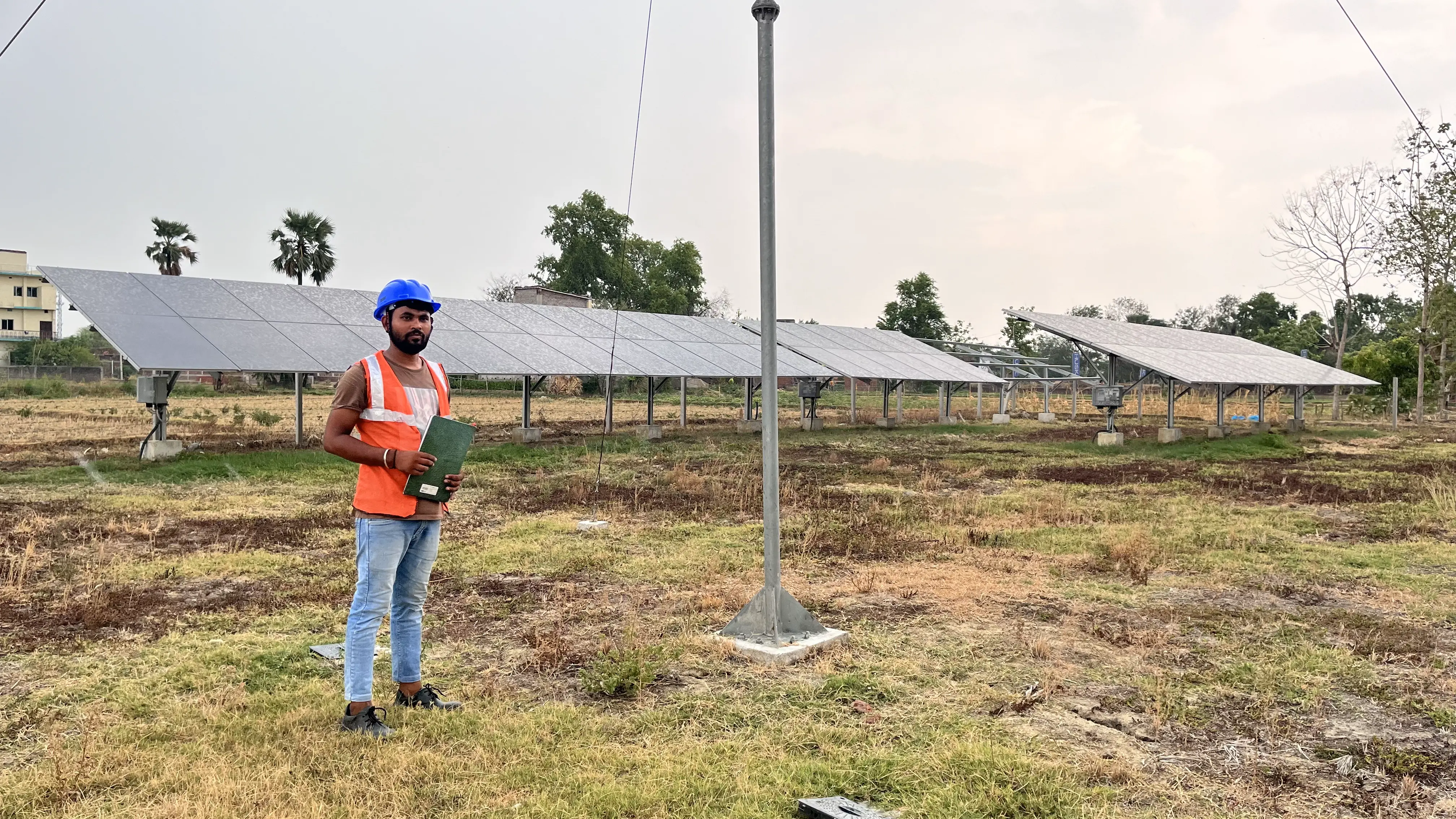
Pintu Kumar, Electrician at Husk Power’s Gurua mini-grid plant poses with solar panels in Gaya district, Bihar. Photo: Sneha Richhariya
Suno India’s Sneha Richhariya travelled to the neighbouring villages in Gaya district of Bihar to understand how renewable energy is penetrating in Bihar. This episode from Suno India’s Climate Emergency series explores the extent of solar adoption in the state and looks at whether solar adoption in Bihar transcends socio-economic factors like income, occupation and caste.
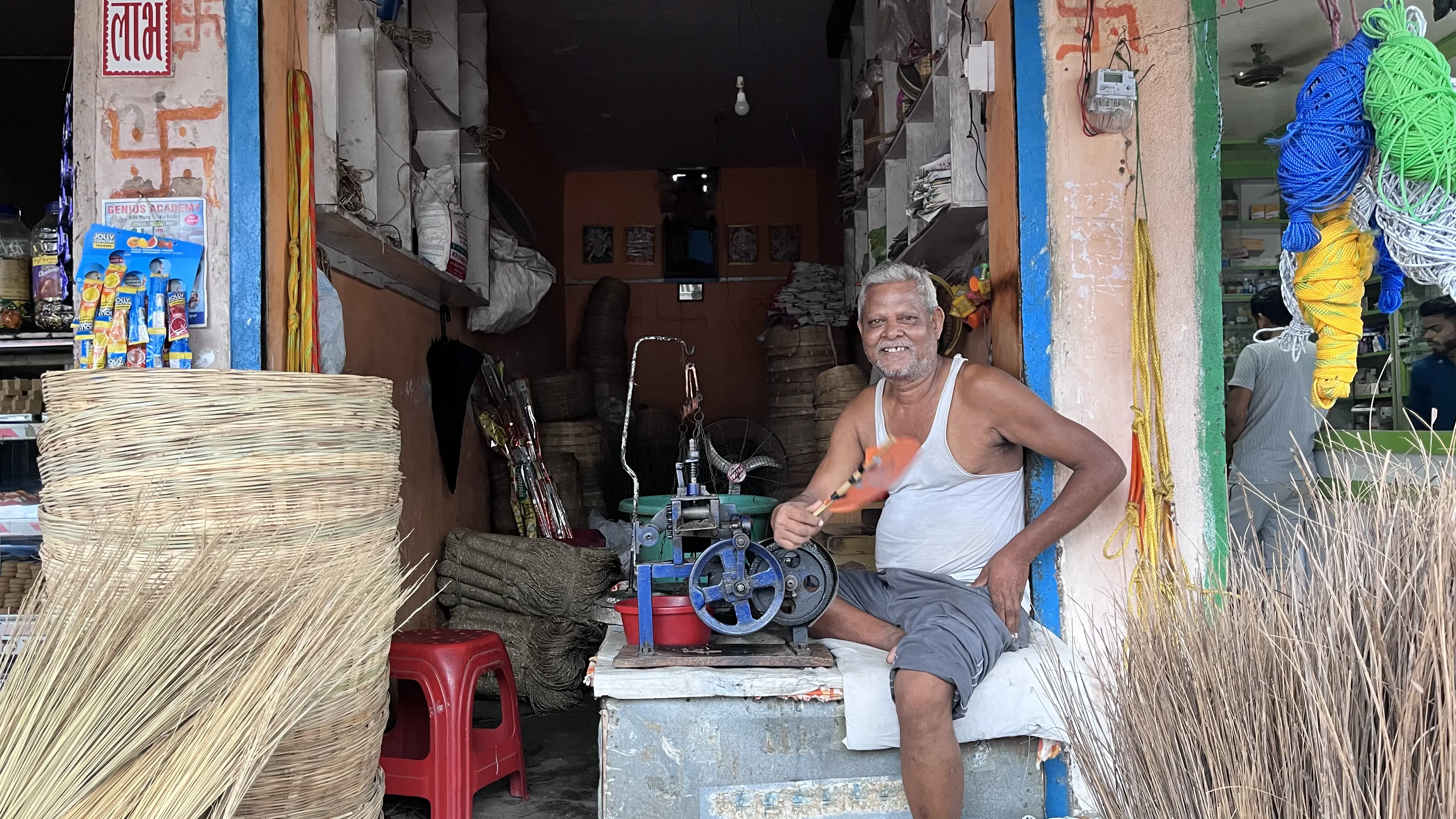
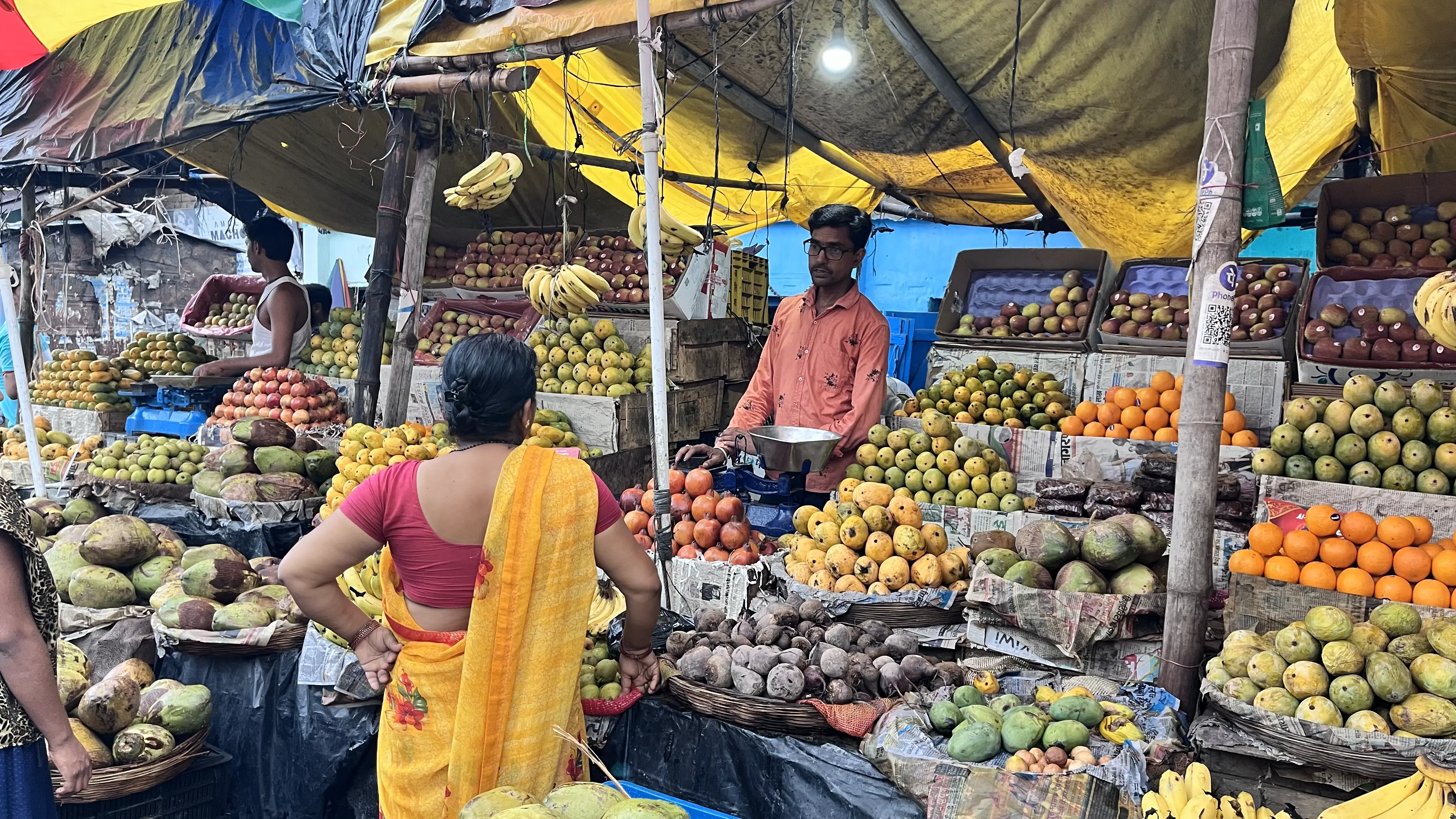
(Left) Kapil Dev Prasad has given up Husk Power’s connection because he found is expensive. He says he has endured consistent power cuts. (Right) A local fruit vendor uses a bulb powered by electricity from Husk Power. Photos: Sneha Richhariya
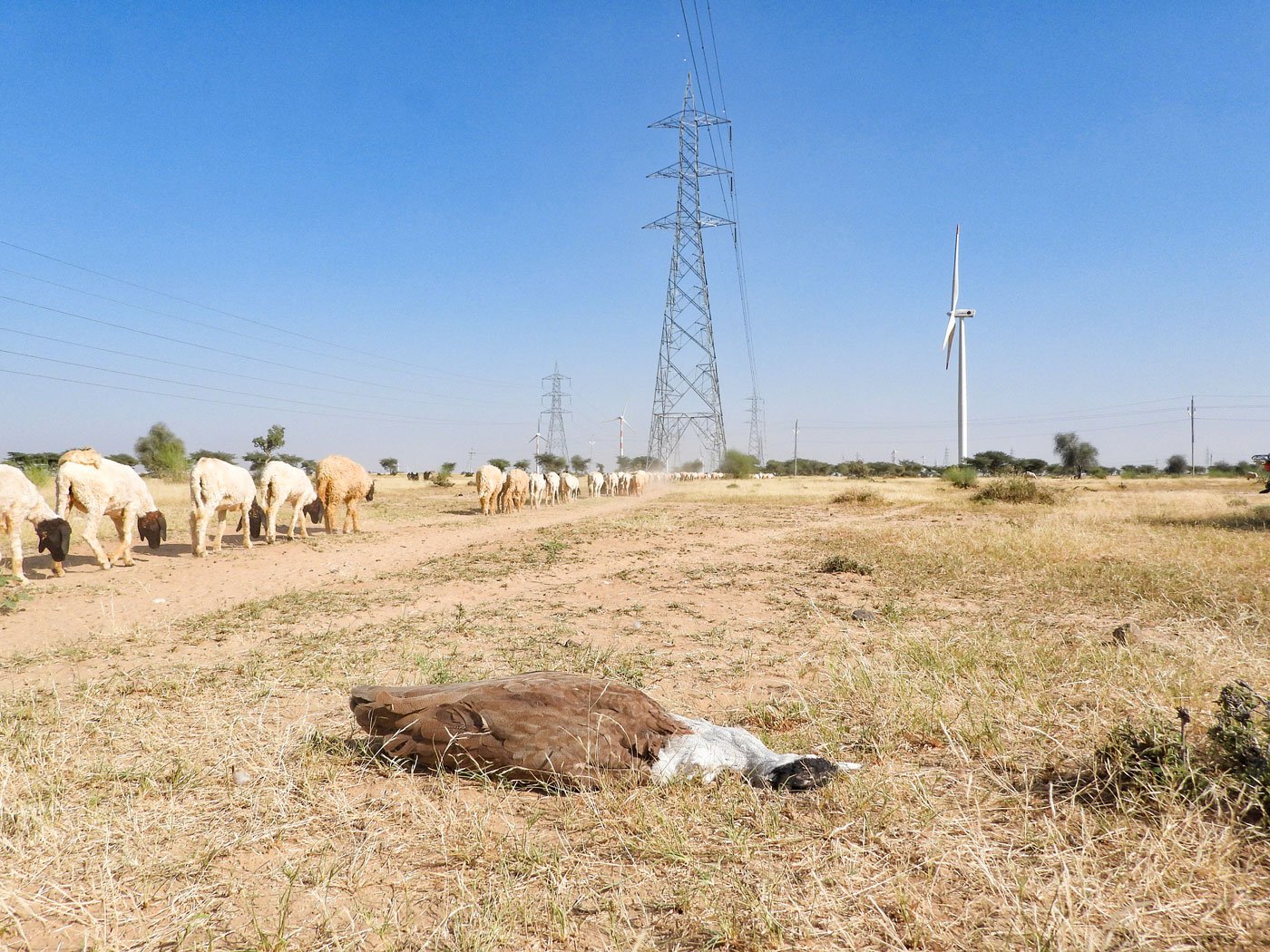
Brown feathers speckled with white are scattered in the short grasses.
Searching keenly, Radheshyam Bishnoi circles the area in the fading light. He is hoping he is wrong. “These feathers don’t look plucked,” he says aloud. Then he makes a call, “Are you coming? I think I’m quite sure…,” he tells the person on the line.
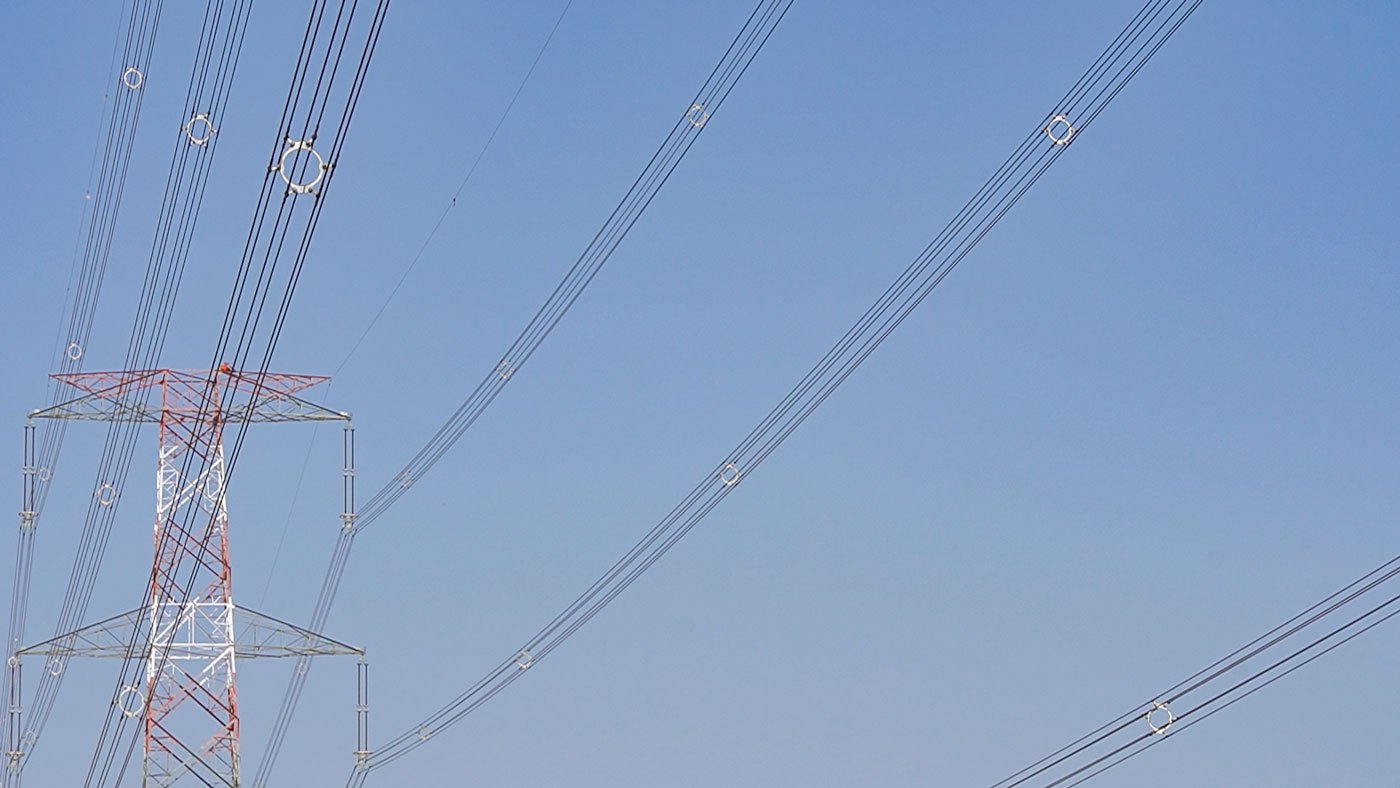
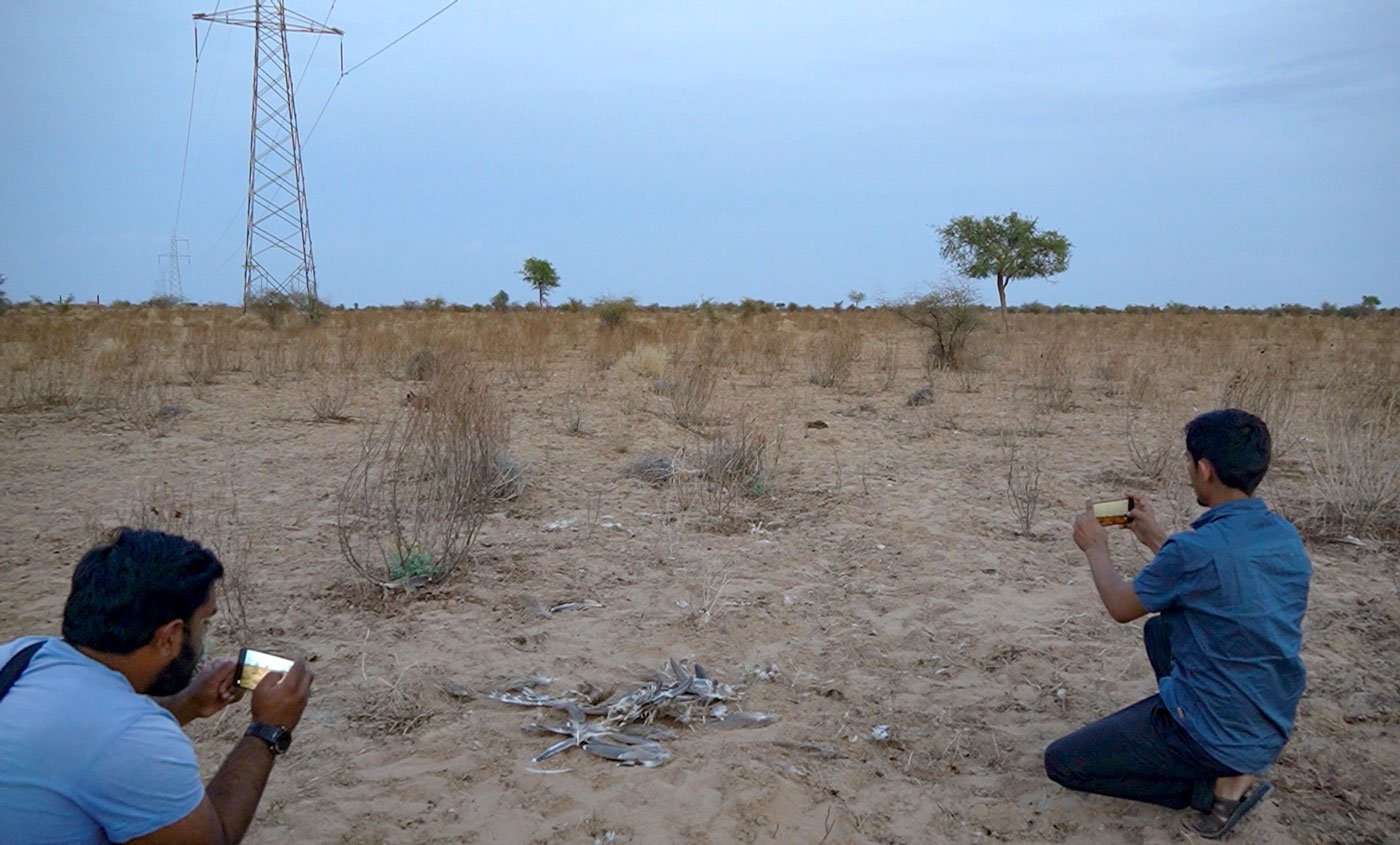
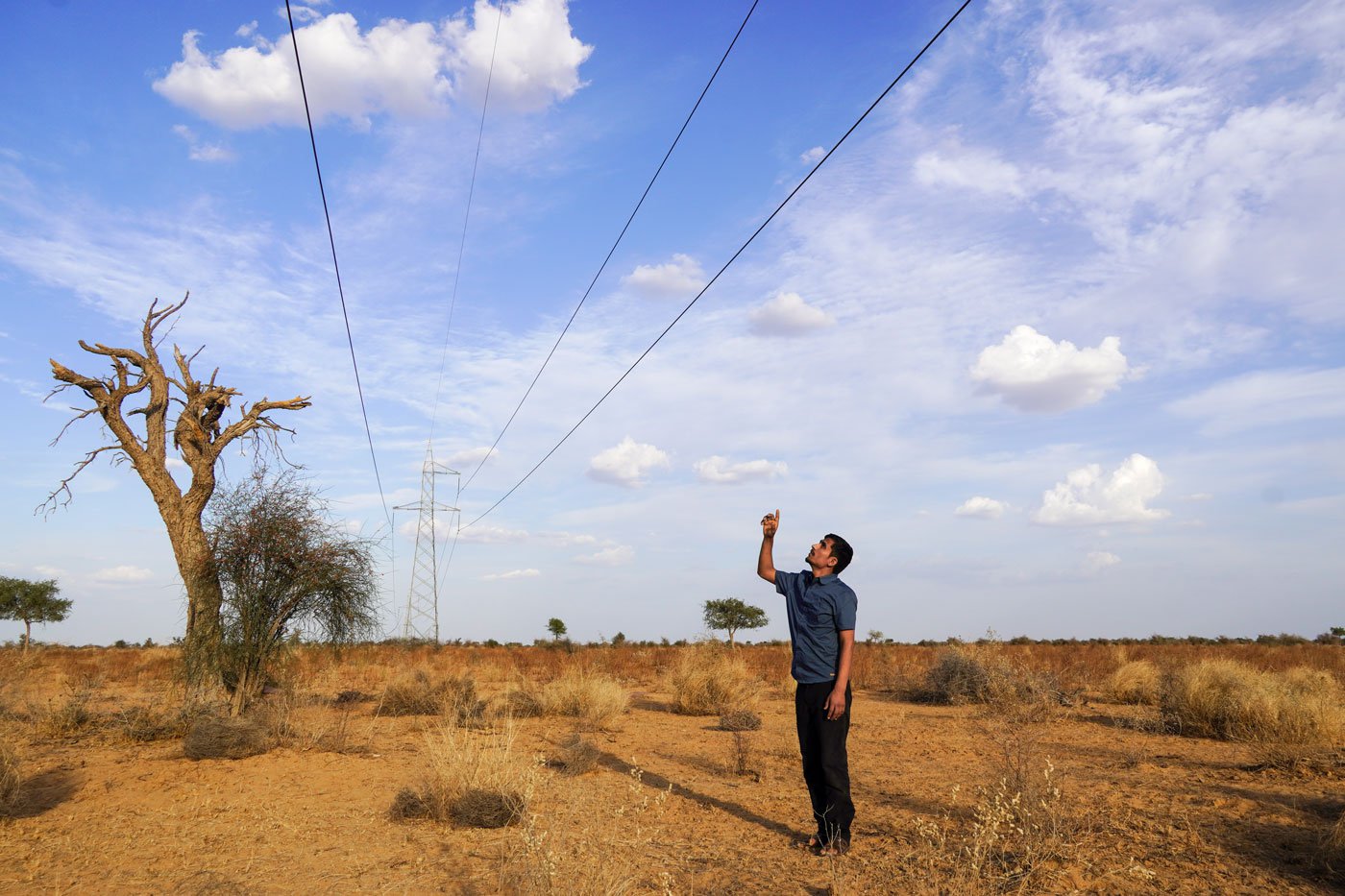
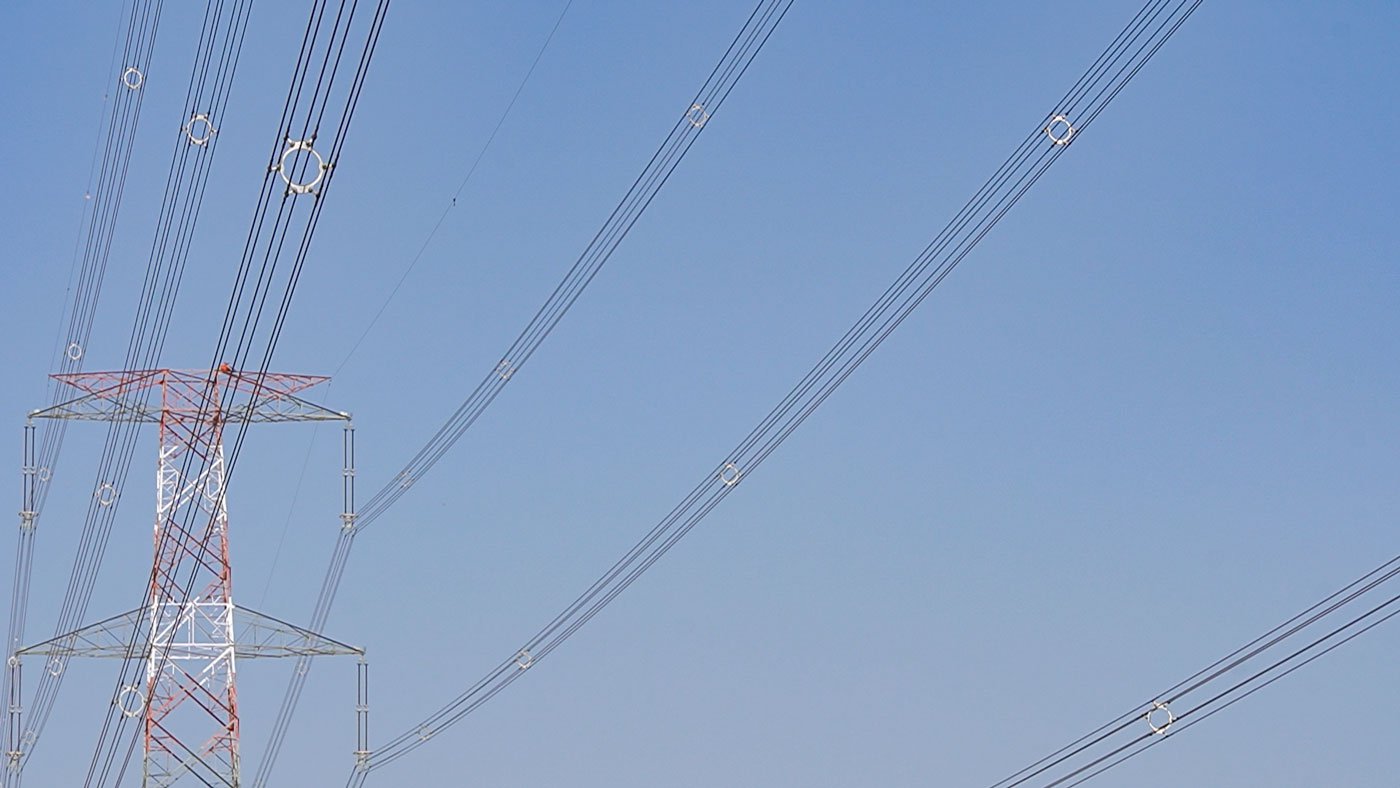
Above us, like an omen in the sky, the 220-kilovolt high tension (HT) cables hum and crackle – now black lines silhouetted against the darkening evening sky.
Remembering his duty as a collector of data, the 27-year-old pulls out his camera and takes a series of close-up and mid-shots of the scene of the crime.
The next day, early in morning we are back on site – a kilometre from hamlet Ganga Ram ki Dhani, near Khetolai in Jaisalmer district.
This time there is no doubt. The feathers belong to the Great Indian Bustard (GIB), known locally as the godawan.
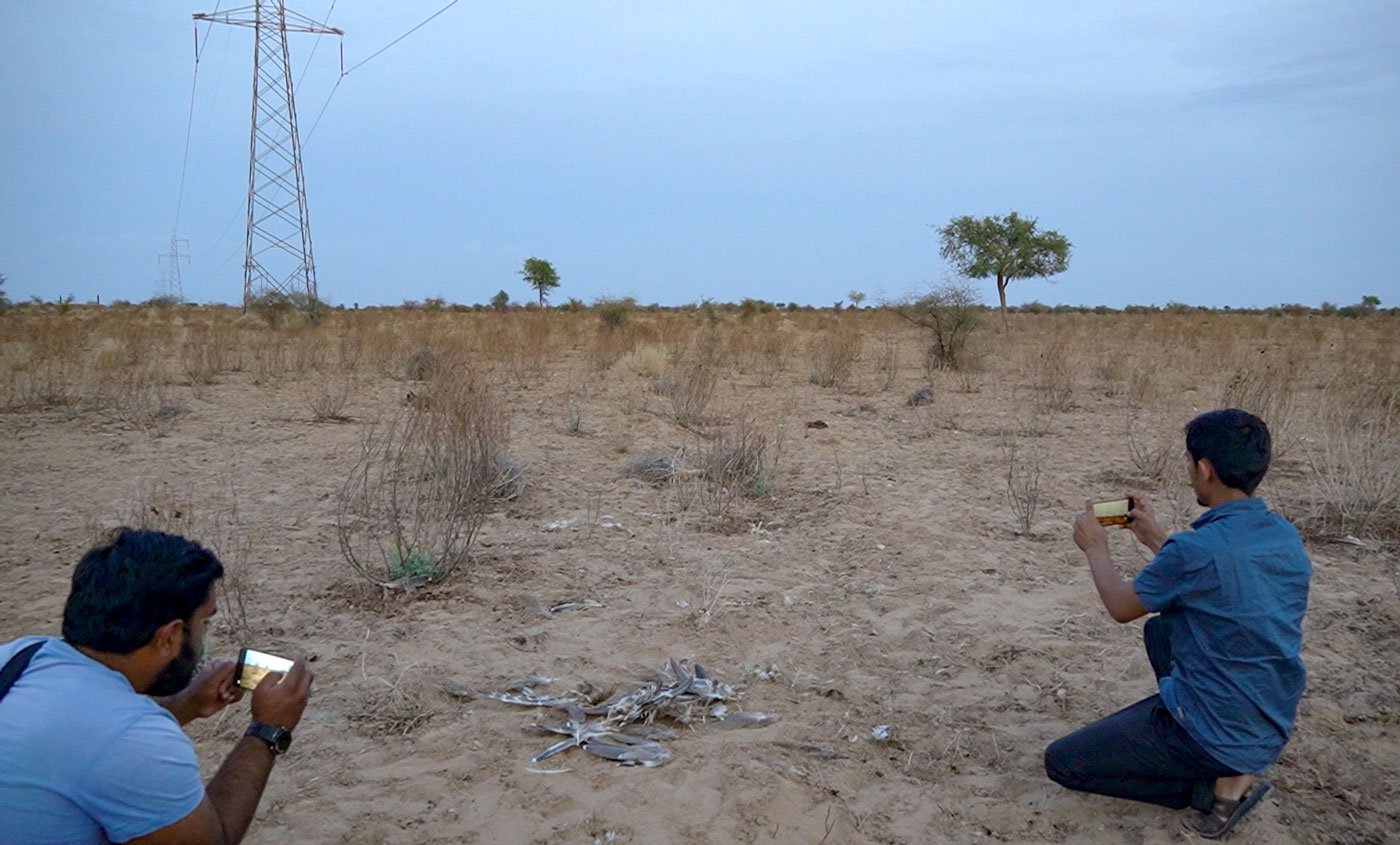
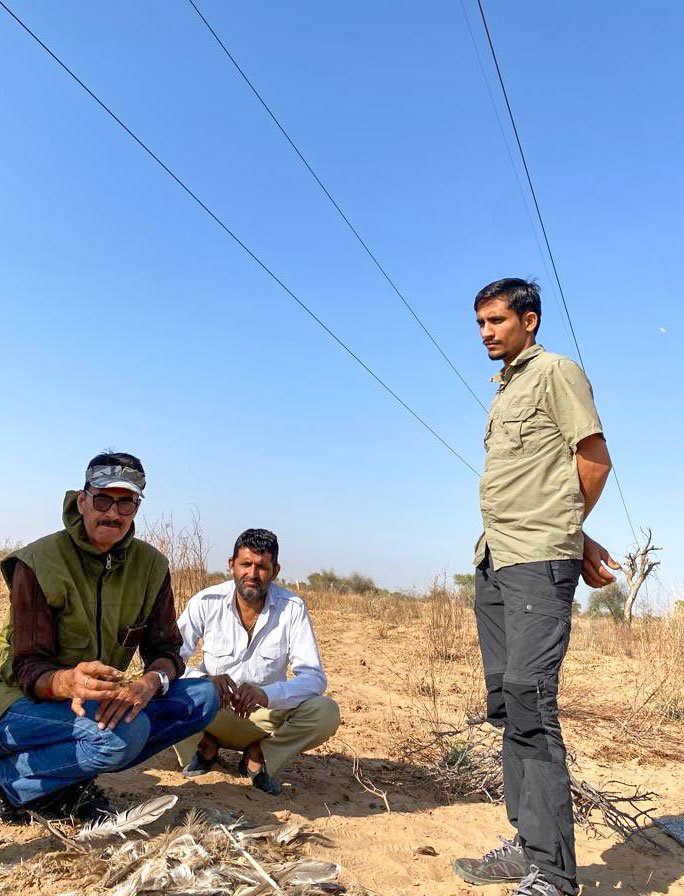
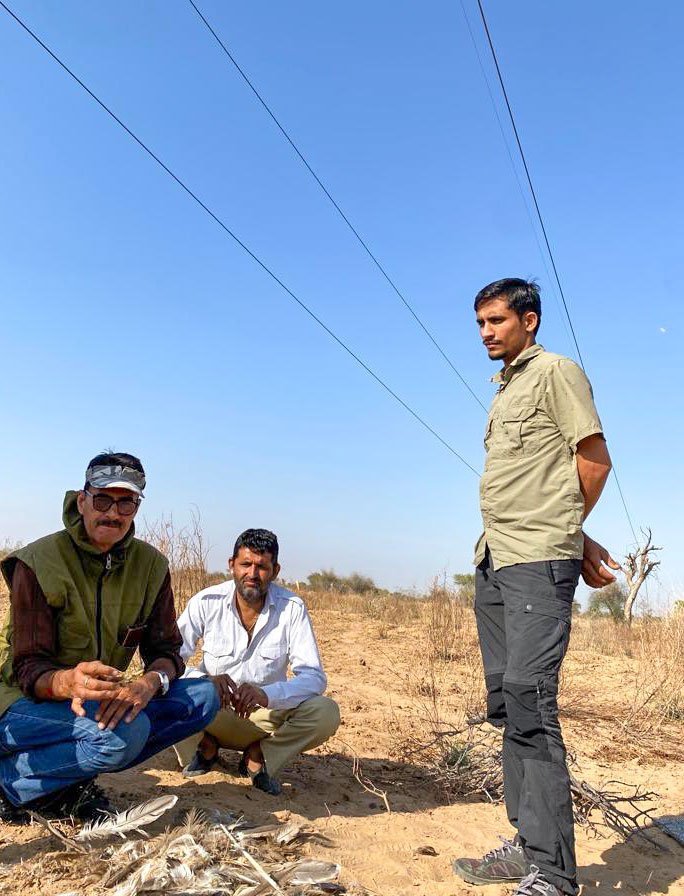
(Left) WII researcher, M.U. Mohibuddin and local naturalist, Radheshyam Bishnoi, at the site on March 23, 2023 documenting the death of a Great Indian Bustard (GIB) after it collided with high tension power lines. (Right) Radheshyam (standing) and local Mangilal watch Dr. S. S. Rathode, WII veterinarian (wearing a cap) examine the feathers. Photos: Urja/PARI
Dr. Shravan Singh Rathore, a wildlife veterinarian is at the site on the morning of March 23, 2023. He says, on examining the evidence: “The death is due to collision with the HT wires, there is no doubt. It appears to have taken place three days prior to today, so on March 20 [2023].”
This is the fourth body of a GIB that Dr. Rathore, who works with Wildlife Institute of India (WII), has examined since 2020. The WII is the technical arm of the Ministry of Environment, Forests and Climate Change (MoEFCC) and state wildlife departments. “All the carcasses were found under HT wires. The direct link between the wires and these unfortunate deaths is clear,” he adds.
The dead bird is the critically endangered Great Indian Bustard (Ardeotis nigriceps). And it’s the second one in just five months to crash and fall to its death after colliding with high tension wires. “This is the ninth death since 2017 [the year he began tracking],” says Radheshyam, a farmer from nearby village Dholiya in Sankra block of Jaisalmer district. An ardent naturalist, he keeps an eye out for the big bird. “Most of the godawan deaths have been right under HT wires,” he too adds.
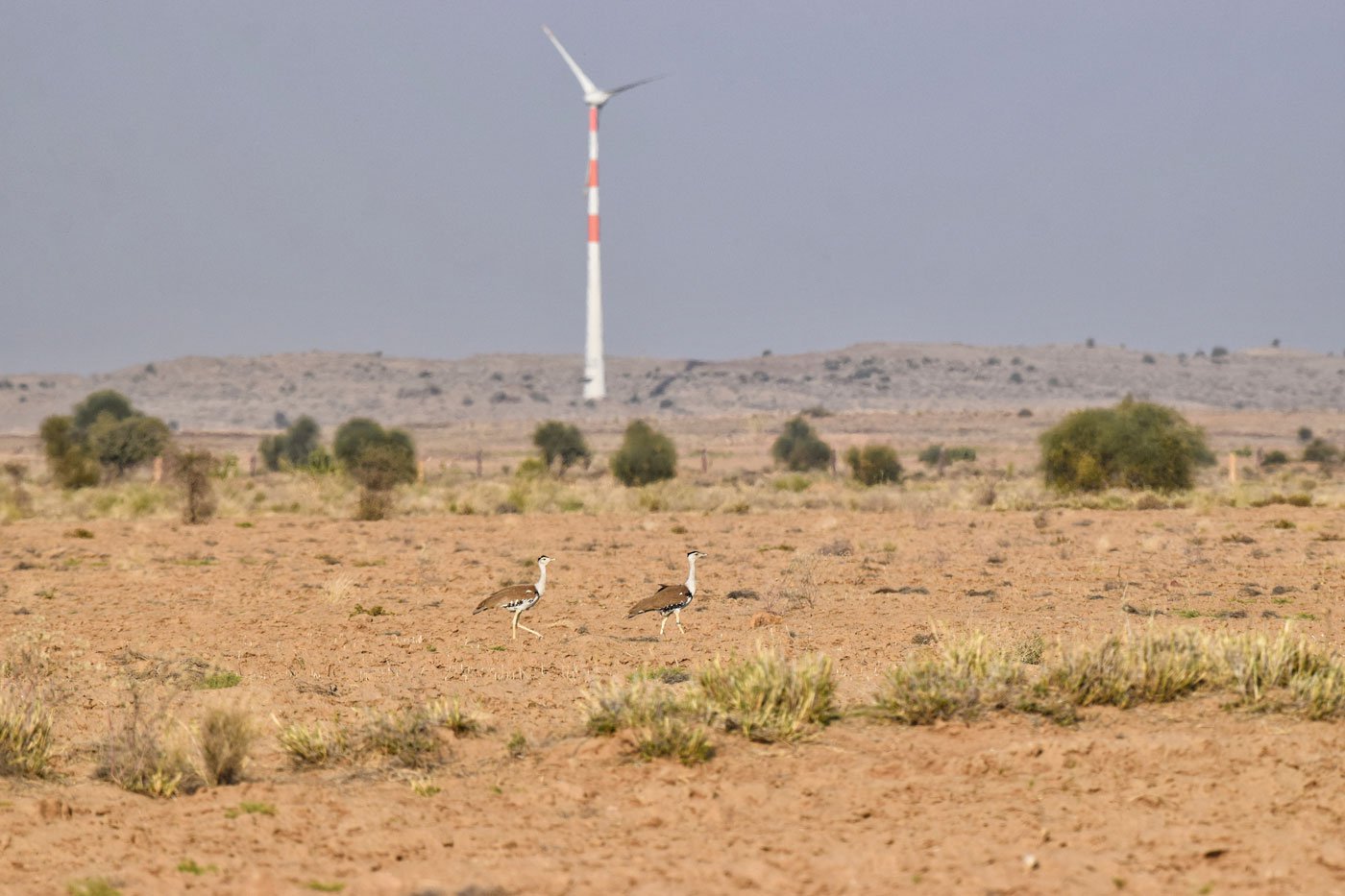
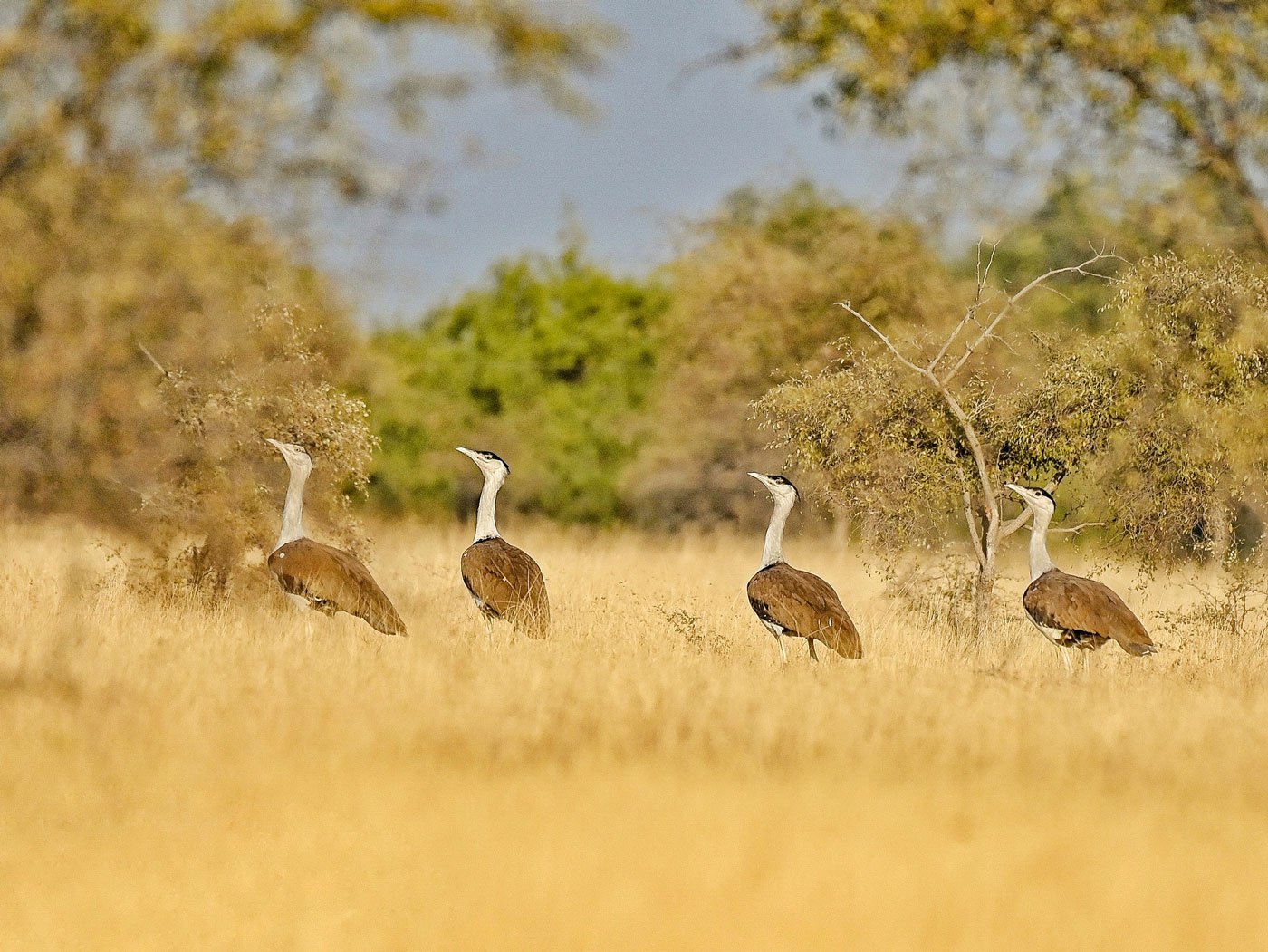
The GIB is listed under Schedule I of India’s Wildlife (Protection) Act 1972 . Once seen in the grasslands of Pakistan and India, today there are totally only around 120-150 birds in the wild in the world, and their population is fragmented across five states. Around 8-10 birds have been sighted at the intersection of Karnataka, Maharashtra and Telangana, and four females in Gujarat.
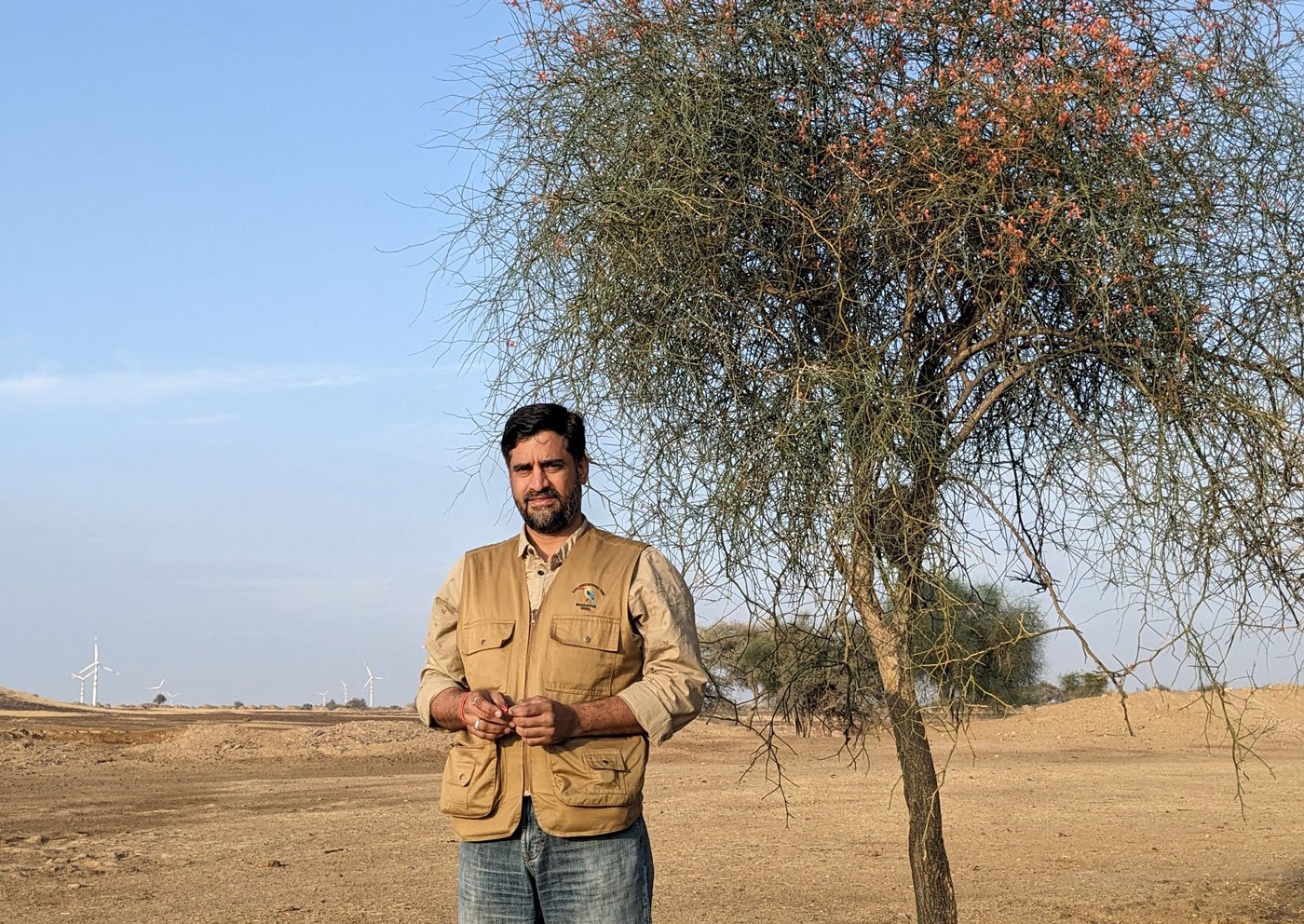
The maximum number are right here in Jaisalmer district. “There are two populations – one near Pokaran and one in the Desert National Park – roughly 100 kilometres apart,” says Dr. Sumit Dookia, wildlife biologist who has been tracking these birds in their habitat – the grasslands of western Rajasthan.
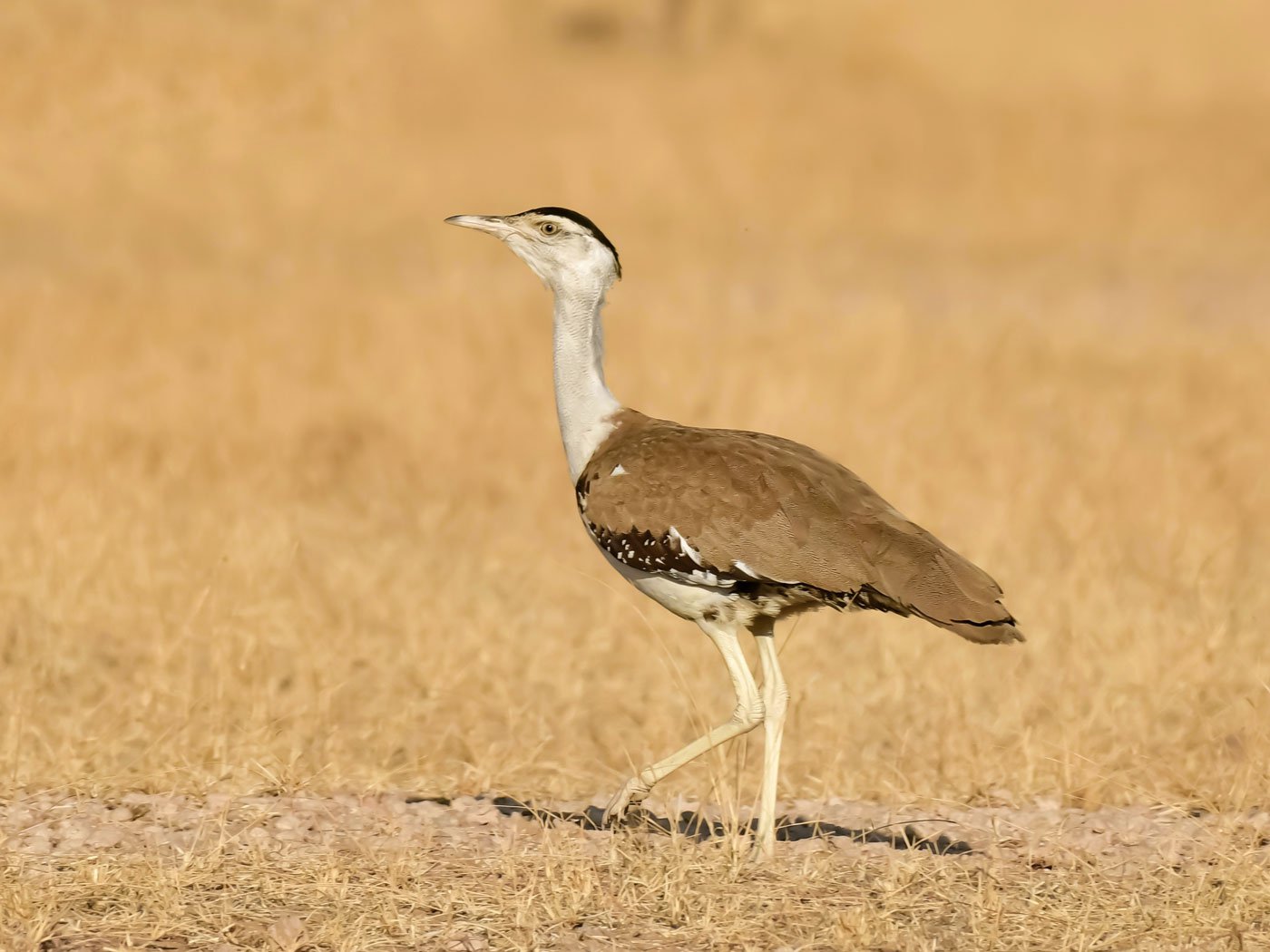
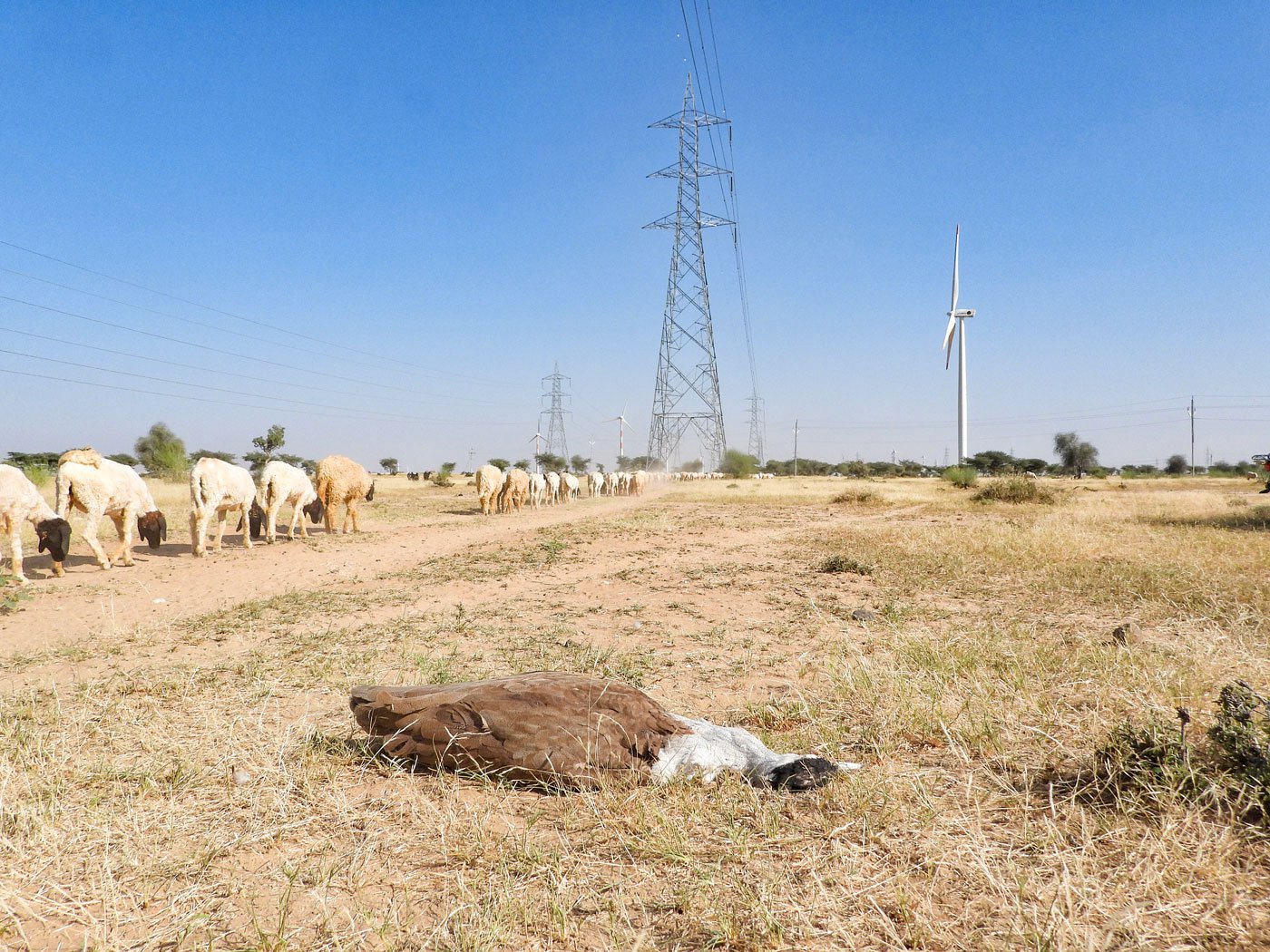
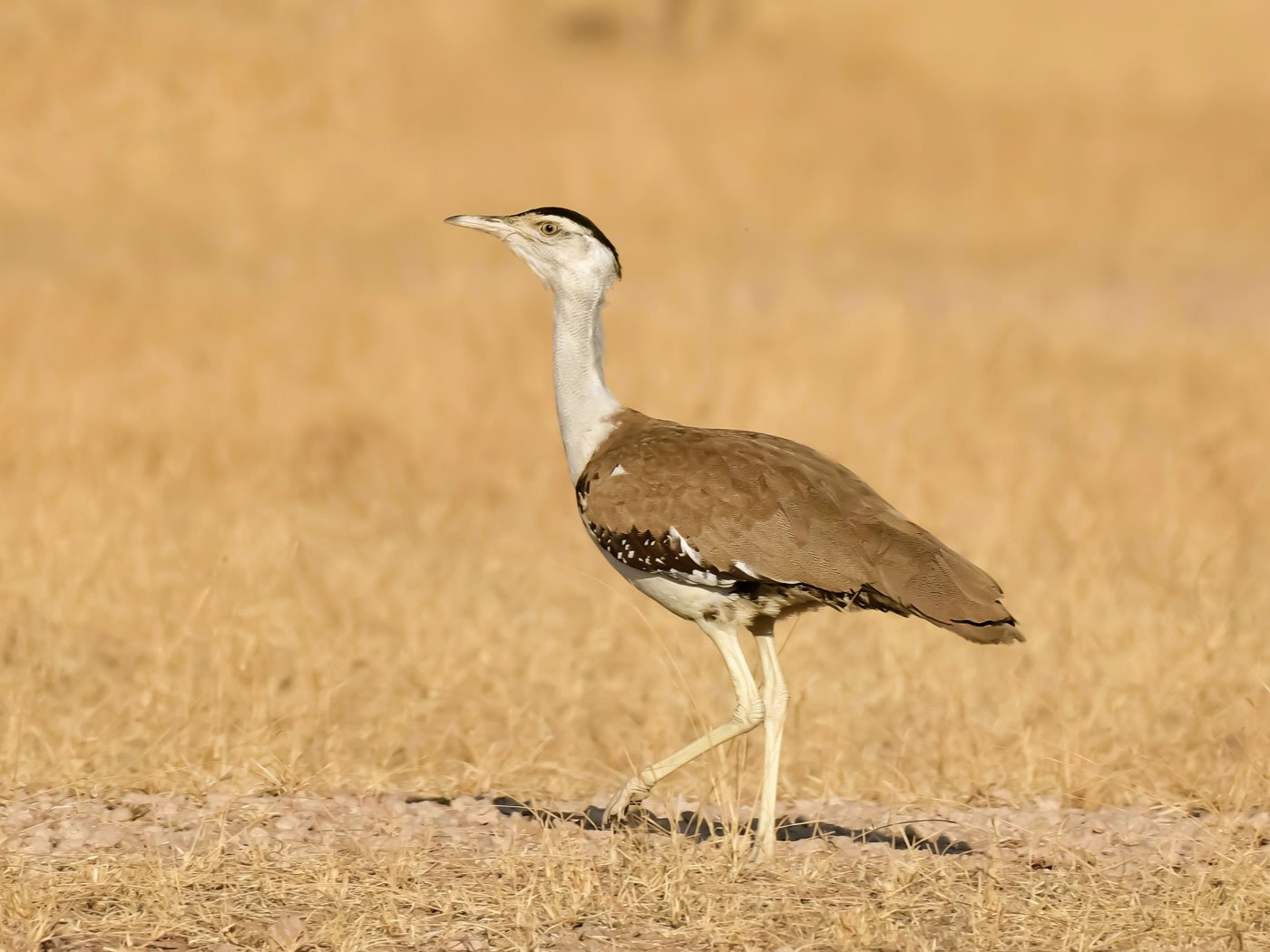
(Left) Today there are totally only around 120-150 Great Indian Bustards in the world and most live in Jaisalmer district. (Right) ‘We have lost GIB in almost all areas. There has not been any significant habitat restoration and conservation initiative by the government,’ says Dr. Sumit Dookia. Photos: Radheshyam Bishnoi/PARI
Mincing no words he says, “We have lost GIB in almost all areas. There has not been any major significant habitat restoration and conservation initiative from the government.” Dookia is honorary scientific advisor at Ecology, Rural Development & Sustainability (ERDS) Foundation – an organisation that has been working in the area since 2015 to build community participation for saving the GIB.
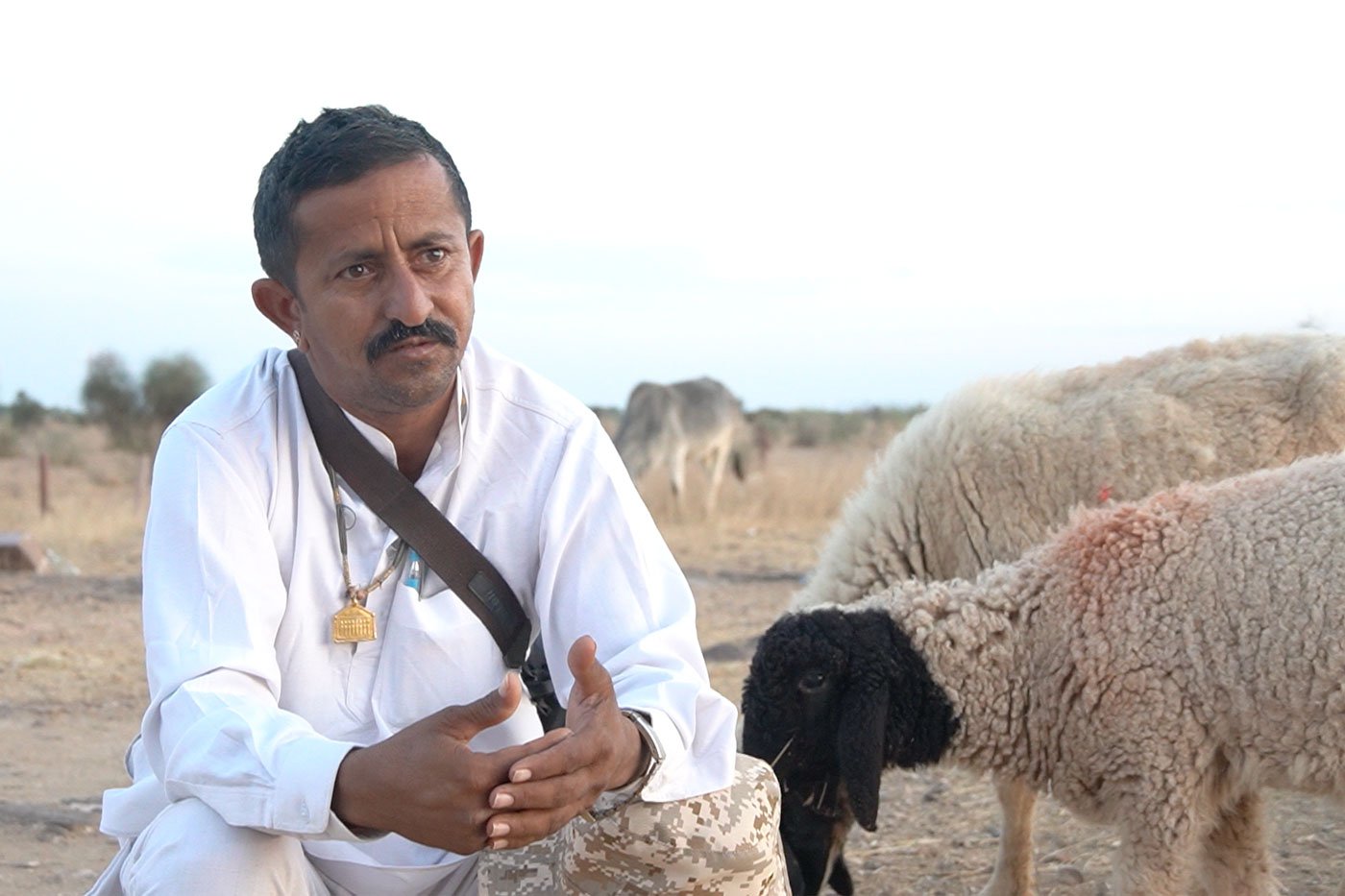
“In my own lifetime I have seen these birds in flocks in the sky. Now I see the single bird, occasionally and rarely in flight,” points out Sumer Singh Bhati. In his forties, Sumer Singh is a local environmentalist and actively working to save the bustard and its habitat in the sacred groves of Jaisalmer district.
He lives in Sanwata village in Sam block, an hour away, but the death of the godawan has brought him and other concerned locals and scientists rushing to the site.
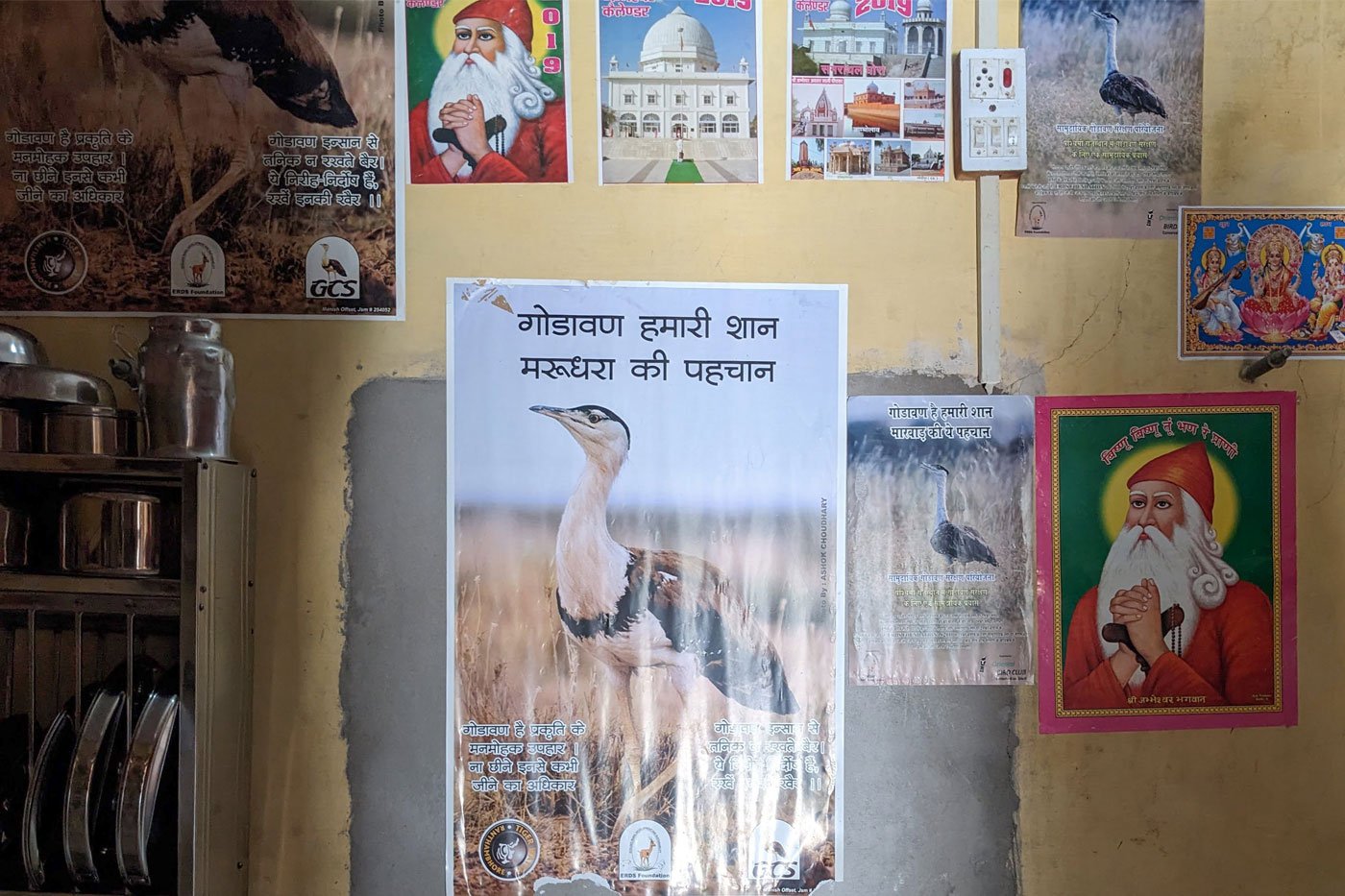
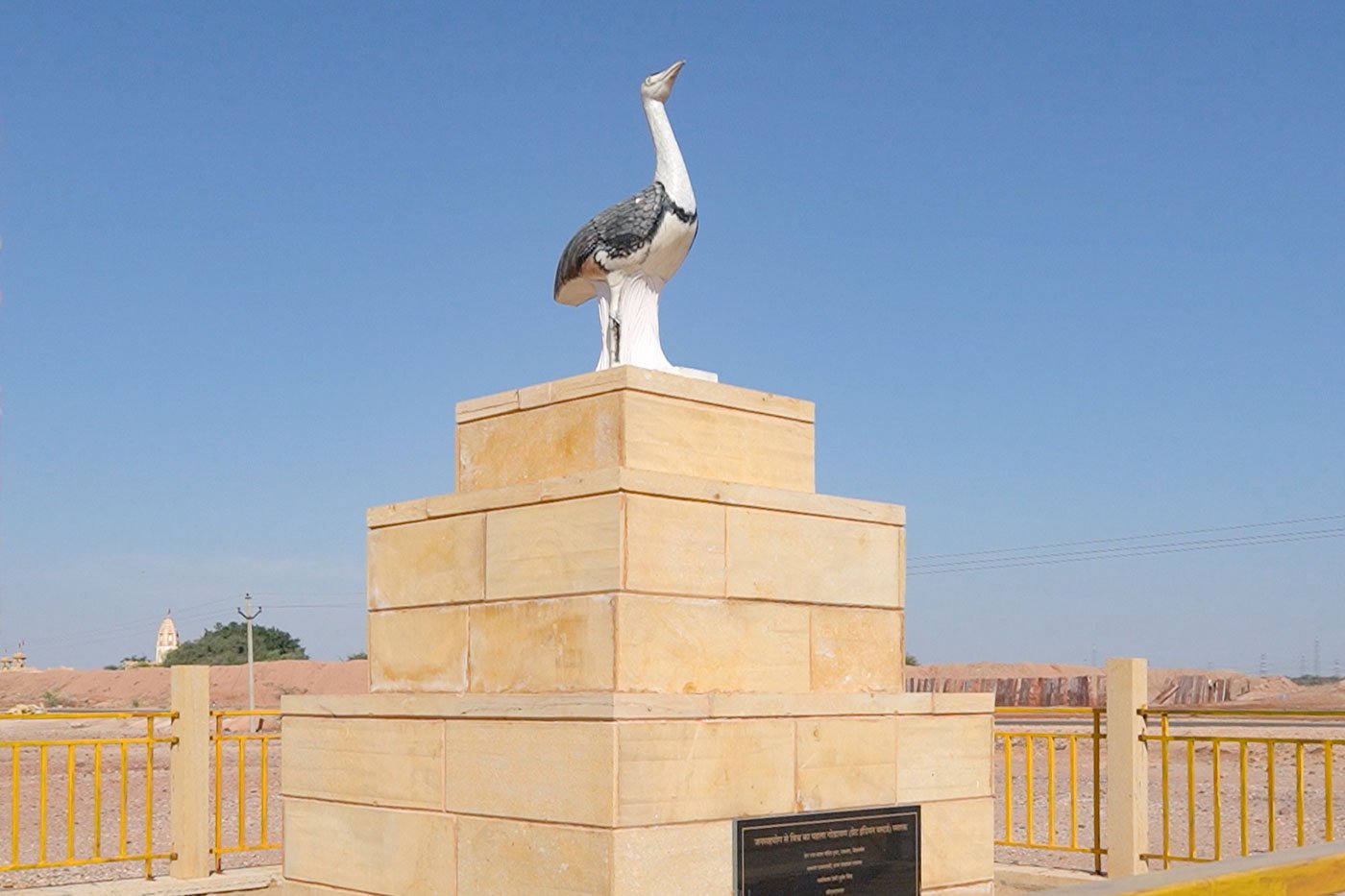
About a 100 metres from the Degray Mata Mandir near Rasla village sits a life-size godawan made of plaster-of-paris. It can be seen from the highway – alone atop a platform inside a roped enclosure.
Locals have installed it as a mark of protest. “It was on the first death anniversary of the GIB that died here,” they tell us. The plaque written in Hindi translates to: ‘Near Degray Mata mandir on 16 September 2020, a female godawan collided with high tension lines. In its memory this monument has been built.’
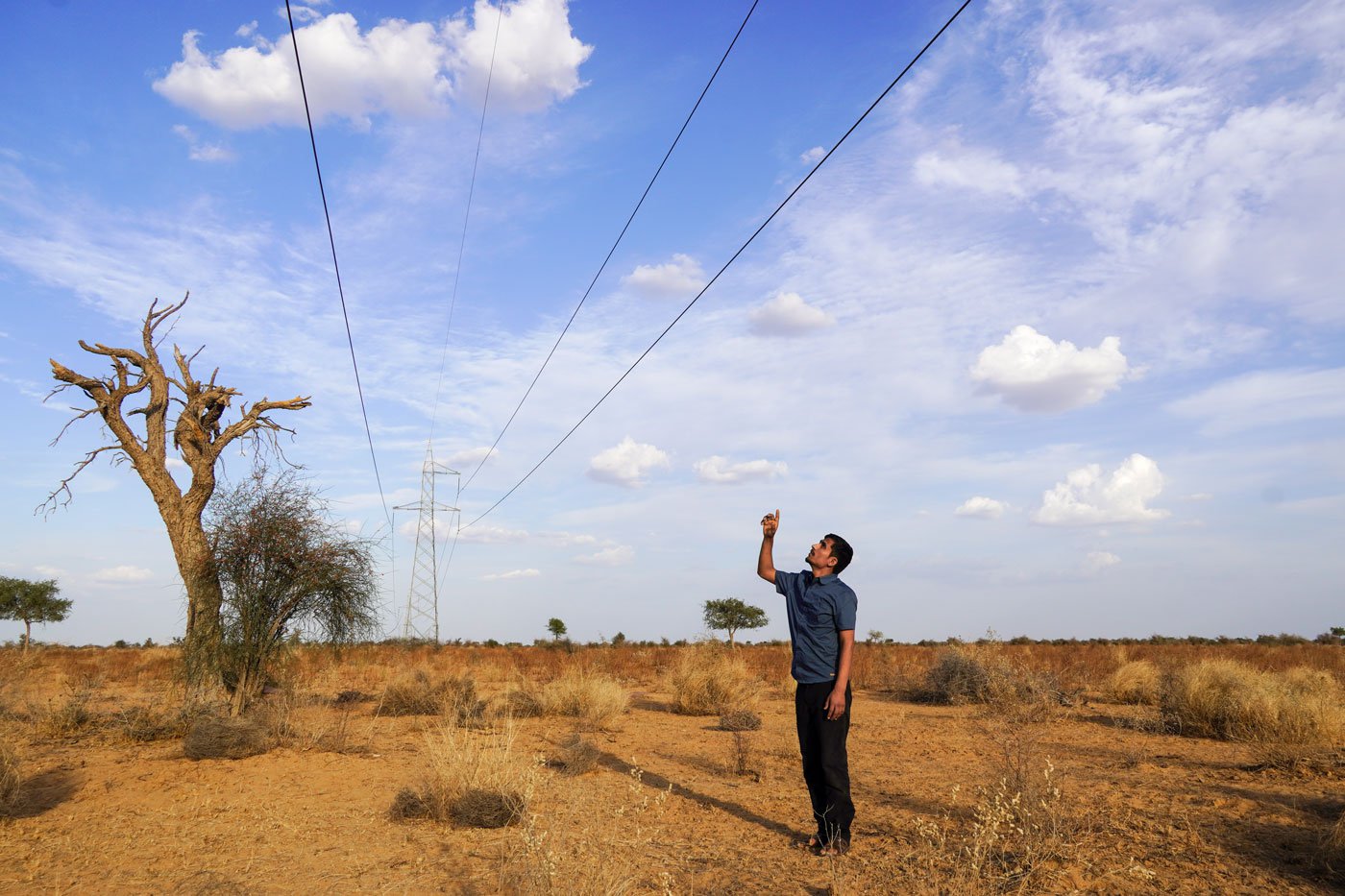
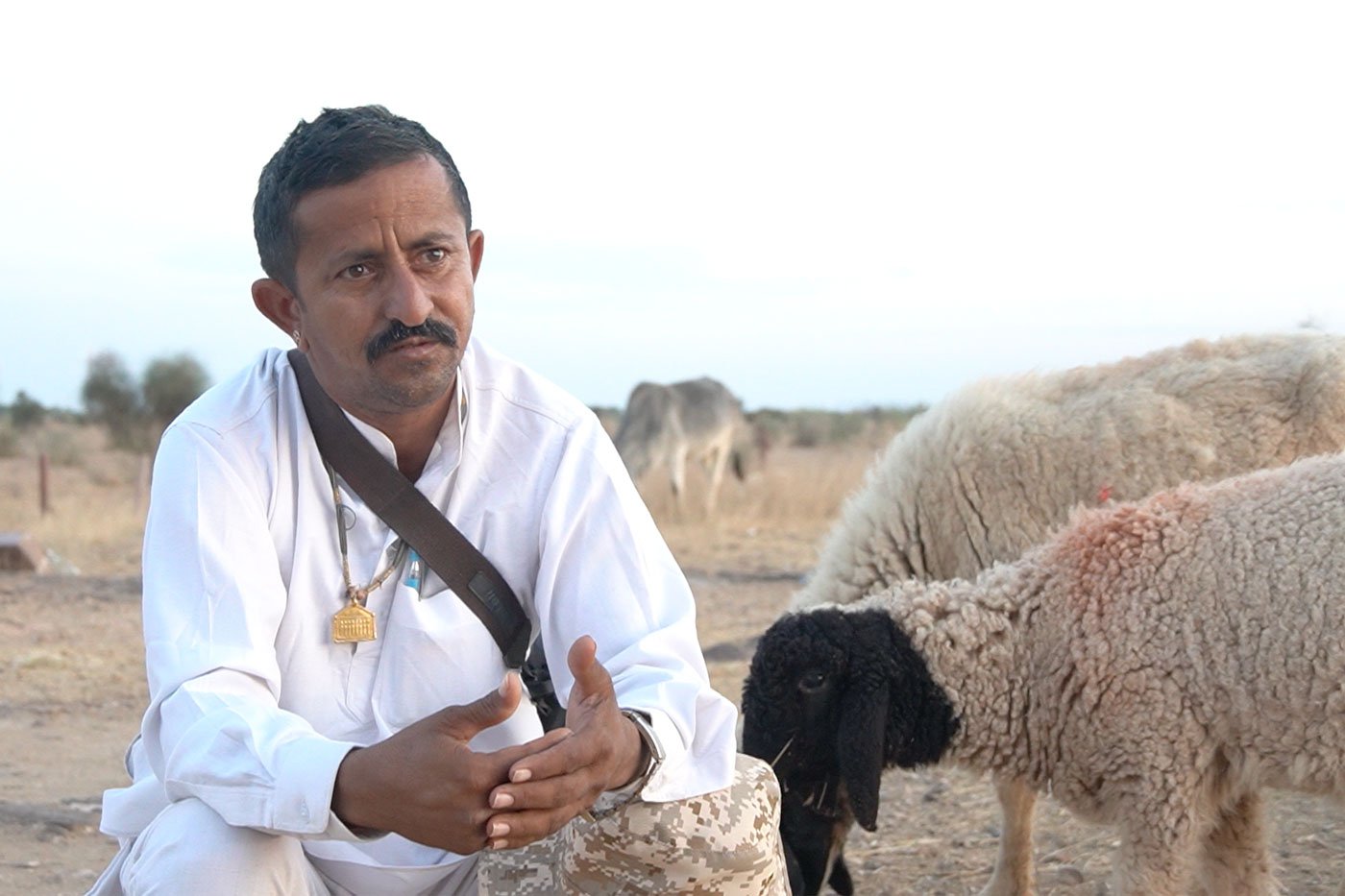
(Left) Radheshyam pointing at the high tension wires near Dholiya that caused the death of a GIB in 2019. (Right) Sumer Singh Bhati in his village Sanwata in Jaisalmer district. Photos: Urja/PARI
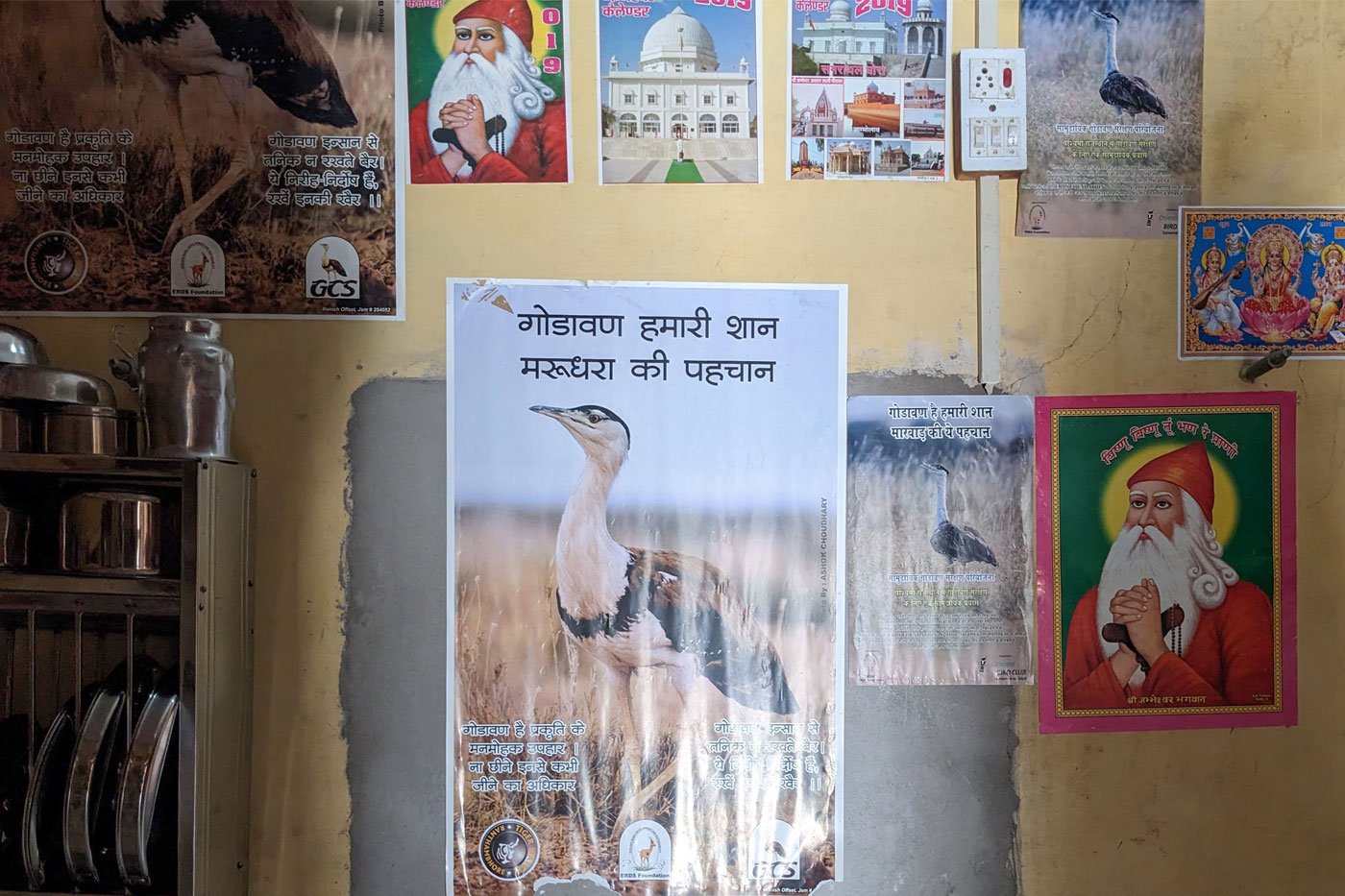
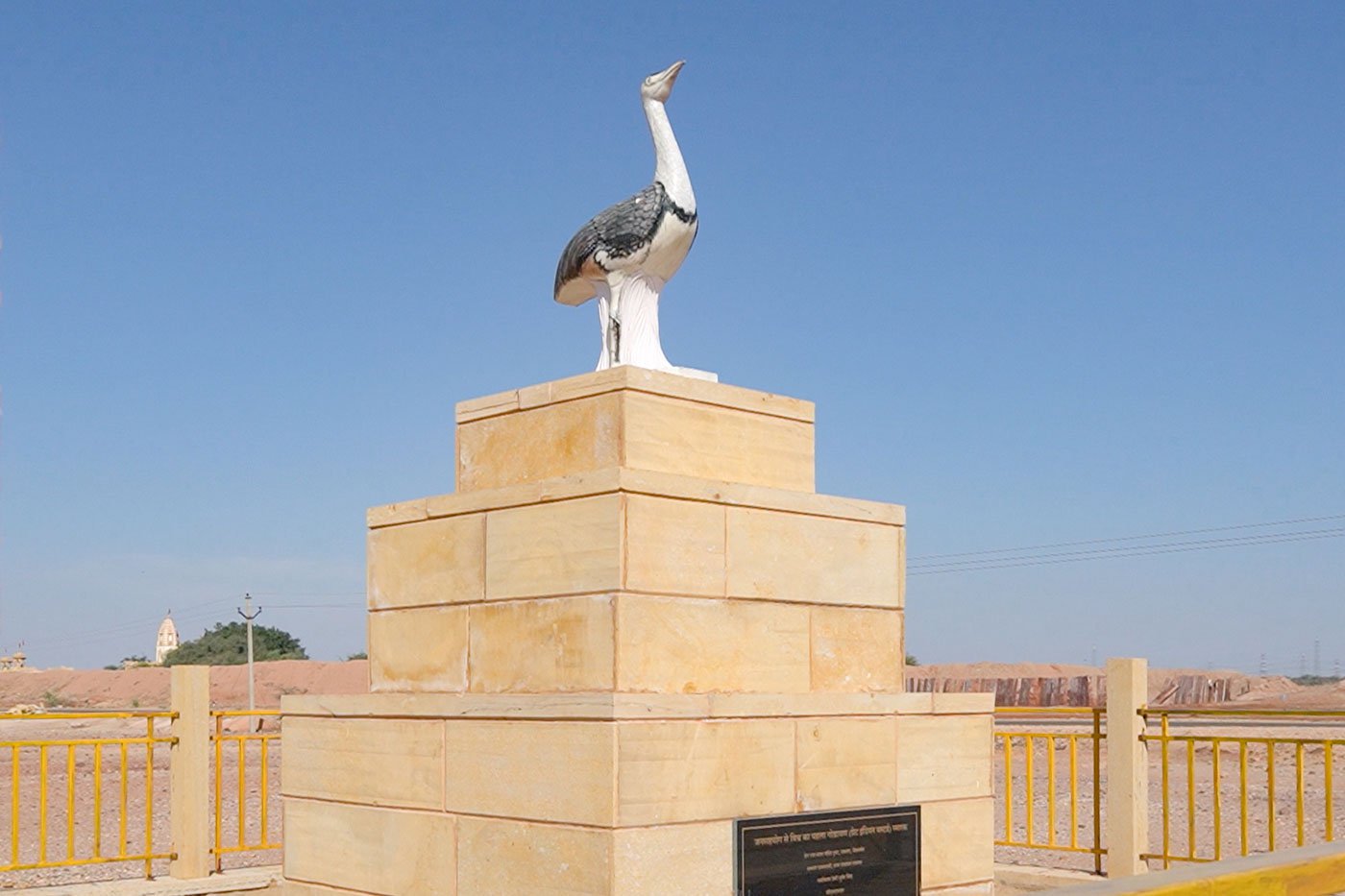
(Left) Posters of the godawan (bustard) are pasted along with those of gods in a Bishnoi home. (Right) The statue of a godawan installed by people of Degray. Photos: Urja/PARI
For Sumer Singh, Radheshyam and other locals of Jaisalmer, the dying godawans and their loss of habitat is grimly symbolic of the lack of agency that their pastoral communities have over their surroundings, and the subsequent loss of pastoral lives and livelihoods.
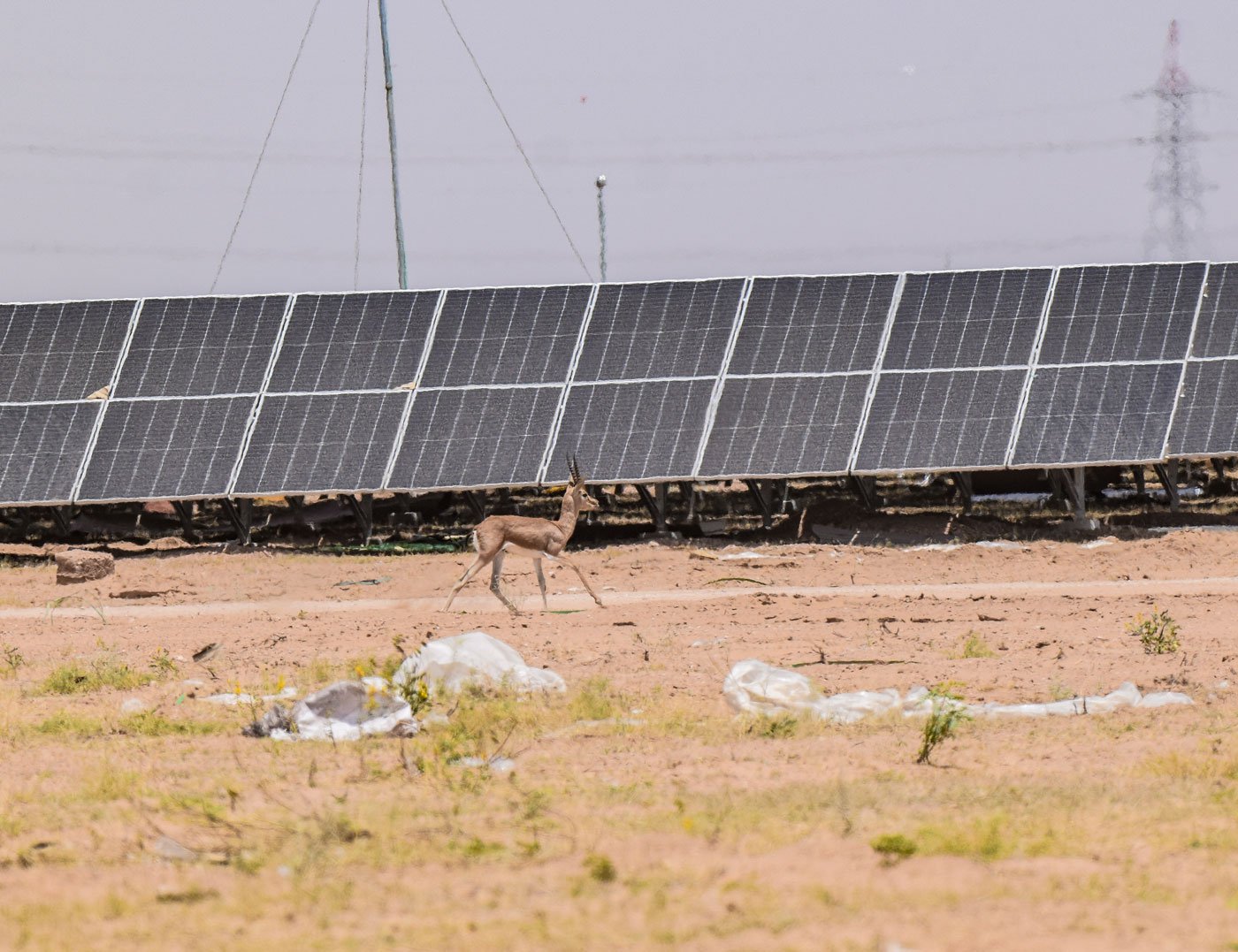
“We are losing so much in the name of ‘development’,” says Sumer Singh. “And who is this development for?” He has a point – there is a solar farm 100 metres away, power lines run overhead, but electricity supply in his village is fitful, inconstant, and unreliable.
India’s RE capacity jumped 286 per cent in the last 7.5 years, proclaims the central Ministry of New and Renewable Energy. And in the last decade but more so in the last 3-4 years, thousands of renewable energy plants – both solar and wind – have been commissioned in this state. Among others, Adani Renewable Energy Park Rajasthan Ltd (AREPRL) is developing a 500 MW capacity solar park in Bhadla, Jodhpur and 1,500 MW capacity solar park in Fatehgarh, Jaisalmer. An inquiry via the website sent to the company asking if they are moving any lines underground, has not been answered at the time of this story being published.
The energy produced by solar and wind farms in the state is sent on to the national grid with the help of a huge network of power lines that act as a barrier in the flight path of bustards, eagles, vultures and other avian species. The RE projects will lead to a green corridor that passes through the GIB habitats of Pokhran and Ramgarh-Jaisalmer.
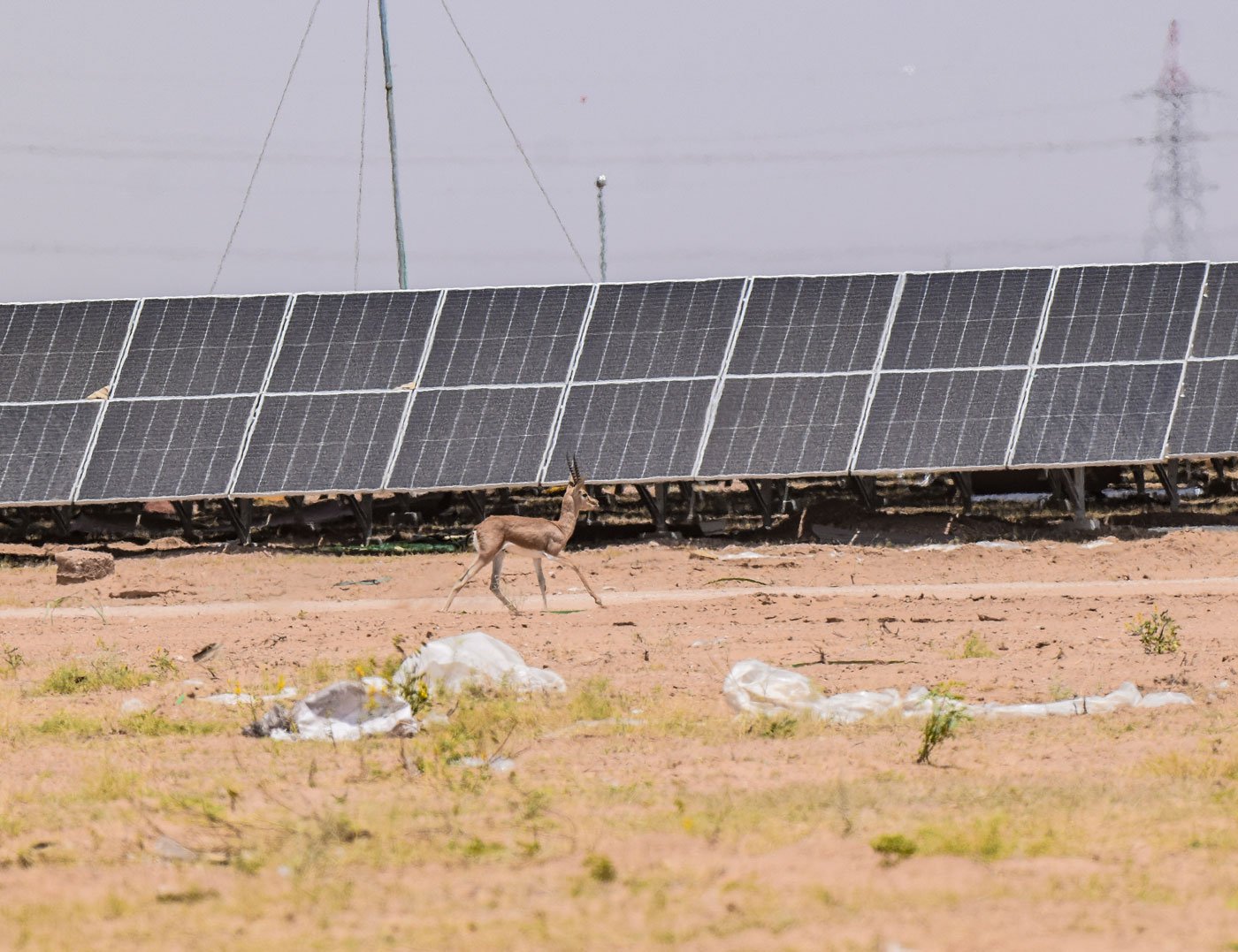
Solar and wind energy projects are taking up grasslands and commons here in Jaisalmer district of Rajasthan. For the local people, there is anger and despair at the lack of agency over their surroundings and the subsequent loss of pastoral lives and livelihoods. Photo: Radheshyam Bishnoi/PARI
Jaisalmer lies in the critical Central Asian Flyway (CAF) – the annual route taken by birds migrating from the Arctic to Indian Ocean, via central Europe and Asia. An estimated 279 populations of 182 migratory waterbird species come through this route, says the Convention on the Conservation of Migratory Species of Wild Animals. Some of the other birds are the endangered Oriental White-backed vulture (Gyps bengalensis), Long-billed (Gyps indicus) , Stoliczka’s Bushchat (Saxicola macrorhyncha) , Green Munia (Amandava formosa) and MacQueen’s or Houbara Bustard (Chlamydotis maqueeni) .
Radheshyam is also an avid photographer and his long focus tele lens has thrown up disturbing images. “I have seen pelicans landing on a field of solar panels at night because they think it’s a lake. The hapless bird then slips on the glass and its delicate legs are irreversibly injured.”
Powerlines are killing not just bustards, but a staggering estimated 84,000 birds a year within a 4,200 square kilometre area in and around the Desert National Park in Jaisalmer, says a 2018 study by the Wildlife Institute of India. “Such high mortality rate [of the bustard] is unsustainable for the species and a sure cause of extinction.”
The danger is not just in the sky but on the ground – large areas of grassland commons, sacred groves or orans as they are referred to here, are now dotted with whirling 200-metre-tall windmills placed at 500 metre intervals, and hectare upon hectares of walled enclosures for solar farms. The intrusion of renewable energy into sacred groves where all communities insist even a branch cannot be cut, has turned grazing into a game of snakes and ladders – pastoralists can no longer tread a direct path, but instead must go round fences and dodge windmills and their attendant microgrids.
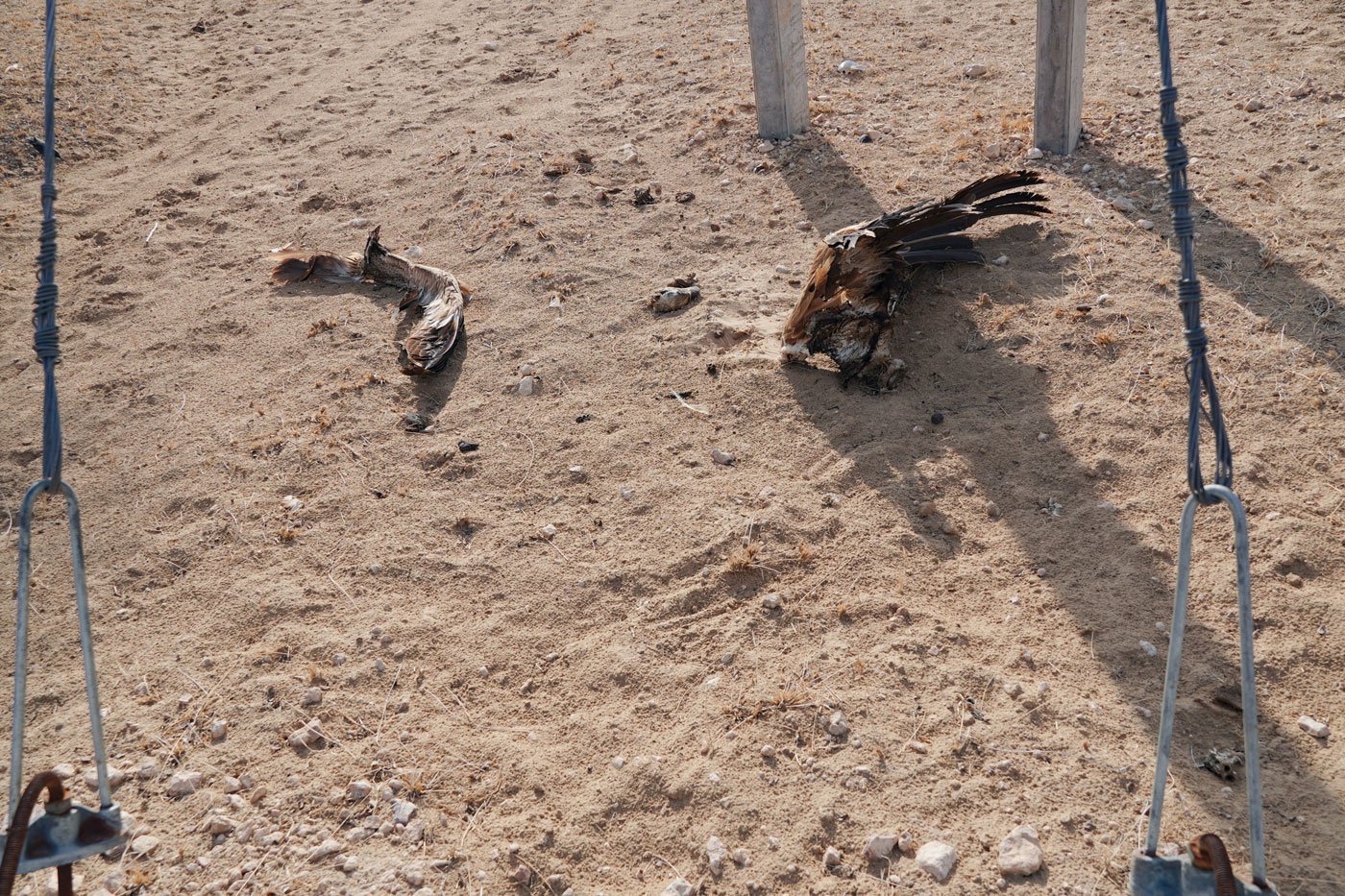
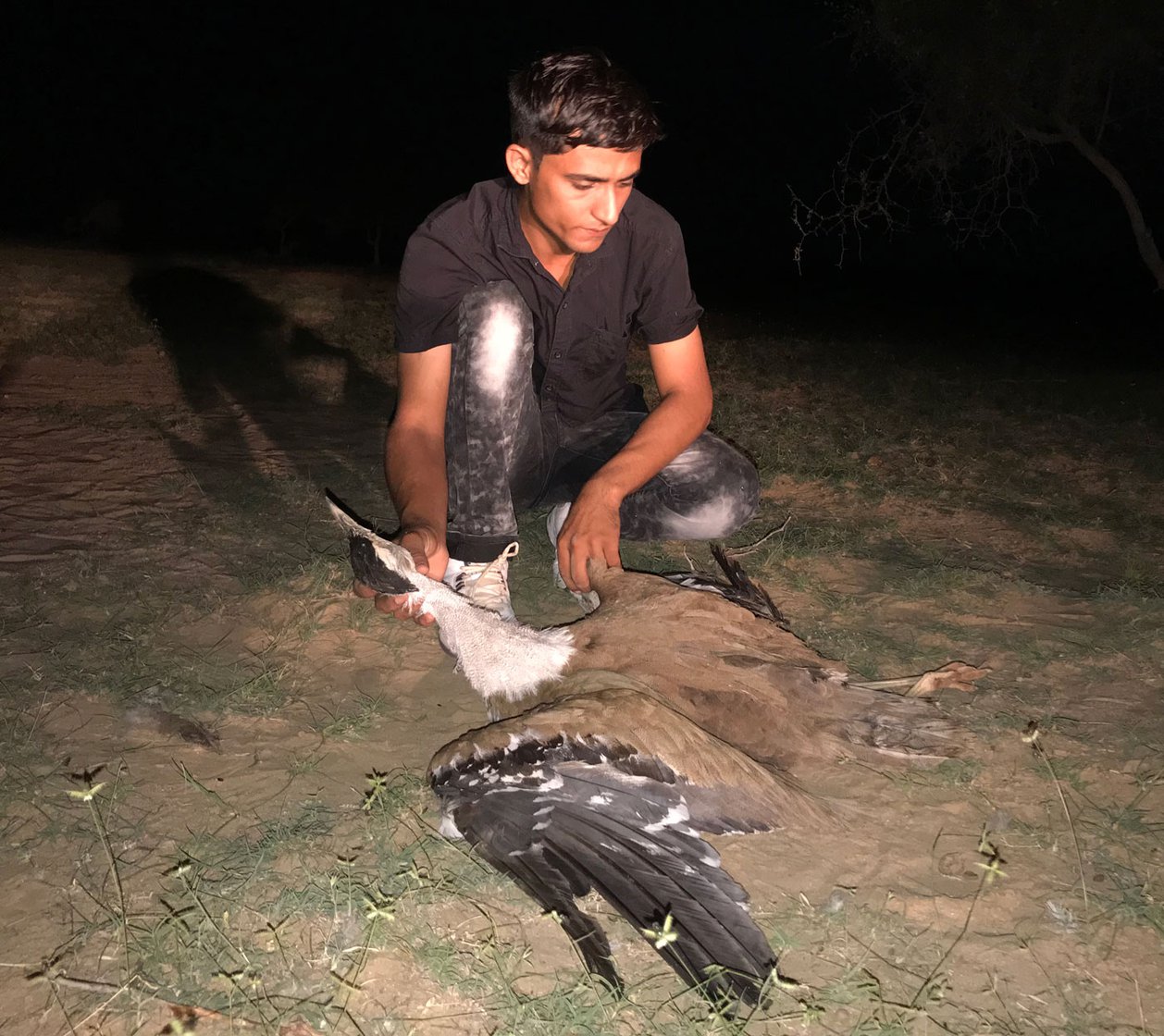
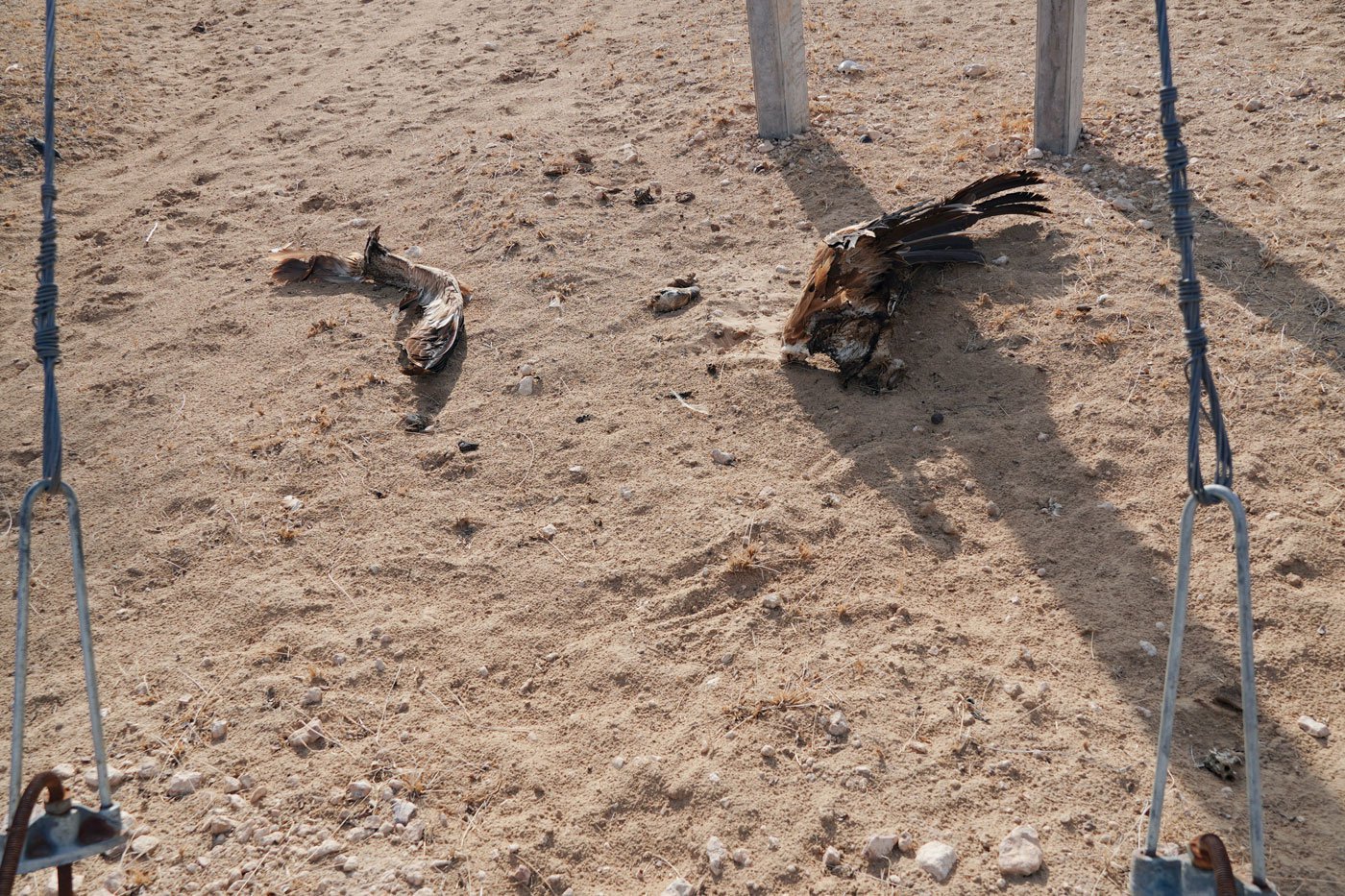
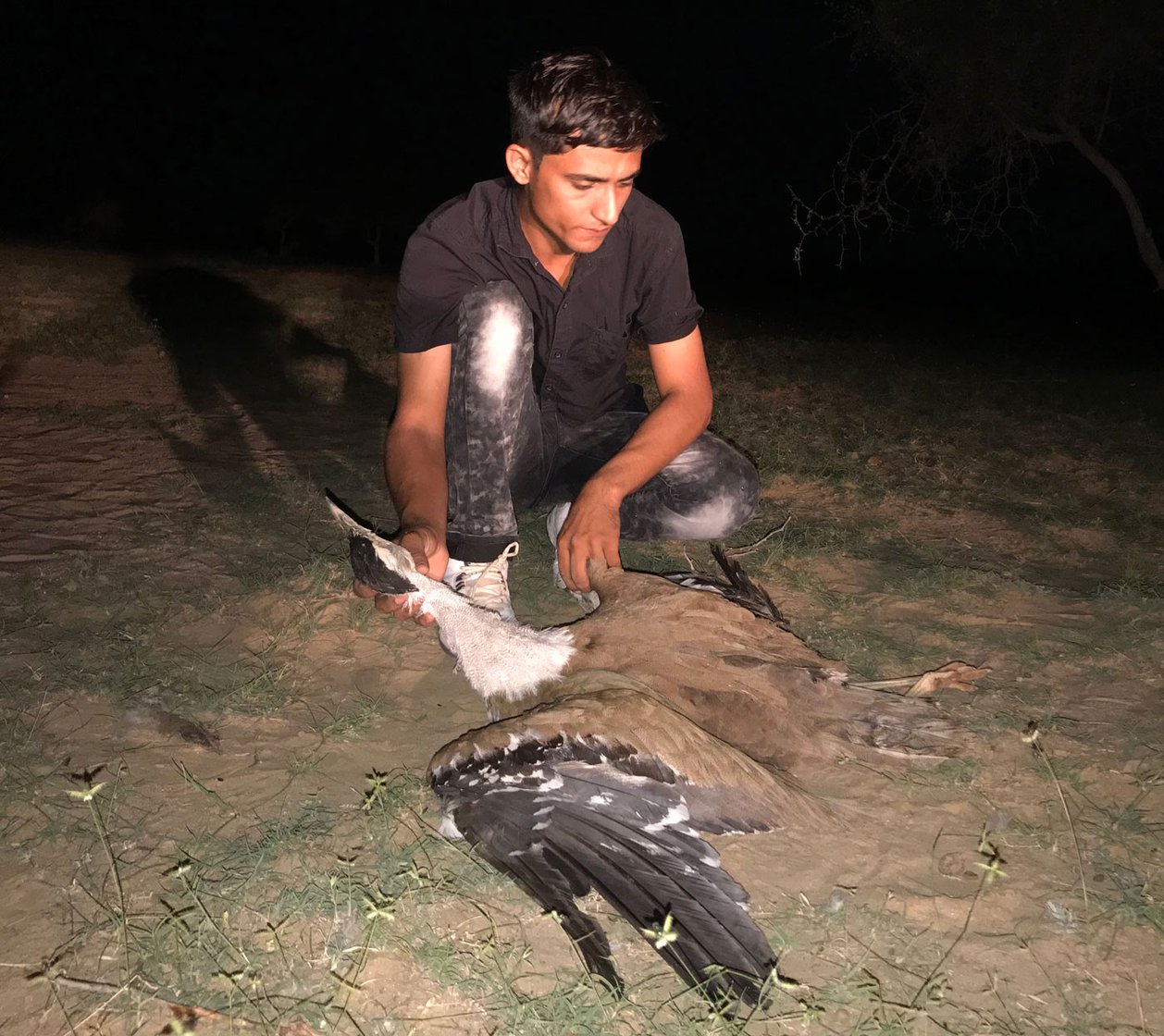
(Left) The remains of a dead griffon vulture in Bhadariya near a microgrid and windmill. (Right) Radheshyam tracks godawans to help keep them safe. Photos: Vikram Darji/PARI
“If I leave in the morning, I get home only by evening,” says Dhanee (she uses only this name). The 25-year-old must go into the forest to bring grass for her four cows and five goats. “I get a shock from the wires sometimes when I take my animals into the forest.” Dhanee’s husband is studying in Barmer town, and she manages their six bigha (roughly 1 acre) of land and their three boys aged 8, 5 and 4 years.
“We have tried to raise questions with our MLA and the District Commissioner (DC), but nothing has happened,” says Murid Khan, Gram Pradhan of Degray in Rasla village of Sam block in Jaisalmer.
“Six to seven lines of high-tension cables have been installed in our panchayat,” he points out. “It is in our orans [sacred groves]. When we ask them, ‘bhai who has given you permission’, they say ‘we don’t need your permission’.”
On March 27, 2023, days after the incident, in a question asked in the Lok Sabha, the Minister of State for Environment, Forest and Climate Change, Shri Ashwini Kumar Choubey said that important GIB habitats would be designated into national parks (NPs).
Of the two habitats, one is already designated a NP and the other is defence land, but bustards are not safe.
On April 19, 2021, in response to a writ petition, the Supreme Court ruled that, “in the priority and potential bustard area, where it is found feasible to convert the overhead cables into underground powerlines the same shall be undertaken and completed within a period of one year, and till such time diverters [plastic discs that reflect light and warn off birds] shall be hung from the existing powerlines.”
The SC judgement lists 104 km of lines to go underground, and 1,238 km of lines to have diverters in Rajasthan.
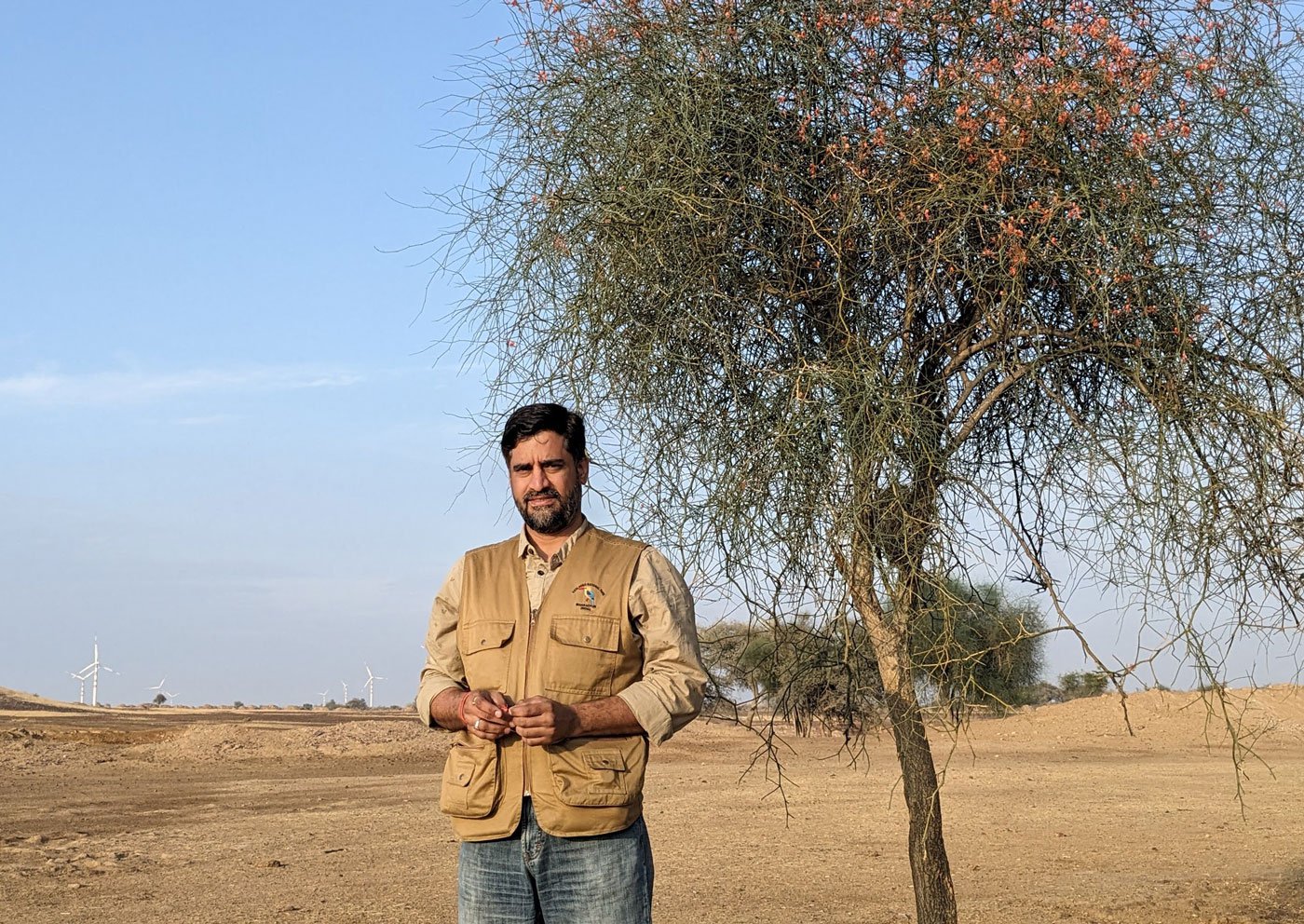
“Why is the government allowing such big-sized renewable energy parks in GIB habitat when transmission lines are killing birds,” asks wildlife biologist, Sumit Dookia. Photos: Urja/PARI
Two years later – April 2023 – the SC’s ruling to send lines underground has been completely ignored and plastic diverters affixed on only a few kms – in areas where it gets public and media attention near major roads. “As per available research, bird diverters reduce collision to a great extent. So theoretically, this death could have been averted,” says wildlife biologist, Dookia.
The native bustard is at risk in what is their only home on this planet. Meanwhile we have rushed to make a home for a foreign species – a majestic five-year plan to spend Rs. 224 crore on bringing African cheetahs to India. The outlay covers flying them in special aircrafts, building secure enclosures, hi-quality cameras, and observation watchtowers. Then there is the tiger whose population is increasing and its budgetary allocation stands at a generous Rs.300 cr in 2022.
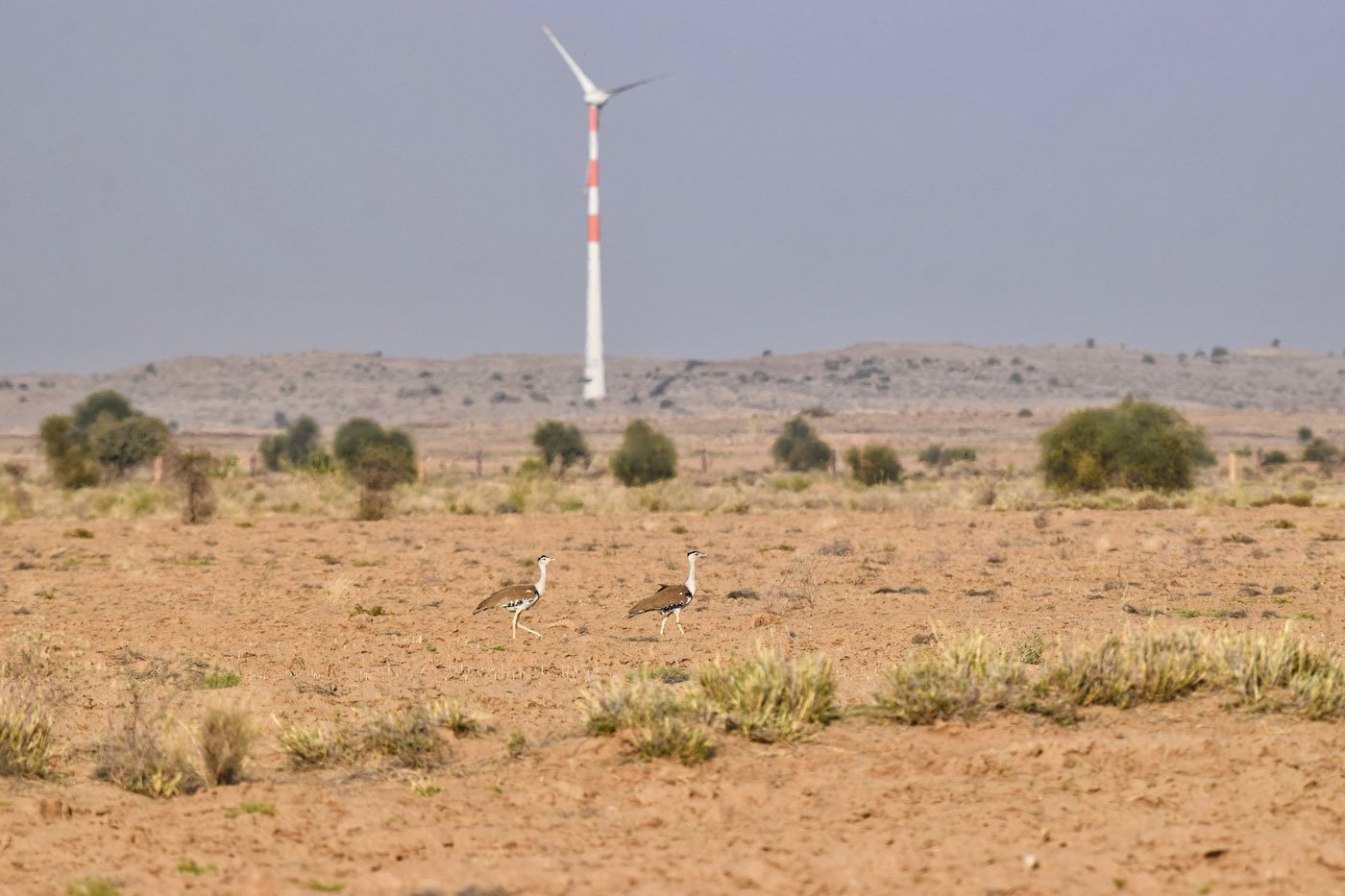
An imposing member of the avian species, the Great Indian Bustard stands a metre tall and weighs around 5-10 kilograms. It lays only one egg a year, and in the open. The increasing population of feral dogs in the area has put bustard eggs at risk. “The situation is grim. We need to find ways to sustain this population and leave some [inviolate] area for this species,” says Neelkanth Bodha, Programme Officer with the Bombay Natural History Society (BNHS) that runs a project in the area.
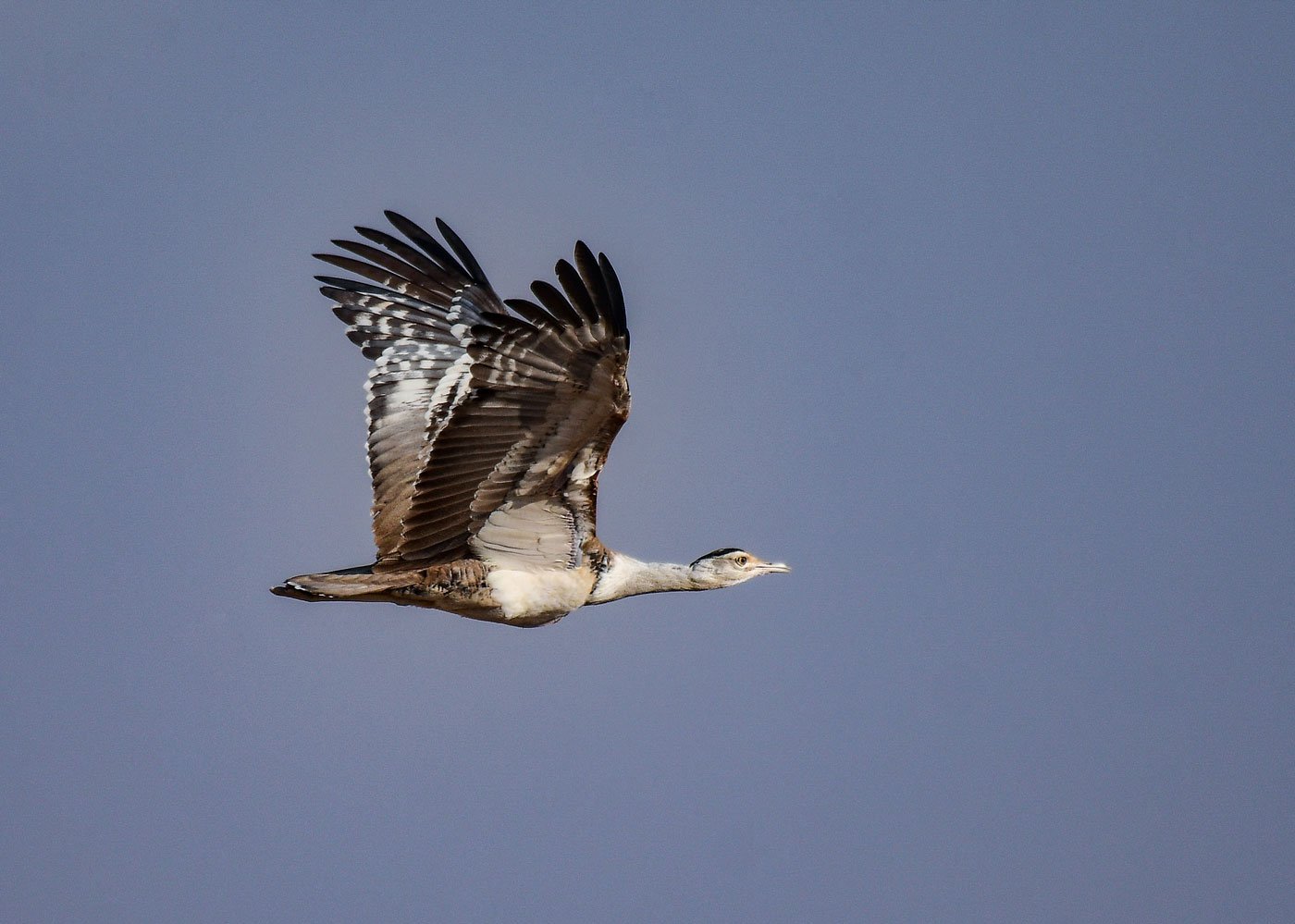
A terrestrial species, it prefers to walk. When it does fly, it’s a majestic sight – its wingspan of around 4.5 feet holding up the heavy body as it glides through the desert skies.
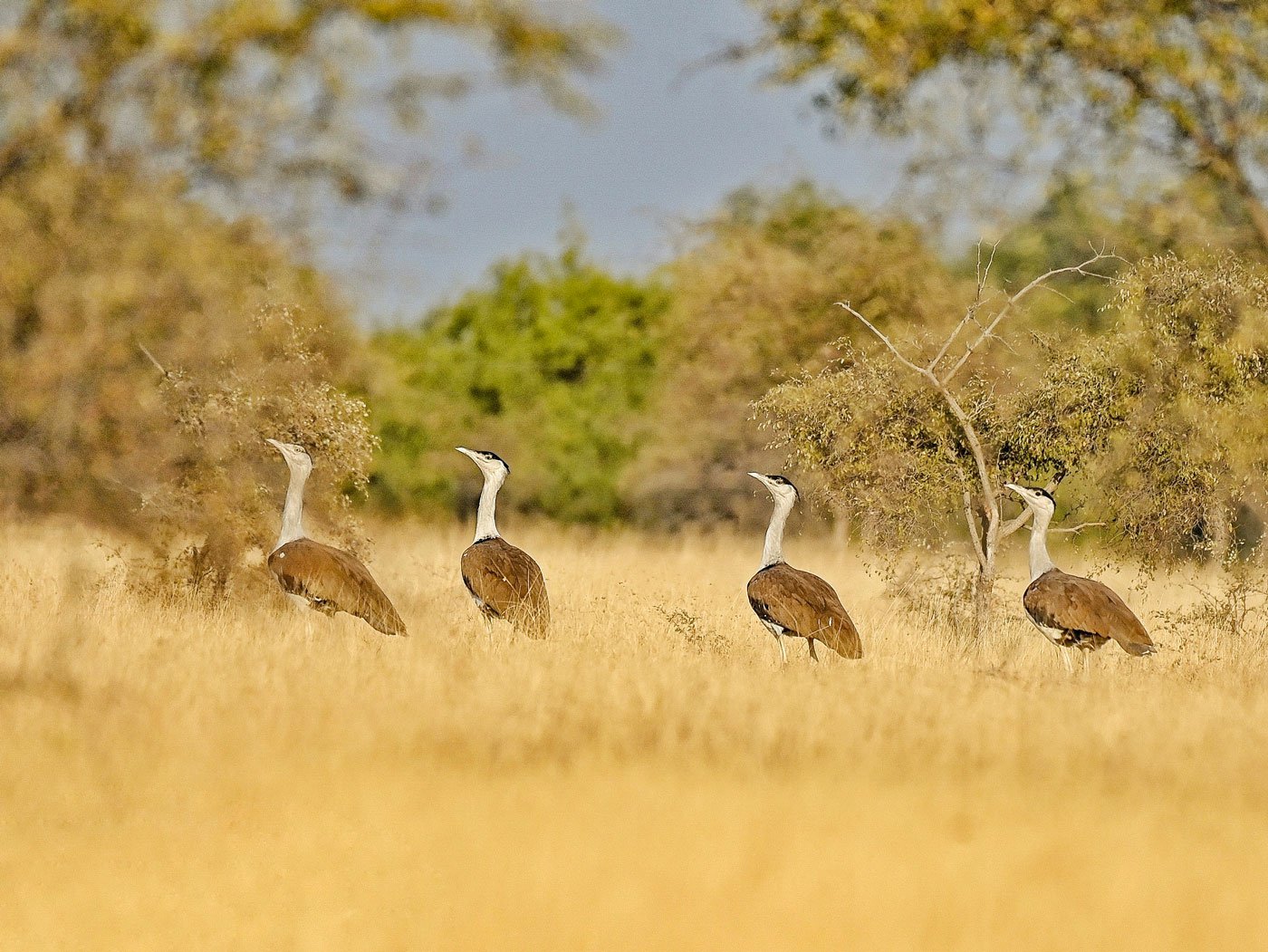
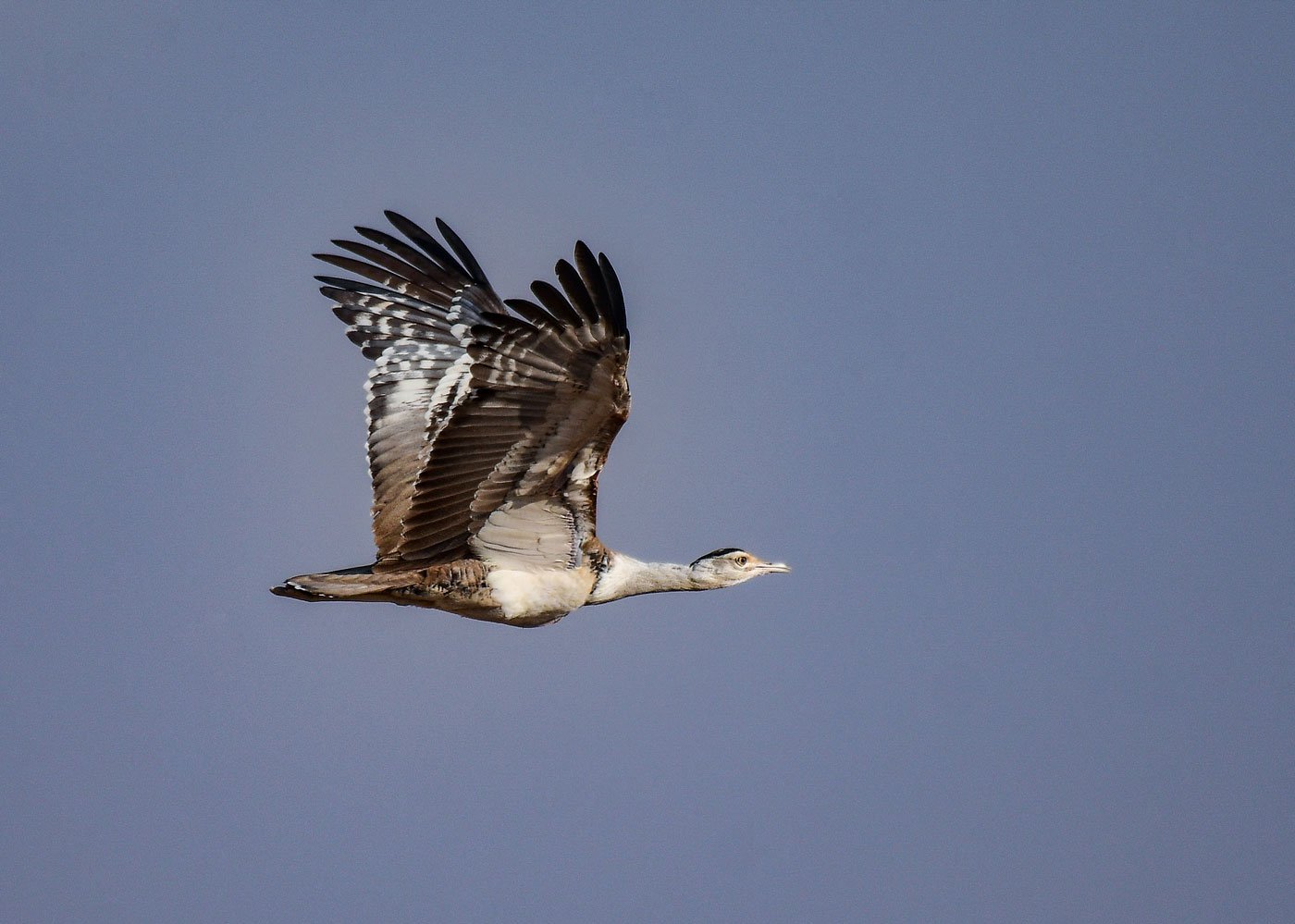
(Left) ‘The godawan doesn’t harm anyone. In fact, it eats small snakes, scorpions, small lizards and is beneficial for farmers,” says Radheshyam (Right) Not only is the Great Indian Bustard at risk, but so are the scores of other birds that come through Jaisalmer which lies on the critical Central Asian Flyway (CAF) – the annual route taken by birds migrating from the Arctic to Indian Ocean. Photos: Radheshyam Bishnoi/PARI
The mighty bustard has eyes on the side of its head, and it cannot see dead ahead. So, it either hits the high-tension wire in a head-on collision or tries to swerve at the last minute. But like a trailer truck that can’t take sharp turns, the GIB’s sudden change of direction is often too late, and some part of its wing or head slams into the wires situated at heights of 30 metres and above. “If the electric shock on encountering the wires don’t kill it, the fall usually does,” says Radheshayam.
In 2022, when locusts entered India through Rajasthan, “it was the presence of the godawan that saved some fields as they ate up locusts in thousands,” recalls Radheshyam. “Godawan doesn’t harm anyone. In fact, it eats small snakes, scorpions, small lizards and is beneficial for farmers,” he adds.
He and his family own 80 bighas (roughly 8 acres) of land on which they grow guar and bajra, and sometimes a third crop if there is winter rain. “Imagine if there were not 150 GIB, but in thousands, such a serious calamity like locusts’ invasion would be reduced,” he adds.
To save the GIB and ensure its habitat is undisturbed requires attention to a relatively small area. “We can make that effort. It’s not such a big deal to do. And there is a court order to send lines underground and not give permission for any more lines,” says Rathore. “Now the government should really stop and think before it’s all over.”
छोटे घासों के बीच सफ़ेद धब्बों वाले भूरे पंख यहां-वहां बिखरे पड़े हैं.
गौर से देखते हुए राधेश्याम बिश्नोई ढलती हुई रौशनी में उस क्षेत्र का चक्कर लगाते हैं. वह उम्मीद करते हैं कि वह ग़लत साबित होंगे. वह अपेक्षाकृत ऊंची आवाज़ में कहते हैं, “ये पंख तोड़े हुए नहीं लगते हैं.” फिर वह किसी को फ़ोन लगाते हैं, “आप आ रहे है? देखकर तो मुझे ऐसा ही लगता है…,” वह लाइन पर जुड़े दूसरे आदमी से कहते हैं.
हमारे माथे के ऊपर आसमान में एक अपशकुन की तरह 220-किलोवाट हाईटेंशन (एचटी) तारों से चटखने और गूंजने की लगातार आवाज़ें आ रही हैं. शाम के गहराते अंधेरे में ये तार काली लकीरों की तरह दिखते हैं.
डेटा-संग्राहक के रूप में अपनी ज़िम्मेदारियों को याद रखते हुए 27 साल के बिश्नोई अपना कैमरा बाहर निकालते हैं और क़रीब से व मध्यम दूरी से ‘अपराध-स्थल’ की बहुत सी तस्वीरें लेते हैं.
अगली सुबह हम पौ फटते ही दोबारा घटना-स्थल पर पहुंचते हैं, जो जैसलमेर ज़िले में खेतोलाई के नज़दीक की छोटी सी बस्ती, गंगाराम की ढाणी से बस एक किलोमीटर की दूरी पर है.
इस बार हमें इस निष्कर्ष पर पहुंचने में कोई दुविधा नहीं होती है कि ये पंख ग्रेट इंडियन बस्टर्ड (जीआइबी) के ही हैं, जिसे स्थानीय लोग गोडावण कहते हैं.
(1) डब्लूआईआई शोधकर्ता एम. यू. मोहिबुद्दीन और स्थानीय प्रकृतिविद राधेश्याम बिश्नोई 23 मार्च को घटना स्थल पर ग्रेट इंडियन बस्टर्ड की हाई टेंशन बिजली के तारों से टकराने के बाद हुई मौत से संबंधित जानकारी इकट्ठा कर रहे हैं. तस्वीर: ऊर्जा/PARI
(2) राधेश्याम (खड़े हैं) और स्थानीय निवासी मांगीलाल, वन्यपशु पशु चिकित्सक डॉ. एस.एस. राठोड़ (टोपी लगाए हुए) को पंखों की जांच करते देख रहे हैं. तस्वीर: प्रीती डेविड/PARI
वन्यपशु चिकित्सक डॉ. श्रवण सिंह राठोड़ भी 23 मार्च, 2023 की सुबह घटना स्थल पर मौजूद हैं. साक्ष्यों पर नज़र दौड़ाते हुए वह कहते हैं: “कोई शक नहीं है कि मौत हाई टेंशन तार से टकराने की वजह से हुई है. ऐसा लगता है कि यह आज से तीन दिन पहले की घटना है, यानी 20 मार्च [2023] को घटी घटना लगती है.”
साल 2020 से लेकर अब तक यह चौथा मृत पंछी है जिसकी जांच भारतीय वन्यजीव संस्थान (डब्लूआईआई) में कार्यरत डॉ. राठोड़ कर रहे हैं. डब्लूआईआई पर्यावरण, वन और जलवायु परिवर्तन मंत्रालय (एमओईएफ़सीसी) और राज्य वन्यजीवन विभाग की एक तकनीकी शाखा है. डॉ. राठोड़ आगे कहते हैं, “सभी मृत गोडावण हाईटेंशन तारों के नीचे पड़े मिले हैं. इन तारों और इन दुर्भाग्यशाली मौतों के बीच सीधा संबंध एकदम साफ़ है.”
यह मृत पक्षी विलुप्ति के गंभीर संकट को झेलता ग्रेट इंडियन बस्टर्ड (आर्डीयोटिस नाइग्रिसेप्स) है. पांच महीने के अन्तराल में यह दूसरी बार हुआ है कि हाई टेंशन तारों से टकराने से इनकी मौत हुई है. राधेश्याम बताते हैं, “साल 2017 [इन पक्षियों पर जब से वह नज़र रखे हैं] से मौत की यह नौवीं घटना है.” वह पड़ोस के ढोलिया में रहते हैं, जो जैसलमेर ज़िले के सांकड़ा ब्लॉक का एक छोटा सा गांव है. एक सच्चे प्रकृतिप्रेमी होने के कारण वह इन विलुप्त होते पक्षियों पर कड़ी नज़र रखते हैं. उनका भी यही कहना है, “अधिकतर गोडावणों की मौत हाई टेंशन के तारों के नीचे हुई है.“
गोडावण को वन्यजीव (संरक्षण) अधिनियम 1972 की अनुसूची-1 में शामिल किया गया है. कभी भारत और पाकिस्तान के मैदानी इलाक़ों में पाए जाने वाले ये दुर्लभ पक्षी आज पूरी दुनिया में केवल 120-150 की तादाद में जीवित हैं और भारत के केवल पांच राज्यों में ही देखे जा सकते हैं. लगभग 8 से 10 पक्षी कर्नाटक, महाराष्ट्र और तेलंगाना के परस्पर सीमावर्ती क्षेत्रों में और चार मादाएं गुजरात में देखी गई हैं.
इनकी सबसे अधिक संख्या जैसलमेर ज़िले में है. पश्चिम राजस्थान के घास वाले मैदानों में इनके प्राकृतिक आवासों में पक्षियों पर निगरानी रखने वाले वन्यजीव जैव वैज्ञानिक डॉ. सुमित डूकिया कहते हैं, “इनकी दो आबादियां हैं – एक पोकरण के निकट, और एक लगभग 100 किलोमीटर की दूरी पर डेजर्ट [मरुस्थल] नेशनल पार्क में.”
(1) आज दुनिया में कुल मिलाकर लगभग 120-150 गोडावण बचे हैं और उनमें से ज़्यादातर जैसलमेर ज़िले में हैं. तस्वीर: राधेश्याम बिश्नोई/PARI
(2) डॉ. सुमित डूकिया बताते हैं, ‘हमने लगभग सभी इलाक़ों में ग्रेट इंडियन बस्टर्ड को खोया है. उनके प्राकृतिक आवासों को दोबारा उनके अनुकूल बनाने और उनके संरक्षण के लिए सरकार की तरफ़ से अभी तक कोई ठोस पहल नहीं की गई है’. तस्वीर: राधेश्याम बिश्नोई/PARI
बिना किसी लाग-लपेट के वह कहते हैं, “हमने लगभग सभी इलाक़ों में ग्रेट इंडियन बस्टर्ड को खोया है. उनके प्राकृतिक आवासों को दोबारा उनके अनुकूल बनाने और उनके संरक्षण के लिए सरकार की तरफ़ से अभी तक कोई ठोस पहल नहीं की गई है.” डूकिया इकोलॉजी, रूरल डेवलपमेंट एंड सस्टेनिबिलिटी (ईआरडीएस) फाउंडेशन के अवैतनिक वैज्ञानिक सलाहकार हैं. यह संगठन गोडावणों के संरक्षण में सामुदायिक भागीदारी के निर्माण की दिशा में 2015 से सक्रिय है.
सुमेर सिंह भाटी बताते हैं, “अपने इसी जीवन में मैंने इन पक्षियों को झुंडों में आकाश में उड़ते हुए देखा है. अब मुझे कभी-कभार आसमान में कोई अकेला गोडावण उड़ता हुआ दिखाई देता है.” चालीस के आसपास की उम्र के सुमेर सिंह स्थानीय पर्यावरणविद हैं और जैसलमेर ज़िले की घनी झुरमुटों में बस्टर्ड और उसके प्राकृतिक आवास को बचाने में काम में पूरी तरह से समर्पित हैं.
हालाँकि सम ब्लॉक के संवत गांव में रहते हैं जहां जाने में एक घंटे का समय लगता है लेकिन गोडावण की मौत की ख़बर ने उन्हें और उनकी तरह इस पक्षी के भविष्य को लेकर चिंतित दूसरे स्थानीय लोगों और वैज्ञानिकों को घटना स्थल पर पहुंचने के लिए विवश कर दिया है.
रासला गांव के क़रीब देगराय माता मंदिर से लगभग 100 मीटर की दूरी पर प्लास्टर ऑफ़ पेरिस की बनी गोडावण की एक आदमकद मूर्ति है, जो हाईवे से ही नज़र आती है – एक चबूतरे पर रस्सी के घेरे के बीच एक अकेली मूर्ति.
स्थानीय लोगों ने इस मूर्ति को अपना विरोध प्रकट करने के उद्देश्य से स्थापित किया है. गांव के लोग बताते हैं, “इस मूर्ति को इसी स्थान पर मरे एक गोडावण की मृत्यु के एक साल पूरे होने के दिन स्थापित किया गया था.” स्मृति-पट्टिका पर लिखा है: “16 सितंबर 2020 को यहां देगराय माता मंदिर के पास हाईटेंशन तारों से टकरा कर एक मादा गोडावण की मौत हुई. यह स्मारक उसी पक्षी की स्मृति में बनाया गया है.”
(1) राधेश्याम हाईटेंशन तारों को दिखाते हुए, जिसके कारण 2019 में एक बस्टर्ड की मौत हो गई. तस्वीर: ऊर्जा/PARI
(2) जैसलमेर ज़िले में अपने गांव सांवता में सुमेर सिंह भाटी. तस्वीर: ऊर्जा/PARI
(1) बिश्नोई समुदाय के एक घर में देवताओं के चित्रों के बगल में चिपकाए गए गोडावण के पोस्टर. तस्वीर: ऊर्जा/PARI
(2) देगराय के स्थानीय ग्रामीणों द्वारा स्थापित गोडावण की मूर्ति. तस्वीर: ऊर्जा/PARI
सुमेर सिंह, राधेश्याम और जैसलमेर के अन्य स्थानीय लोगों के लिए गोडावणों की मौतें और उनके प्राकृतिक आवास के प्रति संवेदनहीनता, आसपास के ग्राम्य समुदायों और उनकी आजीविका के प्रति एक तरह की प्रतीकात्मक उपेक्षा है.
सुमेर सिंह कहते हैं, “विकास के नाम पर हम न जाने कितनी चीज़ें खोते जा रहे हैं. और यह विकास आख़िर किसके लिए है?” उनकी बात में दम है. यहां से क़रीब 100 मीटर की दूरी पर ही एक सौर ऊर्जा संयंत्र है, और लोगों के माथे के ऊपर से बिजली के तार गुज़रते हैं. लेकिन इस गांव में बिजली की आपूर्ति बहुत कम, अनियमित और भरोसेमंद नहीं है.
पिछले 7.5 सालों में भारत की अक्षय ऊर्जा की क्षमता में 286 प्रतिशत की बढ़ोतरी हुई है. यह दावा केंद्रीय नवीन और अक्षय उर्जा मंत्रालय का है. विगत दशक में, ख़ासकर पिछले 3-4 सालों में, राज्य में सौर और पवन उर्जा के हज़ारों प्लांट शुरू किए गए हैं. इसके अतिरिक्त, अडानी रिन्यूएबल एनर्जी पार्क राजस्थान लिमिटेड (एआरईपीआरएल) भी जोधपुर के भादला में एक 500 मेगावाट और जेसलमेर के फतेहगढ़ में 1,500 मेगावाट की क्षमता वाले सौर पार्क विकसित कर रहा है. कंपनी की वेबसाइट के माध्यम से उनसे यह पूछा गया कि क्या वे भूमिगत तारों के माध्यम से अपने ऊर्जा-उत्पादन को वितरित करेंगे, लेकिन इस रपट के प्रकाशित होने की तिथि तक उनकी ओर से कोई उत्तर प्राप्त नहीं हुआ है.
राज्य में सौर और पवन संयंत्रों से जो ऊर्जा पैदा होती है उसे विद्युतीय तारों के विशाल संजालों के ज़रिए नेशनल ग्रिड को भेज दिया जाता है. बिजली की उच्च तरंगों वाले ये तार गोडावण, गरुड़, गिद्ध और दूसरे वायवीय जीवों के लिए बड़ी बाधाएं हैं. अक्षय ऊर्जा से संबंधित परियोजनाएं पोखरण और रामगढ़-जैसलमेर के गोडावणों के हरित क्षेत्र की बाधाएं बन सकती हैं.
राजस्थान के जैसलमेर ज़िले में सौर और पवन ऊर्जा परियोजनाएं हरे-भरे मैदानी इलाक़ों और स्थानीय निवासियों, दोनों को अपना निवाला बना रही हैं. स्थानीय लोगों में आक्रोश और हताशा की एक बड़ी वजह आसपास के ग्राम्यजीवन और उनके आजीविका के लिए आसन्न संकट की स्थिति है. तस्वीर: राधेश्याम बिश्नोई/PARI
जैसलमेर, मध्य एशियाई वायुमार्ग (सीएएफ़) में पड़ने के कारण बहुत महत्वपूर्ण है – आर्कटिक से मध्य यूरोप और एशिया होते हुए हिन्द महासागर तक पहुंचने के लिए अप्रवासी पक्षी इसी मार्ग को चुनते हैं. एक अनुमान के मुताबिक़, 182 अप्रवासी जलीय पक्षियों की प्रजातियों की 279 की आबादी इसी रास्ते से होकर गुज़रती है. ‘यह कन्वेंशन ऑन दी कन्जर्वेशन ऑफ़ माइग्रेटरी स्पीशीज़ ऑफ वाइल्ड एनिमल्स’ का निष्कर्ष है. कुछ अन्य विलुप्तप्राय पक्षियों में बंगाल का गिद्ध या ओरियंटल वाइट-बैक्ड वल्चर (जिप्स बेंगालेन्सिस), लॉन्ग-बिल्ड या भारतीय गिद्ध (जिप्स इंडिकस), पिद्दो या स्टोलिज्का बुशचैट (सैक्सिकोला मेक्रोरिंचा), हरी मुनिया और हौबरा गोडावण या मैकक्वीन बस्टर्ड (क्लेमिडोटिस मैक्वीनी) प्रमुख हैं.
राधेश्याम एक बेहतरीन फ़ोटोग्राफ़र भी हैं और उनके लंबे फोकस वाले लेंसों से कई बार बेचैन कर देने वाले चित्र भी निकलते रहते हैं. “मैंने हवासीलों (पेलिकन) को रात के समय सोलर पैनलों वाले खेतों में उतरते हुए देखा है, क्योंकि उनको यह गलतफ़हमी हो जाती है कि वे एक झील में उतर रहे हैं. नतीजा यह होता है कि ये असहाय पक्षी शीशे पर फिसल जाते हैं और उनके कोमल पैरों में बहुत गहरी चोटें लग जाती हैं.”
भारतीय वन्यजीवन संस्थान के 2018 के एक अध्ययन के अनुसार, हाईटेंशन तारों से केवल गोडावण ही नहीं मारे जा रहे हैं, बल्कि बल्कि डेजर्ट नेशनल पार्क के भीतर और आसपास के 4,200 वर्ग किलोमीटर के इलाक़े में इनके विस्तृत संजालों के कारण प्रत्येक वर्ष अनुमानतः 84,000 अन्य पक्षी भी मारे जाते हैं. “इतनी ऊंची मृत्यु-दर [गोडावणों की] इस प्रजाति के लिए बेहद ख़तरनाक है और ऐसी स्थिति में इन्हें विलुप्त होने से नहीं बचाया जा सकता है.”
ख़तरा सिर्फ़ आसमान में नहीं, बल्कि ज़मीन पर भी है. मैदानी क्षेत्रों का बड़ा भाग, पवित्र उपवनों या ओरण, जैसा कि उन्हें यहां कहा जाता है, अब निरंतर घूमते रहने वाली 200 मीटर ऊंची पवन चक्कियों से बेतरह भर चुके हैं. दो पवन चक्कियों के बीच बमुश्किल 500 मीटर का अन्तराल रह गया है, और साथ में हज़ारों हेक्टेयर ज़मीन पर ऊंची दीवारों से घिरे सौर संयंत्र अलग बने हुए हैं. पवित्र उपवनों की परिधि में अक्षय ऊर्जा की घुसपैठ, जहां स्थानीय समुदायों के लोग पेड़ की एक टहनी काटने तक को धर्म-विरुद्ध काम मानते हैं, वहां मवेशियों की चराई कराना सांप-सीढ़ी के खेल में तब्दील हो गया लगता है. चरवाहे अब सीधे रास्ते नहीं जा सकते हैं, बल्कि उनको पवन चक्कियों और उनकी सहायक माइक्रोग्रिड को पार करने के लिए पूरी घेरेबंदी को घूम कर पार करना पड़ता है.
(1) भादरिया में एक पवन चक्की और माइक्रोग्रिड के पास मरे पड़े ग्रिफिन गिद्ध के अवशेष. तस्वीर: ऊर्जा/PARI
(2) राधेश्याम, गोडावण की सुरक्षा के लिए उनपर नज़र रखते हैं. तस्वीर: विक्रम दर्जी/PARI
धानी (वह अपना यही नाम इस्तेमाल करती हैं) कहती हैं, “मैं सुबह-सुबह घर से निकलती हूं और शाम को वापस लौटती हूं.” क़रीब 25 वर्षीया धानी को अपनी चार गायों और पांच बकरियों के चारे के लिए घास लाने जंगल जाना होता है. “कई बार अपने जानवरों को जंगल ले जाते हुए मुझे इन तारों से बिजली के झटके भी लगते हैं.” धानी के पति बाड़मेर शहर में पढ़ाई करते हैं, और वह परिवार की छह बीघा (लगभग 1 एकड़) ज़मीन और अपने 8, 5 और 4 साल के तीन लड़कों की देखभाल करती हैं.
जैसलमेर के सम ब्लॉक के रासला में देगराय के ग्राम-प्रधान मुरीद ख़ान कहते हैं, “हम इस मामले को लेकर अपने विधायक और उपायुक्त [डीसी] से भी मिले, लेकिन कोई कार्रवाई नहीं हुई.”
वह बताते हैं, “हमारे पंचायत से होकर हाईटेंशन तारों की छह से सात लाइनें गुज़रती हैं. ये हमारे ओरण [पवित्र उपवनों] में आती हैं. जब हम उनसे पूछते हैं, ‘भाई तुम्हें किसने इजाज़त दी है’, तो वे कहते हैं, ‘हमें आपकी इजाज़त लेने की ज़रूरत नहीं है’.”
घटना के कुछ ही दिन बाद 27 मार्च 2023 को जब लोकसभा में यह प्रश्न उठाया गया, तब पर्यावरण, वन और जलवायु परिवर्तन राज्य मंत्री श्री अश्विनी चौबे ने कहा कि गोडावण के महत्वपूर्ण प्राकृतिक आवासों को राष्ट्रीय उद्यान (एनपी) घोषित किया जाएगा.
उनके दोनों प्राकृतिक आवासों में एक को पहले से ही नेशनल उद्यान घोषित किया जा चुका है, और दूसरा भारतीय सेना की ज़मीन है, लेकिन बस्टर्ड कहीं भी सुरक्षित नहीं हैं.
एक याचिका पर 19 अप्रैल, 2021 को सुनवाई करते हुए सर्वोच्च न्यायालय ने आदेश दिया था, “प्राथमिकता के हिसाब से और गोडावणों के संभावित इलाक़ों में, यथासंभव ऊपर से गुज़रने वाले हाईटेंशन तारों को भूमिगत पॉवरलाइनों में बदल दिया जाए, और यह कार्य तत्काल आरंभ कर एक साल की अवधि में संपन्न कर दिया जाए. और, तबतक मौजूदा पॉवरलाइनों में डाईवर्टर [पक्षियों को चेतावनी देने के लिए बने प्लास्टिक डिस्क जिनसे प्रकाश प्रतिबिंबित होता है] लगाए जाएं.”
सर्वोच्च न्यायालय के फ़ैसले में 104 किलोमीटर लंबे पॉवरलाइन को चिन्हित किया गया है, जहां उन्हें भूमिगत किया जाना है. साथ ही, 1,238 किलोमीटर लंबे लाइनों की भी पहचान की गई है, जिनमें डाईवर्टर लगाए जाने हैं.
वन्यजीव जैव वैज्ञानिक सुमित डूकिया कहते हैं, ‘गोडावणों के प्राकृतिक आवासों में सरकार इतने बड़े आकार के अक्षय ऊर्जा पार्क बनाने की अनुमति क्यों दे रही है, जबकि यहां से गुज़रने वाले तारों से टकरा कर पक्षियों की मौतें हो रही हैं’. तस्वीर: ऊर्जा
दो साल बाद, अप्रैल 2023 तक भी सर्वोच्च न्यायालय के पॉवरलाइनों को भूमिगत करने के आदेश की पूरी तरह से उपेक्षा की गई है, और प्लास्टिक के डाईवर्टर भी सिर्फ़ कुछेक किलोमीटर ही लगाए गए हैं. ये अधिकतर मुख्य सड़कों से लगे हुए वे इलाक़े हैं जहां आमतौर पर मीडिया और जनता की नज़र जाती है. वन्यजीव जैव वैज्ञानिक डूकिया कहते हैं, “उपलब्ध शोधों के अनुसार, डाईवर्टर पक्षियों के तार से टकराने की संभावना को कम करने में बहुत हद तक कारगर हैं. इसलिए, सैंद्धांतिक रूप में इन मौतों को टाला जा सकता था.”
आज ये भोलेभाले परिंदे इस पूरी धरती पर अपने इकलौते घर में ख़तरों से घिरे हैं. दूसरी तरफ़, हम अपने देश में एक विदेशी पशु के लिए घर बनाने की हड़बड़ी में हैं. विदित है कि सरकार भारत में अफ़्रीकी चीतों को लाने की 224 करोड़ रुपए की एक पांच वर्षीय वृहद योजना पर काम कर रही है. उन्हें विशेष विमानों से भारत लाने की योजना है, उनके लिए सुरक्षित वनक्षेत्र निर्धारित और विकसित किए गए हैं, उनपर नज़र रखने के लिए उच्च-गुणवत्ता के कैमरे लगाए जा रहे हैं, और निगरानी के लिए वाचटावर बनाए जा रहे हैं. उसके अलावा, बाघ के उदाहरण भी लिए जा सकते हैं, जिनकी तादाद में अब बढ़ोतरी दर्ज की जा रही है और उनके संरक्षण से जुड़ी परियोजना पर वर्ष 2022 में 300 करोड़ रुपए ख़र्च किए गए.
भारतीय पक्षियों में अपनी क़दकाठी से ख़ासा रोबीला दिखने वाला पंछी गोडावण या ग्रेट इंडियन बस्टर्ड लगभग एक मीटर ऊंची होता है और इसका वज़न 5 से 10 किलो के बीच होता है. यह साल में केवल एक अंडे देता है और वह भी खुले में. जंगली कुत्तों की तेज़ी से बढ़ती हुई तादाद के कारण गोडावण के अंडे हमेशा असुरक्षित रहते हैं. बॉम्बे नेचुरल हिस्ट्री सोसाइटी (बीएनएचएस) के कार्यक्रम पदाधिकारी नीलकंठ बोधा कहते हैं, “स्थिति बहुत गंभीर है. हमें इनकी संख्या को बनाए रखने और बढ़ाने के उपाय ढूंढने के लिए, इन प्रजातियों की ख़ातिर एक अलग क्षेत्र छोड़ देने की ज़रूरत है. और, इनके निषेध के उल्लंघन का अधिकार किसी को नहीं हो.” बीएनएचएस, इस इलाक़े में एक परियोजना पर काम कर रहा है.
उड़ने की क्षमता रखने के बावजूद इस प्रजाति को ज़मीन पर चलना अधिक पसंद है. लेकिन जब यह पक्षी उड़ान भरता है, तो एक अद्भुत दृश्य का निर्माण करता है. इसके दोनों डैने 4.5 फीट तक फैल सकते हैं और अपनी भारी-भरकम काया के साथ यह रेगिस्तान के आकाश में किसी वायुपोत की तरह उड़ता हुआ दिखता है.
संकट केवल गोडावणों पर ही नहीं है, बल्कि जैसलमेर आने वाले बहुत से अन्य पक्षी भी ख़तरे के दायरे से बाहर नहीं हैं. यह ज़िला मध्य एशियाई वायुमार्ग में पड़ता है. आर्कटिक से हिन्द महासागर जाने वाले प्रवासी पक्षियों का यही सालाना मार्ग है. तस्वीर: राधेश्याम बिश्नोई
विशालका्य गोडावण की आंखें उनके माथे के दोनों तरफ़ होती हैं, और इसीलिए वे सामने के ख़तरों को ठीक से नहीं देख पाते हैं. इसलिए, या तो वे सीधे-सीधे हाई टेंशन तारों से टकरा जाते है या फिर एकदम अंतिम क्षणों में इधर-उधर मुड़ने की कोशिश करते है. एक दिक्कत यह भी है कि ट्रक की तरह बस्टर्ड भी तेज़ी से मुड़ नहीं सकते हैं. उड़ान के क्रम में मुड़ने में अक्सर देरी होने के कारण उनके माथे या डैनों के तारों में उलझने का ख़तरा रहता है, जो ज़मीन से लगभग 30 मीटर की उंचाई पर होते हैं. राधेश्याम कहते हैं, “अगर बस्टर्ड इन तारों से टकराने के बाद बिजली के झटके से जीवित बच भी जाते हैं, तो इतनी अधिक ऊंचाई से गिरकर उनका मरना तय है.”
राधेश्याम याद करते हैं कि साल 2022 में जब राजस्थान के रास्ते टिड्डियों ने भारत में प्रवेश किया था, तब “गोडावणों ने खेतों को बचाने में महत्वपूर्ण भूमिका निभाई थी. उन्होंने हज़ारों की तादाद में उन टिड्डियों को अपना आहार बनाया था. गोडावण किसी को नुक़सान नहीं पहुंचाते हैं. इनके भोजन में छोटे सांप, बिच्छू, छोटी छिपकलियां आदि शामिल हैं. इस लिहाज़ से वे किसानों के लिए मददगार हैं.”
उनके और उनके परिवार के पास 80 बीघा (लगभग 8 एकड़) खेत हैं, जिनपर वे ग्वार और बाजरा उपजाते हैं, और अगर सर्दियों में मानसून अनुकूल रहा, तो वे कोई तीसरी फ़सल भी उपजा लेते हैं. वह कहते हैं, “फ़र्ज़ कीजिए, अगर 150 की जगह हज़ारों गोडावण होते, तो टिड्डियों के हमलों से निबटना कितना आसान होता.”
गोडावण को बचाने और उनके प्राकृतिक आवास को सुरक्षित व ग़ैर-बाधित बनाए रखने के लिए बहुत छोटे इलाक़े पर ध्यान देने की आवश्यकता है. राठोड कहते हैं, “हम यह प्रयास कर सकते हैं. यह बहुत कठिन काम नहीं है. और, अदालत का यह निर्देश भी है कि पॉवरलाइनों को भूमिगत कर दिया जाए और हाईटेंशन तारों को बिछाने की कोई अनुमति आगे से नहीं दी जाए. सबकुछ नष्ट हो जाए, उससे पहले अब सरकार को भी अपनी ज़िम्मेदारी गंभीरता के साथ निभानी चाहिए.