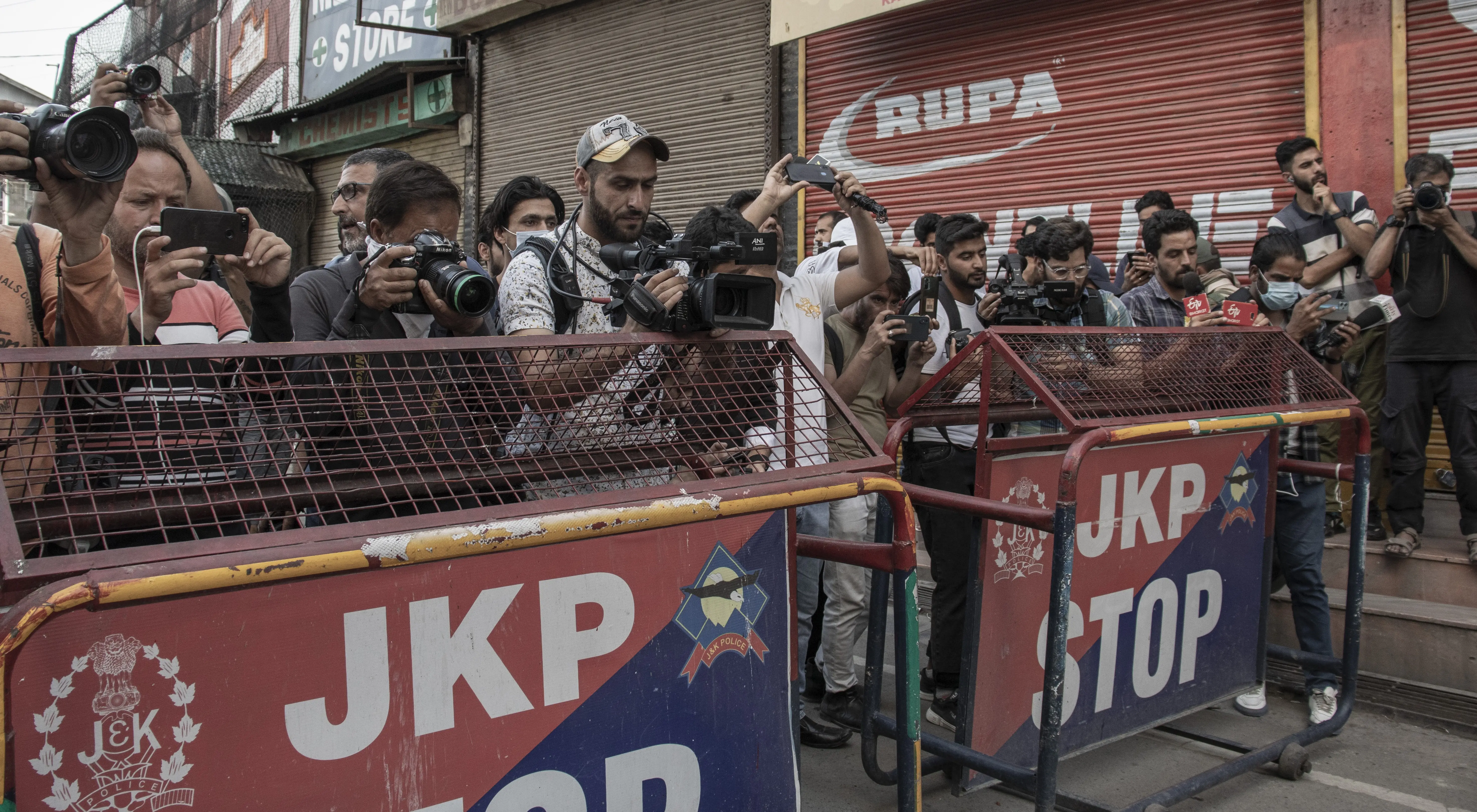
Journalists in the Union territory of Jammu & Kashmir report from behind a barricade in 2022. Photo: Zainab
Earlier this month, India and Pakistan engaged in a military conflict over a course of four days, until a ceasefire was brokered on May 10. Alongside, the two nuclear-armed countries were embroiled in a hailstorm of misinformation, disinformation and propaganda, fuelled by state-backed mainstream media and unverified social media content.
Mainstream TV channels showcased bombings, drones and “invasions” using unverified footage, speculating hour upon hour, and goading their respective militaries to annihilate the other. Internet and network blackouts disrupted communication and the people, desperate for news, had no option but to sift through the barrage of information and videos to judge the truth for themselves.
In the middle of this, journalists on both sides of the border fought a parallel war where they struggled to access impacted areas and report from the ground.
“Independent journalists are the first to reach [impacted] areas, and often the only ones who continue coverage when legacy media goes silent, without any TRP-led bias,” says Suhail Bhat, a Delhi-based journalist from the Union territory of Jammu & Kashmir. TRP refers to Television Rating Point, a metric used by channels to measure the popularity of a segment to determine revenues. “But still, I was stopped by forces many times simply because I’m not affiliated with any particular media house,” Bhat adds.
National and international media outlets are able to provide press cards and appropriate gear to their journalists, while freelancers operate without them. But reporting under editorial mandates of legacy media often means that some crucial stories and aspects can slip through the cracks — a gap that needs local and independent journalism.
“[Non-local journalists] will report that this many people are dead, this many injured, but it’s as if bhed bakriyan mar rahi hai [sheep and goats are dying]. The people have names, families, homes and towns they’re leaving behind. But they’re confined to numbers, or not treated as humans but subjects for stories,” said Gafira Qadir, an independent journalist from the Union territory of Jammu & Kashmir.
The media industry also prioritises viewership and ‘story breaks’, which often means that reporters are sent to the ground at the last moment to capture the first impressions – irrespective of the context. At that, legacy media houses ensure appropriate gear, security checks and access for their journalists. These assets are not provided to freelancers by the newsrooms hiring them on contract for specific assignments.
“TV news channels based in New Delhi always have the upper hand when it comes to access as compared to local reporters. We see it in front of our eyes—a TV reporter can cross a line that other reporters cannot,” said L*, another journalist from the Union territory of Jammu & Kashmir.
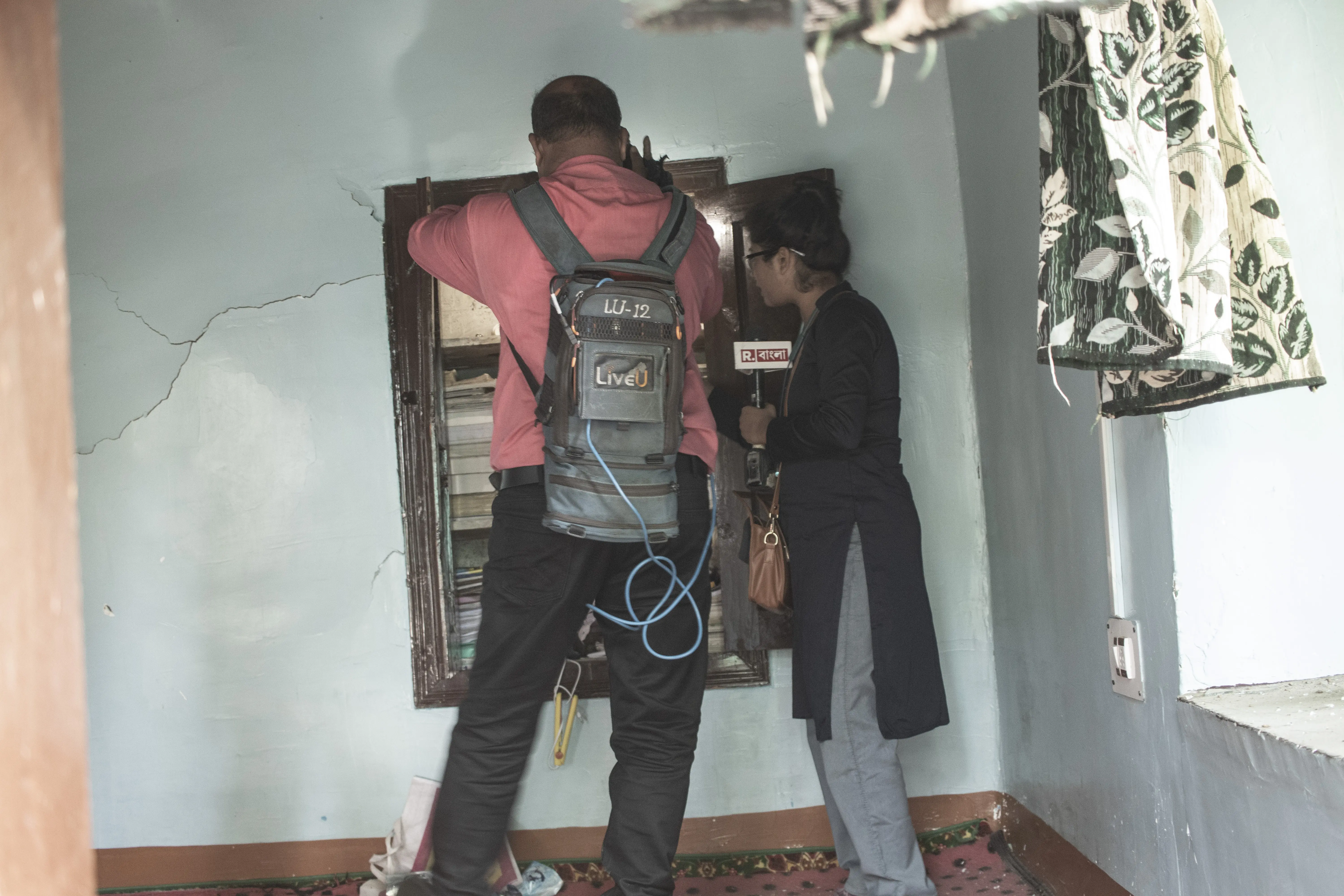
Crew from a prominent Indian TV news channel at a local residence in South Kashmir’s Tral in April 2025. Photo: Zainab
This inequality of access leaves opportunities for sensationalism by certain sections of the media in order to influence public sentiment.
“We’re in these times when the health of the industry isn’t looking good, and people’s faith in the media is at its lowest. At the same time, great journalism is still happening and a lot of it’s coming from independent journalists,” said Karan Deep Singh, an independent journalist and a former Staff Reporter and Visual Journalist with The New York Times and The Wall Street Journal.
Reporting from the frontlines is a different ballgame, and media watchdogs like the Committee to Protect Journalists (CPJ) highly recommend the use of Personal Protective Equipment (PPE) like vests and helmets while covering war zones.
While that is often not an option for independent journalists, proper safety measures aren’t a priority even in established newsrooms, says Kunal Majumdar, CPJ’s India representative.
“There are no mechanisms, no due diligence, not even a basic safety checklist. Does the journalist have a backup plan? An exit strategy? No one takes safety seriously, and the excuse is always cost. Newsroom managers need to understand that journalist safety isn’t just about expensive equipment—it’s about having a clear safety strategy in place,” adds Majumder, formerly a Delhi-based editor with media houses like Tehelka and The Indian Express.
In Kashmir, access is particularly challenging, and journalists are already at risk due to government clampdowns on both sides. During a full-blown conflict, these challenges were exacerbated.
Singh, the Delhi-based journalist, believes that the industry pressure to be the first to publish, combined with how hard it is to make a living off journalism, means that safety and training often take a backseat.
“Most journalists can’t think about it because they’re really trying to get the story, and their entire situation has been so perilous. The industry puts a lot of pressure, and only if they get the story do they get the paycheck. So safety, even for some newsrooms, is an afterthought,” said Singh.
Bhat says that the contracts he signs for a story as an independent journalist for international organisations might be 50-pages long, with clauses on deadlines, compliances and legal liabilities. But safety is not addressed.
“Rarely, if ever, do they mention what happens if the journalist gets injured, arrested or harassed. There is no word on insurance, safety briefings, ethical trainings, or even equipment support,” said Bhat.
On the other side of the border, Islamabad-based journalist Haroon Janjua said that even as drones hovered overhead, the organisations he works with did not provide any protective gear, nor has he received any HEFAT [Hostile Environment and Emergency First Aid Training] yet. This experience was mirrored by all journalists Asian Dispatch spoke to, in both India and Pakistan.
“This lack of gear significantly impacted my ability to work, preventing me from going on the ground to gather accurate and fair information about casualties and the emotions of those affected by the war,” said Janjua.
Others said that the lack of gear doesn’t affect the coverage, because the story must still be told.
“Journalists risk their lives to get the story out. The public sees the news, but they don’t see the emotional, mental, and physical toll it takes on the person behind the camera or mic. That’s the real cost,” said Pakistan-based journalist D*, who requested anonymity to protect their identity over fears of industry backlash.
The Journalist versus ‘Creators’
On May 10, Badar Alam rushed from Islamabad to Lahore to his daughter, who was nervous about the conflict. Upon reaching, he found that the major source of his daughter’s anxiety were Instagram accounts that were posting updates on areas that had been attacked. One of the recent updates that had shaken her was a post about blasts less than 2 kilometers away from her Lahore home. This was not true.
Alam, a seasoned Pakistani journalist, was aghast, and told his daughter that if there really were blasts that close to their home, she would have heard something. “Wouldn’t people around them feel the impact?” he asked her.
Pakistan-based journalist D* said this conflict saw many emotionally-charged local people filming and sharing content using smartphones, without verifying facts.
This negative impact of social media content creators is twofold: It can spread falsehoods, and it undermines journalists trying to find out the truth.
“Local ‘citizen journalists’ were quick to report from their areas whenever a missile or drone hit. They filmed what they could and gave live commentary – often without using the right words, checking facts or understanding journalistic ethics. The rush for instant content and social media engagement is replacing responsible reporting,” said D*.
Journalists and independent newsrooms in both countries are being increasingly targeted and silenced through raids, censorship, intimidation via legal actions, corporate takeovers, court summons, and outright arrests and detention.
This problem is amplified in the Union territory of Jammu & Kashmir, where the Kashmir Press Club – an independent media body – was shut down, making it difficult for freelance journalists to get accreditation, which is an official acknowledgement of a journalist’s credentials.
“Since 2019, we have had ‘Facebook journalists’ who found an opportunity [in the lack of accreditation], resulting in some of them operating very unethically while calling themselves journalists. They don’t ask people before filming and upload their videos online. And then [when we approach people for actual journalistic work], people won’t talk to us because they have been mistreated by these social media creators,” said Qadir. “They put [their content] on Instagram, and make Reels. They’re not reporting, they’re selling.”
Divided by Borders, United in Suppression
Since their partition in 1947, India and Pakistan have come to blows three times over disputed territories, particularly in Kashmir. Currently, different parts of Kashmir are administered by India, Pakistan, and China.
But it’s not just disputed borders that separate the two countries. India and Pakistan’s separation was influenced by an enduring belief that one should be a nation for Hindus, the other for Muslims, and that these two identities are incompatible.
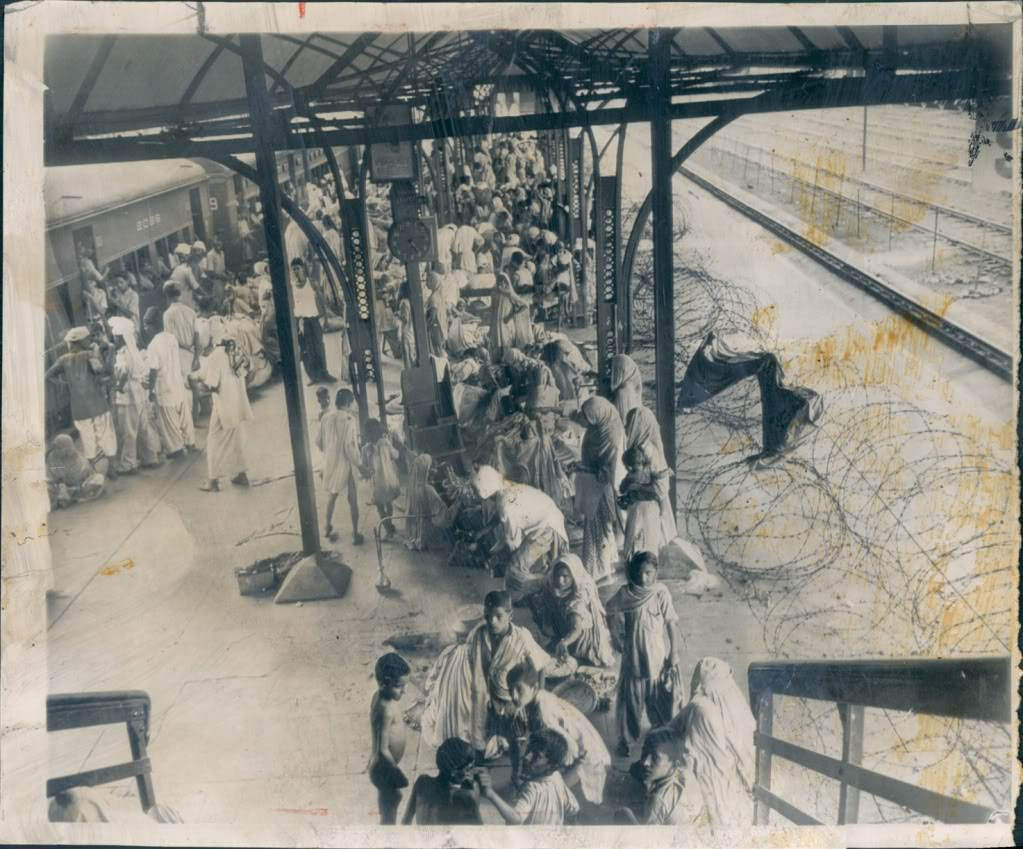
1) An archival image from the Chicago Sun-Times of the Lahore train station in September, 1947, where coils of barbed wire separate the waiting areas. Source: Fran Pritchett’s Archive
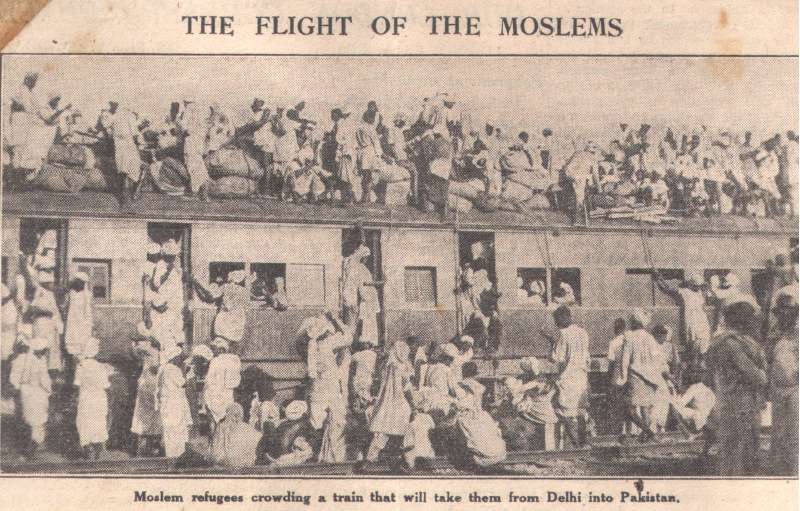
2) An archival image of a Delhi train station during Partition, published in The Manchester Guardian in September, 1947. Source: Fran Pritchett’s Archive
Attacks and persecution of minority populations in both India and Pakistan have been increasing. In Hindu-majority India, over 200 million Muslims face rising discrimination, hate and violence, while in Muslim-majority Pakistan, Hindus are among the top minorities who face religious persecution and violence such as forced conversions.
And with restrictions on cross-border communications, travel and trade, successive governments and militaries have controlled public perceptions.
“We’re working in an atmosphere that’s politically charged on both sides, and both sides seek to gain politically from the conflict. So as journalists, our job is very crucial because we are media-literate, and we can see through propaganda versus hard-core evidence-backed information,” said Singh.
Often, it’s the local journalists who are able to get that evidence.
“Independent journalists can move anywhere, without any kind of set direction in our heads, or from our bureau chiefs. So in that way, we are free to document what’s happening on-ground,” said Adil Abass, a 30-year-old independent journalist from the Union territory of Jammu & Kashmir.
Alam, co-founder of Islamabad-based magazine Earthwise, says that the media response on both sides during this conflict was worse than any he had ever seen, not during the Kargil war, during terrorist incidents, slug fests or shouting matches.
“During this conflict, journalists simply lost their ethics in a way that they never have on both sides of the border. This was something different. The state was following what the media was doing, and the media was egging the state to annihilate the other side. And journalism really died in that battle,” he said.
But he believes that like all challenges, it presents an opportunity, even a collaboration between like-minded sane voices from both sides.
“Journalists who do not monger war, who are sick and tired of the lies and fabrication in the news, social media and by the state, must step forward with the courage to hold hands across the border and work together,” said Alam. “It’s a huge challenge for Pakistani and Indian journalists, but that’s what the spirit of journalism is—to be able to take the first step in that direction.”
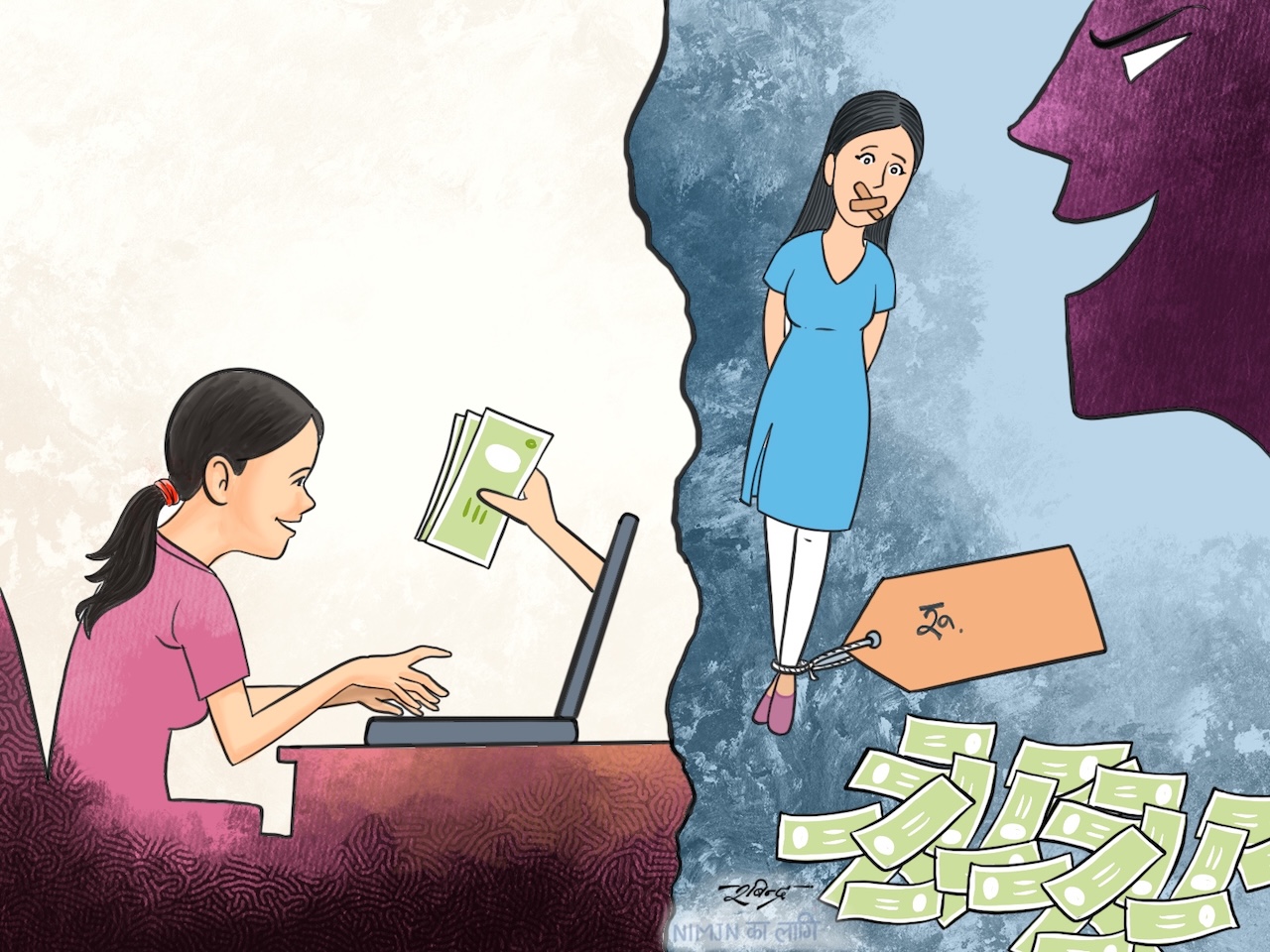
While visiting Gaighat Bazaar in Udayapur district of eastern Nepal, Elisa (name changed) went to a restaurant for a snack. The restaurant owner, whom she knew from her village, greeted her warmly. Anil Sewa, the owner of Brothers Restaurant, asked for her mobile number and Facebook ID.
“I gave him my number and Facebook ID and went home,” says Elisa. “A few days later, he messaged me and said, ‘When you come to the market, come to my restaurant for a snack. I have a secret to tell you’.”
Elisa cannot remember the exact date but recalls it was around June/July when she visited Brothers Restaurant for work. She says, “When I met him and asked, ‘What’s the secret, Dada (elder brother)?’ he replied, ‘Sometimes interesting customers come to my restaurant. If you have fun with them, you can enjoy good food and earn money too’.”
She also asked the hotel owner what kind of work it was. The owner said it wasn’t difficult work. It was about ‘eating, drinking, and having fun. “It sounded easy, and I needed money. So, I was tempted and agreed to it.”
The next day around 11 am, Sewa called Elisa and asked her to come. “When I went there, he made me sit in a room with an unknown man, probably around 50 years old,” Elisa says. “The man ordered beer, cigarettes and snacks, and offered me some too.”
Having seen her parents fight daily due to alcoholism, Elisa had become addicted to drugs at the age of eight due to peer pressure. Therefore, she didn’t refuse the beer and cigarettes. She says that while they were eating, the man made a sexual advance, which she rejected. But the man didn’t stop. “I told him I had never done such a thing before, but he didn’t listen and started forcing himself on me, saying that he had paid the hotel owner for this,” she said tearfully. “I was scared. The man was much older than me and I resisted but in vain.”
Elisa fainted. She says that when she regained consciousness, she was naked, and the man was sleeping naked on the bed. She got dressed and went downstairs to meet the hotel owner and told him about the abuse. But the hotel owner gave her 1,000 rupees, saying it was her ‘earning’ for the day.
Elisa was furious. “I was so angry. How could someone I knew do this to me?” she says. “I was also scared that someone else might find out what happened with me.”
Hotel owner Sewa had used Facebook Messenger to lure Elisa, trafficked her, forced her into prostitution, and she had been raped. But out of fear, she did not report the crime.
The hotel owner had lured Elisa with promises, knowing full well about her weak family and financial situation. “He told me, ‘You won’t find such work anywhere else. Look, you earned a thousand rupees in less than two hours. If a better customer comes, you’ll earn even more. Then, you can buy whatever you want with that money’, he tempted me,” she recalls. “I didn’t say anything. He said, ‘I’ll call you when a good customer comes’, and I went home without saying anything.”
Some hotels and restaurants in urban areas are found to have forced minors like Elisa into sex work under the guise of entertaining customers. According to the police, most of these girls are between ages 13-19. In her statement to the police, Elisa revealed that the hotel owner, Sewa, had also made other women engage with customers. However, in the court statement, Sewa said that he had never had any physical relationship with her and had never made such a proposal.
Elisa was told by the hotel owner in Gaighat that the more people she had physical relations with, the more money she would get. She was paid accordingly. “I used to get 1,000 rupees for having physical relations with one person and 3,000 rupees if I had such relations with two persons,” says Elisa. “Since I could earn more by doing it with more people, I would sleep with two or three people a day.”
She admits that due to her financial need, she was willing to have physical relations with anyone. She says that she would get extra money if she could make the customer happy.
In his statement to the police, restaurant owner Sewa admitted that he would call Elisa when customers wanted to have fun and engage in physical contact. He said that he would take 2,000 rupees from the customer and keep half of it for himself, giving the other half to Elisa.
Cases like Elisa’s have been increasing. Maiti Nepal, an organization working against human trafficking, has rescued 6,434 girls and women in the last 10 years alone. According to Maiti Nepal’s statistics, the number of rescues of those trafficked has been increasing every year.
Last year alone, 101 people were rescued from abroad and 2,287 from within the country, totaling 2,388. Similarly, in 2022, 117 people were rescued from abroad and 2,180 from within the country, totaling 2,297.
| Year | Number of people rescued |
| 2023 | 2388 |
| 2022 | 2297 |
| 2021 | 142 |
| 2020 | 94 |
| 2019 | 322 |
| 2018 | 250 |
| 2017 | 273 |
| 2016 | 239 |
| 2015 | 144 |
| 2014 | 183 |
| 2013 | 142 |
SP Gautam Mishra, the then Information Officer of Nepal Police’s Human Trafficking Investigation Bureau, says that girls from poor families and broken homes are often lured into prostitution with promises of work. Mishra said that the operators themselves trap these girls in massage centers, spas, parlors and restaurants, promising them good jobs.
He said that social media has made it easier for girls to be trafficked. Mishra says that girls are lured and sexually exploited through TikTok, Facebook and Viber, and through online advertisements promising employment.
According to him, children and adolescents are forced into the sex trade through fear and intimidation, and are used to perform obscene acts on video for customers through various apps like strip chat, free live sex cam, and adult chat.
Mishra said that groups are created on Facebook, WhatsApp, and other platforms, and girls are sent to the places specified by the customers who pay.
Lured with the promise of work and raped
Apsara (name changed), a 17-year-old girl from near Butwal, received a mobile number from an unknown person on TikTok. The person who sent the number from a TikTok account named Kelvin James was Resham Gurung from Gorkha, who lived in Tokha, Kathmandu.
After asking why he sent the number, Resham replied, “If you need a job, contact me.” Apsara still remembers saying, “I will not work right now.” Resham assured her that the massage parlor job paid 10,000 rupees per month with a promise of a future raise.
Resham also asked for Apsara’s Facebook ID, and they started chatting daily. One day, Resham said, “If you don’t want a parlor job, it’s okay. I need someone to work at my house. You’re like my sister, and I’ll take good care of you. Don’t be afraid to come to Kathmandu.”
When she said she didn’t have the money to come to Kathmandu, Resham sent her 8,000 rupees as travel expenses. On her first day in Kathmandu, she was raped.
“On the very day I got off the bus, he took me home. While changing my clothes after eating, he knocked on the door,” she says. “When I opened the door, he forced himself on me, saying he would sleep with me. When I resisted, he made a video and threatened to post it online.”
Frightened by threat, Apsara was forced to comply with Resham. In her statement to the police, she said that after the rape, Resham brought a contraceptive from a nearby medical store and forced her to take it, scolding her when she refused.
Resham’s flat was home to his paralyzed mother and postpartum wife. Apsara stayed there for a month, taking care of them, and during this time, she was raped three times, as she revealed in her police statement.
After a month, Resham put her to work at his own Sunflower Wellness Spa in Gongabu. “Although it was called a massage parlor, I had to have sexual relations with the customers and engage in sexual activities to please them,” she says. She faced harassment and abuse at the spa.
According to the police, Resham initially confessed to the charges after his arrest. However, the charge sheet states that he later retracted his statement. Quoting him, the charge sheet states, “When the police interrogated me for the first time after my arrest, I said those things. I don’t remember now.”
Using the victim to find other girls
Resham used Apsara to bring other girls to Kathmandu. After working for a few months, Resham threatened her, saying, “Call another friend from your village, or I’ll make your video go viral.” Out of fear, she called her friend Ayusha (name changed) to Kathmandu.
“Out of fear, I called my 17-year-old classmate Ayusha, telling her there was a good job in Kathmandu,” said Apsara. Ayusha, who didn’t receive much love and affection from her father after her mother left and her father remarried, came to Kathmandu and faced the same fate as Apsara.
Resham knew Makhmali Maya Syangtan, the owner of A-One Spa in Thamel. While visiting Resham’s spa, she met Apsara and Ayusha. Afterward, they left Resham’s spa and started working at A-One.
Apsara said that Makhmali, like Resham, would take 1,000 rupees for each sexual encounter with a customer, keeping 500 for herself and giving 500 to them.
Both Apsara and Ayusha, while working at A-One, were rescued by a team deployed by the Human Trafficking Investigation Bureau on the evening of May 19, 2024. The police filed a case against Resham in the Kathmandu District Court for human trafficking and rape. Both Apsara and Ayusha are currently in a safe house. According to Mishra, the bureau’s information officer, although both girls’ families have been informed, they have not come to take them back, and the girls have also refused to go home.
Just as Resham had used Apsara to bring Ayusha, Sewa and Satish Kumar Yadav had used Elisa to bring another girl from Gaighat. On September 8, 2023, Yadav, who had been staying with Elisa at Sewa’s hotel, took her to Lahan, Siraha, the next day. When Elisa said she would only go to Lahan if Sewa went, Yadav gave her money for the bus fare and they went to Lahan on a scooter.
Sewa told the police in his statement that Yadav had agreed to pay for the hotel expenses in Lahan and had said he would arrange for a fee of 5,000 rupees for one night.
On the night of September 9, 2023, Yadav and Elisa were in one room and Sewa in another room at a hotel in Lahan. On the afternoon of September 10, 2023, when Yadav saw Elisa chatting with a friend on Facebook Messenger, he pressured her to call her friend. According to Sewa’s statement to the police, Yadav had told Elisa’s friend, “Come to Lahan, I’ll give you as much money as you want.”
However, when she said she didn’t have the bus fare, Yadav went to Gaighat on a motorcycle. While returning to Lahan with her, the police at the Jaljale checkpoint stopped their motorcycle and questioned them. When the girl said that she did not know Yadav and that her friend had told her she could earn some money by staying at a hotel for a while, Yadav was arrested. After Yadav’s arrest, the police arrested Sewa on September 13, 2023, and filed a human trafficking case against him in the Udayapur District Court.
Elisa’s friend’s father has filed another human trafficking case against Elisa, Yadav and Sewa. These cases are pending in court.
Trafficking to India
Girls are also being trafficked to India through online contacts. There has been an increase in gangs luring girls with promises of employment on social media and then trafficking them. Binod Pokharel, the program coordinator of Maiti Nepal, Biratnagar, said that rural girls are particularly vulnerable to such traps.
“They lure simple village girls with promises of attractive salaries and take them away. It has been found that they are forced into prostitution in India,” said Pokharel. “These trafficking gangs have been found to use social media, Viber and WhatsApp the most.”
Gitanjali Sharma of Maiti Nepal shared that in July/August alone, they rescued and brought back a 13-year-old girl who had been trafficked to India after getting acquainted with a person through Facebook.
Human trafficking and smuggling is a global and multifaceted problem. Like the illegal trade in weapons and drugs, human trafficking and smuggling has become a thriving business operated by international criminal organizations worldwide. Social analyst Bigyan Luintel states that this crime has become widespread because it is less risky and more profitable compared to other crimes.
Social media has further facilitated this. “The pursuit of urban lifestyles, including commercial sex work, cheap labor, and easy living, has become a pull factor for trafficking,” says Luintel. “Children in local environments are influenced by poverty, illiteracy, unemployment, lack of income-generating opportunities, and social insecurity.”
Mishra said that in the fiscal year 2022/23, the bureau raided hotels, restaurants, and massage parlors 18 times and rescued 61 girls who were forced into risky work. Of these, only 14 were taken by their families, and the rest are still in safe houses.
Mishra said that the bureau has been posting various messages on social media about how to protect oneself from human trafficking through social media. He suggests not chatting with strangers on social media, not being lured by anyone’s promises, not sharing personal information on social media, not trusting anyone easily, and consulting with family members if someone makes any proposal.
उदयपुरको गाईघाट बजार घुम्न गएको बेला खाजा खान छिरेकी एलिसा (परिवर्तित नाम) लाई होटलका सञ्चालकले पहिला नै चिनजान रहेको भन्दै सन्चोबिसन्चो सोध्छन् ।
गाउँकै सामान्य चिनजान रहेका ब्रोदर्स रेस्टुरेन्टका मालिक अनिल सेवाले उनीसँग मोबाइल नम्बर र फेसबुक आईडी माग्छन् । “उहाँलाई मेरो नम्बर र फेसबुक आईडी दिएर घर फर्किएँ,” एलिसा भन्छिन्, “केही दिनपछि उहाँले मलाई मेसेन्जरमा फोन गर्नुभयो र ‘बजार आएको बेला मेरो रेस्टुरेन्टतिर खाजा खान आउनु तिमीसँग एउटा गोप्य कुरा गर्नुछ’ भन्नुभयो ।”
एलिसाका अनुसार उनले मिति त सम्झिएकी छैनन् । तर असारतिर हुनुपर्छ उनी कामविशेषले गाईघाट गएको बेलामा ब्रदर्स रेस्टुरेन्टमा छिरिन् । उनी भन्छिन्, “उहाँलाई भेटेर ‘के गोप्य कुरा छ दादा ?’ भनेर सोध्दा उहाँले ‘मेरो रेस्टुरेन्टतिर कहिलेकाहीँ रमाइलो गर्ने ग्राहक आउँछन्, तिनीहरूसँग रमाइलो गरी बस्यौ भने मिठोमिठो खान पाउनुको साथै पैसा नि कमाइ हुन्छ’ भन्नुभयो ।”
उनले होटल सञ्चालकलाई कामचाहिँ के गुर्नपर्छ नि भनेर पनि सोधेकी थिइन् । सञ्चालकले गाह्रो काम होइन ‘खाने, पिउने रमाइलो गर्ने’ भने । “सुन्दा काम सजिलै लाग्यो, मलाई पैसाको नि जरुरत थियो र खान नि पाइन्छ भनेपछि म प्रलोभनमा परेँ र हुन्छ भनी सहमति जनाएर घर फर्केँ ।”
त्यसको भोलिपल्ट ११ बजेतिर होटल सञ्चालक सेवाले फोन गरेर बोलाएपछि एलिसा गइन् । “त्यहाँ जाँदा मैले नचिनेका अन्दाजी ५० वर्षका मानिससँग कोठामा बस्न लगाउनुभयो,” एलिसा भन्छिन्, “त्यस व्यक्तिले बियर, चुरोट र नास्ता मगाएर मलाई नि खान दिए र आफूले पनि खाए ।”
आमाबुबाले दैनिक रक्सी खाएर झगडा गर्ने गरेको देखेकी उनी ८ कक्षा पढ्दा नै साथीको संगतमा लागूऔषधको दुर्व्यसनमा फसेकी थिइन् । त्यसैले वियर र चुरोटमा नाइँनास्ती नगरेको बताउने उनका अनुसार खानपिन चलिरहेकै बेला तीे व्यक्तिले शारीरिक सम्पर्क गर्ने प्रस्ताव राखे, उनले अस्वीकार गरिन् । तर ती मान्छे रोकिएनन् ।
“मैले अहिलेसम्म यस्तो कार्य गरेको छैन भन्दाभन्दै नमान्दा पनि त्यस व्यक्तिले ‘मैले यसको लागि होटल मालिकलाई पैसा दिएको छु’ भन्दै जबरजस्ती गर्न थाल्यो,” उनले सुस्केरा हाल्दै भनिन्, “मलाई डर लागिरहेको थियो, त्यो मान्छे मभन्दा उमेरमा धेरै ठूलो थियो, मैले प्रतिकार गरिहेको थिएँ, तर मेरो प्रतिकार व्यर्थ रह्यो ।”
एलिसा बेहोस भएकी थिइन् । उनका अनुसार होसमा आउँदा उनको शरीरमा कुनै लुगा थिएन, ती व्यक्ति नग्न अवस्थामै बेडमा सुतिरहेका थिए । उनी लुगा लगाएर होटल मालिकलाई भेट्न तल झरिन् र आफूमाथि भएको अत्याचारको बारेमा बताइन् । तर होटल मालिकले ‘तिम्रो आजको कमाइ’ भनेर हातमा १ हजार रुपैयाँ थमाए ।
एलिसा रिसाइन् । “मलाई रिस उठिरहेको थियो, चिनेजानेको मानिसले मलाई यस्तो काम गर्न कसरी लगाउन सक्छ भनेर,” उनी भन्छिन्, “डर पनि लागेको थियो, कतै अरुले थाहा पाउछ कि भनेर ।”
होटल मालिक सेवाले फेसबुक म्यासेन्जरबाट बोलाएर एलिसाको बेचबिखन गरेका थिए, वेश्यावृत्ति गराएका थिए, त्यहाँ एलिसामाथि बलात्कार भएको थियो । तर डरले उनले आफूमाथि भएको अपराधका बारेमा कतै उजुरी गरिनन् ।
एलिसाको पारिवारिक अवस्था र आर्थिक अवस्था कमजोर रहेको बुझेरै होटल मालिकले लोभलालच देखाएका थिए । “उहाँले मलाई ‘तिमीले यस्तो काम अरु कहीँ पाउँदिनौ, हेर दुई घण्टा नबित्दै एक हजार कमायौ, अझै राम्रो ग्राहक आयो भने योभन्दा धेरै कमाउँछौ, त्यसछि त्यो पैसाले तिमीले मन लागेको कुरा लाउन खान खान पाउँछौ’ भन्दै मलाई प्रलोभन देखाउनुभयो,” उनी सम्झन्छिन्, “म केही नबोली बसेँ, उहाँले ‘म राम्रो ग्राहक आयो भने फोन गर्छु आउनू’ भनेपछि म केही नबोली घर फर्किएको थिएँ ।”
सहर बजारका केही होटल रेस्टुरेन्टमा ग्राहकलाई मनोरञ्जन दिने भन्दै एलिसाजस्ता नाबालिकाहरूलाई यौनकार्यमा लगाउने गरेको पाइन्छ । जसमा १३ वर्षदेखि १९ वर्षसम्मका किशोरी धेरै हुने गरेका प्रहरीको भनाइ छ । एलिसाले प्रहरीमा दिएको बयानअनुसार होटल सञ्चालक सेवाले अरु महिलालाई समेत ग्राहकसँग बस्न लगाउने गरेका थिए । सेवा स्वयंले भने आफूसँग कहिल्यै शारीरिक सम्बन्ध नराखेको र राख्ने प्रस्ताव पनि नगरेको उनले अदालतमा दिएको बयानमा स्पष्ट पारेकी छन् ।
एलिसालाई गाईघाटका होटल सञ्चालकले जति धेरै जनासँग शारीरिक सम्बन्ध बनायो धेरै त्यति पैसा हुन्छ भनेका थिए, त्यसअनुसार उनलाई पैसा पनि दिएका थिए । “एक जनासँग शारीरिक सम्बन्ध बनाउँदा १ हजार र दुई जनासँग बनाउँदा ३ हजार दिनुहुन्थ्यो,” एलिसा भन्छिन्, “धेरै जनासँग गर्दा धेरै पैसा हुने भएकोले म दिनमा दुई–तीन जनासँग नि सुत्थेँ ।”
पैसाको आवश्यकता भएकाले जति जनासँग पनि शारीरिक सम्बन्ध राख्न आफू तयार भएको उनी बताउँछिन् । ग्राहकलाई खुसी बनाएमा अझै अतिरिक्त पैसा आउने गरेको उनी बताउँछिन् ।
| वर्ष | उद्धार गरिएकाको सङ्ख्या |
| 2023 | 2388 |
| 2022 | 2297 |
| 2021 | 142 |
| 2020 | 94 |
| 2019 | 322 |
| 2018 | 250 |
| 2017 | 273 |
| 2016 | 239 |
| 2015 | 144 |
| 2014 | 183 |
| 2013 | 142 |
रेस्टुरेन्ट सञ्चालक सेवाले प्रहरीसँगको बयानमा ग्राहकले रमाइलो गर्न तथा शारीरिक सम्पर्क राख्न केटी खोजीमा एलिसालाई बोलाउने गरेको स्विकारेका छन् । उनले ग्राहसँगबाट २ हजार रुपैयाँ लिने गरेको त्यो पैसा आधा आफूले राखेर १ हजार रुपैयाँ उनलाई दिने गरेको बताए ।
गाउँघरका आर्थिक अवस्था कमजोर भएका, पारिवारिक विखण्डन भएका किशोरीलाई काम लगाइदिन्छु भनेर प्रलोभन देखाई वेश्यावृत्तिमा लगाउने गरेको नेपाल प्रहरीको मानव बेचबिखन अनुसन्धान ब्युरोको सूचना अधिकारी एसपी गौतम मिश्र बताउँछन् । मसाज सेन्टर, स्पा, पार्लर, रेस्टुरेन्टमा काम लगाइदिने भनेर सञ्चालकहरूले नै उनीहरूलाई फसाउने गरेका पाइएको मिश्रले बताए ।
उनका अनुसार सामाजिक सञ्जालको कारणले किशोरीहरू बेचबिखनमा सजिलैसँग फस्ने गरेका छन् । टिकटक, फेसबुक, भाइबरका माध्यमबाट सम्पर्क गरेर तथा अनलाइन माध्यममा विज्ञापन दिएर रोजगारीको प्रलोभन देखाएर किशोरीहरूलाई बोलाउने र यौनशोषण गर्ने गरेको मिश्र बताउँछन् ।
उनका अनुसार बालबालिका तथा किशोरीहरूलाई डर, धाकधम्की दिई जबरजस्ती यौनधन्दामा लाउने, इन्टरनेटको माध्यमबाट विभिन्न एपहरूजस्तै बाट स्ट्रिप च्याट, फ्री लाइभ सेक्स क्याम, एडल्ट च्याटलगायतमा बसाएर ग्राहकले भनेअनुसार भिडियोमा अश्लील हर्कत गर्न लाउने काममा प्रयोग गरिएको पाइन्छ ।
फेसबुक, ह्वाट्सएपलगायतमा ग्रुप बनाई सम्पर्कमा आएका ग्राहकहरूले पेमेन्ट गरेपछि उनीहरूले भनेको स्थानमा किशोरीहरू पठाउनेसमेत पाइएको मिश्र बताउँछन् ।
काम लगाइदिन्छु भन्दै बोलाएर बलात्कार
बुटवल नजिकैकी १७ वर्षीया अप्सरा (परिवर्तित नाम) को टिकटकमा अपरिचित व्यक्तिले मोबाइल नम्बर पठाउँछन् । केल्भिन जेम्स नाम गरेको टिकटकबाट नम्बर पठाउने गोरखा घर भई काठमाडौंको टोखा बस्ने रेशम गुरुङ हुन्छन् ।
किन नम्बर पठाएको भनेर सोधेपछि रेशमले ‘तपाईंलाई काम चाहिएको छ भने सम्पर्क गर्नु’ भनेको र आफूले ‘अहिले म काम गर्दिनँ’ भनेको अप्सारलाई अहिले पनि सम्झना छ । रेशमले मसाज पार्लरको काम मासिक १० हजार रुपैयाँ तलब हुने र पछि तलब बढाइदिने आश्वासन पनि दिन्छन् ।
रेशमले अप्सराको फेसबुक आईडी पनि माग्छन् र उनीहरूबीच दैनिकजसो च्याट हुन्छ । यसै क्रममा एक दिन रेशमले ‘तिमीलाई पार्लरको काम आउँदैन भने केही छैन, मेरो घरमा काम गर्ने मान्छे चाहिएको छ, तिमी मेरो बहिनीजस्तै मान्छे हो, राम्रोसँग काममा राख्ने छु डराउनु पर्दैन काठमाडौं आऊ’ भन्छन् ।
उनले काठमाडौं आउने पैसा छैन भन्दा रेशमले बाटोखर्च भन्दै मनी ट्रान्सफरबाट ८ हजार रुपैयाँ पठाइदिएका थिए । त्यही खर्चले काठमाडौं पुगेको पहिलो दिन नै उनी बलात्कारमा परिन् ।
“बसबाट ओर्लिएकै दिन उहाँले घर लैजानुभयो, खाना खाएर कोठामा लुगा चेन्ज गर्दैगर्दा उहाँले ढोका ढकढक्याउनुभयो,” उनी भन्छिन्, “मैले ढोका खोलेपछि ‘म नि यही सुत्छु भन्दै जबरजस्ती गर्नुभयो, मैले प्रतिकार गर्दा भिडियो बनाउनुभयो, यो कुरा कोही कसैलाई भनेमा नेटमा हाल्दिन्छु भनी डर देखाउनुभयो ।”
अप्सरा त्यही डरले कतै उजुरी नगरी रेशमले भनेको मान्न बाध्य हुन्छिन् । बलात्कारपछि रेशमले नजिकैको मेडिकलबाट गर्भ रोक्ने औषधि ल्याएर खान दिएको र आफूले इन्कार गर्दा गाली गरेको उनले प्रहरीसँगको बयानमा बताएकी छन् ।
रेशमको फ्ल्याटमा प्यारालाइसिस भएकी आमा, सुत्केरी श्रीमती पनि हुन्छन् । उनीहरूकै स्याहार गरेर एक महिना बसेकी अप्सारले त्यसबीचमा ३ पटक करणी गरेको प्रहरीसँगको बयानमा बताएकी छन् ।
एक महिनापछि रेशमले गोंगबुमा रहेको आफ्नै सनफ्लावर वेलनेस स्पामा उनलाई काम लगाउँछन् । “मसाज पार्लर भने पनि त्यहाँ आउने ग्राहकसँग शारीरिक सम्बन्ध राख्नुपर्ने, उनीहरूलाई खुसी बनाउन यौनजन्य गतिविधि गर्नुपर्थ्यो ,” उनी भन्छिन् । मसाज पार्लरमा धेरै नै दुर्व्यवहारको सामना गरेको उनी सुनाउँछिन् ।
प्रहरीका अनुसार रेशमले पक्राउ परेलगत्तै आरोप स्वीकार गरेका थिए । तर पछि उनले आफ्नो बयान फेरेको अभियोगपत्रमा उल्लेख छ । उनलाई उद्धृत गर्दै अभियोग पत्रमा लेखिएको छ, “म पक्राउ परी आएपश्चात् पहिलो पटक मलाई प्रहरीले सोधपुछ गर्ने क्रममा मैले उल्लेखित कुराहरू बोल्न पुगेछु, हाल मलाई याद छैन ।”
पीडितलाई नै प्रयोग गरिन्छ किशोरी खोज्न
अप्सरालाई प्रयोग गरेर रेशमले अरु किशोरीलाई समेत काठमाडौं बोलाएका थिए । केही महिना काम गरेपछि रेशमले ‘गाउँबाट अर्को साथीलाई बोला, नत्र तेरो भिडियो भाइरल गराइदिन्छु’ भनेर डर देखाएपछि गाउँकै साथी आयुशा (परिवर्तिन नाम) लाई काठमाडौं बोलाएको उनी बताउँछिन् ।
“डरका कारण सँगै पढेकी १७ वर्षकी आयुशालाई राम्रो काम छ भन्दै काठमाडौं बोलाएँ,” अप्सराले भनिन् । आमा अर्केसँग हिँडेपछि बुबाले पनि अर्की आमा ल्याएका कारण राम्रो मायाममता पाउन नसकेकी आयुशाले काठमाडौं आएर अप्सराकै नियति भोग्छिन् ।
ठमेलको ए वान स्पाकी सञ्चालिका मखमली माया स्याङ्तानसँग रेशमको चिनजान हुन्छ । उनी रेशमको पार्लरमा आउजाउ गर्ने क्रममा अप्सरा र आयुशाको चिनजान हुन्छ । त्यसपछि उनीहरू रेशमको स्पा छाडेर ए वानमा काम गर्न पुग्छन् ।
मखमलीले पनि रेशमको जस्तै ग्राहकसँग यौनसम्बन्ध बनाएबापत् १ हजार लिने र ५ सय आफूले राखेर ५ सय आफूहरूलाई दिने गरेको अप्सराले बताएकी छन् ।
ए वानमै कार्यरत रहेको बेला अप्सरा र आयुशा दुवै जनालाई जेठ ६, २०८१ को साँझ मानब बेचबिखन अनुसन्धान ब्युरोबाट खटिएको टोलीले उद्धार गरेको थियो । प्रहरीले रेशमविरुद्ध मानव बेचबिखन र जबरजस्ती करणीको कसुरमा काठमाडौं जिल्ला अदालतमा मुद्दा दर्ता गरेको छ । अप्सरा र आयुशा दुवै सेफ हाउसमा छन् ।
ब्युरोका सूचना अधिकारी मिश्रका अनुसार दुवै किशोरीका परिवारलाई खबर गरे पनि हालसम्म लिन नआएको र उनीहरूले पनि घर जान मानेका छैनन् ।
जसरी अप्सरालाई प्रयोग गरेर रेशमले आयुशालाई बोलाएका थिए, त्यस्तै गरेर गाईघाटकी एलिसाकै माध्यमबाट सेवा र सतीशकुमार यादवले अर्की किशोरीलाई समेत बोलाएका थिए । भदौ २२, २०८० मा एलिसासँग सेवाको होटलमा बसेका यादवले भोलिपल्ट उनलाई सिरहाको लहान लगेका थिए । एलिसाले सेवा गए मात्रै लहान जाने भनेपछि एलिसालाई गाडीबाट आऊ भन्दै भाडा दिएर उनीहरू स्कुटरमा लहान पुगेका थिए ।
लहान गएको होटल खर्चबाहेक एक रातको ५ हजार रुपैयाँ लाग्छ भन्दा यादवले मिलाएर दिन्छु भनेको सेवाले प्रहरीसँगको बयानमा बताएका छन् ।
भदौ २३ गते राति लहानको एक होटलमा यादव र एलिसा एउटा कोठामा र सेवा अलग्गै कोठामा सुतेका थिए । भदौ २४ गते दिउँसो लहानको होटलमा बसिरहेको बेला एलिसाले साथीसँग फेसबुक म्यासेन्जरमा कुराकानी गरेको देखेपछि यादवले ती साथीलाई पनि बोलाउन दबाब दिए । सेवाले प्रहरीमा दिएको बयानअनुसार यादवले एलिसाका साथीलाई ‘लहान आऊ मागेजति पैसा दिन्छु’ भनेका थिए ।
तर उनले गाडीभाडा छैन भनेपछि यादव मोटरसाइकल लिएर गाईघाटसम्म गएका थिए । उनलाई लिएर लहान फर्कंदै गर्दा जलजलेको चेकप्वाइन्टमा प्रहरीले मोटरसाइकल रोकेर सोधपुछ गर्दा ती किशोरीले ‘हामीबीच चिनजान नभएको, साथीले होटलमा केही समय बसेपछि पैसा कमाइ हुन्छ भनेकाले लहानतिर जान लागेको’ भनेपछि आफू पक्राउ परेको यादवले बताएका छन् । यादव पक्राउ परेपछि प्रहरीले सेवालाई भदौ २७, २०८० मा पक्राउ गरेर जिल्ला अदालत उदयपुरमा मानव बेचबिखनको मुद्दा दर्ता गरेको छ ।
एलिसाकी साथीका बुबाले एलिसासहित, यादव र सेवालाई आरोपी बनाएर मानव बेचबिखनको अर्को मुद्दा दर्ता गरेका छन् । यी मुद्दा अदातलमा विचाराधीन छन् ।
भारतमा समेत बेचिन्छन्
अनलाइनमार्फत सम्पर्क गरेर किशोरीहरूलाई भारतमा समेत लैजान गरिएको छ । रोजगारी लगाइदिने भनेर सामाजिक सञ्जालमा पोस्ट गर्ने र झुक्याई उनीहरूलाई बेचबिखन गर्ने गिरोह बढ्दै गएको पाइन्छ । यसमा विशेषतः ग्रामीण क्षेत्रका बालबालिकाहरू त्यसको जालमा पर्ने गरेको पाइएको माइती नेपाल विराटनगरका कार्यक्रम संयोजक विनोद पोखरेलले जानकारी दिए ।
“गाउँका सिधासाधा किशोरीहरूलाई आकर्षक तलब हुने भनेर यहाँबाट फकाएर लैजान्छन् । भारततिर पुर्याएपछि वेश्यावृत्तिमा लगाउने गरेको पाइएको छ,” पोखरेलले भने, “बेचबिखन गर्न लैजाने गिरोहले सबैभन्दा बढी सामाजिक सञ्जाल, भाइबर र वाट्स एप प्रयोग गरेको पाइएको छ ।”
माइती नेपालकै गिताञ्जली शर्माले गत साउनमा मात्र फेसबुकको माध्यमबाट चिनजान भएर भारत पुगेकी १३ वर्षकी बालिकालाई उद्धार गरेर फिर्ता ल्याएको जानकारी दिइन् ।
मानव बेचबिखन तथा ओसारपसार एक विश्वव्यापी र बहुआयामिक समस्या हो । हातहतियार र लागूऔषधको अवैध कारोबारजस्तै मानव बेचबिखन तथा ओसारपसार अन्तर्राष्ट्रिय आपराधिक संगठित गिरोहद्वारा सञ्चालित धन्दाका रूपमा विश्वमा फस्टाउँदै गएको छ । अन्यको तुलनामा बेचबिखन र ओसारपसारमा कम जोखिम तर धेरै नाफा आर्जन हुने हुँदा यो अपराधले व्यापकता पाउँदै गएको सामाजिक विश्लेषक विज्ञान लुइँटेल बताउँछन् ।
अहिले सामाजिक सञ्जालले यसलाई थप सहजता दिएको पाइन्छ । “सहर बजारमा व्यावसायिक यौनधन्दा, सस्तो श्रम, सहरी मस्ती, आरामको जीवनशैली नक्कल गर्ने प्रवृत्ति बेचबिखनका लागि तान्ने शक्ति बनेका छन्,” लुइँटेल भन्छन्, “स्थानीय परिवेशमा गरिबी, अशिक्षा, बेरोजगारी, आयआर्जनको अवसरमा कमी, सामाजिक असुरक्षाको प्रभावमा बालबालिका परिरहेका छन् ।”
मिश्रका अनुसार गत आर्थिक वर्ष २०८०/८१ मा ब्युरोले १८ पटक होटल, खाजाघर, मसाज पार्लरलगायतमा छापा मारेर जोखिमपूर्ण काम गर्न बाध्य ६१ जना किशोरीलाई उद्धार गरेको छ । जसमध्येका १४ जनालाई मात्रै परिवारले बुझेर लगेका छन् । अरु सबै सेफ हाउसमै छन् ।
सामाजिक सञ्जालको माध्यमबाट हुने मानव बेचबिखन पर्नबाट जोगिन के गर्ने भन्ने बारेमा ब्युरोले सामाजिक सञ्जालमै विभिन्न पोस्टसमेत गर्ने गरेको मिश्र बताउँछन् । नचिनेका व्यक्तिहरूसँग सामाजिक सञ्जालमा कुराकानी नगर्ने, कसैले कुनै लोभलालच देखाउँदैमा नलोभिने, आफ्नो व्यक्तिगत तथा निजी कुराहरू सामाजिक सञ्जालमा नराख्ने, कसैलाई पनि हत्तपत्त विश्वास नगर्ने र कसैले कुनै प्रस्ताव गरेको छ भने घरपरिवारमा सरसल्लाह गर्नुपर्ने उनको सुझाव छ ।
(यो खोज समाचार निमजिनको फेलोसिप कार्यक्रम अन्तर्गत अस्ट्रेलियन एडको सहयोगमा उत्पादन गरिएको हो । यो सामग्रीको पूर्ण जिम्मेवारी प्रकाशक र लेखकसँग मात्र रहने छ ।)
Note: This interactive novel is best played on full screen mode on a desktop/laptop. Please click the button on the bottom right to activate full screen. On mobile, you may have to scroll to read the text in its entirety.
A memory from 2022 sent a chill down Mohammad Abdus Salam’s spine sharper than a bone-biting Dhaka night.
In early 2022, the 27-year-old engineering graduate was in his hometown Dhaka, the capital city of Bangladesh, when a school friend whose father ran a local recruiting agency offered him a job he couldn’t refuse. It was for data entry that would fetch him a monthly income of nearly $800, an amount that dwarfed his paltry earnings at a garment factory. Bangladesh’s garment industry, which caters to the international fast-fashion brands, is known for its abysmal minimum wage. In the factory, Salam’s monthly income was just $300. But this job offer, although promising, had one caveat: Moving to Cambodia immediately.
Cambodia, the school friend told Salam, is a new destination for migrants. “He said I have the best education in engineering. I’m able to speak English,” Salam told Asian Dispatch. “I was the perfect person for this job, I was told.”
Salam had never traveled outside his country but as the sole breadwinner of the family, he said yes. With no Cambodian diplomatic mission in Bangladesh, the recruiters took a fee of $3,000 – which Salam paid by mortgaging his family farmland and taking a loan – to book a one-way flight ticket and a tourist visa. He was told he will be able to recover that money once he starts working and his visa will be converted for his employment. But once he was there, he had a shocking revelation.
His “workplace”, which was a casino called Long Beach, was located in Cambodia’s special economic zone called Dara Sakor, 250 kms from the country’s capital Phnom Penh. There, his passport was taken and he was handed a computer, 10 iPhones, and 5 SIM cards. His job, he was told, was to impersonate a young Chinese model through dozens of social media accounts to ensnare male victims and scam them into investing in fraudulent crypto schemes. When he tried to call the Bangladeshi broker who “recruited” him, he was ghosted. He knew then: “I had been sold off.”
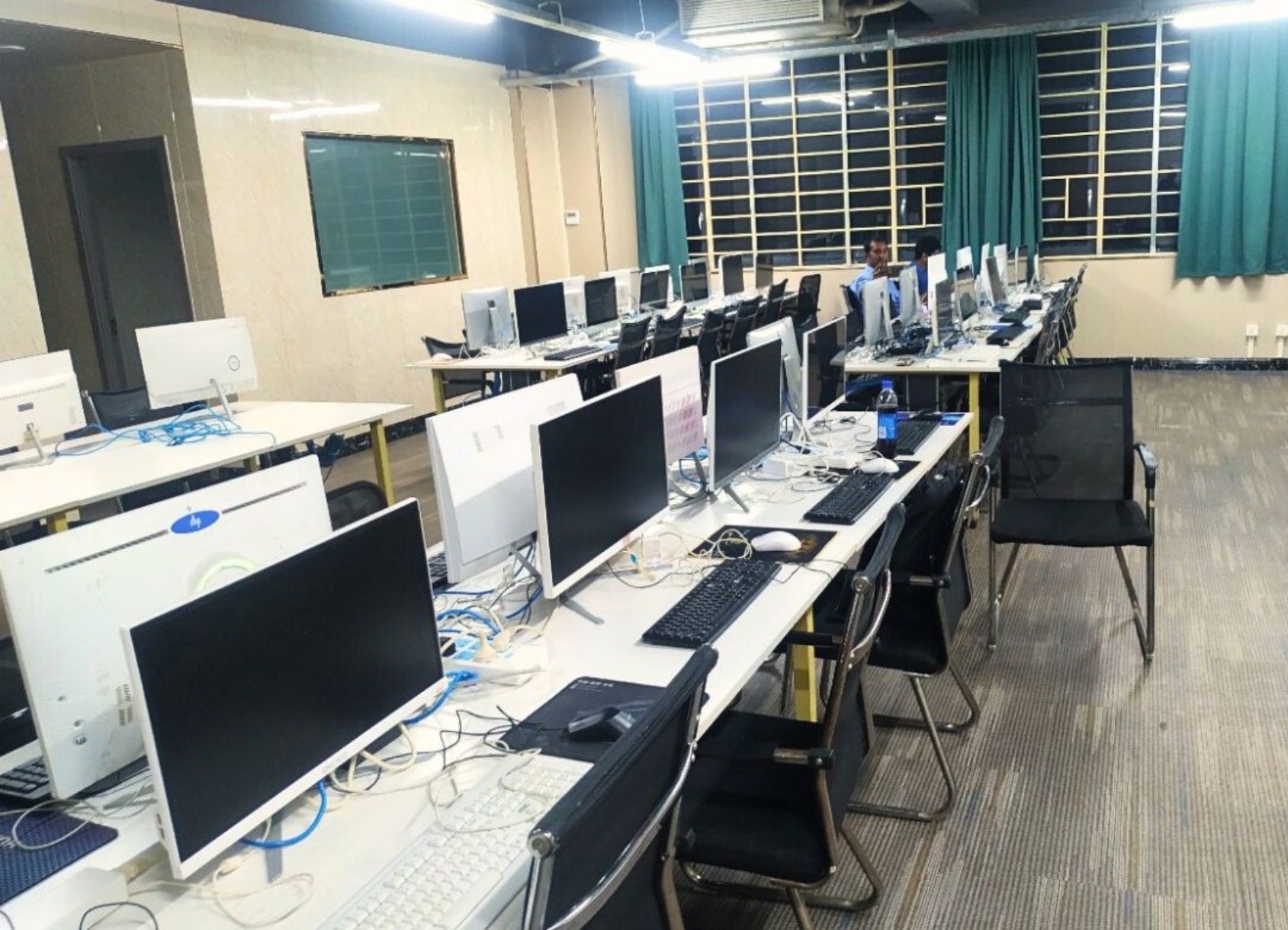
Inside the workstation at a scam compound in Cambodia where Md Abdus Salam was trafficked and tortured into working for five months. This photo was taken secretly by Salam himself and has been used with permission.
For the next five months, Salam went through what he described to Asian Dispatch as torture – both mental and physical – in the scam center that housed men from across South Asia. His employers, who he later found were Chinese, beat him with baseball bats and gave him electric shocks if he failed or refused to work. Outside, the compound was surrounded by gun-toting security guards.
“Unless you’ve seen [the crime] for yourself, you’ll never know how horrible it is,” said Salam. “I was forced to work as [the scam centre’s] slave and at one point, I didn’t care about the people getting scammed because of the torture I faced. I didn’t want to end up dead.”
Salam was rescued by an anti-trafficking non-governmental organisation in September 2022. His story is among hundreds of thousands, according to a United Nations estimate, who have been similarly trafficked by criminal gangs and tortured into running illegal crypto scams in Asia. Pig-butchering scams, as the crime is now widely called, derives its name from the farm practice of fattening pigs before slaughter. The crime involves scamming people after building online relationships with the end goal of exacting money.
Asian Dispatch wove in four stories of those affected by pig-butchering scams in the form of a visual novel– embedded at the beginning of this article – to put the readers in the shoes of those forced to be at its epicenter. As of February 2024, as much as $75 billion is estimated to have been moved to crypto exchanges through scam compounds in Cambodia, Thailand, Myanmar and China. But what is of particular note is the trafficking of South Asians for the purpose of operating these scams. Once among global leaders in IT skills and services, South Asian techies are increasingly being lured into pig-butchering crime hubs as they struggle with post-pandemic economic slowdown and global tech layoffs.
I was forced to work as [the scam centre’s] slave and at one point, I didn’t care about the people getting scammed because of the torture I faced. I didn’t want to end up dead. – Md Abdus Salam, trafficking survivor
Salam says he was sold thrice by compound owners in slave-like conditions. He returned to Dhaka empty-handed while his captors had exchanged tens of thousands of dollars to sell him.
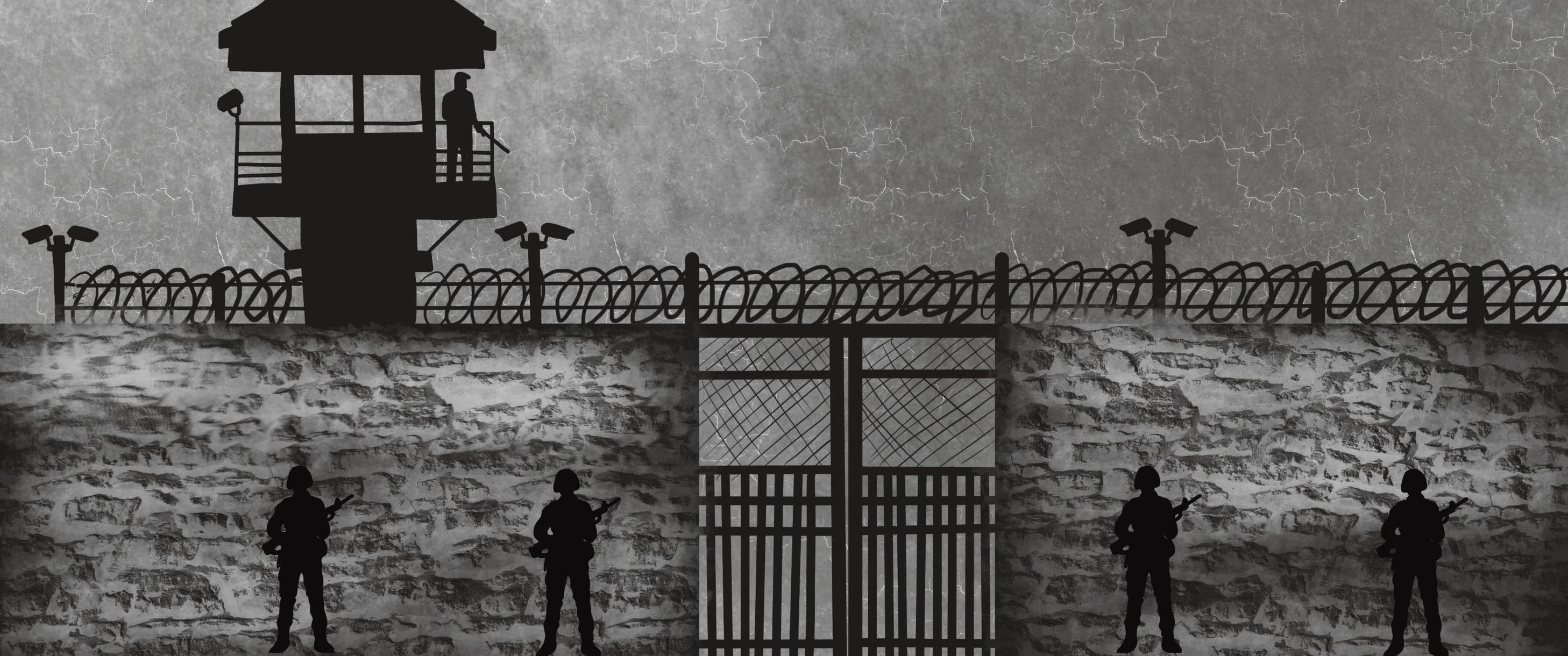
Anti-trafficking organisations have found that scam compounds across Southeast Asia are heavily barricated and deployed with armed men, making it impossible for trafficked victims to escape. Illustration: Sharanya Eshwar
There is no official estimate of the trapped South Asians but in Bangladesh, a 2023 investigation by news outlet The Daily Star estimated thousands trafficked and tortured in these scam centers. In India, officials say they’ve rescued at least 250 citizens this year while news outlet The Indian Express reported the entrapment of around 5,000 Indians. In countries like Nepal, Sri Lanka and Pakistan, the exact number of survivors isn’t known as governments continue to grapple with the crisis.
“We’re in a modern society where we’re traveling all over the world for jobs,” Mechelle Moore, the CEO of an anti-trafficking NGO called Global Alms, told Asian Dispatch. “People aren’t getting jobs in their home countries and [the scam companies] take advantage of that desire to work overseas.”
Moore estimates at least 10,000 trafficking victims stuck in scam compounds that could run up to hundreds if not thousands across Southeast Asia.
“A lot of [these scam] companies lure people who can speak English well, and the jobs advertised for are for logistics, customer service, marketing and so on,” said Moore. “They would specifically target people from South Asian countries that did not have an embassy where they’re operating out of.”
We’re in a modern society where we’re traveling all over the world for jobs. People aren’t getting jobs in their home countries and [the scam companies] take advantage of that desire to work overseas. – Mechelle Moore, CEO, Global Alms
The pandemic provided a big advantage, if not the catalyst, to the criminal network. Civil strife and socio-economic struggles in the host countries add more layers to this complex web of transnational crime.
NGOs like Moore’s have been tracking constructions of new compounds across Asia every year. “They’ve got enough people willing to complete the scams. If the survivors of trafficking don’t want to stay or cause trouble, they’re recycled,” she said. “It’s definitely not dying down.”
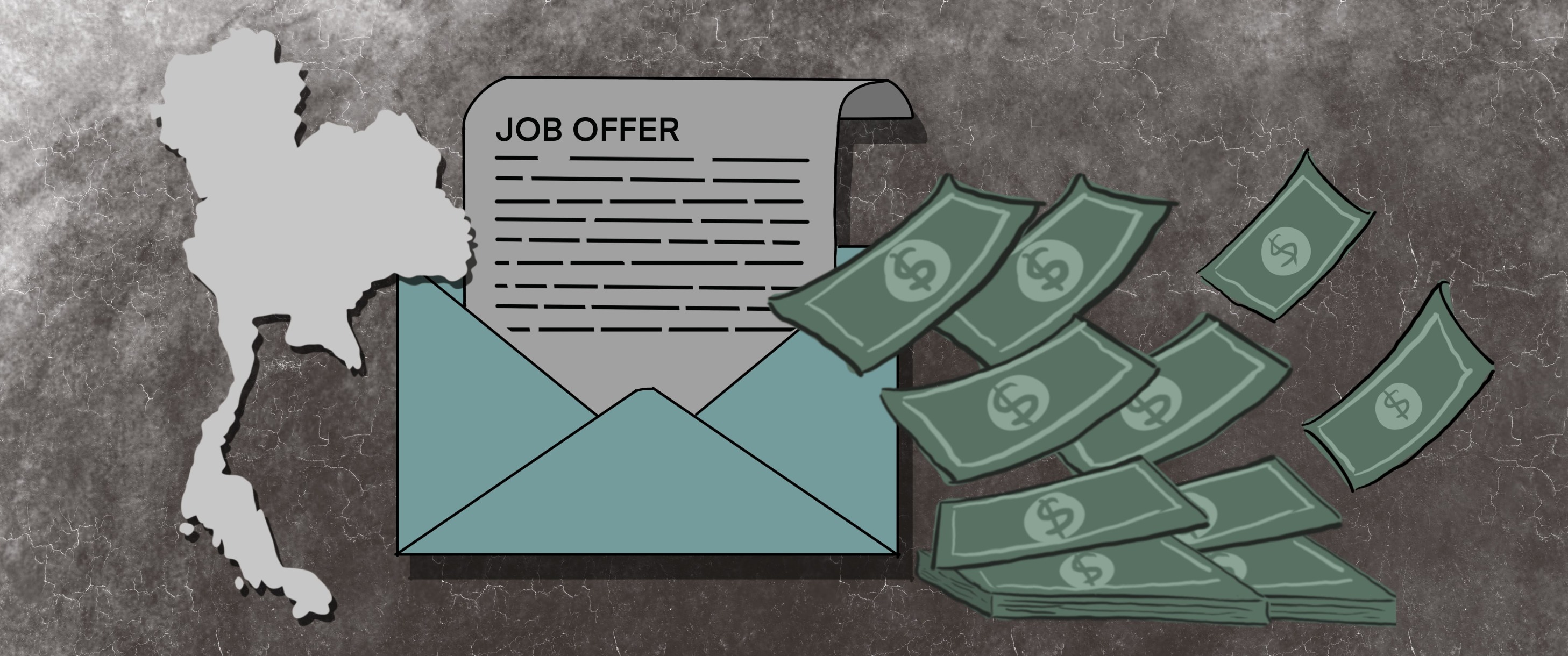
Pig butchering scams feed off of job-seekers’ desire and desperation to find a well-paying job, even if it means moving to another country. Illustration: Sharanya Eshwar
Suresh Jayawardena, another pig-butchering trafficking survivor from Sri Lanka, was a “cyber slave” for eight months in Myanmar, where scam compounds have an additional perimeter of armed protection reportedly under the authority of the Myanmar military or its proxies. Jayawardena, who is addressed with a pseudonym, requested anonymity to be quoted in the story due to social stigma associated with the crime in his country. Asian Dispatch spoke to him weeks after he was rescued among dozens of others in April after an intervention and a rescue mission was carried out by the Sri Lankan government.
Like Salam, Jayawardena, too, faced torture when he resisted participating in the crime, which included being stripped, blindfolded and electrocuted. But what’s of note to many anti-trafficking experts is the platform the trafficking victims are given to defraud people. In Jayawardena’s case, it was Telegram, where he offered fake investment opportunities to people desperate for healthy returns.
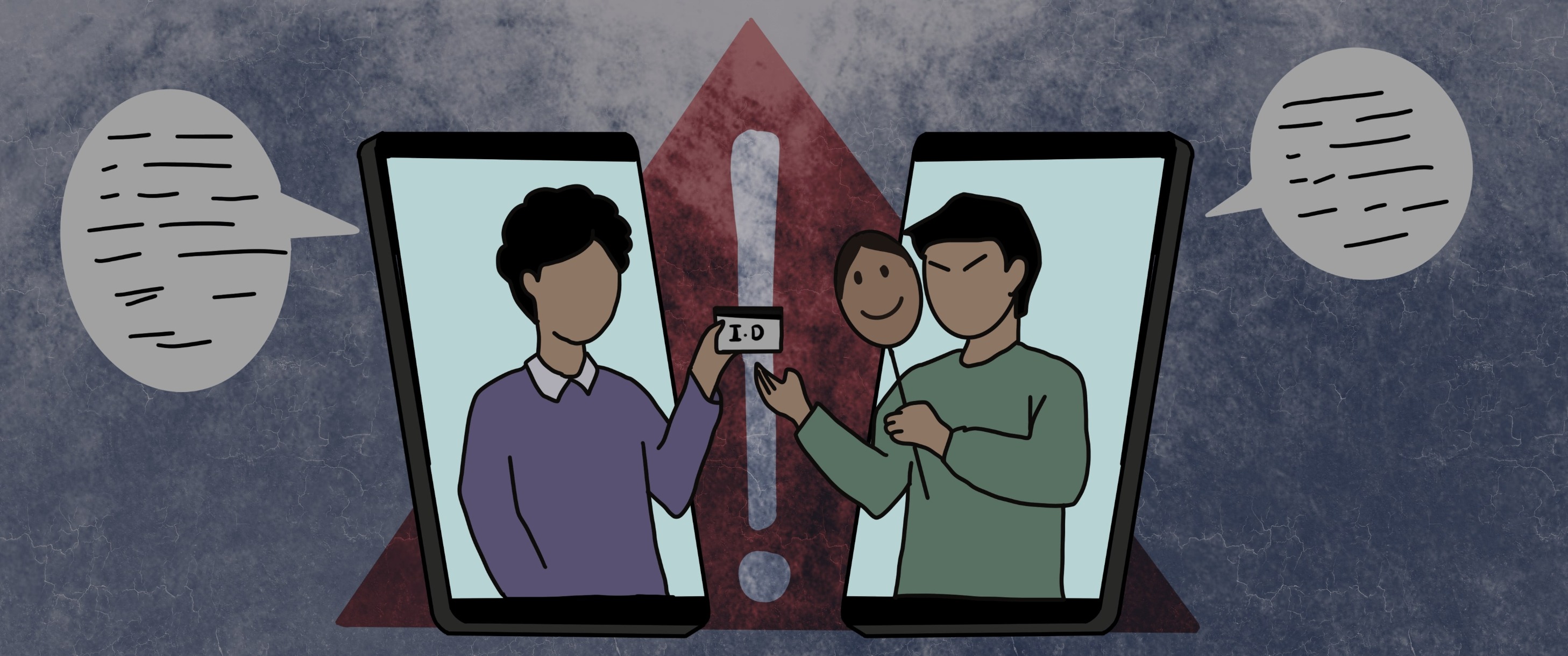
A recreation of Suresh Jayawardena’s experience of being tricked into believeing he was joining a high-paying job in Myanmar, but ending up being forced to scam victims with fraudulent investment offers. Jayawardena spoke to Asian Dispatch on condition of anonymity. Illustration: Sharanya Eshwar
“It’s clear to me that at various stages of the pig-butchering scam, the onboarding of victims of scams happens on [social media] platforms. This is an obvious win [for the scammers],” Erin West, a prosecutor from Santa Clara County in California, US, told Asian Dispatch. West investigates crypto crimes with primarily American victims, and trains law-enforcement agencies across the US to trace cryptocurrency transitions.
A few months ago, she started ‘Operation Shamrock’, which brings together private and public stakeholders across the world, including big tech companies, to lead a concerted fight against pig-butchering scams. During one of the meetings she held with big tech platforms, she told the representatives that their platforms were enabling the crime. “They didn’t appreciate the language and didn’t want to cooperate,” she said.
“There’s a pressing need for global communities to be involved,” West adds. “I don’t believe these people, the scammers, are untouchables.”
Troy Gochenour, who works at the Global Anti-Scam Organization (GASO), says pig-butchering crimes are of “pandemic proportions.” “We’re living in the age of scam-demic,” he told Asian Dispatch. GASO was set up in 2021 by victims of pig-butchering scams, which includes Gochenour himself. By 2022, the organisation had connected with 1,483 victims worldwide who had suffered losses to the tune of $256 million. This means that every victim lost at least $173,000.
This is why this crime is so insidious because at the other end of the phone is someone who is trained to do this. The so-called relationship is a planned operation.— Troy Gochenour, Global Anti-Scam Organization
Gochenour, an American citizen, lost $28,500 in a liquidity mining scam after developing an online relationship with an online profile of who he thought was an Asian woman called Kris Gia. “The allure [of Kris] was her offer to provide me companionship. We would talk like we’re boyfriend-girlfriend or husband-wife,” said Gochenour. “This is why this crime is so insidious because at the other end of the phone is someone who is trained to do this. The so-called relationship is a planned operation.”
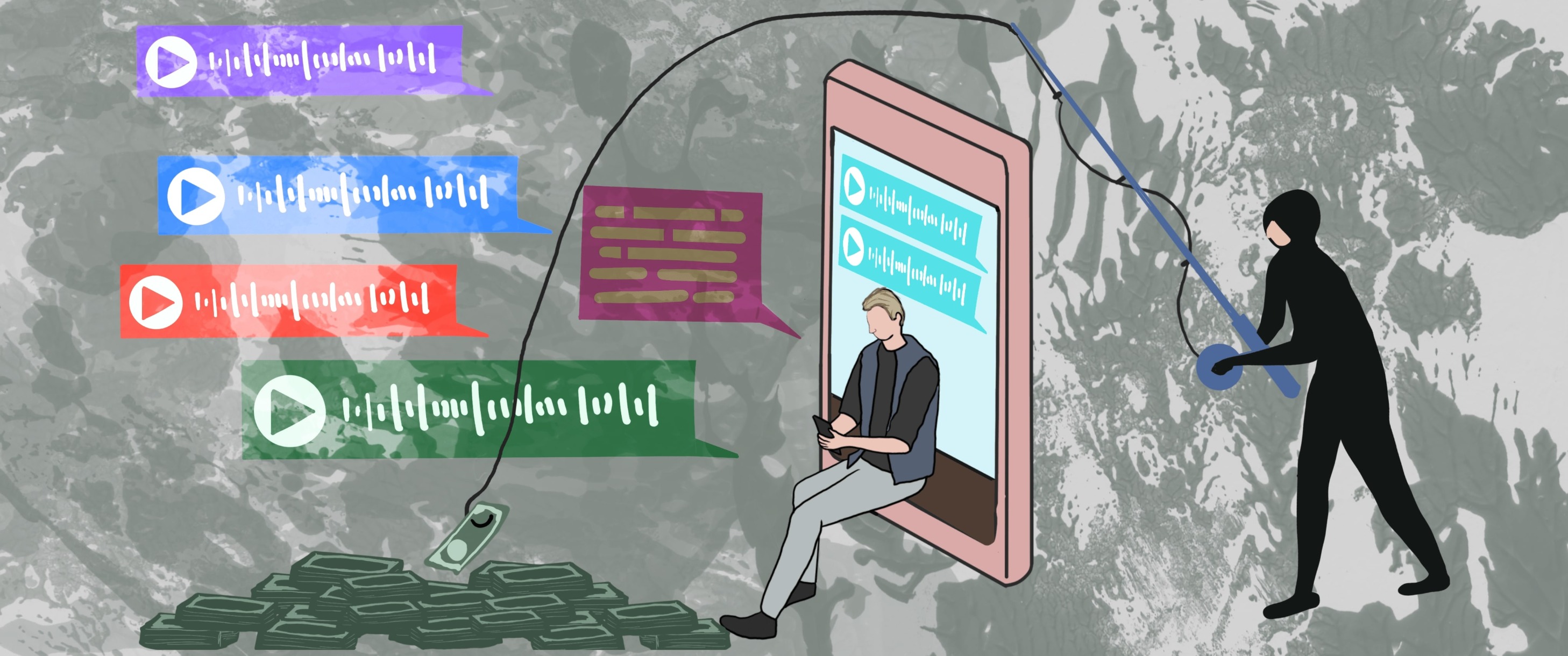
A recreation of the story shared by Troy Gochenour, who found himself on the other end of the pig-butchering scam. He lost $28,500 through a fake profile that he believed was real and was in relationship with. He’s among thousands of victims of these scams. Illustration: Sharanya Eshwar
The victims of the pig-butchering scams aren’t always those in the West. Moore confirms that the scam companies target those in Asian countries too, and hire people from that region to scam them. “We’ve had Vietnamese trafficking victims who were trafficked specifically to scam people in Vietnam. Same with Indonesia, Malaysia, and Chinese,” she said. “It’s a global effort.”
The story of Sandun Silva from Sri Lanka illustrates this. The 34-year-old journalist, who also spoke to Asian Dispatch on condition of anonymity, was introduced to a Telegram group last year after he accepted an online content writing “job” that was attached with a fraudulent investment opportunity. All the admins in the group texted in and spoke Sinhalese. De Silva lost his family savings amounting to $4,000. Even now, the father of two hasn’t told his family about it.
Gochenour says that the first thing tech platforms should do is take down fake profiles when they’re reported. This feature, especially on Meta, is often automated, which Gochenour says doesn’t always resolve the problem. In India, Meta, in its April report, documented receiving over 27,000 reports of fake profiles on Facebook and Instagram but admitted a significant chunk of them were not actioned.
“Unfortunately, there’s not a lot that has been done by these platforms themselves,” Gochenour adds. “Law enforcement has, at times, shut down platforms, but that is only if they’re connected to a particular case they’re working on.”
In May this year, leading tech firms, Match Group, Coinbase, Meta, and Ripple formed a coalition called Tech Against Scam to respond to and prevent online fraud and financial schemes that target consumers through their platforms. Asian Dispatch reached out to Telegram and Meta to understand how they’re tackling these crimes but didn’t get any responses. This story will be updated when it comes.
Early this year, when Asian Dispatch reached out to Salam in Dhaka, he had been back home for a few months. Unlike all survivors quoted in this story, he chose not to be anonymous. He was rescued in 2022 by GASO, which he had covertly reached out to while living at the scam compound. GASO had pressured his “bosses” to release him along with a few others.
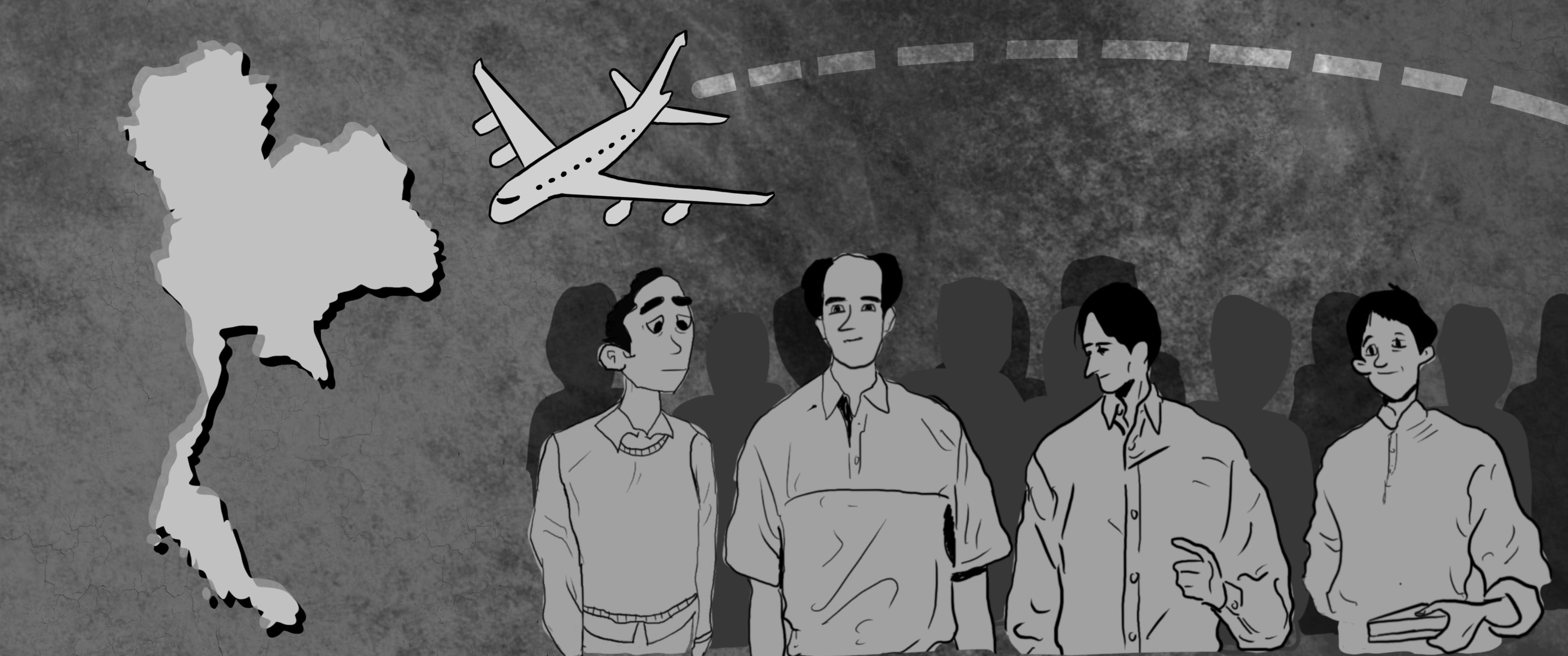
Abdus Salam is determined to raise awareness about how the struggles of trafficking survivors don’t end with getting out of the scam compounds. It continues for years. Illustration: Sharanya Eshwar
However, Salam’s struggles didn’t end there. During the course of his captivity, he had exceeded his visa duration by over 100 days. Since he didn’t get paid by his compound employers, he didn’t have money to pay the visa fine and buy a flight ticket. He finally was sponsored by a friend. Today, he works for a non-profit called Humanity Research Consultancy (HRC), which facilitates survivors’ repatriation after they’re rescued from scam centres.
Once home, a battered Salam underwent spinal surgery for injuries inflicted by the torture. He also struggled psychologically to come to terms with the time and money he lost in that period. But his family’s support helped him take his next steps.
“They told me, ‘It’s fine you lost your money. At least you are still alive.’”
Now, Salam helps other survivors of trafficking even after they’re rescued from the compounds.
“This is the right time for me to commit myself to this mission,” he said. “To the mission of survivors’ rights.”