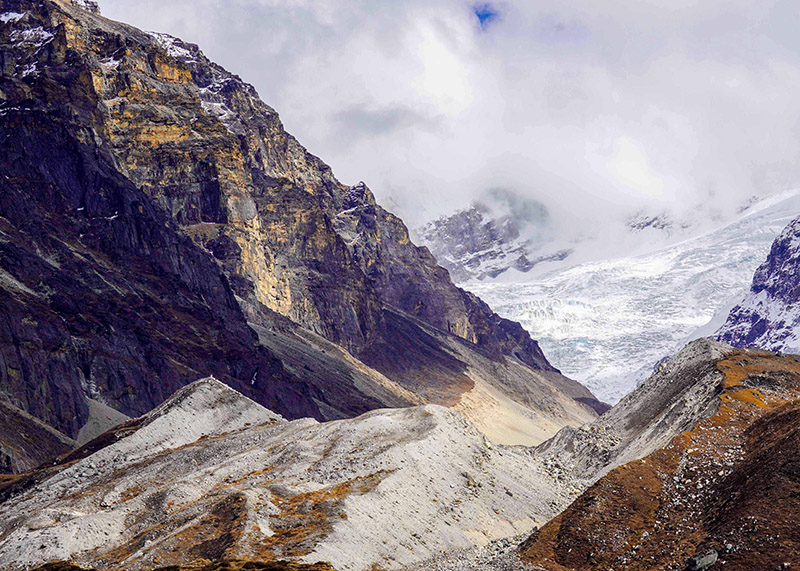
Landslides in the mountains. Photo: Giriraj Banskota/NIMJN
Lonak, the final village before the Kanchenjunga base camp, serves as the ultimate refuge for trekkers embarking on the Kanchenjunga expedition. Given that the base camp, situated at an elevation of 4,790 meters, is a day’s trek from Lonak, allowing for a same-day return, the village hosts hotels catering to tourists. However, a pervasive sense of uncertainty and impending crisis hangs over the local hoteliers. They face the grim reality that they cannot predict how long this scenic village will endure or how much longer they will be able to sustain their businesses there.
Tenjing Sherap Sherpa, a hotelier, has personally witnessed the dramatic shifts in the village’s landscape and harbors deep concerns that Lonak’s very existence may one day be jeopardized.
The United Nations Intergovernmental Panel on Climate Change in its 2023 Synthesis Report has said that human activities, principally through emissions of greenhouse gases, have caused global warming, with global surface temperature rising. Rising temperature of earth has caused topographical changes in the Himalayan region and Kanchenjunga, which spreads across 2,035 square kilometers, is no exception.
The trekking route to the base camp is frequently impacted by landslides and the emergence of new glacial lakes.
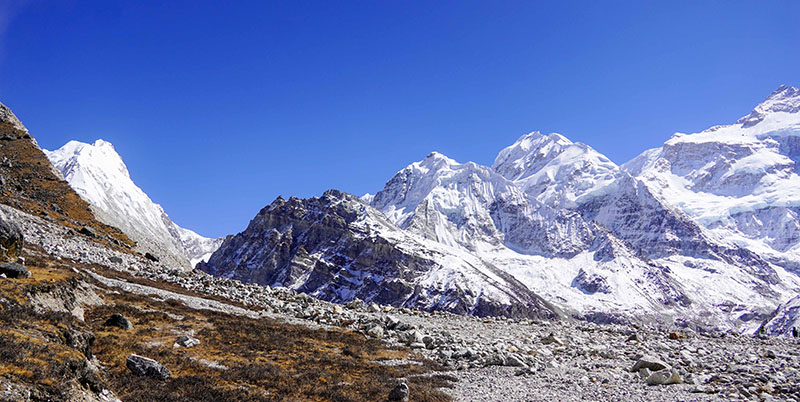
Aggregates and mud swept to the Kanchenjunga Base Camp. Photo: Giriraj Banskota/NIMJN
Kanchenjunga is an example of change. The glacial lake at Lonak appears to expand annually. Locals report that the lake now occupies a site where cowsheds once stood. “We haven’t named this lake, but it’s getting bigger every year,” Tenjing explained. “About 10 to 15 years ago, there were cowsheds here. The grazing land has become a glacier, and where the cattle used to roam, there’s now a lake.”
Tenjing Nupu, another local, has observed a similar phenomenon. Two years ago, when he trekked the Anidesh summit, there was no lake along the route; now, there is one. The water from this lake flows down to Ghunsa and Handrung before reaching the Tamor River. Locals fear that if the lake bursts, it would cause significant loss and damage to downstream settlements, including Khabachen, Ghunsa, and Handrung.
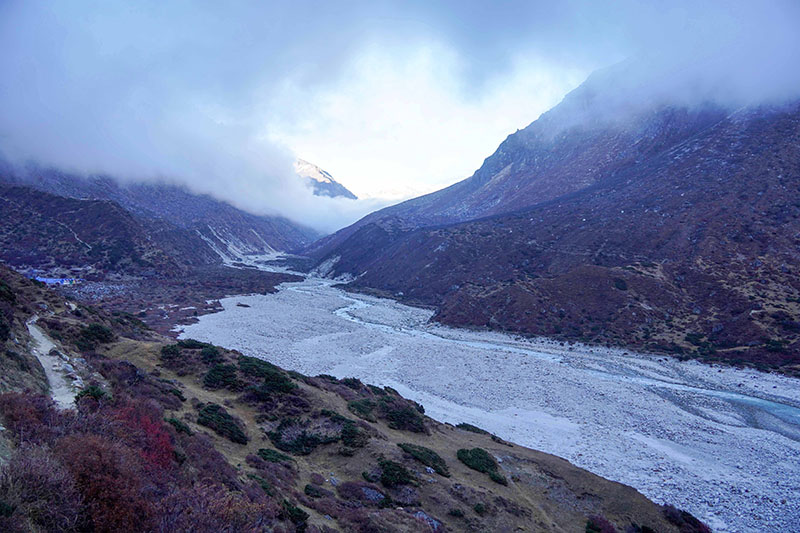
Ghunsa river, which falls along the trekking route, has been widened by floods. Photo: Giriraj Banskota/NIMJN
The widespread landslides serve as another indicator of the environmental shifts occurring in the Kanchenjunga region.
Bibek Basnet, information officer at the District Police Office in Taplejung district, reported that Tika Bahadur Rai of Yabu, Sankhuwasabha, a tourist guide, died in a landslide in Itahari on October 5, 2024.
The Kanchenjunga trekking route begins in Japantar and passes through Itahari. Landslide risks are present not only in Itahari but also along the entire four-day trek to the base camp. A report by the Kanchenjunga Conservation Area states, “The topographical structure of this area is too steep. So the landslide risks become too acute during monsoon.”
The area bordering northeast India and China from Taplejung district was designated a conservation area in 1997. This region encompasses mountain peaks, including the world’s third-highest peak, Kanchenjunga, four peaks over 8,000 meters, and 17 peaks between 7,000 and 8,000 meters.
Due to the risk of landslides, Dikki Sherpa’s “teashop” at Zorque, an hour’s walk from the base camp, has been replaced by a tent. She explained, “Landslides keep occurring, later the walking trail might be damaged. It is expensive to build a house here. Which is why we have put up a tent here.”
Trekkers heading to Kanchenjunga often stop at Zorque for tea, hot water, and soup before continuing their ascent, which sustains local businesses. According to the Kanchenjunga Conservation Area Management Council, 1,085 foreign tourists visited this area in the fiscal year 2023/24. Despite the business potential and her desire to manage her eatery more effectively, Dikki states that she has been unable to invest further due to the persistent risk of landslides.
The trail from Zorque to the base camp has also suffered landslide damage. Debris and piles of earth scattered along the path serve as stark evidence of the ongoing topographical changes in the Kanchenjunga region.
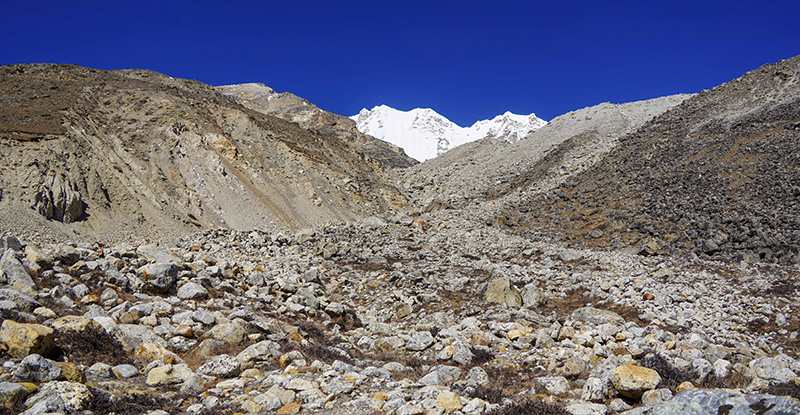
Debris of aggregates brought by landslides. Photo: Giriraj Banskota/NIMJN
Upon reaching the Panpe basecamp, located at an elevation of 5,142 meters, one is greeted by a direct view of the Himalayas. This base camp, offering views of the pristine white mountains against a blue sky, is also threatened by landslides. While one edge of the base camp is eroding, the other side faces active landslides. The glacier in this area is visibly expanding. Tenjing Nurbu, who operates a ‘tea house’ at the base camp, is concerned about the future of the magnificent Kanchenjunga mountain.
“There’s significantly less snowfall. Melting glaciers may have caused the landslides,” Nupu stated. “We’ve witnessed considerable change in the Himalayan region over the past few years.” Like Dikki, Nupu is hesitant to invest further in additional infrastructure for his ‘tea house’ due to these safety risks.
The changes observed in Kanchenjunga are not isolated to this area. According to Sudip Thakuri, Dean of the Faculty of Science and Technology at Mid-western University, who conducts research and studies in the Himalayan region, numerous changes have been occurring across the Hindu-Kush Himalayan region in recent years. This vast region spans 3,500 km across Afghanistan, Bangladesh, Bhutan, China, India, Myanmar, Nepal, and Pakistan, with Nepal’s Himalayas, including Kanchenjunga, falling within it.
According to Sudip Thakuri, the Kanchenjunga region is particularly susceptible to landslides. He attributes this to the area’s proximity to the Tarai, which results in a more compacted landmass, thereby increasing the risks of both floods and landslides.
The rising temperatures and significant decrease in the volume and frequency of snowfall are profoundly impacting the Himalayan region. Sudip Thakuri explains that while land above 5,000 meters typically remains frozen, an increase in temperature weakens the surface, elevating the risks of falling rocks and ice, as well as avalanches.
He stated, “In recent times, incidents such as landslides, avalanches, glacial lake outbursts, melting of glaciers, formation of new glacial lakes, and the expansion of existing glacial lakes have all been observed.”
Floods of June and October
The floods and landslides that occurred from June to October 2024 further exacerbated the fragility of Kanchenjunga’s topography. During this season, tourists found it challenging to navigate the trails due to the widespread flooding and landslides, which extensively damaged the paths in numerous locations.
Some areas have become exceptionally risky and hazardous. “There were dangers in many places. Some sections have become difficult to reach due to the landslides,” said Srithulung Rai, who had returned home from Australia and was trekking in the region. “I felt really bad to see floods and landslides making lives difficult in this beautiful place.”
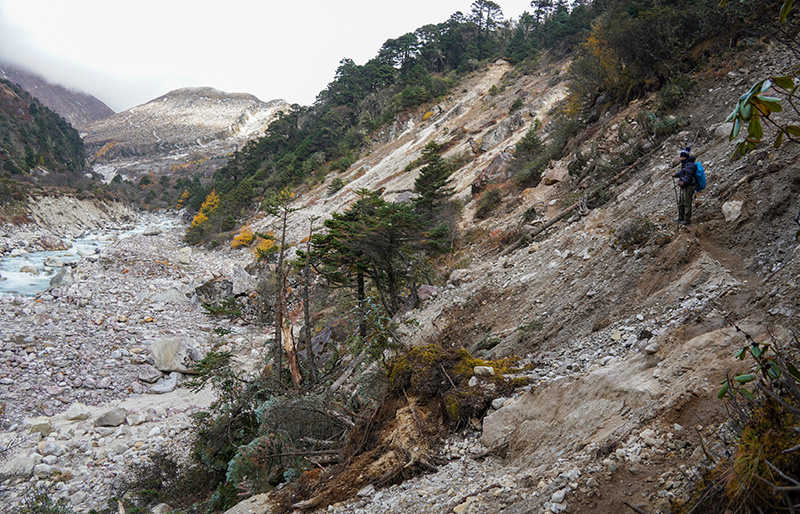
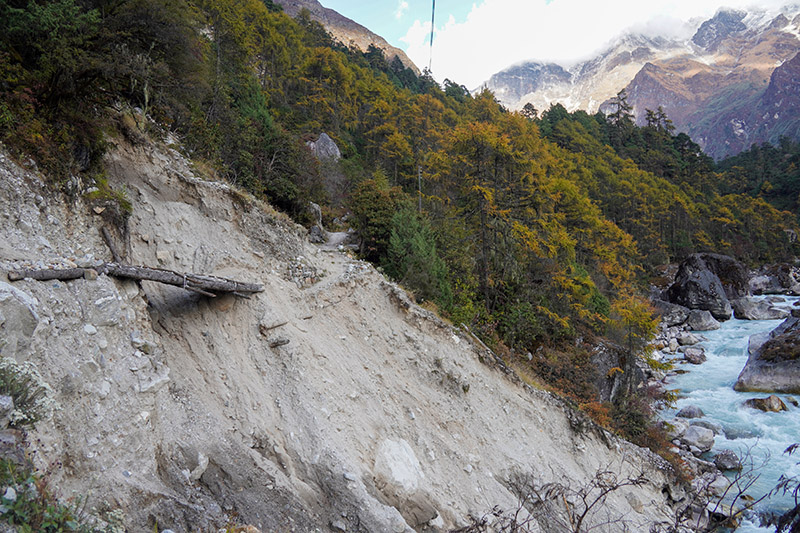
(Left) The Kanchenjunga trail was enveloped by landslides in September. (Right) A makeshift wooden crossing built after the path was broken by a landslide. Photos: Giriraj Banskota/NIMJN
Since the shorter trail from Japantar to Itahari was obstructed by landslides, he had to take a longer, more circuitous route. In certain spots, ladders have been installed, and stools placed on narrow sections of the trail to aid passage.
The old route to Lamatar was swept away by the Ghunsa River floods, forcing travelers to take a longer and more arduous path.
Numerous landslides above Ghunsa have rendered the Himalayan region increasingly fragile. The floodwaters have significantly widened the Ghunsa River. Reaching base camp now requires traversing three camps from Ghunsa, a journey that involves navigating through multiple landslide-affected areas—a situation unlike in the past. Paths are obstructed in many places, preventing mules from traveling to Japantar this year.
These changes in Kanchenjunga, Nepal’s second and the world’s third tallest peak, are attributed to the impacts of climate change. However, there are no authoritative or reliable studies and research specifically addressing the floods and landslides and their precise impacts. Given the recurring and damaging nature of landslides and floods in the area, the Kanchenjunga Conservation Area Management Council has formally requested the International Center for Integrated Mountain Development (ICIMOD) to conduct such studies.
It is worth noting that this conservation area operates on a community-based model. Local tourism entrepreneurs and yak herders are responsible for repairing damaged trails. While the Council also undertakes annual path repairs in many areas, these efforts are often hampered by insufficient budget, according to Council officials. Chhawang Sherpa, the Council’s treasurer and a business owner in Gyabla along the trail, reports that floods and landslides in Kanchenjunga have occurred with unusual intensity.
According to data from the Department of Meteorology and Hydrology’s Lungthung Center, 375.7 mm of rain fell in September/October 2024, and 631 mm in July of the same year. Locals describe significant floods in even smaller rivulets during these rains, which carried substantial debris into the rivers.
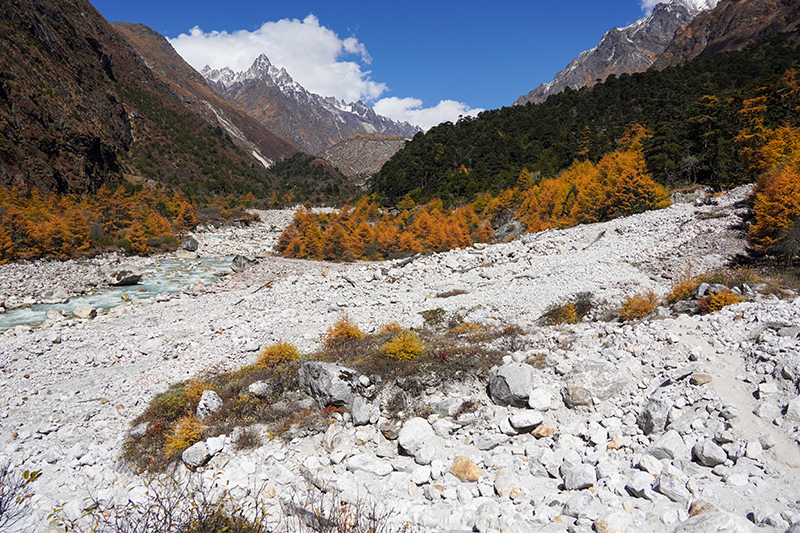
Aggregates brought by landslides near Ghunsa. Photo: Giriraj Banskota/NIMJN
Chhawang reports that landslides have rendered the terrain fragile. He observed, “We’ve experienced rising temperatures, and significantly less snowfall during the winter season. The paths damaged by floods and landslides in October are still awaiting repair.” He added, “I’ve witnessed numerous changes in my lifetime over the last decade.”
Unusual Weather Patterns
Himalayan cow herders, tourism entrepreneurs, and locals in the Kanchenjunga area are observing unusual weather patterns, including unseasonal snowfall, rising temperatures, and scorching daytime heat. These shifts have, in turn, triggered other environmental changes. “We’ve lived in this place since childhood and have experienced several changes,” remarked Chhawang.
He noted that alder trees, once found only above the Thangyam area, now grow at the lower elevation of the Phale riverbed. Similarly, poisonous snakes, previously absent above Thangyam, are now encountered further up in Gyabla. Sherap, also a ward member of Phatanglung Rural Municipality-6, highlighted the significant losses caused by September snowfall and rain in the lower regions. “It snows when it’s not the snowfall season. This year it snowed in September, which caused immense loss and damage,” Sherap stated. He added that in Lonak, at 4,780 meters, mornings and evenings are extremely cold, while the days are very hot.
Tenjing Sherpa, another businessperson from Lonak, recounted instances of underground snowmelt triggering landslides in previously unaffected areas. “The ice underground melts and it triggers landslides,” he explained. According to Tenjing, glaciers they once crossed on foot have now transformed into lakes. Earlier, they could walk directly to the basecamp, but now landslides force them to take a long, winding path. “There used to be small landslides before. Last year there was a big one,” he observed.
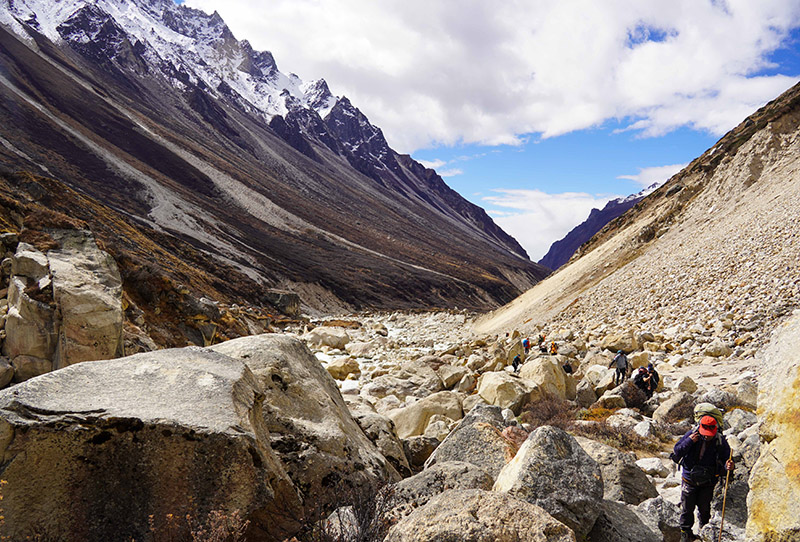
Landslide on the way from Khabachen to Lonak. Since the path has been covered by debris, people have to walk upon the rocks. Photo: Giriraj Banskota/NIMJN
Pema Chhiring Sherpa of Khambachen, who observed dry landslides during the daytime in late September, expressed concern about the region’s future. He remarked, “Unusual things are happening here. Things that existed are becoming extinct.”
Not only locals, but also those engaged in Himalayan research and studies, agree that the changes witnessed in the region are alarming.
Sudip Thakuri, Dean of the Faculty of Science and Technology at Mid-western University, attributes these regional changes to temperature increases induced by climate change. He stated, “Kanchenjunga region is extremely sensitive in the context of climate change. That is the region where rain starts in the monsoon in Nepal. It is very dry in April and May. Once the monsoon starts, the landslides follow.”
The past 30 to 40 years show a clear trend of rising temperatures, he noted. Studies indicate that ice in the Kanchenjunga region is melting at a rate of 15%, and landslides occur when rain falls instead of snow.
A study by the International Centre for Integrated Mountain Development (ICIMOD) reveals that rapidly diminishing snow and ice have negatively impacted both nature and human populations. ICIMOD’s report states that the disappearance of snow and ice in the Hindu Kush Himalaya threatens two billion people and is accelerating species extinction. It further highlights that the effects of the changing cryosphere on fragile mountain habitats are acute, leading to cascading impacts on ecosystems and affecting most inhabitant species. The cryosphere encompasses frozen components of the Earth System, including snow cover, glaciers, ice sheets, ice shelves, icebergs, sea ice, lake ice, river ice, permafrost, seasonally frozen ground, and solid precipitation.
According to ICIMOD, Hindu Kush Himalayan glaciers melted 65% faster between 2011 and 2020 compared to the preceding decade. ICIMOD’s study forecasts that water availability in the Hindu Kush Himalaya will peak in mid-century due to accelerated glacial melt, after which it is projected to decline. The variability in meltwater from glaciers and snow creates significant uncertainty for mountain communities and large lowland populations. Floods and landslides are expected to increase. Exposure to these hazards poses a risk of heightened damage to properties, heritage, and infrastructure, impacting communities already facing adverse conditions.
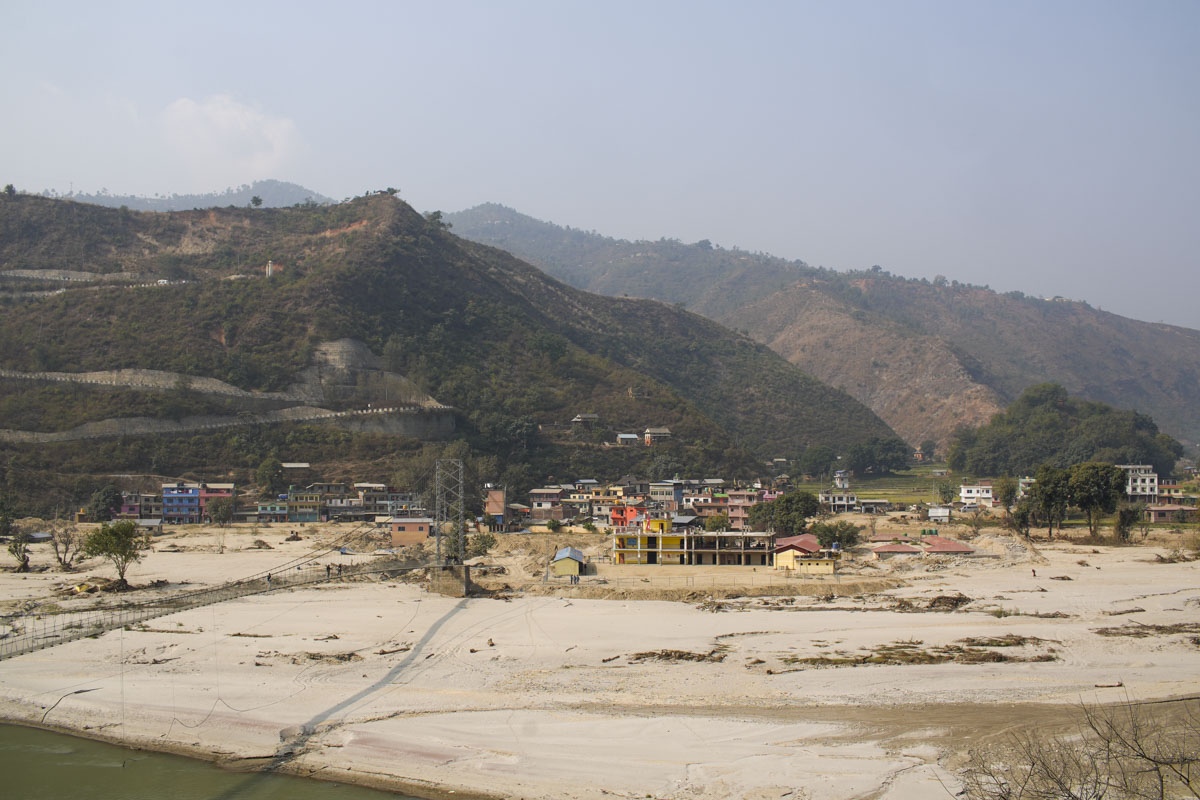
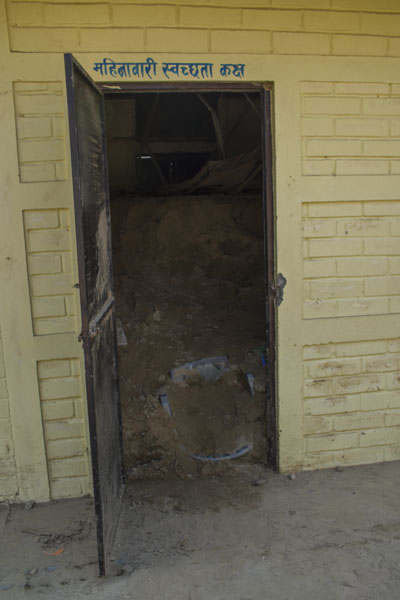
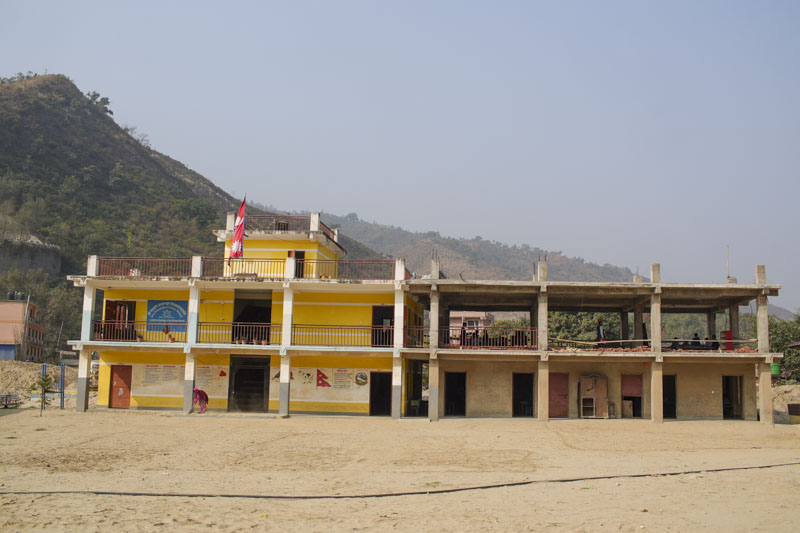
Tanka Prasad Dahal is 18 years old and lives very close to his school, Pashupati Basic School in Mulkot, Sindhuli. Even though he is older than most students, he lives at the school because he has an intellectual disability. But everything changed on September 26, 2024. After two days of heavy rain, the Sunkoshi River flooded and went over his school. When the water went down, the school was full of sand and broken pieces. The two-story building now looked like it only had one story.
A total of 117 students went to Pashupati Basic School, including 95 regular students and 22 students with disabilities. The 95 regular students were able to start classes again, even if they had to use one classroom for two different classes. But students like Tanka have not been able to return. This makes it hard for students with disabilities to get back to school after the disaster.
Nirmala Kumari Shrestha, the school principal, said that they haven’t been able to bring the students with disabilities back because the flood destroyed the entire first floor. All the supplies and materials that were stored there were also ruined. On February 12, 2025, she came with us (the NMJN team) to check on Tanka’s situation.
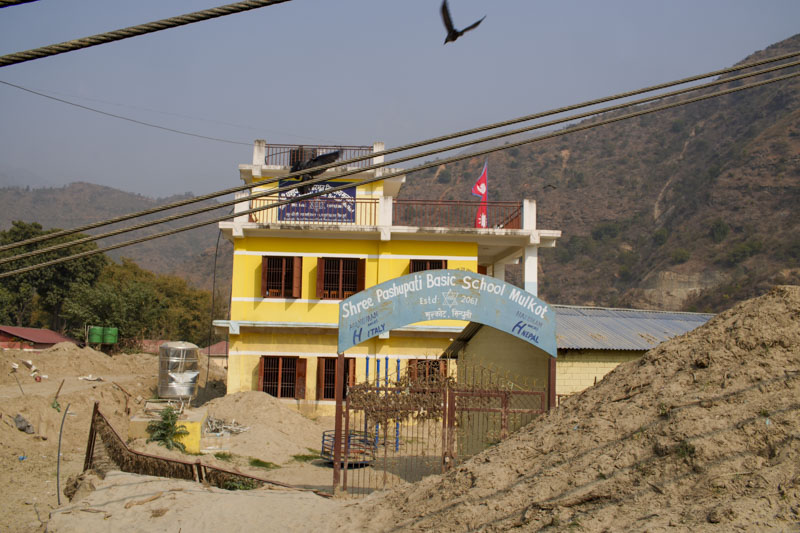
Pashupati Basic School. Photo: NIMJN
Tanka has a problem with his leg. Last year, he went to Kathmandu for an operation on his leg but it didn’t get much better because he didn’t get enough exercises to help it heal, his mother Sharada said. The principal said that Tanka has trouble walking because there is no one at home who can help him do these exercises regularly, probably because both of his parents have health issues.
Tanka’s mother, Sharada, says that he is trying to walk on his own. For his part, Tanka cannot speak confidently and clearly. He shows his feelings through babbling and humming when he hears his favorite song on the radio. Tanka is also trying to write his name clearly. He told us, while his mother was there, that he really wants to go to school and that he misses his friends from school. It’s clear that his parents also want him to be able to go to school.
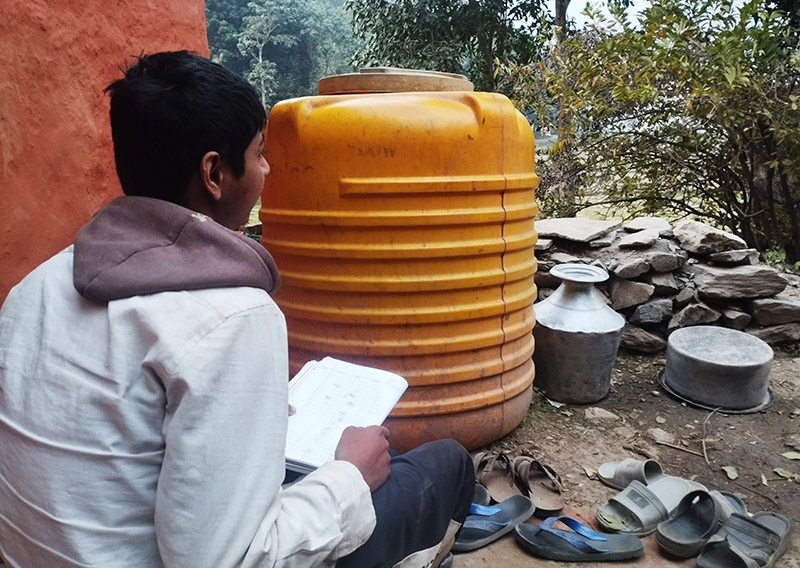
Tanka Prasad Dahal at his home. Photo: NIMJN
Hira Devi Shankar is another child with a disability from Sindhuli Nanglebhare. Her parents send her to a school nearby but she doesn’t want to go because that school doesn’t have things that make it easy and comfortable for children with disabilities. Hira, who is 10, learned a lot at Pashupati School. Before she came to that school, she didn’t even know how to hold a pencil. Before the flood damaged the school, including the classrooms, she could write and read a little. The school hasn’t asked her to come back because there is no fence around the school for safety.
Now, Hira’s parents have started sending her to a school close to their home, but she doesn’t want to go there. Her mother, Kalpana, said, “The school is only about 15 minutes from our house. We started sending her there so she wouldn’t forget what she learned, but she doesn’t want to go because it’s not a good place for her.” Kalpana also said, “Even when she goes, she doesn’t learn anything new.” According to Kalpana, Hira forgets things easily. She doesn’t speak clearly and takes a long time to understand what other people are saying to her. Kalpana said, “She has missed school because of the flood. The school said they will call us after they build a fence. I really hope they do.”
The school principal, Nirmala Kumari, said that the children with disabilities used to learn practical skills and knowledge instead of just theory. But the school hasn’t been able to start classes for them again because it’s not easy for them to get around after the floods. A wire fence has been put up at the edge of the school grounds. She says that once they build a proper wall around the school and get the money to fix the damage, it won’t take long to make the school like it was before. She also mentioned that a new building with three rooms is being built with help from the local government so that the children with disabilities can continue their learning. The principal said that once the wall is built, they will be able to bring the children with disabilities back to school.
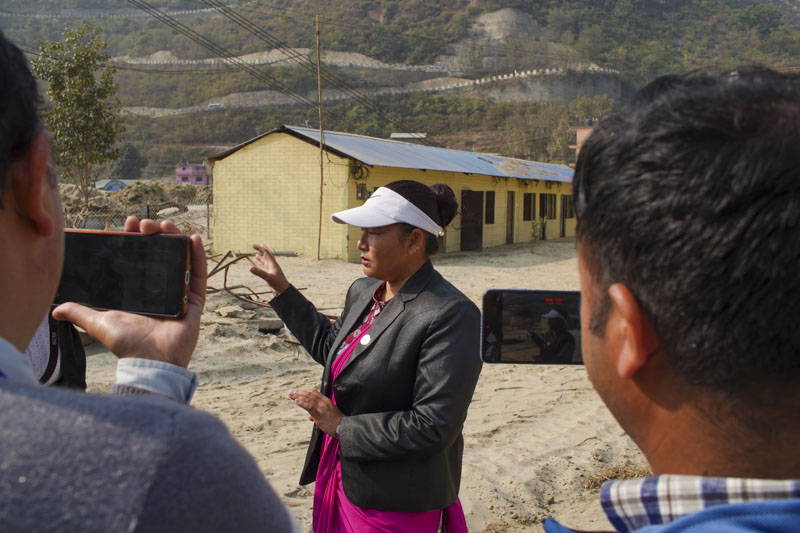
School principal Nirmala Kumari Shrestha briefing about loss and damage caused by floods. Photo: NIMJN
Surath Kumar Basyal, spokesperson for the Sunkoshi Rural Municipality, said that there used to be a special learning center just for children with intellectual disabilities. Two teachers and two helpers worked there for these children. They had two rooms to live in and one classroom, and the Rural Municipality took care of it all. The floods ruined everything except the building itself.
Because they don’t have enough desks and benches, some students have to sit on the floor during classes.
There are no good restrooms or clean drinking water. The flood filled up their well, so now they get dirty water from it. They also have to walk a long way to get water to drink. Nirmala Kumari said that the mud from the flood has dried up and is now causing a lot of pollution, which is making the children sick.
677 schools in suffering
According to the National Disaster Risk Reduction and Management Authority (NDRRMA), a total of 677 schools in 41 different districts of the country were damaged or destroyed by the floods in 2024. Forty-five of these schools were in Sindhuli. Sadly, 13 students died because of the monsoon disaster, and 50 affected students were rescued alive. However, the NDRRMA doesn’t have information on how many children with disabilities were affected. The NDRRMA says that Bagmati province was the most affected by floods and landslides, with Kavrepalanchok district reporting damage to as many as 182 schools. The Authority estimates that it will cost over 1.78 billion rupees to rebuild the school buildings that were destroyed by the monsoon disaster.
The Ministry of Education has slightly different numbers. They say that floods and landslides damaged 163 schools – 110 in Bagmati and 53 in Koshi provinces. The difference is because the NDRRMA counted all schools that had any damage, while the Ministry of Education only counted the schools that had serious damage. Debaka Dhakal, the head of the Education Development and Coordination Unit (EDCU), said that the monsoon floods and landslides have made some schools unsafe for children to attend. Other schools have reopened after some small repairs. She said that the local government, through the EDCU, gathered information about the losses and damage to help with aid and rebuilding in the education area. According to her, they are currently talking about how to manage money for school cleaning, repairs, rebuilding and preparing for future disasters.
The floods have badly damaged the places where schools get drinking water and the toilets. It’s very important to make sure the schools have clean drinking water right away, and the paths to the school and the playground need to be fixed. A first report about getting ready for the monsoon and helping after emergencies, made by the Makawanpur district, showed that they need to rebuild the damaged schools more quickly. The report says that 29 schools in that district were damaged.
Surath Kumar Basyal, Spokesperson for the Sunkoshi Rural Municipality, said that even though the local government is trying to fix the problems caused by the disaster, they don’t have enough money to do it. At the same time, Dr. Dijan Bhattarai, who is an Undersecretary and was the spokesperson for NDRRMA, said that they have created a joint plan to help the schools that were damaged by the monsoon floods and the earthquakes in Jajarkot.
(Left) The menstrual hygiene room covered by flood. Photo: NIMJN
Education for children with disability
There are rules in Nepal’s constitution, laws, and government plans to make sure children with disabilities get the education they need. Devidutta Acharya, who leads the National Disability Federation Nepal, said that in recent years, some regular schools have become inclusive, and more children with disabilities are getting access to education. According to a guidebook from 2018 about including people with disabilities in education, there were 33 special schools, 23 schools that combined special and regular education, and 316 resource classes for children with disabilities.
However, the schools that are open still have problems. Janaki Thapa, who is an interpreter, said that the school for the deaf in Birgunj, Parsa, doesn’t have enough classrooms. This school goes up to grade five and has 53 students, 38 of whom live there, and four teachers. The school needs a building and more classrooms.
The situation is much worse at Ramjanaki Sustamanasthiti School in Dhanusha – it is not even open anymore. Baliram Jha, who used to be the principal, retired two years ago. Now, only one staff member looks after the school. According to Baliram, this person just signs the attendance book whenever they want and still gets paid. Baliram said, “Nobody cares about it. Students come to the school and find the gate locked, so they go back home. Parents call me to complain. When I go to check myself, I find the school closed.”
When Baliram retired two years ago, there were 14 students at the school. Now, all of them have lost their chance to learn.
The situation of these two schools from Dhanusha and Birgunj is symbolic of the various problems faced by schools for children with disability.
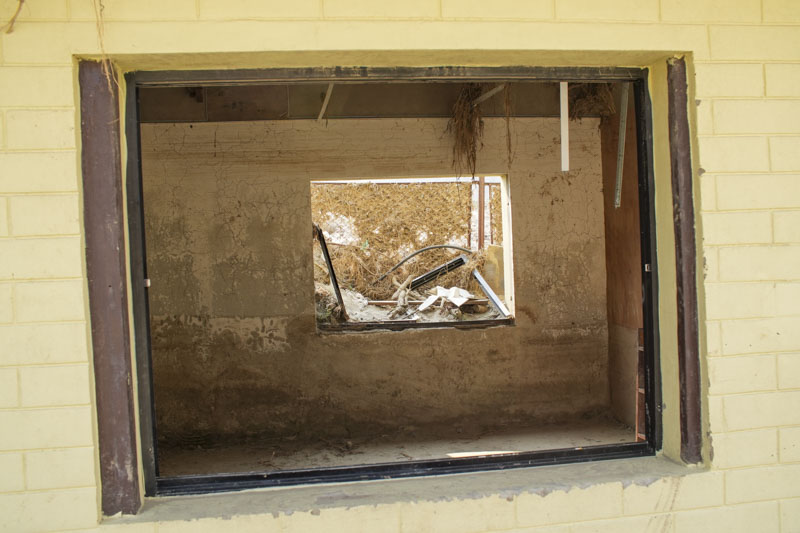
Classroom of Pashupati Basic School. Photo: NIMJN
The government gives four kinds of money help to children with disabilities. There is a “Motivation” scholarship of 1000 rupees each month for ten months. There is also a monthly transportation scholarship of 3000 rupees or 5000 rupees for each child who needs help to go to school regularly. Children who live in hostels, away from their homes, get 50,000 rupees each year. The schools get this money from their local government.
Devidutta Acharya said that they are trying to build schools in safer places. However, the government hasn’t yet made it possible to build school buildings that are completely safe for children. Because of this, when disasters happen, the schools that teach children with disabilities become risky for these children, especially because there aren’t good ways to rescue them that consider their needs.
The number of disasters happening in schools and the education area is increasing every day, making both the schools and the children there unsafe.
Around the world and in Nepal, steps are being taken to make schools and the education area less risky. There are laws and government plans in place, both internationally and in Nepal, to reduce disaster risks in schools and to encourage a culture of school safety. These efforts will help get everyone involved to work together to make sure schools are safe in the future.
Even though children with physical disabilities, vision problems, and hearing problems are currently going to school, those with more severe disabilities are still not in school, which means they are missing out on education. The Ministry of Education has a program to teach children at home. They are talking about finding these children and creating a way to have volunteer teachers educate them in their homes. The government has been making plans to make sure these children can go to school. However, when you look at how well these plans are being put into action, you don’t see much real progress.
Disability and social inclusion
The government has created a plan called the Strategic Action Plan for Gender Equality, Disability and Social Inclusion (GEDSI) in Disaster Risk Reduction and Management (2024). Dr. Dijan Bhattarai, who was the spokesperson for NDRRMA at the time, said that this plan gives clear instructions on how to include everyone equally, including people with disabilities, when preparing for and dealing with disasters.
Devidutta Acharya said that even though the 2015 earthquakes showed that children with disabilities are very likely to be in danger during disasters, there still isn’t enough specific preparation that includes them.
Pashupati Basic School doesn’t have enough classrooms, so students are being taught in an open area on the second floor of a building that is still being built.
According to him, he has asked the NDRRMA to make children with disabilities a priority in schools and hospitals when they are doing rescue and recovery work. He believes that early warnings about disasters should also be easy for everyone to understand and access. He also said that not having access to information makes these children even more at risk during disasters. When making plans for how to respond to disasters, they should think about how to provide services for people who can’t hear or speak, people who use wheelchairs, and children who can’t see.
Also, the people who help during disasters should be trained on how to assist these individuals. The Strategic Action Plan (2024) says that the government should give out kits with tools that people with disabilities will need in emergency situations. Devidutta Acharya says that his organization has been working on this issue constantly.
Making schools safe
According to a report from 2017/18, there are 35,601 schools in Nepal, with 29,005 being public and 6,566 private. A study called ‘School Safety and Existing Legal Provision Directive’ by Krishna Prasad Bhattarai found that two-thirds of these schools are in danger of disasters. The Ministry of Education has started a big plan called the Comprehensive School Safety Masterplan (2017) and created a guide called the Comprehensive School Safety Minimum Package (2018). The National Policy for Disaster Risk Reduction (2018) aims to help Nepal grow in a way that is safer, can adapt to climate change, and can recover from disasters. These rules give schools at all levels advice on having good education and being ready for disasters. Chandra Kanta Bushal, Spokesperson for the Center for Education and Human Resource Development (CEHRD), said that CEHRD is working with aid groups and other organizations to promote the comprehensive school safety masterplan. They also provide training and do practice drills.
The School Safety campaign includes programs that protect students, teachers, and staff from dangerous weather, fires, diseases, and natural disasters, including ways to prevent them. According to Chandra Kanta Bushal, they are teaching people and sharing information as part of this campaign. He also said that they are working to make schools safe by creating education groups and working with the national, regional, and local governments. They are also providing training to the School Management Committee and parents.
However, education expert Professor Dr. Bidhyanath Koirala says that this campaign hasn’t been very effective because it doesn’t consider the specific needs of local areas. He believes that if the training included local knowledge and skills, it would work better.
The study by Krishna Prasad Bhattarai also showed that putting school safety programs into action in schools is still weak. The study found that people involved in education don’t know much about school safety, and they also don’t know much about the existing laws and school safety rules. The study showed that most students are at risk of disasters because they don’t have a safe place to learn. The study lists the problems caused by disasters, such as damage to school buildings, disruption of teaching and learning, students being forced to leave school, and the need for recovery in the local community.
Leaving no child behind
Article 24 of the Convention on the Rights of Persons with Disabilities (2006) says that people with disabilities have the right to education. It states that countries that have signed this agreement must make sure that everyone, including those with disabilities, has the same chance to get an education at all levels and throughout their lives. The Convention also says that these countries should provide the specific support that each person needs to achieve this.
The Rules Regarding Rights of Persons with Disabilities (2020) in Nepal say that the government must arrange accessible education with places to live for children who cannot travel to and from school on their own because of a severe disability or because they are very poor and have no one to help them.
The constitution of Nepal has given the responsibility for education up to the secondary level to the local governments. Because of this, Devidutta Acharya argues that it is the job of the local authorities to know how many children with disabilities there are, to understand what each of them needs, and to make sure they can go to school.
What kind of tools would help children like Tanka to learn easily or to walk? Devidutta says that the local authorities should create a helpful environment for Tanka to get to school. And once he is there, the school should make it easy for him to interact with teachers and other students. Children with disabilities can get the regular money help that the government provides for free education if their schools write to the local authorities, and then the local authorities recommend it to the Department of Education.
Education expert Dr. Bidyanath Koirala argues that local authorities need to take the lead in providing desks, benches, and trained teachers for children with disabilities and in making sure they can go to school. He says that the regional and national governments should help the local authorities with this. According to him, each school should provide what a child with a disability needs based on their individual situation, and the local government should make sure this happens. He says that schools, local authorities, parents, and organizations that work with people with disabilities all need to support this cause.
The schoolyard of Pashupati Basic School ravaged by floods. Photo: NIMJN
There is a special learning plan made just for children with intellectual disabilities. But they need teachers and helpers who are trained, and they need different kinds of technical help based on what they need. For example, children with physical disabilities need help from a physiotherapist. Those with speech problems need a speech therapist. And they need occupational therapy to learn practical knowledge and skills.
Dr. Bidhyanath Koirala says that because schools, local authorities, and the community don’t know enough about these needed services, children with disabilities have been missing out on school education. He says that there are now good technologies and training available for learning. The government has also made a plan to use resources, and there are different organizations working in this area.
Devidutta Acharya, the president of the National Disability Federation Nepal, says that if all these things are well organized and if schools can create the right way to teach, then no children will be left behind.
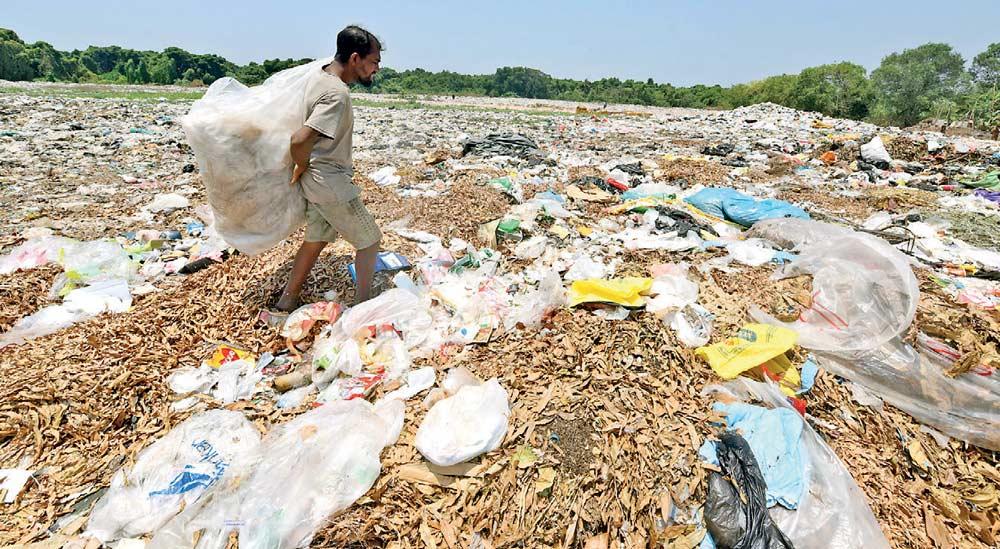
Colombo is a high risk MOH area for dengue due to the lack of a proper solid waste management system. Photo: Kithsiri de Mel
Three-year-old Nethmi Sehansa* from Dematagoda, a suburb of Colombo, succumbed to dengue in May 2023. Her parents and elder siblings remain devastated by her untimely demise. Even though they had big plans for their little daughter, the dengue endemic shattered their dreams.
The Western Province of Sri Lanka had been identified as a high-risk Medical Officer of Health (MOH) area since 2010 with a high density of dengue infected patients. As of March 1, 2025, as many as 4119 cases have been reported from the Western Province, which is the highest recorded number of patients among nine other provinces in the country. The fact that many dengue cases have been reported during a usually low peak season has raised concerns among health officials.
- As of March 1, 2025, as many as 4119 cases had been reported from the Western Province
- Western Province of Sri Lanka had been identified as a high-risk Medical Officer of Health (MOH) area since 2010
- Increasing evidence also suggests that peak dengue seasons may stretch due to unseasonal rains and warmer temperatures
Surge in Dengue Cases
Dengue is a viral infection transmitted following the bite of infected Aedes species of mosquitoes. According to the National Dengue Control Unit, dengue has a seasonal transmission with two peaks occurring with monsoon rains between June-July and October-December respectively.
Usual symptoms of dengue fever include high fever, pain behind eyes, severe headache, nausea, vomiting etc. Little Sehansa had had high fever and her parents took her to the hospital on the second day. The doctor had asserted that her platelet count was low and advised her parents to admit her to the hospital. Unfortunately, the doctors couldn’t save her life.
Since the beginning of 2023, the National Dengue Control Unit (NDCU) in Sri Lanka has reported 36,628 dengue cases. These figures are around three times higher than the cases reported during the same period in 2021 and 2022.
A 2024 research conducted to investigate reasons behind the outbreak of dengue in 2023 explains the fluctuating incidence of dengue fever that occurred in Sri Lanka since 1989. The largest outbreak due to dengue was reported in 2017 with 186,101 cases, associated with the cosmopolitan strain of the dengue virus (DENV) serotype 2. DENV-2 continued to be the predominant circulating serotype until October 2019. In Sri Lanka, the number of cases began to gradually increase from June 2022 onwards with a total number of 89,799 cases reported in 2023, with 18,650 from Colombo equivalent to one fifth of the caseload. Usually, Sri Lanka has two seasons of intensified dengue activity coinciding with the monsoon seasons. One season typically spans November to early February and the second season runs from May to July.
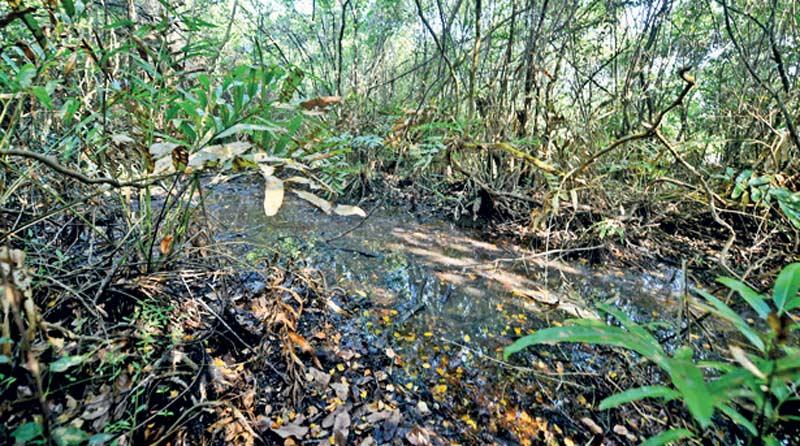
According to Dr. Preshila Samaraweera, Consultant Community Physician at the NDCU, the endemicity of the dengue virus has increased since 2000. “Therefore the number of cases cannot be brought down to zero even during a drought period. Due to the tropical climate the incidence of dengue is high and there is high transmissibility,” said Dr. Samaraweera.
(Left) More rain also creates more stagnant water bodies and receptacles that mosquitoes may breed in.
When asked why there had been a sudden spike of dengue cases during the pre-monsoon period in 2025, Dr. Samaraweera said it cannot be described as a surge in cases because a similar trend had been observed during the past few years during the same period.
Dengue Vector and Climate Change
But increasing evidence also suggests that peak dengue seasons may stretch due to unseasonal rains and warmer temperatures.
More rain also creates more stagnant water bodies and receptacles that mosquitoes may breed in. Three of the four stages of the mosquito life cycle take place in water – eggs are laid in pools of stagnant water, which hatch into larvae and pupae which develop within them.
A 2020 research on climate change induced vulnerability and adaptation for dengue incidence in Colombo and Kandy explores how numerous models have predicted that climate change would increase the geographic distribution and potential risk of dengue incidence.
Relative humidity is a vital factor, which directly enhances the feeding frequency, inter sexual attractions and oviposition rates of Aedes mosquitoes. The adult longevity and survival success after being infected by DENV have also been found to increase under high humid conditions leading to a wide geographical dispersion of dengue.
Colombo – A High Risk MOH Area
As for the Colombo district, a combination of factors make it a highly vulnerable area for dengue fever. A study on the impact of environmental factors on the spread of dengue fever in Sri Lanka reveals that dengue fever incidence was caused by following factors: precipitation, wind, urbanization, land management, socio-demographic characteristics.
Consequently, western province possessed higher dengue cases (41% in 2017) than the eastern parts of the country (7% during the 2017 outbreak).
A 2024 research on dengue dynamics and environmental impact indicates that in Sri Lanka, the tropical climate, marked by seasonal weather primarily influenced by monsoons, fosters optimal conditions for the virus to spread efficiently. This heightened transmission results in increased per-capita vector density. Dr. Samaraweera further said that every year 45-50% of cases are always being reported from the Western Province of Sri Lanka. “Out of 57 MOH areas in the Western Province, a high number of cases are often being reported in areas such as Nugegoda. The reasons are manifold including high population density, flash flood situations after a heavy rain that would usually increase the number of stagnant water bodies and most importantly the lack of a proper solid waste management system,” said Dr. Samaraweera.
She said that potential breeding sites for the dengue vector include discarded items such as yoghurt cups, coconut shells etc., mostly found in the backyards of houses and commercial buildings.
Speaking about changes in weather patterns over the years, Dr. Lareef Zubair, Principal Scientist at the Federation of Environment, Climate and Technology, observe some ‘unusual rain events’ in dry seasons thereby delaying wet seasons at times. It appears that the frequency of such extremes has changed.
The endemicity of the dengue virus has increased since 2000. Therefore the number of cases cannot be brought down to zero even during a drought period. Due to the tropical climate the incidence of dengue is high and there is high transmissibility. —Dr. Preshila Samaraweera, Consultant Community Physician at the NDCU
“Certainly, the temperature highs, the air quality highs and evaporation has been exacerbated due to the already observed climate change. The argument that the warmer atmosphere has the capacity to hold much greater amounts of water vapour is sound and when large clouds burst it can lead to extreme rainfall,” said Dr. Zubair who had been observing weather patterns over the past 15 years.
He further said that people are experiencing a hydrological change. “Both maximum and minimum temperature is higher than in the last century. As a result, evaporation is much higher. Sri Lanka experiences lower air quality, which influences rain formation and the acidification of rain,” he stated.
Dengue Infection and Non-Economic Losses
So far, the dengue infection has claimed four lives during the first two months of 2025. In 2024, dengue claimed the lives of 24 individuals. Dr. Samaraweera further said that by reducing the number of cases, it would also save the expenses borne in treating patients with dengue. “When a patient is diagnosed with dengue, his or her economic productivity drops for three weeks. On the other hand the intensity of the infection varies from person to person. Therefore as the apex body to control dengue infections, we carry out targeted interventions such as fogging activities, source reductions and so on,” she added.
A 2014 study done on the economic cost of non-fatal paediatric dengue cases indicate that the average cost to hospital per case of dengue haemorrhagic fever (DHF) and dengue fever (DF) was SLR 24,856 (US$ 191) and SLR 10,348 (US$ 80) respectively.
Sehansa’s case is a classic example which indicates that dengue infection affects individuals irrespective of age. Other non-economic losses associated with dengue fever includes potential long-term health complications and psychological impact on caregivers.
However, the NDCU has been taking various measures to bring down the frequency of deaths by dengue. Dr. Samaraweera said that compared to 72 deaths in 2023 the number of deaths were brought down to 24 by 2024,” she added.
According to WHO, improper water storage practices and high population density are risk factors for dengue. But even though the authorities are taking steps to bring down the cases of dengue, V. Chithra, Sehansa’s mother, claims that even though fogging activities are being conducted by authorities on a regular basis, none of those interventions could save her daughter. “Fogging alone isn’t enough. If you check around these flats, the drainage systems are blocked and there are many stagnant water bodies. People aren’t interested in cleaning their sewage lines or cleaning the surroundings because poverty is a bigger burden they have to face on a daily basis,” she added.
In her comments, Dr. Anoja Dheerasinghe, Consultant Community Physician at NDCU said that there’s no stigma attached to the dengue infection unlike for diseases such as tuberculosis and HIV. When asked whether the urban poor is more vulnerable to the dengue infection Dr. Dheerasinghe said that people in highly populated areas are more vulnerable. “The population density in underserved settlements is high and the mosquitos’ flight range is between 100-200 metres. Therefore chances of an outbreak is highly likely in these areas and people therefore have to take all precautions,” she underscored.
The temperature highs, the air quality highs and evaporation has been exacerbated due to the already observed climate change. The argument that the warmer atmosphere has the capacity to hold much greater amounts of water vapour is sound and when large clouds burst it can lead to extreme rainfall. —Dr. Lareef Zubair, Principal Scientist at the Federation of Environment, Climate and Technology
According to the newly drafted National Strategic Plan for Prevention and Control of Dengue – 2024-2030, Sri Lanka has made a commitment to reduce dengue deaths to zero by 2030. The authorities are determined to bring down the average infection rate by 40%. But whether increasing risk factors such as climate change and the adaptability of the dengue vector would pose significant challenges in reaching this target, remains a doubt.
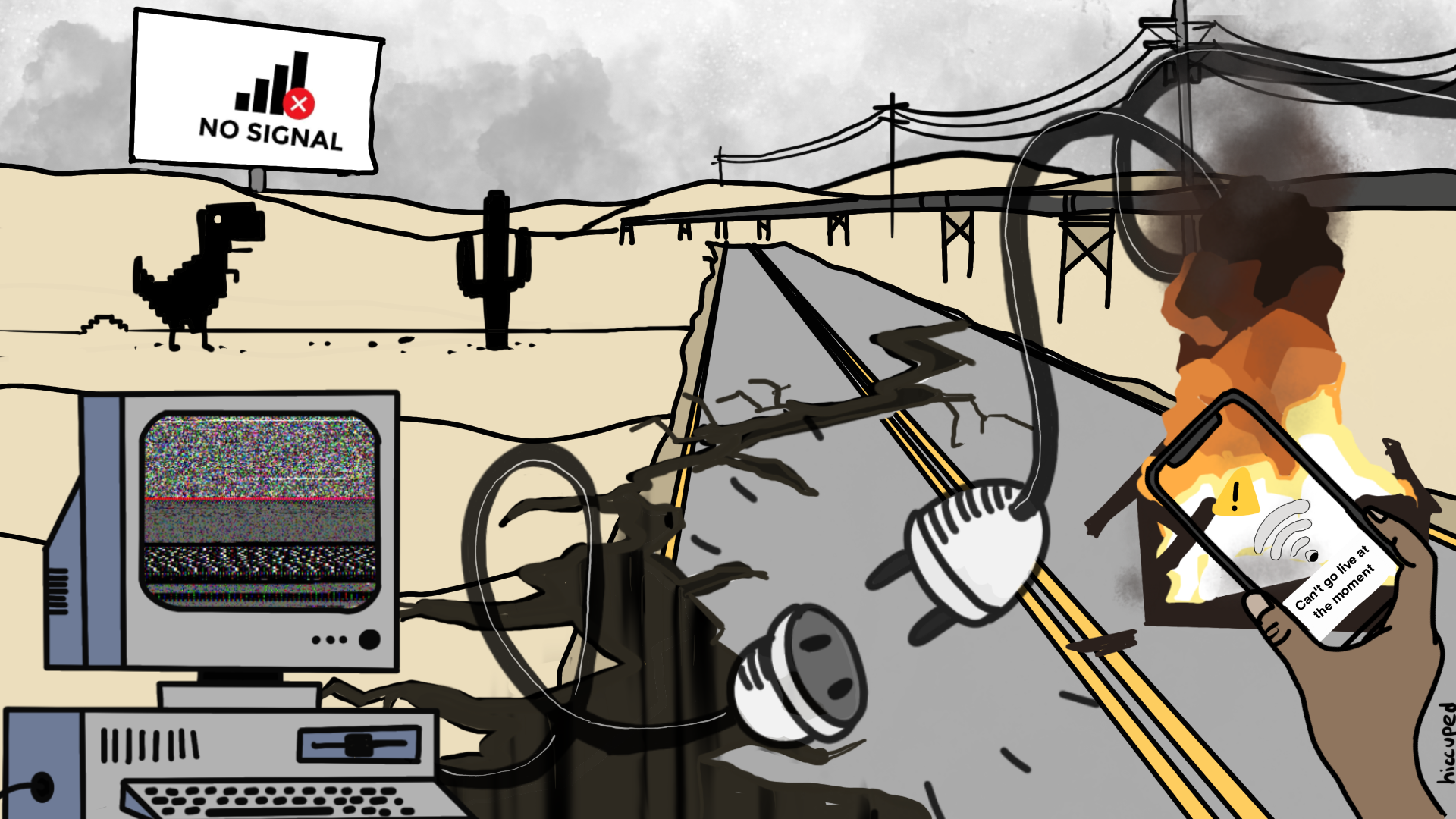
A new Asian Dispatch analysis mapped nearly 400 internet shutdowns in the last five years across South Asia. Illustration: Sharanya Eshwar
Across the world, social media has emerged as a means to collectively voice opinion and advocate for causes since the early 2000s. In South Asia, where internet penetration rates and mobile phone usage are some of the highest in the world, the platforms have been instrumental in democratising freedoms of speech and expression too.
The data speaks for itself. In India, over 70 percent of the population was using the internet as of 2024 data by International Telecommunication Union. In Bangladesh, that rate came up to 44.5 percent in 2024. The mobile broadband subscriptions stand at 899 million users for India and 98 million users in 2024. Looking at data from 2023 for Sri Lanka and Pakistan, we see the connectivity rate at 51.2 percent and 27.4 percent, respectively. The active mobile broadband subscriptions are at 73.5 per 100 people for Sri Lanka and 55.1 per 100 for Pakistan, as of 2024.
At the same time, the digisphere has created a new landscape for non-elite civic participation in everyday politics and political activism, wrote Dr Ratan Kumar Roy, a media studies professor from Bangladesh based in India, in his white paper on digitisation and civic participation. “Politics in the digital age is often subtle and takes on forms different from traditional political activism. This can include liking, sharing or commenting on political content, which can collectively have a large impact,” Roy notes in the report.
According to digital rights group Access Now, South Asia has seen some of the world’s leading internet shutdowns for over six consecutive years until 2024. In their 2024 report, they note that India witnessed 116 internet shutdowns in 2024 and over 500 in the last five years.
Mishi Chaudhary, the founder Software Freedom Law Center (SLFC.in) in India recalls two types of internet shutdowns: Preventive – that are imposed in anticipation of an event that may require the internet to be suspended by the state – and reactive, which are imposed to contain ongoing law and order situations.
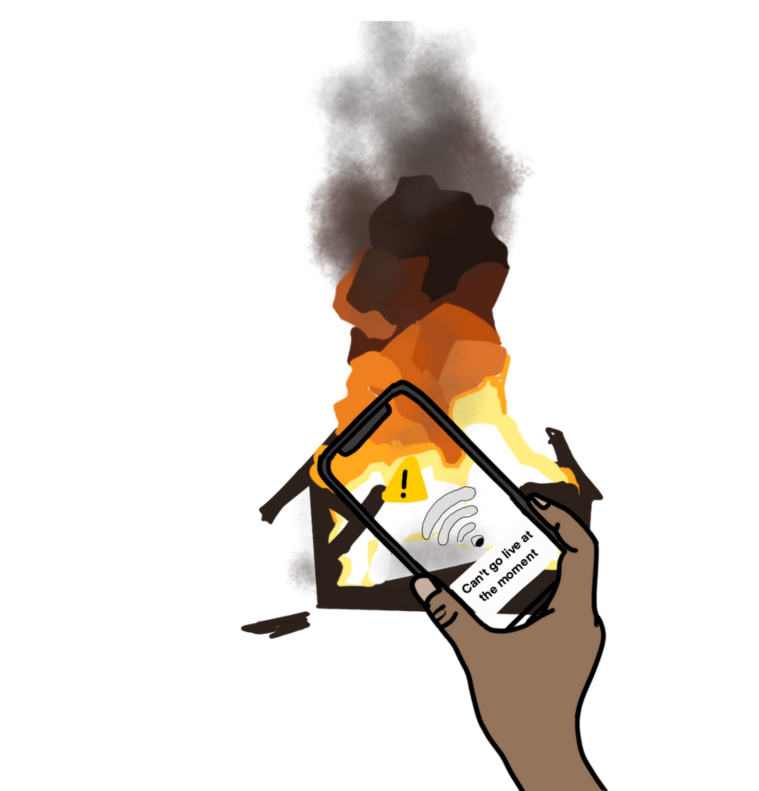
Internet shutdowns can take various forms, from blocking of certain websites to partial or full telecommunication and internet shutdowns.
“Internet shutdowns are the easiest tool in the toolbox for governments to control the flow and dissemination of information,” Chaudhary tells Asian Dispatch. “Although no evidence has ever been presented about the effectiveness of shutdowns, state authorities, fearful of the ease of organisation via the internet, are quick to use this blunt instrument of state power.”
In this piece, Asian Dispatch mapped 397 shutdowns between July 2019 and 2024 in India, Sri Lanka, Pakistan and Bangladesh out of which shutdowns in India, Pakistan, Bangladesh and Sri Lanka stand out. This data doesn’t include Afghanistan, Bhutan, the Maldives and Nepal, where internet shutdowns of this measure have not been documented.
Internet shutdowns have tangible real-world costs. In 2024, Pakistan’s economy was estimated to have lost between $892 million and $1.6 billion, according to the Information Technology and Innovation Foundations, a Washington-based think tank working on science and technology policy. In 2018, Sri Lanka faced an estimated $30 million loss due to similar measures, as reported by NetBlocks. The figures for India in 2024 stand at $322.9 million, as per the report by Top10VPN.
Robbie Mitchell, Senior Communication and Technology Advisor for the Internet Society, a global charitable organisation, says that information blackouts resulting from internet shutdowns can, in fact, result in increased violence. He elaborates further by adding that violent tactics of protest are less reliant on effective communication mechanisms and thus they could substitute non-violent protests that rely on the internet for planning and organization in the cases of internet shutdowns.
“In addition, internet shutdowns tend to attract international attention and create pressure on countries that undertake them. This relates to the so-called ‘Streisand effect,’ where the attempt to silence voices or hide information leads to the unintended consequence of bringing more attention to them,” Michelle says.
Left in the Dark
Mandeep Punia, a 30-year-old journalist from India, says that any internet shutdown causes a “fear of the unknown” in the society. Punia has experienced shutdowns first during the 2016 Jat community reservation protests, as well as the 2019 shutdown in Kashmir during the abrogation of article 370, among others. The most recent internet shutdown in India was in the state of Haryana in August 2025, as recorded by the internet tracker maintained by SLFC.
About 3,000 kms away, in Sri Lanka, Oshadi Senanayake, a civil society member and social worker, recalls the communication shutdown during the anti-Muslim violence in Sri Lanka in 2018. The series of violence saw the imposition of a nationwide state of emergency as Sinhalese-Buddhist crowds attacked Muslims and their establishments in the city of Kandy. “When the means of communication were restricted, it was very difficult,” she tells Asian Dispatch. “We were all in the dark, no one knew what was going on and there was no way to find out either.”
The similarity in these narratives connects the dots across South Asia on how internet shutdowns impact people.
In 2024, Pakistan invoked the region’s most recent shutdowns, which was done to curtail mass uprising in support of jailed former prime minister Imran Khan. This was one of the 17 shutdowns Pakistani people faced in the last five years, as per data collected by Asian Dispatch.
The same year, in July, Bangladesh saw mass protests by university students over government jobs, which eventually upended Sheikh Hasina’s 21-year rule. Her government resorted to internet shutdown in order to curb the organised movement. Over 1,000 people were killed during the protests, as per a report released by the interim government led by Nobel Laureate Mohammad Yunus.

At the same time, Asian Dispatch learned of students finding ways to circumvent the internet blackout, specifically by urging the residents to open their Wi-Fi networks, either by removing passwords or using “123456,” to support the movement. Shahriyaz Mohammed, a student at the University of Chittagong, and Raihana Sayeeda Kamal, another student based in Dhaka, confirmed that such appeals were made. According to Roy, who is also a former media studies professor at BRAC University in Bangladesh, this appeal drew widespread response, with many complying.
At the same time, the communication blockade disrupted the academic and professional prospects for many. Kamal said that she graduated last July and was supposed to apply for her postgraduate work permit in Canada. “I couldn’t do it. I was out of touch from Canada. It hampered my job search and communications with my professors, and delayed my application,” she tells Asian Dispatch.
Raihana Sayeeda Kamal, a student based in Dhaka talks to Asian Dispatch about her experience of living through the internet shut down of 2024 in Bangladesh
Mohammed, who lives in Chattogram, the second largest city of Bangladesh, says that internet cuts take place anytime, and that the Internet Service Providers (ISP) do not give any prior notice.
“The internet is the most necessary thing for my occupation and also for my study,” he says. However, due to these shutdowns, he wasn’t able to communicate with his office or get any updates from other parts of the country during the protests which hampered work for him as a budding reporter.
Controlling the Narrative
In 2019, India abrogated Article 370 of the Indian Constitution, which accorded special privileges to the region of Jammu and Kashmir. Along with the announcement came a sweeping communication blockade in order to curb disruptions due to anticipated unrest. The blockade in the region lasted 18 months prior to the services being fully restored. In all, the region experienced 213 days of no Internet and 550 days of partial or no connectivity, as noted by the Internet Society.
“Due to COVID-19, everyone knows what a lockdown looks or feels like. But it was only worse in Kashmir as there was not a restriction to physical spaces but also to virtual spaces,” Sayma Sayyed*, a student at a leading university in India, tells Asian Dispatch on condition of anonymity.
The situation, she added, resembled a pre-digital era, with no internet or mobile reception, forcing people to travel several kilometers just to check in with their loved ones.
The lack of internet creates a void of information in the society, says Sayyed*, a resident of Baramulla in Kashmir. “When I had to fill my form for competitive exams, students had to rush to government offices to do so,” Sayyed added. “So I went to the District Commissioners office to fill my form which is when I realised something has happened. Something I could do on a leisurely day became such a big task.”
Within India, the Union territory of Jammu & Kashmir holds the record of the highest number of shutdowns in the country.
Another student from the valley, who also spoke to Asian Dispatch on condition of anonymity, highlighted the psychological impact of such situations. “You don’t feel normal in places outside Kashmir,” the student said. “When I shifted to Delhi for further studies, I was confused as I was able to carry out my studies without any restrictions. I expressed this to my friends and they, too, agreed with the lack of restrictions. It felt jarring to someone who has seen so many curfews and internet blackouts.”
In this video from 2020, a student from Kashmir Valley in India’s Jammu & Kashmir voices similar concerns to Sayyed’s over the delay in her B.Tech examinations and how due to lack of internet, applying for her sister’s entrance examination became a daunting task. Source: Internetshutdowns.in, a repository of internet shutdowns in India maintained by Software Freedom Law Center, India [SFLC.in]
In Bangladesh, Shamim Hossen, a 28-year-old humanitarian worker and the reporting officer at Muslim Hands International, a charitable organisation, highlights how those solely reliant on mobile data were completely cut off. “I use mobile internet and data, and when I am in my office, I use Wi-Fi. But during the internet shutdown, our office was closed so I have no experience using Wi-Fi during that time,” she tells Asian Dispatch.
Sri Lanka has seen the use of full internet shut downs as well as partial restrictions such as curbing access to social media websites for a certain duration. Incidents such as the Easter bombings in 2019 which saw serial blasts on multiple public and religious sites in Colombo, to the economic crisis of 2022 to the Presidential elections in 2023 saw the use of such measures. The country has seen 5 shut downs from 2019 to 2022, as per data collected by Asian Dispatch.
Amarnath Amarasingam, Assistant Professor at the School of Religion, Department of Political Studies, at Queen’s University in Canada, told Asian Dispatch about the relation between misinformation and shutdowns. “In Sri Lanka, when social media was blocked, citizens turned to alternative, less reliable sources,” he says. “These shutdowns made it difficult for credible journalists and activists to fact-check information, leading to a situation where rumours and conspiracy theories filled the void. In countries with ongoing communal tensions, the spread of false rumours can lead to real-world violence against civilians as well.”
Massive protests in Delhi. All communications have been suspended in select areas where the protests were scheduled to take place. Please report any Internet shutdowns to us @NetShutdowns
Reach out to us – +911143587126#LetTheNetWork #KeepItOn #delhi pic.twitter.com/ziUtYdJEMe— InternetShutdowns.in (@NetShutdowns) December 19, 2019
Women’s safety and internet shutdowns. How internet shutdowns impact women’s safety and travel in the national capital of India, Delhi. Source: Internetshutdowns.in, a repository of internet shutdowns in India maintained by Software Freedom Law Center, India [SFLC.in]
Highlighting the broader implication of using internet shutdowns to control dissent, Amarasingam adds: “Internet shutdowns have significant human rights implications, especially around issues like freedom of speech and access to information. Shutting down internet services curtails individuals’ ability to express dissent, participate in protests, or even access vital services such as health and education. All of this, of course, will impact marginalised communities more than others.”
“In Sri Lanka, these shutdowns particularly affect communities with fewer alternative sources of information and who rely on mobile internet for basic services. In the former war zones in particular, these alternative sources of information are key for receiving information that is not curated by the government.”
“Along with the professional, personal life also gets affected,” adds Aftab Mohmand, a 44-year old senior journalist from Peshawar. Mohmand adds that usually, one can circumvent restrictions through VPN or Wi-Fi. But in Peshawar, there is no such facility. Four of the 35 shutdowns Asian Dispatch has documented from 2019 to 2024 for Pakistan were in Peshawar province. “VPN data is monitored and it can be dangerous too,” says Mohmand. Since 2014, he has been using the phone to make reels, create reports and record everything using the internet.
Disrupting Normalcy
“My clients outside of Peshawar think that people from the region do not work properly due to internet restrictions coming up now and then. We had in fact replied to messages but they would reach one to two hours later, which affected our credibility.”
This is the ordeal of Sufi Ali, a 35-year-old IT officer from Mardan, located in Peshawar, Pakistan. Pakistan has recorded 35 shut downs between July 2024 to July 2019, according to the Asian Dispatch analysis. These include blocking the internet in response to protests such as the ones in support of former Prime Minister Imran Khan in 2022 to allegations of throttling with the internet speed by the government during the testing of speculated possible internal firewall.

Virtual Private Networks (VPNs) are often used to bypass shutdowns or access regionally blocked websites. But Mohmand notes that they significantly slow down internet speeds.
Journalists from India, Sri Lanka and Pakistan told Asian Dispatch that these restrictions make it nearly impossible to verify information for accurate reporting.
“I am a journalist so whenever we go out for conflict reporting, we face [internet shutdown],” says Punia, the rural journalist from India. “But the worst aspect of that is that our [media portals] are also shut down.
His concerns are mirrored by Sandun, a freelance journalist based in Sri Lanka. Talking about covering the 2018 anti-Muslim violence, she says the internet shutdown made their job even more difficult. “We treated every piece of news with suspicion and nothing could be verified. The officials were too silent or evasive and we didn’t have anyone on the ground. We felt like we would risk peddling misinformation,” she says.
READ: In Bangladesh, Cops Accused of Killing Protesters During 2024 Uprising Roam Free
On July 19 alone – the day Sheikh Hasina’s ousted regime enforced an internet blackout – at least 148 people were killed by law enforcement agencies, according to a report by the International Truth and Justice Project (ITJP) and Tech Global Institute.
CIR also identified two “peaks” in violence. The first was on July 18, where killings amounted to a massacre. It all started with the killing of a protester called Abu Sayeed, in Rangpur district, on July 16, which was captured in a now iconic image of him spreading his hands in front of the police force. The second peak in violence was on August 5, the day Hasina resigned and fled to India.
Both these peaks in violence also correspond to internet shutdowns, as Asian Dispatch has investigated.
The Policy Pitfalls
South Asian governments often cite national security and misinformation as reasons for internet shutdowns. However, these terms are frequently undefined or vaguely worded in legislation and policy, prompting global experts to raise concerns about their potential misuse.
In the absence of any explanations by government arms on the reasons behind these moves, speculation is rife. For instance in India, internet shutdowns are governed under the Temporary Suspension of Telecommunication Services Rules, 2024, which, under clause 3, explicitly states that the reason for such measures needs to be released in writing. However, these orders are seldom found in the public domain..
In Pakistan, the legal backing of shutdowns is murky as the Pakistan Telecommunications Authority (PTA) also recently highlighted this legal uncertainty. Numerous laws are speculated at play here, with most shutdowns being informed by PTA, the body responsible for establishing, maintaining and operating telecommunications infrastructure in Pakistan, via orders for enforcement by the Interior Ministry. Other than these orders it is believed that Section 54(3) of Pakistan Telecommunication (Re-organization) Act, 1996 is used for such shut downs, which has been ruled against by the Islamabad High Court in 2018. The opacity of such measures is widely recognised by activists and advocacy organisations in the country as well as globally.
Recently, Pakistani journalist Hamid Mir filed a petition in Islamabad High Court, requesting for clarity on why the internet speed in the country were significantly lagging in the past few months, leading to even voice notes or multimedia on WhatsApp not reaching receivers. The petition comes at a time when speculations are rife about the government installing a “fire wall” that would prevent free and open use of the internet in Pakistan.
Other laws in Pakistan, such as the Prevention of Electronic Crimes Act, 2016 (PECA) under its 2025 amendment-equipped section 26(A) criminalise intentional dissemination of false information in the country. ‘Fake news’ is also the basis of many internet shutdowns, thereby hinting at the indirect use of the act for enforcing such measures.
Sri Lanka, too, sees a similar trend in a mix of non-specific regulations being used to curb internet and social media access in the country. Orders to the Sri Lankan Telecommunications Regulations Commission by the Ministry of Defense have been seen as ways of enforcing such curbs. Reasons for shutdowns range from curbing the spread of misinformation, to stopping demonstrations such as during a state of emergency.
Amarasingam says that the absence of official communication during internet shutdowns often leads to an information vacuum, which can fuel misinformation.
“The problem is that in authoritarian contexts, misinformation merely means critiques of the ruling party. And ‘terrorism’ often just means agitation against the government. And so, these terms are weaponised to curtail fundamental rights. In these contexts, shutdowns may hinder the spread of accurate information, create distrust, and deepen existing societal divisions,” she says.
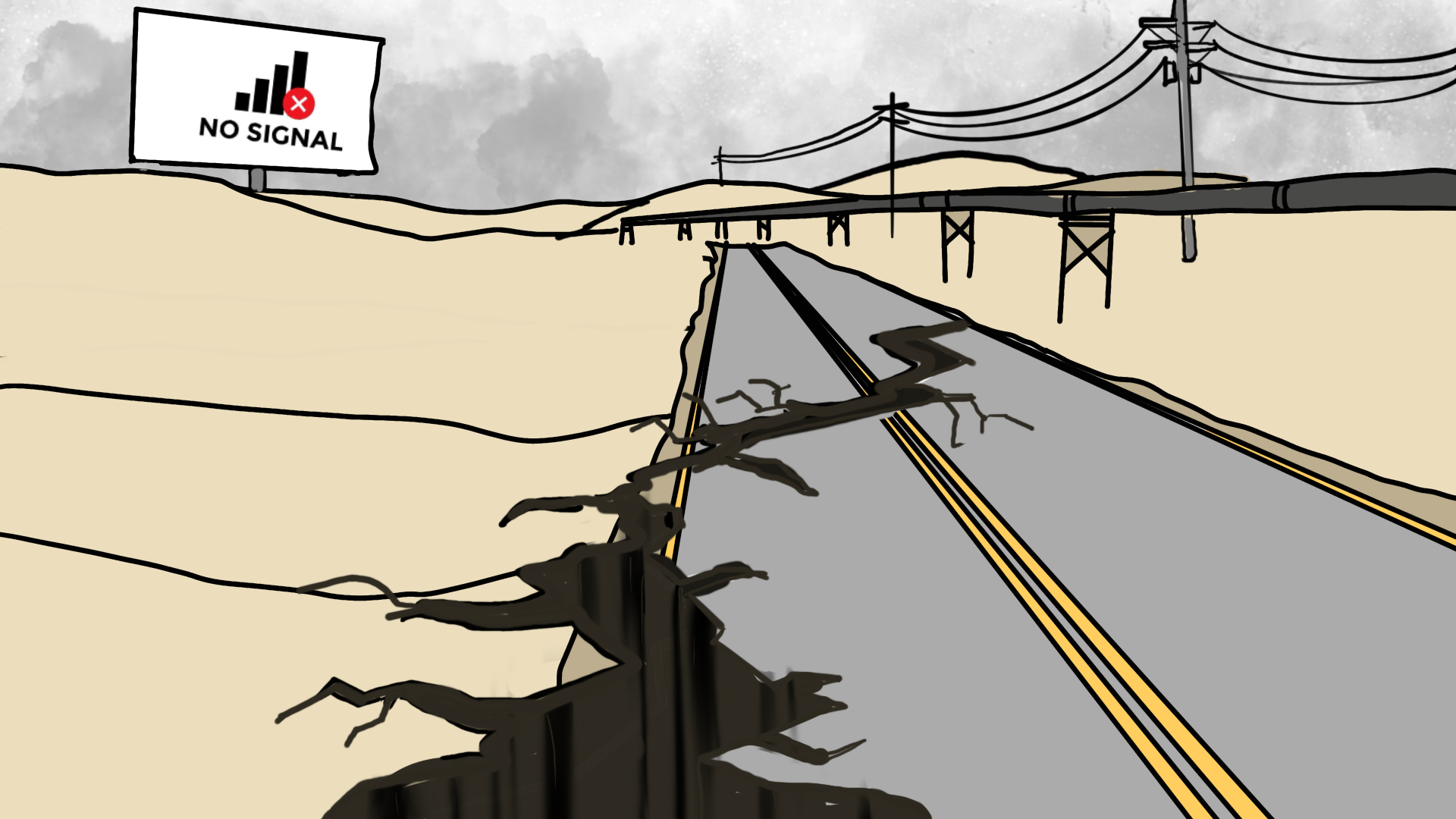
In India, the law is clearly laid out but often not applied consistently. For this, Chaudhary of SLFC says that the civil society has to constantly approach the courts to enforce their rights. “Time period of shutdowns are extended continuously despite limitations imposed by law. Law requires proportionality,” Chaudhary says, adding that the proportionality of these actions is far more than required for the general good.
“Can shutting down the entire system of social communications and completely crashing the payments economy for months be ‘proportional’ to the necessary problem of preventing the incitement of intercommunal riots? If this government intervention is the ‘least restrictive means,’ what are the other more restrictive means the government would not be allowed to use?” Chaudhary asks. “The mind boggles.”
Mitchell from the Internet Society adds further context to the consequences of these actions: “Internet shutdowns tend to attract international attention and create pressure on countries that undertake them. This relates to the so-called Streisand Effect, where the attempt to silence voices or hide information leads to the unintended consequence of bringing more attention to them.”
Digital Rights are Human Rights
When asked whether they were informed prior to internet shutdowns, there’s an astounding “no” from those interviewed for this piece.
Numerous international statutes reaffirm that the internet is an indispensable part of human rights. The United Nations Human Rights Council enshrines this in Article 19 of the Universal Declaration of Human Rights, which “protects everyone’s right to freedom of expression, which includes the freedom to seek, receive and impart information of all kinds, regardless of frontiers.” Restrictions to right to freedom of expression are only permissible under article 19(3) of the Universal Declaration of Human Rights, although it notes: “When States impose internet shutdowns or disrupt access to communications platforms, the legal foundation for their actions is often unstated.”
In India, on two separate instances – by the High Court of the state of Kerala and then the Supreme Court – access to the internet has been declared a fundamental right under the Indian constitution.
“In India, the law is clearly laid out but often not applied consistently. adds Choudhary of SFLC.in.
In Bangladesh, a similar trend exists. Asian Dispatch spoke to students and young professionals who didn’t receive any prior intimation of internet shutdown orders in the last one year. The trend is to slow down the internet, and then slowly revoke access fully, says Kamal, from Bangladesh.
Noting the impact of shutting down the internet, Michelle says: “Internet shutdowns have far-reaching technical, economic, and human rights impacts. They undermine users’ trust in the internet, setting in motion a whole range of consequences for the local economy, the reliability of critical online government services, and even the reputation of the country itself. Policymakers need to consider these costs alongside security imperatives.”
While law governs social media and not internet shutdowns directly, it is worth noting that the negative effects of problematic regulations become yardsticks for regimes that govern a similar cultural and social landscape.
“It also stops people from both demanding and empowering government action to protect its people,” Chaudhary adds. “Shutdowns don’t create the social and political will to safeguard our people, but rather a cloak for the government to hide its shame.”
Punia, the journalist from India, agrees and adds that freedom of speech and expression are never absolute. “They are only useful until one has to show them as democratic for indexes and rankings and gain marks there,” he says.
These are just a few examples of the broader impact experts point to. Given the concerns raised by individuals like Sayyed in India and Hossen in Bangladesh, a critical review of both the shutdowns and the frameworks enabling them is long overdue. Access restrictions need to be brought to the fore and the internet needs to be given a fair chance to make a case for its freedom.
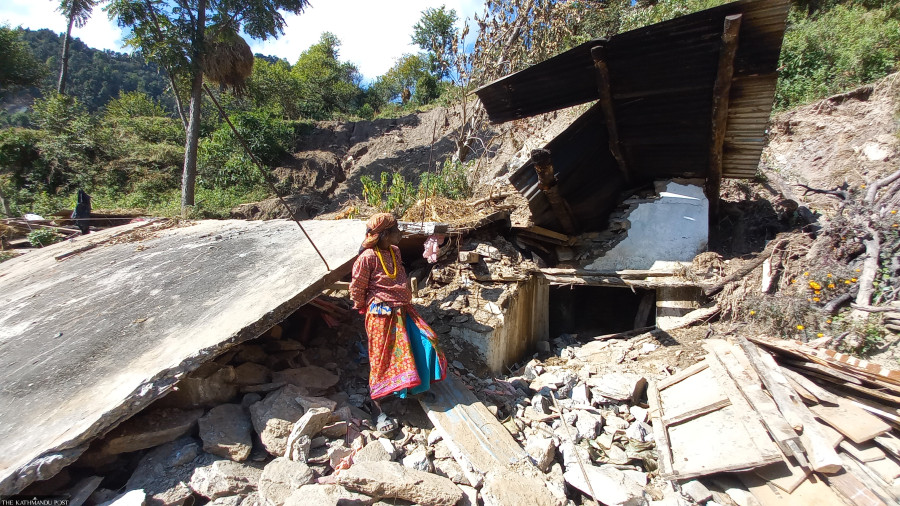
A house destroyed by a landslide in Khaptadchhanna Rural Municipality in Bajhang four years ago, pictured recently. Photo: Basant Pratap Singh
Sekugaun village in Farwest Province was alive with celebration during Dashain, Nepal’s biggest festival. People had gathered to celebrate the Hindu festival with friends, relatives and family. But as twilight fell on October 16, 2021, dark clouds rolled in and a relentless rain began to pour.
Sher Damai, 65, lay awake as water roared just meters from his house. His family slept soundly. He could not. By midnight, floodwaters had reached their doorstep. “I knew we had to get out,” he recalled. As they scrambled uphill in the dark, the wall behind them collapsed with a deafening crash.
Fifteen homes in Sekugaun, most of them Dalit households, were damaged that night. Sher’s was one of hundreds across Bajhang destroyed by unseasonal monsoon floods that displaced over 1,145 families who needed complete home reconstruction. Another 854 required significant repairs. Dalits made up 463 of these affected families. The National Disaster Risk Reduction and Management Authority (NDRRMA), a government agency tasked with managing disaster risks, identified 31 families whose homes needed complete relocation because they were built in high-risk areas.
To uncover how Dalit families were excluded from the disaster reconstruction grant, Asian Dispatch analysed the government records obtained through a Right to Information (RTI) request and conducted ground-level verification across flood and landslide affected settlements in Bajhang. We cross-checked multiple beneficiary lists issued by the National Disaster Risk Reduction and Management Authority (NDRRMA) over the years and found many names had been removed or left pending. Using satellite imagery and Google Earth Engine, we also analyzed four decades of rainfall data, which confirmed the 2021 floods hit after the monsoon’s official withdrawal – adding urgency to the devastation. A visual timeline further showed how bureaucratic delays, official inaction, and structural discrimination quietly erased hundreds of Dalit families from the recovery process.

The disaster damaged 15 houses in Sekugaun, home to 85 Dalit families.
Nearly four years later, many of the worst-hit families – especially the Dalit community – have been ignored by the state, with insufficient funds to rebuild. Left off government beneficiary lists or granted partial aid at best, they remain trapped in debt or have been forced to migrate to India. The failure to deliver post-disaster support exposes deep-rooted caste discrimination that persists despite Nepal’s promises of inclusive recovery. Dalits, historically labeled as ‘untouchables,’ are among the most disadvantaged castes in Nepal–routinely excluded from land ownership, state services and political power.
In Bajhang, 125 Dalit families affected by the disaster remain abandoned, their homes marked by padlocked doors. Already among the worst hit, the Dalit community now faces a second crisis–systematic neglect by the government in both relief and reconstruction efforts.
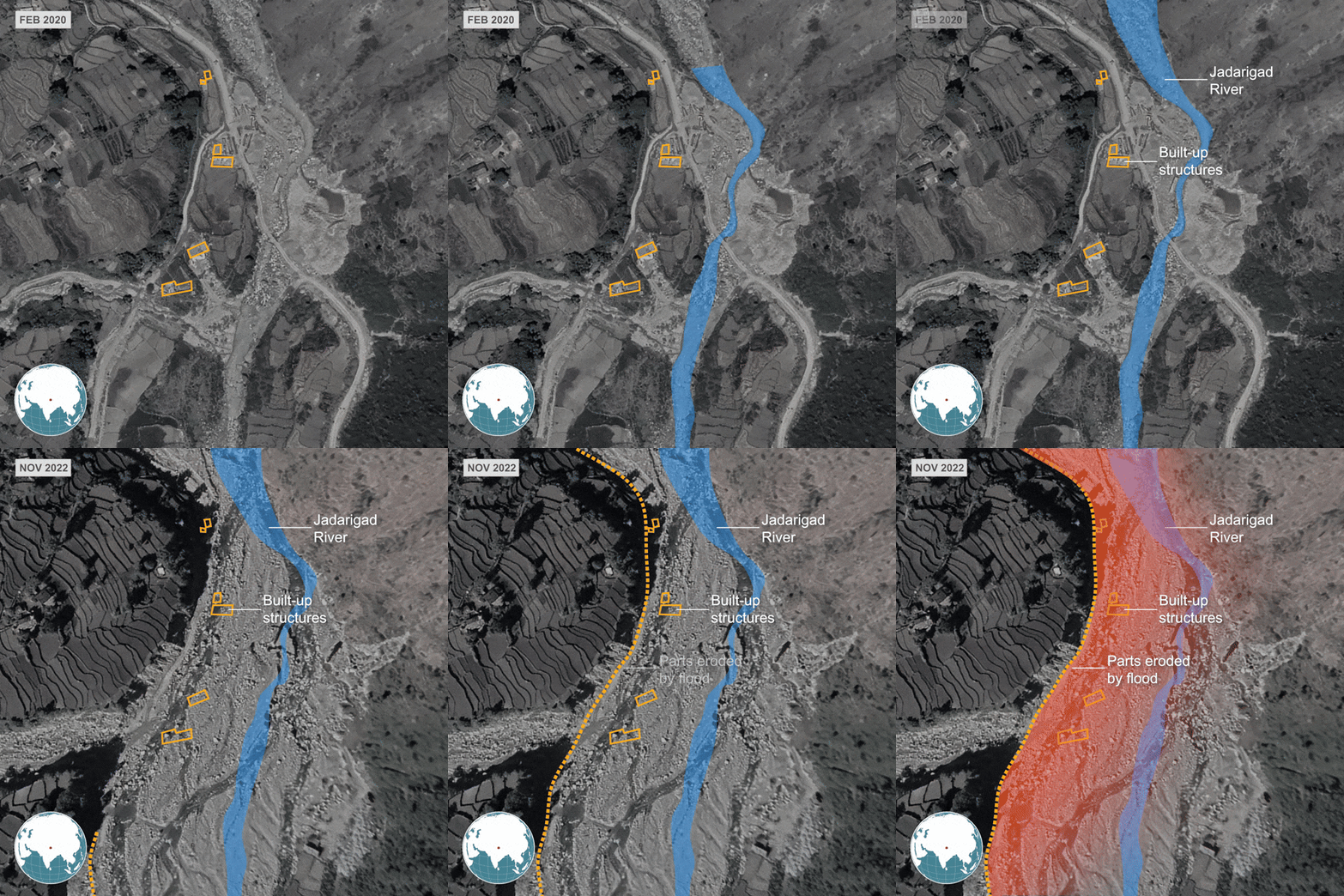
(Left) The October 2021 rainfall triggered landslides in many parts of Bajhang district, Nepal – particularly in Khaptadchhana Rural Municipality. During the same period, floods in the municipality caused significant damage, sweeping away houses, arable land, and infrastructure. Satellite image source: Google Earth Pro
Govinda Raj Pokharel, a former CEO of the National Reconstruction Authority, criticized the government’s failure. “The prolonged delay in rehabilitation and reconstruction work for Bajhang’s disaster victims demonstrates a fundamental weakness in governance. It has ultimately forced people to abandon their country,” said Pokharel, a former Vice Chairman of the National Planning Commission.
“After a disaster in Nepal, the government is tasked with providing immediate temporary shelter to the victims. It is followed by permanent housing within two to three years. This clearly wasn’t a priority,” he said. “Consequently, Dalit and impoverished families – who possessed nothing beyond their homes – were left without any economic safety net when their houses collapsed. These vulnerable people and communities should have received priority attention and additional support compared to others. Instead, they were rendered invisible – the state failed to see them, and they, in turn, felt abandoned by the state.”
Debt and Displacement
Despite the Dashain festival, several teams – including local officials from the rural municipality – arrived days after the landslide to assess the damage. Some brought emergency relief. Deepak Luhar, a local whose ground floor had been engulfed by mud after the landslide broke through one side of his house, followed the teams.
Deepak and his neighbor Sher Damai had narrowly escaped with their families, fleeing just in time. While their lives were spared, their homes were not. In the immediate aftermath, they were told the government would support reconstruction. “They asked us to submit applications to the ward office, saying funds would come for rebuilding,” he recalled. “It’s been four years since we applied. We haven’t received a single rupee.”
Deepak and Sher are among many Dalit families across Bajhang who submitted applications after their homes were destroyed. But most are still waiting. Some weren’t included in the beneficiary list at all. Others received only the first installment and were forced into debt trying to repair or retrofit their houses. A few homes stand shuttered, locked up by families who have since left. Some left for India with hastily built structures abandoned behind them. Others are packing to leave. One by one, Dalit settlements in the district are emptying in the wake of the disaster.
Sher managed to rebuild part of his flood-damaged house by borrowing money. But the repaired walls are already showing cracks. Stones have begun to loosen and fall.
Deepak’s family now lives in a neighbor’s home. Sher earns what little he can through grain paid twice a year in exchange for tailoring clothes for non-Dalits. Deepak relies on his blacksmithing. In their spare time, both take up day labor and borrow money just to survive.
They share a dream: to build strong, permanent homes. But that dream has come at a cost. With mounting debts and no support, their families have been forced to migrate. In April 2022, Deepak’s brother and sister-in-law left for Anarkatta in Bangalore, India, taking their infant child to work as laborers. Two years earlier, Sher’s three sons and two daughters-in-law also migrated with four young children.
“They went hoping to earn enough to rebuild what the landslide destroyed,” Sher said. “But they have to feed their families and send money back too. What little they manage to send is just enough for us to eat. I don’t know when–or if–our dream of building a proper house will come true.”
Systemic Neglect
Neither Sher’s nor Deepak’s name appears on the beneficiary list compiled by the NDRRMA for reconstruction and repair of housing for those at risk from monsoon-induced disasters. When informed of this, the two Dalit members became angry. “Those with less damage than us and even those with no damage at all are on the list, but our names have been removed,” Deepak said angrily. “The well-off receive relief even when they’re not victims, while those of us with real problems have our names cut off. What kind of justice is this?”
According to records from the NDRRMA, 46 Dalit families across all nine wards of Kedarsyun Rural Municipality were affected by the floods and landslides. Of these, NDRRMA’s survey found that 33 families required full house reconstruction, while 13 needed repairs. Yet, even after four years, not a single family–neither those on the list nor those left out–has received any government support for rebuilding or repairs.
One of the victims is 63-year-old Kaisi Od from Dundil in Kedarsyun-1. Her home, built with mud walls and a thatched roof, partially collapsed when one of its walls gave way during the disaster. For two months, her extended family of 19 lived under makeshift tents.
As the cold weather took a toll on her grandchildren’s health, they were forced to take out a loan to build a temporary shed. Repairing the wall and replacing the roof with tin sheets cost them 650,000 rupees–plunging the family into debt. Though they managed to escape the harsh conditions of tent life, they were soon overwhelmed by the financial burden. Eventually, four sons, three daughters-in-law, and nine grandchildren left for India in search of work, leaving behind Kaisi and two of her granddaughters.
“There’s so much debt and no jobs here,” Kaisi said. “They went to India hoping to pay it off. If they’d stayed, how would I feed them all? How could we repay such a huge amount?” She expressed frustration at the government’s failure to deliver on its promises. “If we had received the funds for house reconstruction, my family wouldn’t have had to leave. I wouldn’t be left alone like this in my old age.”
In Dundil village, six out of 23 Dalit families are included in the NDRRMA’s list. Kaisi and four others are categorized as needing house reconstruction and one family is marked for repair. But locals say that 13 Dalit households in the village suffered damage from the disaster.
Broken Promises
In the aftermath of the disaster, it wasn’t just local officials who arrived for an assessment. National leaders, too, descended on Bajhang–each by separate helicopter. Among them were then-Prime Minister Sher Bahadur Deuba, Home Minister Bal Krishna Khand, Far West Province Chief Minister Trilochan Bhatta, Speaker Arjun Thapa, Minister for Internal Affairs and Law Purna Joshi and Kalyani Khadka, chair of the Federal Parliament’s Development and Technology Committee.
They assured survivors that financial aid would soon arrive under the government’s “Private Housing Reconstruction, Retrofitting and Resettlement Grant Procedure 2077,” which allocates 500,000 Nepali rupees for house reconstruction, 50,000 Nepali rupees for repairs and an additional 300,000 Nepali rupees for land purchase in mountainous districts like Bajhang.
Nearly four years later, however, most victims are still waiting.
Under the procedure, local Disaster Management Committees are responsible for identifying beneficiaries and forwarding the list to the District Disaster Management Committee (DDMC). The process is based on digital entries submitted by ward offices, along with required documents like citizenship certificates, proof of land or other records confirming disaster vulnerability. The DDMC then verifies the extent of damage and finalizes the list.
But the reality on the ground tells a different story. Many Dalits–like Deepak Luhar and Sher Damai–were excluded from the initial list. Others, such as Kaisi Od of Dundil village, were listed but later neglected.
Data from the NDRRMA reveals that while the preliminary list had identified 463 Dalit families as eligible for assistance, the final list included only 97. As of now, just 33 families have received the first installment of 50,000 Nepali rupees.
Tasbir Bika, spokesperson for Kedarsyun Rural Municipality, attributes the disparity to deep-rooted structural discrimination. “We raised the issue at the municipal level,” he said. “But across the district, Dalit voices are still ignored. They’re seen as lower-caste citizens and there are no Dalits in decision-making roles. That’s why they’re deprived of services.”
This pattern repeats in Durgathali Rural Municipality, where 107 Dalit families were affected by the 2021 floods and landslides. Of them, 31 needed full reconstruction and 73 required repairs. Yet only 14 families made it to the second list of beneficiaries and none have received any financial support.
Rakail village in Durgathali–3 was among the hardest hit. A landslide severed the road below the settlement, causing several homes to collapse or crack. Five Dalit families abandoned the village three years ago. Those who remain – mostly the elderly and children – live in precarious conditions.
“We submitted petitions to both the ward and the municipality,” said Dhan Bahadur Parki. “But we got nothing. We live in crumbling homes, barely surviving. The government doesn’t care.” His son migrated to India three years ago in hopes of earning enough to rebuild.
According to the DDMC, these victims were eligible, but their names never made it through the system because the municipality failed to approve their inclusion on time.
Kailash Thakurathi, District Chief Officer and DDMC chair, said: “The beneficiary list is uploaded to the NDRRMA’s online system. It only progresses once the municipality verifies and approves it. That didn’t happen. We’ve urged them again and again, but there’s been no action.”
Local officials, for their part, deflect the blame.
“This disaster occurred under the previous leadership. It was their responsibility to ensure victims got aid,” said Ramesh Bahadur Bohara, ward chair of Durgathali–3. “I wasn’t aware people on the list hadn’t received funds. Now that I know, I’ll take action.”
Bohara said that Dalit settlements are often located in disaster-prone areas. “When generational poverty collides with natural calamities,” he said, “people are left with no choice but to leave the country.”
Locked Homes
The consequences of this cycle are starkly visible in Dikla, a village in Thalara Rural Municipality–4. On the night of October 18, 2021, a landslide struck around midnight, wiping out homes and families in an instant. Kalak Sarki lost 18 family members – his mother, wife, four children, brother, sister-in-law and several nieces and nephews. Nare Parki, his neighbor, lost five: his mother, wife, and three children. The landslide destroyed five additional homes and swept away 50 ropani (2.5 hectares) of farmland.
The municipality listed Kalak, Nare and five other families as eligible for government grants. Each was supposed to receive 500,000 Nepali rupees under the disaster assistance program. But three years on, they’ve received only the first installment: 50,000 Nepali rupees.
To rebuild, Kalak borrowed 150,000 Nepali rupees and went to India to work as a laborer, but the debt still looms. Nare, now 57, used donations from individuals and NGOs to buy a plot of land for 150,000 Nepali rupees and lay a foundation for his new house. But with no additional funds, construction stalled. He, too, has since migrated to India.
“Everyone in my family is gone,” Nare said in a phone call from Bengaluru, India. “I thought if the government helped, I could build a home and die on my own land. But fate cheated me – and so did the government.”
Two other affected families in Dikla faced the same situation. After receiving only 50,000 Nepali rupees–far short of what they needed to rebuild or buy land–they, too, left for India with their families. Some now live with relatives, while others struggle to find work abroad.
“We got the 50,000 Nepali rupees in our accounts three years after the landslide,” said Bhagwati Devi Dikli. “That’s not even enough to buy land. How are we supposed to build homes with that?” Her husband, daughter-in-law, and ten other family members have been living in India ever since.
Forgotten by the State
Among the areas hit hardest by the 2021 disaster was Khaptadchhanna Rural Municipality. Floods and landslides left 287 families homeless, including 63 Dalit households. Across Wards 1 through 7, 18 Dalit settlements bore the brunt of the destruction.
In Meltadi, a Dalit village in Ward 3 with 23 households – 20 Damai (Dalit tailors) and 3 Chadara (Dalit wooden utensil makers)–only eight homes still have their doors open. The rest have been locked up. Entire families have migrated to India, abandoning the village.
Surjan Damai said these families, who once relied on scraps of leather given by non-Dalits in exchange for labor, had little to fall back on – just small patches of land and hope. After the disaster, they took shelter in the cowsheds of non-Dalit neighbors, waiting for government relief. When it didn’t arrive, they left for India.
Further east, in Masuradi village of Ward 1, Kali Kami would soon leave for New Delhi with her children. Her husband migrated there two years ago. The family had taken a loan of 425,000 Nepali rupees to build their house, hoping to repay it with the reconstruction aid promised by the government. So far, they have received just 50,000 rupees.
“The government betrayed us,” she said. “We wouldn’t have borrowed so much if they hadn’t promised support. Who wants to leave their home behind?”
Of the 23 families in Masuradi, 12 Dalit households displaced by the landslide had already migrated two years ago. Those who remain live in constant fear, especially during heavy rains. “Our houses are like death traps,” said Prakash Sarki. “We sleep in fear. More families are getting ready to leave.”
According to the 2021 census, Khaptadchhanna has a Dalit population of 2,223. But Ram Bahadur Singh, the ward chair of Khaptadchhanna–5, said only a fraction now live in the village. “Most Dalit villages are empty,” he said. “Maybe five or six hundred Dalits remain in the entire municipality. The rest have gone to India.”
Nepal’s laws mandate that marginalized groups be prioritized in disaster response. The National Disaster Risk Reduction Policy of 2017 and the 12-year Strategic Plan (2018–2030) call for rescue and relief to focus on at-risk groups, including Dalits, the elderly, single women and people with disabilities.
But these commitments rarely translate into action, said Rup Sunar, chairperson of the Dignity Initiative, which researches issues affecting Dalit communities. “We’re good at drafting policies,” he said. “But when it comes to implementation, the deep-rooted discrimination becomes visible. The policies fade into the background.”
He said the situation isn’t unique to Bajhang. Across Far West Province, Dalit communities are among the most exposed to climate-related risks and the most neglected. “With no support, they’re forced to hand over their house keys to neighbors and leave the country,” he said. “It’s tragic that people are being pushed out of their homeland because the state can’t enforce its own promises.”
Four years on, festivals in Bajhang no longer feel the same.
“Sometimes it feels like the Dashain of 2021 brought nothing but misfortune for us,” said Harka Kami of Khaptadchhanna–1. “Since then, we’ve never had the kind of gathering we used to.”
The village is quieter now–emptied by disaster, debt and despair.
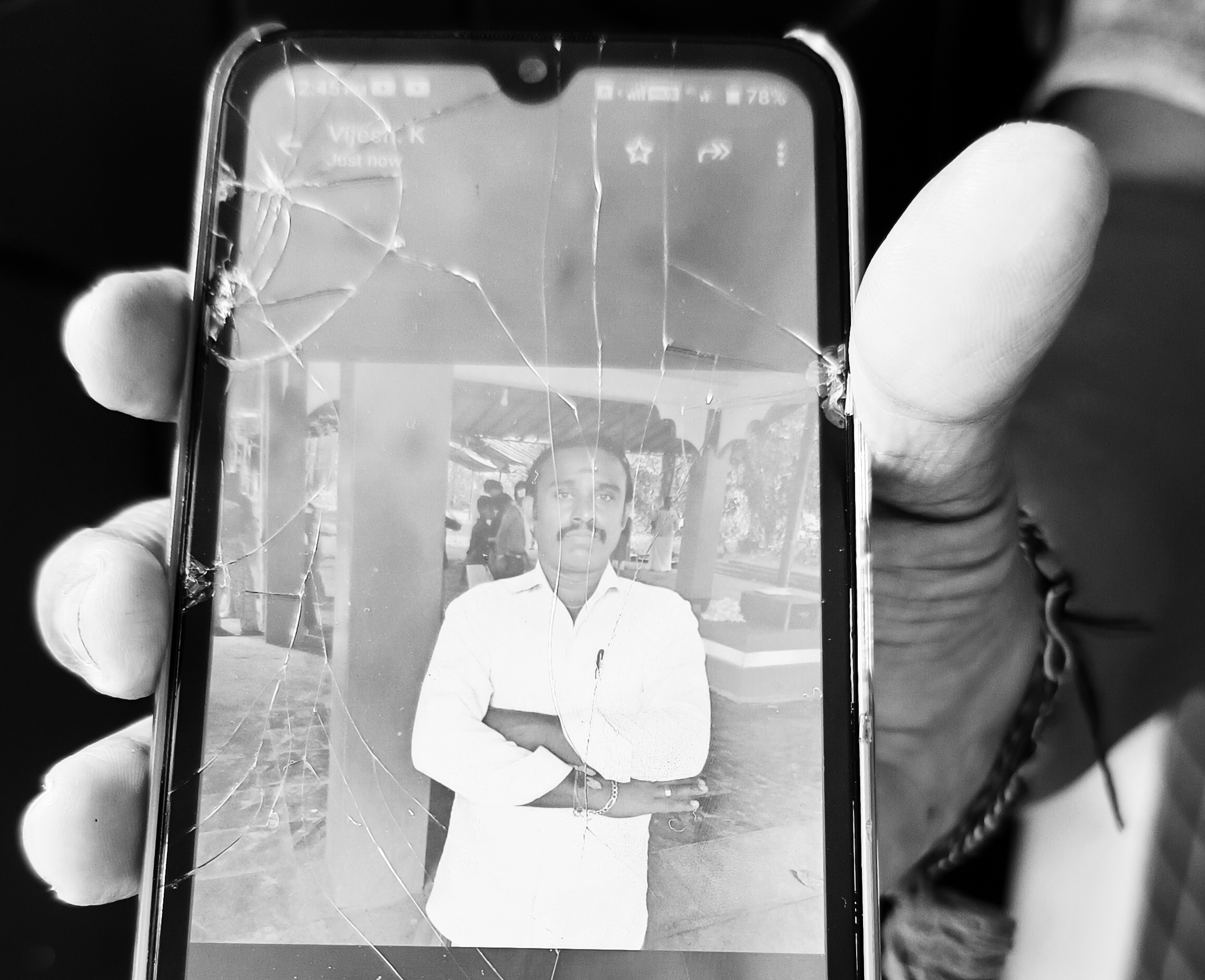
A photo of Vijesh Kaniyeri, a 41-year-old building painter in Kerala who died after he was exposed to extreme heat. His death was not recorded as being caused by heat because the post-mortem did not indicate it. India has a massive problem of undercounting heat-related deaths. Photo: Jeff Joseph
On April 30, 2024, a day before International Workers Day, Vijesh Kaniyeri, a 41-year-old building painter from Kozhikode district in the Indian state of Kerala, fainted while washing up for lunch. “His body temperature had become too high,” Pushpa T, his sister-in-law, said. “He was put on a ventilator at the hospital but never regained consciousness.” Kaniyeri died two days later.
With temperatures hovering at over 40 degrees Celsius in parts of the state at the time, Kerala had issued an official heatwave alert on 29 April, a day before Kaniyeri collapsed. It issued an orange alert, its second most severe alert category, for areas of Palakkad district; and a yellow alert, indicating heat tolerable for the general population but suggesting caution for the vulnerable, for Alappuzha, Thrissur and Kozhikode districts. The administration urged people in these areas to avoid outdoor work between 11 am and 3 pm. It also stressed the need for vigilance against heat stroke and listed precautions, such as ample hydration, to mitigate health risks.
“Vijesh had not worked for a week because of the heat,” said Pushpa. He had followed advisories and heat warnings in the media. But the advisories did not come with provisions to cover wages lost. “He had no money left,” she said, explaining what prompted him to go to work on the fatal day.
Muhammad Haneefa, a 62-year-old mason from Padinjattumuri in Malappuram district, died in the early hours of 2 May – the same day that Kaniyeri died. He had fainted the previous day at work. “He had no other health issues,” Moidukutty, Haneefa’s brother, said. “Sun stroke is what the doctors said led to his death.” Malappuram was not on the list of districts for which heatwave alerts had been issued.
Ultimately, neither Kaniyeri nor Haneefa’s deaths were classified as being heat-related, because neither of their post-mortems listed heat as the cause of death. India has a massive problem of undercounting heat-related deaths. Without an understanding of the growing incidence of extreme-heat fatalities, the country lags behind on impactful heat-action strategies, especially for its large population of outdoor workers. Ineffective heat advisories without localised and actionable features do little to nothing to address the problem.
The Indian Meteorological Department (IMD) defines a heatwave as a period of unusually high temperatures as compared to what is normally expected over a region. Excessive heat exposure affects the human body’s ability to maintain optimum internal temperatures. A 2024 research report by the World Economic Forum predicts the loss of 1.6 million lives to heatwaves globally by 2050. The people most at risk are outdoor workers, the urban poor, pregnant women, people with existing medical conditions, the elderly and the young, as well as those who live in substandard housing without proper ventilation or other cooling mechanisms.
Heat causes blood vessels to dilate and blood pressure to drop, thereby putting strain on the heart. Kidney function can be affected as sweating causes loss of fluids and salts, which leads to electrolyte imbalances. This increases the risk of heat stroke, which can then lead to organ failure. Heatwaves especially increase health risks for those with chronic conditions such as high blood pressure, heart disease or diabetes.
Globally, 2024 was the warmest year on record, with average near-surface temperatures at about 1.5 degrees Celsius above the pre-industrial baseline level. It was also the hottest year in India since record-keeping began in 1901. Many parts of India hit their all-time highest maximum temperatures over the past year.
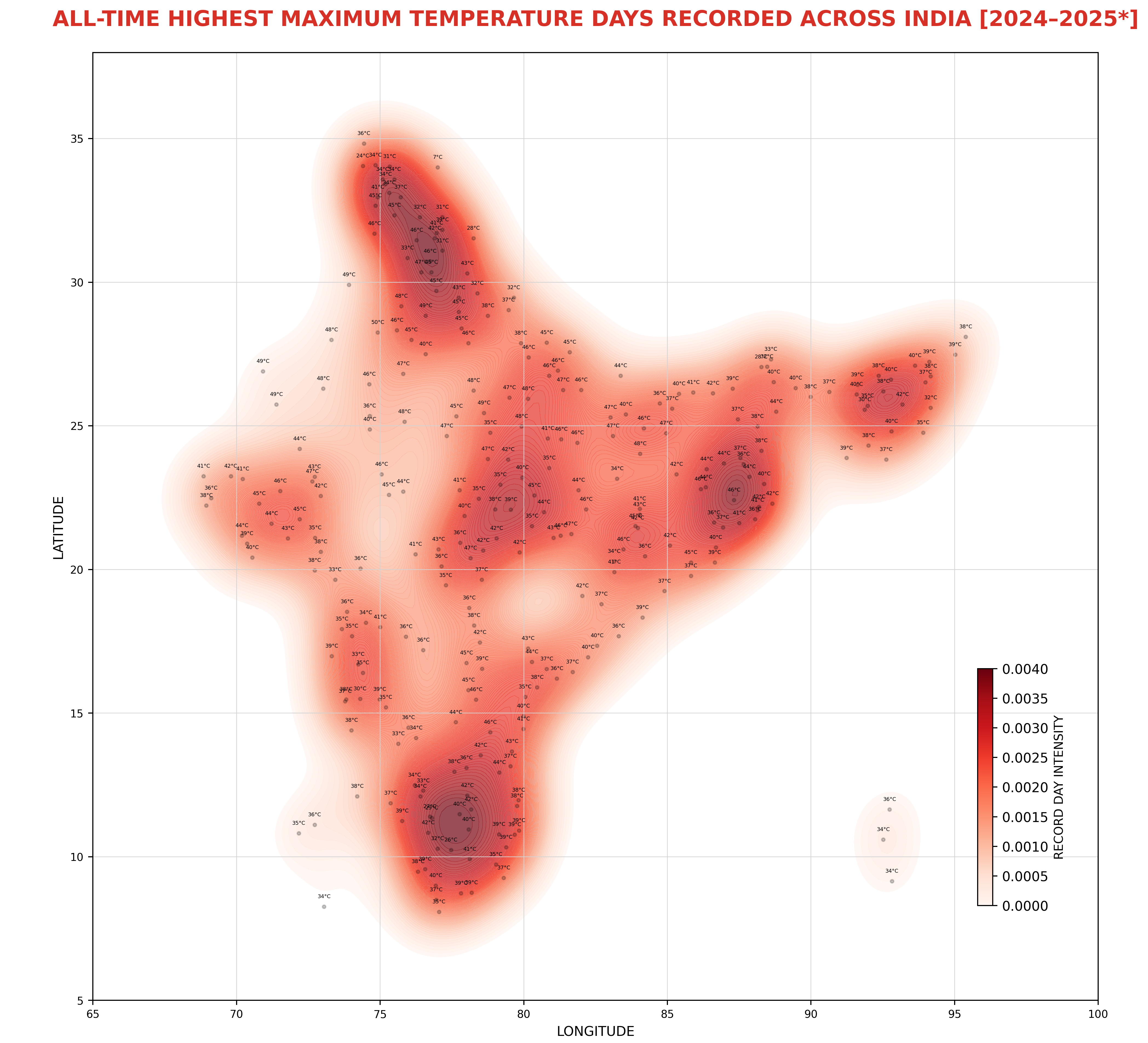
Source: National Data Centre, IMD Pune
Kozhikode, where Kaniyeri lived, saw two of its highest daily maximum temperatures ever. In Kozhikode, 2024 broke records for the highest daily minimum temperatures, with nine of the top ten highest minimum temperature days ever witnessed. Higher night-time temperatures affect heat dissipation and exacerbate the effects of heat on the human body.
In the past, heatwaves have not been a common phenomenon in Kerala, which lies at the southern tip of India. The closest the state had come to having one before 2024 was in 2016, when Palakkad district recorded a temperature of 41.9 degrees Celsius – the highest since 1901. But summer temperatures have become increasingly severe in recent years. Palakkad recorded six of its ten highest maximum temperature days in 2024.
Studies have shown that human-induced climate change has made extreme heat events more likely or more severe worldwide. The 2022 heatwave that affected large parts of India and Pakistan was made at least 30 times more likely by human-induced climate change. Going forward, scientists say, anthropogenic climate change will make summers hotter, with more frequent and more intense heatwave conditions.
The IMD has a network of automatic weather stations (AWS) and surface manual observatories to track heat. An AWS uses sensors and automated data loggers to record weather data, while manual stations rely on human observers to record readings. Scientists generally regard manual observatories as giving more accurate readings. An AWS is often exposed to environmental factors like direct sunlight, which results in faulty readings. In 2024, an AWS in Delhi recorded a temperature of 52.9 degrees Celsius – the highest ever reading in India – due to a sensor error. “The temperature readings from automatic weather stations are unreliable,” a senior scientist at an IMD station, who did not want to be named, said. The IMD relies on data from manual observatories to issue alerts.
Automatic weather stations also lack sufficient historical data to detect long-term temperature deviations, necessitating reliance on manual observatories instead. IMD documents show a network of 547 surface manual observatories across more than 750 districts in India. Regular data is available from 438 of these. In Kerala, not all 14 districts have manual weather monitoring stations. Kasaragod, at the northern tip of the state, Pathanamthitta near south-central Kerala, and the two hill districts of Idukki and Wayanad, all have no manual observatories. When I spoke to a Kerala State Disaster Management Authority (KSDMA) official this February, he told me that the manual station at Alappuzha was not functional at the time.
The situation is worse across much of the rest of India. Uttar Pradesh – India’s most populous state, and one of the states most severely affected by heatwaves – has 33 manual stations for its 75 districts. Rajasthan, which regularly records the highest temperatures in India, has 22 manual surface stations for its 50 districts.
(Left) Districts with the India Meteorological Department’s surface manual observatories indicated in green. A darker green indicates a higher number of stations. Light grey indicates a district with no station or no data available. Graphic: Arun Karki, data via National Data Centre, Pune.
State disaster-management authorities issue district-level alerts based on input from the IMD, relying on climate models along with real-time data from surface observatories. According to experts, the resulting alerts are inadequate. “We haven’t developed an accurate system to alert heatwaves,” a senior climate scientist and academic said on condition of anonymity. “Warnings and alerts must be specific. What we have are general awareness announcements.”
Abhilash S, the director of the atmospheric radar research centre at the Cochin University of Science and Technology, said that without specific localised inputs to inform the alerts, efforts to mitigate the effects of a heatwave are reduced to government bodies and social organisations providing drinking water on roadsides. “By issuing generalised warnings, the advisories lose urgency in the public eye,” he said. Focussed measures – such as cooling centres for the vulnerable, or targeted social support and localised curfews to restrict movement and work in the most severely affected areas – can help people much more.
Another problem is the lack of clear definitions for heatwaves. The IMD has three criteria for declaring a heatwave – one based on departure from normal temperatures, the second based on actual maximum temperatures and a third applicable only for coastal regions. When temperatures touch or exceed 40 degrees Celsius in the plains or 30 degrees Celsius in the hills, a heatwave condition is reached if the maximum temperature departure from normal is 4.5 degrees Celsius or more. Additionally, a heatwave condition is reached when the maximum temperature crosses 45 degrees Celsius. For coastal areas, a heatwave can be declared when the maximum temperature touches 37 degrees Celsius and there is a 4.5-degree Celsius departure from normal maximum temperatures.
But relying on temperatures alone discounts fluctuations in humidity. “In places with humidity, the feel-like temperature is always higher than the real temperature,” Abhilash said. “This causes heat stress. This is different from central India, where even 45 degrees won’t cause as much heat stress as a 38 degree here,” in Kochi. In high humidity, sweat does not evaporate and the body’s ability to cool itself is hampered.
A better way to account for heat stress is to use a heat index, which conveys what it feels like to be exposed to a particular combination of air temperature and other meteorological factors, primarily humidity. The IMD and some states, such as Karnataka, recognise the importance of a heat index that factors in relative humidity when predicting a heatwave. In 2023, the IMD launched a heat index on an experimental basis; in the summer of 2024, it issued heat index-based alerts for Delhi. But the IMD still does not use a heat index countrywide.
“A heat index of 50 is considered a very high temperature. Kerala hits 50 regularly,” Fahad Marzook, a hazard analyst with the atmospheric science section at the KSDMA, said. In late April 2024, Kerala met the IMD’s conditions for a heatwave – a rare occurrence for the state. Parts of the state recorded maximum temperatures of 40 degrees Celsius and a temperature departure from normal of 4.5 degrees Celsius. On 29 April, when the heatwave alert was issued, Kozhikode recorded a maximum temperature of 38 degrees Celsius and a highest minimum temperature of 29.2 degrees Celsius.
But the state had been in the grip of severe heat and humidity for many days before the official alert. Kozhikode had already recorded a maximum temperature of 38 degrees Celsius on 12 April – a record for that station. It had all-time-high minimum temperatures for five nights between 11 April and 17 April.
Kozhikode in Kerala has seen its average surface temperature increase by 7 °C in the last 30 years because of urban heat island effect as per studies. Seen here is the historical satellite view of Chakkumkadavu in Kozhikode where Vijesh lived. Scientists blame land use pattern changes and climate change for the intensifying summers. Graphic: Jeff Joseph using Google Earth
Many heatwave experts point out discrepancies in heatwave data because observatories are often located away from urban centres and end up recording lower temperatures. “The IMD Palam observatory in New Delhi is further away from the city centre which makes its readings less accurate for predicting heatwave conditions within the city,” Dileep Mavalankar, the former director of the Indian Institute of Public Health, Gandhinagar, said. Mavalankar was instrumental in designing India’s first heat-action plan, implemented in the city of Ahmedabad in 2013. This provided immediate and long-term strategies to reduce the impacts of extreme heat on the city’s most vulnerable populations. It also provided a template for plans now being implemented in 23 states prone to heatwave conditions.
“The issue of urban heat islands too isn’t factored in by the IMD when declaring heatwaves,” Abhilash said. Heat islands can raise temperatures in urban areas and city centres by between two to four degrees Celsius compared to surrounding areas. One study has shown that, over the years, Kozhikode has seen a substantial rise in average land surface temperature, from 23 degrees Celsius in 1993 to 30 degrees Celsius in 2022, due to the effects of urban development. (The image above shows the expansion of Kozhikode’s urban sprawl between January 2010 and January 2025.)
Even some of the IMD’s own top scientists and administrators admitted, on condition of anonymity, that India’s heatwave alert system needed to be updated.
On October 6, 2024, hundreds of thousands thronged an Indian Air Force air show at Marina Beach in the city of Chennai, in Tamil Nadu. According to news reports at the time, five attendees died from heat stroke and more than a hundred people were admitted to hospitals seeking medical treatment for heat-related issues after the event. Ma Subramanian, the health minister of the Tamil Nadu state government, confirmed the deaths, saying they were due to “high temperatures”. However, the monthly data on confirmed heat-stroke deaths for 2024 from the National Centre for Disease Control (NCDC) lists just two confirmed heat-stroke deaths and 116 suspected heat-stroke cases from Tamil Nadu, with no deaths recorded after July. This is because the data on heat-related illnesses and deaths in India is collected only through the months of March, April, May, June and July.
As per information from the NCDC, the country had 189 confirmed cases of heat-stroke deaths and 19,388 cases of suspected heat stroke in 2023. But in 2024, despite a higher number of suspected cases of heat stroke, totalling 48,001, as well as a more intense summer, the data shows just 159 heat-related deaths. No heat-related deaths were recorded in 2021.
Independent studies show much higher death tolls from extreme heat in India. Mavalankar was part of a study that looked into excess mortality during a heatwave in Ahmedabad in 2010. It showed a high correlation between daily maximum temperatures and excess mortality. The total number of deaths during May that year was 4462 – a 43 percent increase from other years – and 1344 were associated with heat.
A recent analysis of district level excess mortality from a University of California Berkeley researcher showed that a single heatwave day causes 3400 excess deaths in India. A five-day heatwave causes about 30,000 excess deaths. If there are five heatwaves of five days each during summer, it can cause 150,000 excess deaths, the researchers say, calling this massive number a conservative estimate.
In a radio address to the country in February 2018, India’s prime minister, Narendra Modi, made the claim that thousands of people would lose their lives every year due to heatwaves until a few years ago. “The NDMA organised workshops on heatwave management as part of a campaign to raise awareness among people,” Modi said. “Mass participation led to good results reducing deaths to 220 in 2017.”
The number of heat-related deaths in the official tally did drop significantly and one of the factors for low numbers in recent years may be a change in the way such deaths are being counted. In a report on reducing heat-related mortality, the National Disaster Management Authority claimed that the introduction of committees to verify deaths from heat waves helped bring the numbers down. “Over-reporting of heat-wave deaths—done for the purpose of seeking monetary compensation for the families of the dead—has been nearly brought to an end,” the report said. But officials on the ground note that the criteria for a heat-related death has become only death by heatstroke. “The central officials tell us to not even follow up on other heat-related illnesses or issues such as sunburns,” an official from Kerala’s health department said. This discounts a large number of deaths that can be triggered by extreme heat.
India’s government relies on post-mortem reports followed by a medico-legal scrutiny to confirm heatwave deaths instead of estimating excess mortality in the summer months, which leads to undercounting. Graphic: Jeff Joseph, data via National Disaster Management Authority report and National Centre for Disease Control.
India has a dedicated Integrated Health Information Platform that collates data on heat-related illnesses and deaths, among other things. This is managed under the health ministry’s National Programme on Climate Change and Human Health (NPCCHH). The data for 2021 showed that 17 out of 24 Indian states and union territories had failed to report heat-related deaths, while the remaining seven reported none. For 2022, nine failed to report heat-related deaths while 10 reported zero deaths.
Often, different government sources have different numbers. In August 2024, Anupriya Patel, a union minister of state for health and family welfare, said that there had been 48,385 suspected cases of heat stroke and 185 confirmed heat-stroke deaths in India up until 28 July that year. As per data collected under the National Heat-Related Illness and Death Surveillance programme, there were 48,156 suspected heat-stroke cases in 2024, with 269 suspected heat-stroke deaths and 161 confirmed heat-stroke deaths. As previously noted, the NCDC cited slightly lower figures for suspected cases and confirmed deaths. In his February 2018 address, Modi cited 220 deaths for 2017, which was lower than the NCDC toll of 384. But experts see all these figures as undercounting the true toll by many orders of magnitude.
One likely reason for undercounting heat-related deaths is that there are no pathological tests to confirm such deaths. Excess heat causes organ failure, which is very often what is documented as the cause of death in heat-related cases. A heat-stroke is indicated by the rise of core body temperature above 40 degrees Celsius and dysfunction of the central nervous system. “Survival chances of heat-stroke cases are low,” Abdul Nissar, the district nodal officer for climate change in Malappuram, said. “If there is no intervention to cool the body by pouring cold water over it immediately, the chance of death is very high. Most won’t survive.”
Heat stroke can be of two types – exertional, when caused by strenuous activity; and classic, when it results from passive exposure to extreme heat. Exertional heat stroke most often occurs in people employed in physical labour outdoors, usually under direct exposure to the sun, like in the cases of Kaniyeri and Haneefa. Classic heat stroke is often seen in vulnerable populations such as those with comorbidities, and can often occur even while people are indoors. “Ninety percent of heat-related deaths are in people with comorbidities,” Mavalankar said. People with obesity, cardiovascular disease, respiratory disease and diabetes are more at risk from heat-related illness. Some medicines for cardiac conditions and diuretics for managing hypertension have been found to increase the risk of heat stroke.
This February, Sekhar Lukose Kuriakose, the member secretary of the KSDMA and the head of Kerala’s emergency operations centre, told me that no heat-related deaths had been recorded in the state for 2024. “Confirmation has to come from the health department that this is a heatwave-related death, through a medico-legal process,” he said.
Post-mortems form the basis for the classification of heat-stroke deaths. “The post-mortem report didn’t confirm the death as caused by heat stroke,” M Bijulal, a councillor with the Kozhikode Corporation, said about Kaniyeri’s death. Haneefa’s post-mortem report also did not say anything conclusive about the effect of heat.
“In suspected cases, a laboratory confirmation is sought,” R Renuka, the district medical officer for Malappuram, said. After a suspected heat-related death is reported, an investigation is conducted by a team that includes an epidemiologist and a specialist, who look at the autopsy report. The cause of death is eventually certified by the district surveillance officer and reported to the state. Information from the Kerala state health department showed that of five suspected heat-stroke deaths in 2024, only two cases were confirmed by post-mortem – neither of them involving Kaniyeri or Haneefa.
When people with comorbidities die during an extreme heat event, often their underlying conditions are documented as the causes of death, Nissar explained. This stand in the way of their cases being recognised as heat-stroke deaths. “Forensic surgeons are not sufficiently exposed to heat-stroke deaths and don’t factor them in sufficiently,” he said. “That is why such deaths get classified as heart attacks or organ failure depending on underlying conditions even if it was caused by heat.”
Kerala has one of the most advanced public health systems within India. But while Kerala’s health department shows two confirmed cases of heat-stroke deaths in 2024, its disaster-management authority claims that the state had none. Media reports during the summer of 2024 listed at least five such deaths, including Kaniyeri and Haneefa. NCDC data cites 14 altogether, including suspected heat-stroke cases and one confirmed heat-stroke death.
Mavalankar stated that, to get a truer picture of the number of people at risk and dying due to extreme heat, India needs to go beyond absolute numbers of heat stroke deaths and look at excess mortality. In a study published last year, researchers evaluated global, regional and national mortality associated with heatwaves for the period between 1990 and 2019. They found more than 150,000 excess deaths occurred globally every summer. with close to half of these occurring in Asia and a fifth – roughly 30,000 deaths – just in India. A multi-city study on the impact of heatwaves that occurred between 2008 and 2019, looking at all-cause mortality in 3.6 million deaths in India, showed that a two-day heatwave was associated with a 14.7 percent increase in daily mortality.
Despite reported undercounting, the United States, with its population of 334 million people, counted 2300 heat-related deaths in 2023. In the United Kingdom, as per the government’s heat mortality monitoring report, there were an estimated 2295 deaths associated with heat in the summer of 2023. The number of people in the United Kingdom aged above 65 – a group in which heat-associated deaths are especially prevalent – was 12.7 million. As of 2011, when India released its last census, the country had 104 million people aged 60 years and above. Even accounting for deaths in the intervening period, India currently has a population above the age of 70 that is likely greater than the entire population of the United Kingdom. Yet the recorded numbers of heat-related deaths here, where extreme heat is far more prevalent, remain far below those in the United Kingdom.
These studies and comparisons call into question the Indian government’s official numbers on heat-related deaths and the methods used to count them, especially as summer temperatures continue to break records every year and heatwaves become increasingly common and intense across the country. Unlike the United Kingdom, which calculates heat-related deaths based on excess mortality, India only considers confirmed heat-stroke deaths in its tally of heat-related mortality. “We are far off from reporting most of the deaths and illnesses,” Mavalankar said.
Kerala’s Heat Action Plan provides for compensation of INR 4 lakh – roughly USD 4700 – to families of the victims of heat-related events. Although Kaniyeri’s death was never recorded as being heat-related, his parents, 94-year-old Kumaran K and 73-year-old Vasanthi, who were financially dependent on their son, applied for relief from the state. A year later, they have received no response.
While many states have adopted centrally-mandated heat action plans that sometimes include compensation, a lack of funds typically makes such provisions meaningless. India has 12 types of notifiable disaster at the national level – cyclones, droughts, earthquakes, fires, floods, tsunamis, hailstorms, landslides, avalanches, cloudbursts, pest attacks, frosts and cold waves. Victims of these disasters are eligible for relief assistance from national and state-level disaster relief funds (SDRF). “Heatwaves are not a nationally notified disaster in India,” said Marzook of the KSDMA. As a result, “states can spend only a maximum of 10 percent of the SDRF for heatwave mitigation efforts.”
(Right) Vijesh Kaniyeri’s 94-year-old father, K Kumaran, with his daughter-in-law, Pushpa. Kaniyeri took care of his parents while he was alive. After his death, Pushpa quit her job in a textile shop to be their caregiver. Photo: Jeff Joseph
State governments can use up to 10 percent of their annual disaster-relief funds to provide immediate relief to the victims of state-specific natural disasters not recognised as nationally notified disasters. Kerala notified heatwaves, as well as outbreaks of sun stroke and sunburn, as state-specific disasters in 2019. In 2024, the state of Tamil Nadu declared heatwaves to be a category of state-specific disaster. Rajasthan, Chhattisgarh, Odisha, Maharashtra, Karnataka and Andhra Pradesh have done so too.
In 2024, Kerala had INR 783 crore, or roughly USD 90 million, for disaster relief after combining new allocations and leftover budget allocations from the previous year. Massive landslides in Wayanad district last year drew the government’s attention and its relief funds. With landslides and cyclones and the property damage they cause, politicians are often eager to be seen as providing relief to the victims. “When there is visible damage, political interests come in,” Mavalankar said. “The issue with heatwaves is that there is no property damage, so it isn’t visible.” This acts against their victims.
As per information obtained through a Right to Information request, Kerala’s health department allocated a measly INR 50,000 to each of the state’s 14 districts in 2024 to deal specifically with heat-related illnesses. Under the NPCCHH, the central government allocated INR 100 crore to all Indian states and union territories together. This funding was to be split between mitigation efforts related to multiple climate-related issues, including extreme heat, air pollution, extreme weather events and vector-borne diseases, as well as the adoption of climate-resilience measures in health care facilities.
By 2030, 500 million people around the world are expected to be exposed to extreme heat for at least a month every year. The largest proportion of the exposed is expected to be in India and Pakistan, followed by Bangladesh. Poor and deprived, the most vulnerable people in these countries cannot protect themselves from this threat. Ineffective advisories, undercounting of heat-related illnesses and deaths, and the absence of meaningful relief and support are common problems across Southasia.
In 2024, the Pakistan Meteorological Department forecast a heatwave across most of the country and primarily in the Sindh province between 20 June and 24 June. Much like in India, the preparations to mitigate heat-related illnesses and deaths were largely limited to setting up roadside camps to provide drinking water. Advisories for limiting movement proved inadequate. Between 20 to 26 June 2024, 568 deaths were reported from Karachi alone. The actual number was thought to be much higher. “Around 1100 to 1200 [heat-related] deaths were recorded,” Saqib Baqar, a Karachi-based journalist who covered the heatwave, said. “Most of the deaths were in the thickly populated areas in old areas of Karachi. The old were said to be most at risk. But even young people without any previous health risks died from heart failure.”
“Even when alerts predict high temperatures and heatwaves, workers have no other option but to work,” Sheema Siddiqui, a Karachi-based journalist, said. “People who were working in mandis [markets] and factory workers in Karachi were severely affected. They cannot afford mitigation measures such as coolers,” and the government did not provide support for such mitigation measures.
Pakistan is yet to announce specific relief provisions for heatwave deaths. Its heatwave action plan for 2024, released by its national disaster-management authority, does not mention relief and compensation for heat-related illnesses or deaths.
Around April 2024, many parts of Bangladesh experienced heatwaves for 30 consecutive days. This was the longest heatwave period the country had seen since 1948. “Advisories are ad-hoc and not pre-emptive,” M Zakir Hossain Khan, the chief executive officer of the Dhaka-based think-tank Change Initiative, said.
“Factory owners were not made aware of the upcoming heatwaves,” Khan said. “It is important for managing labour productivity. But they continue to conduct business as usual.” The textile and garment industry in Bangladesh, which employs around 5 million and generates more than 80 percent of the country’s export revenues, is based primarily in urban centres such as Dhaka, a city which sees amplified effects of heatwaves due to the urban-island effect.
“Industrial workers are more vulnerable in Bangladesh,” Ahmad Kamruzzaman Majumder, the dean at the school of science at Stamford University Bangladesh, said. “Many industries do not have the means to provide air conditioning. When faced with power shortages, industries compensate by taking out air conditioning.”
“During extreme heat, access to electricity is very important. But what we see is that severe load-shedding happens during heatwaves,” Khan said, referring to power cuts. On 28 April 2024, during peak summer, Bangladesh saw load-shedding cross 1860 megawatts, its highest power shortage in a decade. “At times, even if factories have air conditioning, workers must return to homes without any cooling measures,” he said. Health experts also say that long exposure to air conditioners can decrease the human body’s adaptability to heat,creating increased risk of heat-related illnesses. Information on casualties in Bangladesh’s textile mills is not coming out, Kamruzzaman said. “They are treated as industrial accidents and kept secret.”
A 2024 International Labour Organisation report showed that at least 2.4 billion workers are exposed to excessive heat at work every year. More than 80 percent of India’s labour force works in the informal sector. A study on informal-sector workers in the slums of Delhi found that net earnings fell by 40 percent and earnings declined by 19 percent on heatwave days for every one-degree Celsius increase in wet-bulb temperatures. Under intense heat, daily-wage workers risk death to make a living.
Nepal too has increasingly been seeing the impacts of heatwaves. Last June, heatwaves in the country’s Terai region saw schools being shut for three days. “The rising temperatures in the mid-hills and mid-mountains of Nepal are alarming,” Anil Pokhrel, the former chief executive officer of Nepal’s disaster risk reduction management authority, said. “Even if the temperatures are only 35 degrees, the people in these areas and their livelihoods are not adapted to such temperatures.”
Unlike in India, Pakistan and Bangladesh, where heatwaves are a somewhat expected summer phenomenon, for Nepal heatwaves are raising unprecedented questions about adaptation. “Metal roofs increase the risks of heat,” Pokhrel said. “They need to be replaced with materials which are heat resilient and with increased ventilation. This is more important than giving out sherbets and water during heatwaves,” Pokhrel said. Adaptation pilot projects are underway but heatwave casualties are not being tracked in Nepal, the Maldives or Sri Lanka.
Southasia accounts for 29 percent of the 736 million people living in extreme poverty worldwide. Low-income populations face significantly higher exposure to heatwaves. By 2100, the poorest 25 percent of the world population is expected to be exposed to heatwaves at a rate equivalent to the rest of the global population combined. Many of them will live in Southasia. It is imperative that the region’s governments act immediately to help them.
उदयपुरको गाईघाट बजार घुम्न गएको बेला खाजा खान छिरेकी एलिसा (परिवर्तित नाम) लाई होटलका सञ्चालकले पहिला नै चिनजान रहेको भन्दै सन्चोबिसन्चो सोध्छन् ।
गाउँकै सामान्य चिनजान रहेका ब्रोदर्स रेस्टुरेन्टका मालिक अनिल सेवाले उनीसँग मोबाइल नम्बर र फेसबुक आईडी माग्छन् । “उहाँलाई मेरो नम्बर र फेसबुक आईडी दिएर घर फर्किएँ,” एलिसा भन्छिन्, “केही दिनपछि उहाँले मलाई मेसेन्जरमा फोन गर्नुभयो र ‘बजार आएको बेला मेरो रेस्टुरेन्टतिर खाजा खान आउनु तिमीसँग एउटा गोप्य कुरा गर्नुछ’ भन्नुभयो ।”
एलिसाका अनुसार उनले मिति त सम्झिएकी छैनन् । तर असारतिर हुनुपर्छ उनी कामविशेषले गाईघाट गएको बेलामा ब्रदर्स रेस्टुरेन्टमा छिरिन् । उनी भन्छिन्, “उहाँलाई भेटेर ‘के गोप्य कुरा छ दादा ?’ भनेर सोध्दा उहाँले ‘मेरो रेस्टुरेन्टतिर कहिलेकाहीँ रमाइलो गर्ने ग्राहक आउँछन्, तिनीहरूसँग रमाइलो गरी बस्यौ भने मिठोमिठो खान पाउनुको साथै पैसा नि कमाइ हुन्छ’ भन्नुभयो ।”
उनले होटल सञ्चालकलाई कामचाहिँ के गुर्नपर्छ नि भनेर पनि सोधेकी थिइन् । सञ्चालकले गाह्रो काम होइन ‘खाने, पिउने रमाइलो गर्ने’ भने । “सुन्दा काम सजिलै लाग्यो, मलाई पैसाको नि जरुरत थियो र खान नि पाइन्छ भनेपछि म प्रलोभनमा परेँ र हुन्छ भनी सहमति जनाएर घर फर्केँ ।”
त्यसको भोलिपल्ट ११ बजेतिर होटल सञ्चालक सेवाले फोन गरेर बोलाएपछि एलिसा गइन् । “त्यहाँ जाँदा मैले नचिनेका अन्दाजी ५० वर्षका मानिससँग कोठामा बस्न लगाउनुभयो,” एलिसा भन्छिन्, “त्यस व्यक्तिले बियर, चुरोट र नास्ता मगाएर मलाई नि खान दिए र आफूले पनि खाए ।”
आमाबुबाले दैनिक रक्सी खाएर झगडा गर्ने गरेको देखेकी उनी ८ कक्षा पढ्दा नै साथीको संगतमा लागूऔषधको दुर्व्यसनमा फसेकी थिइन् । त्यसैले वियर र चुरोटमा नाइँनास्ती नगरेको बताउने उनका अनुसार खानपिन चलिरहेकै बेला तीे व्यक्तिले शारीरिक सम्पर्क गर्ने प्रस्ताव राखे, उनले अस्वीकार गरिन् । तर ती मान्छे रोकिएनन् ।
“मैले अहिलेसम्म यस्तो कार्य गरेको छैन भन्दाभन्दै नमान्दा पनि त्यस व्यक्तिले ‘मैले यसको लागि होटल मालिकलाई पैसा दिएको छु’ भन्दै जबरजस्ती गर्न थाल्यो,” उनले सुस्केरा हाल्दै भनिन्, “मलाई डर लागिरहेको थियो, त्यो मान्छे मभन्दा उमेरमा धेरै ठूलो थियो, मैले प्रतिकार गरिहेको थिएँ, तर मेरो प्रतिकार व्यर्थ रह्यो ।”
एलिसा बेहोस भएकी थिइन् । उनका अनुसार होसमा आउँदा उनको शरीरमा कुनै लुगा थिएन, ती व्यक्ति नग्न अवस्थामै बेडमा सुतिरहेका थिए । उनी लुगा लगाएर होटल मालिकलाई भेट्न तल झरिन् र आफूमाथि भएको अत्याचारको बारेमा बताइन् । तर होटल मालिकले ‘तिम्रो आजको कमाइ’ भनेर हातमा १ हजार रुपैयाँ थमाए ।
एलिसा रिसाइन् । “मलाई रिस उठिरहेको थियो, चिनेजानेको मानिसले मलाई यस्तो काम गर्न कसरी लगाउन सक्छ भनेर,” उनी भन्छिन्, “डर पनि लागेको थियो, कतै अरुले थाहा पाउछ कि भनेर ।”
होटल मालिक सेवाले फेसबुक म्यासेन्जरबाट बोलाएर एलिसाको बेचबिखन गरेका थिए, वेश्यावृत्ति गराएका थिए, त्यहाँ एलिसामाथि बलात्कार भएको थियो । तर डरले उनले आफूमाथि भएको अपराधका बारेमा कतै उजुरी गरिनन् ।
एलिसाको पारिवारिक अवस्था र आर्थिक अवस्था कमजोर रहेको बुझेरै होटल मालिकले लोभलालच देखाएका थिए । “उहाँले मलाई ‘तिमीले यस्तो काम अरु कहीँ पाउँदिनौ, हेर दुई घण्टा नबित्दै एक हजार कमायौ, अझै राम्रो ग्राहक आयो भने योभन्दा धेरै कमाउँछौ, त्यसछि त्यो पैसाले तिमीले मन लागेको कुरा लाउन खान खान पाउँछौ’ भन्दै मलाई प्रलोभन देखाउनुभयो,” उनी सम्झन्छिन्, “म केही नबोली बसेँ, उहाँले ‘म राम्रो ग्राहक आयो भने फोन गर्छु आउनू’ भनेपछि म केही नबोली घर फर्किएको थिएँ ।”
सहर बजारका केही होटल रेस्टुरेन्टमा ग्राहकलाई मनोरञ्जन दिने भन्दै एलिसाजस्ता नाबालिकाहरूलाई यौनकार्यमा लगाउने गरेको पाइन्छ । जसमा १३ वर्षदेखि १९ वर्षसम्मका किशोरी धेरै हुने गरेका प्रहरीको भनाइ छ । एलिसाले प्रहरीमा दिएको बयानअनुसार होटल सञ्चालक सेवाले अरु महिलालाई समेत ग्राहकसँग बस्न लगाउने गरेका थिए । सेवा स्वयंले भने आफूसँग कहिल्यै शारीरिक सम्बन्ध नराखेको र राख्ने प्रस्ताव पनि नगरेको उनले अदालतमा दिएको बयानमा स्पष्ट पारेकी छन् ।
एलिसालाई गाईघाटका होटल सञ्चालकले जति धेरै जनासँग शारीरिक सम्बन्ध बनायो धेरै त्यति पैसा हुन्छ भनेका थिए, त्यसअनुसार उनलाई पैसा पनि दिएका थिए । “एक जनासँग शारीरिक सम्बन्ध बनाउँदा १ हजार र दुई जनासँग बनाउँदा ३ हजार दिनुहुन्थ्यो,” एलिसा भन्छिन्, “धेरै जनासँग गर्दा धेरै पैसा हुने भएकोले म दिनमा दुई–तीन जनासँग नि सुत्थेँ ।”
पैसाको आवश्यकता भएकाले जति जनासँग पनि शारीरिक सम्बन्ध राख्न आफू तयार भएको उनी बताउँछिन् । ग्राहकलाई खुसी बनाएमा अझै अतिरिक्त पैसा आउने गरेको उनी बताउँछिन् ।
| वर्ष | उद्धार गरिएकाको सङ्ख्या |
| 2023 | 2388 |
| 2022 | 2297 |
| 2021 | 142 |
| 2020 | 94 |
| 2019 | 322 |
| 2018 | 250 |
| 2017 | 273 |
| 2016 | 239 |
| 2015 | 144 |
| 2014 | 183 |
| 2013 | 142 |
रेस्टुरेन्ट सञ्चालक सेवाले प्रहरीसँगको बयानमा ग्राहकले रमाइलो गर्न तथा शारीरिक सम्पर्क राख्न केटी खोजीमा एलिसालाई बोलाउने गरेको स्विकारेका छन् । उनले ग्राहसँगबाट २ हजार रुपैयाँ लिने गरेको त्यो पैसा आधा आफूले राखेर १ हजार रुपैयाँ उनलाई दिने गरेको बताए ।
गाउँघरका आर्थिक अवस्था कमजोर भएका, पारिवारिक विखण्डन भएका किशोरीलाई काम लगाइदिन्छु भनेर प्रलोभन देखाई वेश्यावृत्तिमा लगाउने गरेको नेपाल प्रहरीको मानव बेचबिखन अनुसन्धान ब्युरोको सूचना अधिकारी एसपी गौतम मिश्र बताउँछन् । मसाज सेन्टर, स्पा, पार्लर, रेस्टुरेन्टमा काम लगाइदिने भनेर सञ्चालकहरूले नै उनीहरूलाई फसाउने गरेका पाइएको मिश्रले बताए ।
उनका अनुसार सामाजिक सञ्जालको कारणले किशोरीहरू बेचबिखनमा सजिलैसँग फस्ने गरेका छन् । टिकटक, फेसबुक, भाइबरका माध्यमबाट सम्पर्क गरेर तथा अनलाइन माध्यममा विज्ञापन दिएर रोजगारीको प्रलोभन देखाएर किशोरीहरूलाई बोलाउने र यौनशोषण गर्ने गरेको मिश्र बताउँछन् ।
उनका अनुसार बालबालिका तथा किशोरीहरूलाई डर, धाकधम्की दिई जबरजस्ती यौनधन्दामा लाउने, इन्टरनेटको माध्यमबाट विभिन्न एपहरूजस्तै बाट स्ट्रिप च्याट, फ्री लाइभ सेक्स क्याम, एडल्ट च्याटलगायतमा बसाएर ग्राहकले भनेअनुसार भिडियोमा अश्लील हर्कत गर्न लाउने काममा प्रयोग गरिएको पाइन्छ ।
फेसबुक, ह्वाट्सएपलगायतमा ग्रुप बनाई सम्पर्कमा आएका ग्राहकहरूले पेमेन्ट गरेपछि उनीहरूले भनेको स्थानमा किशोरीहरू पठाउनेसमेत पाइएको मिश्र बताउँछन् ।
काम लगाइदिन्छु भन्दै बोलाएर बलात्कार
बुटवल नजिकैकी १७ वर्षीया अप्सरा (परिवर्तित नाम) को टिकटकमा अपरिचित व्यक्तिले मोबाइल नम्बर पठाउँछन् । केल्भिन जेम्स नाम गरेको टिकटकबाट नम्बर पठाउने गोरखा घर भई काठमाडौंको टोखा बस्ने रेशम गुरुङ हुन्छन् ।
किन नम्बर पठाएको भनेर सोधेपछि रेशमले ‘तपाईंलाई काम चाहिएको छ भने सम्पर्क गर्नु’ भनेको र आफूले ‘अहिले म काम गर्दिनँ’ भनेको अप्सारलाई अहिले पनि सम्झना छ । रेशमले मसाज पार्लरको काम मासिक १० हजार रुपैयाँ तलब हुने र पछि तलब बढाइदिने आश्वासन पनि दिन्छन् ।
रेशमले अप्सराको फेसबुक आईडी पनि माग्छन् र उनीहरूबीच दैनिकजसो च्याट हुन्छ । यसै क्रममा एक दिन रेशमले ‘तिमीलाई पार्लरको काम आउँदैन भने केही छैन, मेरो घरमा काम गर्ने मान्छे चाहिएको छ, तिमी मेरो बहिनीजस्तै मान्छे हो, राम्रोसँग काममा राख्ने छु डराउनु पर्दैन काठमाडौं आऊ’ भन्छन् ।
उनले काठमाडौं आउने पैसा छैन भन्दा रेशमले बाटोखर्च भन्दै मनी ट्रान्सफरबाट ८ हजार रुपैयाँ पठाइदिएका थिए । त्यही खर्चले काठमाडौं पुगेको पहिलो दिन नै उनी बलात्कारमा परिन् ।
“बसबाट ओर्लिएकै दिन उहाँले घर लैजानुभयो, खाना खाएर कोठामा लुगा चेन्ज गर्दैगर्दा उहाँले ढोका ढकढक्याउनुभयो,” उनी भन्छिन्, “मैले ढोका खोलेपछि ‘म नि यही सुत्छु भन्दै जबरजस्ती गर्नुभयो, मैले प्रतिकार गर्दा भिडियो बनाउनुभयो, यो कुरा कोही कसैलाई भनेमा नेटमा हाल्दिन्छु भनी डर देखाउनुभयो ।”
अप्सरा त्यही डरले कतै उजुरी नगरी रेशमले भनेको मान्न बाध्य हुन्छिन् । बलात्कारपछि रेशमले नजिकैको मेडिकलबाट गर्भ रोक्ने औषधि ल्याएर खान दिएको र आफूले इन्कार गर्दा गाली गरेको उनले प्रहरीसँगको बयानमा बताएकी छन् ।
रेशमको फ्ल्याटमा प्यारालाइसिस भएकी आमा, सुत्केरी श्रीमती पनि हुन्छन् । उनीहरूकै स्याहार गरेर एक महिना बसेकी अप्सारले त्यसबीचमा ३ पटक करणी गरेको प्रहरीसँगको बयानमा बताएकी छन् ।
एक महिनापछि रेशमले गोंगबुमा रहेको आफ्नै सनफ्लावर वेलनेस स्पामा उनलाई काम लगाउँछन् । “मसाज पार्लर भने पनि त्यहाँ आउने ग्राहकसँग शारीरिक सम्बन्ध राख्नुपर्ने, उनीहरूलाई खुसी बनाउन यौनजन्य गतिविधि गर्नुपर्थ्यो ,” उनी भन्छिन् । मसाज पार्लरमा धेरै नै दुर्व्यवहारको सामना गरेको उनी सुनाउँछिन् ।
प्रहरीका अनुसार रेशमले पक्राउ परेलगत्तै आरोप स्वीकार गरेका थिए । तर पछि उनले आफ्नो बयान फेरेको अभियोगपत्रमा उल्लेख छ । उनलाई उद्धृत गर्दै अभियोग पत्रमा लेखिएको छ, “म पक्राउ परी आएपश्चात् पहिलो पटक मलाई प्रहरीले सोधपुछ गर्ने क्रममा मैले उल्लेखित कुराहरू बोल्न पुगेछु, हाल मलाई याद छैन ।”
पीडितलाई नै प्रयोग गरिन्छ किशोरी खोज्न
अप्सरालाई प्रयोग गरेर रेशमले अरु किशोरीलाई समेत काठमाडौं बोलाएका थिए । केही महिना काम गरेपछि रेशमले ‘गाउँबाट अर्को साथीलाई बोला, नत्र तेरो भिडियो भाइरल गराइदिन्छु’ भनेर डर देखाएपछि गाउँकै साथी आयुशा (परिवर्तिन नाम) लाई काठमाडौं बोलाएको उनी बताउँछिन् ।
“डरका कारण सँगै पढेकी १७ वर्षकी आयुशालाई राम्रो काम छ भन्दै काठमाडौं बोलाएँ,” अप्सराले भनिन् । आमा अर्केसँग हिँडेपछि बुबाले पनि अर्की आमा ल्याएका कारण राम्रो मायाममता पाउन नसकेकी आयुशाले काठमाडौं आएर अप्सराकै नियति भोग्छिन् ।
ठमेलको ए वान स्पाकी सञ्चालिका मखमली माया स्याङ्तानसँग रेशमको चिनजान हुन्छ । उनी रेशमको पार्लरमा आउजाउ गर्ने क्रममा अप्सरा र आयुशाको चिनजान हुन्छ । त्यसपछि उनीहरू रेशमको स्पा छाडेर ए वानमा काम गर्न पुग्छन् ।
मखमलीले पनि रेशमको जस्तै ग्राहकसँग यौनसम्बन्ध बनाएबापत् १ हजार लिने र ५ सय आफूले राखेर ५ सय आफूहरूलाई दिने गरेको अप्सराले बताएकी छन् ।
ए वानमै कार्यरत रहेको बेला अप्सरा र आयुशा दुवै जनालाई जेठ ६, २०८१ को साँझ मानब बेचबिखन अनुसन्धान ब्युरोबाट खटिएको टोलीले उद्धार गरेको थियो । प्रहरीले रेशमविरुद्ध मानव बेचबिखन र जबरजस्ती करणीको कसुरमा काठमाडौं जिल्ला अदालतमा मुद्दा दर्ता गरेको छ । अप्सरा र आयुशा दुवै सेफ हाउसमा छन् ।
ब्युरोका सूचना अधिकारी मिश्रका अनुसार दुवै किशोरीका परिवारलाई खबर गरे पनि हालसम्म लिन नआएको र उनीहरूले पनि घर जान मानेका छैनन् ।
जसरी अप्सरालाई प्रयोग गरेर रेशमले आयुशालाई बोलाएका थिए, त्यस्तै गरेर गाईघाटकी एलिसाकै माध्यमबाट सेवा र सतीशकुमार यादवले अर्की किशोरीलाई समेत बोलाएका थिए । भदौ २२, २०८० मा एलिसासँग सेवाको होटलमा बसेका यादवले भोलिपल्ट उनलाई सिरहाको लहान लगेका थिए । एलिसाले सेवा गए मात्रै लहान जाने भनेपछि एलिसालाई गाडीबाट आऊ भन्दै भाडा दिएर उनीहरू स्कुटरमा लहान पुगेका थिए ।
लहान गएको होटल खर्चबाहेक एक रातको ५ हजार रुपैयाँ लाग्छ भन्दा यादवले मिलाएर दिन्छु भनेको सेवाले प्रहरीसँगको बयानमा बताएका छन् ।
भदौ २३ गते राति लहानको एक होटलमा यादव र एलिसा एउटा कोठामा र सेवा अलग्गै कोठामा सुतेका थिए । भदौ २४ गते दिउँसो लहानको होटलमा बसिरहेको बेला एलिसाले साथीसँग फेसबुक म्यासेन्जरमा कुराकानी गरेको देखेपछि यादवले ती साथीलाई पनि बोलाउन दबाब दिए । सेवाले प्रहरीमा दिएको बयानअनुसार यादवले एलिसाका साथीलाई ‘लहान आऊ मागेजति पैसा दिन्छु’ भनेका थिए ।
तर उनले गाडीभाडा छैन भनेपछि यादव मोटरसाइकल लिएर गाईघाटसम्म गएका थिए । उनलाई लिएर लहान फर्कंदै गर्दा जलजलेको चेकप्वाइन्टमा प्रहरीले मोटरसाइकल रोकेर सोधपुछ गर्दा ती किशोरीले ‘हामीबीच चिनजान नभएको, साथीले होटलमा केही समय बसेपछि पैसा कमाइ हुन्छ भनेकाले लहानतिर जान लागेको’ भनेपछि आफू पक्राउ परेको यादवले बताएका छन् । यादव पक्राउ परेपछि प्रहरीले सेवालाई भदौ २७, २०८० मा पक्राउ गरेर जिल्ला अदालत उदयपुरमा मानव बेचबिखनको मुद्दा दर्ता गरेको छ ।
एलिसाकी साथीका बुबाले एलिसासहित, यादव र सेवालाई आरोपी बनाएर मानव बेचबिखनको अर्को मुद्दा दर्ता गरेका छन् । यी मुद्दा अदातलमा विचाराधीन छन् ।
भारतमा समेत बेचिन्छन्
अनलाइनमार्फत सम्पर्क गरेर किशोरीहरूलाई भारतमा समेत लैजान गरिएको छ । रोजगारी लगाइदिने भनेर सामाजिक सञ्जालमा पोस्ट गर्ने र झुक्याई उनीहरूलाई बेचबिखन गर्ने गिरोह बढ्दै गएको पाइन्छ । यसमा विशेषतः ग्रामीण क्षेत्रका बालबालिकाहरू त्यसको जालमा पर्ने गरेको पाइएको माइती नेपाल विराटनगरका कार्यक्रम संयोजक विनोद पोखरेलले जानकारी दिए ।
“गाउँका सिधासाधा किशोरीहरूलाई आकर्षक तलब हुने भनेर यहाँबाट फकाएर लैजान्छन् । भारततिर पुर्याएपछि वेश्यावृत्तिमा लगाउने गरेको पाइएको छ,” पोखरेलले भने, “बेचबिखन गर्न लैजाने गिरोहले सबैभन्दा बढी सामाजिक सञ्जाल, भाइबर र वाट्स एप प्रयोग गरेको पाइएको छ ।”
माइती नेपालकै गिताञ्जली शर्माले गत साउनमा मात्र फेसबुकको माध्यमबाट चिनजान भएर भारत पुगेकी १३ वर्षकी बालिकालाई उद्धार गरेर फिर्ता ल्याएको जानकारी दिइन् ।
मानव बेचबिखन तथा ओसारपसार एक विश्वव्यापी र बहुआयामिक समस्या हो । हातहतियार र लागूऔषधको अवैध कारोबारजस्तै मानव बेचबिखन तथा ओसारपसार अन्तर्राष्ट्रिय आपराधिक संगठित गिरोहद्वारा सञ्चालित धन्दाका रूपमा विश्वमा फस्टाउँदै गएको छ । अन्यको तुलनामा बेचबिखन र ओसारपसारमा कम जोखिम तर धेरै नाफा आर्जन हुने हुँदा यो अपराधले व्यापकता पाउँदै गएको सामाजिक विश्लेषक विज्ञान लुइँटेल बताउँछन् ।
अहिले सामाजिक सञ्जालले यसलाई थप सहजता दिएको पाइन्छ । “सहर बजारमा व्यावसायिक यौनधन्दा, सस्तो श्रम, सहरी मस्ती, आरामको जीवनशैली नक्कल गर्ने प्रवृत्ति बेचबिखनका लागि तान्ने शक्ति बनेका छन्,” लुइँटेल भन्छन्, “स्थानीय परिवेशमा गरिबी, अशिक्षा, बेरोजगारी, आयआर्जनको अवसरमा कमी, सामाजिक असुरक्षाको प्रभावमा बालबालिका परिरहेका छन् ।”
मिश्रका अनुसार गत आर्थिक वर्ष २०८०/८१ मा ब्युरोले १८ पटक होटल, खाजाघर, मसाज पार्लरलगायतमा छापा मारेर जोखिमपूर्ण काम गर्न बाध्य ६१ जना किशोरीलाई उद्धार गरेको छ । जसमध्येका १४ जनालाई मात्रै परिवारले बुझेर लगेका छन् । अरु सबै सेफ हाउसमै छन् ।
सामाजिक सञ्जालको माध्यमबाट हुने मानव बेचबिखन पर्नबाट जोगिन के गर्ने भन्ने बारेमा ब्युरोले सामाजिक सञ्जालमै विभिन्न पोस्टसमेत गर्ने गरेको मिश्र बताउँछन् । नचिनेका व्यक्तिहरूसँग सामाजिक सञ्जालमा कुराकानी नगर्ने, कसैले कुनै लोभलालच देखाउँदैमा नलोभिने, आफ्नो व्यक्तिगत तथा निजी कुराहरू सामाजिक सञ्जालमा नराख्ने, कसैलाई पनि हत्तपत्त विश्वास नगर्ने र कसैले कुनै प्रस्ताव गरेको छ भने घरपरिवारमा सरसल्लाह गर्नुपर्ने उनको सुझाव छ ।
(यो खोज समाचार निमजिनको फेलोसिप कार्यक्रम अन्तर्गत अस्ट्रेलियन एडको सहयोगमा उत्पादन गरिएको हो । यो सामग्रीको पूर्ण जिम्मेवारी प्रकाशक र लेखकसँग मात्र रहने छ ।)
While visiting Gaighat Bazaar in Udayapur district of eastern Nepal, Elisa (name changed) went to a restaurant for a snack. The restaurant owner, whom she knew from her village, greeted her warmly. Anil Sewa, the owner of Brothers Restaurant, asked for her mobile number and Facebook ID.
“I gave him my number and Facebook ID and went home,” says Elisa. “A few days later, he messaged me and said, ‘When you come to the market, come to my restaurant for a snack. I have a secret to tell you’.”
Elisa cannot remember the exact date but recalls it was around June/July when she visited Brothers Restaurant for work. She says, “When I met him and asked, ‘What’s the secret, Dada (elder brother)?’ he replied, ‘Sometimes interesting customers come to my restaurant. If you have fun with them, you can enjoy good food and earn money too’.”
She also asked the hotel owner what kind of work it was. The owner said it wasn’t difficult work. It was about ‘eating, drinking, and having fun. “It sounded easy, and I needed money. So, I was tempted and agreed to it.”
The next day around 11 am, Sewa called Elisa and asked her to come. “When I went there, he made me sit in a room with an unknown man, probably around 50 years old,” Elisa says. “The man ordered beer, cigarettes and snacks, and offered me some too.”
Having seen her parents fight daily due to alcoholism, Elisa had become addicted to drugs at the age of eight due to peer pressure. Therefore, she didn’t refuse the beer and cigarettes. She says that while they were eating, the man made a sexual advance, which she rejected. But the man didn’t stop. “I told him I had never done such a thing before, but he didn’t listen and started forcing himself on me, saying that he had paid the hotel owner for this,” she said tearfully. “I was scared. The man was much older than me and I resisted but in vain.”
Elisa fainted. She says that when she regained consciousness, she was naked, and the man was sleeping naked on the bed. She got dressed and went downstairs to meet the hotel owner and told him about the abuse. But the hotel owner gave her 1,000 rupees, saying it was her ‘earning’ for the day.
Elisa was furious. “I was so angry. How could someone I knew do this to me?” she says. “I was also scared that someone else might find out what happened with me.”
Hotel owner Sewa had used Facebook Messenger to lure Elisa, trafficked her, forced her into prostitution, and she had been raped. But out of fear, she did not report the crime.
The hotel owner had lured Elisa with promises, knowing full well about her weak family and financial situation. “He told me, ‘You won’t find such work anywhere else. Look, you earned a thousand rupees in less than two hours. If a better customer comes, you’ll earn even more. Then, you can buy whatever you want with that money’, he tempted me,” she recalls. “I didn’t say anything. He said, ‘I’ll call you when a good customer comes’, and I went home without saying anything.”
Some hotels and restaurants in urban areas are found to have forced minors like Elisa into sex work under the guise of entertaining customers. According to the police, most of these girls are between ages 13-19. In her statement to the police, Elisa revealed that the hotel owner, Sewa, had also made other women engage with customers. However, in the court statement, Sewa said that he had never had any physical relationship with her and had never made such a proposal.
Elisa was told by the hotel owner in Gaighat that the more people she had physical relations with, the more money she would get. She was paid accordingly. “I used to get 1,000 rupees for having physical relations with one person and 3,000 rupees if I had such relations with two persons,” says Elisa. “Since I could earn more by doing it with more people, I would sleep with two or three people a day.”
She admits that due to her financial need, she was willing to have physical relations with anyone. She says that she would get extra money if she could make the customer happy.
In his statement to the police, restaurant owner Sewa admitted that he would call Elisa when customers wanted to have fun and engage in physical contact. He said that he would take 2,000 rupees from the customer and keep half of it for himself, giving the other half to Elisa.
Cases like Elisa’s have been increasing. Maiti Nepal, an organization working against human trafficking, has rescued 6,434 girls and women in the last 10 years alone. According to Maiti Nepal’s statistics, the number of rescues of those trafficked has been increasing every year.
Last year alone, 101 people were rescued from abroad and 2,287 from within the country, totaling 2,388. Similarly, in 2022, 117 people were rescued from abroad and 2,180 from within the country, totaling 2,297.
| Year | Number of people rescued |
| 2023 | 2388 |
| 2022 | 2297 |
| 2021 | 142 |
| 2020 | 94 |
| 2019 | 322 |
| 2018 | 250 |
| 2017 | 273 |
| 2016 | 239 |
| 2015 | 144 |
| 2014 | 183 |
| 2013 | 142 |
SP Gautam Mishra, the then Information Officer of Nepal Police’s Human Trafficking Investigation Bureau, says that girls from poor families and broken homes are often lured into prostitution with promises of work. Mishra said that the operators themselves trap these girls in massage centers, spas, parlors and restaurants, promising them good jobs.
He said that social media has made it easier for girls to be trafficked. Mishra says that girls are lured and sexually exploited through TikTok, Facebook and Viber, and through online advertisements promising employment.
According to him, children and adolescents are forced into the sex trade through fear and intimidation, and are used to perform obscene acts on video for customers through various apps like strip chat, free live sex cam, and adult chat.
Mishra said that groups are created on Facebook, WhatsApp, and other platforms, and girls are sent to the places specified by the customers who pay.
Lured with the promise of work and raped
Apsara (name changed), a 17-year-old girl from near Butwal, received a mobile number from an unknown person on TikTok. The person who sent the number from a TikTok account named Kelvin James was Resham Gurung from Gorkha, who lived in Tokha, Kathmandu.
After asking why he sent the number, Resham replied, “If you need a job, contact me.” Apsara still remembers saying, “I will not work right now.” Resham assured her that the massage parlor job paid 10,000 rupees per month with a promise of a future raise.
Resham also asked for Apsara’s Facebook ID, and they started chatting daily. One day, Resham said, “If you don’t want a parlor job, it’s okay. I need someone to work at my house. You’re like my sister, and I’ll take good care of you. Don’t be afraid to come to Kathmandu.”
When she said she didn’t have the money to come to Kathmandu, Resham sent her 8,000 rupees as travel expenses. On her first day in Kathmandu, she was raped.
“On the very day I got off the bus, he took me home. While changing my clothes after eating, he knocked on the door,” she says. “When I opened the door, he forced himself on me, saying he would sleep with me. When I resisted, he made a video and threatened to post it online.”
Frightened by threat, Apsara was forced to comply with Resham. In her statement to the police, she said that after the rape, Resham brought a contraceptive from a nearby medical store and forced her to take it, scolding her when she refused.
Resham’s flat was home to his paralyzed mother and postpartum wife. Apsara stayed there for a month, taking care of them, and during this time, she was raped three times, as she revealed in her police statement.
After a month, Resham put her to work at his own Sunflower Wellness Spa in Gongabu. “Although it was called a massage parlor, I had to have sexual relations with the customers and engage in sexual activities to please them,” she says. She faced harassment and abuse at the spa.
According to the police, Resham initially confessed to the charges after his arrest. However, the charge sheet states that he later retracted his statement. Quoting him, the charge sheet states, “When the police interrogated me for the first time after my arrest, I said those things. I don’t remember now.”
Using the victim to find other girls
Resham used Apsara to bring other girls to Kathmandu. After working for a few months, Resham threatened her, saying, “Call another friend from your village, or I’ll make your video go viral.” Out of fear, she called her friend Ayusha (name changed) to Kathmandu.
“Out of fear, I called my 17-year-old classmate Ayusha, telling her there was a good job in Kathmandu,” said Apsara. Ayusha, who didn’t receive much love and affection from her father after her mother left and her father remarried, came to Kathmandu and faced the same fate as Apsara.
Resham knew Makhmali Maya Syangtan, the owner of A-One Spa in Thamel. While visiting Resham’s spa, she met Apsara and Ayusha. Afterward, they left Resham’s spa and started working at A-One.
Apsara said that Makhmali, like Resham, would take 1,000 rupees for each sexual encounter with a customer, keeping 500 for herself and giving 500 to them.
Both Apsara and Ayusha, while working at A-One, were rescued by a team deployed by the Human Trafficking Investigation Bureau on the evening of May 19, 2024. The police filed a case against Resham in the Kathmandu District Court for human trafficking and rape. Both Apsara and Ayusha are currently in a safe house. According to Mishra, the bureau’s information officer, although both girls’ families have been informed, they have not come to take them back, and the girls have also refused to go home.
Just as Resham had used Apsara to bring Ayusha, Sewa and Satish Kumar Yadav had used Elisa to bring another girl from Gaighat. On September 8, 2023, Yadav, who had been staying with Elisa at Sewa’s hotel, took her to Lahan, Siraha, the next day. When Elisa said she would only go to Lahan if Sewa went, Yadav gave her money for the bus fare and they went to Lahan on a scooter.
Sewa told the police in his statement that Yadav had agreed to pay for the hotel expenses in Lahan and had said he would arrange for a fee of 5,000 rupees for one night.
On the night of September 9, 2023, Yadav and Elisa were in one room and Sewa in another room at a hotel in Lahan. On the afternoon of September 10, 2023, when Yadav saw Elisa chatting with a friend on Facebook Messenger, he pressured her to call her friend. According to Sewa’s statement to the police, Yadav had told Elisa’s friend, “Come to Lahan, I’ll give you as much money as you want.”
However, when she said she didn’t have the bus fare, Yadav went to Gaighat on a motorcycle. While returning to Lahan with her, the police at the Jaljale checkpoint stopped their motorcycle and questioned them. When the girl said that she did not know Yadav and that her friend had told her she could earn some money by staying at a hotel for a while, Yadav was arrested. After Yadav’s arrest, the police arrested Sewa on September 13, 2023, and filed a human trafficking case against him in the Udayapur District Court.
Elisa’s friend’s father has filed another human trafficking case against Elisa, Yadav and Sewa. These cases are pending in court.
Trafficking to India
Girls are also being trafficked to India through online contacts. There has been an increase in gangs luring girls with promises of employment on social media and then trafficking them. Binod Pokharel, the program coordinator of Maiti Nepal, Biratnagar, said that rural girls are particularly vulnerable to such traps.
“They lure simple village girls with promises of attractive salaries and take them away. It has been found that they are forced into prostitution in India,” said Pokharel. “These trafficking gangs have been found to use social media, Viber and WhatsApp the most.”
Gitanjali Sharma of Maiti Nepal shared that in July/August alone, they rescued and brought back a 13-year-old girl who had been trafficked to India after getting acquainted with a person through Facebook.
Human trafficking and smuggling is a global and multifaceted problem. Like the illegal trade in weapons and drugs, human trafficking and smuggling has become a thriving business operated by international criminal organizations worldwide. Social analyst Bigyan Luintel states that this crime has become widespread because it is less risky and more profitable compared to other crimes.
Social media has further facilitated this. “The pursuit of urban lifestyles, including commercial sex work, cheap labor, and easy living, has become a pull factor for trafficking,” says Luintel. “Children in local environments are influenced by poverty, illiteracy, unemployment, lack of income-generating opportunities, and social insecurity.”
Mishra said that in the fiscal year 2022/23, the bureau raided hotels, restaurants, and massage parlors 18 times and rescued 61 girls who were forced into risky work. Of these, only 14 were taken by their families, and the rest are still in safe houses.
Mishra said that the bureau has been posting various messages on social media about how to protect oneself from human trafficking through social media. He suggests not chatting with strangers on social media, not being lured by anyone’s promises, not sharing personal information on social media, not trusting anyone easily, and consulting with family members if someone makes any proposal.
By the time the summons from the principal came for Jane Kaushik (she/her), she had already heard the whispers from the students. It was late 2022, and it had only been a week since Jane joined Uma Devi Children’s Academy, a residential school, in Uttar Pradesh’s Lakhimpur Kheri district as a teacher. She had been living in Delhi when she got the job and decided to relocate for it.
At the time of her hiring, the principal of the school knew Jane was a transgender woman because of a difference in her older education certificates and her current ID proof. Jane said that the principal had asked her not to tell anyone about her gender identity, a condition Jane had rejected at other schools but was forced to accept in this one because she had been unemployed for two years and needed the work.
A student in Jane’s dorm ‘found out’ that Jane was trans, and the news spread like wildfire. She prepared herself for the worst as she made her way to the principal’s office. As she entered the room, she noticed that two male teachers sat beside the principal.
Jane told me that the principal asked her to write a resignation letter, and that when she tried to reason with her, the principal said that if the job really meant so much to her, she shouldn’t have “let it out.” The reference was to her gender identity—Jane said that she still thinks about the principal’s choice of phrasing.
Many institutions in India, educational institutions foremost among them, tend to view any deviation from the norm as an aberration to be punished. The political scientist Asim Ali recently wrote that “the Indian schooling system produces an exceptional, soul crushing conformity.” One of the ways in which this is accomplished, he argues, is by “inculcating in students an eternal suspicion of their own autonomy.” This sort of environment is particularly oppressive towards queer people, whose very existence defies societal norms.
How then do teachers who are queer navigate this flawed system? What does it mean for them to carry their queerness into these deeply unsafe spaces? How does their queerness inform their pedagogy? And how does their presence in the classroom influence the lives of students?
In search of answers to these questions, I spoke to six queer teachers from across the country. Three of them have only taught in private schools or colleges in cities. The others either currently teach in smaller towns and villages, or have done so in the past.
In my conversations, I found a common refrain: they all want to be the kind of teacher they wished they’d had as students.
Destabilising Heteronormativity
Around a decade ago, when Prerna (he/she/they) was still a student in high school, they asked their teacher a question during a sexuality education class—what did it mean that they weren’t interested in crushes and didn’t experience attraction? In response, the teacher told Prerna, “Sexual attraction and desire can be very liberating, there’s no need to feel shame around it,” adding that when they met the right person, “it would all make sense”.
For most teachers, and even some queer teachers like me, there’s nothing immediately untoward about that teacher’s fairly progressive and sex-positive response. For Prerna, however, it made coming to terms with their own queerness a lot more complicated as a young asexual person.
In the comprehensive sexuality education (CSE) sessions that they conduct and even in general classroom interactions at a private alternative school in Bengaluru, Prerna makes it a point to let children know what it was like for them to grow up without experiencing attraction. “I’ve found that at least two students in every classroom will say, ‘I feel the same’. I’m not sure if it’s [queerness] or if they’ve just internalised ‘this is not the age for crushes’, but it’s something I wish I had when I was a child.”
Going beyond CSE sessions, Prerna said they ask themselves how to destabilise heteronormativity “through everyday conversation and in every little practical moment.” As a masc-presenting non-binary person, they often go to school dressed in veshtis and shirts and finds that children almost always respond to their presentation with “enthusiastic curiosity that is very open to listening and understanding.” Another opportunity arises during PT/games periods. Sports are segregated in schools, and for Prerna, it’s crucial to show that “non-gendered joy in play is possible.” Instead of organizing separate games for boys and girls, which is still a norm in many schools, Prerna makes all children play together, whether it is football or volleyball. They also makes them play against each other. “The point isn’t who wins or who is stronger but that they have fun together.”
Like Prerna, Kabir Maan (he/him) is a sexuality educator who works with government and private schools and engages with children in formal and informal learning spaces. In a recent art exhibit he set up for students at Delhi University, he guided young viewers through a map of his experience as a transgender man. The audience was confronted with elements that are part of his everyday life—layers of clothing, disposable stand-to-pee instruments, underwear with a pad stuck to it. Kabir uses each of these elements to tell a larger story—about trans ingenuity, dysphoria and fashion, harassment and complicated doctors’ appointments, and all the ways in which trans bodies are forced to fit into binaries.
While Prerna and Kabir’s approaches to education are likely to help queer students feel more comfortable in the classroom, non-queer students also stand to benefit immensely. Ultimately, learning how to think beyond society’s default rules regarding gender and sexuality can increase students’ capacity for critical thought and their appetite for freedom.
A non-binary approach to art education (and life)
Three years ago, Krishna*(they/he), a trans non-binary art educator, joined an educational organisation in a small town. Since then, they, along with a colleague, have been setting up a Pride Month display for children in the library run by the organisation, whose name Krishna prefers not to reveal to protect their identity. They have painted bookshelves in rainbow colours and in the colours of the trans flag and stacked them with queer-themed books for children to read. However, as they did so, they noticed a conspicuous absence of some types of stories in the library.
“All of the picture books in the library [which are queer] are about either homosexual cis people or trans femme children/people. There are books about girls wanting to ride motorcycles, or having facial hair, but there are no books about trans masculine people or about [being] non-binary,” they said. Krishna decided to do some research of their own and made a list of books that represented experiences more familiar to their own experience with gender, and is waiting for the library to buy these books.
As an art educator, Krishna views their work as an important tool that helps them build an environment in which all children learn to believe that their way of perceiving and existing in the world is valid. This is especially important, they said, because the children they teach are mostly from low-income families and marginalised communities.
Krishna’s facilitation involves bookmaking, narrative work, and story writing—and a lot of the prompts they use in these sessions are related to the self. They call this their “non-binary approach to art education.”
“It’s important to design spaces so that each person can bring their own individuality, perception, perspective, and lifeworld into whatever they do,” they said. “There is no one way to perceive things, experience things, or express things. Even if there is a single prompt or a common theme, the way each child processes that is completely different, and to build that environment of acceptance and interpretation in my classroom is very influenced by me being non-binary.”
For Krishna, it is also important to resist the idea that people can only express themselves in words. “I work with children for whom certain kinds of language acquisition is a struggle, and their own languages are not the mainstream. If queerness or difference of any kind is an unnamed thing, that’s okay. Language around queerness is so new…only some children who have access to English and the internet have access to that language, [but] that doesn’t mean [those who don’t] shouldn’t have access to their connection with their self, their way of being different.”
In an older strain of education philosophy, children were thought of as blank slates, or tabula rasa, waiting to be fed and filled with knowledge and meaning. While this notion has long been set aside in theory, many schools and teachers continue to build their classes and their relationships with children around it. Krishna has witnessed that attitude around them too and seeks to challenge it every day.
“Children are not encouraged to talk about themselves. They are not treated as full people,” Krishna lamented. “My focus is to let them spend time with whatever’s inside them, to help them connect to their queerness, if that exists, or their neurodivergence, or [to whatever makes them] feel different, in the hope that over time they’ll build a connection with themselves [so that] if they discover queerness, there is no discomfort there. This is at the core of how my queerness interacts with what I do.”
Protecting queer children from bullying
Receiving an education that is sensitive to—and respectful of—queerness is a rare privilege in India. It is far likelier that a student ends up in an educational setting where their queerness becomes a burden—in many cases, even the reason for them dropping out of education altogether.
In a study conducted in Tamil Nadu by UNESCO and Sahodaran, a Chennai-based NGO that is run by and for the LGBTQIA+ community, 241 of the 371 participants surveyed from gender and sexual minorities reported that they felt unsafe in schools. With 43 percent of participants reporting sexual bullying in primary school and 60 percent reporting physical bullying in middle and high school, it is no wonder that these young people felt unsafe.
Of the 18 percent of those who dared to report being bullied to school authorities, the action was taken on their complaints in just about half of those cases. Devastatingly, 33.2 percent said that bullying was an important factor in their discontinuing school.
Radz (they/them) is a teacher in an international school in Chennai and a parent educator. When they became aware of a student who was being bullied viciously for being queer, they confronted the bully, a boy in the same class as the queer student, but nothing changed. Radz pressed on and set up a meeting with the parents of the bully, hoping that it would translate to adults at home holding the bully accountable as well. The parents showed up to the meeting and listened impatiently to what Radz had to say about their son. When Radz had relayed everything, the parents asked with great urgency, “But how is he [their child] doing in his piano lessons at school?”
By the end of the conversation, Radz realised they couldn’t expect any support from the parents. Radz focused instead on protecting the queer student in whatever way they could from the bullying.
Radz told me that it is vital to involve parents in sexuality education in schools.“It may not be smooth sailing, but we need parents on board if this is going to work,” they said. “Teachers can help children organise seminars or art festivals or open houses around queer concepts to involve parents. I know people will create a ruckus, but I know I don’t want another Arvey.”
In 2022, a class 10 student of Delhi Public School, Faridabad, Arvey Malhotra, died by suicide after years of complaining about the bullying and harassment doled out to him by classmates because of his queerness. Aarti Malhotra, his mother, who was an art teacher in the same school, has since been active on social media in advocating for LGBTQIA+ children and is still fighting a court case that implicates students, teachers, and the principal of the school. Among other things, Aarti has petitioned the Delhi High Court to make gender sensitisation training mandatory in all schools in order to safeguard queer children.
In 2021, the National Council for Educational Research and Training (NCERT) released the Inclusion of Transgender Children in School Education, a manual for making schools safer and more welcoming for gender non-conforming and transgender children. The manual was taken down from the NCERT website a few days after its publication because of backlash from right-wing and parent groups, as well as from the National Commission for Protection of Child Rights (NCPCR). The NCPCR has its own guide for educators and schools to prevent bullying, but the recommendations are neither mandatory nor is there a section for preventing bullying of queer children.
In the absence of a systematic approach to deal with queerness as a concept or queer students as individuals, most of the burden of protecting queer students ends up falling on individual queer teachers.
Why are queer teachers important?
It’s important not to assume and push students one way or another. Even if they come out to you, it’s important not to give them solutions,” said Nadika (she/her), who teaches at St. Joseph University in Bengaluru. She pointed out that students entering college are probably encountering some freedoms for the first time, and just starting to think about who they are and what they want. “If a student tells me they are trans, I’ll say, ‘That’s cool, what have you thought about it? How do you want to do things?’, rather than ‘do this’ or ‘do that’,” she added.
It’s possible that these students first began asking these questions about themselves in their early teens, but not knowing where to go, they may have coped with or responded to those questions in ways that harmed their mental health, Nadika explained. Which is why it is important, in her view, to allow students to think of themselves as people who are capable of helping themselves.
Being queer themselves, Nadika and Radz are uniquely positioned to respond to queer students’ questions and concerns. “It’s important to ease the tension that exists in queer kids, and cis people can’t always do that, they may not have the right words and analogies,” said Radz.
However, the idea that queer teachers alone know how to show up for queer children can have harmful consequences for both teachers and students. Prerna believes it can become an isolating and closeting experience for a student to be expected to seek out only queer adults, adding that she doesn’t want to be “a flag bearer or some kind of agent of queerness” either.
Radz believes that one part of the solution lies in sensitising non-queer teachers to respond to the needs of queer students. Over the past year, the Tamil Nadu government has been holding public consultations for a state LGBTQIA+ policy, and in the light of this development, they have created lesson plans for teachers to introduce queerness in their classrooms, focusing on neurodivergent-friendly and age-appropriate pedagogical strategies and techniques. However, they insist that any effort to introduce queer concepts in schools has to be a multi-stakeholder effort. There is no point in creating a policy about queer sensitisation without looking closely at teacher trainers and training curriculum as well. Teachers should examine their own biases, and in this country, biases are not limited to queerness, but also operate on a complicated hierarchy of caste, religion, gender, and class.
Additionally, schools need to create frameworks that support the queer teachers that they do hire—not just because of what they have to offer to queer children, but because their queerness could make them good educators in unique ways. It isn’t enough to just hire them, but to ensure that they feel safe and supported enough to stay in schools.
Making queer teachers feel welcome
In December 2022, the same month that Jane had been coerced into resigning from the school in Uttar Pradesh, the National Commission for Women (NCW) had taken cognisance of the discrimination and issued a notice to the Chief Secretary of the Uttar Pradesh government, asking that an inquiry be conducted into the incident. The inquiry led nowhere as the school claimed that Jane was fired for incompetence and went on to sue Jane for Rs.1 crore in a defamation suit.
Unfortunately, it wasn’t the last time Jane was fired from a job because of her gender identity. In July 2023, she got another teaching job at JP Modi school in Jamnagar, Gujarat. She said she was fired the day after she arrived in the city when the school management learned that she was a transgender woman. In response to her writ petition to the Supreme Court, a bench comprising then Chief Justice of India D.Y. Chandrachud and two others issued a notice in January 2024 to the Uttar Pradesh and Gujarat state governments and the Centre, and the hearings are ongoing as of December 2024.
As Jane pointed out to me, the Transgender Persons (Protection of Rights) Act, 2019, already prohibits discrimination against trans people, but she has now been fired from two private schools explicitly because she is a transgender woman, and has also been fighting a defamation suit for speaking plainly about why she was fired. The absence of supportive and inclusive guidelines around hiring and supporting queer teachers creates a hostile environment for these teachers. When queerbeat reached out to the administration of the two schools to check why Jane was fired, the management from Uma Devi Children’s Academy in UP responded that they cannot comment on the issue because the matter is in court. The authorities of JP Modi School in Gujarat did not respond.
Krishna has been asking their organisation to conduct sensitisation sessions for their colleagues since before they joined, but it has still not happened. “If you are the first and only queer or trans employee, it’s an intense amount of work for you,” Krishna said.
Prerna recently joined a private school in Bengaluru and told me how pleasantly surprised he was when he first found a clause in the school handbook that said, “we’re open to students of all sexualities and gender expressions.” Prerna believes that this has the potential to signal to queer students that they don’t need to specifically seek out a queer teacher, and to queer teachers that they will be accepted in the staff room, which can be a relief.
Nadika believes that queer teachers should form associations and unions, and rally around larger issues rather than fighting personal and individual battles. “If you form a circle and you’re helping one student, then you’re doing something better than what we had as kids. When I was growing up, I didn’t know I could transition. If a queer student realises that they can get some support from me, then that’s a lot more useful than me fighting, for example, for my right to cut my hair when I want to. I think our fight has to be at the larger, structural level. Our fight should be policy, it should be governance, it should be better standards of education and healthcare, and access to education for people who are denied it.”

Trigger Warning: This article contains descriptions of suicide.
Guru Dutt, one of India’s most revered filmmakers, would have turned 100 this year.
Dutt is celebrated for creating masterpieces like Pyaasa and Kaagaz Ke Phool (Hindi for ‘Parched’ and ‘Paper Flower’, respectively) that inspired generations of filmmakers. Yet, as his biographer, I was struck not just by his cinematic genius, but by the constant, silent struggle he endured as his mental health disintegrated parallelly to the release of some of his best work. In this milestone centenary year, it feels essential to confront the shadows that long lingered behind the brilliance of his work, a pain buried for too long. In the high-stakes world of filmmaking, particularly in South Asia, the same shadows persist even today—mental health remains a glaring blind spot. But first, let’s return to Dutt’s unfinished story.
As a biographer, I was curious about what troubled the auteur, who kept trying to end his life until he succeeded at the young age of 39. Dutt’s younger sister and artist, the late Lalitha Lajmi, had witnessed his life and times at close quarters, and shared vivid memories while collaborating for my biography on Dutt.
Left: Guru Durr in Pyaasa (1957); Right: Guru Dutt and Abrar Alvi at the premiere of Pyaasa
It was in 1956 when Dutt’s dream project Pyaasa (the only Hindi film to make it to the ‘100 Greatest Films of All Time’ list by Time magazine) was nearing completion. This is when news broke about Dutt’s attempted suicide. The 31-year-old had swallowed a copious amount of opium. In my book Guru Dutt: An Unfinished Story, Lajmi remembered: “I knew he was in turmoil… When the news came, we were stunned. I remember his body had turned cold and his vision had blurred. He kept repeating, ‘I’m becoming blind, I can’t see…’”
People close to Dutt could never really know if this move was due to skirmishes in his personal life, mood disorder, philosophical reasons or just poor impulse control. Neither did they seek professional help after he was discharged from the hospital. With scarce conversations around a socially stigmatised topic and big money riding on the magnum opus Pyaasa, Dutt found little time to address what was happening to him.
The rejection of the world and life itself was a prominent theme of Pyaasa. The movie became a major commercial and critical success and catapulted Dutt into stardom. Next came the brooding, quasi-autobiographical Kaagaz Ke Phool, which mirrored Dutt’s own story, his unhappy marriage and his confusing relationship with his muse. It eerily ends with the death of the protagonist, a filmmaker, after failing to come to terms with his acute loneliness and doomed relationships. Kaagaz Ke Phool, now considered a classic, was rejected by audiences when it was released in 1959. It broke his heart and confidence so much that he never officially directed a film after that. “He was sleepless and in a terrible state of mind. His constant refrain was: ‘I think I will go crazy,’” Lajmi told me in my book.
(Left) A shot from Kaagaz Ke Phool (1959) filmed inside Vauhini Studious, Madras; (Right) Kaagaz Ke Phool (1959): The rise of the director. Fans lining up for autographs.
The celebrated cinematographer VK Murthy recalled a heartbreaking conversation with Dutt in an interview: “Kaagaz Ke Phool upset him very much… he (would quote) a line from Pyaasa: Agar yeh duniya mujhe mil bhi jaye to kya hai? (Even if I get the world, what does it matter?) I asked him why he said that. ‘Mujhe waise hi lag raha hai. Dekho na, mujhe director banna tha, director ban gaya; actor banna tha, actor ban gaya; picture achcha banana tha, achche bane. Paisa hai, sab kuch hai, par kuch bhi nahi raha (I feel this way. I wanted to become a director, I became one; I wanted to become an actor, I became one; I wanted to make good films, I made them. I have money, I have everything, yet I have nothing).”
Lajmi recalled that at that time, the family believed that Dutt had internalised the serious characters of his dark films leading to his inner turmoil. But what was even more tragic was that his suffering was evident, yet neither he nor those around him sought professional intervention as mental health awareness was simply nonexistent in 1960s India.
(Left) Chaudhvin Ka Chand (1960): Guru Dutt’s biggest commercial success ever; (Right) Guru Dutt and Waheeda Rehman in a still from Sahib, Bibi Aur Ghulam (1963)
Lajmi recalled: “Even though his next Chaudhvin Ka Chand was a huge success, Dutt’s melancholy persisted. By Sahib Bibi Aur Ghulam, which won the President’s Medal, he appeared to be in deep depression—though never formally diagnosed.”
Soon after, in a shocking move, on his birthday in 1963, he demolished his own bungalow, his dream house in Mumbai’s Pali Hill neighbourhood. Then one night, he swallowed 38 sleeping pills – his second attempt at suicide.
“The second time, it was an overdose of sleeping pills. His body had gone completely cold. He was unconscious for three days,” Lajmi recalled in Guru Dutt: An Unfinished Story, adding he never spoke with her about his repeated suicide attempts, “Sometimes he used to call me. I would rush to him even in the middle of the night. But he would sit in silence. I felt he wanted to say something. But he never really confided. Never. He was disturbed.”
After he survived the second suicide attempt, his friend and writer of Sahib, Bibi our Ghulam, Bimal Mitra is quoted him in his book, Bindira (Sleepless), asking him: “You have fame, you have wealth, you have the adoration of the masses. You possess all that most people crave for! Why are you so dissatisfied with life?” Dutt replied, “I am not dissatisfied with life, I am dissatisfied within myself.”
‘Madness’ and Media in South Asia
The media industry of the 1960s India turned Dutt’s pain into salacious gossip, reducing his suicide attempts to a failed love affair and a broken marriage, even blaming his wife, Geeta Dutt, for his condition.
1) Geeta Dutt—The star singer who married a struggling film-maker; 2) Guru and Geeta Dutt at their wedding; 3) Geeta with a young Tarun Dutt, their son.
Geeta told me: “I was much younger than him and in those days, no one really talked about such things. In 1963, as suggested by his doctor, we also called a psychiatrist but he charged Rs 500 for a visit. My brother Atmaram laughed that he was ‘just talking’ with Guru and he is so expensive. We never called the psychiatrist again.”
Dutt’s final rejection of the world came swiftly. On October 10, 1964, he was found dead in his room, a glass of pink liquid — sleeping pills, Sonaril, crushed and dissolved in water — on the side table.
Left: Shooting still from K. Asif’s Love and God. Dutt was playing Majnu but passed away before completing the film. This was supposed to be K. Asif’s next mega project after Mughal-E-Azam.
Right: Guru Dutt’s final scene, the film is Baharen Phir Bhi Aayengi (1966). Playing a reporter in the film, he resigns from his job. He throws his resignation letter on the table and tells his editor (Mala Sinha), “Whether you accept it or not, this is my resignation. I am going.”
Left: Guru Dutt and Waheeda Rehman in Kaagaz Ke Phool (1959); Right: Indian actors Dev Anand and Raj Kapoor at Guru Dutt’s funeral
Once again, the media reduced his death to a tragic romance, putting the blame between his wife or his muse, weaving it into legend. But no one addressed the crucial question around his mental health.
In fact, even the six decades since Dutt’s death, there’s been little effort to address mental health in the industry.
“When it comes to mental health, it is very much real to have a sense of perceived discrimination, stigma and hesitancy in seeking help leading to delayed intervention,” Dr Samir Parikh, a psychiatrist and director of the Department of Mental Health and Behavioural Sciences at Fortis Healthcare, tells Asian Dispatch. “A surgeon, a journalist, an athlete and a politician – they all have different kinds of stresses. But if you’re in an industry where ‘How many people constantly appreciate your work?’ is at the core of what you do than the peoples’ involvement, it also becomes a part of the entire process. Just because you become accustomed to adulation of people does not mean you don’t feel human emotions or you do not feel hurt. It is even more exaggerated.”
Dutt’s struggles weren’t the only one within the Indian film industry. The six pivotal decades since his death have been lost opportunities for change.
In the 1980s, when leading actress Parveen Babi was reportedly diagnosed with schizophrenia, the media industry didn’t grasp her ordeal. In fact, it sexed up her “madness.” Cover stories analysed her collapses with voyeuristic relish, quoting lovers, producers and directors bemoaning their loss instead of her suffering.
In several headlines such as “What drove Parveen to another breakdown? 12 concerned men reveal the real story” (Star & Style, Sept 16-29, 1983) and “EXPOSED! A common factor in Babi’s three breakdowns” (Stardust, October 1983), the narrative wasn’t of a woman battling a frightening illness; it was one of how her illness intruded upon others. Filmmaker Vijay Anand is quoted by the 1983 edition of Star & Style as saying: “There’s no doubt her illness is a genetic problem. I personally feel she should give up working and settle down.”
Piece on Parveen Babi’s ‘breakdowns’ in Star & Style magazine, 1983. Sourced from archives by Usman.
“The treatment of Parveen Babi was widely documented and even today you’ll see people using similar language very casually — mental illnesses as a slur or insult — which really can be hurtful,” Amrita Tripathi, the founder-editor of The Health Collective told Asian Dispatch. Babi’s reported schizophrenia made her an outcast in the world she once ruled. Isolated and forgotten, she withdrew first from stardom, then from life—until she died alone in 2005.
A decade later, in the 1990s, another Bollywood actor Raj Kiran disappeared, owing to his battle with depression. In 2011, there were news stories of him being sighted in a mental facility in Mumbai and later in Atlanta. Thankfully, his story lacked the tabloid frenzy of Babi’s. But the end was the same: Silence, neglect and an industry that simply looked away.
In Pakistan, too, the silence around mental health has been deafening. Waheed Murad, the nation’s beloved “chocolate hero,” reportedly spiralled into depression as his career faded. Yet, neither he nor anyone close to him acknowledged the issue. When he died in 1983, the media fixated only on the question: Was it suicide or a heart attack? Was he depressed or simply heartbroken by failure? Never once addressing the possibility that mental illness might have played a role.
Years later, Pakistan’s famous film and TV actress in the 1970-80s, Roohi Bano’s battle with schizophrenia met the same fate. Senior Pakistani journalist and film critic Omair Alavi told me: “In South Asia, particularly in India and Pakistan, ‘hero worship’ elevates actors to near-mythical status. But when the spotlight shifts and audiences move on, the descent can be brutal. For stars already battling mental health struggles, this pressure can be devastating.”
When Murad died at 45, media narratives fixated on his alleged suicide, Alavi adds, framing it as a failure to cope with fading stardom rather than a lack of mental health support. “Bano’s tragic case was covered with almost no empathy for her schizophrenia delving more into tabloid-style gossip,” he says.
Different countries and different people, but same stories and the same lack of empathy. In all these cases, the underlying issue—mental health—was buried beneath scandal and silence. Sometimes, the non-A listers escaped the wrath of being in public glare. Was it a blessing in disguise?
In another South Asian country, Bangladesh, actor Salman Shah, hailed as the “First superstar of modern Dhallywood,” was found dead in 1996 amid rumours ranging between a family feud to an affair. Shah’s ex-wife, Samira Haq, later revealed that there were multiple suicide attempts. “He (Imon) was mentally suicidal by nature. He attempted suicide three times before his death. You can check the records of Metropolitan Hospital,” she told Bangladeshi publication, Daily Sun.
Left: Waheed Murad, Pakistan’s beloved ‘chocolate hero’. Photo: Wikimedia Commons; Right: Salman Shah, the first superstar of Bangladeshi cinema. Photo: IMDB

In Nepal too, the tragic death of film actor Saruk Tamrakar in 2023 sparked a debate on mental health in the filmmaking community there. “As a journalist covering celebrities, I’ve observed how, in Nepalese society, wealth and fame often overshadow personal struggles. Tamrakar’s passing was a shock, but had he spoken out, many might have dismissed him as attention-seeking. That’s also a harsh reality celebrities face when dealing with mental health issues,” says Anish Ghimire, culture and lifestyle editor at The Kathmandu Post.
In South Asian societies, even hinting that a star struggles with mental health is deemed a career-ending move. British-Indian actress Jiah Khan, who acted in big Bollywood films like Ghajini, Housefull and Nishabd, died by suicide on June 3, 2013, at a very young age of 25. Her six-page suicide note hinted at a young woman’s silent battle with depression under tremendous personal and professional pressure.
“The perception problem with mental health issues in India is, firstly, an absolute denial, even in private, let alone public,” senior film critic and newspaper editor Mayank Shekhar told Asian Dispatch. “This problem grows all the more with the rich or accomplished or famous—the popular argument being, since they’re doing so well, what could they be suffering from, say, depression for? This altogether ignores the dimensions of darkness and disease.”
Shekhar adds: “With cinema heroes, perhaps, it gets worse, because they also have a public/screen image to zealously project and protect.”
A Space for Change
Surprisingly, the past decade saw a shift. Mental health conversations slowly entered the mainstream, chipping away at long-held stigma. A pivotal moment came in 2015 when Bollywood star Deepika Padukone openly shared her battle with clinical depression.
“Being able to define my condition was an important first step on my path to recovery,” she told The New York Times, recalling how she first experienced symptoms in 2014 after fainting from exhaustion. Her admission was unprecedented in an industry where vulnerability was rarely acknowledged, let alone discussed and it sparked nationwide discussions. Even Hrithik Roshan, Bollywood’s ‘greek god’, opened up about dealing with feelings of depression saying he “was dying” during the filming of his action film War (2019): “I was completely lost, and that’s when I knew that I needed to make a change in my life.”
Then in 2020, Bollywood actor Sushant Singh Rajput’s tragic death in 2020, during the COVID-19 pandemic, pierced through that illusion of progress, and showed how little has changed since Dutt’s time.
Rajput’s death spiralled into sensationalism as the media, the film industry and even many mental health professionals – hungry for publicity – turned his death into a spectacle. His struggle with mental health was dissected like a mystery to be solved or, worse, a dark secret to be exposed. For months, news outlets reduced the complexities of mental illness to simplistic narratives that fed into societal prejudices. Such voyeurism surrounding his death undid years of awareness and empathy, casting mental health once again into the realm of ridicule. This coverage dragged the issue of mental health back into the realm of shame and speculation.
“While there is no doubt (even anecdotally) that awareness about mental health challenges has improved, there is so much sensationalism in our media coverage; which the tragic Rajput case makes evident,” Tripathi, from The Health Collective, says. “There are clear guidelines for reporting on suicide, which are meant to protect against suicide contagion or the Werther effect. It’s beyond troubling that media organisations, journalists and nowadays even ‘influencers’ choose not to follow them or even remain unaware or oblivious to the damage they may be causing.”
She adds: “There is a need to educate ourselves and others on the responsibility we bear towards each other and especially the most vulnerable — the first principle should be to do no harm.”
In recent years, more South Asian stars like Mahira Khan, Meesha Shafi, Shraddha Kapoor, Imran Khan, Alia Bhatt, Arjun Kapoor, Imran Abbas, and others have bravely opened up about their battles with anxiety, depression, and mental health.
Tripathi says that since the pandemic, people – at micro and macro levels – have more awareness and conversations about mental health. “I do believe young people are at the forefront of this— mainstreaming and ‘normalising’ the conversation around mental illness and not judging each other for seeking help when it’s needed,” she says.
Popular cinema and stars in South Asia hold immense influence, shaping perceptions across both the masses and the elite. In 2016, a standout example from Bollywood emerged, called Dear Zindagi, featuring Shah Rukh Khan — arguably the subcontinent’s biggest star — as a charming psychiatrist Dr Jehangir Khan, alongside Alia Bhatt as a young woman seeking therapy. In his paper titled ‘Mental illness in Indian Hindi Cinema’, Ramakrishna Biswal from the National Institute of Technology, Rourkela, had noted how the “depiction of the mental health professional, mainly psychiatrist, in films such as Damini (1993), Dilwale (1994), and Kyon Ki (2005) were shown to be Mr Evil, unprofessional, insensitive, unscientific, apathetic, comic fillers and boundary violators.”
“[Dear Zindagi broke that pattern and] is the first of its kind to correctly show the therapeutic relationship between the mental health professional and the patient,” Biswal told Asian Dispatch.
When A-list actors normalise conversations around mental health on screen, it paves the way for real change. “The only way to advance mental health as a cause is for public figures—those who are followed and respected—to consistently speak about it,” Parikh adds. “There needs to be a seamless integration of mental health awareness across society. Equally important is the role of healthcare providers, sustained funding, and government policies. Only when these elements align can large-scale change become visible.”