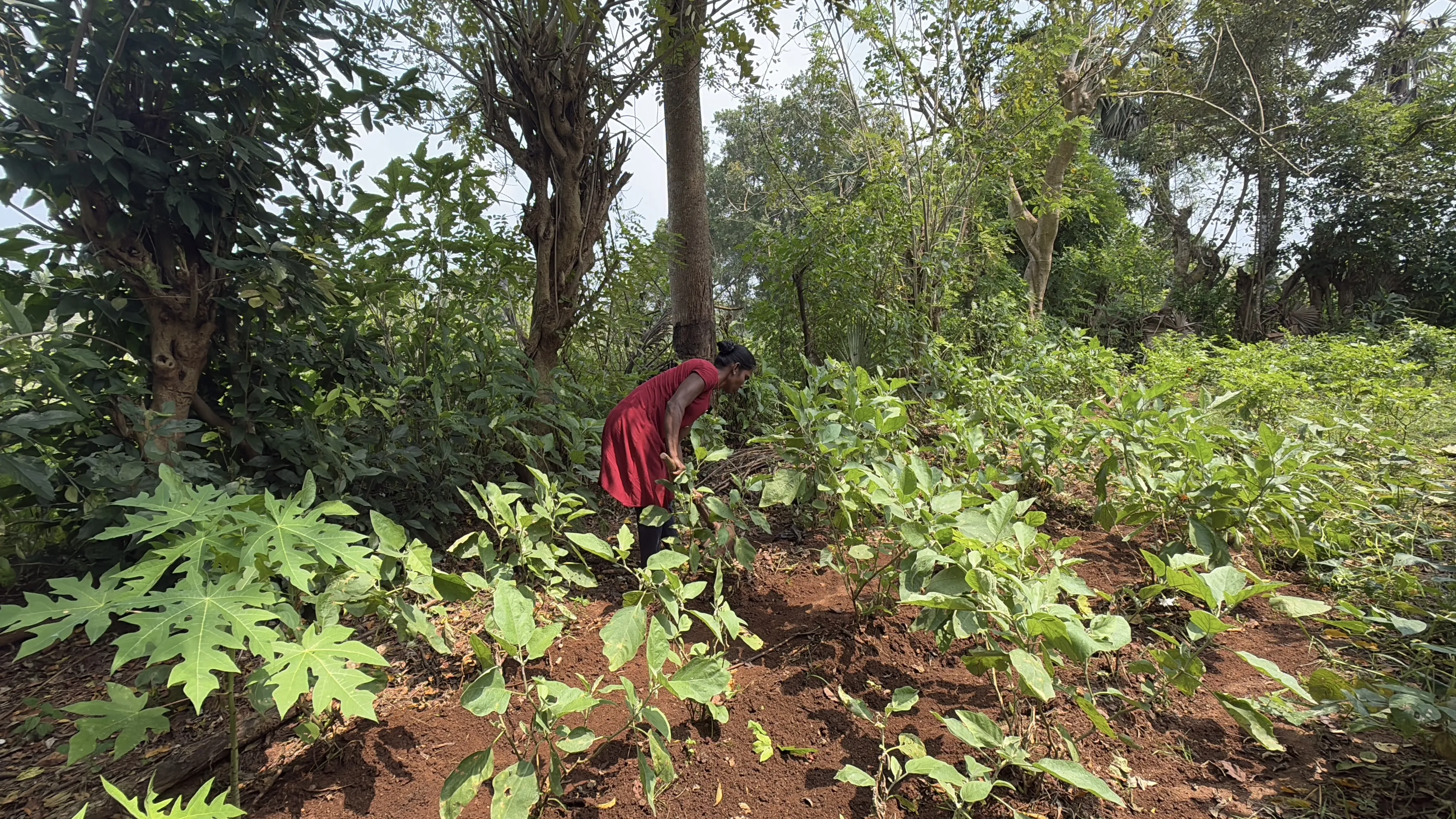
Women like Sivaranjini are forced to deal with the existential crisis of either having too much or too little water for their land. Sivaranjini, seen in this photograph, grows vegetables in a patch next to her home for the third year in a row. Photo: Rukshana Rizwie
Santhirasegaram Sivaranjini kneels in the dry soil of her home garden, her hands caked in dirt as she carefully plants seedlings. The sun beats down relentlessly, a reminder of the prolonged drought that has ravaged her land. Around her, the remnants of last year’s failed harvest — withered stalks and cracked earth — tell a story of loss. But Sivaranjini is determined. “This year, I will try again,” she says, her voice steady despite the weight of her struggles.
For the 44-year-old war widow and a mother of three, this small plot of land is more than a garden. It’s a lifeline. She endures the dual devastations of Sri Lanka’s recently concluded 26-year-long civil war and the escalating impacts of climate change.
Sri Lanka’s civil war was a conflict between the Sri Lankan security forces and a separatist group of Tamil minority called the Liberation Tigers of Tamil Eelam (LTTE). In the final stages of the conflict in 2009, the Sri Lankan military ruthlessly bombed LTTE strongholds in the north. The death toll – mostly civilians – is estimated to be up to 100,000. One of the victims was Sivaranjini’s husband, who died from injuries sustained during the shelling of Oddusuddan, a township that witnessed some of the fiercest fighting between the Sri Lankan forces and the LTTE.
Today, the war is over, but not for Sivaranjini.
“This year has been the most devastating,” she tells Asian Dispatch, her voice tinged with exhaustion. “There was no rain during the weeding period, and then too much rain just before harvest. Severe droughts in between. Everything was destroyed.”
Sivaranjini is the sole provider for her home, and her story is not unique. In northern Sri Lanka, particularly in Mullaitivu, Tamil women — many of whom are war widows or survivors of the conflict — are facing the compounded impacts of prolonged droughts and erratic weather patterns.
One of the significant impacts that the conflict has had is the increased number of female-headed households (FHH) in the Northern Province including Mullaitivu district. Out of the 5.2 million households in Sri Lanka, an estimated 1.1 million households or 23 percent of the households are FHH.41. Of that it is estimated that women head 58,121 households in the Northern Province.
For over two decades, the north has experienced drastic climate shifts, with severe droughts rendering vast tracts of agricultural land infertile and torrential rains causing floods. Climate change has robbed these women of their primary livelihood—farming—and forced them to seek solutions for survival.
Oddusudan by Asian Dispatch
A time-lapse of Oddusuddan, in Mullaitivu district, highlights how much the landscape changed from 1966 onwards. The landscape shows lush greenery in the late 90s to parched and infertile lands in the 2000s. Video: Rukshana Rizwie; satellite images via Google Earth
Sivaranjini’s family once thrived on farming. Before the war, they earned at least LKR 1,000 (roughly $3) per day, growing black gram, green gram, maize, ground nut, cowpea, sesame, kurakkan, red onion, big onion and soya beans.
But the conflict and its aftermath left deep scars. Her eldest son, who sustained severe fractures during the shelling, requires frequent hospital visits. With no borewells to irrigate her three acres of land, Sivaranjini relies on borrowed water from a nearby well—a precarious arrangement. “If the other landowners see my plants bearing fruit, they won’t let me fetch water,” she says. This makes her increasingly reliant on the rain cycle.
Mullaitivu is located in Sri Lanka’s dry zone, and has long been a hub for growing red rice and other field crops such as groundnut, green gram, black gram and pulses. This is also where the last phases of the civil war were fought.
Over the past few decades, the district has experienced significant shifts in its rainfall patterns, disrupting traditional farming practices and challenging the resilience of its agricultural dependents. Data from 1961 to 2002 reveals a complex picture of climate change impacts, with Mullaitivu standing out as one of the few regions in Sri Lanka where annual rainfall has increased, even as the number of rainy days has declined.
According to academicians Sulakshika Senalankadhikara and L Manawadu, who both teach at the Department of Geography at the University of Colombo, who are co-authors of a study, Mullaitivu recorded an increase in total annual rainfall of 7.215 mm per year over the 42-year period from 1961 to 2002. However, this increase in total rainfall has not been accompanied by a rise in the number of rainy days.
“Mullaitivu experienced a decline in the number of rainy days by 0.818 days per year. This suggests that while the total volume of rainfall has grown, it is now concentrated in fewer, more intense downpours,” Senalankadhikara says, adding that this shift has significant implications for agriculture, as it leads to longer dry spells interspersed with heavy rainfall events that can cause flooding and soil erosion.
For example, the study’s spatial interpolation maps show that Mullaitivu’s rainfall patterns have shifted significantly over the decades. While the district once received relatively consistent rainfall, it now experiences more extreme fluctuations, with periods of intense rainfall followed by prolonged dry spells. This variability is particularly challenging for paddy cultivation, which relies on consistent water availability.

Spatial interpolation maps of Sri Lanka show that rainfall patterns have changed over the years with the district now receiving torrential pours.
According to V Pathmanandakumar of the Department of Geography at Eastern University in Sri Lanka, the land cover in Oddusuddan has undergone significant changes over the past two decades. His research, which produced thematic maps illustrating land-use changes between 1997 and 2016, reveals a troubling trend: A 5.88 square kilometre decline in vegetation cover.
“In 1997, about 453.02 square kilometres of the Oddusuddan division was covered with vegetation,” Pathmanandakumar explains. “By 2016, that figure had dropped to 447.14 square kilometres.”
Legacy of loss in the north
In the north, the story of the climate crisis is closely intertwined with the legacy of loss among the Tamils. Sri Lanka is a Sinhalese Buddhist-majority country, and Tamils form its largest minority, making up 12 percent out of its 23 million population. The community has historically faced systemic discrimination since the country gained independence from British colonisation in 1948. Sinhalese Buddhists have great influence in Sri Lanka’s institutions, including politics, judiciary and police, leading to further marginalisation. Ethnic fissures, compounded by violence and discrimination, eventually erupted into a civil war in 1983, which lasted until 2009. The war is over now, but not for 3.1 million Tamils, who still reel from the impacts of war. Women and children are disproportionately impacted by its outcomes.
Sasikumar Ranjinidevi, who lives 30 km away from Sivaranjini, says the war has left her feeling like a stranger in her own land. Her husband and family members surrendered to Sri Lankan security forces during the final years of the armed conflict. Her kin are now among an estimated hundred thousands of disappeared, with no sign of their return. This left Ranjinidevi to shoulder the burden of raising her children and rebuild their shattered lives alone.
According to the United Nations Human Rights Council Report, Sri Lanka has the second highest number of enforced disappearances worldwide, tipping 100,000 disappearances.
“I see the sorrow etched on my son’s face,” she tells Asian Dispatch. “There are days he returns from school in a solemn mood, refusing meals and weeping alone for hours or even days. He misses his father terribly.”
The weight of her loss is palpable. Yet, Ranjinidevi masks her grief, knowing life must go on. After the end of the armed conflict, she returned to her hometown to reclaim her land and rebuild what was lost. “Our harvests and planting cycles always revolved around the weather,” she recalls. “It was like clockwork. Now, it’s as unpredictable as our lives. Over the years, we’ve abandoned our land, plot by plot. Today, an entire acre lies barren and unusable.”

Ranjinidevi’s lands are vast but her farms are small, she can only grow what the weather allows. Today she is tending to wheat and hopes her vegetables will withstand the next downpour. Photo: Rukshana Rizwie
What little remains of her land tells a story of struggle. Ranjinidevi once grew vegetables in her home garden and pulses in the fields. “Either the seeds drown in excessive rainwater or the crops are washed away before we can harvest them,” she explains. Though the rains are brief, they are devastatingly intense, leaving no chance for recovery.
Knee-deep in debt, Ranjinidevi has borrowed from both private and government banks. “We can’t make enough. Nothing grows, and when it does, it’s destroyed. Whatever I hoped to salvage has been lost. I can’t even pay the interest on my loans. I don’t know what to do, and there’s no one to share my worries with,” she says.
During droughts, the situation worsens. Wells dry up, forcing them to buy drinking water. “The brinjals and pulses I planted withered under the scorching heat and lack of water,” she says with despair. ”There was a time when lorries would come to our lands to load up on onions to take to [capital city] Colombo,” she said. “Today we jump for joy at the sight of a growing single onion.” The dry spells are the hardest to bear, she says. The severe drought in 2018 she and her family experienced, lasted for more than eleven months and affected the western part of the entire district.
She says no matter how much effort or money she invests, the force of climate change is against her. “It isn’t supposed to rain this month (February), but it has been pouring and last year around this time, we experienced floods.”
When is the next big drought?
Based on the research by a group of scientists from Malaysia-based Universiti Sains Malaysia, the next significant drought in Mullaitivu is likely to occur during the southwest monsoon season, which spans June, July and August. Historically, these months have been identified as the driest in the region, with minimal or no rainfall recorded in some years. The study highlights that drought conditions often originate in the western part of the district in March and progressively spread eastward, intensifying during the peak dry months of July and August. This pattern is influenced by geographical factors and the Indian Ocean Dipole (IOD), which has a strong correlation with drought occurrences in the area.
Given the cyclical nature of droughts in Mullaitivu, the southwest monsoon season of 2025 is expected to follow this established trend. The combination of high temperatures, increased evaporation rates, and reduced rainfall during these months will likely exacerbate water scarcity, impacting agriculture and daily life.
The study also notes that the IOD plays a significant role in shaping these conditions, with positive IOD phases linked to warmer sea surface temperatures and reduced rainfall in the region.

A heatmap based on scientific studies conducted in Mullaitivu which shows the occurrences and incidents of severe droughts from 1977 onwards to date. Graphic: Rukshana Rizwie
A struggle for identity and land
To understand the climate crisis for Sri Lanka’s north, one needs to acknowledge the historical role land plays in Tamil identity. The community is believed to have descended from the Jaffna kingdom and are natives to the country. Despite the legacy, the Sri Lankan government listed them as a separate ethnic group and even removed the Tamil language as an official language in 1956 – which was later reinstated in 1987. The Sri Lankan government is also accused of erasing Tamil legacy by destroying archeological evidence of the community’s historical roots. With the Tamil culture, language and history under siege, the LTTE was borne out of the idea of a Tamil “homeland” where LTTE founder V Prabhakaran famously said that the Tamil race is “deeply rooted” to the northern soil. After the war, the Sri Lankan government has been waging a quiet war on Tamil land. Most of it is on agricultural land.
Sasikumar Santhidevi was eight months pregnant when her husband died during the shelling in the war. She fled to save her and her unborn baby’s lives but when she came back in 2011, her land was occupied by the Sri Lankan military. Military occupation of Tamil land became a jarring reality for thousands of civilians like Santhidevi, who returned after the war only to find camps, bases and High Security Zones on their agrarian and familial land. According to the Adayaalam Centre for Policy Research, an advocacy group, the military held 30,000 acres of land in Mullaitivu in 2019, a decade after the war.
For Santhidevi, the military eventually let go of some land but a portion of it is still occupied by Sri Lanka’s Department of Forests.
“[When I came back after the war],I couldn’t locate my home, Santhidevi recalls. “The entire area was a jungle. My mother and my little children took axes and began to cut through the dense shrubbery. I remember one occasion when we were having a meal during a brief respite, the army commander of the area came over and told us to leave everything and go.”
Santhidevi didn’t give up: “We lived on this land and had all the documentation to prove it, so I went to court. The army offered us money in exchange for an acre of land, but we refused. We wanted to keep our land.” Once she was finished dealing with the army, she confronted another issue: The Department of Forests, which still claimed an acre of her land. “We can’t access it to date,” she says, leading us to a spot marked with concrete poles. “They’ve fenced the land, and if we are to go to court over it, we need at least LKR 100,000 ($334) in legal fees, money which we don’t have.”
Despite the Department of Forests’ claim on the land, Santhidevi says she sees them planting and harvesting pulses each year, which they later sell.
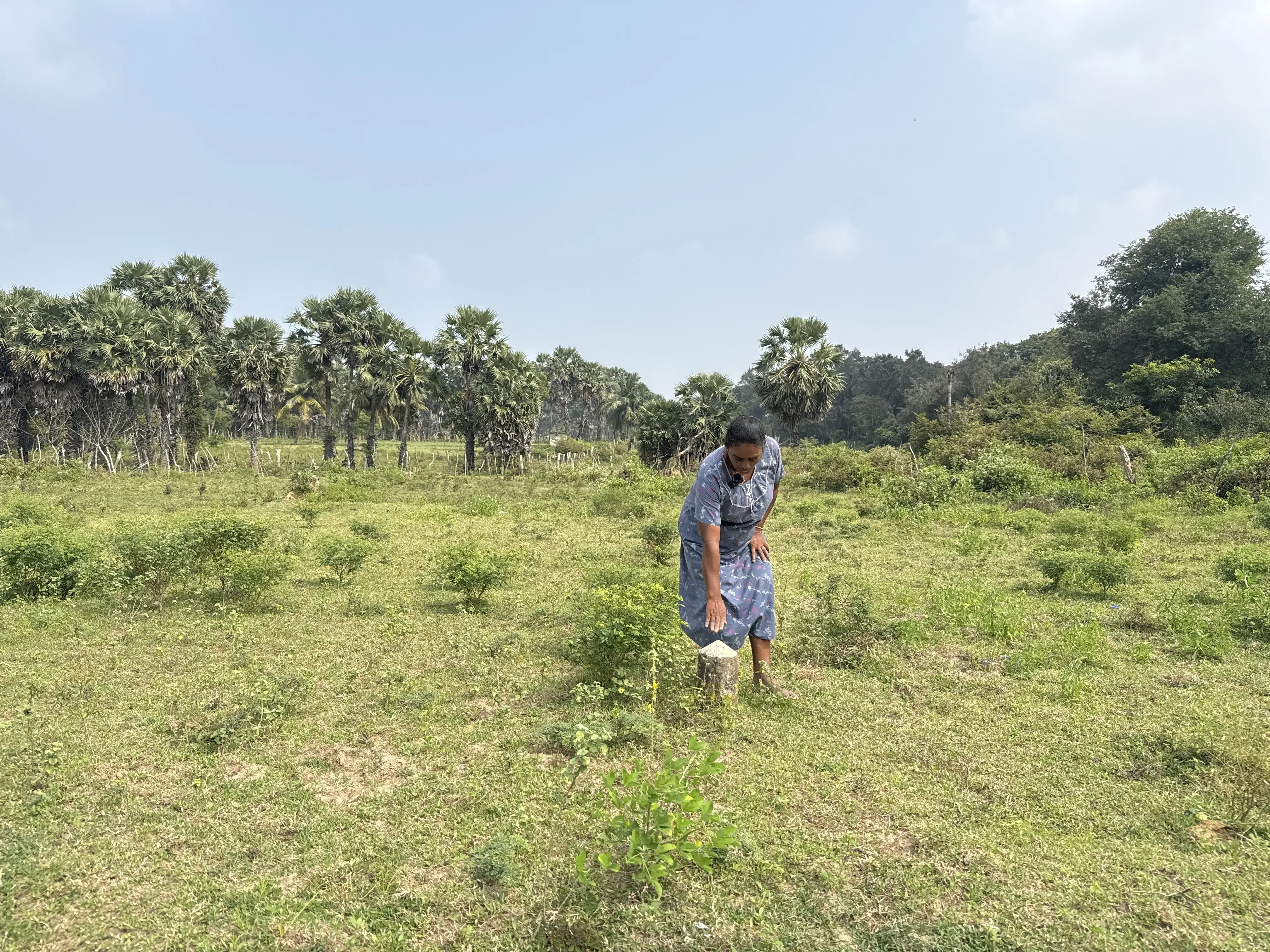
Santhidevi shows us the concrete polls that separate her own lands from the rest of the plot. Photo: Rukshana Rizwie
Asian Dispatch investigated the land occupation in Mullaitivu district.
In response to a Right to Information (RTI) petition submitted by us, the Mullaitivu secretariat responded with a calculation that showed a total of 4,859 acres that still remain occupied. Only 2,891.75 acres have been released so far. Of the five divisions in the Mullaitivu, Karaithuraipatru (Maritimepattu) is the most heavily occupied. Over 4,000 acres of the total occupied land fell within this division.
| Division | Total seized by tri-forces | Land Released (acres) | Land Remaning (acres) |
| Karaithuraipatru | 6809 | 2764 | 4045 |
| Thunukkai | 429.25 | 0.25 | 429 |
| Oddusuddan | 188 | 2 | 186 |
| Puthukudiyiruppu | 284.5 | 115.5 | 169 |
| Manthai East | 40 | 10 | 30 |
| Total | 7750.75 | 2891.75 | 4859 |
Keppapulavu is where hundreds of residents – including Santhidevi – were forced to flee their homes during the final stages of the war in 2008. Soon after, the military took control of more than 202 hectares of Tamil-owned residential land, incorporating the former residents’ homes into vast military camps. The army now uses the land for farming and maintaining guarded military camps, despite promising that they’ll return the land as part of the government’s justice, peace and reconciliation process.
The RTI petition also revealed that Sri Lanka’s Forest Department has expropriated 32,110 acres of land, while the Wildlife Department continues to lay claim to 23,515 acres. The Sri Lankan military, at the same time, continues to occupy large tracts of state and private land in Mullaitivu, estimated to be 16,910 acres, according to a research by the Oakland Institute researchers.
Although the government claims that the military has released 90 percent of occupied land in the Tamil-majority north, a Human Rights Watch report last year found that this figure was impossible to verify as there was “no publicly available accurate and comprehensive mapping of land occupation”. The Adayaalam Centre for Policy Research estimates that the military still occupies 12,140 hectares of land in Mullaitivu alone.
A Google Maps search shows several key military institutions scattered across Mullaitivu, including the Sri Lankan Air Force base and station, the Sri Lanka Army barracks, the security forces headquarters, a military barracks next to the GE Office, the 6th Battalion Sri Lanka Electrical and Mechanical Engineers base, the 9th Sri Lanka Army Signal Corps, and the Mullaitivu army base hospital.

A simple Google map search reveals just a few of the military installations and camps dotted along the main roads in Mullaitivu. Screenshot: Google Maps
At the same time, the Sri Lankan Army has commercialised the agricultural land in question, by selling the produce to landowners. The military has been running commercial projects such as resorts and shops in high-security zones, which prevents the resettlement of displaced Tamils. For example, Valikamam North in Jaffna district is approved for resettlement, but large military camps and bungalows remain on private land, and access to many areas continues to be restricted.
A time-lapse video showing how the area around Mullaitivu has changed since 1965. Graphic: Rukshana Rizwie
In 2023, the Sri Lanka army admitted that several of its battalions had been stationed on private land, occupying 70.05 acres of private land. Many of these military companies are not even pinned on a map to be easily identified or located.


Images on the Sri Lankan army website show its military personnel engaging in farming. Photos: Army.lk
Building a new life, one garden at a time
Pulasthi*, a war survivor who requested anonymity, expressed exhaustion from monitoring the Sri Lankan army’s occupation of two acres of her Keppapulavu farmland. She recounted fleeing with her husband and two children to Mullivaikkal during the war’s final phase. While taking refuge in Mullivaikkal camps, her husband and eldest son were killed by a shell that struck their camp. The army forced her to leave her home in 2009, moving her to Manik Farm. Manik Farm was a military-run displacement camp, which recorded several human rights violations. Pulasthi was there until 2012, when the site was shut down and its residents relocated to another camp in Sooripuram. Pulasthi was given a new house in another village but returning to her land in Keppapulavu isn’t allowed.
“The land I’m on isn’t mine,” she says. “It’s only 40 perches. I used to have two acres [in Keppapulavu] where we farmed and lived comfortably. This land is barren. We have no electricity, and I can’t make ends meet.”
Today, in a parched home granted to her, Pulasthi finds solace in her home garden, where she’s planted chillies and palm trees. What she lacks is irrigation as her plot of land is situated at a lower elevation, which makes it vulnerable to flooding during rainfall. “Either the water is too salty or it evaporates too quickly,” she claims. “I pray to God it rains soon.”
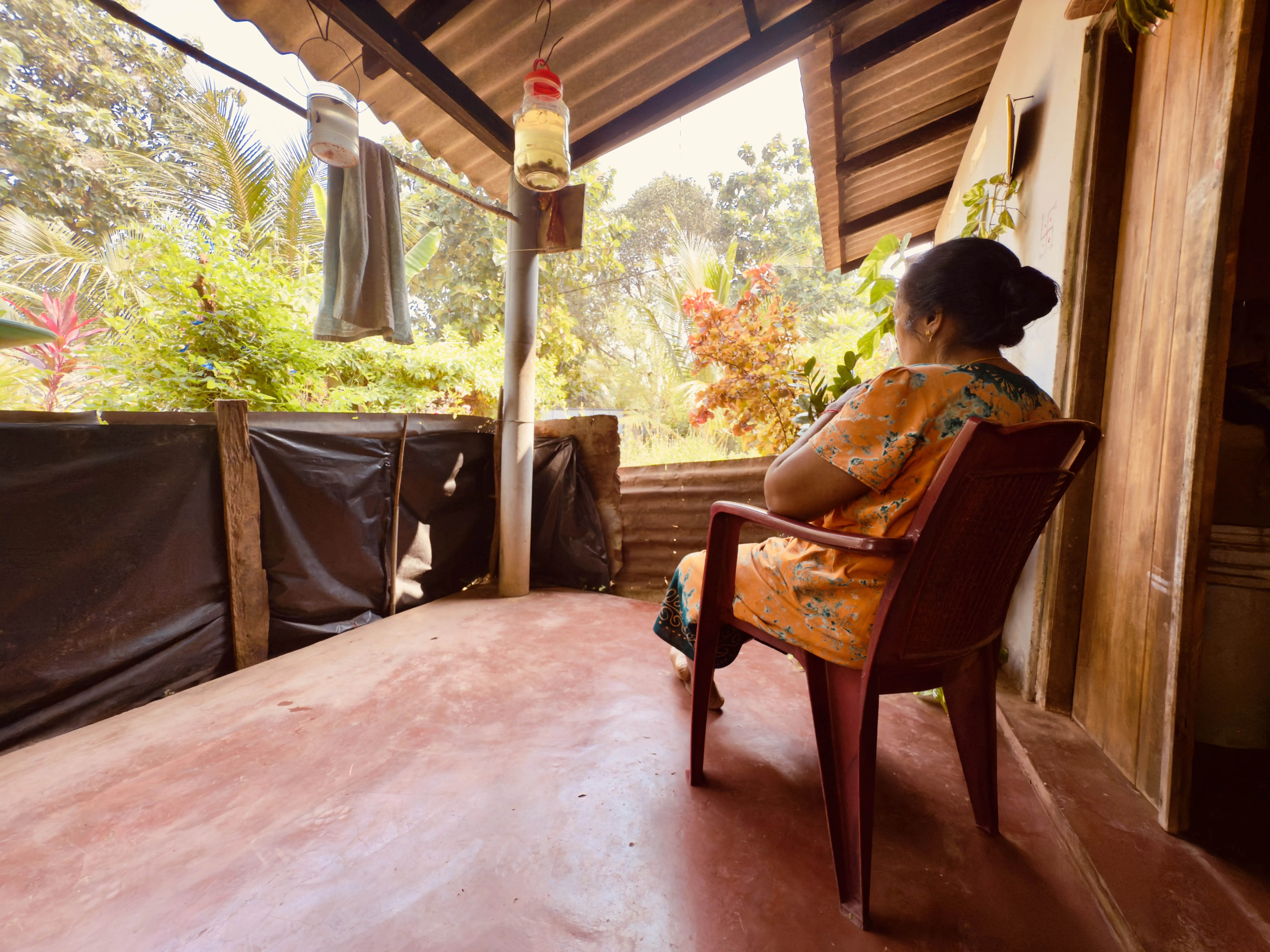
Pulasthi looks out at the expanse of land beyond the confines of her humble home. Photo: Rukshana Rizwie
Daily life often revolves around accessing clean water from wells and nearby tanks. Now, rising salinity levels, exacerbated by droughts and saltwater intrusion, is making this increasingly difficult. The consequences are far-reaching: Water resources are under immense strain. Major reservoirs experience fluctuating water levels, minor irrigation systems dry up rapidly, and streams flow irregularly. Just like Pulasthi described, the groundwater sources are depleting, and water quality is declining due to high salinity.
Compounding these physical vulnerabilities is the district’s low socioeconomic resilience. With a disaster resilience index of less than 30 percent, Mullaitivu residents struggle to cope with and recover from climate shocks. Poverty, limited income diversity, low financial inclusion, and inadequate social protection systems leave communities ill-equipped to face long-term challenges. The result is a cycle of hardship that undermines well-being and hampers recovery efforts.
“We live because dying isn’t a choice,” she says, her voice steady but her eyes betraying the weight of her struggles. “What can I do? I’m cornered in this piece of land that isn’t mine. We grow and eat whatever we can and live for the sake of our children.”
Sivarasa Rajeshwari, a war widow with four children, says that agricultural resilience is the only hope for Tamil women. The 46 year old had fled the war to Puthukudiyiruppu, a small town in Mullaitivu, and was displaced several times without money or belongings until she came back home to reclaim her land – and sustenance. “Growing vegetables not only feeds my family but also brings in a little extra when I sell them at the market,” she says. In 2018, the worst drought in memory wiped out her entire harvest. “I’m grateful it was only that year,” she says, her relief tempered by fear. “I pray we never see a repeat of it.”
Despite the erratic climate, Rajeshwari says it’s necessary for women like them to adapt. “Only certain vegetables can survive these conditions,” she explains, gesturing to a field of eggplants. “Thankfully, I have a well with a motor to pump water to the plants. Before, we carried water in buckets for each plant —it was exhausting.”

Rajeshwari inspects her eggplants to ensure the leaves are not infected with pests. She tells us that she has a few more weeks before she can harvest them. Photo: Rukshana Rizwie
Despite the hardships, the resolve of the women in Mullaitivu remains unshaken. For Sivaranjini, the path forward is clear.
“I will keep working,” she says, her hands returning to the soil. “This land is all I have.” Her words echo the quiet determination of a community that refuses to be defeated, even as the odds stack higher against them.
In the face of war and climate change, women’s resilience is a powerful reminder of the human capacity to endure and adapt. Amid the rubble of loss and the scars of conflict, new life sprouts in the women’s home gardens, a testament to hope and perseverance.
While visiting Gaighat Bazaar in Udayapur district of eastern Nepal, Elisa (name changed) went to a restaurant for a snack. The restaurant owner, whom she knew from her village, greeted her warmly. Anil Sewa, the owner of Brothers Restaurant, asked for her mobile number and Facebook ID.
“I gave him my number and Facebook ID and went home,” says Elisa. “A few days later, he messaged me and said, ‘When you come to the market, come to my restaurant for a snack. I have a secret to tell you’.”
Elisa cannot remember the exact date but recalls it was around June/July when she visited Brothers Restaurant for work. She says, “When I met him and asked, ‘What’s the secret, Dada (elder brother)?’ he replied, ‘Sometimes interesting customers come to my restaurant. If you have fun with them, you can enjoy good food and earn money too’.”
She also asked the hotel owner what kind of work it was. The owner said it wasn’t difficult work. It was about ‘eating, drinking, and having fun. “It sounded easy, and I needed money. So, I was tempted and agreed to it.”
The next day around 11 am, Sewa called Elisa and asked her to come. “When I went there, he made me sit in a room with an unknown man, probably around 50 years old,” Elisa says. “The man ordered beer, cigarettes and snacks, and offered me some too.”
Having seen her parents fight daily due to alcoholism, Elisa had become addicted to drugs at the age of eight due to peer pressure. Therefore, she didn’t refuse the beer and cigarettes. She says that while they were eating, the man made a sexual advance, which she rejected. But the man didn’t stop. “I told him I had never done such a thing before, but he didn’t listen and started forcing himself on me, saying that he had paid the hotel owner for this,” she said tearfully. “I was scared. The man was much older than me and I resisted but in vain.”
Elisa fainted. She says that when she regained consciousness, she was naked, and the man was sleeping naked on the bed. She got dressed and went downstairs to meet the hotel owner and told him about the abuse. But the hotel owner gave her 1,000 rupees, saying it was her ‘earning’ for the day.
Elisa was furious. “I was so angry. How could someone I knew do this to me?” she says. “I was also scared that someone else might find out what happened with me.”
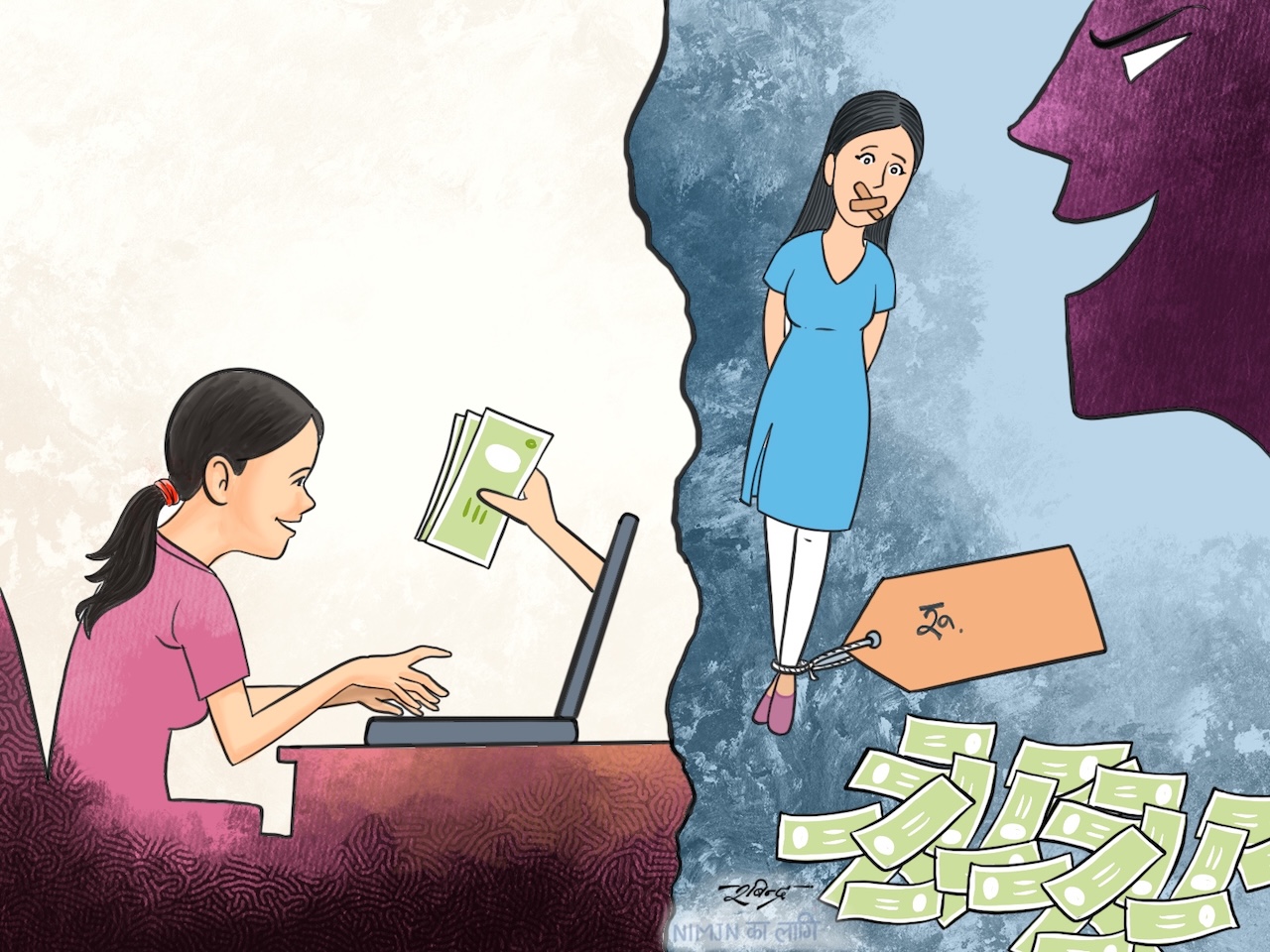
Hotel owner Sewa had used Facebook Messenger to lure Elisa, trafficked her, forced her into prostitution, and she had been raped. But out of fear, she did not report the crime.
The hotel owner had lured Elisa with promises, knowing full well about her weak family and financial situation. “He told me, ‘You won’t find such work anywhere else. Look, you earned a thousand rupees in less than two hours. If a better customer comes, you’ll earn even more. Then, you can buy whatever you want with that money’, he tempted me,” she recalls. “I didn’t say anything. He said, ‘I’ll call you when a good customer comes’, and I went home without saying anything.”
Some hotels and restaurants in urban areas are found to have forced minors like Elisa into sex work under the guise of entertaining customers. According to the police, most of these girls are between ages 13-19. In her statement to the police, Elisa revealed that the hotel owner, Sewa, had also made other women engage with customers. However, in the court statement, Sewa said that he had never had any physical relationship with her and had never made such a proposal.
Elisa was told by the hotel owner in Gaighat that the more people she had physical relations with, the more money she would get. She was paid accordingly. “I used to get 1,000 rupees for having physical relations with one person and 3,000 rupees if I had such relations with two persons,” says Elisa. “Since I could earn more by doing it with more people, I would sleep with two or three people a day.”
She admits that due to her financial need, she was willing to have physical relations with anyone. She says that she would get extra money if she could make the customer happy.
In his statement to the police, restaurant owner Sewa admitted that he would call Elisa when customers wanted to have fun and engage in physical contact. He said that he would take 2,000 rupees from the customer and keep half of it for himself, giving the other half to Elisa.
Cases like Elisa’s have been increasing. Maiti Nepal, an organization working against human trafficking, has rescued 6,434 girls and women in the last 10 years alone. According to Maiti Nepal’s statistics, the number of rescues of those trafficked has been increasing every year.
Last year alone, 101 people were rescued from abroad and 2,287 from within the country, totaling 2,388. Similarly, in 2022, 117 people were rescued from abroad and 2,180 from within the country, totaling 2,297.
| Year | Number of people rescued |
| 2023 | 2388 |
| 2022 | 2297 |
| 2021 | 142 |
| 2020 | 94 |
| 2019 | 322 |
| 2018 | 250 |
| 2017 | 273 |
| 2016 | 239 |
| 2015 | 144 |
| 2014 | 183 |
| 2013 | 142 |
SP Gautam Mishra, the then Information Officer of Nepal Police’s Human Trafficking Investigation Bureau, says that girls from poor families and broken homes are often lured into prostitution with promises of work. Mishra said that the operators themselves trap these girls in massage centers, spas, parlors and restaurants, promising them good jobs.
He said that social media has made it easier for girls to be trafficked. Mishra says that girls are lured and sexually exploited through TikTok, Facebook and Viber, and through online advertisements promising employment.
According to him, children and adolescents are forced into the sex trade through fear and intimidation, and are used to perform obscene acts on video for customers through various apps like strip chat, free live sex cam, and adult chat.
Mishra said that groups are created on Facebook, WhatsApp, and other platforms, and girls are sent to the places specified by the customers who pay.
Lured with the promise of work and raped
Apsara (name changed), a 17-year-old girl from near Butwal, received a mobile number from an unknown person on TikTok. The person who sent the number from a TikTok account named Kelvin James was Resham Gurung from Gorkha, who lived in Tokha, Kathmandu.
After asking why he sent the number, Resham replied, “If you need a job, contact me.” Apsara still remembers saying, “I will not work right now.” Resham assured her that the massage parlor job paid 10,000 rupees per month with a promise of a future raise.
Resham also asked for Apsara’s Facebook ID, and they started chatting daily. One day, Resham said, “If you don’t want a parlor job, it’s okay. I need someone to work at my house. You’re like my sister, and I’ll take good care of you. Don’t be afraid to come to Kathmandu.”
When she said she didn’t have the money to come to Kathmandu, Resham sent her 8,000 rupees as travel expenses. On her first day in Kathmandu, she was raped.
“On the very day I got off the bus, he took me home. While changing my clothes after eating, he knocked on the door,” she says. “When I opened the door, he forced himself on me, saying he would sleep with me. When I resisted, he made a video and threatened to post it online.”
Frightened by threat, Apsara was forced to comply with Resham. In her statement to the police, she said that after the rape, Resham brought a contraceptive from a nearby medical store and forced her to take it, scolding her when she refused.
Resham’s flat was home to his paralyzed mother and postpartum wife. Apsara stayed there for a month, taking care of them, and during this time, she was raped three times, as she revealed in her police statement.
After a month, Resham put her to work at his own Sunflower Wellness Spa in Gongabu. “Although it was called a massage parlor, I had to have sexual relations with the customers and engage in sexual activities to please them,” she says. She faced harassment and abuse at the spa.
According to the police, Resham initially confessed to the charges after his arrest. However, the charge sheet states that he later retracted his statement. Quoting him, the charge sheet states, “When the police interrogated me for the first time after my arrest, I said those things. I don’t remember now.”
Using the victim to find other girls
Resham used Apsara to bring other girls to Kathmandu. After working for a few months, Resham threatened her, saying, “Call another friend from your village, or I’ll make your video go viral.” Out of fear, she called her friend Ayusha (name changed) to Kathmandu.
“Out of fear, I called my 17-year-old classmate Ayusha, telling her there was a good job in Kathmandu,” said Apsara. Ayusha, who didn’t receive much love and affection from her father after her mother left and her father remarried, came to Kathmandu and faced the same fate as Apsara.
Resham knew Makhmali Maya Syangtan, the owner of A-One Spa in Thamel. While visiting Resham’s spa, she met Apsara and Ayusha. Afterward, they left Resham’s spa and started working at A-One.
Apsara said that Makhmali, like Resham, would take 1,000 rupees for each sexual encounter with a customer, keeping 500 for herself and giving 500 to them.
Both Apsara and Ayusha, while working at A-One, were rescued by a team deployed by the Human Trafficking Investigation Bureau on the evening of May 19, 2024. The police filed a case against Resham in the Kathmandu District Court for human trafficking and rape. Both Apsara and Ayusha are currently in a safe house. According to Mishra, the bureau’s information officer, although both girls’ families have been informed, they have not come to take them back, and the girls have also refused to go home.
Just as Resham had used Apsara to bring Ayusha, Sewa and Satish Kumar Yadav had used Elisa to bring another girl from Gaighat. On September 8, 2023, Yadav, who had been staying with Elisa at Sewa’s hotel, took her to Lahan, Siraha, the next day. When Elisa said she would only go to Lahan if Sewa went, Yadav gave her money for the bus fare and they went to Lahan on a scooter.
Sewa told the police in his statement that Yadav had agreed to pay for the hotel expenses in Lahan and had said he would arrange for a fee of 5,000 rupees for one night.
On the night of September 9, 2023, Yadav and Elisa were in one room and Sewa in another room at a hotel in Lahan. On the afternoon of September 10, 2023, when Yadav saw Elisa chatting with a friend on Facebook Messenger, he pressured her to call her friend. According to Sewa’s statement to the police, Yadav had told Elisa’s friend, “Come to Lahan, I’ll give you as much money as you want.”
However, when she said she didn’t have the bus fare, Yadav went to Gaighat on a motorcycle. While returning to Lahan with her, the police at the Jaljale checkpoint stopped their motorcycle and questioned them. When the girl said that she did not know Yadav and that her friend had told her she could earn some money by staying at a hotel for a while, Yadav was arrested. After Yadav’s arrest, the police arrested Sewa on September 13, 2023, and filed a human trafficking case against him in the Udayapur District Court.
Elisa’s friend’s father has filed another human trafficking case against Elisa, Yadav and Sewa. These cases are pending in court.
Trafficking to India
Girls are also being trafficked to India through online contacts. There has been an increase in gangs luring girls with promises of employment on social media and then trafficking them. Binod Pokharel, the program coordinator of Maiti Nepal, Biratnagar, said that rural girls are particularly vulnerable to such traps.
“They lure simple village girls with promises of attractive salaries and take them away. It has been found that they are forced into prostitution in India,” said Pokharel. “These trafficking gangs have been found to use social media, Viber and WhatsApp the most.”
Gitanjali Sharma of Maiti Nepal shared that in July/August alone, they rescued and brought back a 13-year-old girl who had been trafficked to India after getting acquainted with a person through Facebook.
Human trafficking and smuggling is a global and multifaceted problem. Like the illegal trade in weapons and drugs, human trafficking and smuggling has become a thriving business operated by international criminal organizations worldwide. Social analyst Bigyan Luintel states that this crime has become widespread because it is less risky and more profitable compared to other crimes.
Social media has further facilitated this. “The pursuit of urban lifestyles, including commercial sex work, cheap labor, and easy living, has become a pull factor for trafficking,” says Luintel. “Children in local environments are influenced by poverty, illiteracy, unemployment, lack of income-generating opportunities, and social insecurity.”
Mishra said that in the fiscal year 2022/23, the bureau raided hotels, restaurants, and massage parlors 18 times and rescued 61 girls who were forced into risky work. Of these, only 14 were taken by their families, and the rest are still in safe houses.
Mishra said that the bureau has been posting various messages on social media about how to protect oneself from human trafficking through social media. He suggests not chatting with strangers on social media, not being lured by anyone’s promises, not sharing personal information on social media, not trusting anyone easily, and consulting with family members if someone makes any proposal.
उदयपुरको गाईघाट बजार घुम्न गएको बेला खाजा खान छिरेकी एलिसा (परिवर्तित नाम) लाई होटलका सञ्चालकले पहिला नै चिनजान रहेको भन्दै सन्चोबिसन्चो सोध्छन् ।
गाउँकै सामान्य चिनजान रहेका ब्रोदर्स रेस्टुरेन्टका मालिक अनिल सेवाले उनीसँग मोबाइल नम्बर र फेसबुक आईडी माग्छन् । “उहाँलाई मेरो नम्बर र फेसबुक आईडी दिएर घर फर्किएँ,” एलिसा भन्छिन्, “केही दिनपछि उहाँले मलाई मेसेन्जरमा फोन गर्नुभयो र ‘बजार आएको बेला मेरो रेस्टुरेन्टतिर खाजा खान आउनु तिमीसँग एउटा गोप्य कुरा गर्नुछ’ भन्नुभयो ।”
एलिसाका अनुसार उनले मिति त सम्झिएकी छैनन् । तर असारतिर हुनुपर्छ उनी कामविशेषले गाईघाट गएको बेलामा ब्रदर्स रेस्टुरेन्टमा छिरिन् । उनी भन्छिन्, “उहाँलाई भेटेर ‘के गोप्य कुरा छ दादा ?’ भनेर सोध्दा उहाँले ‘मेरो रेस्टुरेन्टतिर कहिलेकाहीँ रमाइलो गर्ने ग्राहक आउँछन्, तिनीहरूसँग रमाइलो गरी बस्यौ भने मिठोमिठो खान पाउनुको साथै पैसा नि कमाइ हुन्छ’ भन्नुभयो ।”
उनले होटल सञ्चालकलाई कामचाहिँ के गुर्नपर्छ नि भनेर पनि सोधेकी थिइन् । सञ्चालकले गाह्रो काम होइन ‘खाने, पिउने रमाइलो गर्ने’ भने । “सुन्दा काम सजिलै लाग्यो, मलाई पैसाको नि जरुरत थियो र खान नि पाइन्छ भनेपछि म प्रलोभनमा परेँ र हुन्छ भनी सहमति जनाएर घर फर्केँ ।”
त्यसको भोलिपल्ट ११ बजेतिर होटल सञ्चालक सेवाले फोन गरेर बोलाएपछि एलिसा गइन् । “त्यहाँ जाँदा मैले नचिनेका अन्दाजी ५० वर्षका मानिससँग कोठामा बस्न लगाउनुभयो,” एलिसा भन्छिन्, “त्यस व्यक्तिले बियर, चुरोट र नास्ता मगाएर मलाई नि खान दिए र आफूले पनि खाए ।”
आमाबुबाले दैनिक रक्सी खाएर झगडा गर्ने गरेको देखेकी उनी ८ कक्षा पढ्दा नै साथीको संगतमा लागूऔषधको दुर्व्यसनमा फसेकी थिइन् । त्यसैले वियर र चुरोटमा नाइँनास्ती नगरेको बताउने उनका अनुसार खानपिन चलिरहेकै बेला तीे व्यक्तिले शारीरिक सम्पर्क गर्ने प्रस्ताव राखे, उनले अस्वीकार गरिन् । तर ती मान्छे रोकिएनन् ।
“मैले अहिलेसम्म यस्तो कार्य गरेको छैन भन्दाभन्दै नमान्दा पनि त्यस व्यक्तिले ‘मैले यसको लागि होटल मालिकलाई पैसा दिएको छु’ भन्दै जबरजस्ती गर्न थाल्यो,” उनले सुस्केरा हाल्दै भनिन्, “मलाई डर लागिरहेको थियो, त्यो मान्छे मभन्दा उमेरमा धेरै ठूलो थियो, मैले प्रतिकार गरिहेको थिएँ, तर मेरो प्रतिकार व्यर्थ रह्यो ।”
एलिसा बेहोस भएकी थिइन् । उनका अनुसार होसमा आउँदा उनको शरीरमा कुनै लुगा थिएन, ती व्यक्ति नग्न अवस्थामै बेडमा सुतिरहेका थिए । उनी लुगा लगाएर होटल मालिकलाई भेट्न तल झरिन् र आफूमाथि भएको अत्याचारको बारेमा बताइन् । तर होटल मालिकले ‘तिम्रो आजको कमाइ’ भनेर हातमा १ हजार रुपैयाँ थमाए ।
एलिसा रिसाइन् । “मलाई रिस उठिरहेको थियो, चिनेजानेको मानिसले मलाई यस्तो काम गर्न कसरी लगाउन सक्छ भनेर,” उनी भन्छिन्, “डर पनि लागेको थियो, कतै अरुले थाहा पाउछ कि भनेर ।”
होटल मालिक सेवाले फेसबुक म्यासेन्जरबाट बोलाएर एलिसाको बेचबिखन गरेका थिए, वेश्यावृत्ति गराएका थिए, त्यहाँ एलिसामाथि बलात्कार भएको थियो । तर डरले उनले आफूमाथि भएको अपराधका बारेमा कतै उजुरी गरिनन् ।
एलिसाको पारिवारिक अवस्था र आर्थिक अवस्था कमजोर रहेको बुझेरै होटल मालिकले लोभलालच देखाएका थिए । “उहाँले मलाई ‘तिमीले यस्तो काम अरु कहीँ पाउँदिनौ, हेर दुई घण्टा नबित्दै एक हजार कमायौ, अझै राम्रो ग्राहक आयो भने योभन्दा धेरै कमाउँछौ, त्यसछि त्यो पैसाले तिमीले मन लागेको कुरा लाउन खान खान पाउँछौ’ भन्दै मलाई प्रलोभन देखाउनुभयो,” उनी सम्झन्छिन्, “म केही नबोली बसेँ, उहाँले ‘म राम्रो ग्राहक आयो भने फोन गर्छु आउनू’ भनेपछि म केही नबोली घर फर्किएको थिएँ ।”
सहर बजारका केही होटल रेस्टुरेन्टमा ग्राहकलाई मनोरञ्जन दिने भन्दै एलिसाजस्ता नाबालिकाहरूलाई यौनकार्यमा लगाउने गरेको पाइन्छ । जसमा १३ वर्षदेखि १९ वर्षसम्मका किशोरी धेरै हुने गरेका प्रहरीको भनाइ छ । एलिसाले प्रहरीमा दिएको बयानअनुसार होटल सञ्चालक सेवाले अरु महिलालाई समेत ग्राहकसँग बस्न लगाउने गरेका थिए । सेवा स्वयंले भने आफूसँग कहिल्यै शारीरिक सम्बन्ध नराखेको र राख्ने प्रस्ताव पनि नगरेको उनले अदालतमा दिएको बयानमा स्पष्ट पारेकी छन् ।
एलिसालाई गाईघाटका होटल सञ्चालकले जति धेरै जनासँग शारीरिक सम्बन्ध बनायो धेरै त्यति पैसा हुन्छ भनेका थिए, त्यसअनुसार उनलाई पैसा पनि दिएका थिए । “एक जनासँग शारीरिक सम्बन्ध बनाउँदा १ हजार र दुई जनासँग बनाउँदा ३ हजार दिनुहुन्थ्यो,” एलिसा भन्छिन्, “धेरै जनासँग गर्दा धेरै पैसा हुने भएकोले म दिनमा दुई–तीन जनासँग नि सुत्थेँ ।”
पैसाको आवश्यकता भएकाले जति जनासँग पनि शारीरिक सम्बन्ध राख्न आफू तयार भएको उनी बताउँछिन् । ग्राहकलाई खुसी बनाएमा अझै अतिरिक्त पैसा आउने गरेको उनी बताउँछिन् ।
| वर्ष | उद्धार गरिएकाको सङ्ख्या |
| 2023 | 2388 |
| 2022 | 2297 |
| 2021 | 142 |
| 2020 | 94 |
| 2019 | 322 |
| 2018 | 250 |
| 2017 | 273 |
| 2016 | 239 |
| 2015 | 144 |
| 2014 | 183 |
| 2013 | 142 |
रेस्टुरेन्ट सञ्चालक सेवाले प्रहरीसँगको बयानमा ग्राहकले रमाइलो गर्न तथा शारीरिक सम्पर्क राख्न केटी खोजीमा एलिसालाई बोलाउने गरेको स्विकारेका छन् । उनले ग्राहसँगबाट २ हजार रुपैयाँ लिने गरेको त्यो पैसा आधा आफूले राखेर १ हजार रुपैयाँ उनलाई दिने गरेको बताए ।
गाउँघरका आर्थिक अवस्था कमजोर भएका, पारिवारिक विखण्डन भएका किशोरीलाई काम लगाइदिन्छु भनेर प्रलोभन देखाई वेश्यावृत्तिमा लगाउने गरेको नेपाल प्रहरीको मानव बेचबिखन अनुसन्धान ब्युरोको सूचना अधिकारी एसपी गौतम मिश्र बताउँछन् । मसाज सेन्टर, स्पा, पार्लर, रेस्टुरेन्टमा काम लगाइदिने भनेर सञ्चालकहरूले नै उनीहरूलाई फसाउने गरेका पाइएको मिश्रले बताए ।
उनका अनुसार सामाजिक सञ्जालको कारणले किशोरीहरू बेचबिखनमा सजिलैसँग फस्ने गरेका छन् । टिकटक, फेसबुक, भाइबरका माध्यमबाट सम्पर्क गरेर तथा अनलाइन माध्यममा विज्ञापन दिएर रोजगारीको प्रलोभन देखाएर किशोरीहरूलाई बोलाउने र यौनशोषण गर्ने गरेको मिश्र बताउँछन् ।
उनका अनुसार बालबालिका तथा किशोरीहरूलाई डर, धाकधम्की दिई जबरजस्ती यौनधन्दामा लाउने, इन्टरनेटको माध्यमबाट विभिन्न एपहरूजस्तै बाट स्ट्रिप च्याट, फ्री लाइभ सेक्स क्याम, एडल्ट च्याटलगायतमा बसाएर ग्राहकले भनेअनुसार भिडियोमा अश्लील हर्कत गर्न लाउने काममा प्रयोग गरिएको पाइन्छ ।
फेसबुक, ह्वाट्सएपलगायतमा ग्रुप बनाई सम्पर्कमा आएका ग्राहकहरूले पेमेन्ट गरेपछि उनीहरूले भनेको स्थानमा किशोरीहरू पठाउनेसमेत पाइएको मिश्र बताउँछन् ।
काम लगाइदिन्छु भन्दै बोलाएर बलात्कार
बुटवल नजिकैकी १७ वर्षीया अप्सरा (परिवर्तित नाम) को टिकटकमा अपरिचित व्यक्तिले मोबाइल नम्बर पठाउँछन् । केल्भिन जेम्स नाम गरेको टिकटकबाट नम्बर पठाउने गोरखा घर भई काठमाडौंको टोखा बस्ने रेशम गुरुङ हुन्छन् ।
किन नम्बर पठाएको भनेर सोधेपछि रेशमले ‘तपाईंलाई काम चाहिएको छ भने सम्पर्क गर्नु’ भनेको र आफूले ‘अहिले म काम गर्दिनँ’ भनेको अप्सारलाई अहिले पनि सम्झना छ । रेशमले मसाज पार्लरको काम मासिक १० हजार रुपैयाँ तलब हुने र पछि तलब बढाइदिने आश्वासन पनि दिन्छन् ।
रेशमले अप्सराको फेसबुक आईडी पनि माग्छन् र उनीहरूबीच दैनिकजसो च्याट हुन्छ । यसै क्रममा एक दिन रेशमले ‘तिमीलाई पार्लरको काम आउँदैन भने केही छैन, मेरो घरमा काम गर्ने मान्छे चाहिएको छ, तिमी मेरो बहिनीजस्तै मान्छे हो, राम्रोसँग काममा राख्ने छु डराउनु पर्दैन काठमाडौं आऊ’ भन्छन् ।
उनले काठमाडौं आउने पैसा छैन भन्दा रेशमले बाटोखर्च भन्दै मनी ट्रान्सफरबाट ८ हजार रुपैयाँ पठाइदिएका थिए । त्यही खर्चले काठमाडौं पुगेको पहिलो दिन नै उनी बलात्कारमा परिन् ।
“बसबाट ओर्लिएकै दिन उहाँले घर लैजानुभयो, खाना खाएर कोठामा लुगा चेन्ज गर्दैगर्दा उहाँले ढोका ढकढक्याउनुभयो,” उनी भन्छिन्, “मैले ढोका खोलेपछि ‘म नि यही सुत्छु भन्दै जबरजस्ती गर्नुभयो, मैले प्रतिकार गर्दा भिडियो बनाउनुभयो, यो कुरा कोही कसैलाई भनेमा नेटमा हाल्दिन्छु भनी डर देखाउनुभयो ।”
अप्सरा त्यही डरले कतै उजुरी नगरी रेशमले भनेको मान्न बाध्य हुन्छिन् । बलात्कारपछि रेशमले नजिकैको मेडिकलबाट गर्भ रोक्ने औषधि ल्याएर खान दिएको र आफूले इन्कार गर्दा गाली गरेको उनले प्रहरीसँगको बयानमा बताएकी छन् ।
रेशमको फ्ल्याटमा प्यारालाइसिस भएकी आमा, सुत्केरी श्रीमती पनि हुन्छन् । उनीहरूकै स्याहार गरेर एक महिना बसेकी अप्सारले त्यसबीचमा ३ पटक करणी गरेको प्रहरीसँगको बयानमा बताएकी छन् ।
एक महिनापछि रेशमले गोंगबुमा रहेको आफ्नै सनफ्लावर वेलनेस स्पामा उनलाई काम लगाउँछन् । “मसाज पार्लर भने पनि त्यहाँ आउने ग्राहकसँग शारीरिक सम्बन्ध राख्नुपर्ने, उनीहरूलाई खुसी बनाउन यौनजन्य गतिविधि गर्नुपर्थ्यो ,” उनी भन्छिन् । मसाज पार्लरमा धेरै नै दुर्व्यवहारको सामना गरेको उनी सुनाउँछिन् ।
प्रहरीका अनुसार रेशमले पक्राउ परेलगत्तै आरोप स्वीकार गरेका थिए । तर पछि उनले आफ्नो बयान फेरेको अभियोगपत्रमा उल्लेख छ । उनलाई उद्धृत गर्दै अभियोग पत्रमा लेखिएको छ, “म पक्राउ परी आएपश्चात् पहिलो पटक मलाई प्रहरीले सोधपुछ गर्ने क्रममा मैले उल्लेखित कुराहरू बोल्न पुगेछु, हाल मलाई याद छैन ।”
पीडितलाई नै प्रयोग गरिन्छ किशोरी खोज्न
अप्सरालाई प्रयोग गरेर रेशमले अरु किशोरीलाई समेत काठमाडौं बोलाएका थिए । केही महिना काम गरेपछि रेशमले ‘गाउँबाट अर्को साथीलाई बोला, नत्र तेरो भिडियो भाइरल गराइदिन्छु’ भनेर डर देखाएपछि गाउँकै साथी आयुशा (परिवर्तिन नाम) लाई काठमाडौं बोलाएको उनी बताउँछिन् ।
“डरका कारण सँगै पढेकी १७ वर्षकी आयुशालाई राम्रो काम छ भन्दै काठमाडौं बोलाएँ,” अप्सराले भनिन् । आमा अर्केसँग हिँडेपछि बुबाले पनि अर्की आमा ल्याएका कारण राम्रो मायाममता पाउन नसकेकी आयुशाले काठमाडौं आएर अप्सराकै नियति भोग्छिन् ।
ठमेलको ए वान स्पाकी सञ्चालिका मखमली माया स्याङ्तानसँग रेशमको चिनजान हुन्छ । उनी रेशमको पार्लरमा आउजाउ गर्ने क्रममा अप्सरा र आयुशाको चिनजान हुन्छ । त्यसपछि उनीहरू रेशमको स्पा छाडेर ए वानमा काम गर्न पुग्छन् ।
मखमलीले पनि रेशमको जस्तै ग्राहकसँग यौनसम्बन्ध बनाएबापत् १ हजार लिने र ५ सय आफूले राखेर ५ सय आफूहरूलाई दिने गरेको अप्सराले बताएकी छन् ।
ए वानमै कार्यरत रहेको बेला अप्सरा र आयुशा दुवै जनालाई जेठ ६, २०८१ को साँझ मानब बेचबिखन अनुसन्धान ब्युरोबाट खटिएको टोलीले उद्धार गरेको थियो । प्रहरीले रेशमविरुद्ध मानव बेचबिखन र जबरजस्ती करणीको कसुरमा काठमाडौं जिल्ला अदालतमा मुद्दा दर्ता गरेको छ । अप्सरा र आयुशा दुवै सेफ हाउसमा छन् ।
ब्युरोका सूचना अधिकारी मिश्रका अनुसार दुवै किशोरीका परिवारलाई खबर गरे पनि हालसम्म लिन नआएको र उनीहरूले पनि घर जान मानेका छैनन् ।
जसरी अप्सरालाई प्रयोग गरेर रेशमले आयुशालाई बोलाएका थिए, त्यस्तै गरेर गाईघाटकी एलिसाकै माध्यमबाट सेवा र सतीशकुमार यादवले अर्की किशोरीलाई समेत बोलाएका थिए । भदौ २२, २०८० मा एलिसासँग सेवाको होटलमा बसेका यादवले भोलिपल्ट उनलाई सिरहाको लहान लगेका थिए । एलिसाले सेवा गए मात्रै लहान जाने भनेपछि एलिसालाई गाडीबाट आऊ भन्दै भाडा दिएर उनीहरू स्कुटरमा लहान पुगेका थिए ।
लहान गएको होटल खर्चबाहेक एक रातको ५ हजार रुपैयाँ लाग्छ भन्दा यादवले मिलाएर दिन्छु भनेको सेवाले प्रहरीसँगको बयानमा बताएका छन् ।
भदौ २३ गते राति लहानको एक होटलमा यादव र एलिसा एउटा कोठामा र सेवा अलग्गै कोठामा सुतेका थिए । भदौ २४ गते दिउँसो लहानको होटलमा बसिरहेको बेला एलिसाले साथीसँग फेसबुक म्यासेन्जरमा कुराकानी गरेको देखेपछि यादवले ती साथीलाई पनि बोलाउन दबाब दिए । सेवाले प्रहरीमा दिएको बयानअनुसार यादवले एलिसाका साथीलाई ‘लहान आऊ मागेजति पैसा दिन्छु’ भनेका थिए ।
तर उनले गाडीभाडा छैन भनेपछि यादव मोटरसाइकल लिएर गाईघाटसम्म गएका थिए । उनलाई लिएर लहान फर्कंदै गर्दा जलजलेको चेकप्वाइन्टमा प्रहरीले मोटरसाइकल रोकेर सोधपुछ गर्दा ती किशोरीले ‘हामीबीच चिनजान नभएको, साथीले होटलमा केही समय बसेपछि पैसा कमाइ हुन्छ भनेकाले लहानतिर जान लागेको’ भनेपछि आफू पक्राउ परेको यादवले बताएका छन् । यादव पक्राउ परेपछि प्रहरीले सेवालाई भदौ २७, २०८० मा पक्राउ गरेर जिल्ला अदालत उदयपुरमा मानव बेचबिखनको मुद्दा दर्ता गरेको छ ।
एलिसाकी साथीका बुबाले एलिसासहित, यादव र सेवालाई आरोपी बनाएर मानव बेचबिखनको अर्को मुद्दा दर्ता गरेका छन् । यी मुद्दा अदातलमा विचाराधीन छन् ।
भारतमा समेत बेचिन्छन्
अनलाइनमार्फत सम्पर्क गरेर किशोरीहरूलाई भारतमा समेत लैजान गरिएको छ । रोजगारी लगाइदिने भनेर सामाजिक सञ्जालमा पोस्ट गर्ने र झुक्याई उनीहरूलाई बेचबिखन गर्ने गिरोह बढ्दै गएको पाइन्छ । यसमा विशेषतः ग्रामीण क्षेत्रका बालबालिकाहरू त्यसको जालमा पर्ने गरेको पाइएको माइती नेपाल विराटनगरका कार्यक्रम संयोजक विनोद पोखरेलले जानकारी दिए ।
“गाउँका सिधासाधा किशोरीहरूलाई आकर्षक तलब हुने भनेर यहाँबाट फकाएर लैजान्छन् । भारततिर पुर्याएपछि वेश्यावृत्तिमा लगाउने गरेको पाइएको छ,” पोखरेलले भने, “बेचबिखन गर्न लैजाने गिरोहले सबैभन्दा बढी सामाजिक सञ्जाल, भाइबर र वाट्स एप प्रयोग गरेको पाइएको छ ।”
माइती नेपालकै गिताञ्जली शर्माले गत साउनमा मात्र फेसबुकको माध्यमबाट चिनजान भएर भारत पुगेकी १३ वर्षकी बालिकालाई उद्धार गरेर फिर्ता ल्याएको जानकारी दिइन् ।
मानव बेचबिखन तथा ओसारपसार एक विश्वव्यापी र बहुआयामिक समस्या हो । हातहतियार र लागूऔषधको अवैध कारोबारजस्तै मानव बेचबिखन तथा ओसारपसार अन्तर्राष्ट्रिय आपराधिक संगठित गिरोहद्वारा सञ्चालित धन्दाका रूपमा विश्वमा फस्टाउँदै गएको छ । अन्यको तुलनामा बेचबिखन र ओसारपसारमा कम जोखिम तर धेरै नाफा आर्जन हुने हुँदा यो अपराधले व्यापकता पाउँदै गएको सामाजिक विश्लेषक विज्ञान लुइँटेल बताउँछन् ।
अहिले सामाजिक सञ्जालले यसलाई थप सहजता दिएको पाइन्छ । “सहर बजारमा व्यावसायिक यौनधन्दा, सस्तो श्रम, सहरी मस्ती, आरामको जीवनशैली नक्कल गर्ने प्रवृत्ति बेचबिखनका लागि तान्ने शक्ति बनेका छन्,” लुइँटेल भन्छन्, “स्थानीय परिवेशमा गरिबी, अशिक्षा, बेरोजगारी, आयआर्जनको अवसरमा कमी, सामाजिक असुरक्षाको प्रभावमा बालबालिका परिरहेका छन् ।”
मिश्रका अनुसार गत आर्थिक वर्ष २०८०/८१ मा ब्युरोले १८ पटक होटल, खाजाघर, मसाज पार्लरलगायतमा छापा मारेर जोखिमपूर्ण काम गर्न बाध्य ६१ जना किशोरीलाई उद्धार गरेको छ । जसमध्येका १४ जनालाई मात्रै परिवारले बुझेर लगेका छन् । अरु सबै सेफ हाउसमै छन् ।
सामाजिक सञ्जालको माध्यमबाट हुने मानव बेचबिखन पर्नबाट जोगिन के गर्ने भन्ने बारेमा ब्युरोले सामाजिक सञ्जालमै विभिन्न पोस्टसमेत गर्ने गरेको मिश्र बताउँछन् । नचिनेका व्यक्तिहरूसँग सामाजिक सञ्जालमा कुराकानी नगर्ने, कसैले कुनै लोभलालच देखाउँदैमा नलोभिने, आफ्नो व्यक्तिगत तथा निजी कुराहरू सामाजिक सञ्जालमा नराख्ने, कसैलाई पनि हत्तपत्त विश्वास नगर्ने र कसैले कुनै प्रस्ताव गरेको छ भने घरपरिवारमा सरसल्लाह गर्नुपर्ने उनको सुझाव छ ।
(यो खोज समाचार निमजिनको फेलोसिप कार्यक्रम अन्तर्गत अस्ट्रेलियन एडको सहयोगमा उत्पादन गरिएको हो । यो सामग्रीको पूर्ण जिम्मेवारी प्रकाशक र लेखकसँग मात्र रहने छ ।)
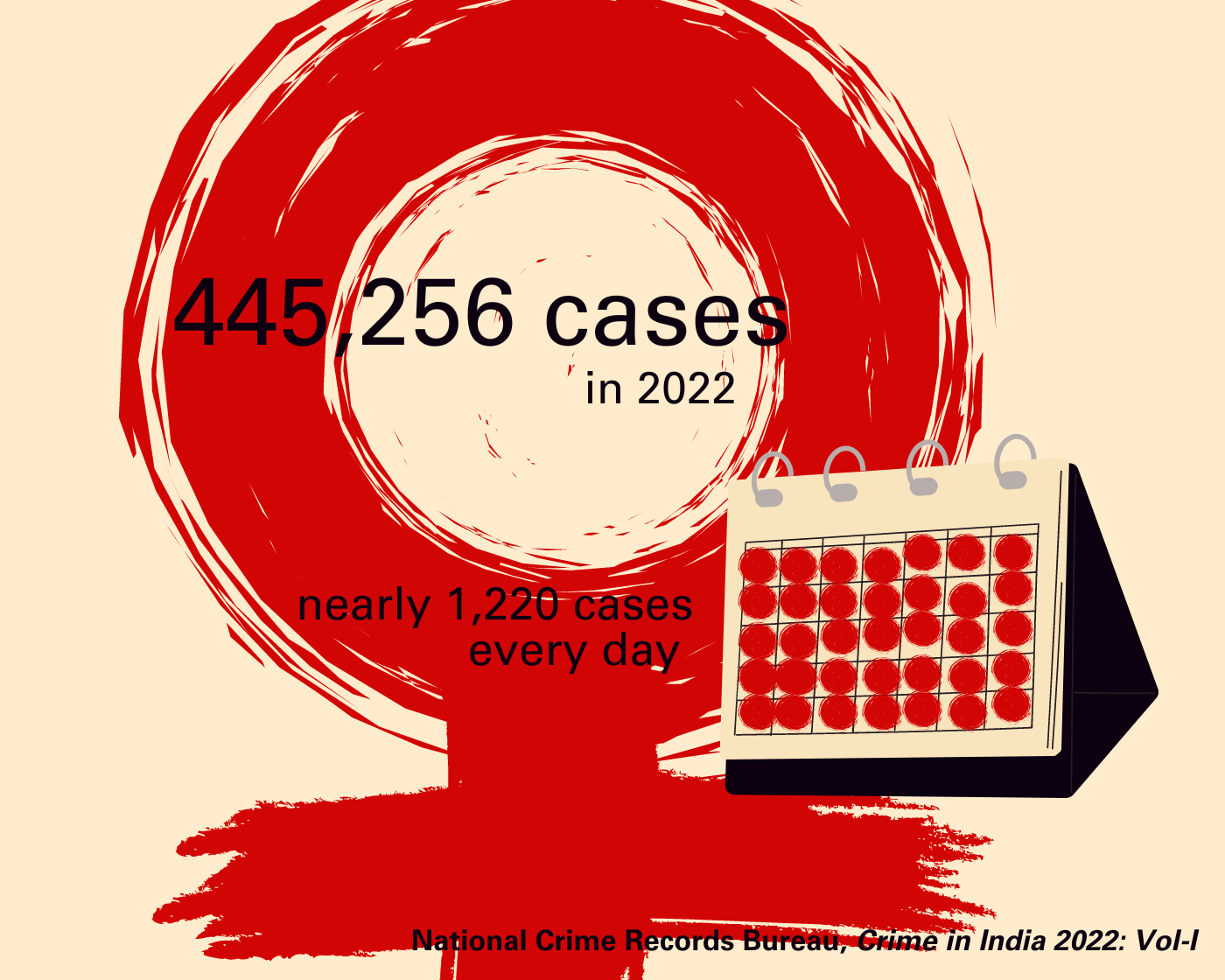
Precisely 4,45,256 cases were registered in the year 2022 as ‘crime against women’ in India. This amounts to nearly 1,220 cases everyday – those reported officially and gathered by the National Crime Records Bureau, that is. The actual incidence of such gendered violence is bound to be greater than the official numbers.
Violence against women has insidiously permeated into every aspect of daily living. Workplace harassment, trafficking of women, sexual abuse, domestic violence, sexism in art and language – all hinder the safety and security of women.
Violence against women has insidiously permeated into every aspect of daily living. Workplace harassment, trafficking of women, sexual abuse, domestic violence, sexism in art and language – all hinder the safety and security of women.
It’s a well-documented fact that women hesitate to report cases of crimes committed against them, further marginalising their voices. Take for instance the case of Barkha, a 22-year-old Dalit woman from Uttar Pradesh. Barkha states that the police refused to lodge an FIR for her complaint of rape and kidnapping when she first approached them because the main accused was a local political leader. Another rape survivor, Malini, who is a resident of Haryana, says, “the police asked me to take some money from the accused and to just let it [the crime] go. When I refused to compromise, they scolded me and said, “We will put you in lock-up if you don’t compromise.“
Police negligence, informal khap panchayats and lack of access to medical and legal resources work in tandem, discouraging women from seeking reparations for violence against them. A 2020 report, Barriers in Accessing Justice: The experiences of 14 rape survivors in Uttar Pradesh, India shows that in six of the reviewed cases, police registered an FIR (first information report) only after complaints were escalated to senior police officers. In the remaining five cases where an FIR was filed, it was done only after a court order. Markers like caste, class, disability and age augment one’s exclusion from state mechanisms which are in place to redress gender-based violence.
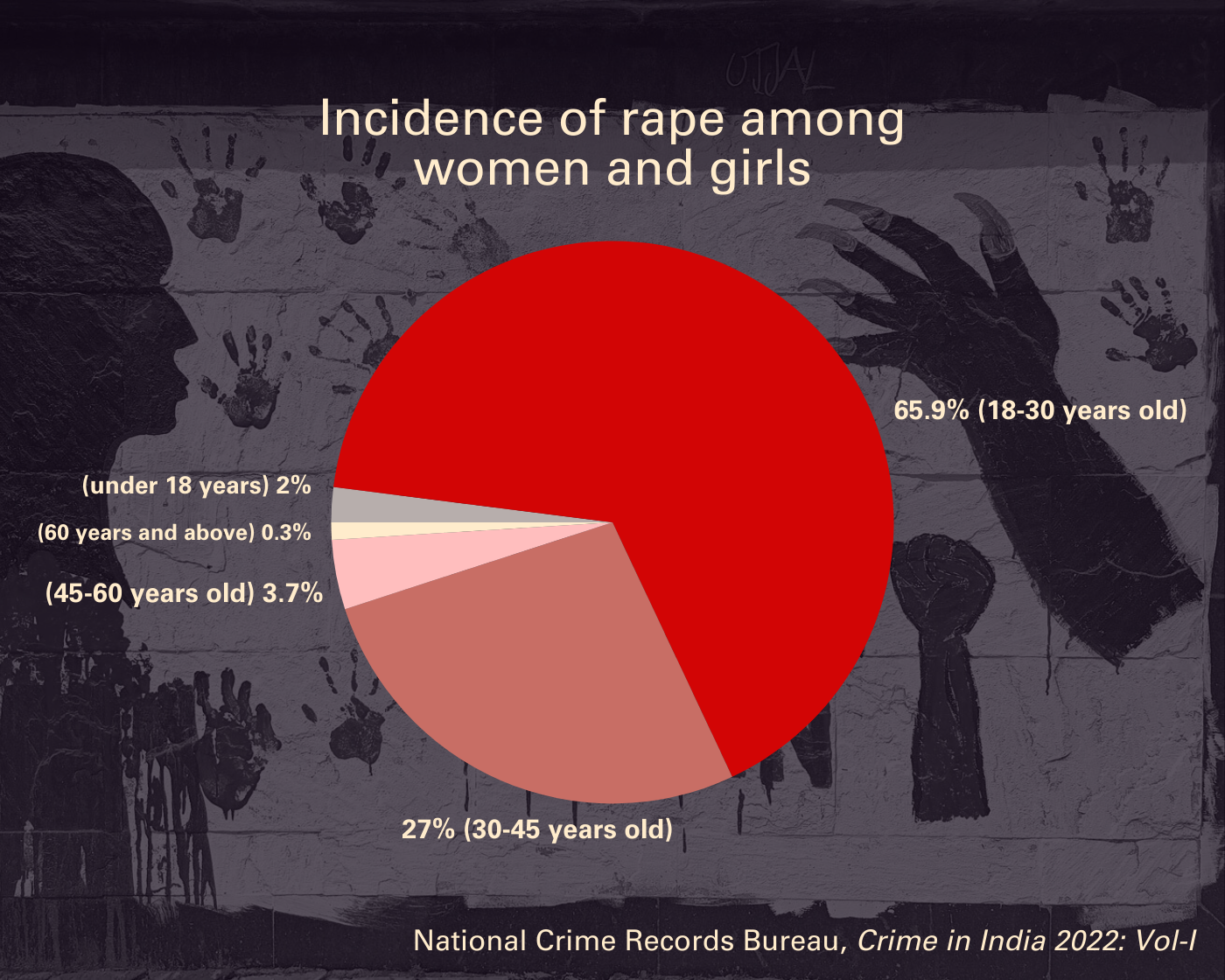
As per a report by Dalit Human Rights Defenders Network, perpetrators targeted girls younger than 18 years of age in 62 per cent of the 50 case studies of sexual violence against Dalit women. The Crime in India 2022 report also notes that the the incidence of rape cases in highest among women aged between 18 to 30 years.
Girls and women with psychological or physical disabilities are more prone to sexual violence in India, this report notes, due to the barriers in communication as well as their dependency on caretakers. Even when complaints are registered, like in the case of 21-year-old Kajri who is living with psychiatric disability, the legal process itself becomes the punishment. Kajri was kidnapped in 2010 and spent 10 years as a victim of trafficking, sexual assault, and child labour. Her father says, “it’s been difficult to continue my job in one place because I need days off to take Kajri to give police statements, tests etc. I get fired when I ask for frequent leave.”
In the essay Conceptualising Brahmanical Patriarchy in Early India , Prof. Uma Chakravarty writes of the enduring “obsession with creating an effective system of control and the need to guard them [women] constantly.” This control, as the essay notes, is often undertaken by rewarding women who subscribe to patriarchal norms and shaming those who do not. Regulatory norms which violently limit women’s mobility are often rooted in the fear of women’s sexuality and financial independence. “Earlier they [her in-laws] would say that I was going to meet with other men whenever I would go to see any pregnant woman in the village or take them to the hospital. Being an ASHA, this is my duty,” says 30-year-old Girija. A resident of Uttar Pradesh’s Mahoba district, Girija faces pressure from her in-laws to quit her job as an Accredited Social Health Activist (ASHA). “Yesterday my husband’s grandfather hit me with a lathi [stick] and even tried to throttle me,” she adds.
When women do manage to work and get paid for it, workplace harassment is the next gendered hurdle. As per a survey of garment sector workers in National Capital Region and Bengaluru, 17 per cent of women workers reported instances of sexual harassment at the workplace. “Male managers, supervisors and mechanics – they would try to touch us and we had no one to complain to,” notes Latha, a factory worker in the garment industry. Aiming to strengthen the collective bargaining power of female workers, the Vishaka Guidelines (1997) recommends organisations to form a Complaints Committee which should be headed by a woman and have as women not less than half of its members. Despite the existence of such directives on paper, their implementation continues to be feeble. Violence against women pervades at work and home.
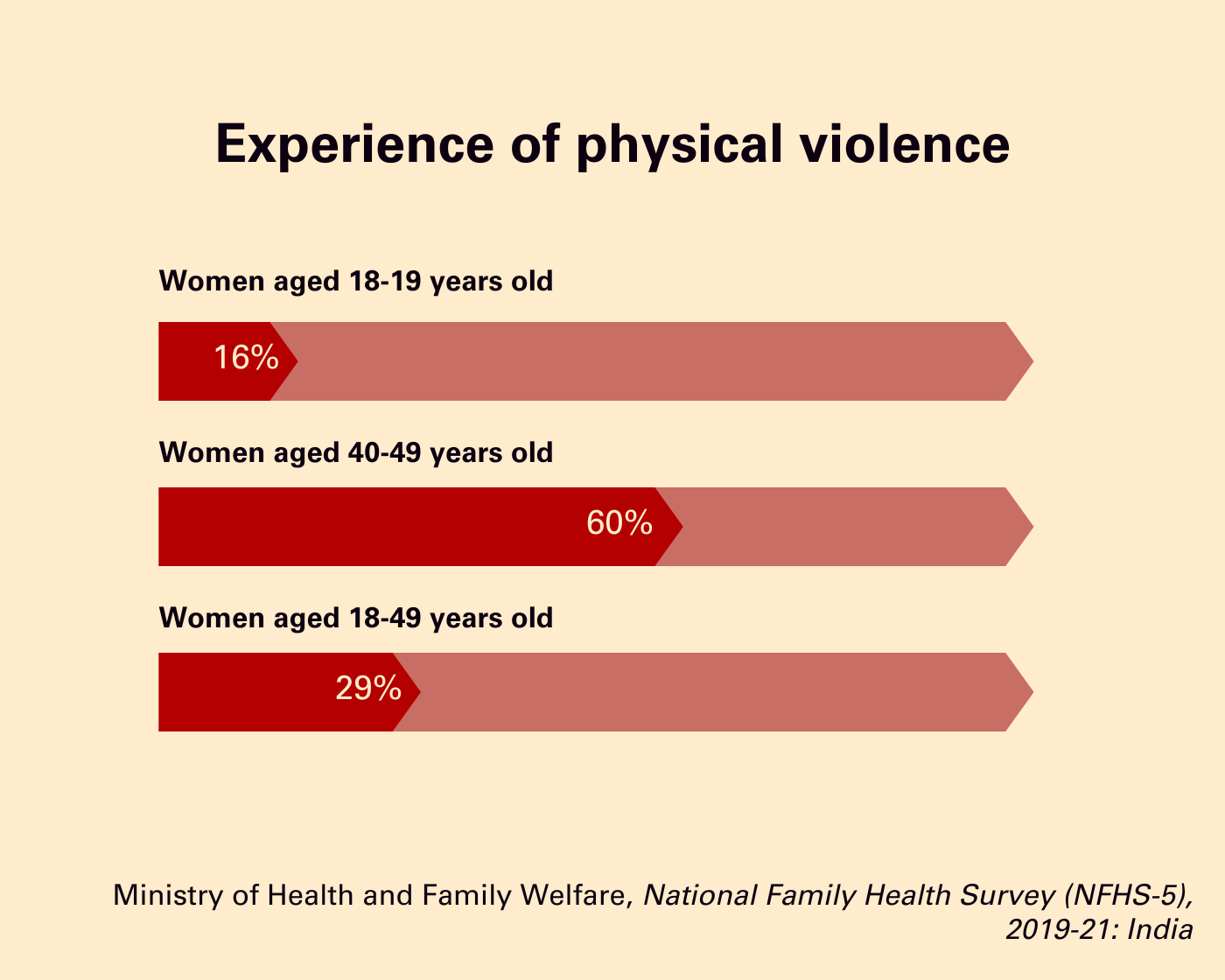
In the 2019-21 National Family Health Survey (NFHS), 29 per cent of women aged 18-49 years reported having experienced physical violence at home since the age of 15. Six per cent reported experiencing sexual violence. However, only 14 per cent of the women who had ever experienced sexual or physical violence sought help to stop it – from family, friends, or government institutions. There is a growing number of cases of violence women suffer from partners. “Meri gharwali hai, tum kyon beech mein aa rahe ho [She is my wife. Why are you interfering]?” Ravi would say when someone objected to his beating his wife. In just the year 2021, about 45,000 girls were killed by their partners or other family members around the world.
Without doubt, the endorsement of violence in romantic relationships portrayed in popular culture is a factor. In Impact of Indian Cinema on Young Viewers , depictions of “ chedh khaani ” or eve teasing (better termed as street sexual harassment) is seen as harmless banter by 60 per cent of the youth. The sinister normalisation of gendered violence is noted in another recent publication, Analysis of sitting MPs/MLAs with Declared Cases Related to Crimes against Women 2024, which states that as high as 151 sitting MPs/MLAs have cases of crimes against women declared in their candidature affidavits.
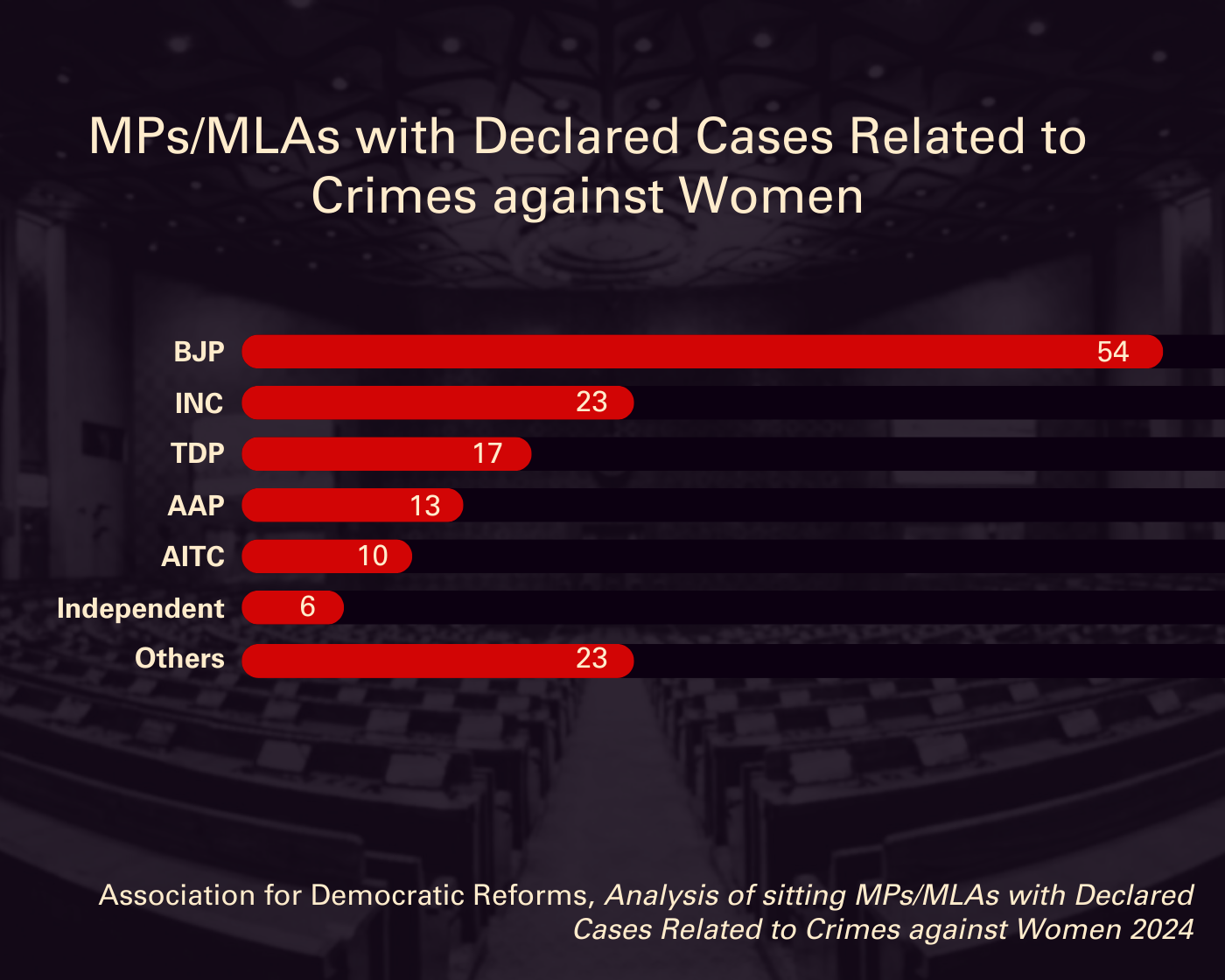
Add to this alarming mix the culture of victim-shaming, especially towards those who have experienced sexual violence: Radha, who was raped by four men from her village in Beed district, was then accused of being “characterless” and defaming her village when she spoke out against them.
The list of such crimes is long, and their patriarchal roots are deeply enmeshed in our society.
In Asia, the battle against gender-based violence reveals the harsh realities of society. World Health Organization reports that 1 in 3 women globally have experienced physical or sexual violence. This alarming statistic, while shocking and devastating, only scratches the surface of a more insidious issue: Marital rape. Despite the prevalence of violence within marriage, the laws governing marital rape in most Asian countries remain nonexistent, leaving countless women trapped in a cycle of abuse.
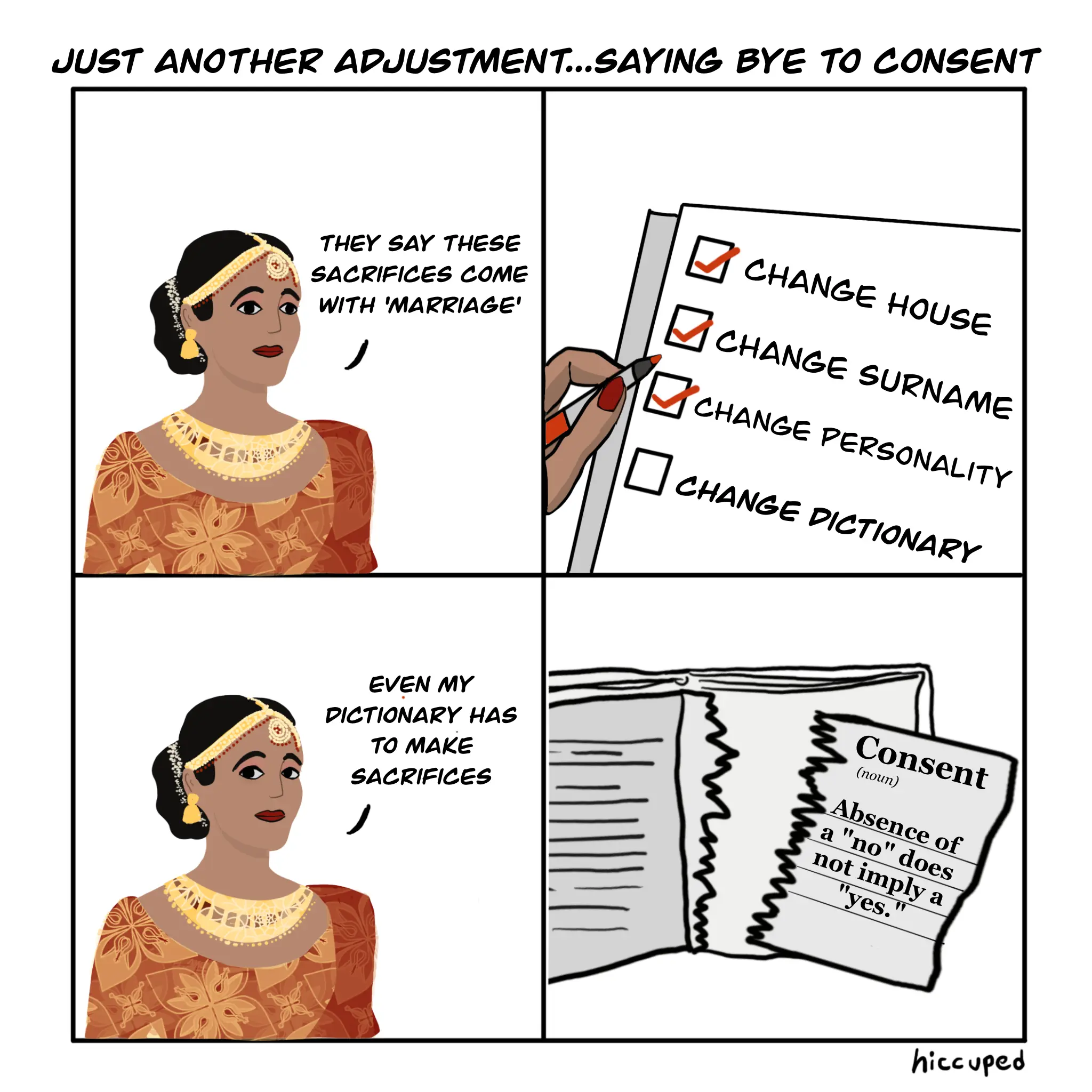
A study by UNESCO reveals that over 37 percent of women in South Asia, 40 percent in Southeast Asia, and up to 68 percent in the Pacific have faced violence from intimate partners. The numbers could be much higher considering that marital rape often goes unreported because women are conditioned to accept, endure and adjust within the confines of marriage. Across Asian societies, marriage is often presented as a sanctuary of security – both economic and physical. But we must ask: Safety for whom? If this institution is meant to protect women, then how are women expected to safeguard themselves from people within the institution? In reality, this “safety” seems illusory, benefitting the patriarchal individuals who designed these institutions.
Illustration: Sharanya Eshwar
While countries like Nepal, Bhutan, Indonesia and the Philippines recognise marital rape as a crime, many Asian countries still lack comprehensive legal frameworks to curb it, thereby prioritising cultural norms over safety of women. For instance, in India, the debate over criminalising marital rape, which is currently under judicial review by the Supreme Court, has its opponents – which include everyone from government officials to conservative groups – arguing that the law could be misused against men, and that not allowing marital rape could destabilise family structures. India prides itself in having one of the world’s lowest divorce rates but that speaks more to societal stigmas around divorce (especially for women) in the country and lengthy legal processes. The arguments against criminalisation of marital rape also reveal a troubling prioritisation of protecting men in patriarchal societies.
It’s not all hunky dory in countries that recognise marital rape, such as in Sri Lanka, Malaysia and Bangladesh. There are conditions and limitations. For instance, in Sri Lanka, marital rape is recognised only if the couple is legally separated. Or in Malaysia, it’s recognised only if the husband is causing hurt in order to have sexual intercourse with the wife. In Bangladesh, unless the victim is under the age of 13, marital rape isn’t recognised.
In Pakistan, there is no explicit laws where forced sex within marriage is criminalised. However, a recent ruling in Karachi marked a notable shift: A man was sentenced to three years for forcing his wife into non-consensual sex. This verdict acknowledged intimate partner violence as a criminal offence. In this case, the survivor’s lawyer, Bahzad Akbar, argued that the act of forced sodomy fell under the definition of rape in the amended Section 375 of Pakistan’s Penal Code.
The institution of marriage, peddled to offer protection and partnership, often serves as a deeply flawed and unfair structure for women. The failure to criminalise marital rape fully is a glaring example of shielding men from accountability, and enabling them to commit violence behind closed doors. Since time immemorial, social expectations and legal loopholes have trapped women in a position where they must choose between their safety and dignity, often leaving them deprived of both. The idea of marriage as a safe haven is distorted when norms of “obedience”, “sacrifice” and “submissiveness” to a husband are culturally imposed, and the legal system upholds these expectations.
The complicity of societal norms and the law in many parts of Asia reflects a troubling reality: Marriage is less about equal partnership and more about control. By framing consent as unnecessary within a marriage, the law not only fails women but actively enables perpetrators.
This complicity is not coincidental—it’s a well-orchestrated team effort between tradition and the legal system, where both reinforce each other to keep women subjugated within marriages. Women deserve legal systems that prioritise their rights and safety over outdated notions of family and honour. Until then, the institution of marriage, as it currently stands in many Asian countries, will continue to fail women.
Earlier this October, Cambodian police rescued 20 Filipino women, who were allegedly trafficked into the country to be used as surrogate mothers in a baby trafficking ring.
Of the 20, at least 13 were pregnant and received care at a local hospital, while the remaining seven are set to be repatriated, according to the Philippine Embassy in Phnom Penh on Tuesday, October 8.
The embassy issued the statement in response to a report by the Cambodia-based Khmer Times on the same day that details the involvement of an unnamed Philippine agency in bringing Filipino women to Cambodia to serve as surrogate mothers, despite the country’s ban on surrogacy.
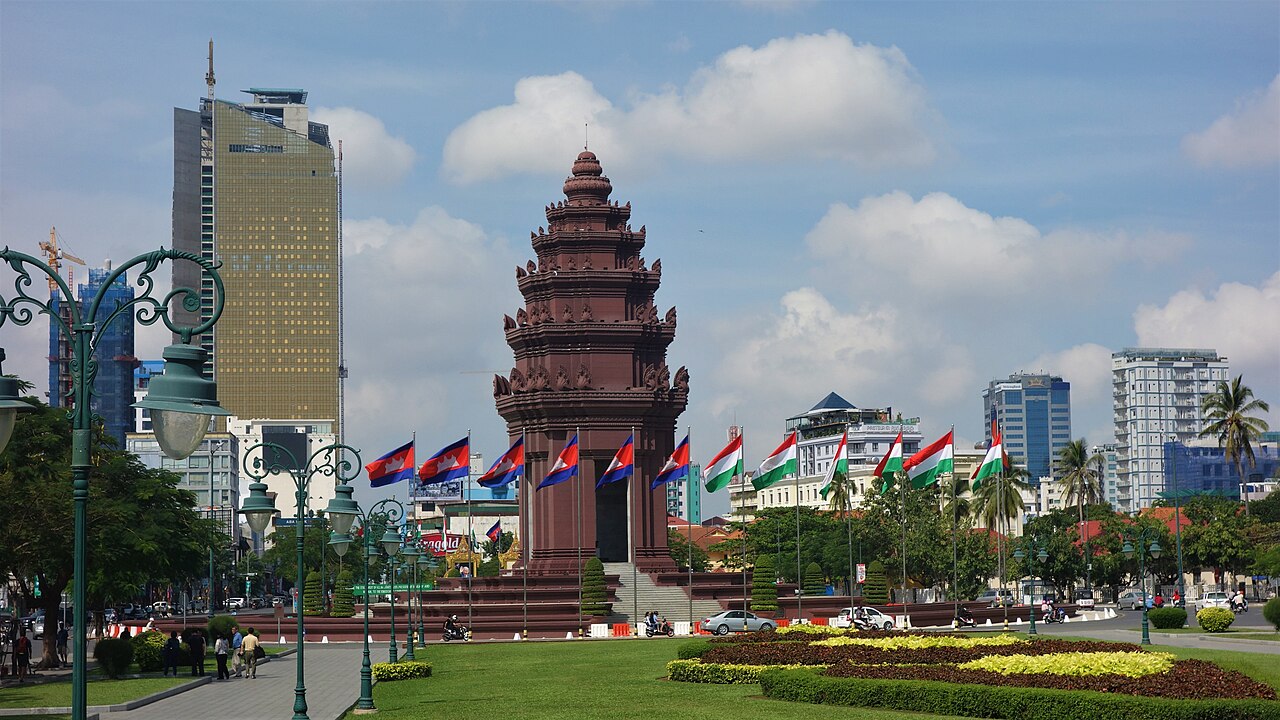
The Independence Monument in Phnom Penh, capital of Cambodia. Photo: Wikimedia Commons
.jpg)
The 13 pregnant Filipino women confirmed that a Philippine agency, working with in vitro fertilization experts in Thailand, arranged their travel to Cambodia “with the ultimate goal of trafficking babies,” according to the report.
Authorities’ interviews of the 20 Filipino women revealed that they were recruited online by an individual who used an apparently “assumed name.” Initially promised travel to another Southeast Asian country, the 20 Filipinos were instead sent to Cambodia.
The identity and nationality of the recruiter is yet to be determined, the embassy said.
“The Embassy emphasizes that human trafficking is a transnational crime, and aside from the Filipino women, the involvement of other nationalities has been established,” the embassy said. “At the time of their rescue, the women were found to be under the care of a local ‘nanny,’ together with four other women from a neighboring country.”
The plight of the 20 trafficked women reflects the alarming rise of online scams across Southeast Asia, where individuals are often lured with false promises of legitimate work, Phillipine Foreign Affairs Undersecretary Eduardo de Vega said in a televised briefing on Wednesday, October 9.
READ: Inside the Story of South Asians Trafficked and Enslaved in Asia’s Booming Scam Compounds
While the department has assisted in the repatriation of several trafficked Filipinos in Cambodia, De Vega said this is the department’s first time hearing about the use of surrogate mothers for such scams.
Cambodia banned surrogacy in 2016 but is yet to pass a law that criminalizes it.
“The problem, according to our embassy, is that we might not even know the agency’s physical address because all contact has been made through social media,” he said in mixed Filipino and English.
De Vega said most of the 20 apparently “knew what they were getting into.”
“It’s not one size fits all. We believe most knew. But it’s impossible that there weren’t at least one or two who thought they were contracted to do something else,” he said.
It’s usually like this: They’re told there’s work in Thailand and Cambodia involving computer or tourism work, but when they get there, they’re suddenly given another job. —Philippine Foreign Affairs Undersecretary Eduardo de Vega
De Vega said the same scheme could be taking place in other countries besides Cambodia.
Scam operations in Cambodia and other Southeast Asian nations have ensnared numerous Filipinos, subjecting them to human trafficking and forced labor within cyber scam compounds.
Lured by false promises of legitimate jobs, many find themselves trapped in brutal conditions, coerced into working for online scam operators. They also reportedly face threats of violence if they attempt to escape.
Early this week, Hollywood actor Meryl Streep called out the Taliban at the UN headquarters in New York, accusing their government of allowing more rights to “cats” and “squirrels” than women and girls in Afghanistan. The Taliban took great offense at this comment and said they “highly respected” women and would “never compare them to cats.” But one only needs to look at Afghanistan’s current government’s “morality laws”, the first such law to be codified ever since the armed militia took control over the country in August 2021, to understand which statement is closer to reality.
The 114-page code, published by the Ministry of Propagation of Virtue, Prevention of Vice and Hearing Complaints, enforces many restrictions on men and women but it goes as far as to impose literal silence on women. Women aren’t allowed to show their faces and bodies when they come out in public in order to “avoid temptation and tempting others.” In a country that ranks last in the Global Gender Gap Index (2023), the law not only deprives women living there of an identity but also effectively erases them from public life. However, soon after the law came into effect, Afghan women uploaded videos of themselves singing. By singing songs, the women have not only brought global attention but also inspire more women to stay resilient in the face of such adversity.
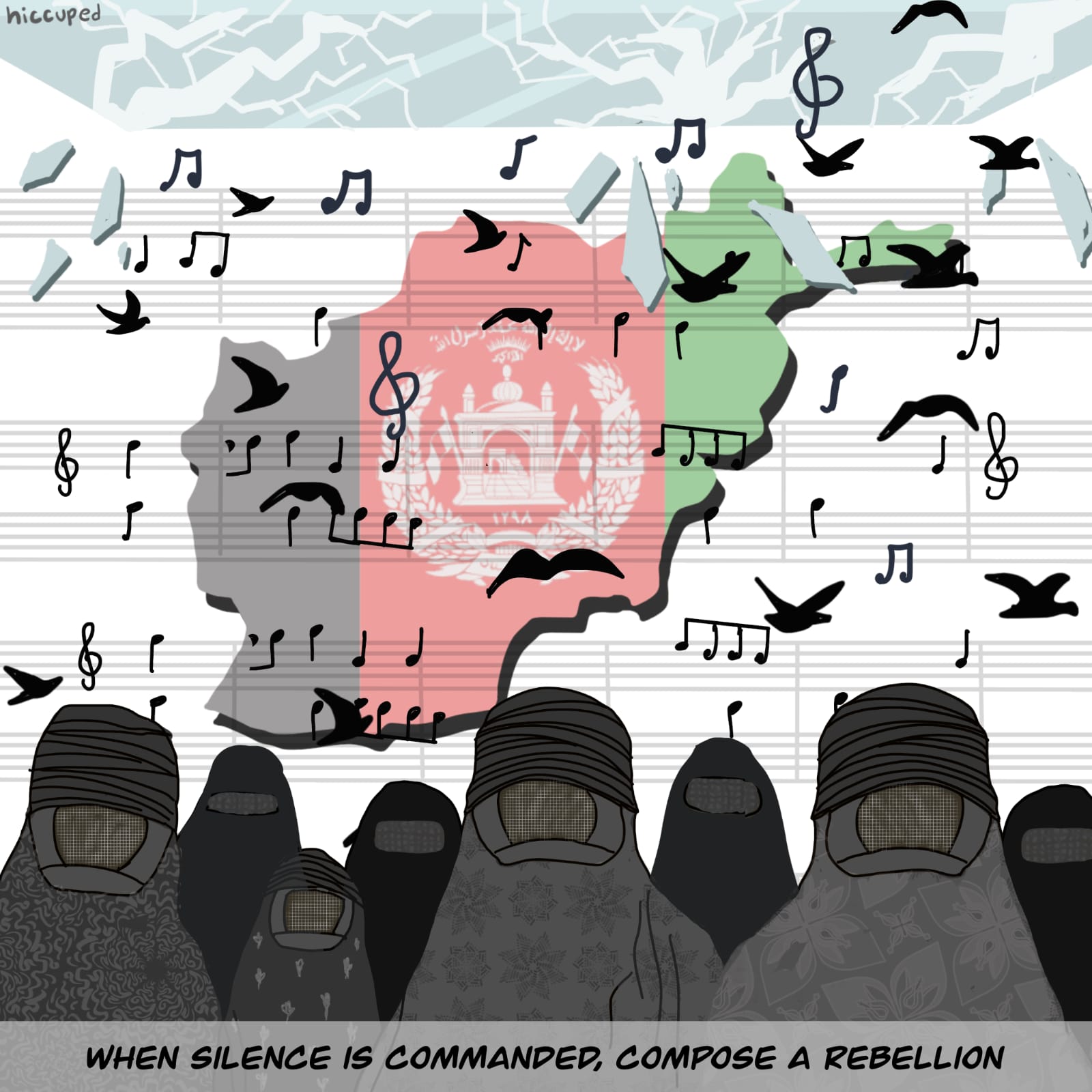
Today’s ‘Double Take’ – in which this journalist probes deeper into the socio-political events in Asia from an intersectional gendered lens – takes off from these small acts of resistance in Afghanistan, and looks into how women in other parts of Asia too have resisted oppression through art, music, and culture.
Women in Iran are prohibited from singing or performing in public and yet they defy such bans by performing at underground concerts and online.
Illustration: Sharanya Eshwar
Chuu Wai Nyein is an artist from Myanmar who chose to empower Burmese women in a society marked by harassment and abuse through her artwork. Her revolutionary art serves as a form of resistance against the ongoing military coup in Myanmar.
In India, men and women of the Dalit community – considered outside the stringent Hindu caste hierarchy and once deemed “untouchables” – have been using art forms like rap, gaana (music genre that originated in north chennai as the expression of the oppressed), and street theater (koothu) to fight caste and gender oppression.
Iranian visual artists Mahdieh Farhadkiaei and Atieh Sohrabi have used their art as a form of protest, boldly challenging oppressive norms such as their dress laws and advocating for freedom and change through their powerful, thought-provoking work.
As bold and empowering as these movements and actions may be, they often come with severe repercussions. Throughout history and even today, countless women who dare to speak out or create revolutionary art are censored, silenced, or even met with violent retaliation. From artists having their works banned to activists facing imprisonment or exile, the path of dissent against oppressive systems is fraught with risk. Yet, despite the dangers, these women continue to rise, their courage inspiring others to challenge the very forces that seek to suppress them.
As political activist and street artist Banksy aptly puts it, “Art should comfort the disturbed and disturb the comfortable.”
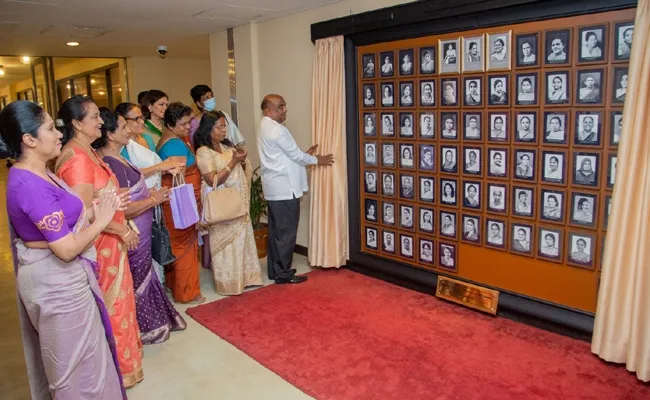
Women’s Caucus in Sri Lanka. Photo: CIR/Sri Lanka Parliament
Female politicians continue to face an uphill battle in politics, especially when obtaining nominations from their mainstream political parties and spending money on their election campaigns. Women representing the current Parliament in Sri Lanka note that structural and financial barriers are forcing them to reckon with their future in politics as they still only have one foot in the door.
A case in point is Samagi Jana Balawegaya (SJB) MP Rohini Wijeratne Kavirathna, who first entered Parliament in 2015, and says that she has sold four lands in the past 10 years to fund her political career and educate her children. In such a context, she questioned how women could even “put their head through the door”.
She said that despite coming from a family with a strong political background (her father was a Deputy Minister while her late husband was a Member of Parliament), the United National Party (UNP) had been reluctant to give her nominations in 2015.
“Other party members were against it – they thought I couldn’t do it due to various reasons such as a lack of financial means. I had my strength of mind and that’s what allowed me to get in.
“The electorate supported me because I was a teacher and due to the political backgrounds of my husband and father. I didn’t have a lot of support in 2015 from the party,” said Wijeratne, adding that if parties did not perceive a female candidate as popular or as a “winning candidate,” they would receive less internal backing.
“I received some financial support in 2015 [from the UNP], but I did hear that others received more support than me. After I entered Parliament in 2015 I worked hard, so at the next General Elections in 2019, I was considered an essential candidate. I was more reluctant to contest in 2019 as the UNP had split in two, but the SJB promised me its backing. The SJB provided me with Rs. 1 million in financial support for the 2020 campaign,” she said.
Patronage Politics and Female Candidates
“Women don’t have as much of a chance to connect with private well-wishers and donors either, to help them with their campaigns. Even the business community will support male candidates because they can open a bottle together and become friends. We don’t have that opportunity to receive support, so it is very difficult for a woman to even enter the political system,” said Wijeratne.
Women Parliamentarians’ Caucus Chair and Parliamentarian Dr. Sudarshini Fernandopulle, who first entered Parliament in 2010, noted too that for female candidates, raising campaign finances was difficult as they did not tend to support illicit deals. “So people think there is no point in supporting us.”
However, Gender and Election Working Group (GEWG) Voluntary Convenor Kanaka Abeygunawardana observed that even female politicians could benefit from the existing patronage system in the country if the political party they represented presented them as a “winning horse”.
“Our political system is based on patronage so you bet on the winning horse. How the party presents the candidate is how they receive prominence in this patronage system. Women are on a sticky wicket because if they’re not dominating or represented as equal to the men in the area, people won’t bet on them. The electorate is not for clean politics, transparency, or accountability either. We need to change the electorate too,” said Abeygunawardana.
Questionable Nomination Processes
Dr. Fernandopulle said that the issue mainly lay with the leadership bodies of political parties that did not consider women as being ‘suitable’ for politics due to its violent and expensive nature.
“I didn’t have a problem with the nomination process as I came in after the assassination of my husband. However, for other women, receiving a nomination is a tough game as there is no clear system through which they can enter. It depends on the party leaders and general secretaries, and their consent. There is no clear nomination process for any candidate – male or female.”
Adding that some political parties did not have women even on their nomination boards, she said that women were only considered as ‘suitable’ by parties after the loss of their male family members: “There is a ready-made electorate there.”
Dr. Fernandopulle contested with the Sri Lanka Podujana Peramuna (SLPP) in 2020. “I didn’t receive any financial backing for my campaign then. I think this was the same for the other candidates as well.”
SLPP MP Muditha Prishanthi too said she had been granted a nomination to contest the 2020 General Elections immediately after the death of her husband, who had been a parliamentarian.
“Prior to that I was involved politically in women’s organisations and in my husband’s politics. The party did not provide me with money to contest, but it did support me in organising in other ways. I was already known in the district due to my husband’s popularity. But someone who enters politics newly would find it difficult. There are financial issues and many women are scared of the campaign trail because they face more ‘kapili’ (sabotage),” said Prishanthi.
Meanwhile, SLPP MP Rajika Wickramasinghe said that when she first contested in 2015, she had received the opportunity to do so because she had been politically involved in women’s organisations and because her husband was in politics. She had lost in 2015 but won in 2020. “I am not from Kegalle, I came to Kegalle due to my marriage so there was a lot of criticism against me, with people saying that someone from Colombo shouldn’t get the vote.”
Abeygunawardana pointed to other social and structural barriers that existed during an election.
Caste plays a major role in most parts of Sri Lanka. If the man representing a particular caste from a district dies, then the best thing for a political party to do is to find his wife. Women are affected because of the perceptions of society – we are not supposed to be talking, we are supposed to be pleasing to the eye. Due to that, we are not given positions within parties as well. — Kanaka Abeygunawardana, Gender and Election Working Group
“Selection procedures are also mainly done by men – sometimes, there is not a single woman. Unless we change those structures slowly, it is very difficult for women to be in politics,” she said.
On the other hand, actress-turned-politician Women’s Affairs State Minister Geetha Kumarasinghe, who currently represents the SLPP, noted that it was her “famous name, wealth, and business income” that had helped her in her political journey.
“I am not from a political family – many women come to politics after their husband or father dies. That is the procedure in Sri Lanka, otherwise women don’t engage in politics. But I was someone who had an established name – that made it easy for me to enter politics. A woman who doesn’t have that can’t even think of coming in. That is wrong, that is not what should happen in politics.
“How can people be committed to politics if they don’t have money? I don’t have any personal problems or many personal expenses, so I can spend on politics. But that is a problem in our political system,” she said.
Kumarasinghe further said that she had not received a “single cent” in financial support from the political parties she had represented since 2010 and little support otherwise.
“There was no support from the party – especially no special support due to my being a woman. The first time I contested, I lost because there were two people contesting from the same seat: Sagara Kariyawasam and me. That was one reason for me to lose that election, yet I campaigned heavily for President Mahinda Rajapaksa at the time.
“During the elections, there were a lot of false rumours about me. The party did ask me whether I could spend on a campaign – that was all they asked. I did hear that men received more financial support than me at the time, in 2010, from the party,” said Kumarasinghe.
Meanwhile, National People’s Power (NPP) MP Dr. Harini Amarasuriya said that the NPP campaigned centrally, as a party, as opposed to running individual campaigns.
“Individual candidates are not expected to spend since local organisers in charge will handle whatever financials are necessary so they are not given money individually. We are not expected to raise funds or spend on our own. Funds are collected by the party’s central fund to organise meetings and print pamphlets,” said Amarasuriya, adding that therefore, the NPP did not consider financial capabilities when handing out nominations.
Meanwhile, Samanmalee Gunasinghe, who contested from the NPP in 2020 and who has been part of the Janatha Vimukthi Peramuna (JVP) for the past 25 years, said that she had witnessed the JVP/NPP change over the years.
“With the political background in the past, there was no chance for women to engage in politics. Politics was done by criminals, drug traffickers, or thugs. In that system, it is unlikely that women would enter politics. Even though our women comrades were willing to enter politics, that environment impacted their entry.
“However, in the past few years we have been forming women’s groups that could face those challenges. Parallel to that, the political background also changed, where more progressive politics became more popular. Our organising and awareness-raising became more strengthened, and with that, women are now ready to face that challenge,” she said, adding that it was unfair to ask women to contest in an election without providing them with the necessary understanding and support so that they would be willing to do so.
Recognising this need, Gunasinghe said that in the past two years the NPP had been involved with women in three ways: awareness-raising about political rights amongst women in a non-partisan manner at the village level, programmes for grassroots NPP women leaders on contesting elections, and forming district women leaders for the party.
Minority Women
Former United People’s Freedom Alliance (UPFA) MP Ferial Ismail Ashraff, one of just two Muslim women to have contested in an election in Sri Lanka and entered Parliament, said that her political career was a “swim against the current”.
Ashraff said that she had received the nomination after her husband passed away as party members had seen how closely she had worked with him. “But there was a bigger half of people saying that a Muslim woman shouldn’t be in politics. The community was not willing to accept it and it was difficult to convince even women to support me. But now, 20 years later, when I speak with young Muslim women and see that they accept what I have done, I consider it as a step forward.”
She added that “nothing much has changed as far as the men are concerned,” but noted the positive development that came after the 25% quota for Local Government (LG) authorities was introduced, which mandated that 25% of LG bodies must be represented by women.
“Even when the quota was being introduced, Muslim parties protested saying that they would not be able to find women to represent them. However, Muslim women activists stepped forward saying that they could find women for the parties. I assume there will be some change that seeps through to the Parliament system too as a result,” she said.
Ambika Satkunanathan, who had been part of the Tamil National Alliance (TNA) National List in 2020, said that she had “zero interest” in entering politics.
“In 2020, I turned down the invitation to contest but was later included in the National List. Throughout this entire process I faced sexist, misogynistic, and abusive personal hate campaigns directed at me, especially on social media, by sections of the TNA itself. There were even claims of being in an inappropriate romantic relationship with a Tamil politician, and a Tamil TV channel telecast a skit alluding to this rumour,” Satkunanathan said, recounting her experience.
She noted that similar to other political parties in the country, Tamil parties too rarely had women holding positions of power within the parties. “Historically, Tamil women have been active in politics and were seen on political stages, even though they didn’t hold positions of power within political parties. Their participation has become less visible and we don’t commonly see women on political stages. The conservative nature of the Tamil community exacerbates the general challenges that women entering politics face.”
Women’s Caucus Attempts
Female MPs said that if the system were to change to increase female representation in Parliament, then the change should come from party leaders themselves.
“The first step should come from the party leaders – they should have the will to increase female representation in Parliament. We can attempt to bring in laws for representation, but those decisions will also be finally taken by men, which means they will get delayed. The decision-making rooms are filled with men. Equality is only there as a sentence in the Constitution,” said MP Wijeratne.
Dr. Fernandopulle said that women unfortunately did not have an equal opportunity as male colleagues to enter politics, as almost all parties were headed by men: “Even within the decision-making bodies of parties, there are very few women.”
She said that on behalf of the Women’s Caucus, she had brought in two private member’s bills – one to mandate parties to provide 50% of the National List seats to women and one to ensure that 30% of party leadership is represented by women.
“We lobbied parties and asked to make voluntary amendments, but we didn’t receive any response. Only the NPP has a manifesto of 50-50 for the National List. But none of the other parties have a plan to increase women’s representation,” she said.
The 25% Quota
Local Government councillors who contested in 2018 noted that the question of financial means was an important one during the interview process conducted by their respective political parties, prior to granting them nominations.
“They asked us to come to Colombo for interviews and asked how much we can spend,” said Achala Rajakaruna Kularatne, an LG Councillor who contested from the UNP in 2018, adding that this meant that “talented ones” rarely got the opportunity to contest in an election.
“We all went through the interview process in 2018. If the husbands of the potential candidates have been involved in politics, they are then prioritised. This happens from the party headquarters, yet some women fight for their spot by showing they have paddy fields and lands to support them during an election,” said Kularatne.
She added that she had supported herself in politics with the income of her husband, who was working abroad, and income obtained through her other assets.
Accordingly, elections researcher and analyst Attorney-At-Law (AAL) D.M. Dissanayake said that this led to only ‘upper-class’ women even stepping up to ask for nominations from their parties, as land rights were mostly only enjoyed by such women.
Dissanayake pointed out that the question of money was a common one that was asked by most parties when determining their nominations for any election. “If they don’t have that financial backing, the chances of them getting the nomination really decrease.”
Sujeewani Nanayakkara, another UNP LG Councillor, also said that she had been asked about her financial means to support an election run during the nomination interview at the party headquarters, while pointing out that the interview panels rarely included women.
Institute for Democratic Reforms and Electoral Studies (IRES) Executive Director (ED) Manjula Gajanayake said that political parties were reluctant to give nominations for women candidates as they did not consider them to be “winning horses”.
“Political parties are constantly treating female candidates as second citizens. Women candidates often pawn their land or other assets to cover the cost of a campaign,” he said.
Party Promises
SJB General Secretary Ranjith Madduma Bandara, noting that they had been part of the Government which had introduced the 25% women’s quota for LG bodies, said that more women needed to come forward for nominations. “We are offering training these days to encourage more women to come forward. The SJB Executive Council is prepared to increase female representation in the coming elections.”
NPP General Secretary Dr. Nihal Abeysinghe said that the party hoped to ensure that each district would have female representation at the next General Elections. “We just haven’t decided on the numbers from each district for women as we still haven’t discussed the General Elections yet. However, we can say with certainty that each district will have female representation.”
SLPP General Secretary Sagara Kariyawasam said that of the current female SLPP MPs in Parliament, only Wildlife and Forest Resources Conservation Minister Pavithra Wanniarachchi had funds: “We selected based on who was with the people.”
“We treat everyone as a candidate and we don’t discriminate based on gender,” Kariyawasam said in response to whether money was being unfairly allocated to male candidates over female ones when campaigning. “We help the way we can and people who don’t need that help do not take it.”
He added: “We have always been of the stance that talented persons should be given a chance. Our party allocated two National List seats to women and has the largest representation of women from any party in the current Parliament.”
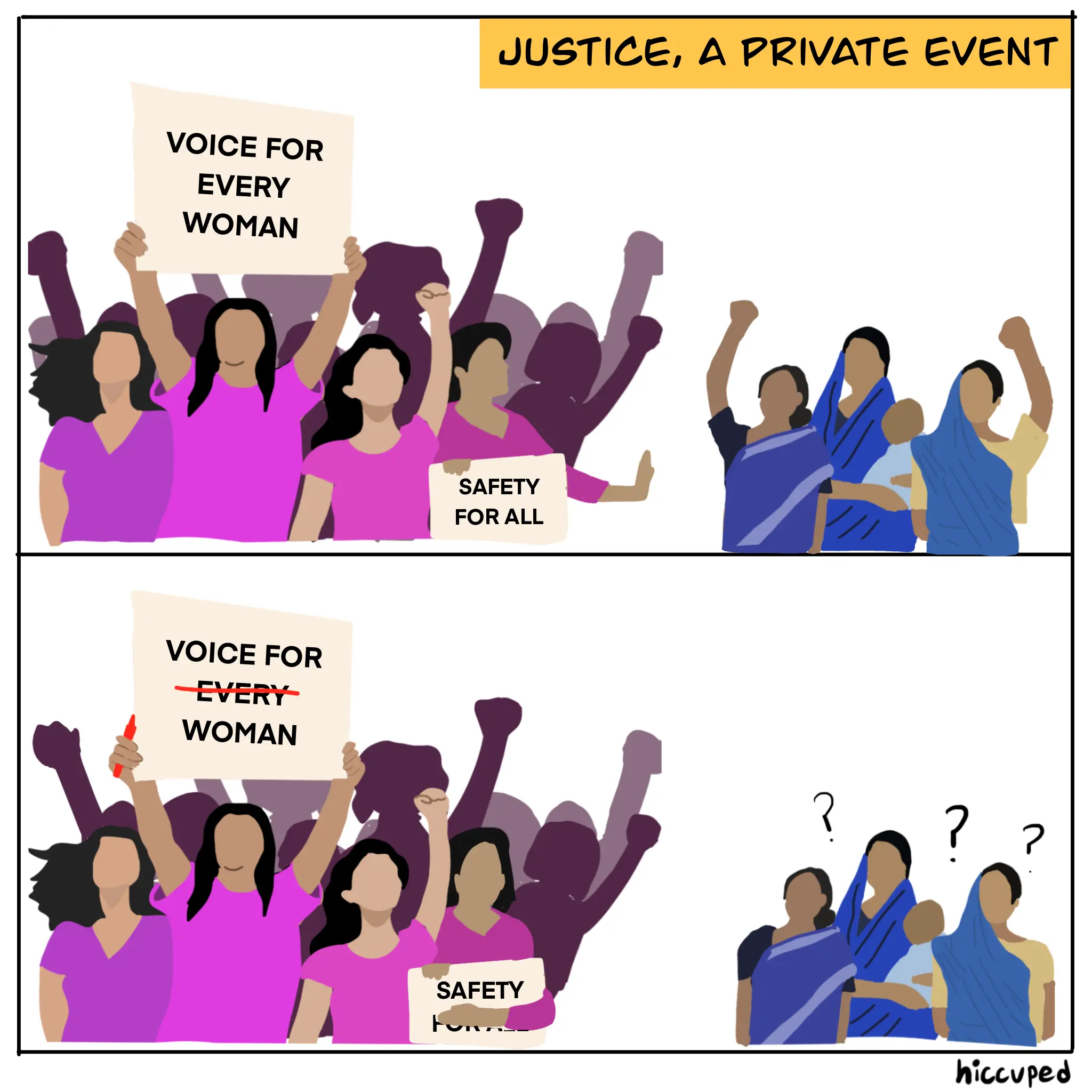
When it comes to feminist movements, are some women more equal than others? Are the brave voices we hear those of a privileged few? And do they really represent the diverse realities of all women? With the emergence of various waves of feminism across Asia, feminist movements have created quite a ripple by making significant progress. However, many have also been criticised for lacking inclusivity.
Today’s illustration for ‘Double Take’ – in which this journalist probes deeper into the socio-political events in Asia from an intersectional gendered lens – looks into this question of intersectionality when it comes to radical movements such as feminism.
Illustration: Sharanya Eshwar
The illustration above is based on actual events from last month in India, after protests broke out across the country against the brutal sexual assault of a doctor in the eastern Indian city of Kolkata.
In Mumbai – one of the world’s most expensive cities – one such protest took place at an upscale neighbourhood called Powai. Upper-class women took to the streets to demand safety for women. However, when women from a slum neighbourhood, comprising of historically marginalised and oppressed communities – the Dalits (outside the Indian caste hierarchy) and Adivasis (indigenous people) – joined them, the women from Powai told them they weren’t welcome to take part in “an exclusive protest only for residents of the Hiranandani complex (a posh residential building in Powai).”
The incident underscores how women of oppressed communities often find their struggles sidelined even though they face disproportionately more violence with little access to justice. Their experiences are deemed “different,” highlighting a divide in how feminist activism engages with caste-based oppression.
We’ve seen similar examples, such as in South Korea, where the ‘Escape the Corset’ campaign and the 4B movement advocate for women to fight against oppressive patriarchal norms, but has been criticised for not directly addressing the systemic and institutional barriers that perpetuate gender inequality in their society. This disproportionately impacts rural and economically disadvantaged women, potentially excluding them from the movement’s discourse and benefits.
In another instance, the annual Aurat March (which translates to “Women’s March”) in Pakistan aims to advance women’s rights but has drawn backlash for its controversial slogans that overshadow discussions on inclusivity and intersectionality.
In Myanmar, there are questions around whether the Rohingya women, who are further marginalised because of their identity, are ever a part of feminist efforts or discourse. In Indonesia the feminist movement’s elitist tendencies continue to exist and ostracise marginalised women.
There is a dire need for feminists to engage at a grassroots level to counter conservative movements and avoid remaining a minority confined to the middle class.
While feminism in Asia is increasingly aware of the need for intersectionality, there is still much work to be done to ensure that the voices of all women, regardless of caste, ethnicity, sexuality, education, sexual orientation, location or class, are heard and represented. The challenge is to eliminate further marginalisation of women based on other identities. As the famous civil rights icon Fannie Lou Hamer said, “Nobody’s free until everybody’s free.”

Aimah
Standing barefoot in the cold paediatric ward, Aimah watched in horror as she took in the latest blow of misfortune through blurred, tear-drenched vision.

Over the past months, the Bajau Laut woman lost her siblings to illnesses in Semporna and her husband to the clutches of immigration officers in Lahad Datu, leaving Aimah, who was pregnant, to fend for her six children alone.

On that day in the Lahad Datu Hospital paediatric ward, a stranger cuddled her newborn baby while Aimah, denied access, stood at the doorway crying–and didn’t stop weeping for days.
Having fought for the medical rights of fellow stateless Bajau Laut at Lahad Datu Hospital, Aimah believed this was her ultimate punishment – losing custody of her child to the same hospital.

The circumstances in which she lost custody of her child are being disputed. The hospital claims she left the child unattended so they called the Welfare Department. The department then deemed Aimah an unfit parent and took the child away.
But Aimah, who declined to have her full name published, said after recovering from delivery, she was told to return home and leave the premature baby in the neonatal intensive care unit (NICU).
This harrowing story of a stateless woman having her child snatched away is not unique. Malaysiakini documented three other similar cases. Two of the mothers regained custody of their babies while another mother, faced with the prospect of losing custody, was found dead with her child, having committed murder-suicide at the hospital.
Accused of neglect
Aimah’s ordeal began in September 2021, when she was rushed to the hospital with her premature baby, following an unexpected home birth.
Mother and baby, on the brink of death, were warded immediately. Aimah recovered in a few days after a blood transfusion and was asked to go home while her baby recovered in the NICU.
“I had to care for my other children at home. I am still breastfeeding some of them,” she told Malaysiakini, via a translator.
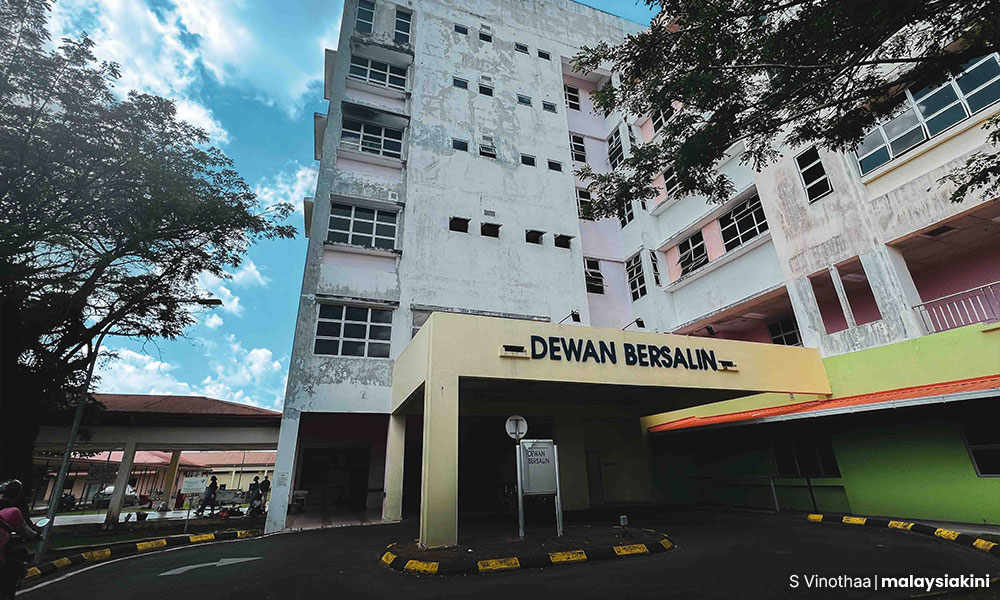
Maternity block of Lahad Datu Hospital. Photo: S. Vinothaa/Malaysiakini
A child protection officer representing the Welfare Department accused Aimah of child neglect, after the baby was in the NICU for about two months. Although her baby was not ready to be discharged, Aimah rushed back upon hearing of an imminent adoption order relating to her baby.
Within one week, the officer processed the application and the Magistrate’s Court granted the adoptive parents custody of Aimah’s baby.
Who are the Bajau Laut?
The Bajau Laut are sea nomads living on the open waters and their ancestral maritime domain stretches across the Sulu-Celebes seas between the island of Borneo and the Philippines. They have been faring between sea villages in Sulu in the Philippines, Semporna in East Sabah, and South Sulawesi in Indonesia, for generations.

Despite being recognised by the Sabah government as indigenous people of the state, most of the Bajau Laut community are stateless by law, and are often hounded by the Immigration Department for being “illegal immigrants”. This bars them from seeking any avenue of redress and attempting to make a police report would risk their freedom with a potential indefinite term of detention at Sabah’s infamous Rumah Merah detention centres.
Without government-issued documentation, these stateless communities are prevented from getting formal jobs, protection by labour laws, education, healthcare, and are pushed to the brink of survival. They are recognised by their preference of being barefoot wherever they go, and are shunned by many Sabahans as people from the lowest stratum of human beings.
The few who secure ‘cash-in-hand’ jobs earn less than half of what their colleagues who are citizens will take home. Those who depend on the sea for a livelihood have to settle for less as seafood wholesalers peg a lower value on anything they catch.
Aimah’s husband, stateless and penniless, was detained before the birth of his youngest child and remains in detention, unqualified to be deported to any country. He has not received the news that they have lost custody of his youngest child – a child he has not met.
Arung

On Feb 1, 2020, a 16-year-old Bajau Laut mother, Arung (not her real name), committed murder-suicide with her five-month-old infant at Lahad Datu Hospital after she was told she could lose custody of her baby.

The hospital’s internal investigation of the incident found that news of losing custody of her child “compounded by the constant berating and badgering for settlement of hospital bills made the young girl very anxious and depressed”.
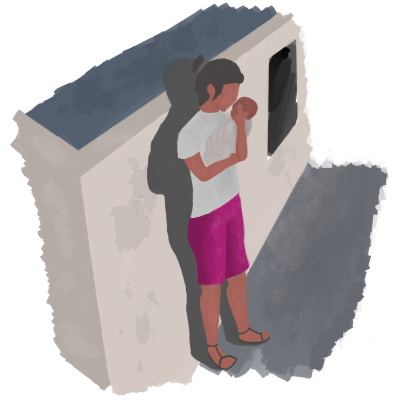
“She was successful on her second attempt,” revealed a medical official privy to details of the investigation, but spoke to Malaysiakini on condition of anonymity.
Repeated incidents of stateless mothers losing custody of their babies in Lahad Datu Hospital have struck fear among expectant mothers and those with young children, discouraging them from seeking medical care for themselves and their children. This new fear has led to one in four Bajau Laut mothers opting for home births, said the village midwife, Fatimah Rafily Darao. This, on top of the obligation for non-citizens to pay high registration fees and upfront costs of treatment and diagnostic tests, as well as badgering from hospital administrators if fees cannot be paid.
Against United Nations recommendations, stateless patients in public hospitals are charged the same fees as foreigners, starting with a RM100 upfront registration fee and RM120 outpatient clinic fee. To avoid hospital staff harassment for payments, many stateless persons bear with the pain and wait until they are in critical condition with the hopes of being accepted into the Red Zone in the Emergency Department – the only place where all upfront payments are temporarily waived.
Sometimes, they wait too long and suffer irreparable damage or die.
Adoption process halted upon threat of a counterclaim
Kampung Panji village head Fandry Alsao said apart from Aimah and Arung, two other stateless mothers from his village almost lost custody of their babies in similar circumstances. But Fandry’s timely intervention prevented this from happening. In these cases, he said, the child protection officer relented after Fandry threatened to “file a counterclaim (tuntut)” for custody of the child.
“These words seemed to shake the officer,” he said.
He said all cases, except Arung’s, involved the same child protection officer.
Sarlina Aswan

Sarlina Aswan’s newborn fell ill and was admitted to the NICU sometime in mid-2021. Like Aimah, she was asked to return home and leave her infant at the hospital.
Without access to transportation and with other children to care for, Sarlina was only able to visit her newborn once a week. In the third week, she found a woman she did not know caring for her infant. It was only then that she was told the woman was her child’s adoptive mother. Learning this sent her into a state of depression, she told Malaysiakini.

But in a phone call to the child protection officer, Fandry threatened to file a counterclaim. This prompted the officer to look for Sarlina in Kampung Panji.

“The officer came to Kampung Panji looking to ask her if she wanted to keep her baby. After I threatened to file a counterclaim, he asked Sarlina to follow him to the hospital and handed over her baby after the child was discharged.”
“After I threatened to file a counterclaim, he asked Sarlina to follow him to the hospital and handed over her baby after the child was discharged.”
In all the cases documented by Malaysiakini, the mothers said they were unable to go to the hospital every day because they had other children to care for at home. And while they were away from the hospital, in just a matter of weeks, a prospective adoptive parent was introduced as a carer for their respective babies.
Felindaya

In June last year, 20 days after she gave birth, Felindaya was on the ward floor in tears, begging for her baby to be returned.

Earlier, Fandry received a call notifying him that a child protection officer was preparing adoption papers for Felindaya’s newborn.

He threatened to file a counterclaim and again, the officer backtracked and the adoption process was halted. Relieved, Felindaya, who only wanted to have her first name published, took her child home even before the treatment was complete.
Stateless mothers deemed unfit
Apart from Sarlina, all four mothers were accused of neglect or being unfit parents when custody of their infants came into question.
When it came to teen mothers, the same child protection officer with the Welfare Department told Malaysiakini that underaged mothers were automatically deemed unfit because of their age and because they were not legally married.
The officer was transferred to Lahad Datu sometime in early 2020, and was not involved in Arung’s case.
“A girl aged 16 years old is not mature enough to take care of a child. But if she was legally married (status nikah yang sah), then it is not an issue,” he told Malaysiakini.
He said in Sabah, underaged girls who want to marry must seek permission of the Syariah Court if she is Muslim. If she is deemed mature enough, she can marry. As such, a registered marriage is proof that a teenager is ready to be a mother, he said.
The child protection officer, who acted in all the cases except for teen mother Arung’s, said he generally viewed the stateless community to be unfit parents. This is because they live in poverty and deplorable conditions, which he said is unsuitable for a child.
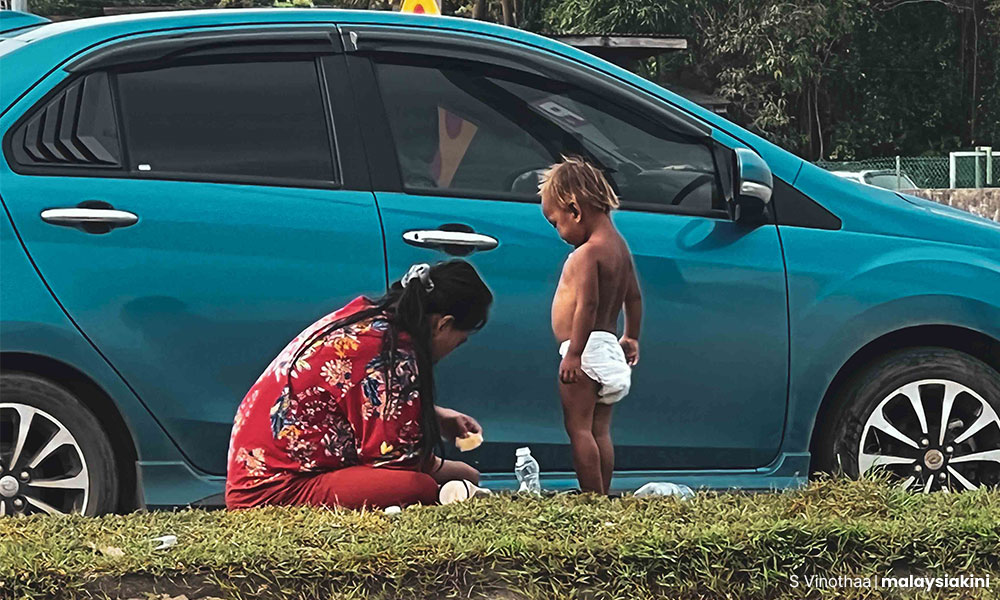
A woman making a bottle of milk for her child on a road divider. Photo: Malaysiakini
While Bajau Laut men earn their keep by doing odd jobs, the officer claimed the women often took their children to the streets to beg, just for the fun of it.
“I have been to many places in Sabah and street beggars are not a big issue in places like Kunak and Semporna. Begging for money is not their sole option, especially in Kunak where all the (stateless) are employed,” he said.
Swift Adoption Process
There is no direct evidence that Bajau Laut babies born to stateless mothers are being targeted for adoption, but the swiftness of the adoption process raises questions.
The legal adoption process in Malaysia is known to take years and in March this year, Women, Family, and Community Development Minister Nancy Shukri announced a stricter selection process for adoptive parents when she launched new guidelines for eligibility.
It was reported that the new selection process would involve a psychological measurement tool, designed to provide scientific data on an individual’s thoughts, feelings, and behaviour. The process of child placement would be overseen by the respective state Social Welfare directors.
The stricter processes in place suggested longer waits and greater safeguards for adoptions but they do little to reassure stateless mothers who are wary of taking their young children for treatment in hospitals, especially without avenues of redress should anything untoward happen.
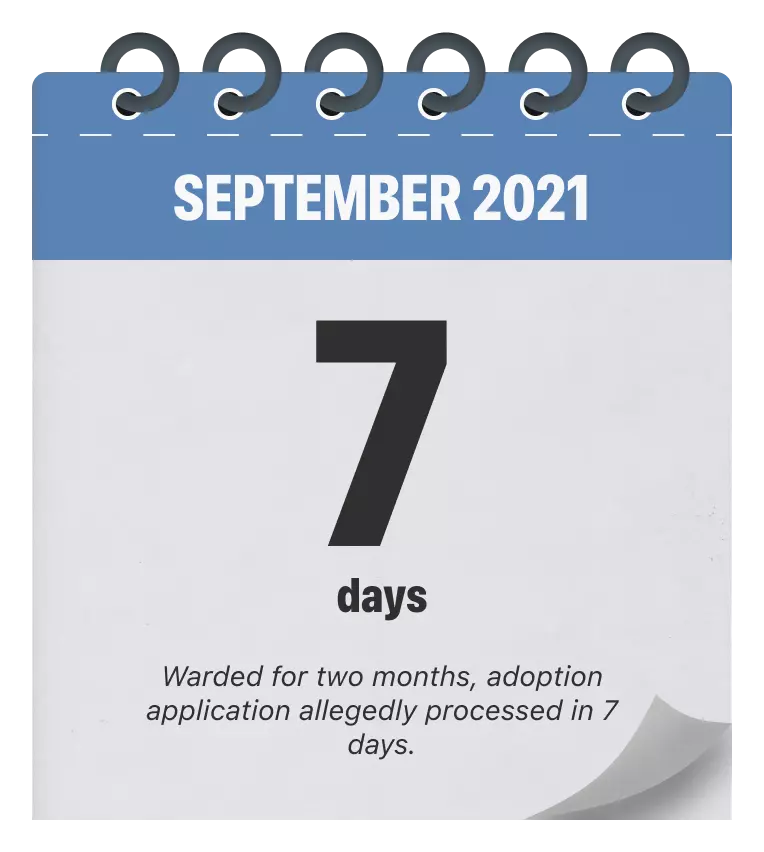
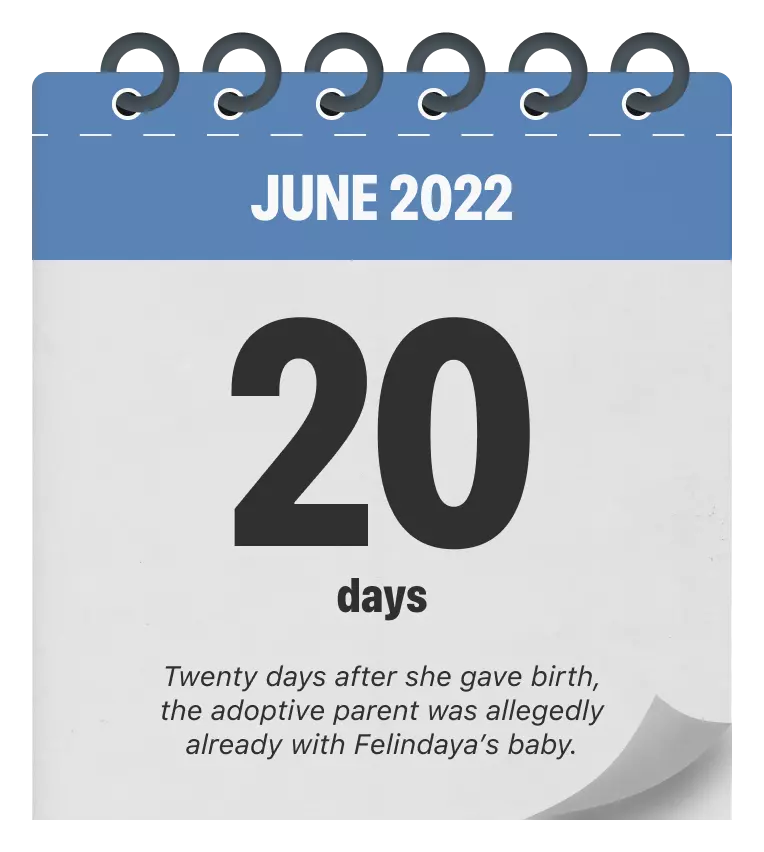
Who paid the hospital bills?
Curiously, the three mothers who spoke to Malaysiakini were not badgered to settle hefty bills for their babies’ care in NICU – something uncharacteristic of the Lahad Datu Hospital’s revenue department which reportedly collects bills from non-citizens with zeal.
Sarlina only paid RM50 but treatment for a non-Malaysian baby in the NICU alone would have exceeded RM10,000, those in the know tell Malaysiakini. A medical official from the hospital, who spoke on condition of anonymity, estimated Felindaya’s bill to reach RM50,000 but she was allowed to leave the hospital without harassment for the full settlement of her bill.
“Aimah was not asked to settle her bill but that could be because she no longer had custody of her baby,” said the medical official, who was unsure if the bill was settled by the adoptive parents.
A Bajau Laut woman bringing clean water to her home.
No Records
Medical officials from different parts of Sabah who spoke to Malaysiakini said hospitals don’t have to keep records of the stateless individuals they turned away.
“So, even if they wanted to complain about the death of a loved one as a result of being turned away by the hospital, they can’t because they are not on our records,” one medical official in Kota Kinabalu said.
The hospital, however, keeps a record of all cases treated at the hospital in the form of ‘case notes’ like a repository of patient medical history, accessible with the consent of the revenue department.
An unforgettable case was of a child who was held under observation for 12 hours and sent home with her fatal injuries untreated because her father was unable to raise the funds needed to conduct the surgery that would have saved her life, the healthcare professional said.
A Bajau Laut child climbing into his home
Unlike other cases of stateless patients, Arung’s death was high profile, and was investigated not just internally but also by the police. But questions arose when the staff nurse, who conducted the internal hospital investigation,
was transferred to Tuaran Hospital less than a month after the incident, after serving more than a decade in Lahad Datu.
The then Lahad Datu police district chief Nasri Mansor who, on the day of the incident vowed to the media to find out the real reason for the tragedy, has since been transferred out of the state to Bukit Aman.
The district crime team has declined to comment.
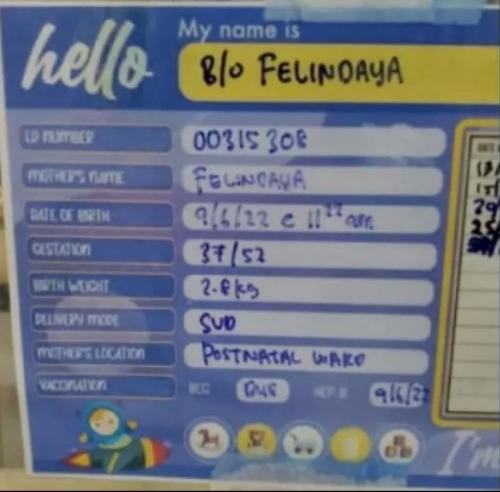
Malaysiakini has contacted the women, family, and community development minister and the Health Ministry, and is awaiting their response. The Sabah Health Department, in a statement after this article was published, denied there were any cases of baby snatching in public hospitals in the state. They have also lodged a police report over the matter.
(Left) Hospital card identifying Felindaya’s newborn. Photo: Malaysiakini
‘Is this my punishment?’
Many of the Bajau Laut are not proficient in Bahasa Malaysia because they do not have access to formal education and have little interaction with those who speak the language.
Despite this, Aimah has helped close to 100 fellow stateless villagers in critical condition to the hospital’s emergency department, in hopes of being admitted to the Red Zone, where fees for non-citizens are temporarily waived. She is their go-to person because after 100 times, she is very familiar with the process.
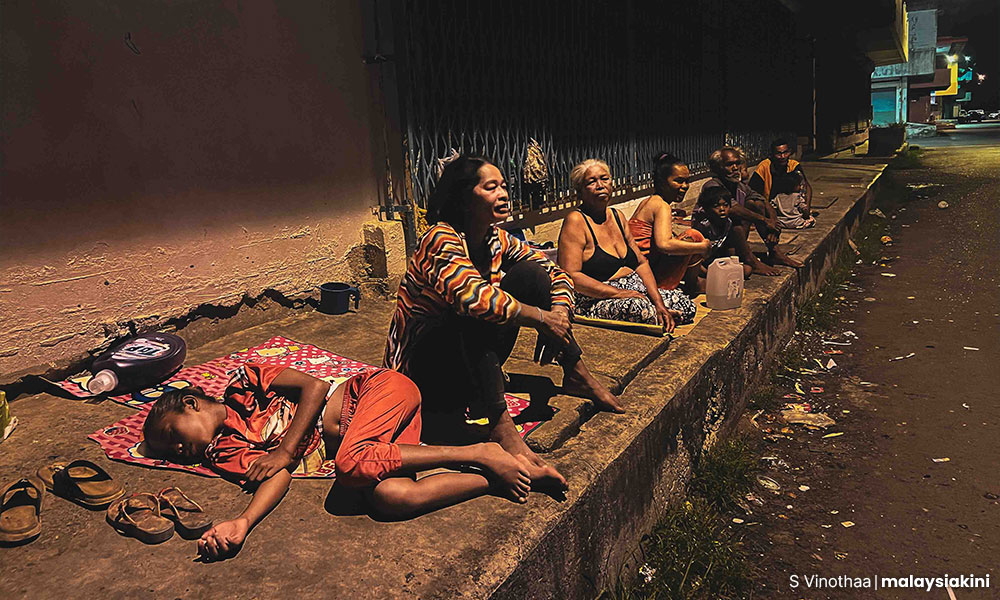
Stateless people sleeping rough in Lahad Datu town. Image: Malaysiakini
“I am always scared when I go to the hospital. I am terrified they will call the police.”
She knows she is a familiar face to the hospital revenue department, who she believes is unhappy about her bringing in the stateless patients who cannot pay their bills.
As such, she wonders if having her child taken away was a form of punishment. Scarred by the incident, she will not return to the hospital – not even to bring a critically ill fellow
villager like she did before.
No way to prove the baby is hers
Months after her baby was taken away, Aimah still hopes there is a way for her to regain custody. But she doesn’t know how. She has no documentation of the birth of her youngest child, and is terrified of lodging a police report because of her own undocumented status.
“If I am arrested, what will happen to my children?” she asked.
Confirming her fears, the child protection officer said the adoption procedure is already complete and during the process, the department, with the help of police, spent a week looking for her.
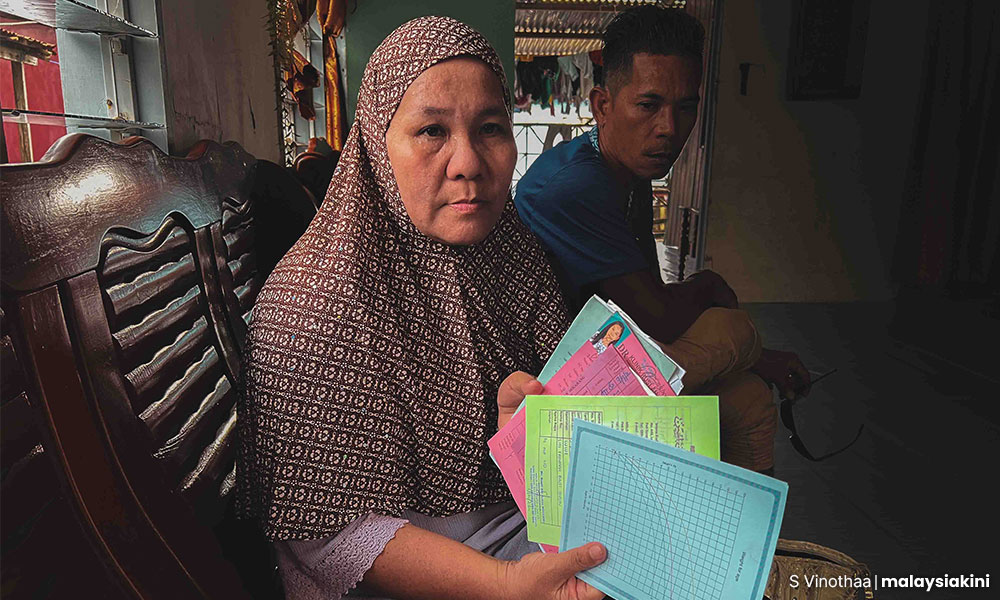
Midwife Fatimah Rafily Darao says recently, babies born to stateless mothers cannot get birth certificates. If they’re born at home, these cards are the only record of their birth. Photo: S. Vinothaa/Malaysiakini
He said they failed to find her and her absenteeism was reported to the Magistrate’s Court, which handled the adoption. “Now she has to prove that the child is hers. What proof does she have?” he asked. He claimed Aimah only showed up after the court had awarded custody to the adoptive parents.
“We already had an application to adopt the child, so we presented the case in court. Why not give the baby to a guardian who is legal?”